The most recent addition to the zoo, as well as a personal favorite since it’s opening back in 2014, the Rainforest of the Americas is perhaps one of the most gorgeous areas in all the zoo. I have a review on the existing thread of the Rainforest of the Americas but I wanted to possibly add more and update it with what I had seen in my last couple visits. Comprised of 13 exhibits, varying in fauna and lush vegetation engulfing you as you trek through the whole complex. Originally was only 12 exhibits, an additional exhibit was worked on for another year which was finally completed in 2015 and is home to one heavy hitter, actually 3 total. It can take approximately 30 minutes to view it all and it tends to have zoo guests linger on due to the immersive experience of the exhibits. Although all the exhibits in the ROTA are well done, there are at least 4 I’d rank as some of the best the zoo has to offer among others. The first is the Harpy Eagle exhibit. It is placed strategically at the the top the hill, potentially the highest point on the zoo grounds. Consisting of two large trees inside, an artificial nesting stump, waterfall, and perches for the Harpy Eagle to glide around. The next big exhibit is a crowd pleaser every day and a must see, the Giant River Otter exhibit. Consisting of one large pool which is viewable from the rainforest stilt house and downstairs directly attached to the piranha exhibit. 3 smaller pools, slides, multiple viewing areas, and more than enough land area for the whole group of otters to bask after a dip. The zoo has had great success in breeding otters and they are a joy to see with their endless playful nature and squeaks. Another large exhibit that has made me warm up to is the Baird’s Tapir aka Central American Tapir exhibit. With the first viewing area directly across the otters, the tapirs surely love taking a dip during the hot summer days. In the recent days, 2 tapirs are housed together and tend to keep to themselves. There is a central island comprised of trees and sand, with their feeder being usually near the base of the small island formation. And last but certainly not least, at the very dead end of the path, the last super stars make their presence known when they want to which is the Jaguar exhibit. Home to 3 adults jaguars: Senior citizen male Kaloa, young female Johar, and a young male Stewie. Each of the jaguars are rotated almost daily with Johar being the most energetic and inquisitive of the whole bunch. Their entire exhibit is one very large netted area that had trees for shade and well as fallen trees for the jaguars to perch themselves on top. The whole exhibit is on a steep incline which gives the jaguars a sprawling view of their rest of the zoo. A small waterfall near the front of the exhibit which has 2 glass viewing windows to get an up close look at them when they inevitably come down for a drink. Needless to say that it’s a must see attraction here at the zoo but it’s not without its issues. One problem is some of the glass viewing windows for the multiple exhibits appeared smudged or scratched by their animal resident. This is a fairly common issue at any zoo or aquarium but it appears that it’s not frequently cleaned or buffed out. Having visited this area more frequently over the years since it’s debut, I can’t recall a time I noticed the windows being cleaned but that may be harsh to say since I’m not at the zoo every day or had been for months prior to past 8 visits in 1 month. Another issue the path appears to be rather narrow and can make it difficult to pass if families or large volumes of people stop at an exhibit, I find myself often bumping into people or having to squeeze past through at certain points along the path. Down below I’ll be listing the exhibits in order from the main entrance that faces the Elephants of Cambodia exhibit area:
Rainforest stilt house, top level right side netted exhibit:
Harpy Eagle
Rainforest stilt house, top level front side:
Giant River Otters
Rainforest stilt house, floor level right side aquarium:
Caiman Lizard
Freshwater Angelfish
Cardinal Tetra
Rainforest stilt house, floor level front side hybrid aquarium/exhibit:
Red Bellied Pirahna
Bucktooth Tetra
Motoro’s Stingray
Polka-Dot Stingray
Armored Catfish
Giant River Otters(seperated by glass)
Viewing windows along right side of path:
Giant River Otter
View window across Giant River Otter exhibit(second viewing area across 3 netted exhibits):
Baird’s Tapir
Netted exhibit #1 right side:
Black Howler Monkey
Lowland Paca
Netted exhibit #2 right side(far back):
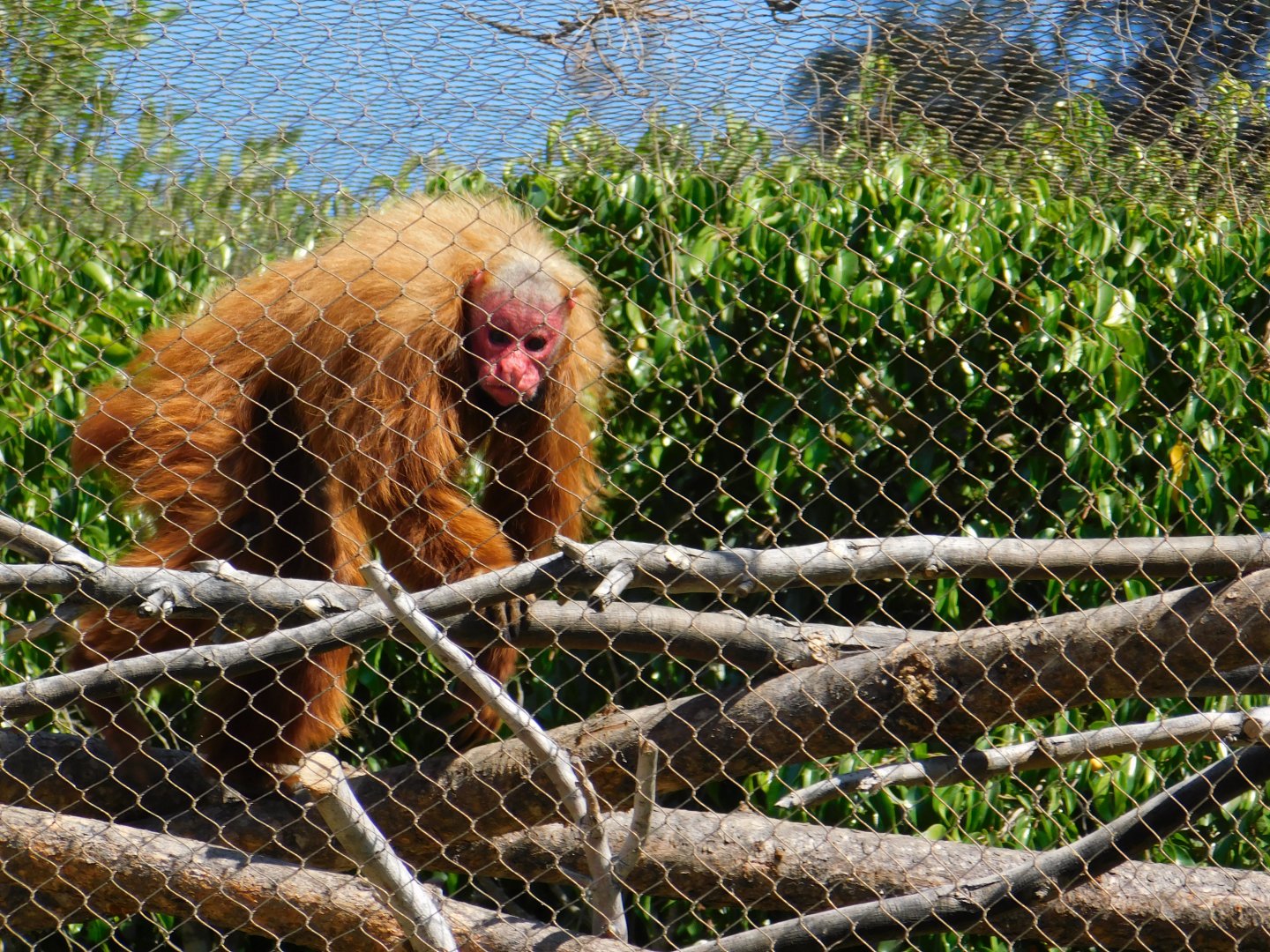
Red Uakari
Netted exhibit #3 right side:
Crested Oropendola
Sunbittern
White Tailed Jay
Artificial wooden log, exhibit #1:
Cuvier’s Dwarf Caiman
Mata Mata
Cichlids(unspecified variety)
Artificial wooden log, exhibit #2:
Golden Poison Frog
Blessed Poison Frog
Variable Poison Frog
Green-And-Black Poison Frog
Blue Poison Frog
Yellow-Banded Poison Frog
Artificial wooden log, exhibit #3:
Marine Toad
Netted exhibit, left side:
Green Aracari
Large netted exhibit:
Jaguar
In addition to the 4 exhibits I’d consider the best, there is one that is good but does have its negatives. The LA Zoo is lucky to be home to the Red Uakari that are on display at the ROTA. They have a slightly modified netted exhibit, rectangular in shape and more reinforced compared to the smaller netted exhibits along the path. The major problem with this is that the exhibit is approximately 20 to 30 feet from the signage for the uakari, elevated on incline as well. The only way to actually get a look at them is to either have binoculars or a good camera to get a view of them, luckily I’m tall enough to look over the fence that separates the exhibit from the main path. As far as I’m aware, the main reason the exhibit was built this way was due to the territoriality of the males towards humans especially when females are also present. If you are able to bring a nice camera that can reach the 20 to 30 feet distance in regards to getting a good visual, I would definitely recommend it. I know it seems like I’ve complained a bit about the ROTA, but in all honesty, this is my favorite sections of all the zoo due to how it’s made. It also brings me a little bit of pride due to my heritage, Mexican American, which also makes others of Latin America feel somewhat at home here at the ROTA. The signage is also translated in both English and Spanish due to the demographic of the zoo visitors as well as the residents of Los Angeles county. I’ll continue to post photos of the zoo in particular the ROTA, if you have any comments or corrections, please feel free to let me know.
Rainforest stilt house, top level right side netted exhibit:
Harpy Eagle
Rainforest stilt house, top level front side:
Giant River Otters
Rainforest stilt house, floor level right side aquarium:
Caiman Lizard
Freshwater Angelfish
Cardinal Tetra
Rainforest stilt house, floor level front side hybrid aquarium/exhibit:
Red Bellied Pirahna
Bucktooth Tetra
Motoro’s Stingray
Polka-Dot Stingray
Armored Catfish
Giant River Otters(seperated by glass)
Viewing windows along right side of path:
Giant River Otter
View window across Giant River Otter exhibit(second viewing area across 3 netted exhibits):
Baird’s Tapir
Netted exhibit #1 right side:
Black Howler Monkey
Lowland Paca
Netted exhibit #2 right side(far back):
Red Uakari
Netted exhibit #3 right side:
Crested Oropendola
Sunbittern
White Tailed Jay
Artificial wooden log, exhibit #1:
Cuvier’s Dwarf Caiman
Mata Mata
Cichlids(unspecified variety)
Artificial wooden log, exhibit #2:
Golden Poison Frog
Blessed Poison Frog
Variable Poison Frog
Green-And-Black Poison Frog
Blue Poison Frog
Yellow-Banded Poison Frog
Artificial wooden log, exhibit #3:
Marine Toad
Netted exhibit, left side:
Green Aracari
Large netted exhibit:
Jaguar
In addition to the 4 exhibits I’d consider the best, there is one that is good but does have its negatives. The LA Zoo is lucky to be home to the Red Uakari that are on display at the ROTA. They have a slightly modified netted exhibit, rectangular in shape and more reinforced compared to the smaller netted exhibits along the path. The major problem with this is that the exhibit is approximately 20 to 30 feet from the signage for the uakari, elevated on incline as well. The only way to actually get a look at them is to either have binoculars or a good camera to get a view of them, luckily I’m tall enough to look over the fence that separates the exhibit from the main path. As far as I’m aware, the main reason the exhibit was built this way was due to the territoriality of the males towards humans especially when females are also present. If you are able to bring a nice camera that can reach the 20 to 30 feet distance in regards to getting a good visual, I would definitely recommend it. I know it seems like I’ve complained a bit about the ROTA, but in all honesty, this is my favorite sections of all the zoo due to how it’s made. It also brings me a little bit of pride due to my heritage, Mexican American, which also makes others of Latin America feel somewhat at home here at the ROTA. The signage is also translated in both English and Spanish due to the demographic of the zoo visitors as well as the residents of Los Angeles county. I’ll continue to post photos of the zoo in particular the ROTA, if you have any comments or corrections, please feel free to let me know.