Rank these UK orangutan outdoor enclosures

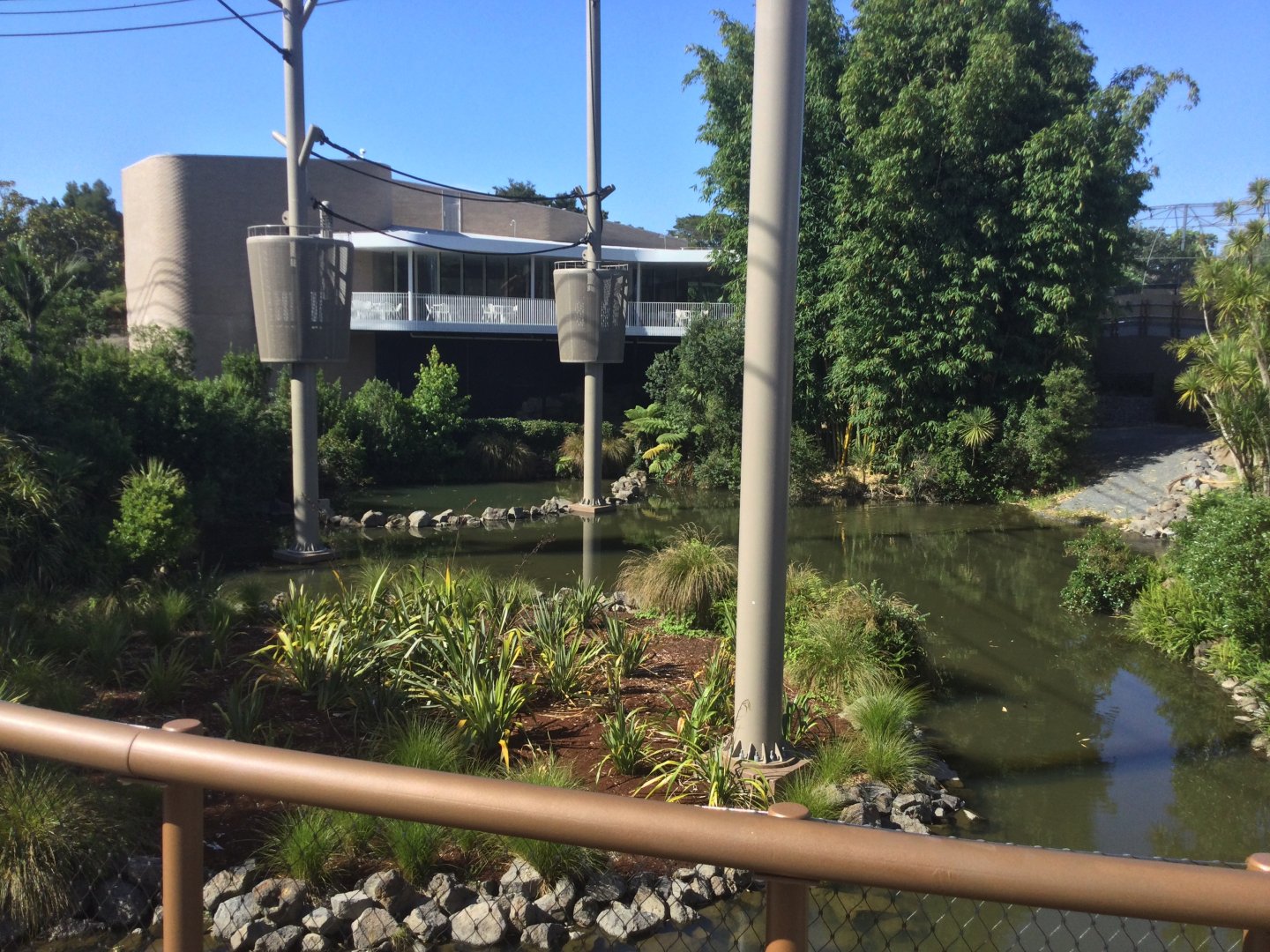
I think they should these UK zoos should take inspiration from Auckland's new Orangutan complex when considering a future enclosure:

wanita-on-jungle-track-gallery.jpg

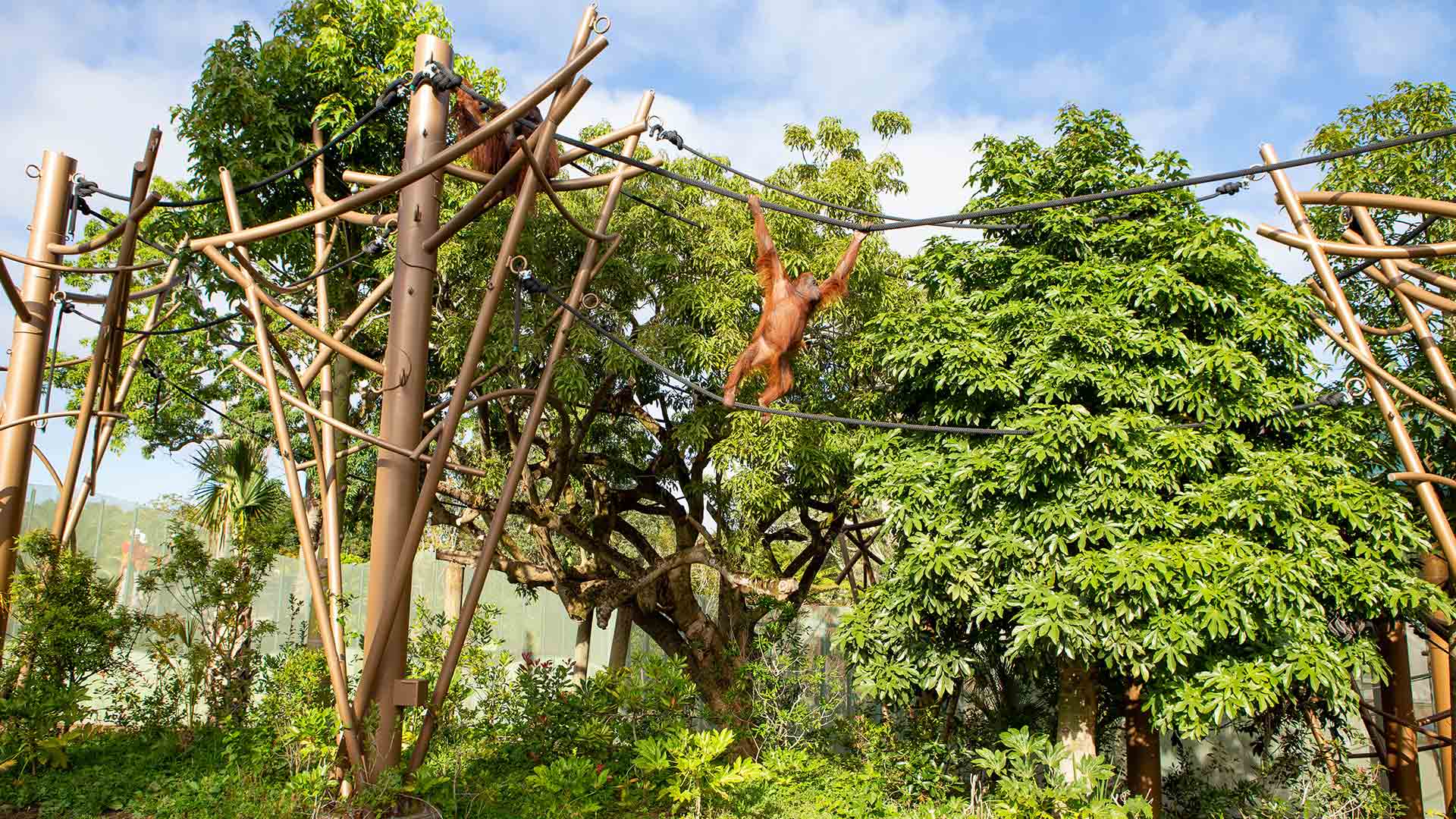
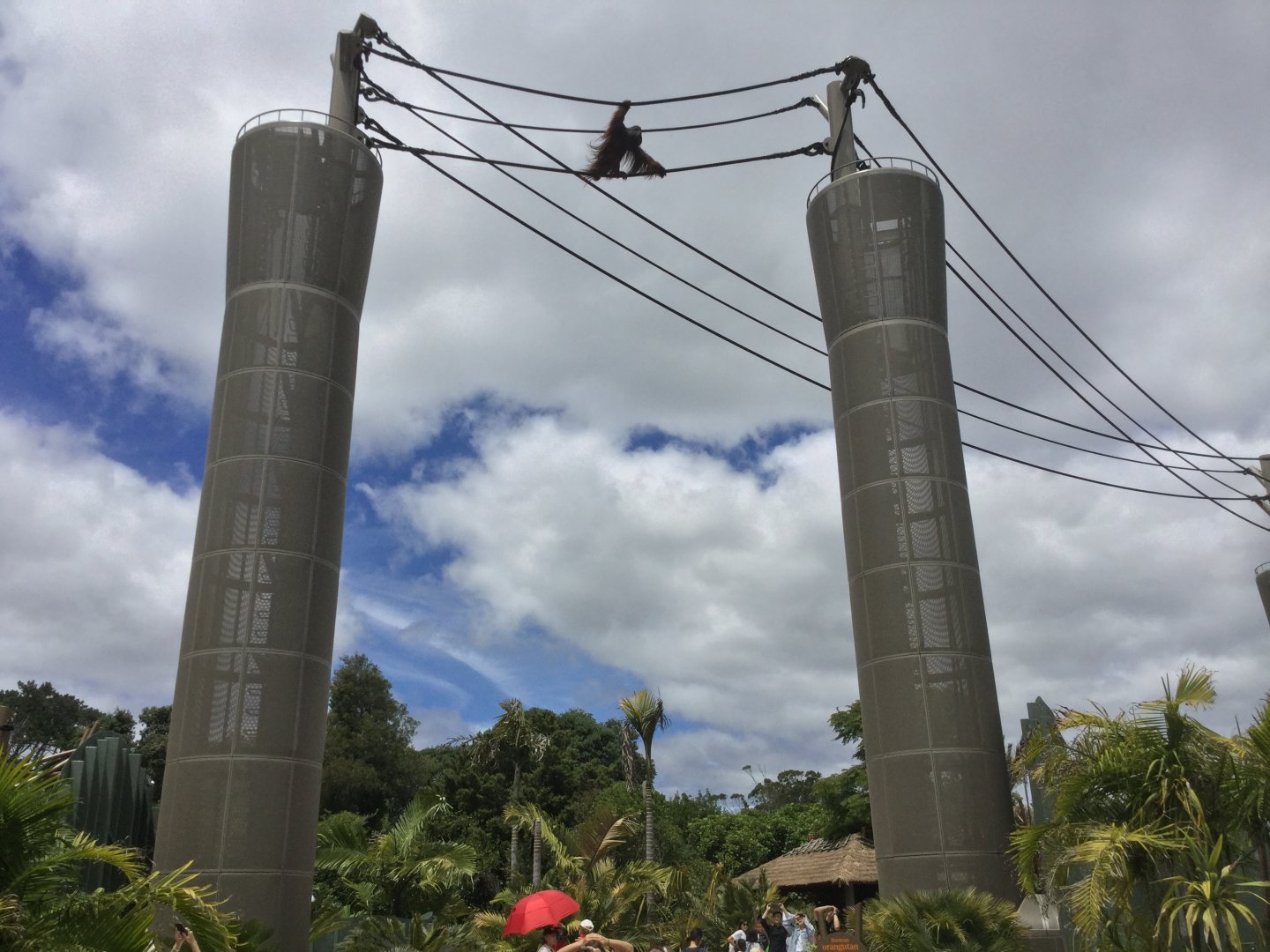
Auckland’s orangutan exhibit is world class with the highlight being the high ropes which extend across the lake. The European exhibits are comparatively dull, with room for improvement.

 
This is probably a daft question but is there a reason natural tall trees / replicated canopies aren’t grown and used in these sort of enclosures? Strength of branches not being enough or they eat and so destroy them? Long time to grow?
Not daft at all. That is really the whole issue. When an exhibit is built (carefully) around large existing trees (as was the Philadelphia Zoo yard) the trees can accommodate orangs. But that requires such trees to be where you want them and also that the yard be big enough to allow these trees to be preserved while doing whatever construction is required.
Moving trees that are sufficiently large is very costly and requires sustained care for years after. It fails as often as it succeeds. Planting good sized trees and protecting them from orangs (walling them off with hot wire) will require a decade or more to accomplish the goal of letting the apes into the trees.
 
The flaw is that Great Apes, particularly gorillas, like overhead cover, which for them represents the security of forest canopy. Open outdoor exhibits represent clearings in the forest that wild gorillas venture into for shorter periods e.g. for feeding or travel, but then retreat back into the forest. Most gorilla exhibits have a smaller indoor area they prefer to use, and a huge outside area they don't. I often think the relative sizes would be better reversed! For Orangutans too- the indoor areas represent security and cover and usually, far superior climbing opportunities compared to their outside areas as equipment can be hung from cage ceilings etc. Swinging on fire hoses, and even better, hanging plastic vines, is far more natural for them than clambering along solid wooden poles. So again, they often prefer to be 'inside'. Weather conditions, shade, wind, rain are all other considerations too.
The year after we opened the Congo Gorilla Forest at the Bronx Zoo I hired an intern to observe the apes throughout the day, noting where each was situated in the exhibit. It became apparent then that on overcast days the apes might be anywhere, but on sunny clear sky days they would be found in places where something ws above them. These findings were consistent.
 
I think they should these UK zoos should take inspiration from Auckland's new Orangutan complex when considering a future enclosure:

wanita-on-jungle-track-gallery.jpg

Unfortunately some of these exhibits are unlikely to see any changes in the near future. Dudley's is brand new! Twycross is one place where a really poor 40+ year old exhibit is due for replacement soon- we hope...
 
Last edited by a moderator:
Certainly the Jersey Orangs have indoor access. However, I’ve seen them use Gunnera leaves as umbrellas/sunshades
I wonder if Jersey give their apes only natural substances to play with, use as sunshades etc and buck the popular.trend of giving apes blankets and sheets.
 
on overcast days the apes might be anywhere, but on sunny clear sky days they would be found in places where something ws above them. These findings were consistent.

Gorillas are especially vulnerable to sun. In several zoos I saw gorillas sitting flattened against the wall on a tiny patch of exhibit which was in shade.

A number of gorillas in zoos developed eye cataracts. It is possible that eyes of great apes are adapted to lower light conditions and skin of apes to less sun than humans. Actually, I read somewhere it is reverse: eyes of humans shrank slightly in modern times, possibly because of use of artificial light.

Gut of great apes are adapted to foods much lower calories than human guts, so light tolerance can be different too.

Unfortunately some of these exhibits are unlikely to see any changes in the near future. Dudley's is brand new! Twycross is one place where a really poor 40+ year old exhibit is due for replacement soon- we hope...

For me it makes little sense to invest big sums in a naturalistic part of an exhibit, for example a water moat, and then kill the effect by putting a pile of old telephone poles and mowing grass.

Rebuilding an existing exhibit may be too expensive, but minor things could change much. For example:
- plant bushes, fast growing bamboo or giant bamboo.
- put tarpaulin or wooden palettes as sun shades and visual screens,
- add several thickness of poles and real branches. It looks like every zoo in Britain purchased one kind of poles and ropes, and every zoo different ones.
- Wild orangutans are often cautious about climbing trees, especially smooth trunks after rain. Putting poles at slight angle, not perfectly vertical, and cutting grooves or wrapping ropes or these old firehoses around could make them more similar to the bumpy trunks of real trees.

Moving trees that are sufficiently large is very costly and requires sustained care for years after.

European zoos could experiment with local fast growing pioneer trees which regenerate easily after damage: willows, poplars and alders. Also thorny honey locust and inedible Pterocarya were used in primate exhibits. Currently most zoos grow tree species vulnerable to damage, like beech or oaks.
 
Last edited:
European zoos could experiment with local fast growing pioneer trees which regenerate easily after damage: willows, poplars and alders. Also thorny honey locust and inedible Pterocarya were used in primate exhibits. Currently most zoos grow tree species vulnerable to damage, like beech or oaks.

I believe the grove of large trees on Paignton's larger island were mature Willow or Poplar- something of that type, but even then the Orangutans completely denuded them over time, first the dense foliage went, then later the dead and dying branches which were lopped off for safety. The tall stumps may still be standing but I'm not sure- Gigit would know.

Paignton's smaller island initially contained several tall mature Alder trees, but again they were damaged and gradually reduced in size- now they've sadly gone entirely and been replaced by a simple and small climbing frame(see above photo). I do think even if not providing real climbing opportunity, that fast-growing Willow/Poplar/Bamboos/fast growing bushes etc produce a good understorey effect and help naturalise a habitat better, as in the Jersey or Chester(Bornean) enclosures.
 
European zoos could experiment with local fast growing pioneer trees which regenerate easily after damage: willows, poplars and alders. Also thorny honey locust and inedible Pterocarya were used in primate exhibits. Currently most zoos grow tree species vulnerable to damage, like beech or oaks.
I see no success in such a plan. Fast growing species are almost always brittle, asily damaged. No tree could outgrow what an orangutan can do to it.
 
I wonder if Jersey give their apes only natural substances to play with, use as sunshades etc and buck the popular.trend of giving apes blankets and sheets.
They had sacking the last time I was there - more aesthetically pleasing than assorted sheets probably, but orangs do love sheets!
 
I believe the grove of large trees on Paignton's larger island were mature Willow or Poplar- something of that type, but even then the Orangutans completely denuded them over time, first the dense foliage went, then later the dead and dying branches which were lopped off for safety. The tall stumps may still be standing but I'm not sure- Gigit would know..

I'll forensically examine the islands this week and report back! I think it was Nakal, one of PZ's first intake of orangs, who started the destruction by stripping bark from the willows on the small island, which was his territory. The first females were fairly inactive (Chinta being one of them). But Demo and Mali's arrival in 2007 signalled the fate of most of the trees.
 
  • Like
Reactions: TNT
Auckland's man-made climbing structures and high ropes are reminiscent of Dublin's fairly new fake trees. They offer climbing, feeding and access to two areas of the zoo above the pedestrian walkway and seem to be very successful. A big investment though, I imagine.
 
I'll forensically examine the islands this week and report back! I think it was Nakal, one of PZ's first intake of orangs, who started the destruction by stripping bark from the willows on the small island, which was his territory. The first females were fairly inactive (Chinta being one of them). But Demo and Mali's arrival in 2007 signalled the fate of most of the trees.

Nakal was the only one of the original ex London group- of which he was by far the youngest- whom I ever saw venturing as far as the 'grove' end of the big island, and even then I didn't see him climb at all. Bulu and Senja I never saw more than a short distance from the doorways, Senja in particular was very inactive. The trees remained virtually untouched for a number of years until Demo & Mali arrived.
 
My list:

1. Chester (Bornean) A great enclosure which isn’t perfect but plenty of branciation opportunities and plenty of height plus lots of vegetation.

2. Chester (Sumatran) This enclosure has slightly less climbing opportunities and foliage than ROTRA but is still a great exhibit with just as much height.

3. Jersey This enclosure is very good considering it’s age and it still has lots of foliage, space and with there still being plenty of climbing opportunities.

4. Monkey world This enclosure probably has the most branciation opportunities out of all of these although also one of the least naturalistic, and there is no foliage.

5. Paignton this one is very nice with it having possibly the most foliage and enough climbing opportunities.

6. Dudley This one is the newest one here with their old exhibit (which is still used) would comfortably be in last place. They have a pretty good amount of climbing opportunities and although there is hardly any foliage in the enclosure at the moment, there may be more planted in the future.

7. Wingham: Very much a Wingham-style enclosure with it being a pretty ugly enclosure with no foliage as with all wingham enclosures but a decent amount of climbing opportunities and a cool overhead tunnel.

8. Colchester: This enclosure is basically a pit, being very unattractive with a strange water feature and very few branciation opportunities and also basically no plants with it plus it’s slightly on the small side.

9. Blackpool: This enclosure has more climbing opportunities than Colchester and is slightly more attractive but is smaller with mown grass and extremely ugly concrete tunnels (although I’m sure the orangs don’t care too much as they do provide shelter.)

10. Twycross: An average Twycross ape enclosure with a typical climbing frame, no attempt at being naturalistic as with all Twycross enclosures, Mowed grass and it’s quite small but they’re soon getting a new enclosure so watch this space.
 
The easiest to rank for me are the bottom 3. Until recently Dudley would comfortably been bottom and although I haven't seen the completed new enclosure I know it will be a massive improvement.

10 Blackpool - a much improved indoor accommodation is still let down by the outside.
9 Twycross - only very marginally better!

8 Colchester - not great that it is a pit, but considerably bigger than the other 2

7 Paignton - loss of the trees drops it from a position probably in the top 3.

6 Wingham - only seen it once, don't remember it as being anything special or anything really bad.

5 Dudley

4 Chester Bornean - never been much of a fan of this enclosure. Poor viewing from a visitor point of view. OK for the residents though.

3 Jersey - never been but looks good from photos I've seen.

1 & 2 Not sure whether it should be Chester Sumatran or Monkeyworld. I haven't been to MW for around 5 years.


Paignton - I took this photo this morning from the cul-de-sac between the gorillas and orangs. These are the last tree trunks standing on the large island. There are lots of leafy shrubs and, at the other end, large clumps of pampas grass. Plenty of natural foraging and cover, but climbing opportunities almost non-existent. I would still rate it higher than some other zoos because it is so natural and open. I suppose I should do a list!
 
Auckland's man-made climbing structures and high ropes are reminiscent of Dublin's fairly new fake trees. They offer climbing, feeding and access to two areas of the zoo above the pedestrian walkway and seem to be very successful. A big investment though, I imagine.

Not in the UK so I didn't mention it, but IMO this design is a lot more functional for climbing than the heavy-duty poles style. Those long straps hanging from the fake trees are indeed reminiscent of rainforest vines and when they get to the top the Orangs can actually do something, travelling along high above the ground. Though these 'O-lines', or whatever they are called, do look very dangerous- one slip....


Paignton - I took this photo this morning from the cul-de-sac between the gorillas and orangs. These are the last tree trunks standing on the large island. There are lots of leafy shrubs and, at the other end, large clumps of pampas grass. Plenty of natural foraging and cover, but climbing opportunities almost non-existent. I would still rate it higher than some other zoos because it is so natural and open. I suppose I should do a list!

The stumps of those previously tall trees are even smaller than I remember from last time I saw them, it looks like they've been reduced to virtually nothing now. This is what Orangs (and then the tree surgeon) do to vegetation.... The understorey is natural -looking but of course provides no height for climbing. Still much more interesting than some of the other enclosures though.
 
My list:

1. Jersey - the orangs use it well and, to me, Jersey exudes an aura of excellence.
2. Chester Bornean - I think the orangs appreciate it.
3. Chester Sumatran - ditto
4. Dudley - I haven't visited it but they get extra points for transforming the lives of their orangs.
5. Paignton - no climbing as we've said, but a place where they can forage, hide, interact with nature, and see what's going on around them which I think must be enriching.
6. Monkeyworld - although I'm not sure the industrial enclosures get a lot of use beyond feeding times.
7 and 8. Wingham or Twycross - can't decide. I haven't visited Wingham but it doesn't look very exciting from the photos. Twycross is still Twycross.
9. Blackpool - I hate that moat. It looks ugly, is a waste of space and caused the death of Beau.
10. Colchester - a prison exercise yard in a pit with little if any stimulation, especially for two of the orangs now there (Mali & Tatty who used to be at Paignton). It was probably fine for dear old Rajang after his previous enclosure and also for Tiga from Twycross, but ...
 
My list:

1. Jersey - the orangs use it well and, to me, Jersey exudes an aura of excellence.
2. Chester Bornean - I think the orangs appreciate it.
3. Chester Sumatran - ditto
4. Dudley - I haven't visited it but they get extra points for transforming the lives of their orangs.
5. Paignton - no climbing as we've said, but a place where they can forage, hide, interact with nature, and see what's going on around them which I think must be enriching.
6. Monkeyworld - although I'm not sure the industrial enclosures get a lot of use beyond feeding times.
7 and 8. Wingham or Twycross - can't decide. I haven't visited Wingham but it doesn't look very exciting from the photos. Twycross is still Twycross.
9. Blackpool - I hate that moat. It looks ugly, is a waste of space and caused the death of Beau.
10. Colchester - a prison exercise yard in a pit with little if any stimulation, especially for two of the orangs now there (Mali & Tatty who used to be at Paignton). It was probably fine for dear old Rajang after his previous enclosure and also for Tiga from Twycross, but ...
At least Colchester have a decent indoors but it’s a disgrace that the enclosure was only built in 2009!
 
Though these 'O-lines', or whatever they are called, do look very dangerous- one slip....

They're Orangutans; they don't slip.;):D I'm sure if the zoo felt there was a chance one could, they wouldn't create structures like those.
 
Back
Top