Taronga Zoo Recent history of Taronga and developments etc

Yeah was mainly thinking was the crab-eating macaques but then thought perhaps the female and baby De Brazzas perhaps (but thought moreso the macaques; for some reason they kind of made me think of Cercopithecini genus monkeys when looking at them a bit too in the footage). Thought was good footage, and a few rarities too for a long time like the elephant seals and the black bears.

Taronga must have started keeping emperor tamarins sometime in 1992 given they werent on the list from that 1991 primate TAG report WhistlingKite found (same report had left out that Perth had golden-lion tamarins also, except Perth's representative Dr Markham wasnt at the meeting that year so Perth's primate species inventory was based on what the rest of the TAG team knew them to have believe, but side-tracking with mentioning that).
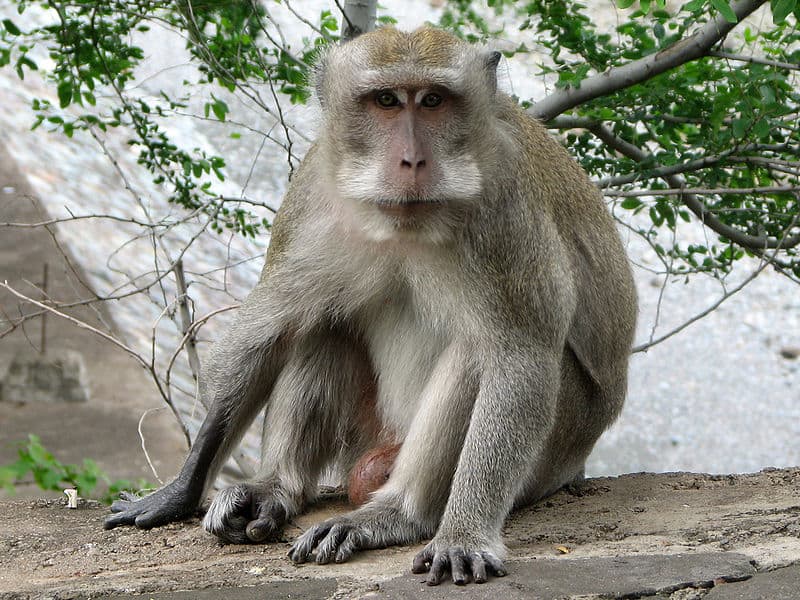
I too thought perhaps the De Brazzas and Crab Eating Macaques were mixed together based on the footage, but then found a photo which demonstrates some Crab Eating Macaques also grow white beards.

crab-eating_macaque3.jpg
 
So happy (after trying to track this documentary down again for us on here for nearly 9 years, lost vhs recording of used to have) that a legend out there (thanks ''Didz'')
uploaded this documentary from May 1994 about Tarongas (hybrid) 6 orangutans' Judy, Wendy, Archie, Wanita, Willow & Jantan's move from their old tiny outdated pen enclosures in the old ape house to the 'Orangutan Rainforest' exhibit in early 1994:

The short segments at Melbourne Zoo are grear too, aswell as some of the side stories liked the mixed Amazonian species in one of the aviaries, and the primate island one with Mary the Muller's gibbon and the squirrel monkeys (and other brief footage like briefly of Burma & Ranee, three of the giraffes, one of the seals, and snow leopard and others).

Had forgotten about how they had tested out Archie's strength with a dead tree in his old enclosure; and how he just worked at it with his strength until he snapped it.

*Willow's avoidance from her keepers for sedation for the move over after seeing how Jantan was sedated and moved is not surprising given their incredible intelligence. Just realised that for that moving back from the keepers at the bars p.o.v shot was of course a re-enactment of how she responded to; thought it was kinda funny that it meant the direct asked her keepers and vets if they could huddle together again at the bars so could the cameraman could mimic how she backed away from them.

**Really impressed how Archie's keepers with their expertees and knowing him best, were able to distract Archie - so that in the few minutes for the dart anesthetic to take effect he didnt climb up too high, and have a dagerous fall from a height when knocked out, was really impressive; just seeing glimpses of how keepers manage situations like that, and keeping the animals in their care safe when there are barriers that make it harder to do.

*The squirrel monkeys on island short term experiment as you can see was where the cotton-top tamarins live now and was Mary the gibbon's home for decades. It's funny because referring to it ''..'squirrel monkey' island becomes 'gibbon island''' techically became Mary's island again, but as a kid thought it meant it only became hers then until joining zoochat and learning tonnes of history recent and old about TZ. (Say this with humour rather than 'nitpicking' but notice in the panoramic shot of the island exhibit when narrator Darren is about to talk about the problem with the squirrel monkeys being the residents of the island it's actually Mary swinging about in that footage before it cuts back to previous filmed footage of the squirrel monkeys).

Watching the doco, it is really interesting how the new exhibit is linked with the development of Sydney as a modern city. At the time, the Orangutan Rainforest was the most expensive development Taronga Zoo had ever undertaken (obviously inflation plays a role in that and how the $3 million has now been dwarfed, Chimpanzee Park aged much better).
 
Watching the doco, it is really interesting how the new exhibit is linked with the development of Sydney as a modern city. At the time, the Orangutan Rainforest was the most expensive development Taronga Zoo had ever undertaken (obviously inflation plays a role in that and how the $3 million has now been dwarfed, Chimpanzee Park aged much better).

I recall hearing Chimpanzee Park quoted at $1 million when it opened in 1980 and was at the time the zoo’s most costly exhibit to date.

In essence it’s a simplistic exhibit, a large grassed paddock with climbing structures and rocks; but the space compensates for what it lacks in complexity and enables a large community of chimpanzees to inhabit it - which ultimately is the greatest enrichment for the individuals within said troop.

The renovations in 2011 cost $7 million by comparison.
 
So happy (after trying to track this documentary down again for us on here for nearly 9 years, lost vhs recording of used to have) that a legend out there (thanks ''Didz'')
uploaded this documentary from May 1994 about Tarongas (hybrid) 6 orangutans' Judy, Wendy, Archie, Wanita, Willow & Jantan's move from their old tiny outdated pen enclosures in the old ape house to the 'Orangutan Rainforest' exhibit in early 1994:

The short segments at Melbourne Zoo are grear too, aswell as some of the side stories liked the mixed Amazonian species in one of the aviaries, and the primate island one with Mary the Muller's gibbon and the squirrel monkeys (and other brief footage like briefly of Burma & Ranee, three of the giraffes, one of the seals, and snow leopard and others).

Had forgotten about how they had tested out Archie's strength with a dead tree in his old enclosure; and how he just worked at it with his strength until he snapped it.

*Willow's avoidance from her keepers for sedation for the move over after seeing how Jantan was sedated and moved is not surprising given their incredible intelligence. Just realised that for that moving back from the keepers at the bars p.o.v shot was of course a re-enactment of how she responded to; thought it was kinda funny that it meant the direct asked her keepers and vets if they could huddle together again at the bars so could the cameraman could mimic how she backed away from them.

**Really impressed how Archie's keepers with their expertees and knowing him best, were able to distract Archie - so that in the few minutes for the dart anesthetic to take effect he didnt climb up too high, and have a dagerous fall from a height when knocked out, was really impressive; just seeing glimpses of how keepers manage situations like that, and keeping the animals in their care safe when there are barriers that make it harder to do.

*The squirrel monkeys on island short term experiment as you can see was where the cotton-top tamarins live now and was Mary the gibbon's home for decades. It's funny because referring to it ''..'squirrel monkey' island becomes 'gibbon island''' techically became Mary's island again, but as a kid thought it meant it only became hers then until joining zoochat and learning tonnes of history recent and old about TZ. (Say this with humour rather than 'nitpicking' but notice in the panoramic shot of the island exhibit when narrator Darren is about to talk about the problem with the squirrel monkeys being the residents of the island it's actually Mary swinging about in that footage before it cuts back to previous filmed footage of the squirrel monkeys).

I wonder whether the Crab-eating macaques who briefly lived in the Orangutan Rainforest were the ones who ended up at Mogo. I know Mogo received macaques as one of their first exotic species - I know Mogo opened in 1989 but not sure if they didn't receive exotics until later. Either way, I'm pretty sure they were from Taronga.
 
I wonder whether the Crab-eating macaques who briefly lived in the Orangutan Rainforest were the ones who ended up at Mogo. I know Mogo received macaques as one of their first exotic species - I know Mogo opened in 1989 but not sure if they didn't receive exotics until later. Either way, I'm pretty sure they were from Taronga.

That sounds likely. Taronga has transferred several species to Mogo over the years including their retired/non-breeding pair of Snow leopard; the retirement troop of Western lowland gorilla; and their hybrid orangutans. In return, Taronga received lion cubs and a male Snow leopard to pair with their female.

Mogo were receiving exotics by at least 1995, when they received a Siberian tiger from Adelaide, who wanted to phase the species out in favour of Sumatrans.

@tetrapod gave the following account of Taronga’s macaque phase out:

Taronga's success with mixing macaques and orangs was a bit 'artificial'; the macaques were a castrated/non-breeding group and it only worked with certain orangs. Ultimately it was the concerns of Herpes A that did the macaques in, as the management were concerned about transmission to the orangs.
 
I wonder whether the Crab-eating macaques who briefly lived in the Orangutan Rainforest were the ones who ended up at Mogo. I know Mogo received macaques as one of their first exotic species - I know Mogo opened in 1989 but not sure if they didn't receive exotics until later. Either way, I'm pretty sure they were from Taronga.

That sounds likely. Taronga has transferred several species to Mogo over the years including their retired/non-breeding pair of Snow leopard; the retirement troop of Western lowland gorilla; and their hybrid orangutans. In return, Taronga received lion cubs and a male Snow leopard to pair with their female.

Mogo were receiving exotics by at least 1995, when they received a Siberian tiger from Adelaide, who wanted to phase the species out in favour of Sumatrans.

@tetrapod gave the following account of Taronga’s macaque phase out:

Taronga's success with mixing macaques and orangs was a bit 'artificial'; the macaques were a castrated/non-breeding group and it only worked with certain orangs. Ultimately it was the concerns of Herpes A that did the macaques in, as the management were concerned about transmission to the orangs.

Yeah I agree with you guys that some of the zoo's other crab-eating macaques (apparently they had like 20 to 25 individuals in early '90s) were close to certainly the ones the Padeys had at Mogo in the early '90s, believe they kept them as early as 1991. Taronga's gave their pumas to the Padeys around that time actually also.

Unfortunately the macaques who had co-habitated with the orangutans in the rainforest exhibit were all euthanised (10 individuals) in 1999 because after testing them all for the herpes b virus, think two were revealed to show possible traces of it, but the necropsies revealed that it was just the antibodies from the immune system against the virus, was a real shame it happened that way, but the fear of the group being carriers of the virus must have become an extreme safety concern at the time.

@tetrapod mentioned some info about the macaques and orangutans interactions also

Pretty sure the original design of the orang exhibit was to include long tail macaques as a mixed species display, and this did last for a number of years throughout the 90s. At first glance when I saw the combined exhibit (1998), I felt it was a really interesting and novel idea. The activity of the smaller primates were off-set by the more impressive but less active apes. There was nice interaction between individuals of both species. TZ also managed to get around the vegetation-destruction problem by hot-wiring the beds around the perimeter walls (not perfect, but not bare walls either). However I think the biggest downfall with the original design was not creating a series of interconnected exhibits to manage the orangs as units, rather then as one family group. Maybe space/money was the issue. Probably also a lack of commitment to making an exhibit best for the species, over something nice for the public. Over time there were some management issues (lack of forward thinking regarding macaque behaviour?) - macaque aggression both towards orangs (individuals sitting in front of the slides preventing orangs comin in!) and also within the macaque group (eventually TZ stopped keeping a dominant male in the exhibit), and then eventually the possible Herpes disease transmission issue. Sadly and probably inevitably on my return visit (2001) the macaques were gone.
 
Last edited:
Black-and-white footage of native Australian animals Taronga Zoo 1930s (4:23-6:34) Youtube.

The narration is very of that era (and referring to black swans as only found natively in Western Australia - common misconception because of their important symbolism in WA; and dingos as ''possibly the oldest of Australian animals'' are '...say what?' comments of the narrator). Some good b+w footage though, especially the platypus (albeit examination footage, not swimming or emerging from burrow). Does show a brief glimpse of the flamingos too (and peacocks), and the fur seals are among the native animals shown.
 
Last edited:
What is Taronga's plan- just to keep a bachelor group, or no gorillas?

After they transfer out the females, they’ll keep a bachelor troop for the foreseeable. I’m not aware of plans to phase out gorillas entirely; and there’s currently limited options within the region of where they could go. The exhibit is a sufficient size for four males.

From the sounds of it, they'll be sticking with their bachelor males for the foreseeable.

From memory of the size of the enclosure I'd say four would be enough.

Considering three of the males are still younger it should be fine at least in the meantime. It's a reasonable size, and perhaps do-able if they allow the males to both outdoor habitats. But it would still be quite tight for four adult males in the future. Moving one of the males into a breeding troop eventually (likely Fabumi) might be the best option.

It's a really smart decision with the female gorillas going to Melbourne to form a new family, and the four bachelor males remaining at Taronga hey. Space wise it works best very much so. The main exhibit's land area is about 650m2, the indoor areas about 280m2, and the second outdoor habitat is about the same area size as the indoor area. So definitely better in the present and next few years for 4 or 3 bachelor males. Good suggestion about Fatumi being a good candidate for being able to form his own family troop in near future.
 
It's a really smart decision with the female gorillas going to Melbourne to form a new family, and the four bachelor males remaining at Taronga hey. Space wise it works best very much so. The main exhibit's land area is about 650m2, the indoor areas about 280m2, and the second outdoor habitat is about the same area size as the indoor area. So definitely better in the present and next few years for 4 or 3 bachelor males. Good suggestion about Fatumi being a good candidate for being able to form his own family troop in near future.

Fabumi would be a good candidate genetically to lead a bachelor troop as Frala’s offspring have provided poor succession of her lineage to date:

1.0 Kukuma (1989) - Castrated/deceased
0.1 Shinda (1991) - one offspring (castrated)
0.1 Anguka (1994) - one offspring
1.0 Unnamed (1998) - deceased
0.1 Unnamed (1999) - deceased
1.0 Fataki (2003) - bachelor troop
1.0 Fuzu (2007) - bachelor troop
1.0 Fabumi (2015) - going into bachelor troop
0.1 Fikiri (2019) - deceased
 
Not to throw a spanner in the works ; but back when I was studying at the zoo , an associate did say that Phase one was the elephant phase out and that the gorillas were considered for the follow-up phase out .

Not much was said ; however it was mentioned that the exhibit is no longer adequate and that the gorillas aren’t overly active / engaging and much prefer to retreat into their night dens and out of the public eye .

Such a shame . I understand the need to no longer exhibit elephants ; but to phase out the orangutans and potential gorillas is a massive turn off . We have Fk all exotic species at Taronga and it looks as though that they are phasing out too many exotic species .

Wish our collections were as diverse as the 1950’s-80’s .

We no longer have dholes , New Guinea singing dogs , snow leopards , Grizzly bears , Barbary sheep , Himalayan Tahrs , deers , common hippos , rhinos , leopards n cheetahs just to name a few .

Should they wish to phase out the gorillas , least they can do is replace them with smaller primates ; preferably mandrills .

They are smaller , yet are more colourful and much more engaging .
 
Not to throw a spanner in the works ; but back when I was studying at the zoo , an associate did say that Phase one was the elephant phase out and that the gorillas were considered for the follow-up phase out .

Not much was said ; however it was mentioned that the exhibit is no longer adequate and that the gorillas aren’t overly active / engaging and much prefer to retreat into their night dens and out of the public eye .

Such a shame . I understand the need to no longer exhibit elephants ; but to phase out the orangutans and potential gorillas is a massive turn off . We have Fk all exotic species at Taronga and it looks as though that they are phasing out too many exotic species .

Wish our collections were as diverse as the 1950’s-80’s .

We no longer have dholes , New Guinea singing dogs , snow leopards , Grizzly bears , Barbary sheep , Himalayan Tahrs , deers , common hippos , rhinos , leopards n cheetahs just to name a few .

Should they wish to phase out the gorillas , least they can do is replace them with smaller primates ; preferably mandrills .

They are smaller , yet are more colourful and much more engaging .

I agree the current gorilla exhibit is inadequate (at least for a breeding troop); but the obvious solution is to invest in a new exhibit. They’re an immensely popular species and a new complex that facilitates breeding would be an asset to the zoo.

Considering the zoo are transferring out the females and there’s little hope of acquiring any more from Europe any time soon, we can assume the Congo precinct will remain shelved or even scrapped as has been reported. It’s a major blow to the zoo’s development in my opinion.

I would hate to see gorillas phased out altogether; but it honestly wouldn’t surprise me long term. It would make an excellent Mandrill exhibit (potentially accomodating 8-10 Mandrill); but regional support for this species is lacking, so sadly I doubt even that would happen. Perhaps it could be redeveloped for a Pygmy hippopotamus/Black and white colobus exhibit.
 
Not to throw a spanner in the works ; but back when I was studying at the zoo , an associate did say that Phase one was the elephant phase out and that the gorillas were considered for the follow-up phase out .

Not much was said ; however it was mentioned that the exhibit is no longer adequate and that the gorillas aren’t overly active / engaging and much prefer to retreat into their night dens and out of the public eye .

Such a shame . I understand the need to no longer exhibit elephants ; but to phase out the orangutans and potential gorillas is a massive turn off . We have Fk all exotic species at Taronga and it looks as though that they are phasing out too many exotic species .

Wish our collections were as diverse as the 1950’s-80’s .

We no longer have dholes , New Guinea singing dogs , snow leopards , Grizzly bears , Barbary sheep , Himalayan Tahrs , deers , common hippos , rhinos , leopards n cheetahs just to name a few .

Should they wish to phase out the gorillas , least they can do is replace them with smaller primates ; preferably mandrills .

They are smaller , yet are more colourful and much more engaging .
It was mentioned on here last year or so, so I wouldn't be surprised if consideration was given to phasing out the gorillas in the long term.

It's no surprise the gorillas tend to want to avoid the public eye. The current exhibit size and design doesn't do much, for giving them opportunities to move out of public view on exhibit. It's size and general layout (being more width centric than length), also would play a part in their overall willingness to be active as a result. This could all easily be fixed with the implementation of a completely new exhibit - which was in discussion prior to covid.

Common Hippos and Cheetahs aren't huge losses, as they're also kept at Dubbo. Taronga will also be acquiring an Indian Rhino male from Dubbo, so rhinos will be returning to Taronga. It would be good to see a species of Leopard at Taronga - Sri Lankan would be perfect.
 
I agree the current gorilla exhibit is inadequate (at least for a breeding troop); but the obvious solution is to invest in a new exhibit. They’re an immensely popular species and a new complex that facilitates breeding would be an asset to the zoo.

Considering the zoo are transferring out the females and there’s little hope of acquiring any more from Europe any time soon, we can assume the Congo precinct will remain shelved or even scrapped as has been reported. It’s a major blow to the zoo’s development in my opinion.

I would hate to see gorillas phased out altogether; but it honestly wouldn’t surprise me long term. It would make an excellent Mandrill exhibit (potentially accomodating 8-10 Mandrill); but regional support for this species is lacking, so sadly I doubt even that would happen. Perhaps it could be redeveloped for a Pygmy hippopotamus/Black and white colobus exhibit.


100 % wouldn’t be surprised if Taronga becomes a zoo with only bush turkeys and free - ranging eastern Water dragons
 
It was mentioned on here last year or so, so I wouldn't be surprised if consideration was given to phasing out the gorillas in the long term.

It's no surprise the gorillas tend to want to avoid the public eye. The current exhibit size and design doesn't do much, for giving them opportunities to move out of public view on exhibit. It's size and general layout (being more width centric than length), also would play a part in their overall willingness to be active as a result. This could all easily be fixed with the implementation of a completely new exhibit - which was in discussion prior to covid.

Common Hippos and Cheetahs aren't huge losses, as they're also kept at Dubbo. Taronga will also be acquiring an Indian Rhino male from Dubbo, so rhinos will be returning to Taronga. It would be good to see a species of Leopard at Taronga - Sri Lankan would be perfect.


Not sure if many people would be keen to head alllll the way to our sister zoo to see Hippo or cheetah .

Atleast the rhino could “fit” into that large wow factor now that the elephants are gone . And the Sri Lankan leopards would be a perfect candidate for an extra big cat . They have a “ similar” pattern to a cheetah and presumed they wouldn’t need a large space to sprint .

Also being a tree climbing species ; it would ad another element of aw . The leopard at Mogo was nothing short of majestic .. irrespective of the exhibit .
 
Not sure if many people would be keen to head alllll the way to our sister zoo to see Hippo or cheetah .

Atleast the rhino could “fit” into that large wow factor now that the elephants are gone . And the Sri Lankan leopards would be a perfect candidate for an extra big cat . They have a “ similar” pattern to a cheetah and presumed they wouldn’t need a large space to sprint .

Also being a tree climbing species ; it would ad another element of aw . The leopard at Mogo was nothing short of majestic .. irrespective of the exhibit .

Yes, it’s unfortunate for Taronga that Dubbo is 5.5 hours away (in contrast to Melbourne and Adelaide, who both have open range sister zoos within an hour’s drive). It’s surely contributed to Dubbo having more double ups to Taronga (e.g. tigers, otters etc); and now Indian rhinoceros.

A number of people on here are of the opinion that Taronga’s phase outs (especially when replaced by visitor amenities) have gone too far; and a phase out of Western lowland gorilla would surely be the most nonsensical to date. They don’t require a huge amount of space (compared to elephants) and the Congo precinct would have proved a major drawcard for the zoo.

While Taronga would still be regarded by many to be the region’s premier zoo; Sydney Zoo’s relative plethora of exotic megafauna provides steady competition.
 
With Sydney (Blacktown) Zoo actually being a smaller site than Taronga at only about 8 or 9 hectares (there is a roughly 4,400 sq m space behind the African ungulates habitiats which includes a 1,500m2 dam/reservoir, imagine may have been intended for river hippos', would require a new arm of the raised walkway though for visitors to be able to see that area; built over what is the dividing area between Tino the rhino + the male nyala and the giraffes, zebras and female nyalas, + ostriches).

If was ever put into use, small for hippos, though its about the same scale as the other exotic megafauna mammal's exhibits based on their size, probably could never have more than 3 hippos there, even just 2). So yeah the idea of a actual open range zoo in western Sydney (as we all know, a concept going way back many decades) will most probably never eventuate.

Often wondered if Hunter Valley Zoo/WP could have become an open range zoo that would be accessible for not only greater Newcastle/Hunter region and even Central Coasters, but also possible as daytrips for Sydneysiders (if was possible and not financially impossible to acquire/had acquired neighbouring acreages of land to expand the site of).

Of recent years, us Sydney lot are once again lucky with opportunities to see cheetahs at three different places: Sydney-Blacktown, Symbio, and Wild Cat Conservation Centre if one can book the private visit and has the car fuel (which also means getting to see clouded leopards, caracals and servals also). Except for a brief stay by some young cheetahs from Dubbo in 2001 it's been a long time since had cheetahs living near Sydney until the afformentioned three started keeping them. With river hippos and other large animals, it's tough without anything of an exceptionally large site zoo within an hour of Sydney (though Sydney-Blacktown may still try, will be hard to do and house them satisafactorally though).

Very true about leopards and other arboreal cats @Younesmark. Can't wait to see Chaturi at Mogo finally (and Phoenix at Zambi, he seems magnificent too). Personally long wanted Taronga to return to holding leopards again (Sri Lankan in this case) or clouded leopards, ever since the snow leopards were sent away. Think you guys are spot on about Taronga and Sri Lankan leopards.

edit: actually 2,000 sq m reservoir dam on the north-western corner of Sydney Zoo (there appears to be a rocky isthmus 'path' blocking the furthest 500m2 of it). Also some of that area has shallow water depth from the dam so its definitely much more a waterbody space than a land surface space looking at again.
 
Last edited:
With Sydney (Blacktown) Zoo actually being a smaller site than Taronga at only about 8 or 9 hectares (there is a roughly 4,400 sq m space behind the African ungulates habitiats which includes a 1,500m2 dam/reservoir, imagine may have been intended for river hippos', would require a new arm of the raised walkway though for visitors to be able to see that area; built over what is the dividing area between Tino the rhino + the male nyala and the giraffes, zebras and female nyalas).

If was ever put into use, small for hippos, though its about the same scale as the other exotic megafauna mammal's exhibits based on their size, probably could never have more than 3 hippos there, even just 2). So yeah the idea of a actual open range zoo in western Sydney (as we all know, a concept going way back many decades) will most probably never eventuate.

Often wondered if Hunter Valley Zoo/WP could have become an open range zoo that would be accessible for not only greater Newcastle/Hunter region and even Central Coasters, but also possible as daytrips for Sydneysiders (if was possible and not financially impossible to acquire/had acquired neighbouring acreages of land to expand the site of).

Of recent years, us Sydney lot are once again lucky with opportunities to see cheetahs at three different places: Sydney-Blacktown, Symbio, and Wild Cat Conservation Centre if one can book the private visit and has the car fuel (which also means getting to see clouded leopards, caracals and servals also). Except for a brief stay by some young cheetahs from Dubbo in 2001 it's been a long time since had cheetahs living near Sydney until the afformentioned three started keeping them. With river hippos and other large animals, it's tough without anything of an exceptionally large site zoo within an hour of Sydney (though Sydney-Blacktown may still try, will be hard to do and house them satisafactorally though).

It wouldn’t surprise me to see Sydney Zoo reconsider hippos. New holders would be of value now more than ever with Werribee hopefully proceeding with plans to import a couple of bulls. Even if both are retained, they’ll inevitably be a trickle down of calves to Monarto and Dubbo; and the region can only accomodate so many bulls before castration or cessation of breeding is needed to manage the growing population.

Dubbo hold four cows in two pods, so could easily accomodate a bull on site, with one of the mother/daughter trio identified for breeding and the bull housed with the other two while the mother tends to her neonate offspring.

Australia Zoo is another possibility for hippo. I’m not sure if we ever got a definitive answer on whether they intend to acquire Common or Pygmy hippopotamus. The latter is more space efficient, but the former could soon be in greater surplus.
 
I wish Australia zoo , Taronga and all the other state/ government zoos take on the initiative in importing and focusing their attention to the common river hippos while the smaller zoos manage the Pygmy species .

It will allow more of the smaller wildlife parks to become holders of the Pygmies while large zoos can have the funds and resources to manage the River hippos .

I can imagine Altina , DDZ , Mogo and national zoo becoming holders .
 
I wish Australia zoo , Taronga and all the other state/ government zoos take on the initiative in importing and focusing their attention to the common river hippos while the smaller zoos manage the Pygmy species .

It will allow more of the smaller wildlife parks to become holders of the Pygmies while large zoos can have the funds and resources to manage the River hippos .

I can imagine Altina , DDZ , Mogo and national zoo becoming holders .
The only situation where I can see further regional facilities acquiring Pygmy Hippos, is if sufficient surplus is generated regionally. At the moment, it isn't looking like this will be the case with the current population in mind.

Common Hippos would be a far better bet - some of the smaller, regional facilities could manage to get their hands on surplus bulls/cows if breeding takes off at Werribee, and consequently Monarto/Dubbo. But I would surprised to see them being specifically bred for that - it might end up being a case of one of the main facilities needs to offload a few individuals or so, rather than want.
 
I wish Australia zoo , Taronga and all the other state/ government zoos take on the initiative in importing and focusing their attention to the common river hippos while the smaller zoos manage the Pygmy species .

It will allow more of the smaller wildlife parks to become holders of the Pygmies while large zoos can have the funds and resources to manage the River hippos .

I can imagine Altina , DDZ , Mogo and national zoo becoming holders .


Yeah that seems like would be a really cool possibility for those zoos. Sounds like with the number of river hippos you guys see probably to be in Australia in the near years, that them being available for these other zoos will not be an issue. With them being privately owned and operated zoos, finances would be a tough slog even with great numbers of visitors; but if it turns out that they would be financially able to care for river hippos in addition to their other species already in their care, and they are keen on it, would be fantastic hey.

Mogo Zoo's site of about 27 hectares is at about 12 & a half hectares used for the current zoo site (but maiive paddocks, the ones can see from Tomakin Rd where the water buffalos live in some), and the boundaries of the furthest section which was built a bit later is the lake with the six large primate islands. There definitely is room for expand the place a lot, if ever was feasible for them to do so. (Know its Mogo Wildlife Park now, but always call it Mogo Zoo still).
 
Back
Top