Very likely yesI understand Sir Edward Hallstrom was very keen on concrete, with a view to avoiding parasite buildup in a more natural substrate
You are using an out of date browser. It may not display this or other websites correctly.
You should upgrade or use an alternative browser.
You should upgrade or use an alternative browser.
Taronga Zoo Recent history of Taronga and developments etc
- Thread starter hodgey
- Start date
-
- Tags
- taronga zoo

I understand Sir Edward Hallstrom was very keen on concrete, with a view to avoiding parasite buildup in a more natural substrate
I've heard the same, with concrete surfaces being easier to clean/sanitise. Concrete was used extensively across the big cat exhibits for the same reason.
The chimpanzee exhibit was by contrast an open exhibit with grassed terrain. The chimps were afflicted by parasite and bacterial infections (some of which were fatal) for a number of years until counter measures were taken.

Actually, pretty much the entire zoo was built of concrete in the early days, for the reason you stated. The first antibiotics weren't developed until the 1950s and even then, it was still easier (and cheaper) to clean and sterilise concrete.

Hix
Hix

@Zoofan15 @Hix Wow so with antibotics only being developed in the 1950s it explains a lot about how with Hallstrom taking on the directors role before that in the 1940s how the concrete ground/flooring for the exhibits built during his time were the chosen approach. Apparently the Big Cat House was the last exhibit developed during his time (sometime around 1965-1967) which explains the concrete floors there too. The Chimpanzee Park opening in 1980 was refreshing I can only imagine not only in size (over 1,500 square metres) but also in the grassed terrain like you mentioned, but is unfortunate too to hear about the bacterial and parasitic transmissions that inflicted the Chimpanzees in the early years as a side effect of having soil under their feet, in contrast it was intresting learning from Tetrapod about how the Orangutans at Perth Zoo had constant strongyloidiasis infections in their old concrete exhibit in the 1960s and 1970s but this was due to the cracks in the concrete giving the parasites a continued transmissable cycle route to the Orangs through the soil below even after a seemingly successful treatment round. Apparently the belief was that parasites came from Indonesia and Malaysia with the Orangs already infected and after they tried curing them with tablets the parasites still manged to harbour themselves from total eradication in the soil beneath the exhibit (a direct reason why many if not all the Orangutans babies born in the '70s were hand reared by keepers and other staff to try break the cycle). However the issue didn't seem to be completely cured until the current Orangutan exhibit site in its original form opened in 1981, and continuation of tablet medication of course. However later on when Mawas died in 1997 and she had an autopsy she was still found to small signs of parasites in her system which I wonder if some of the strongyloides managed to get into the soil in the new grassed exhibits too albeit on a much much smaller scale to not cause the whole community another infection?
Back with Taronga as should have stuck to, I wonder if Dr John Kelly had a role to play in helping break the cycle of infection with the Chimpanzee community as apparently his veterinary thesis was on parasitic infections and how the host animals experience the infections.
Back with Taronga as should have stuck to, I wonder if Dr John Kelly had a role to play in helping break the cycle of infection with the Chimpanzee community as apparently his veterinary thesis was on parasitic infections and how the host animals experience the infections.
Last edited:
Back with Taronga as should have stuck to, I wonder if Dr John Kelly had a role to play in helping break the cycle of infection with the Chimpanzee community as apparently his veterinary thesis was on parasitic infections and how the host animals experience the infections.
During Dr John Kelly’s directorship, the chimpanzees were affected by the Encephalomyocarditis virus (EMCV). It’s often spread by rodents, where food and water are contaminated by infected urine and faeces.
EMCV can result in sudden death as a result of acute myocarditus (inflammation of the heart) and it sadly led to the death of at least two chimps including Shiba’s then two year old son in 1992.
A research paper was published in 1997 on EMCV infection at Taronga Zoo and the zoo’s research department have since developed a vaccine to protect against EMCV. This is now given annually to the chimpanzees and no further deaths have since occurred.
My bad. I've provided you with some misinformation. I thought it was 1948 that Alexander Fleming discovered penicillin, hence my reference to the first antibiotics being developed in the '50s. However it was actually in 1928 penicillin was discovered, but not commercially available until the mid-'40s (I must have been thinking of Watson & Cricks discovery of DNA in 1948). The '40s and '50s are considered by some to be the golden era of antibiotic development. But my original statement still is correct - when the zoo was built in 1912-1916 it was mostly concrete; Hallstrom merely continued what was already common practice at Taronga. With the benefit that if you make the concrete look like rocks, it looks soooooooooooo natural!
steveroberts said:The Chimpanzee Park opening in 1980 was refreshing ...... but is unfortunate too to hear about the bacterial and parasitic transmissions that inflicted the Chimpanzees in the early years as a side effect of having soil under their feet
There's an analogy that parents often use - the kids that play outside in the mud and in the gutters have a better immune system than kids kept inside in a relatively sterile environment, because the immune system of the outside children is exposed to pathogens when they are young - they get sick at that age but their immune system can cope when they are exposed again at a later age.
So it's no wonder the chimps had problems when they were moved out of their concrete cubes that constituted the Great Ape House and put on the expansive lawns of chimpanzee park. However, those bacterial and parasitic infections could be more easily managed at that time than they could have in the decades before.
Hix
Not recent history but this podcast episode features some interesting anecdotes and insight into the Hallstrom period
Days Like These - True Stories: Monkey escape at Taronga Zoo! on Apple Podcasts
Days Like These - True Stories: Monkey escape at Taronga Zoo! on Apple Podcasts
I thought this document may be of interest to some: https://majorprojects.planningporta...nt?AttachRef=SSD-7419!20190227T112230.794 GMT
From 2001, it primarily outlines how future development at Taronga should take place in order to not impact views of the harbour, or the way the zoo is viewed from the harbour. Unfortunately there aren't details of what those developments might be, but some photos of the zoo at the time, which for me, was both nostalgic and great to see some parts of the zoo which I don't remember.
From 2001, it primarily outlines how future development at Taronga should take place in order to not impact views of the harbour, or the way the zoo is viewed from the harbour. Unfortunately there aren't details of what those developments might be, but some photos of the zoo at the time, which for me, was both nostalgic and great to see some parts of the zoo which I don't remember.
I thought this document may be of interest to some: https://majorprojects.planningportal.nsw.gov.au/prweb/PRRestService/mp/01/getContent?AttachRef=SSD-7419!20190227T112230.794 GMT
From 2001, it primarily outlines how future development at Taronga should take place in order to not impact views of the harbour, or the way the zoo is viewed from the harbour. Unfortunately there aren't details of what those developments might be, but some photos of the zoo at the time, which for me, was both nostalgic and great to see some parts of the zoo which I don't remember.
Thanks for finding that. It was interesting to see some of the old photos.
Parts of the zoo look dated by today’s standards but I’m a huge fan of historical and heritage listed architecture so am glad buildings like the elephant temple are retained.
They clearly place a strong emphasis on the harbour view (a unique selling point to visitors). The name “Taronga” is of course Aboriginal for “sea view.”

I thought this document may be of interest to some: https://majorprojects.planningportal.nsw.gov.au/prweb/PRRestService/mp/01/getContent?AttachRef=SSD-7419!20190227T112230.794 GMT
From 2001, it primarily outlines how future development at Taronga should take place in order to not impact views of the harbour, or the way the zoo is viewed from the harbour. Unfortunately there aren't details of what those developments might be, but some photos of the zoo at the time, which for me, was both nostalgic and great to see some parts of the zoo which I don't remember.
They've done this quite well within their newest precints (Africa and Tiger Trek) and I think it really benefits the experience (especially if your not a Sydney local).
I found it!
Here is the Zoo 2000 Masterplan: https://majorprojects.planningporta...nt?AttachRef=SSD-7419!20190227T112324.468 GMT
Many a thread back in the day on ZooChat involved those who had seen the document, describing it for others (it would have been a sensitive document when it was active, although now it's just very interesting). I'd never seen the maps before, though. Page 14 contains the most detailed map, outlining many of the species Taronga planned to hold in the exhibits.
When I showed it to my brother, his observation was how a fair bit of it did end up getting developed, and what was considered a new enough exhibit at the time to not get redeveloped, ie the gorilla exhibit. I was surprised by the lion exhibit's position; I think plans changed to have it up the other end (ie, where it is now) relatively soon after this.
I hope you enjoy this as much as I did!
Here is the Zoo 2000 Masterplan: https://majorprojects.planningporta...nt?AttachRef=SSD-7419!20190227T112324.468 GMT
Many a thread back in the day on ZooChat involved those who had seen the document, describing it for others (it would have been a sensitive document when it was active, although now it's just very interesting). I'd never seen the maps before, though. Page 14 contains the most detailed map, outlining many of the species Taronga planned to hold in the exhibits.
When I showed it to my brother, his observation was how a fair bit of it did end up getting developed, and what was considered a new enough exhibit at the time to not get redeveloped, ie the gorilla exhibit. I was surprised by the lion exhibit's position; I think plans changed to have it up the other end (ie, where it is now) relatively soon after this.
I hope you enjoy this as much as I did!
I found it!
Here is the Zoo 2000 Masterplan: https://majorprojects.planningportal.nsw.gov.au/prweb/PRRestService/mp/01/getContent?AttachRef=SSD-7419!20190227T112324.468 GMT
Many a thread back in the day on ZooChat involved those who had seen the document, describing it for others (it would have been a sensitive document when it was active, although now it's just very interesting). I'd never seen the maps before, though. Page 14 contains the most detailed map, outlining many of the species Taronga planned to hold in the exhibits.
When I showed it to my brother, his observation was how a fair bit of it did end up getting developed, and what was considered a new enough exhibit at the time to not get redeveloped, ie the gorilla exhibit. I was surprised by the lion exhibit's position; I think plans changed to have it up the other end (ie, where it is now) relatively soon after this.
I hope you enjoy this as much as I did!
Great find! It was interesting to see the plan to have the same biome represented across multiple continents:
African woodland, Australian woodland, Asian woodland
African rainforest, Australian rainforest, Asian rainforest, Papua New Guinea rainforest
The turn of the century represented the transition of exhibits arranged by biome to exhibits arranged by geography, so this catered to both and would have been designed to offer opportunities to compare and contrast.
I found it!
Here is the Zoo 2000 Masterplan: https://majorprojects.planningportal.nsw.gov.au/prweb/PRRestService/mp/01/getContent?AttachRef=SSD-7419!20190227T112324.468 GMT
Many a thread back in the day on ZooChat involved those who had seen the document, describing it for others (it would have been a sensitive document when it was active, although now it's just very interesting). I'd never seen the maps before, though. Page 14 contains the most detailed map, outlining many of the species Taronga planned to hold in the exhibits.
When I showed it to my brother, his observation was how a fair bit of it did end up getting developed, and what was considered a new enough exhibit at the time to not get redeveloped, ie the gorilla exhibit. I was surprised by the lion exhibit's position; I think plans changed to have it up the other end (ie, where it is now) relatively soon after this.
I hope you enjoy this as much as I did!
Awesome find.
The Wild Asia and GSO trails seem to be almost planned exactly the way they came out; with a few little exceptions.
There also seems to be a Northern Australian trail planned for behind the bull elephant enclosure; the largely forested area, aforementioned. As I suggested, that area is rather hilly, so wouldn't be suitable for anything besides smaller species, and it seems Taronga were thinking along the same lines. Interestingly, Camels were also apart of the Australian precinct just to the right of their current home, so it seems they've been apart of Taronga's plans for a while now.
The Carnivore area dosen't seem to have any plans for renovations which is interesting.
The Giraffe exhibit is also in virtually the same location, but is smaller now than what the masterplan shows. A stream running down into an African Lion would've been phenomenal. I also noticed a Kopje precinct which I assume would contain meerkats; but could also have held species such as Klipspringer, Rock Hyrax and Mongoose.
The Congo area seems to be stacked too; with Lemurs, Bongos, Duikers, Colobus, Mandrills, Gorillas and De Brazzas. It's a real shame it never panned out as planned. I also like the flowing 'river' that runs up from the chimps all the way down to the gorillas. Quite an ingenious idea; a real shame it never eventuated.
Awesome find.
The Wild Asia and GSO trails seem to be almost planned exactly the way they came out; with a few little exceptions.
There also seems to be a Northern Australian trail planned for behind the bull elephant enclosure; the largely forested area, aforementioned. As I suggested, that area is rather hilly, so wouldn't be suitable for anything besides smaller species, and it seems Taronga were thinking along the same lines. Interestingly, Camels were also apart of the Australian precinct just to the right of their current home, so it seems they've been apart of Taronga's plans for a while now.
The Carnivore area dosen't seem to have any plans for renovations which is interesting.
The Giraffe exhibit is also in virtually the same location, but is smaller now than what the masterplan shows. A stream running down into an African Lion would've been phenomenal. I also noticed a Kopje precinct which I assume would contain meerkats; but could also have held species such as Klipspringer, Rock Hyrax and Mongoose.
The Congo area seems to be stacked too; with Lemurs, Bongos, Duikers, Colobus, Mandrills, Gorillas and De Brazzas. It's a real shame it never panned out as planned. I also like the flowing 'river' that runs up from the chimps all the way down to the gorillas. Quite an ingenious idea; a real shame it never eventuated.
My interpretation of the lack of renovation for the carnivore area (at least in contrast to other parts of the zoo which were earmarked for complete redevelopment) was that many of the exhibits were less than ten years old at the time. The pygmy hippo and meerkat exhibits would have been demolished for create a new home for dhole, with a red panda exhibit added between the snow leopards and the tahr (not quite sure whether that would have fit, but perhaps into the area where there was a short-lived walkway build before the two areas were demolished).
Speaking of, were golden cats ever housed in the dhole exhibits (between fennec fox and pygmy hippo)? I feel like I have a memory of it from just before the dholes arrived, but that could be my childhood memory playing tricks on me.
A key change is that the path past the giraffes would have been absorbed into the exhibit space. I didn't realise that until subsequent times looking at the masterplan map.
Speaking of, were golden cats ever housed in the dhole exhibits (between fennec fox and pygmy hippo)? I feel like I have a memory of it from just before the dholes arrived, but that could be my childhood memory playing tricks on me.
The Dholes were imported in 2006. It’s possible prior to that, Valentin the Temminck’s golden cat was housed in their exhibit following his import, but since all breeding introductions were carried out between him and Mao in the Small Cats Building, I’d assume this was a very brief stay.
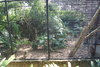
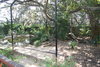
Here’s some photos of the Dhole exhibit by @Jabiru96, it was certainly suitable for an on display Temminck’s golden cat, though doesn’t offer the privacy needed for breeding - being on display and not as densely vegetated as this felid prefers:


Attachments
My interpretation of the lack of renovation for the carnivore area (at least in contrast to other parts of the zoo which were earmarked for complete redevelopment) was that many of the exhibits were less than ten years old at the time. The pygmy hippo and meerkat exhibits would have been demolished for create a new home for dhole, with a red panda exhibit added between the snow leopards and the tahr (not quite sure whether that would have fit, but perhaps into the area where there was a short-lived walkway build before the two areas were demolished).
Speaking of, were golden cats ever housed in the dhole exhibits (between fennec fox and pygmy hippo)? I feel like I have a memory of it from just before the dholes arrived, but that could be my childhood memory playing tricks on me.
A key change is that the path past the giraffes would have been absorbed into the exhibit space. I didn't realise that until subsequent times looking at the masterplan map.
That's true, although some of the big cat pits were rather old and were in need of replacements. The above row (of Fennec Foxes, Dholes, Snow Leopards ect.); was fairly new and most of the cages were built in the 90's I believe. Unfortunately come the 2010's, cages were out of fashion in zoos, and all of them were demolished for the Tiger trek.
That area (in my opinion) would've been better as a Himalayan area for Tahr, Snow Leopards and Red Pandas. Possibly even a species like Himalayan Monal too. The current Tiger trek takes up a lot of potential space, and the tigers could've been incorporated into the Wild Asia trail. Sending the elephants to Dubbo initially would have given them space for this.
That's true, although some of the big cat pits were rather old and were in need of replacements. The above row (of Fennec Foxes, Dholes, Snow Leopards ect.); was fairly new and most of the cages were built in the 90's I believe.
Those canine enclosures are actually much older than that, probably the 1950's as the back walls were all concrete in the mock rock fashion that characterised that era. They were certainly old enclosures when I first started visiting the zoo in the mid-70's. At that time they housed dingos, African Hunting Dogs and New Guinea Wild Dogs. They were all open-topped, and the substrate was just dirt (which looked crappy), except for the last enclosure (the western-most one) which had long lush grass. The wild dogs were in that exhibit, and they periodically got moved into one of the neighbouring enclosures for temporary exhibits like Maned Wolf and Cheetah prior to them moving up to Dubbo. Dholes arrived in the early eighties and flamingos were housed there at one time too.
The wooden cat enclosures opposite were built in the late 70's (around 1978-79) and housed Serval, Caracals, Jaguarundi and Puma. The puma were later replaced with the Snow Leopards (after some major interior renovations and plantings).
Hix
@Abbey @Hix @Zoofan15
Am curious when the last descendants of the 1980s imported Dholes actually died, have a memory that seems to be from around 1998 of Dholes still living in at least one of the middle exhibits in that row.
@Zoofan15 Yeah did see a Golden Cat housed in that/one of the exhibit(s) at one time though can't remember the date except it was obviously before 2006 (was resting on either a tree branch or a wooden railing, on the side closer to the old Fennec Fox exhibit).
Am curious when the last descendants of the 1980s imported Dholes actually died, have a memory that seems to be from around 1998 of Dholes still living in at least one of the middle exhibits in that row.
@Zoofan15 Yeah did see a Golden Cat housed in that/one of the exhibit(s) at one time though can't remember the date except it was obviously before 2006 (was resting on either a tree branch or a wooden railing, on the side closer to the old Fennec Fox exhibit).
@Zoofan15 Yeah did see a Golden Cat housed in that/one of the exhibit(s) at one time though can't remember the date except it was obviously before 2006 (was resting on either a tree branch or a wooden railing, on the side closer to the old Fennec Fox exhibit).
I’m wondering if the Temminck’s golden cat you saw was Mao. Following her arrival in August 2001, Taronga introduced her to Nugi in the Small Cats Building between October 2001 and his death in August 2002.
Mao was then introduced to Valentin in the Small Cats Building between July 2004 and October 2007. I don’t have his arrival date, but assume from these dates it was early 2004.
That leaves close to two years when Mao was on her own at the zoo. It made sense to move her out the Small Cats Building during that time, so the zoo could concentrate on breeding Fishing cat.
Am curious when the last descendants of the 1980s imported Dholes actually died, have a memory that seems to be from around 1998 of Dholes still living in at least one of the middle exhibits in that row.
A map from 1999 dosen’t seem to show them, so it seems you may have seen the last of them in 1998. They were definitely there in the early 90’s though; their cage was right next to the Lions.