Taronga Zoo Recent history of Taronga and developments etc

upload_2025-3-10_15-25-3-png.775560


Jip 0.1, might be this Asian elephant unknown 0.1 at Sydney (Taronga) Zoo in Australia - Elephant Encyclopedia and Database who died 4 July 1956 (arrived at Taronga in 1947 (age not mentioned).

source: Billboard

*'Chick' Cody believe would be the late MAJ. David Cody (1926-2010)'s uncle Charlie Cody (thanks @Zoofan15 for the info). MAJ. David Cody apparently started working at the zoo with the elephants there in 1947 also.
 
Last edited:
upload_2025-3-10_15-25-3-png.775560


Jip 0.1, might be this Asian elephant unknown 0.1 at Sydney (Taronga) Zoo in Australia - Elephant Encyclopedia and Database who died 4 July 1956 (arrived at Taronga in 1947 (age not mentioned).

source: Billboard

*'Chick' Cody believe would be the late MAJ. David Cody (1926-2010). He apparently started working at the zoo with the elephants there in 1947 also.

Great find!

There’s a great article about David Cody here from 2011 (written by none other than Darill Clements; in conjunction with David’s son, Trevor):

Fearless elephant handler had an affinity with animals

Apparently two Cody’s worked at Taronga, with the other being his uncle Charles Cody.

It was interesting to hear that Jill, Joan and Sarina all gave rides. I’d previously only heard of Sarina being a ride elephant; but rotating them (perhaps two per day) presumably gave them a rest from their duties.
 
Great find!

There’s a great article about David Cody here from 2011 (written by none other than Darill Clements; in conjunction with David’s son, Trevor):

Fearless elephant handler had an affinity with animals

Apparently two Cody’s worked at Taronga, with the other being his uncle Charles Cody.

It was interesting to hear that Jill, Joan and Sarina all gave rides. I’d previously only heard of Sarina being a ride elephant; but rotating them (perhaps two per day) presumably gave them a rest from their duties.

Oh ok 'Chick' Cody then would be Charlie Cody, 'Chick' and 'Chicka' sometime nicknames for Charlie have heard (like 'Chuck'), I'll edit post above. Thanks for the great article too man.
 
Oh ok 'Chick' Cody then would be Charlie Cody, 'Chick' and 'Chicka' sometime nicknames for Charlie have heard (like 'Chuck'), I'll edit post above. Thanks for the great article too man.

No worries.

On the subject of Cody the Elder, I came across this interesting photo of him with Sir Edward Hallstrom and a Clouded leopard in 1958:

Sir Edward Hallstrom today made impressions of the footprints of... News Photo - Getty Images

I hadn’t realised Taronga held this species prior to the import of Samar and Nonah in 1994.
 
No worries.

On the subject of Cody the Elder, I came across this interesting photo of him with Sir Edward Hallstrom and a Clouded leopard in 1958:

Sir Edward Hallstrom today made impressions of the footprints of... News Photo - Getty Images

I hadn’t realised Taronga held this species prior to the import of Samar and Nonah in 1994.
@Zoofan15

Oh awesome find man!!

I only recently found on on old thread here that they used to have one before too -

(8/4/2008) Ah yes; everyone's favourite cat - the clouded leopard.

.... Taronga had also had one back in the 1960s which no-one ever saw but it's keepers. It lived in the enclosure now used for fennecs but spent all day in the den.
Can anyone add anything about Melbourne's old girl? Is she easily seen by the public?
If so, I must come down and pay my respects.

from: Clouded Leopards in Australia
 
Last edited:
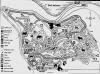
(bit of a low-quality) map of Taronga Zoo from May 4, 1980 attached to an article about the Duchess & Duke of Bedford visiting Taronga at the time, and arrivals to Western Plains around the same time including the two of the southern white rhinos 0.1 Nicole & 1.0 Timothy named after the afformentioned. Will post the article too. Source: - The Sun Herald (Sydney Morning Herald) Sunday May 4, 1980 page 67 and their writer Mark Coultan. Can see the 'Chimpanzee Park' under construction symbol and gorillas Betsy & Bulumun still living near entrance of zoo with a gorilla symbol drawing amongst many others, for one other example looks like Mary & Robinson the grey gibbons were living on the island near the elephants yards and temple back then previouly too, unless was other gibbons at the time (but Mary & Robinson were definitely at the zoo at that time of course; Mary for 20 years already by that point.

upload_2025-3-10_23-22-21.png

The Sun Herald (SMH) 4 May 1980

upload_2025-3-10_23-28-50.png
upload_2025-3-10_23-29-52.png
 

Attachments

  • upload_2025-3-10_23-22-21.png
    upload_2025-3-10_23-22-21.png
    673.5 KB · Views: 17
  • upload_2025-3-10_23-28-50.png
    upload_2025-3-10_23-28-50.png
    73 KB · Views: 17
  • upload_2025-3-10_23-29-52.png
    upload_2025-3-10_23-29-52.png
    442 KB · Views: 17
Last edited:
(bit of a low-quality) map of Taronga Zoo from May 4, 1980 attached to an article about the Duchess & Duke of Bedford visiting Taronga at the time, and arrivals to Western Plains around the same time including the two of the southern white rhinos 0.1 Nicole & 1.0 Timothy named after the afformentioned. Will post the article too. Source: - The Sydney Morning Herald and their writer Mark Coulton (can see the 'Chimpanzee Park' under construction symbol and gorillas Betsy & Bulumun still living near entrance of zoo with a gorilla symbol drawing amongst many others, for one other example looks like Mary & Robinson the grey gibbons were living on the island near the elephants yards and temple back then previouly too, unless was other gibbons at the time (but Mary & Robinson were definitely at the zoo at that time of course; Mary for 20 years already by that point).

View attachment 775646
Great find.

Interesting to hear about the White Rhinos - Nicole would be sent across to Dubbo on the sixth of May; just two days after this article was published! She and two others were the first White Rhinos ever at Dubbo. Nicole was wild born in 1968 and passed 13/09/2000. Not sure about Timothy unfortunately.

It appears the former Gorilla enclosures were around where the current Squirrel Monkey islands currently are.

Also on the gibbons, I think your right in that Mary and Mr Robinson had lived on the island much longer than we all initially thought. Perhaps since as early as the 70's.
 
Great find.

Interesting to hear about the White Rhinos - Nicole would be sent across to Dubbo on the sixth of May; just two days after this article was published! She and two others were the first White Rhinos ever at Dubbo. Nicole was wild born in 1968 and passed 13/09/2000. Not sure about Timothy unfortunately.

It appears the former Gorilla enclosures were around where the current Squirrel Monkey islands currently are.

Also on the gibbons, I think your right in that Mary and Mr Robinson had lived on the island much longer than we all initially thought. Perhaps since as early as the 70's.

Thanks Jambo and thanks @Jaiden too (-:

Yeah their cages were very very close to where the squirrel monkey islands are now but that was the American alligator lake listed on the map. The gorillas were in an area thats essentially closed to the public now but directly to the compass east of the former alligator lake, I think the gorilla cages were where the top sky-safari depot stands/stppd (Hallstrom's 1960 reptile house and the original Komodo dragon exhibit were also the closest other animals in proximity to where the gorilla cages were located).
 
(bit of a low-quality) map of Taronga Zoo from May 4, 1980 attached to an article about the Duchess & Duke of Bedford visiting Taronga at the time, and arrivals to Western Plains around the same time including the two of the southern white rhinos 0.1 Nicole & 1.0 Timothy named after the afformentioned. Will post the article too. Source: - The Sydney Morning Herald and their writer Mark Coulton (can see the 'Chimpanzee Park' under construction symbol and gorillas Betsy & Bulumun still living near entrance of zoo with a gorilla symbol drawing amongst many others, for one other example looks like Mary & Robinson the grey gibbons were living on the island near the elephants yards and temple back then previouly too, unless was other gibbons at the time (but Mary & Robinson were definitely at the zoo at that time of course; Mary for 20 years already by that point).

View attachment 775646

The Sydney Morning Herald (SMH) 4 May 1980

View attachment 775647

View attachment 775648
So I do have more information on the other White Rhinos.

Tessie was in fact a girl, her and Thomas were the two sent to Dubbo 06/05/1980. It appears they were only quarantined at Taronga for a short period.

Thomas and Tessie had the following offspring together;

1.0 Sag (18/05/1981 - 20/05/1981)
1.0 Nkulu (21/05/1984 - 18/08/1984)
0.1 Likiwezi (20/12/1985) Sent to Werribee 24/07/1989, now back at Dubbo
0.1 Stillborn (02/11/1988)

Thomas also had a song with another female named 'Tdnandi';

1.0 Stumpy (17/07/1983) Sent to Orana 05/11/1988

Stumpy passed at Orana in 2022.

Also cool to hear mention of the young Orangutan infant. Jason was a hybrid born 04/04/1980 to parents, Roy and Judy II. He passed 04/06/1986. Roy was a Bornean and Judy II was a hybrid herself (half Sumatran via her mother, half Bornean via her father).
 
Thanks Jambo and thanks @Jaiden too (-:

Yeah their cages were very very close to where the squirrel monkey islands are now but that was the American alligator lake listed on the map. The gorillas were in an area thats essentially closed to the public now but directly to the compass east of the former alligator lake, I think the gorilla cages were where the top sky-safari depot stands/stppd (Hallstrom's 1960 reptile house and the original Komodo dragon exhibit were also the closest other animals in proximity to where the gorilla cages were located).
You do seem to be right actually. The Sky Safari was opened in 1987 after years of construction so this would tie in well with the redevelopment of the area following the gorillas departure to Melbourne in 1982.
 
You do seem to be right actually. The Sky Safari was opened in 1987 after years of construction so this would tie in well with the redevelopment of the area following the gorillas departure to Melbourne in 1982.

Yeah it would line-up timewise very much. Was (Oct') 1980 that Betsy & Buluman went to Melbourne but your point is spot on about the area and the development plans that occured.
 
Possibility of purebred Sumatran orangutans bred at Taronga Zoo:

22 orangutans were born at Taronga Zoo between 1957-1987. There’s a possibility three of these were purebred Sumatran orangutans as there’s no confirmation on whether a male named Charlie (1954-1973) was Bornean or Sumatran. If he was Sumatran, then his three offspring with Sumatran female Leslie would have been purebred.

Ultimately, it’s inconsequential as all three of those offspring (Karen, aged four; Jackie, aged three; and Winnie, aged 16 months) died in 1966. It marked a particularly bad year for Leslie’s offspring, with her fourth infant (a male) being stillborn that year also.

Leslie’s fifth and final infant (a hybrid male named Perang) was born 1972 and survived to adulthood. Leslie’s line survives in the region to this day via Perang’s offspring, Jantan and Willow (albeit non-breeding hybrids).

Taronga Zoo - Orangtuan History

Taronga Zoo imported 27 orangutans between 1948 and 1963.

22 of these orangutans either died within two years of their arrival or were quickly transferred to other Australasian facilities.

The other five remained at the zoo and bred:

1.0 Rufus (Bornean)
Born in the wild 01/01/1940 (+/- 2 years)
Arrived at Taronga Zoo 17/06/1949
Died at Taronga Zoo 16/09/1974

0.1 Helen (Sumatran)
Born in the wild 01/01/1949 (+/- 2 years)
Arrived at Taronga Zoo 07/01/1956
Died at Taronga Zoo 03/09/1970

0.1 Leslie (Sumatran)
Born in the wild 01/01/1951 (+/- 2 years)
Arrived at Taronga Zoo 07/01/1956
Died at Taronga Zoo 27/02/1977

1.0 Charlie II (Unknown)
Born in the wild 01/01/1954 (+/- 2 years)
Arrived at Taronga Zoo 03/09/1958
Died at Taronga Zoo 23/11/1973

1.0 Roy (Bornean)
Born in the wild 01/01/1958 (+/- 2 years)
Arrived at Taronga Zoo 30/08/1963
Died at Taronga Zoo 28/12/1983

Helen gave birth to four offspring at Taronga Zoo:

0.1 Judy II (Hybrid)
Born at Taronga Zoo 26/10/1957
Died at Taronga Zoo 10/06/2007
Sire: Rufus

0.1 Wendy (Hybrid)
Born at Taronga Zoo 20/03/1961
Died at Taronga Zoo 27/04/2001
Sire: Rufus

1.0 Bobby (Hybrid)
Born at Taronga Zoo 07/09/1964
Sent to Perth Zoo 12/04/1968
Sire: Rufus

0.1 Dawn (Hybrid)
Born at Taronga Zoo 20/11/1967
Sent to Tel Aviv Zoo 08/04/1971
Sire: Rufus

Leslie gave birth to five offspring at Taronga Zoo:

0.1 Karen (Unknown)
Born at Taronga Zoo 04/09/1962
Died at Taronga Zoo 14/06/1966
Sire: Charlie II

0.1 Jackie (Unknown)
Born at Taronga Zoo 28/10/1963
Died at Taronga Zoo 19/10/1966
Sire: Charlie II

0.1 Winnie (Unknown)
Born at Taronga Zoo 23/01/1965
Died at Taronga Zoo 06/06/1966
Sire: Charlie II

1.0 Unnamed (Hybrid)
Born at Taronga Zoo 06/03/1966
Died at Taronga Zoo 06/03/1966
Sire: Roy

1.0 Perang (Hybrid)
Born at Taronga Zoo 01/02/1972
Died at Taronga Zoo 22/05/1990
Sire: Roy

Judy II gave birth to seven offspring at Taronga Zoo:

1.0 Unnamed (Hybrid)
Born at Taronga Zoo 29/12/1967
Died at Taronga Zoo 04/01/1968
Sire: Rufus

0.1 Perak (Hybrid)
Born at Taronga Zoo 26/03/1972
Sent to Hyderabad Zoo 22/05/1990
Sire: Rufus

1.0 Little Mo (Hybrid)
Born at Taronga Zoo 15/03/1975
Sent to Barcelona Zoo 16/09/1982
Sire: Rufus

0.1 Anne (Hybrid)
Born at Taronga Zoo 23/08/1977
Died at Taronga Zoo 07/04/1985
Sire: Roy

1.0 Jason (Hybrid)
Born at Taronga Zoo 04/04/1980
Died at Taronga Zoo 04/06/1986
Sire: Roy

1.0 Leroy (Hybrid)
Born at Taronga Zoo 09/01/1984
Died at Taronga Zoo 05/10/1984
Sire: Roy

1.0 Jantan (Hybrid)
Born at Taronga Zoo 11/07/1987
Sent to Mogo Zoo 15/09/2018
Sire: Perang

Wendy gave birth to four offspring at Taronga Zoo:

1.0 Merah (Hybrid)
Born at Taronga Zoo 03/09/1973
Died at Taronga Zoo 15/03/1974
Sire: Rufus

1.0 Archie (Hybrid)
Born at Taronga Zoo 06/05/1975
Died at Taronga Zoo 25/03/1996
Sire: Roy

0.1 Wanita (Hybrid)
Born at Taronga Zoo 23/03/1979
Sent to Auckland Zoo 06/03/2001
Sire: Roy

0.1 Willow (Hybrid)
Born at Taronga Zoo 09/06/1985
Sent to Mogo Zoo 15/09/2018
Sire: Perang

Perak gave birth to two offspring at Taronga Zoo:

1.0 Partong (Hybrid)
Born at Taronga Zoo 01/06/1983
Died at Taronga Zoo 30/07/1985
Sire: Perang

1.0 Paddi (Hybrid)
Born at Taronga Zoo 27/06/1987
Died at Taronga Zoo 27/08/1987
Sire: Archie

Three orangutans were imported in 1995 and 1996:

0.1 Melur (Bornean)
Born at Hong Kong Zoo 11/06/1988
Arrived at Taronga Zoo 07/02/1995
Sent to Auckland Zoo 06/03/2001

0.1 Gangsa (Bornean)
Born at Hong Kong Zoo 31/12/1989
Arrived at Taronga Zoo 07/02/1995
Sent to Auckland Zoo 06/03/2001

1.0 Datuk (Bornean)
Born at Auckland Zoo 18/05/1989
Arrived at Taronga Zoo 13/12/1996
Died at Taronga Zoo 04/04/1998
 
Further information on the gibbons:

It appears that not only did Robinson and Mary live on the island from at least the 70’s (probably the 60’s), they also produced young.

Honey (born late 1970) was the first to survive the neonate stage (though the lack of information on her henceforth unfortunately suggests she died young).

Article is below:

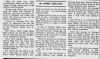
Mr Dennis Smith, keeper of the apes at Taronga Zoo, returns to his Queenscliffe home each night with a baby ape. His companion is Honey, a 4 1/2 month-old gibbon, who owes her life to the tender care of Mr Smith and his family.

Soon after she was born. Honey's parents abandoned her on a small island in the middle of the zoo's duckpond.

Honey is doing so well that Mr Smith expects her to become a full-time zoo resident in April, though she will not be reunited with her parents.


Mr Smith said Honey was the world's first Gibbon to be reared artificially, and the first to be reared in Australia. Other Gibbons had been born at Taronga Park, but had not survived.

Source: Sydney Morning Herald (Tuesday, February 16, 1971)
 
Further information on the gibbons:

It appears that not only did Robinson and Mary live on the island from at least the 70’s (probably the 60’s), they also produced young.

Honey (born late 1970) was the first to survive the neonate stage (though the lack of information on her henceforth unfortunately suggests she died young).

Article is below:

Mr Dennis Smith, keeper of the apes at Taronga Zoo, returns to his Queenscliffe home each night with a baby ape. His companion is Honey, a 4 1/2 month-old gibbon, who owes her life to the tender care of Mr Smith and his family.

Soon after she was born. Honey's parents abandoned her on a small island in the middle of the zoo's duckpond.

Honey is doing so well that Mr Smith expects her to become a full-time zoo resident in April, though she will not be reunited with her parents.


Mr Smith said Honey was the world's first Gibbon to be reared artificially, and the first to be reared in Australia. Other Gibbons had been born at Taronga Park, but had not survived.

Source: Sydney Morning Herald (Tuesday, February 16, 1971)
I wonder whether perhaps Mary and Mr Robinson did live on the island since the 60's; potentially since their arrival to the zoo. We know Mary arrived in 1960 from Borneo.

Melbourne began displaying their gibbons on islands in the early 70's, which I initially thought was a regional first for that type of display, but it's possible Taronga had beat them to it.
 
I wonder whether perhaps Mary and Mr Robinson did live on the island since the 60's; potentially since their arrival to the zoo. We know Mary arrived in 1960 from Borneo.

Melbourne began displaying their gibbons on islands in the early 70's, which I initially thought was a regional first for that type of display, but it's possible Taronga had beat them to it.

It appears likely the gibbons first inhabited this island from the 1960’s.

From the 1960’s (and certainly 1970’s onwards) zoos were giving an increasing amount of thought on how to shake off the image of concrete and bars. Zoos like Longleat began holding chimpanzees on islands in the 1960’s; and replicating this style of exhibitory with a lesser ape was likely seen as the extent of what a city zoo was a capable of. Taronga would follow through with the open air, partially moated chimpanzee exhibit in 1980; and later the gorilla exhibit in 1996.

Aesthetically moats looks nice, but realistically speaking, moats are wasted land space that have proved fatal to great apes on at least three occasions within the region.
 
I wonder whether perhaps Mary and Mr Robinson did live on the island since the 60's; potentially since their arrival to the zoo. We know Mary arrived in 1960 from Borneo.

Melbourne began displaying their gibbons on islands in the early 70's, which I initially thought was a regional first for that type of display, but it's possible Taronga had beat them to it.

I think it was around 1972 that Perth Zoo built their main lake islands (likely inspired by Melbourne). I think Taronga mays still of had another gibbon species or at the time too, am positive Mary & Robinson were the islands occupants back then too.
 
Last edited:
It appears likely the gibbons first inhabited this island from the 1960’s.

From the 1960’s (and certainly 1970’s onwards) zoos were giving an increasing amount of thought on how to shake off the image of concrete and bars. Zoos like Longleat began holding chimpanzees on islands in the 1960’s; and replicating this style of exhibitory with a lesser ape was likely seen as the extent of what a city zoo was a capable of. Taronga would follow through with the open air, partially moated chimpanzee exhibit in 1980; and later the gorilla exhibit in 1996.

Aesthetically moats looks nice, but realistically speaking, moats are wasted land space that have proved fatal to great apes on at least three occasions within the region.

Yeah I saw a news article archive footage of Paignton Zoo filmed c.1963 think it was with some gibbons on a very well planted pond island with trees and the British narrator in that narration delivery common for the time says something like ''one might think we're in the jungles of Asia right now..but in fact its Paignton Zoo in southern England'' something like that.
 
It appears likely the gibbons first inhabited this island from the 1960’s.

From the 1960’s (and certainly 1970’s onwards) zoos were giving an increasing amount of thought on how to shake off the image of concrete and bars. Zoos like Longleat began holding chimpanzees on islands in the 1960’s; and replicating this style of exhibitory with a lesser ape was likely seen as the extent of what a city zoo was a capable of. Taronga would follow through with the open air, partially moated chimpanzee exhibit in 1980; and later the gorilla exhibit in 1996.

Aesthetically moats looks nice, but realistically speaking, moats are wasted land space that have proved fatal to great apes on at least three occasions within the region.
I found it interesting to recently read that Melbourne's gorilla exhibit was actually designed to have a moat. Instead, the zoo last minute elected to keep the exhibit with a dry moat which they deemed was far more effective.

For the reasons you stated, the moat would've wasted a lot of completely usable space to the gorillas and you can tell it just wouldn't have fit the design of Melbourne's 'island' as well as was perhaps initially thought.
 
Back
Top