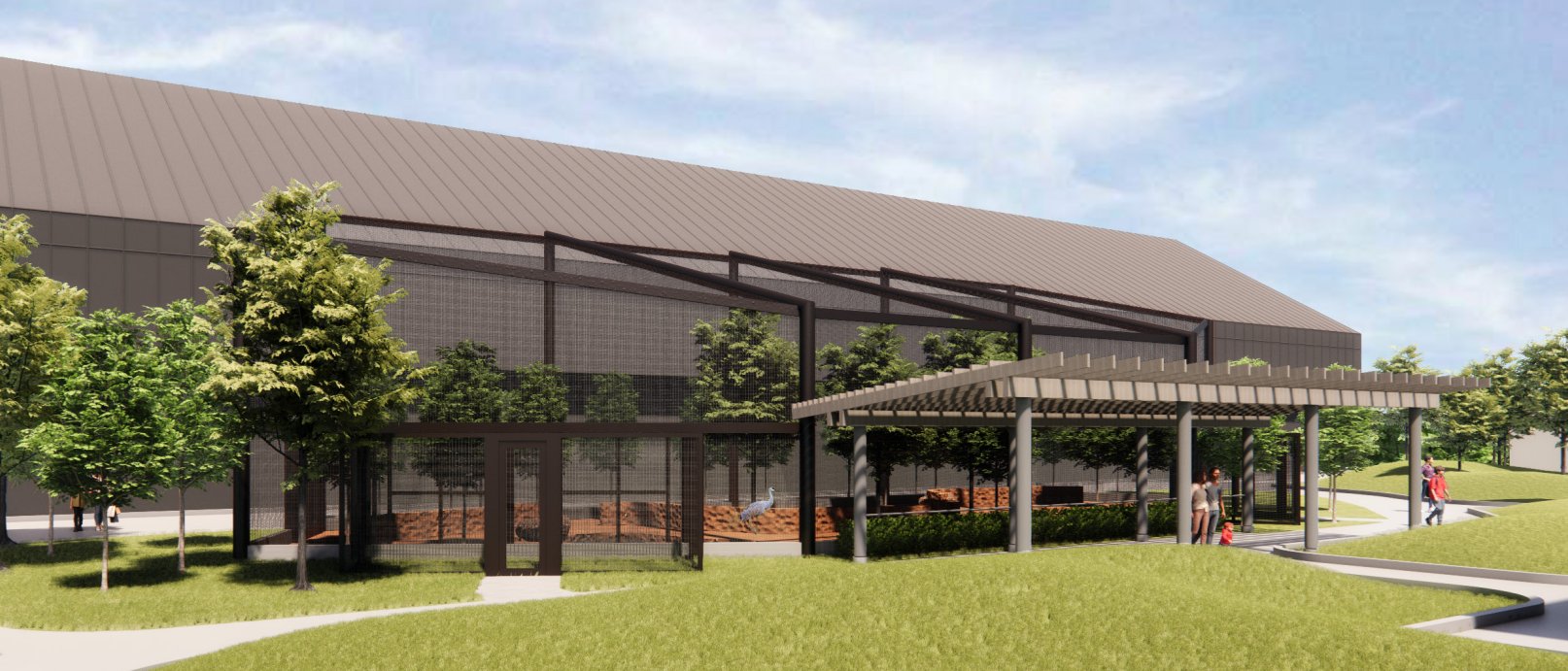
When a new exhibit is announced, without a doubt the most exciting part is seeing the renderings and concept art of how the exhibit will look. It’s one thing to hear about the plans or see blueprints of how the area will be organized, but actually seeing the idea visualized is what it takes to really generate excitement for future projects. Oftentimes however, the renderings and/or concept art look better than the final product. Value engineering leads to some ideas being scaled-back and while it’s easy to draw up cool ideas, building them with the same level of detail is a far greater challenge. In this thread, I want to take a look at how some exhibits evolved from a conceptual design to a real life zoo enclosure. This is an open thread where I encourage everyone to contribute where they can and post any comparisons they find interesting. I myself have a few exhibits I want to highlight and to get the ball rolling I’ll start out with two recent projects that had a number of differences in appearance between the renderings and reality.
Lincoln Park Zoo’s lion house remodel was generally well received when it was completed a few years ago, although this is definitely a case of a rendering looking more pretty than the final design. Here is a comparison between two areas of the exhibit.
Rendering:

Reality:

@ZooNerd1234
There’s some pretty obvious differences right off the bat. What caught my eye first was the rendering depicted a more naturalistic appearance both in the rockwork (more closely resembling a kopje) and the landscaping, with savanna grasses and trees both in and around the lion exhibit. Ultimately the zoo settled on a gray coloration with the rockwork and concrete walls in the viewing area, while opting for . Additional rockwork and faux trees were added to the center of the area, which were not shown in the concept art. The one other change I notice is that it appears there was going to be a second viewing area on the left side of the rendering, when in the final product the above picture is the only such viewing area on this side of the exhibit.
Rendering:

Reality:

Now this part of the exhibit actually came out pretty close to what the rendering suggests. The only differences beyond the aforementioned aesthetics are the lack of deadfall and that a layer of carpet was added to the interior. Otherwise the way the viewing windows are set-up is identical and even the rockwork is positioned similarly in both photos. I know the furthest right window is out of frame in the bottom picture, but just trust me on this.
However, on some occasions the rendering actually undersells the exhibit and it turns out better than expected in real life. A recent example of this is Nashville's new komodo dragon complex. The concept art depicted a spacious but rather barren yard, yet the actual enclosure ended up being beautifully planted and far more dynamic than initially presented. They also never went through with the hollow log waterfall, instead just going with a simple stream leading to the pool.
Rendering:

Reality:

Lincoln Park Zoo’s lion house remodel was generally well received when it was completed a few years ago, although this is definitely a case of a rendering looking more pretty than the final design. Here is a comparison between two areas of the exhibit.
Rendering:
Reality:
@ZooNerd1234
There’s some pretty obvious differences right off the bat. What caught my eye first was the rendering depicted a more naturalistic appearance both in the rockwork (more closely resembling a kopje) and the landscaping, with savanna grasses and trees both in and around the lion exhibit. Ultimately the zoo settled on a gray coloration with the rockwork and concrete walls in the viewing area, while opting for . Additional rockwork and faux trees were added to the center of the area, which were not shown in the concept art. The one other change I notice is that it appears there was going to be a second viewing area on the left side of the rendering, when in the final product the above picture is the only such viewing area on this side of the exhibit.
Rendering:
Reality:
Now this part of the exhibit actually came out pretty close to what the rendering suggests. The only differences beyond the aforementioned aesthetics are the lack of deadfall and that a layer of carpet was added to the interior. Otherwise the way the viewing windows are set-up is identical and even the rockwork is positioned similarly in both photos. I know the furthest right window is out of frame in the bottom picture, but just trust me on this.
However, on some occasions the rendering actually undersells the exhibit and it turns out better than expected in real life. A recent example of this is Nashville's new komodo dragon complex. The concept art depicted a spacious but rather barren yard, yet the actual enclosure ended up being beautifully planted and far more dynamic than initially presented. They also never went through with the hollow log waterfall, instead just going with a simple stream leading to the pool.
Rendering:
Reality:
Last edited:


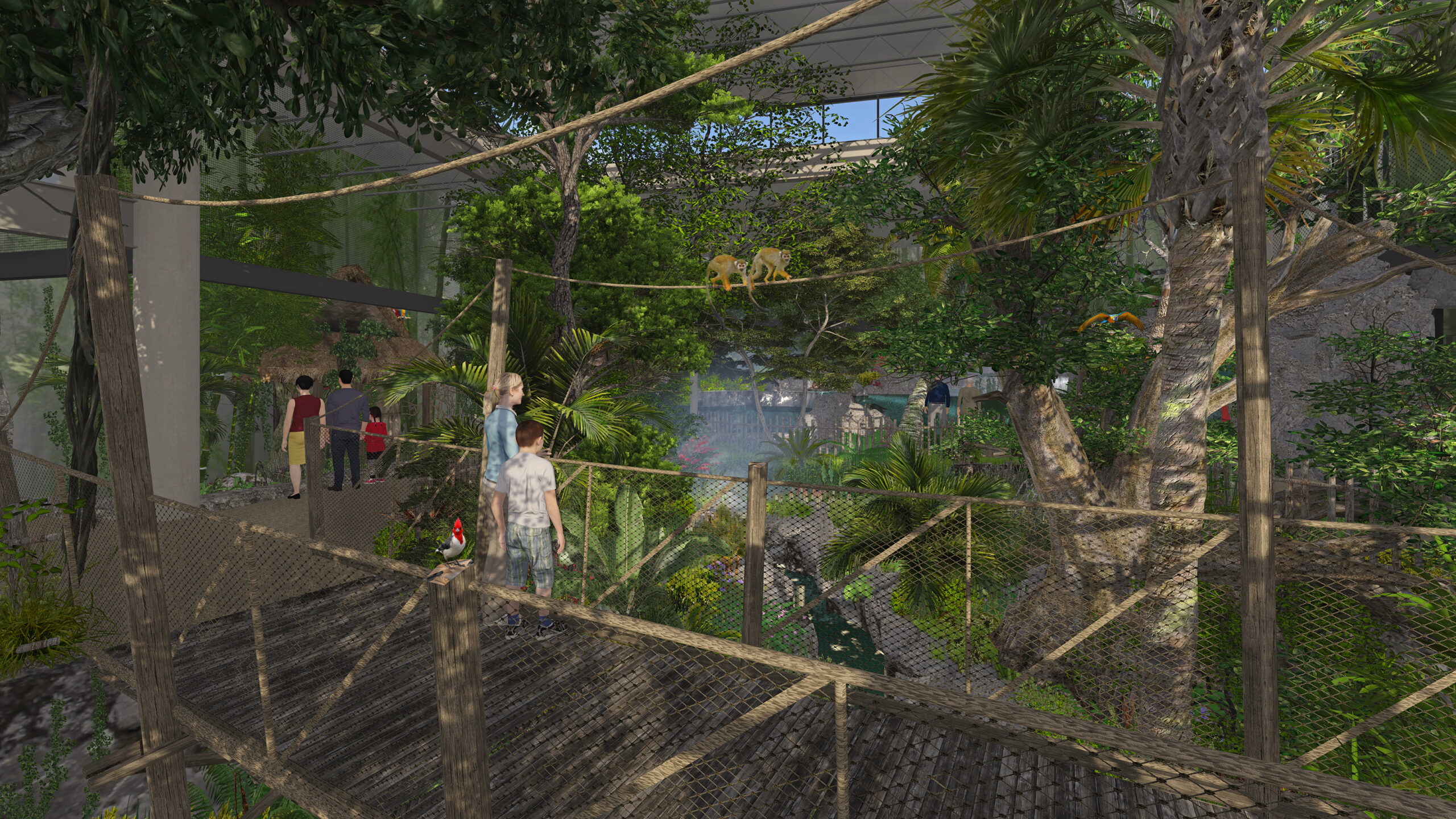
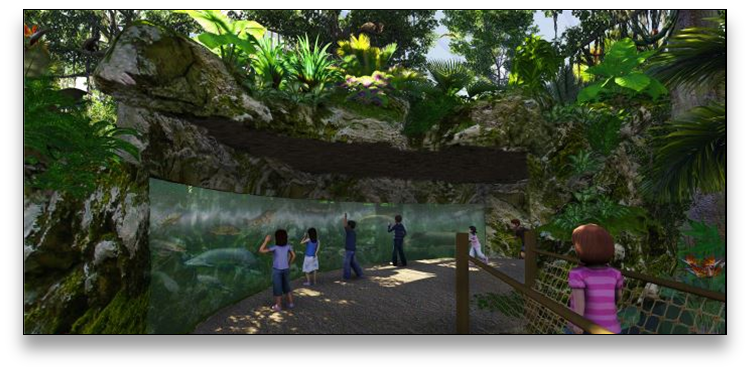
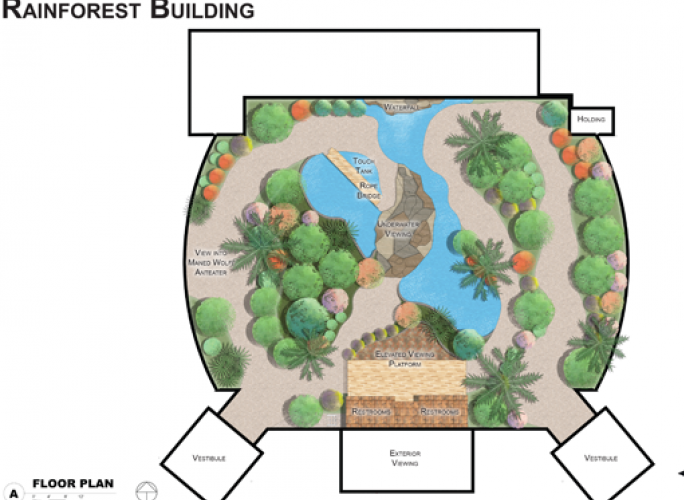
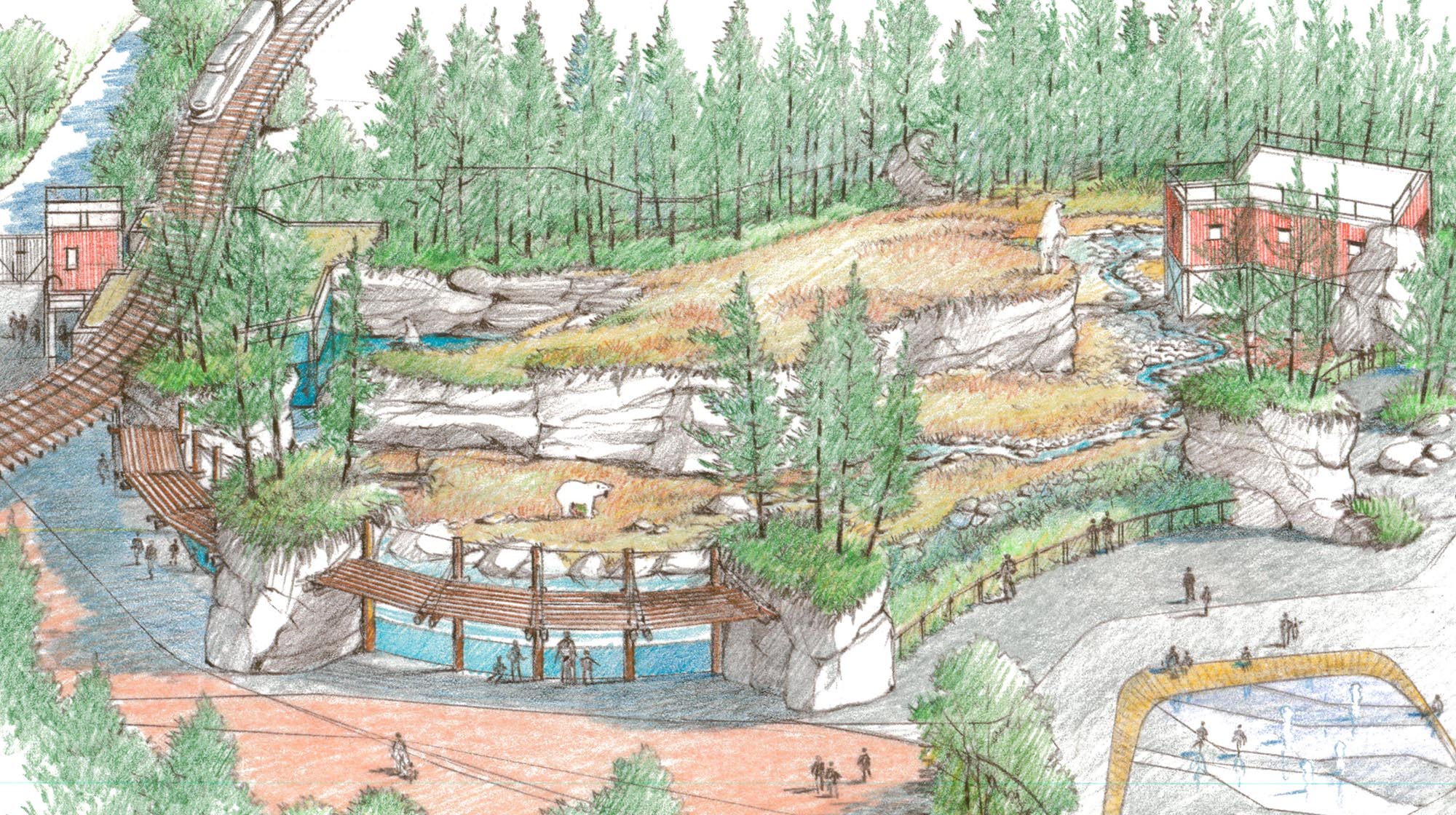


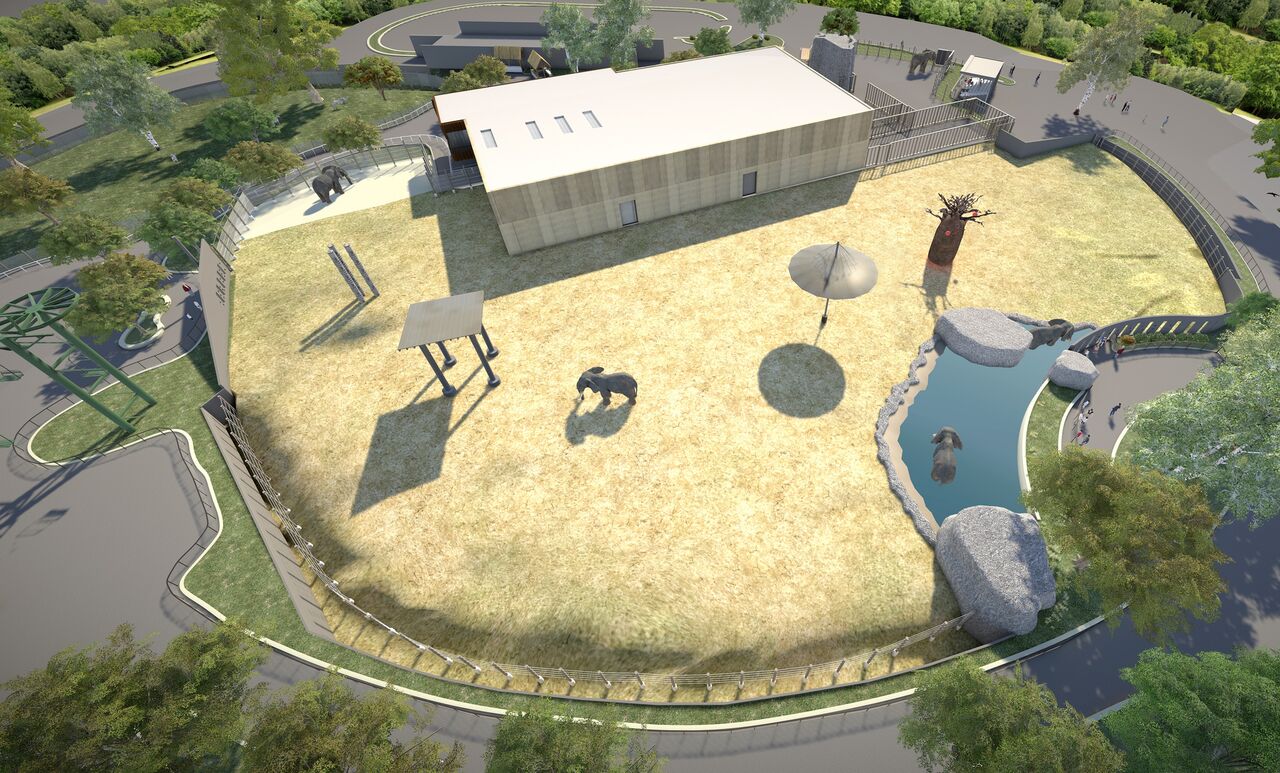


 Honestly if I was in charge of a small zoo and needed to make some concept art for an upcoming exhibit, it sounds a whole lot cheaper to get someone who's a pro at Planet Zoo to make something instead of a design firm.