
Aquatica is SeaWorld Orlando’s waterpark, a separate-admission park just across the street from the marine animal theme park. (Discovery Cove is the other of the three SeaWorld Orlando gated facilities that are adjacent to one another). It is located just a few miles from three other major waterparks as well as many lavish resort pool and slide facilities, so it has a lot of competition. It features three animal exhibits, only one of which is major, so it does not need its own forum and gallery in Zoochat; I will include it in the theme park’s forum and gallery instead. Aquatica is a well-designed facility with a vague Australasia theme; bright signs and waterslides and beachy pool areas with names such as ‘Walkabout Waters’ and ‘Kata’s Kookaburra Cove’ are set within a tropical landscape that does not seek to recreate any specific geographic area of Australasia other than in a contemporary whimsical evocation of the region. Abstract carvings and signs of the park’s host characters are thinly scattered around the park, including a kiwi that features in the park’s entry signs and a royal spoonbill and a gecko, but they stop short of having anthropomorphized dress-up characters roaming the grounds. Buildings are bright and contemporary rather than looking like Maori longhouses. The lush landscape is generic rather than a recreation of the lush rainforest-ringed beaches of Queensland. Even the rockwork of waterfalls and outcrops is stylized rather than realistic. The overall effect is one of a sunny and cheery paradise. It seems to be holding its own as far as attendance goes, after opening in 2008; it will be joined by a similar park in the chain next year when SeaWorld San Antonio opens it own Aquatica waterpark on its property. It certainly has a full assortment of waterslides with about 7 major ones in tall structures as well as several smaller ones scattered in the two areas of water playgrounds. There are also two large wavepools on the edge of a massive sandy beach for relaxing, two floating river circuits, three restaurants, and a few shops. Of course, the focus of this review is on the animal exhibits; it is interesting to note that all three exhibits feature animals that do not live in Australasia!
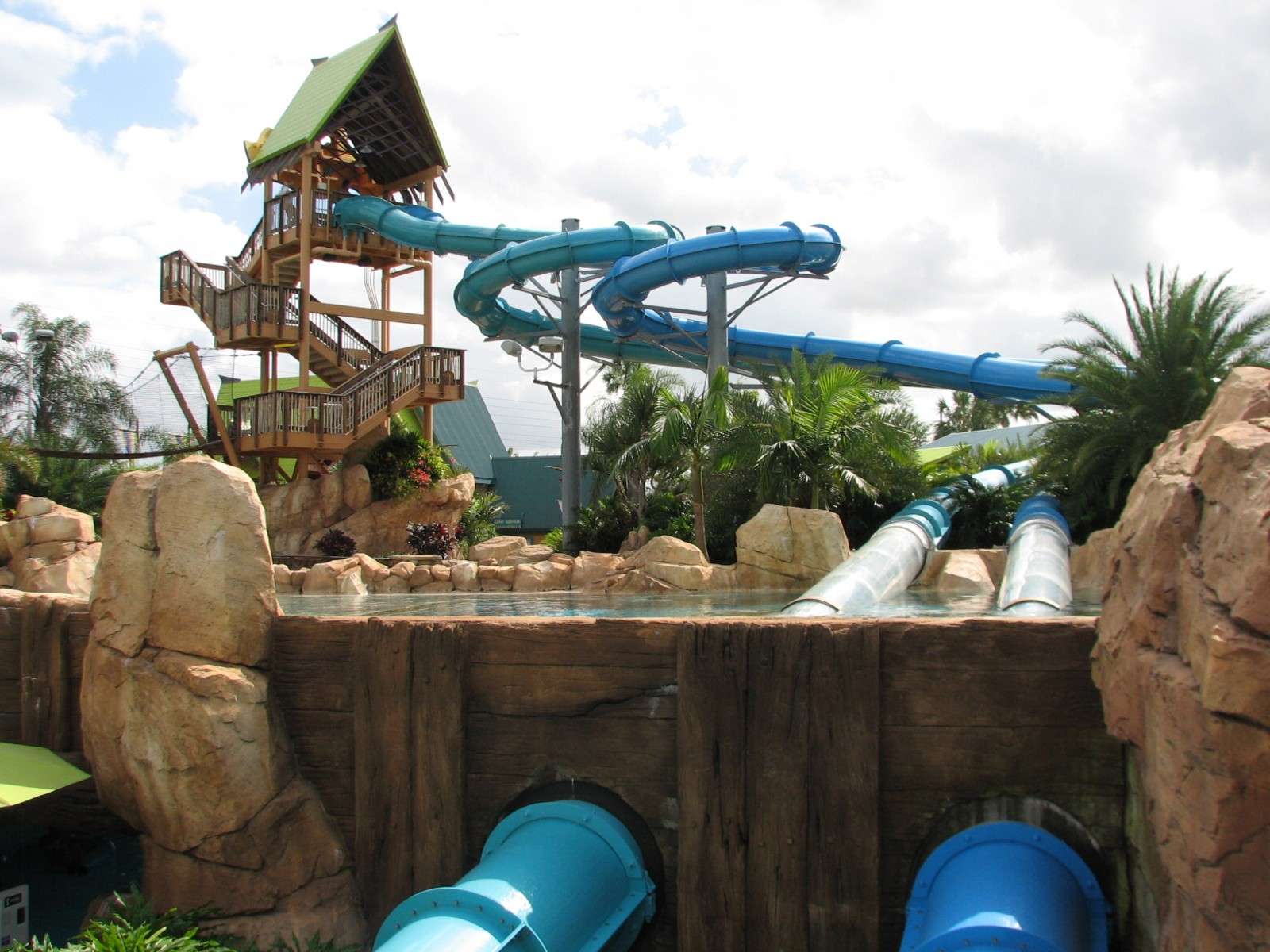
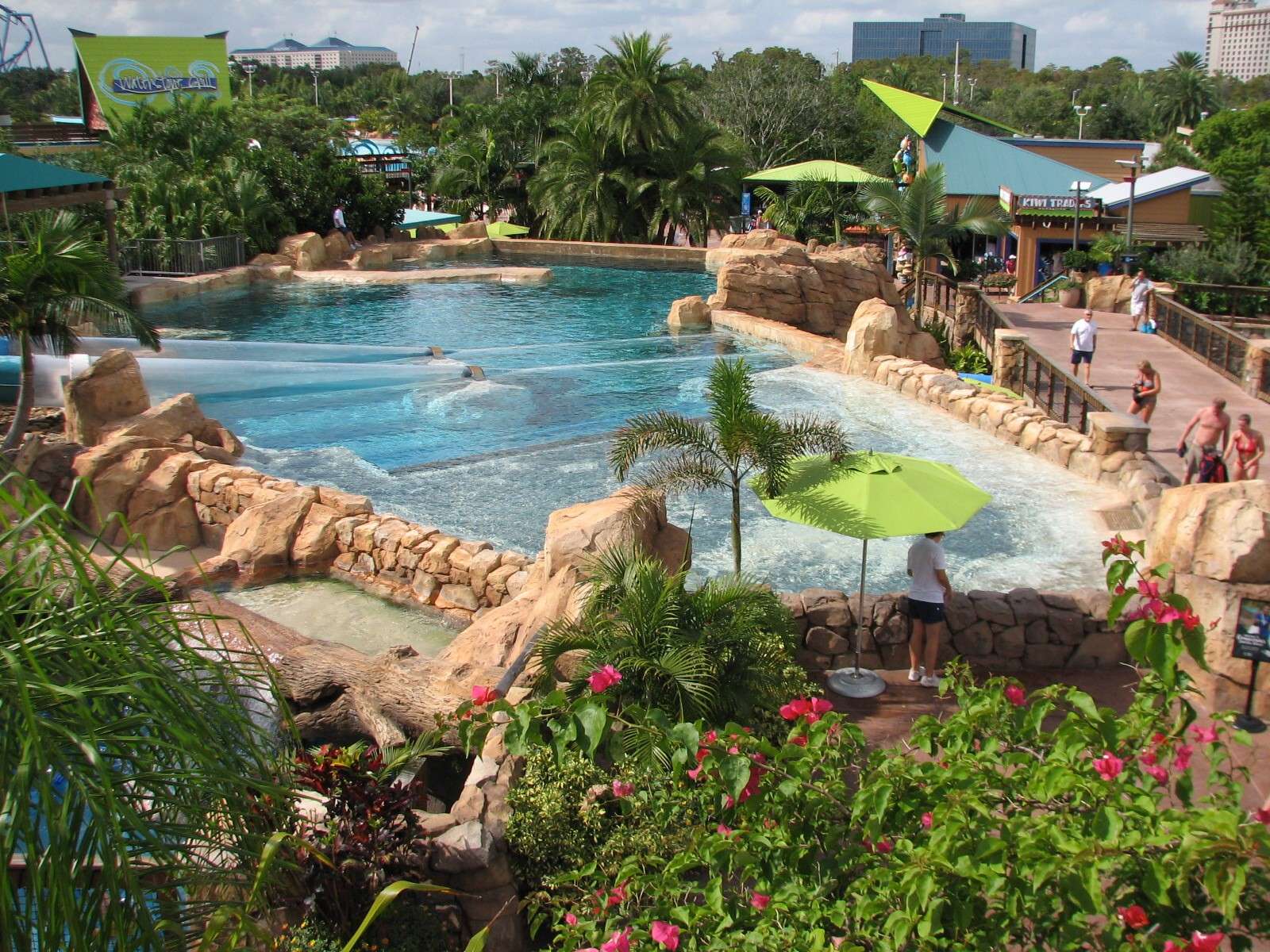
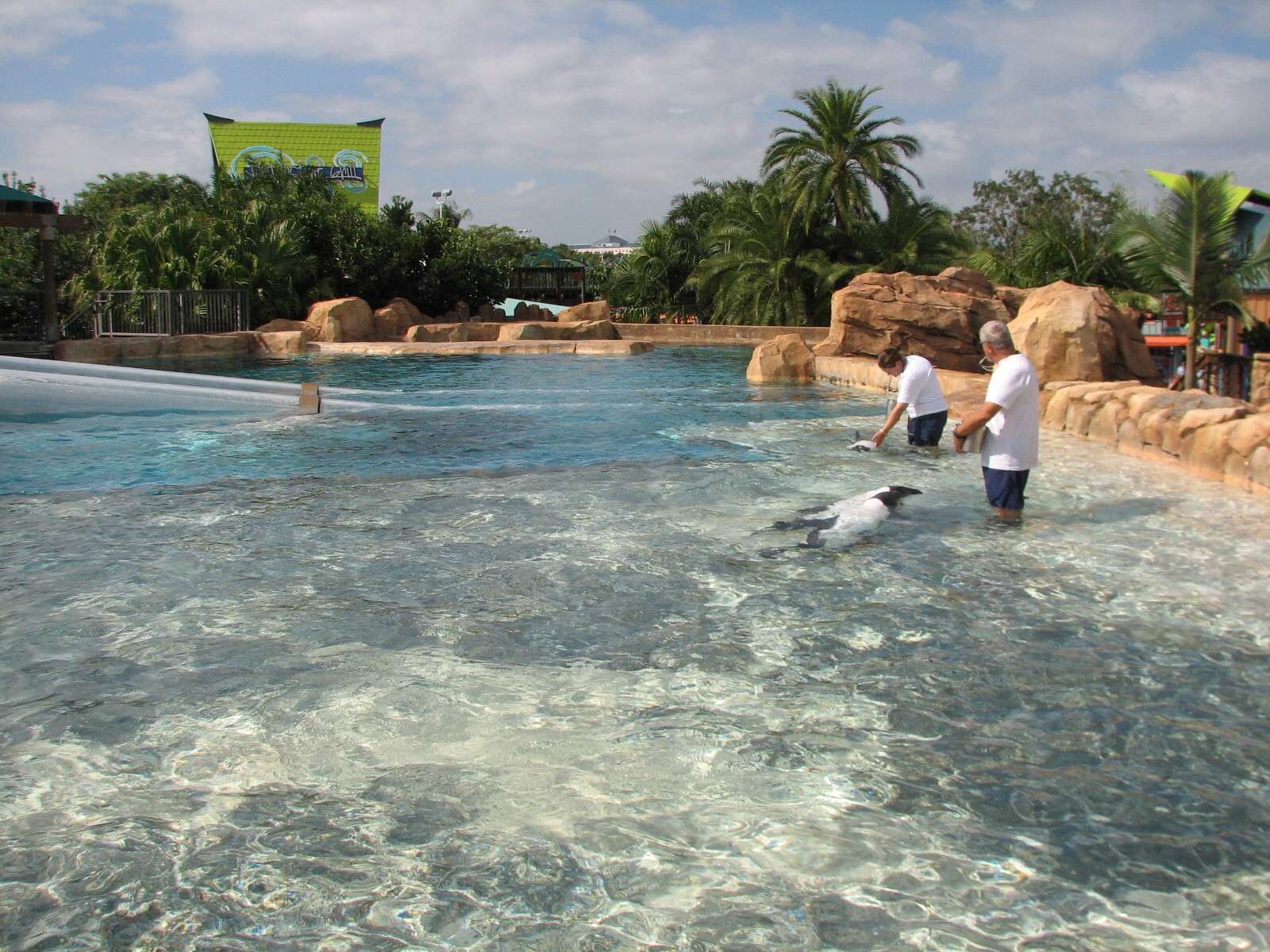
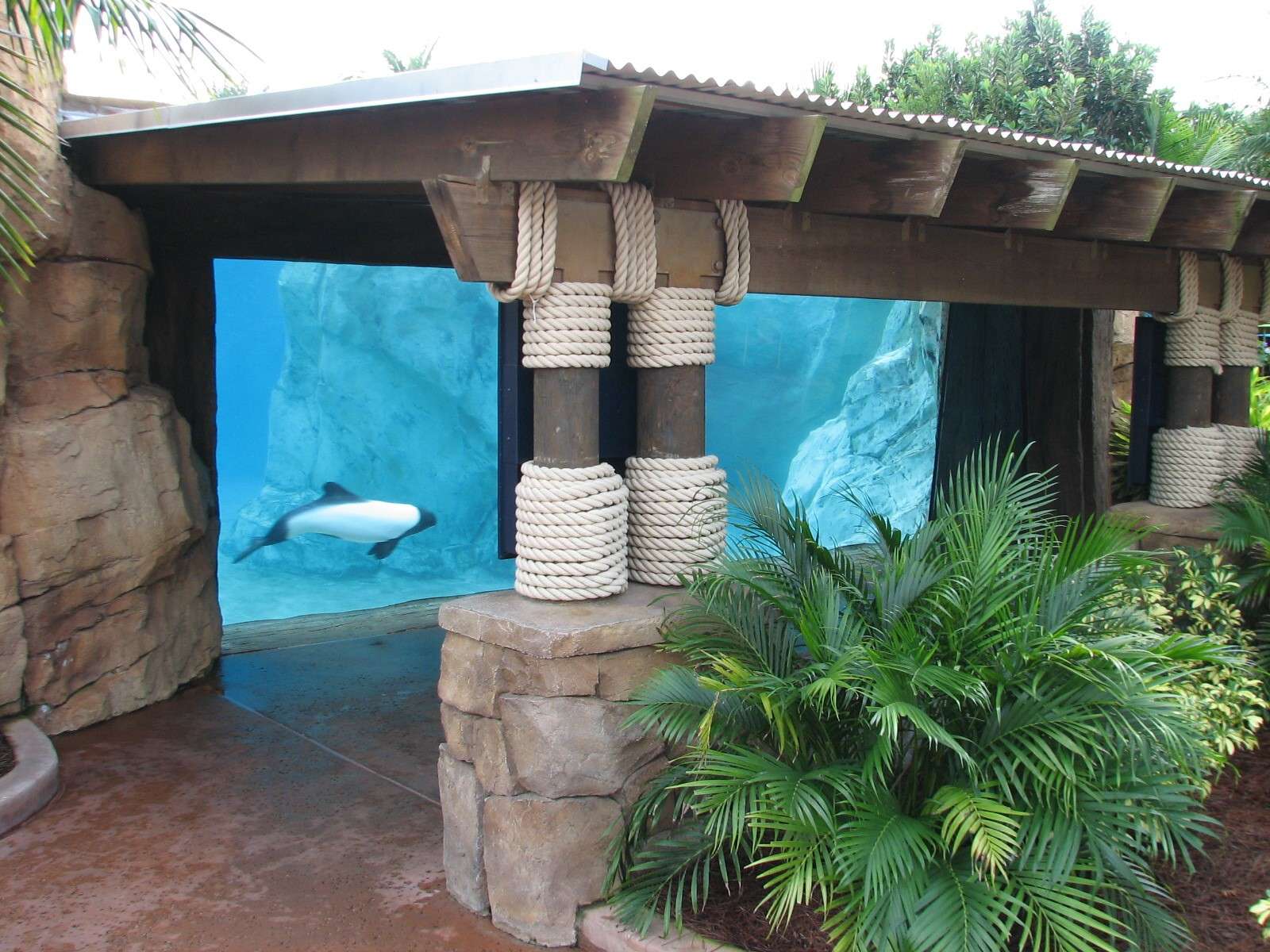
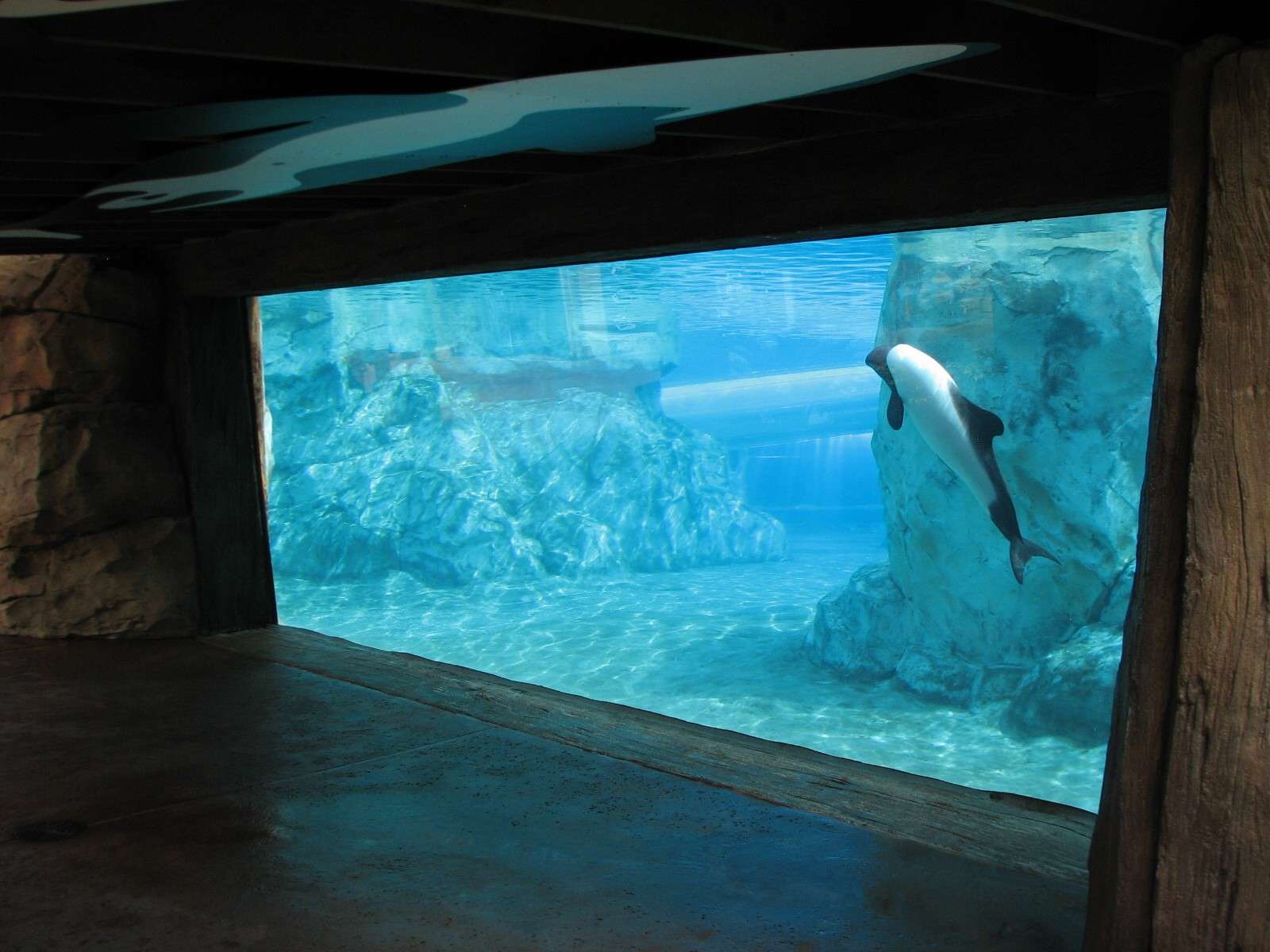
Dolphin Plunge is the major exhibit at the park and is a very nice habitat for four captive-born male Commerson’s dolphins. It is good to see a rare-in-captivity species showcased this way. The habitat is a large outdoor lagoon contained with low simulated rocky sides, the entire interior of the tank is treated with simulated rock as well, and a few rocky arches inside create a variety of underwater spaces for the dolphins. One end of the habitat is a massive shallow shelf; visitors can view the surface of the habitat from this perimeter, and several daily trainer interactions occur in the shallows just a few feet away. The trainers can easily stand on the rocky bottom while the dolphins enjoy getting scratched and rubbed by them and being sent to swim between them on the edges. This is not a show, and the volume of the announced educational presentation is quiet. The trainers are also available for unamplified questions while they stand in the shallows afterwards. The other end of the exhibit is the deeper part, and it is a roomy area that is about 10 or 12 feet deep. It is viewed from a single large flat underwater viewing panel set in the rocky containment walls and is sheltered by a nice wood shed; reflections from the main path behind the shed are partially obscured by a small lush planting area that contains the viewing area. The ceiling of the shed has a life-size cutout of an orca for visitors to distinguish the size difference of these two dolphin species, and there are a few decent educational graphics mounted nearby; however, I heard at least three adult visitors walk into the viewing area, see the dolphins, and exclaim ‘baby killer whales!’ so perhaps the graphics could be improved in their clarity or visibility. There are also two other ways to view the habitat. One is the Dolphin Plunge that gives the exhibit its name: it is a tall waterslide of two side-by-side opaque tubes that is entered at the top of a nearby stairway tower. Sliders descend one at a time through the winding circuit that twists around at the back of the habitat before entering a straight section of the tube that becomes clear and descends through the surface of the dolphin habitat and through the width of it in the deeper section. Then the tube becomes opaque again as it exits the rocky containment wall of the habitat for a short section until it ends in a small splashdown pool nearby. If this feature seems gimmicky, it is; if it seems to stress the inhabitants, it does not appear so. In fact the dolphins seemed oblivious to the sliders and enjoyed swimming upside down around the tubes. Fortunately, the tubes are located far enough away from the underwater viewing window that it is not a distraction to those enjoying the dolphins themselves. The ride on Dolphin Plunge is fun, but going through the habitat is quick and rather difficult to see the dolphins if they are not closeby. I saw a few younger sliders slowing themselves down by sitting up and pressing their hands against the sides of the tubes once they were in the habitat…they must be experienced visitors giving themselves a better chance of seeing them! There is also another way to see the habitat: a ride on a lazy river in an innertube, called Loggerhead Lane. (Guess what? Another misnomer. There are no loggerhead sea turtles to be seen here.) One section of the river circuit enters a rocky overhang (it is passing below the shallows area of the habitat) and into a cave with a long underwater viewing window into the deeper part of the habitat. This window is much closer to the Dolphin Plunge waterslide tube than the dry viewing window on the other side of the deeper habitat. With a variety of ways to see the habitat, a variety of areas in the habitat (there is a behind-the-scenes pool as well that they seemed to be able to enter at will), a responsible educational presentation, and a unique setting, Dolphin Plunge is a memorable exhibit.
Dolphin Plunge's waterslide tower and descent through the Commerson's dolphin habitat:
Dolphin Plunge as seen from the top of the waterslide's tower:
Trainers and dolphins in the shallows:
Underwater Viewing area:
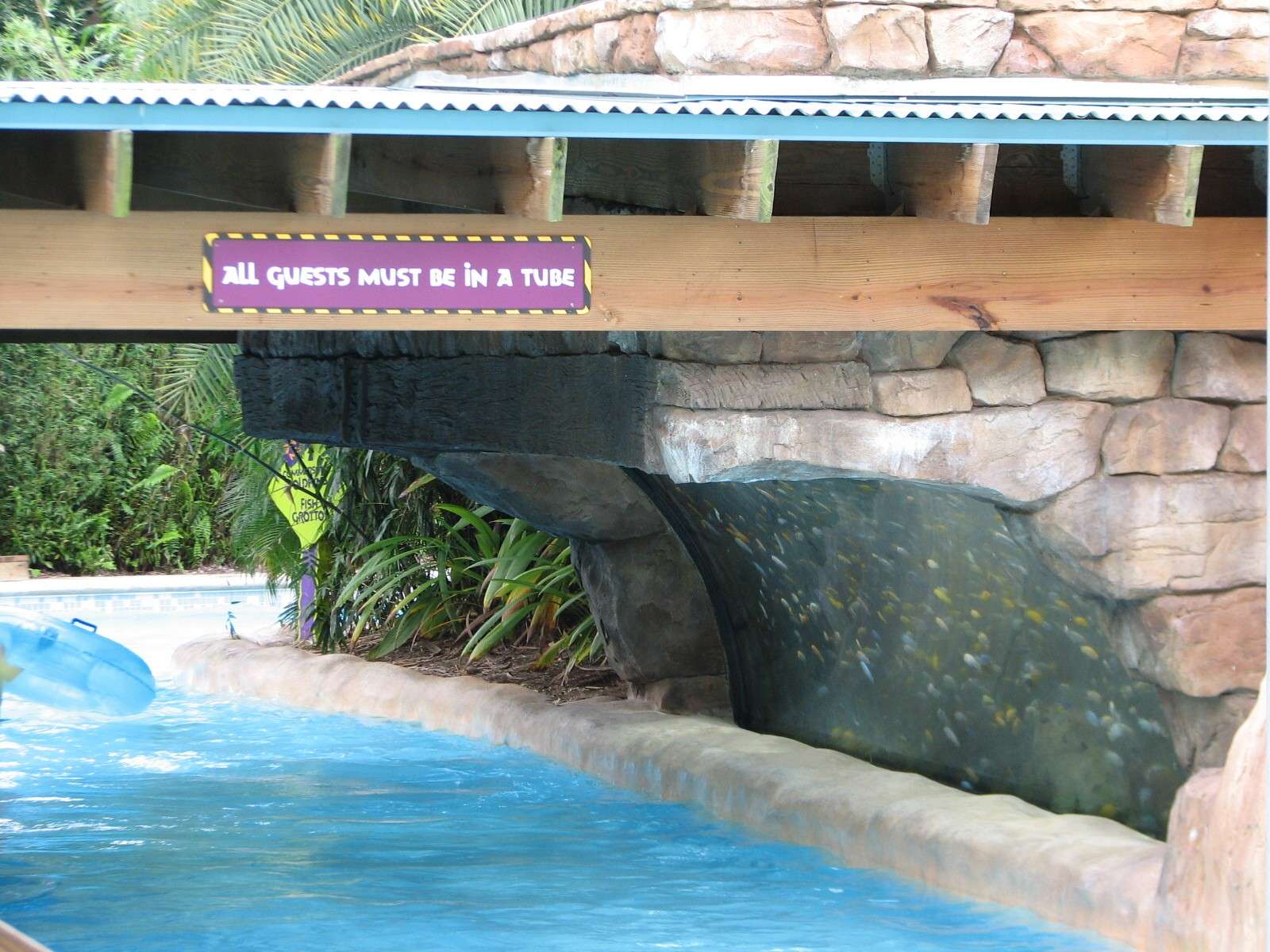
Fish Grotto is the other exhibit viewed from the lazy river attraction called Loggerhead Lane. It is really only viewed by guests floating in innertubes and can only be partially glimpsed in the distance from a path for those who want to stay dry, which is unfortunate. As such, it is an exhibit that is not universally accessible. The exhibit is viewed when the waterway briefly enters a rocky shed overhang; along one side is a quarter-round long viewing window that arches above guests as they float. Inside the tank is a rocky grotto full of cichlids, although no identification signs are seen. In fact, the park’s website lists them only as ‘exotic tropical fish’! Despite the lack of information, the scenic panorama of multitudes of the fish is attractive. I am guessing the tank capacity is about 30,000 gallons, so it is not a minor exhibit, but it would certainly benefit from another viewing window outside of the river.
Fish Grotto, as seen from a path: (I did not risk my camera on an innertube for a better shot!)
Marvelous Macaws is an open-air exhibit on the edge of a major path that is viewed from behind a low rocky outcrop. The small sandy yard is contained by low timber poles, and a small tree skeleton hung with toys provides the perch for the various macaw species that are brought out. A lush backdrop of small palms completes this minor animal attraction. The park’s website states that guests might also meet a tamandua or other animal ambassador; I did not see any, and I wonder if they do bring them out whether they are featured to the side of this exhibit or not.
Aquatica is a great waterpark, but it is strange that it chose not to include more animal exhibits to further differentiate itself from all the local competitors. Typhoon Lagoon at Walt Disney World even has its own very nice swim-through reef attraction filled with fish as part of its waterpark; why would Aquatica omit that kind of attraction? (Admittedly, there is a fantastic swim-through reef at SeaWorld Orlando’s Discovery Cove, but why not include this in both parks? Actually, I think I know the answer: exclusivity at Discovery Cove, for the big spenders. Aquatica’s much-lower entrance fee is aimed at the masses.) I would at least expect a larger waterfowl yard with royal spoonbills or something related to the theme! I will not rank the park in my lists of zoos or aquariums visited since the animal exhibits are such a minor component, but the Dolphin Plunge nearly makes my Top 15 of aquatic mammal exhibits, probably around 20 or so. General adult admission is $49.99; for visitors who are only interested in animal exhibits, this fee is a full $45 overpriced, but of course this fee is not aimed at those who only want to see animal exhibits! It is on par with the other expensive major waterparks in the area, and combination tickets with SeaWorld’s other parks is what they are really trying to sell by making a single entry expensive. I have posted additional pictures in the SeaWorld Orlando gallery.
Dolphin Plunge is the major exhibit at the park and is a very nice habitat for four captive-born male Commerson’s dolphins. It is good to see a rare-in-captivity species showcased this way. The habitat is a large outdoor lagoon contained with low simulated rocky sides, the entire interior of the tank is treated with simulated rock as well, and a few rocky arches inside create a variety of underwater spaces for the dolphins. One end of the habitat is a massive shallow shelf; visitors can view the surface of the habitat from this perimeter, and several daily trainer interactions occur in the shallows just a few feet away. The trainers can easily stand on the rocky bottom while the dolphins enjoy getting scratched and rubbed by them and being sent to swim between them on the edges. This is not a show, and the volume of the announced educational presentation is quiet. The trainers are also available for unamplified questions while they stand in the shallows afterwards. The other end of the exhibit is the deeper part, and it is a roomy area that is about 10 or 12 feet deep. It is viewed from a single large flat underwater viewing panel set in the rocky containment walls and is sheltered by a nice wood shed; reflections from the main path behind the shed are partially obscured by a small lush planting area that contains the viewing area. The ceiling of the shed has a life-size cutout of an orca for visitors to distinguish the size difference of these two dolphin species, and there are a few decent educational graphics mounted nearby; however, I heard at least three adult visitors walk into the viewing area, see the dolphins, and exclaim ‘baby killer whales!’ so perhaps the graphics could be improved in their clarity or visibility. There are also two other ways to view the habitat. One is the Dolphin Plunge that gives the exhibit its name: it is a tall waterslide of two side-by-side opaque tubes that is entered at the top of a nearby stairway tower. Sliders descend one at a time through the winding circuit that twists around at the back of the habitat before entering a straight section of the tube that becomes clear and descends through the surface of the dolphin habitat and through the width of it in the deeper section. Then the tube becomes opaque again as it exits the rocky containment wall of the habitat for a short section until it ends in a small splashdown pool nearby. If this feature seems gimmicky, it is; if it seems to stress the inhabitants, it does not appear so. In fact the dolphins seemed oblivious to the sliders and enjoyed swimming upside down around the tubes. Fortunately, the tubes are located far enough away from the underwater viewing window that it is not a distraction to those enjoying the dolphins themselves. The ride on Dolphin Plunge is fun, but going through the habitat is quick and rather difficult to see the dolphins if they are not closeby. I saw a few younger sliders slowing themselves down by sitting up and pressing their hands against the sides of the tubes once they were in the habitat…they must be experienced visitors giving themselves a better chance of seeing them! There is also another way to see the habitat: a ride on a lazy river in an innertube, called Loggerhead Lane. (Guess what? Another misnomer. There are no loggerhead sea turtles to be seen here.) One section of the river circuit enters a rocky overhang (it is passing below the shallows area of the habitat) and into a cave with a long underwater viewing window into the deeper part of the habitat. This window is much closer to the Dolphin Plunge waterslide tube than the dry viewing window on the other side of the deeper habitat. With a variety of ways to see the habitat, a variety of areas in the habitat (there is a behind-the-scenes pool as well that they seemed to be able to enter at will), a responsible educational presentation, and a unique setting, Dolphin Plunge is a memorable exhibit.
Dolphin Plunge's waterslide tower and descent through the Commerson's dolphin habitat:

Dolphin Plunge as seen from the top of the waterslide's tower:

Trainers and dolphins in the shallows:

Underwater Viewing area:


Fish Grotto is the other exhibit viewed from the lazy river attraction called Loggerhead Lane. It is really only viewed by guests floating in innertubes and can only be partially glimpsed in the distance from a path for those who want to stay dry, which is unfortunate. As such, it is an exhibit that is not universally accessible. The exhibit is viewed when the waterway briefly enters a rocky shed overhang; along one side is a quarter-round long viewing window that arches above guests as they float. Inside the tank is a rocky grotto full of cichlids, although no identification signs are seen. In fact, the park’s website lists them only as ‘exotic tropical fish’! Despite the lack of information, the scenic panorama of multitudes of the fish is attractive. I am guessing the tank capacity is about 30,000 gallons, so it is not a minor exhibit, but it would certainly benefit from another viewing window outside of the river.
Fish Grotto, as seen from a path: (I did not risk my camera on an innertube for a better shot!)

Marvelous Macaws is an open-air exhibit on the edge of a major path that is viewed from behind a low rocky outcrop. The small sandy yard is contained by low timber poles, and a small tree skeleton hung with toys provides the perch for the various macaw species that are brought out. A lush backdrop of small palms completes this minor animal attraction. The park’s website states that guests might also meet a tamandua or other animal ambassador; I did not see any, and I wonder if they do bring them out whether they are featured to the side of this exhibit or not.
Aquatica is a great waterpark, but it is strange that it chose not to include more animal exhibits to further differentiate itself from all the local competitors. Typhoon Lagoon at Walt Disney World even has its own very nice swim-through reef attraction filled with fish as part of its waterpark; why would Aquatica omit that kind of attraction? (Admittedly, there is a fantastic swim-through reef at SeaWorld Orlando’s Discovery Cove, but why not include this in both parks? Actually, I think I know the answer: exclusivity at Discovery Cove, for the big spenders. Aquatica’s much-lower entrance fee is aimed at the masses.) I would at least expect a larger waterfowl yard with royal spoonbills or something related to the theme! I will not rank the park in my lists of zoos or aquariums visited since the animal exhibits are such a minor component, but the Dolphin Plunge nearly makes my Top 15 of aquatic mammal exhibits, probably around 20 or so. General adult admission is $49.99; for visitors who are only interested in animal exhibits, this fee is a full $45 overpriced, but of course this fee is not aimed at those who only want to see animal exhibits! It is on par with the other expensive major waterparks in the area, and combination tickets with SeaWorld’s other parks is what they are really trying to sell by making a single entry expensive. I have posted additional pictures in the SeaWorld Orlando gallery.

