
This park is located in the Carranza Valley in the Basque Country, Spain. After a trip along winding roads, one hour from Bilbao, close to the border with Cantabria, we find a park that focuses on the collection of rescued animals, whether confiscated, abandoned pets or unrecoverable wild animals. A peculiarity it has is that no animals reproduce and, with few exceptions, all the animals that arrive there stay until the end of their days. This is something different from what we find in normal zoos. Because of this, we find a few empty facilities or with very few individuals, even in species that are social by nature. To give you an idea, I counted about 8 empty facilities out of about 30 in total. It occupies about 20 hectares, located on a hill and it takes about 2-3 hours to visit it leisurely. It is divided into 3 areas: the first occupies the majority of the zoo and is where the real animals are and then there are two others with figures of dinosaurs and ancient animals, called Terrasaurus and Gastornisland (in which there are figures with movement and sound ).
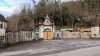
Upon arrival at opening time; 11 in the morning, a little late for what it usually is in other parks, if you are lucky you will be able to park in a small parking lot for about 10 cars right in front of the entrance, if not you will have to drive 200 more meters to another parking lot and through a wooden path you will reach the zoo. You are greeted by a large stone entrance which was the old access door to the property. Upon entering, just to the right we have the store and the ticket office. When you enter, to the left, there are some cages to leave your pet in case you take it with you. As is the current trend, they do not provide a map, you have to scan the QR.

We started the path following the arrows and climbing a large slope. On the left hand side was one of the 3 red deer facilities with 2 females. For these facilities, basically what they do is close a natural meadow and add a stable, this dynamic extends to the other deer and fallow deer facilities. Following the path we find a large house with more than 30 rooms, not used at all since it is half abandoned and without anything related to animals. Near the house we find a picnic area. We continue climbing and we find the large installation of the fallow deer next to a children's playground. Then we have the fork towards the areas of Terrasauri and Gastornisland, areas with 0 animals and which take a route that reaches the store area. Passing by we arrived at a beautiful facility divided into 3 for northern lynxes following the dynamic of closing a piece of forest, so it had a multitude of trees and plants, which only had one female. Continuing through the forest we see a sloping, wooded enclosure for a group of mouflons opposite an enclosure for a small melanic leopard in a simple but beautiful installation. Next to the leopard installation there is a pond with a small, low-lying interior for an alligator.

After this we reach a fork, we must go to the left and retrace our steps, previously this path made sense to be able to visit the Iberian wolf, puma and dingo facilities, currently we can see a set of empty facilities except for one pair of wolves without subspecies.
We return to the fork and find a high viewpoint to have another view of the alligator pond and we continue to go in the direction of the roe deer enclosure, similar to that of the mouflons. Here we arrive at one of the best facilities in the park, that of the Gibraltar macaque where there are 3 of these specimens in two joined facilities. The facility is spacious with a multitude of platforms, mounds of stones...

Arriving at a fork we will take the path to the right to see its most recent addition and one of the most interesting animals, the clouded leopard. This panther comes from animal trafficking and is practically blind, its installation, for an animal of these characteristics, is more than acceptable. Right next door we have an installation for a pair of common marmosets with green iguanas. After walking a little we continue with the primates in this case with a group of crab-eating macaques in a beautiful enclosure including a pond. The next one is for African porcupines, a large facility but unfortunately with a concrete floor, which makes it a poor enclosure. We pass between the llama enclosures and a group of male mouflons to take a dead-end path where we will see an empty enclosure and another with ferrets.

Returning to the path we left behind we will see an enclosure with unrecoberable griffon vultures which cannot fly, this makes the separation fence barely 1 and a half meters high. Now we arrive at a type of square with facilities on the sides, mainly with unrecoverable birds of prey, although there are also some confiscated among them. We can highlight booted eagle, red kite, peregrine falcon, common goshawk, marsh harrier or honey buzzard. In addition to birds of prey, we can see meerkats, coatis, or bengal cats. In general the facilities are very simple and small, there were specimens that were very stressed by having people so close, remember that they are animals that have almost always lived in freedom.

After this we arrived at the brown bear enclosure, a large enclosure but it lacked any type of structure inside. Now we head to the reptile house inaugurated a few years ago but before that we pass through another common marmoset enclosure. We arrived at a stone house where the terrarium is located, all the enclosures reach the ground with a height of two meters, for some species the terrariums are suitable but we found some deficiencies such as for the snapping turtle or spur turtle where the facilities are very deficient. Regarding the species, they are the typical ones that we can find in pet stores, remember that all reptiles are rescued. Finally we have a large enclosure for red deer.

Regarding animals, the Karpin has nothing more to offer us but it has two other areas dedicated to dinosaurs and prehistoric mammals where we can waste another half hour.
In general it is a good park, most of the facilities are large and suitable for the species they house except for the raptor area and the terrarium where things could be improved, it is a publicly managed park so the government should get down to business and improve some areas and the large abandoned house that could house a museum, for example. It really is a park somewhat far from big cities but if you are on a route through the north of Spain I recommend you visit it and enjoy its surroundings. I am ready for more reviews of other Spanish zoos, in the meantime you have more photographs of this zoo in the gallery.
Upon arrival at opening time; 11 in the morning, a little late for what it usually is in other parks, if you are lucky you will be able to park in a small parking lot for about 10 cars right in front of the entrance, if not you will have to drive 200 more meters to another parking lot and through a wooden path you will reach the zoo. You are greeted by a large stone entrance which was the old access door to the property. Upon entering, just to the right we have the store and the ticket office. When you enter, to the left, there are some cages to leave your pet in case you take it with you. As is the current trend, they do not provide a map, you have to scan the QR.
We started the path following the arrows and climbing a large slope. On the left hand side was one of the 3 red deer facilities with 2 females. For these facilities, basically what they do is close a natural meadow and add a stable, this dynamic extends to the other deer and fallow deer facilities. Following the path we find a large house with more than 30 rooms, not used at all since it is half abandoned and without anything related to animals. Near the house we find a picnic area. We continue climbing and we find the large installation of the fallow deer next to a children's playground. Then we have the fork towards the areas of Terrasauri and Gastornisland, areas with 0 animals and which take a route that reaches the store area. Passing by we arrived at a beautiful facility divided into 3 for northern lynxes following the dynamic of closing a piece of forest, so it had a multitude of trees and plants, which only had one female. Continuing through the forest we see a sloping, wooded enclosure for a group of mouflons opposite an enclosure for a small melanic leopard in a simple but beautiful installation. Next to the leopard installation there is a pond with a small, low-lying interior for an alligator.
After this we reach a fork, we must go to the left and retrace our steps, previously this path made sense to be able to visit the Iberian wolf, puma and dingo facilities, currently we can see a set of empty facilities except for one pair of wolves without subspecies.
We return to the fork and find a high viewpoint to have another view of the alligator pond and we continue to go in the direction of the roe deer enclosure, similar to that of the mouflons. Here we arrive at one of the best facilities in the park, that of the Gibraltar macaque where there are 3 of these specimens in two joined facilities. The facility is spacious with a multitude of platforms, mounds of stones...
Arriving at a fork we will take the path to the right to see its most recent addition and one of the most interesting animals, the clouded leopard. This panther comes from animal trafficking and is practically blind, its installation, for an animal of these characteristics, is more than acceptable. Right next door we have an installation for a pair of common marmosets with green iguanas. After walking a little we continue with the primates in this case with a group of crab-eating macaques in a beautiful enclosure including a pond. The next one is for African porcupines, a large facility but unfortunately with a concrete floor, which makes it a poor enclosure. We pass between the llama enclosures and a group of male mouflons to take a dead-end path where we will see an empty enclosure and another with ferrets.
Returning to the path we left behind we will see an enclosure with unrecoberable griffon vultures which cannot fly, this makes the separation fence barely 1 and a half meters high. Now we arrive at a type of square with facilities on the sides, mainly with unrecoverable birds of prey, although there are also some confiscated among them. We can highlight booted eagle, red kite, peregrine falcon, common goshawk, marsh harrier or honey buzzard. In addition to birds of prey, we can see meerkats, coatis, or bengal cats. In general the facilities are very simple and small, there were specimens that were very stressed by having people so close, remember that they are animals that have almost always lived in freedom.
After this we arrived at the brown bear enclosure, a large enclosure but it lacked any type of structure inside. Now we head to the reptile house inaugurated a few years ago but before that we pass through another common marmoset enclosure. We arrived at a stone house where the terrarium is located, all the enclosures reach the ground with a height of two meters, for some species the terrariums are suitable but we found some deficiencies such as for the snapping turtle or spur turtle where the facilities are very deficient. Regarding the species, they are the typical ones that we can find in pet stores, remember that all reptiles are rescued. Finally we have a large enclosure for red deer.
Regarding animals, the Karpin has nothing more to offer us but it has two other areas dedicated to dinosaurs and prehistoric mammals where we can waste another half hour.
In general it is a good park, most of the facilities are large and suitable for the species they house except for the raptor area and the terrarium where things could be improved, it is a publicly managed park so the government should get down to business and improve some areas and the large abandoned house that could house a museum, for example. It really is a park somewhat far from big cities but if you are on a route through the north of Spain I recommend you visit it and enjoy its surroundings. I am ready for more reviews of other Spanish zoos, in the meantime you have more photographs of this zoo in the gallery.


 , I guess they tried (or managed) to dig themselves out.