This month marks two years since I visited Melbourne Zoo in December 2018 for the first time. I never got around to writing a full review immediately after my visit but I think it would still be interesting to write one out now as we are coming to the end of 2020. Consequently, this review serves as a ‘snapshot’ of the zoo and doesn’t exactly reflect the current collection. It’s important to note that some of my memories of the zoo are a bit foggy but luckily, I took lots of photos during my visit, enabling me to jog my memory. Also, something else to consider is that some parts of this review might be a little generous at times as Melbourne did provide me with lots of firsts (elephants, orangutans etc.) and therefore I remember my visit as a largely positive one. In hindsight, I also missed a few parts of the zoo (Keeper Kids for example) so I won’t provide a final species list like I have been doing with my other reviews as it wouldn’t be a complete representation of the zoo’s on-display collection.
This review will be broken up into three parts roughly based on location within the zoo: part 1 will cover Gorilla Rainforest and Trail of the Elephants, part 2 will discuss the Australian Bush, central zoo area and Reptile House, and finally part 3 will include the Carnivores Trail, Wild Sea, Growing Wild, Amazon Aviary/Japanese Garden and Final Thoughts.
Map to follow along with (note there have been a few changes as it’s a 2020 edition): https://www.zoo.org.au/media/4276/melbourne-zoo-map-october-2020.pdf
PART 1 – Gorilla Rainforest and Trail of the Elephants
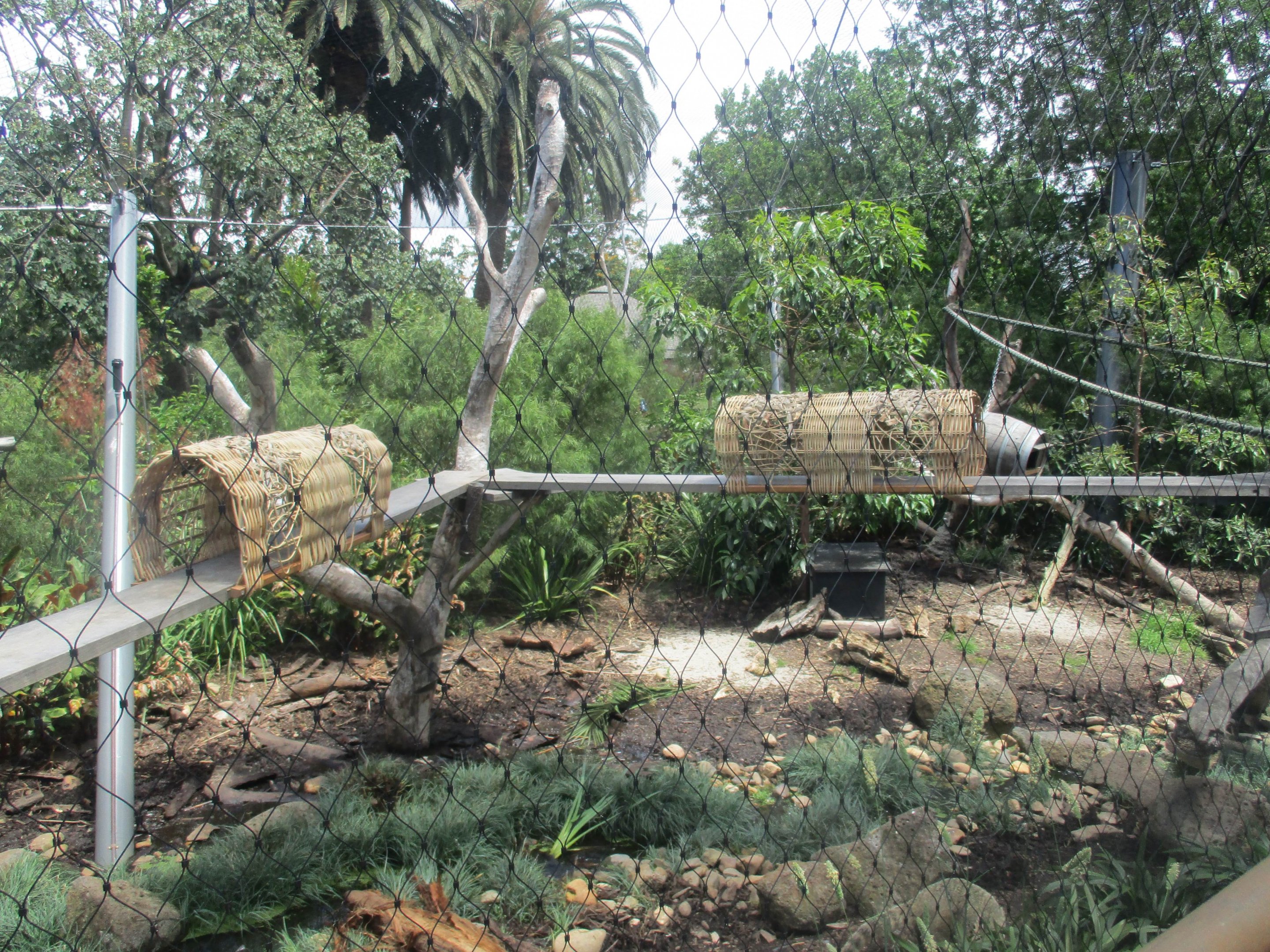
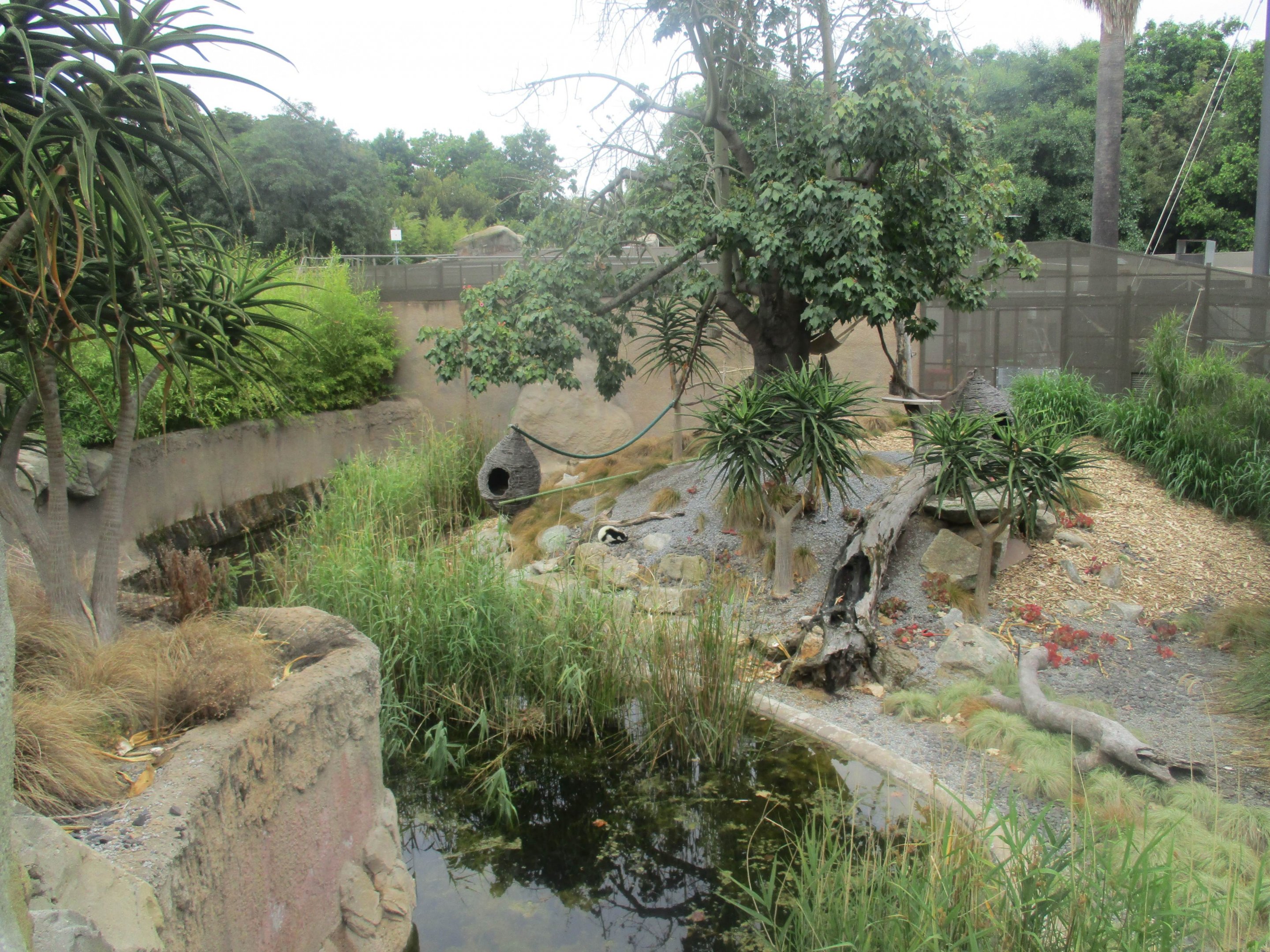
Walking through an impressive entrance and well-manicured gardens, the first animal exhibit along the first trail (which was labelled as Gorilla Rainforest on the map) was a very large netted walkthrough enclosure for Ring-tailed Lemurs. The exhibit was large enough to comfortably accommodate the lemurs and guests I thought and provided them with a good range of vantage points (e.g. wooden platforms). It would have been nice to have some lovebirds or Radiated tortoises introduced into the space but I guess this initial exhibit served its purpose as an engaging display for the general public and a good first impression. Upon exiting this walkthrough enclosure there was a large well-landscaped exhibit with an impressive central tree. It also contained a series of hammocks, wooden platforms and a few small huts. This exhibit contained a pair of Black and White Ruffed Lemurs.
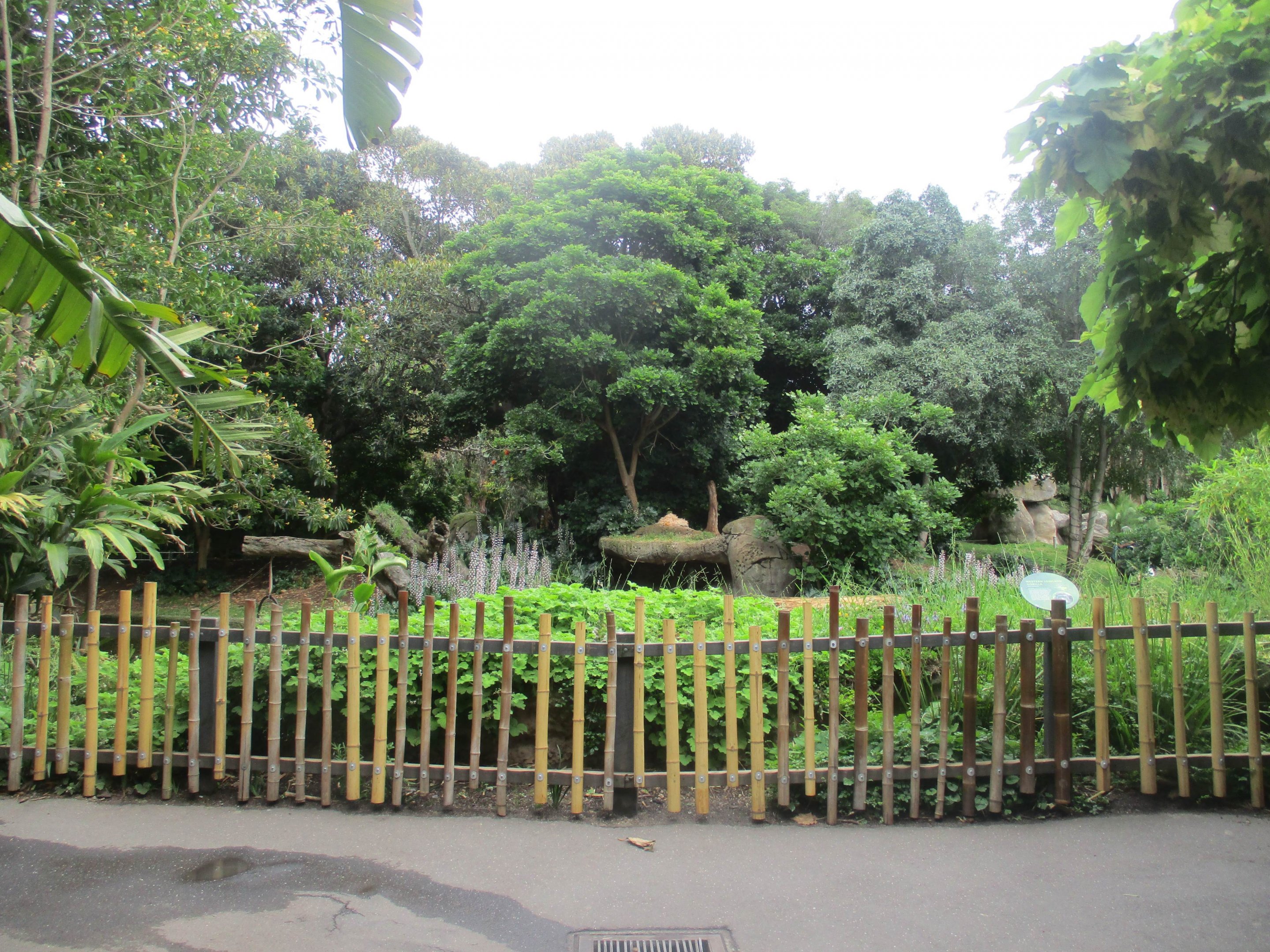
The next area represented one of my favourite spots in the zoo. I was greeted with a very lush enclosure with a dense canopy from a dry moat barrier. This enclosure had multiple viewing opportunities and vantage points including a large set of windows to watch the zoo’s small group of Western Lowland Gorillas. I really had to search for the occupants which I thought was brilliant. Despite being about thirty years old, it’s a timeless and mature exhibit – wonderfully executed and one of Melbourne’s key strengths.
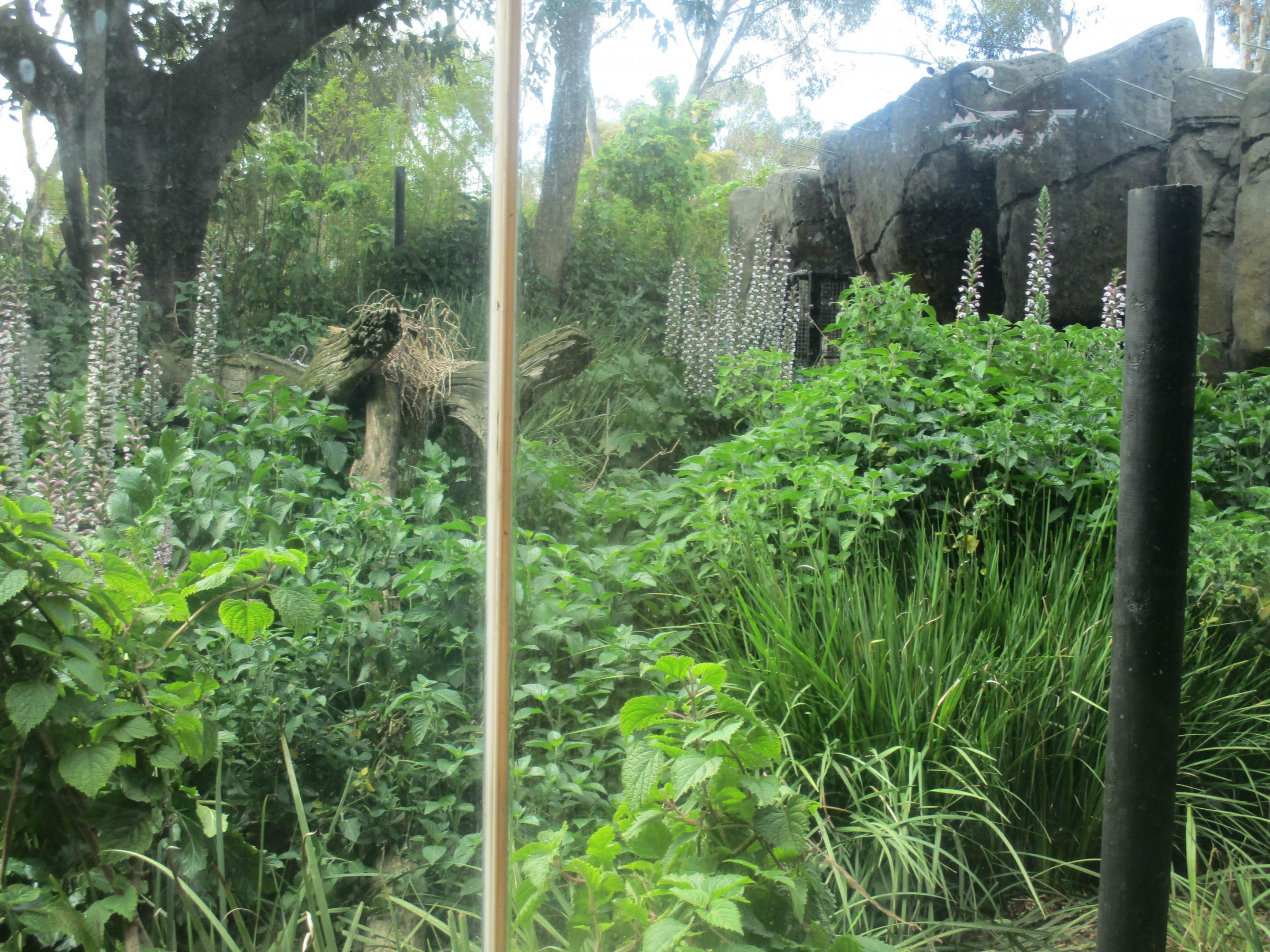
Next up were a set of glass-fronted exhibits – one was signed as the future home for their Brazilian Tapir [note: the tapir never did end up moving into this enclosure but rather ended up at Adelaide Zoo] and the other enclosure housed the zoo’s Pygmy Hippopotamus. The pygmy hippo enclosure also had underwater viewing which was quite impressive to see. Along the lush pathway there was another glass-fronted enclosure for a Southern Cassowary which was nice enough. Generously-planted as well. A real shame that the mandrills are no longer at Melbourne. I am sure most of you would agree that they would have really helped to tie in the remnants of the African rainforest theme.
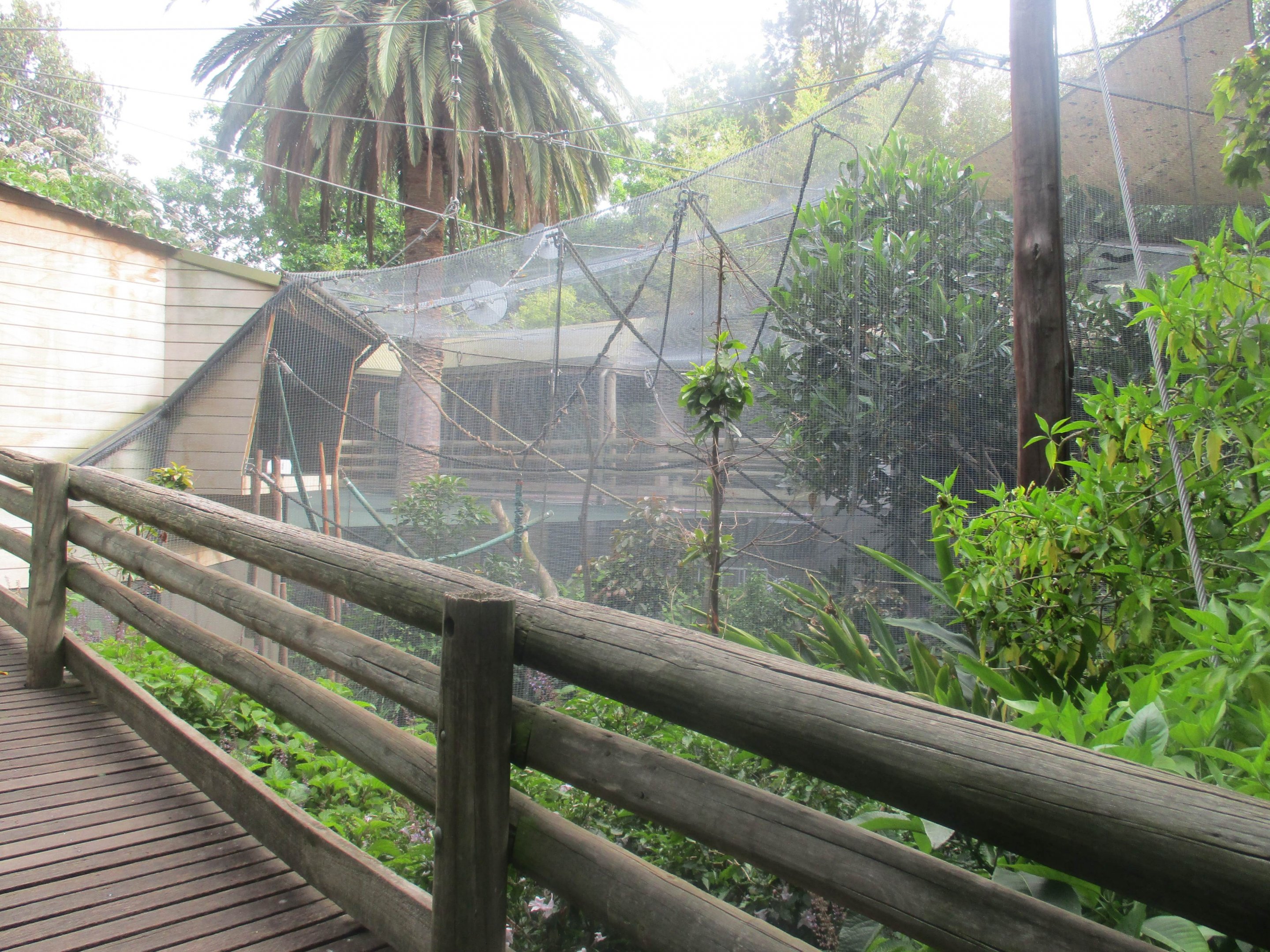
The final component of the Gorilla Rainforest trail contains the nucleus of the zoo’s primate collection. I loved the sound of the whole concept with the Tree-top Apes and Monkeys complex – showcasing a good range of primates with raised viewing opportunities seemed like a great idea. In person, I remember feeling that some of the exhibits were too small in my opinion but I did really enjoy the whole experience via the raised boardwalk. The first glass-fronted enclosure was one of the better exhibits and was well-planted with a more complex series of ropes than most exhibits. This enclosure also had two viewing windows and during my visit housed, a lone but very vocal male White-cheeked Gibbon. Continuing on were a pair of enclosures for the zoo’s five Black-handed Spider Monkeys including a very young infant clinging to her mother. On my visit the monkeys were separated with female and infant in one exhibit, and the remaining three in the other. Following the second viewing window for the first gibbon, was one of the smaller exhibits for a father-son pair of Black-capped Capuchins. They were both sleeping in a hammock during my visit. Next door, I was absolutely thrilled to see my first Eastern Black-and-white Colobus Monkeys – really elegant primates that demand attention. Like the capuchins, their enclosure was unfortunately one of the smaller exhibits if I remember correctly. Next up was the zoo’s main pair of White-cheeked Gibbons in another exhibit. There was also a smaller enclosure tucked in a corner which was empty and had the sprinklers on. Days later, the zoo introduced their Cotton-top Tamarins into this particular exhibit. The final exhibit in this complex was a small glass-fronted enclosure for Crimson-bellied Conure – one of my favourite species of conure we have available here in Australia. All in all, a bit of mixed bag with this treetop monkey area both in terms of species selection and the quality of the exhibits. [Note: there have since been several changes to the species line-up including the addition of Emperor Tamarins. These changes are covered in the Melbourne Zoo News 2020 thread].
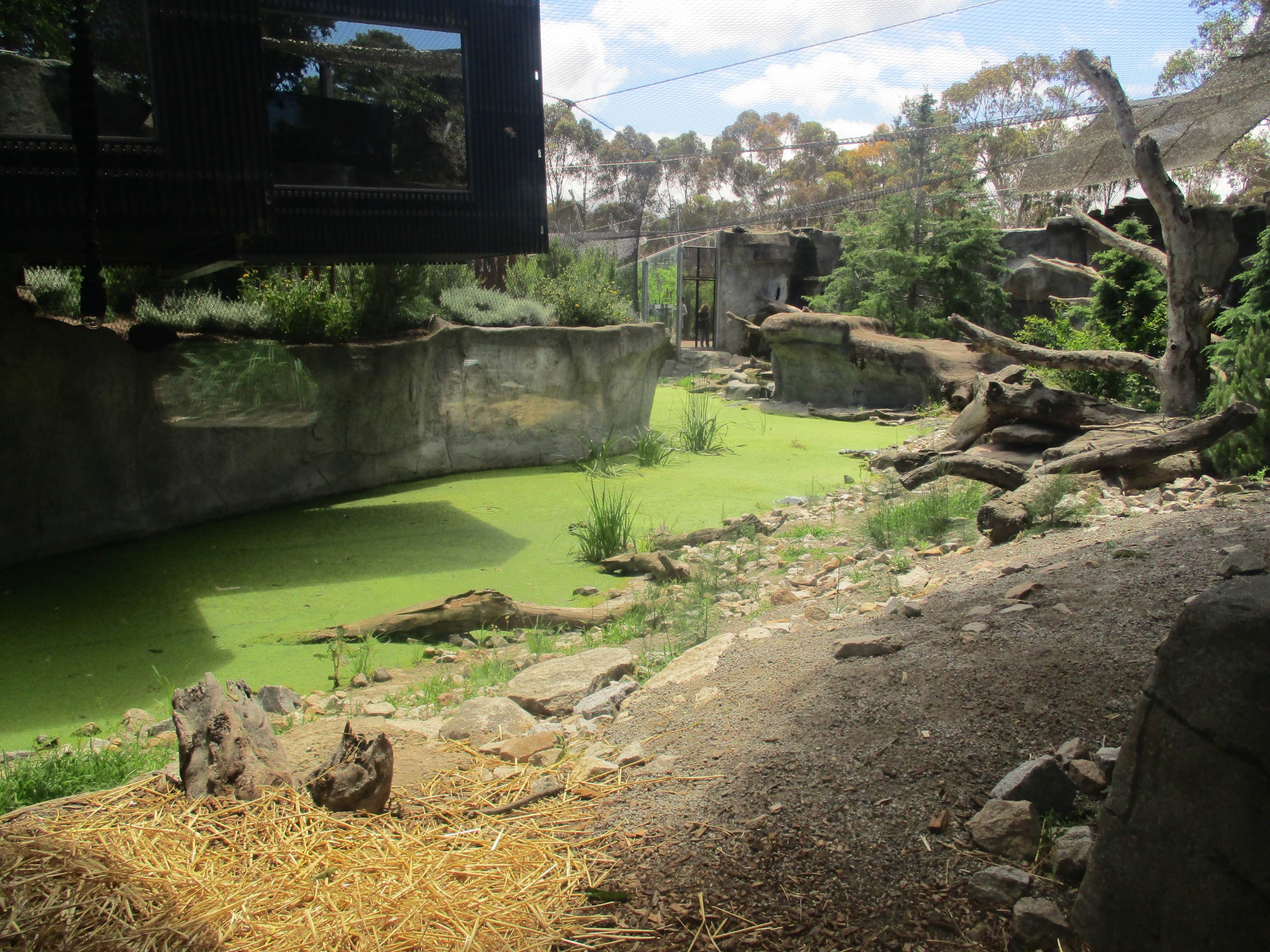
Continuing on, the Trail of the Elephants is a well-established complex with predominantly Asian species and is the second trail marked on the map. There was a stronger presence of theming in this area centred around the zoo’s group of elephants. The trail began with an enclosure for Asian Small-clawed Otters. Only two individuals were seen but this number has grown since my last visit. Their enclosure fitted well with the environment around it with effective plantings and a nice little rocky stream. Nearby was similarly naturalistic exhibit for Sumatran Tiger – I’m afraid I don’t remember much more about it but it was well-shaded.
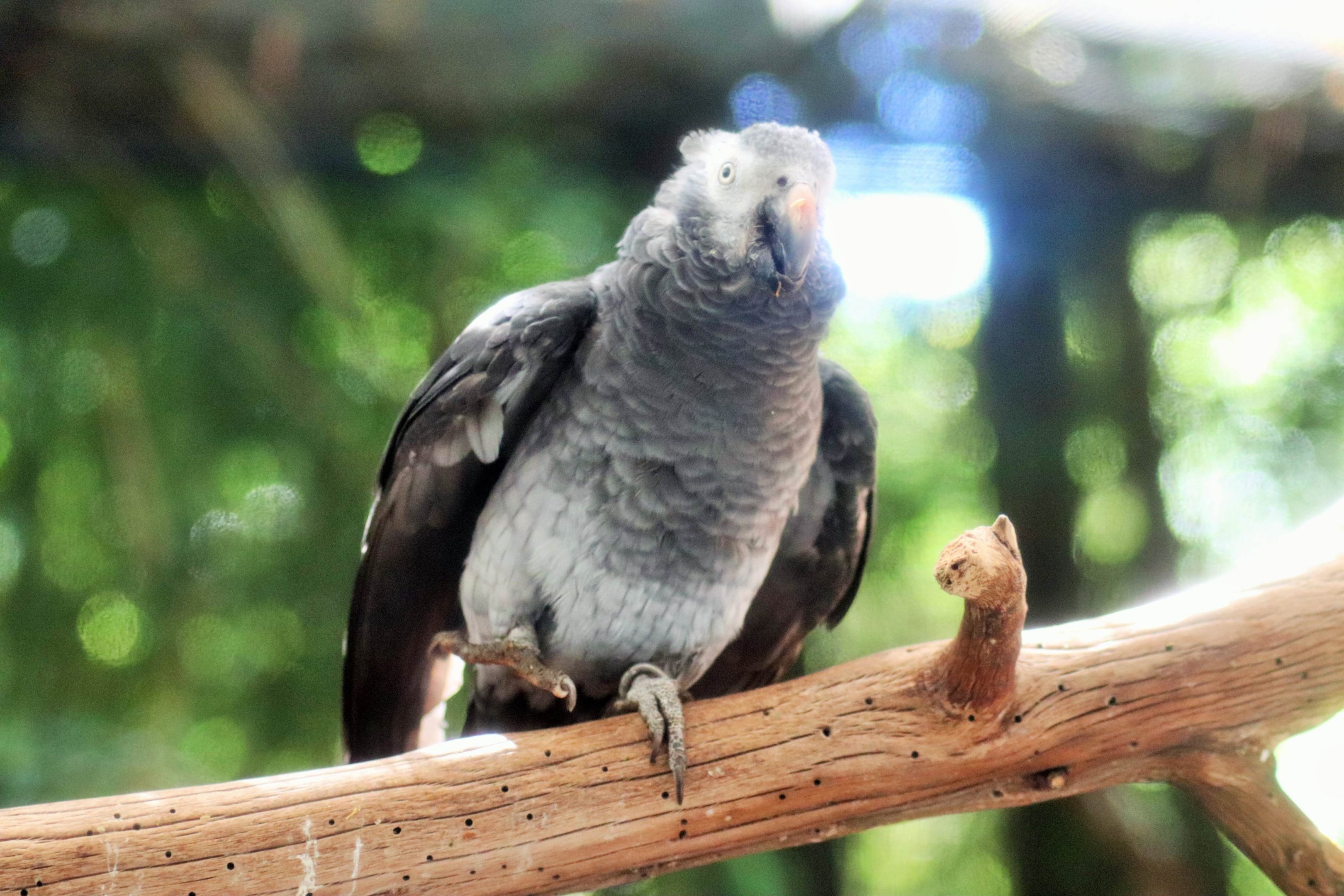
Nearby were a few aviaries. The pair of bird aviaries were pretty sparse with species and frankly a bit disappointing. The first glass-fronted aviary contained Timneh Grey Parrot and Noisy Pitta. The five grey parrots seemed to have just been introduced to the aviary the day I arrived as their travel packs were still in the enclosure. The second had Emerald Dove, Pied Stilt and Java Sparrow. Perhaps some lories, bulbuls or Nicobar Pigeons would have liven up these tired-looking aviaries. Looking at the Zoolex, this area certainly used to have a more balanced bird collection. There was also a Binturong housed somewhere along the trail in an aviary-style enclosure. It was pretty dark and difficult to see him. I had only ever seen binturong housed in open-topped enclosures which I have to say certainly improves visibility somewhat.
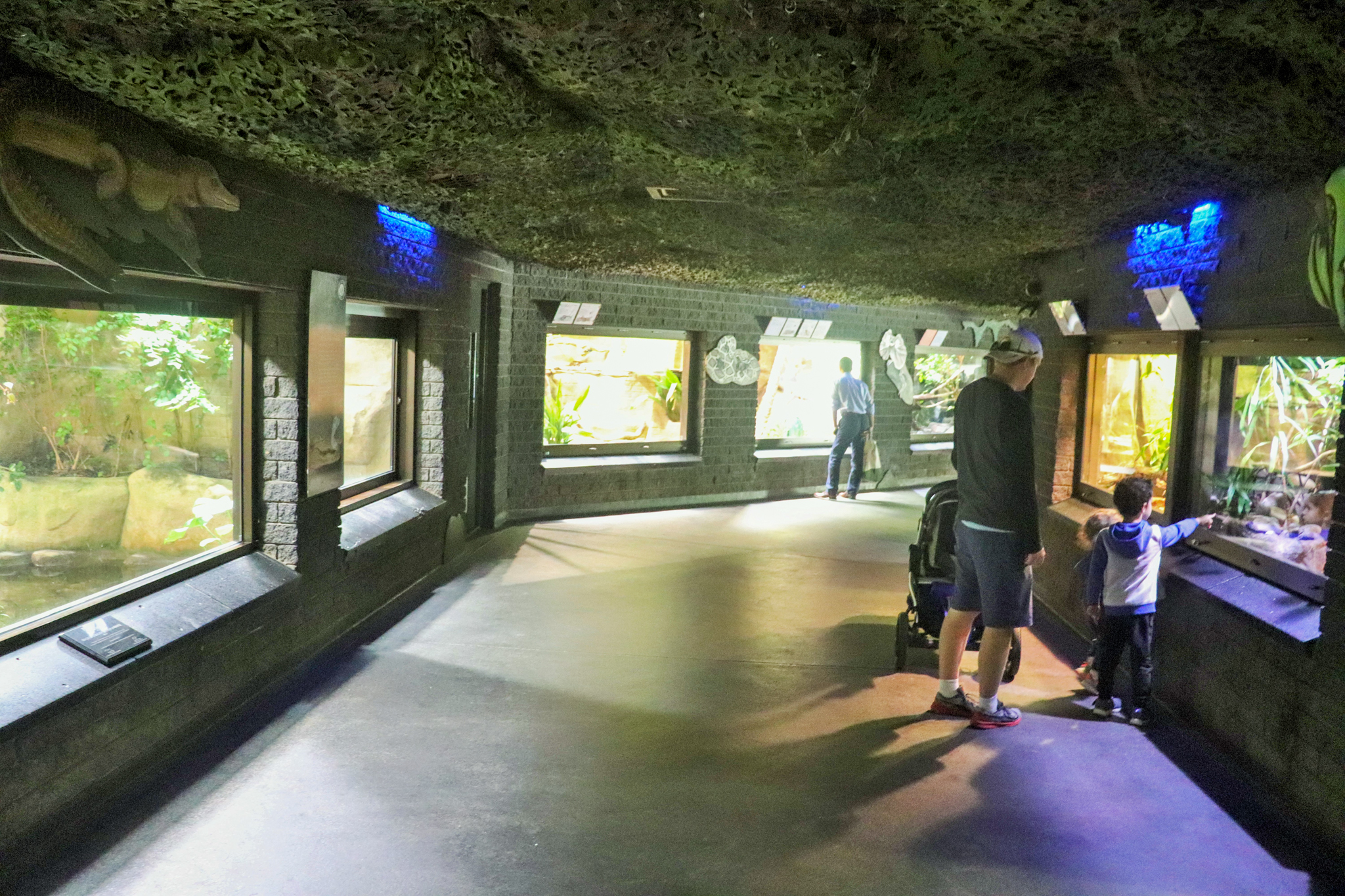
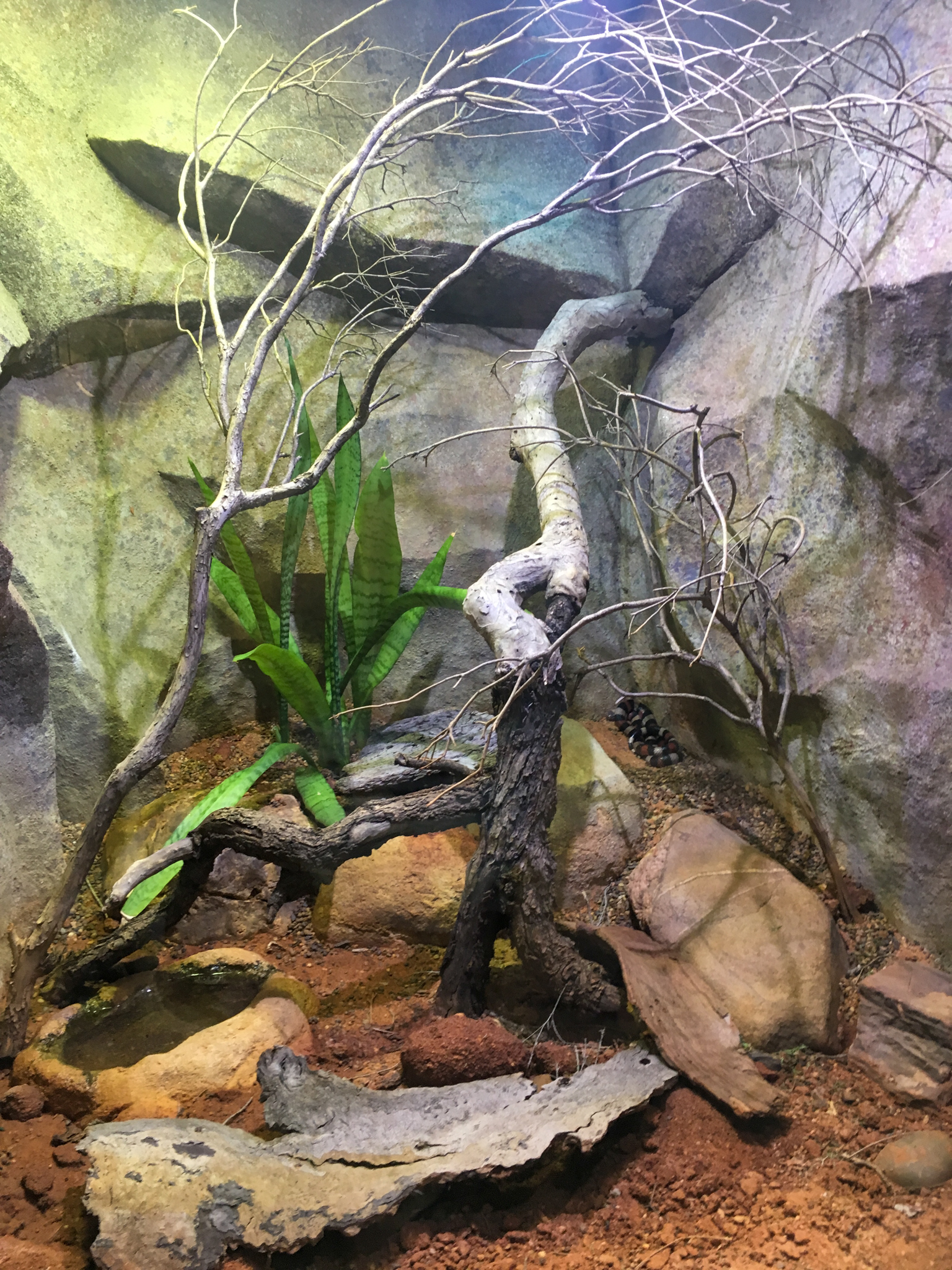
There was also small indoor building with a series of terrariums nearby; the largest one contained Fijian Crested Iguana and Star Tortoise. It was also signed for Chinese Three-striped Box Turtle but I saw no sign of the species. A nearby tank had also had several species of stick insects – Spiny Leaf Insect, Children’s Stick Insect, Eastern Goliath and Giant Walking Stick. Finally, there was also an enclosure for Boyd’s Forest Dragon.
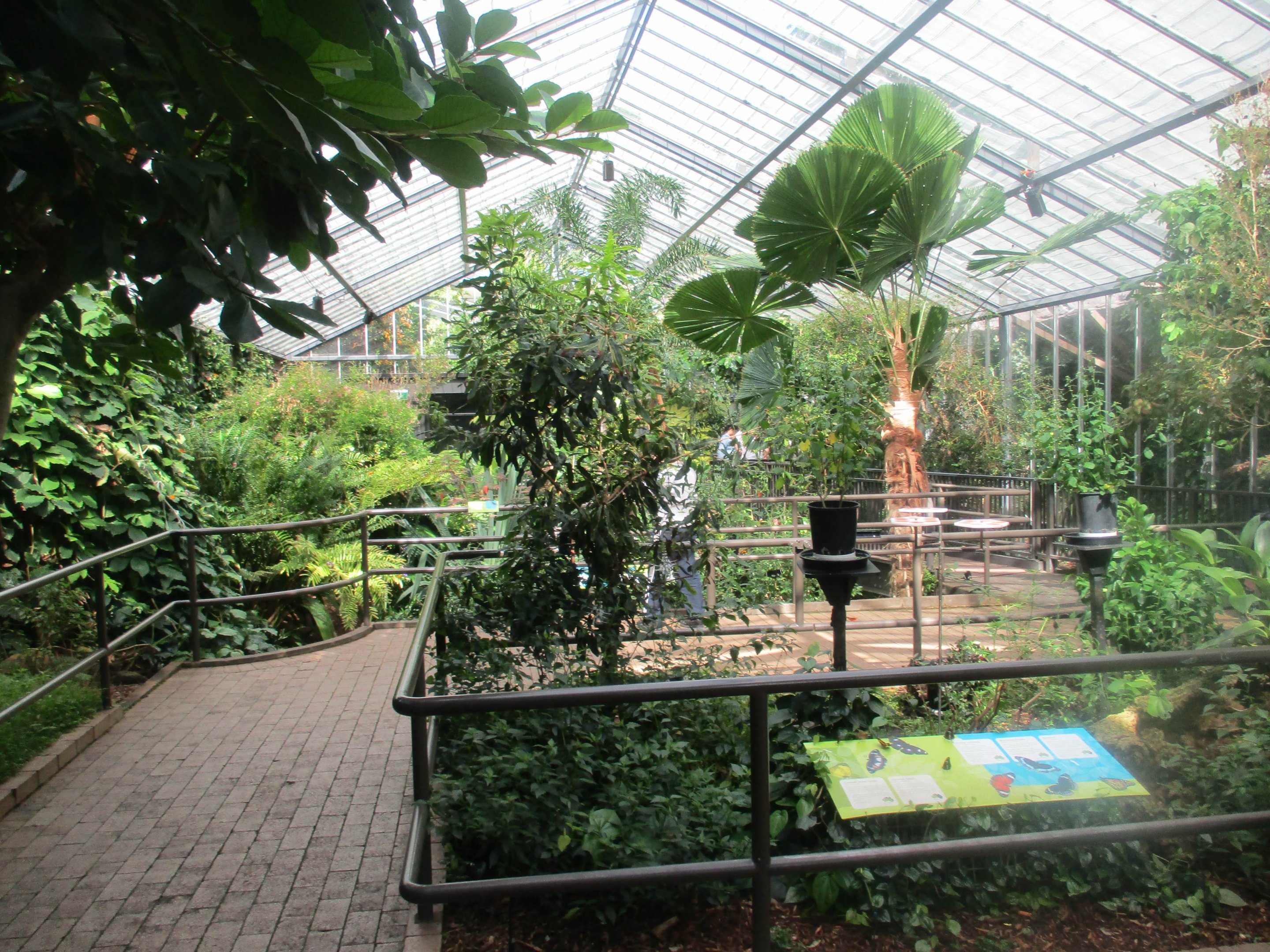
The crown jewel of the zoo for me was their Butterfly House. An absolutely brilliant place tucked quietly along the trail. Why more zoos in Australasia don’t have a permanent butterfly house is beyond me. The general public seemed to love it just as much as I did. I heard lots of positive comments and saw many people slow down and enjoy the environment around them. The humidity and heat also reminded me of Brisbane during the crisp Melbourne morning I was visiting. The range of species was decent as well – Red-bodied Swallowtail, Orchard Swallowtail, Australian Lurcher, Cruiser, Common Crow, Common Eggfly, Blue-banded Eggfly and Orange Lacewing. The signs listed more species but these were the species I saw. I was also hoping to see my first birdwings but there didn’t seem to be any around during my visit. In recent livestreams the zoo has released, it seems like the Butterfly House has an even better range with more showier species like birdwings, Blue Tigers and Ulysses butterflies. There was also an unsigned stick insect I saw in with the butterflies – which was later confirmed as a Spiny Leaf Insect. Outside the Butterfly House, was a small display about their work with the Lord Howe Island Stick Insect but I didn’t see any actual live stick insects.
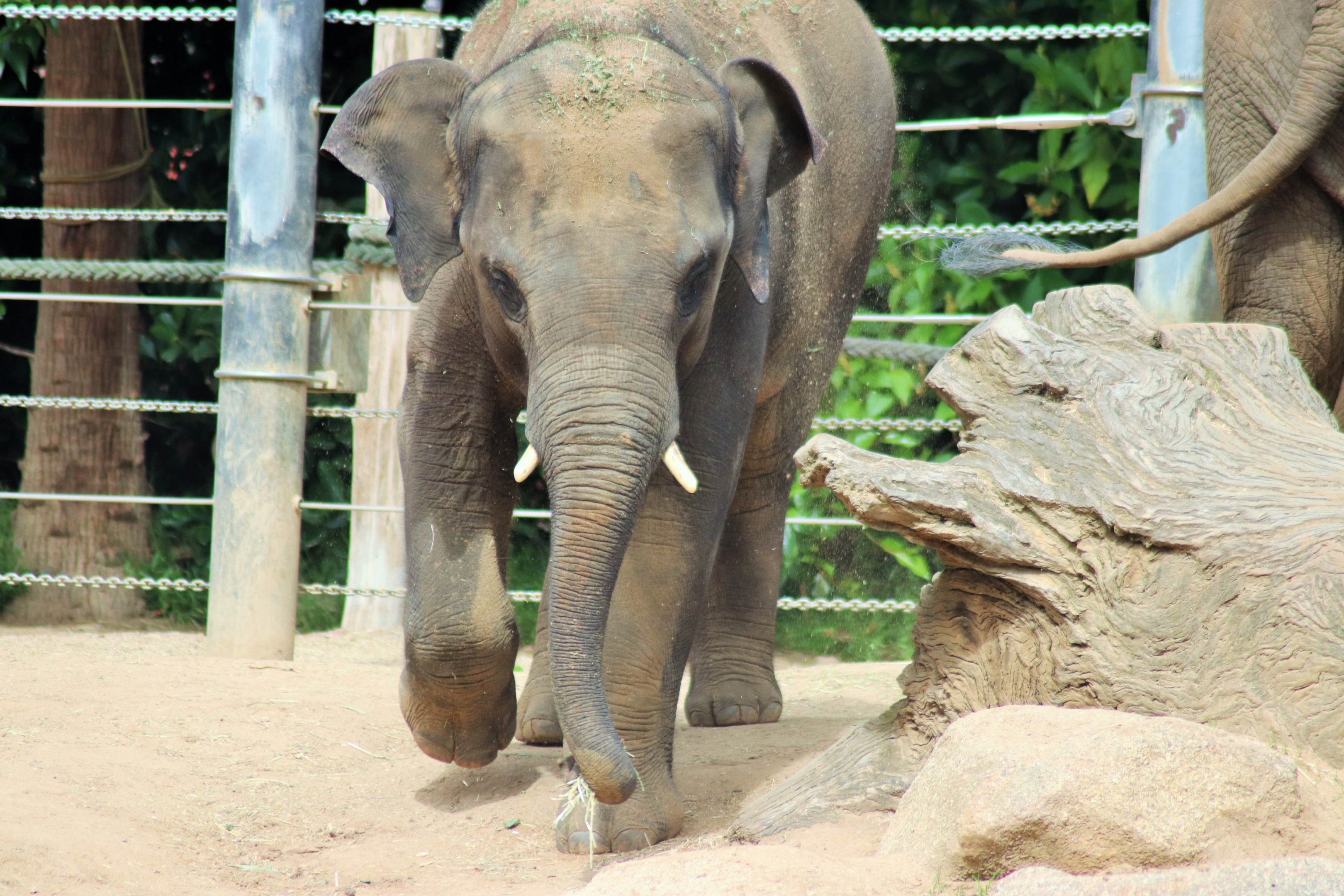
Moving on was the Elephant Barn and the main elephant enclosure where I saw five of their six Asian Elephants at the time. Lots of cultural and elephant theming as expected. I have to say I liked this elephant complex way more than the one at Taronga Zoo but it still isn’t ideal having the elephants in a city zoo. There has been enough elephant-related discussion about this but their move to Werribee is certainly overdue and hopefully their replacement will be impressive. I think Trail of the Indian Rhino has a ring to it!

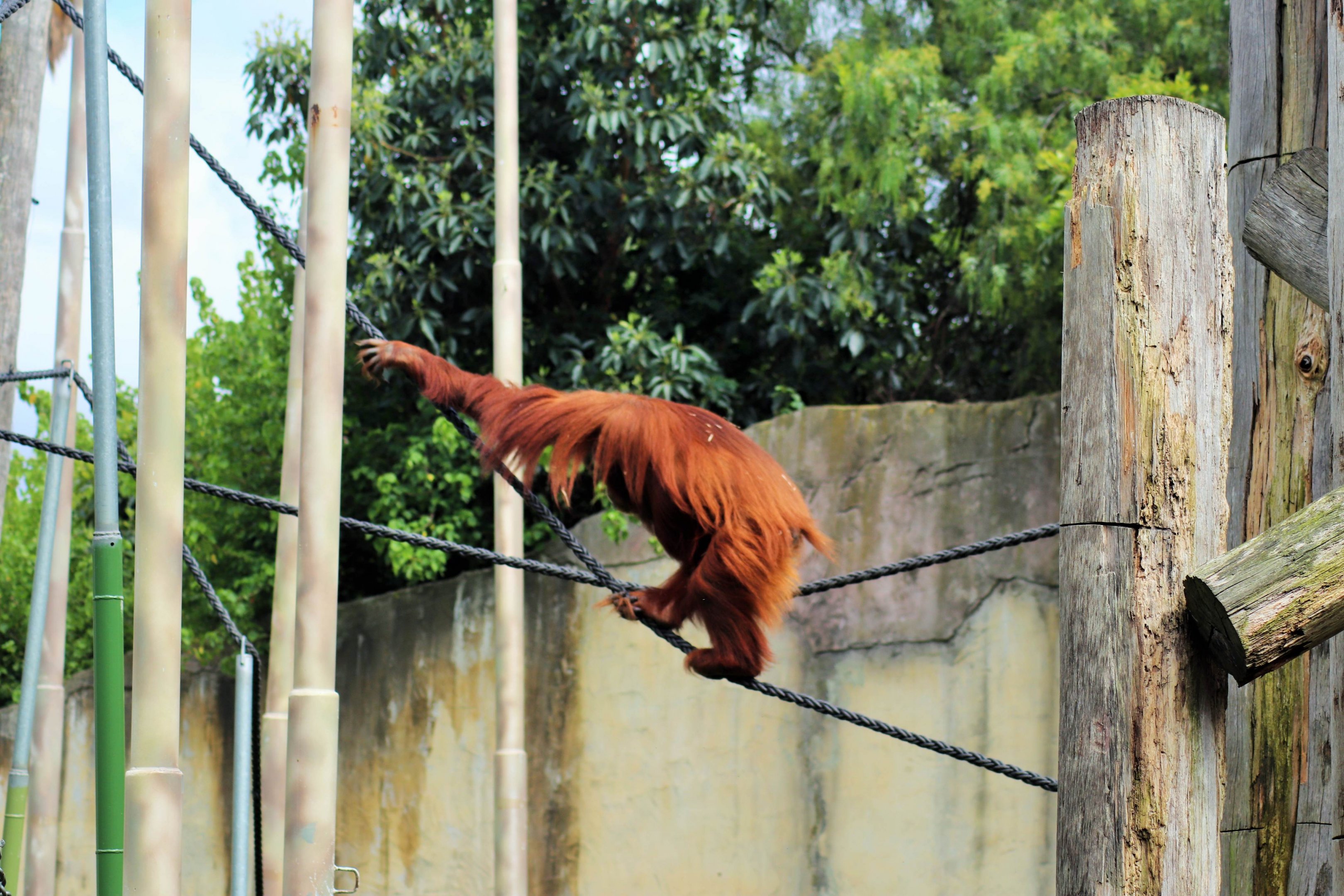
To reach the final section of the precinct, I had to backtrack my way out of the area because the pathway to the orangs was closed during my visit. The Orangutan Sanctuary comprises of an outdoor exhibit, a netted enclosure and a day room. Albeit looking a bit tired, I quite liked the outdoor orang enclosure especially the bamboo poles. I saw the Hybrid Orangutans outdoors and the Sumatran Orangutans in the netted exhibit. There was also lots of signage and a strong conversation message particularly present in this area.
Well so far, we have covered two of Melbourne Zoo’s core trails that present some of the more well-established areas with popular exhibits ranging from the excellent (butterfly house, gorillas) to the average (some of the primate enclosures, elephants). Part Two will continue onto the Australian Bush and the central area of the Melbourne Zoo including the few African species and the outstanding Reptile House.
This review will be broken up into three parts roughly based on location within the zoo: part 1 will cover Gorilla Rainforest and Trail of the Elephants, part 2 will discuss the Australian Bush, central zoo area and Reptile House, and finally part 3 will include the Carnivores Trail, Wild Sea, Growing Wild, Amazon Aviary/Japanese Garden and Final Thoughts.
Map to follow along with (note there have been a few changes as it’s a 2020 edition): https://www.zoo.org.au/media/4276/melbourne-zoo-map-october-2020.pdf
PART 1 – Gorilla Rainforest and Trail of the Elephants
Walking through an impressive entrance and well-manicured gardens, the first animal exhibit along the first trail (which was labelled as Gorilla Rainforest on the map) was a very large netted walkthrough enclosure for Ring-tailed Lemurs. The exhibit was large enough to comfortably accommodate the lemurs and guests I thought and provided them with a good range of vantage points (e.g. wooden platforms). It would have been nice to have some lovebirds or Radiated tortoises introduced into the space but I guess this initial exhibit served its purpose as an engaging display for the general public and a good first impression. Upon exiting this walkthrough enclosure there was a large well-landscaped exhibit with an impressive central tree. It also contained a series of hammocks, wooden platforms and a few small huts. This exhibit contained a pair of Black and White Ruffed Lemurs.
The next area represented one of my favourite spots in the zoo. I was greeted with a very lush enclosure with a dense canopy from a dry moat barrier. This enclosure had multiple viewing opportunities and vantage points including a large set of windows to watch the zoo’s small group of Western Lowland Gorillas. I really had to search for the occupants which I thought was brilliant. Despite being about thirty years old, it’s a timeless and mature exhibit – wonderfully executed and one of Melbourne’s key strengths.
Next up were a set of glass-fronted exhibits – one was signed as the future home for their Brazilian Tapir [note: the tapir never did end up moving into this enclosure but rather ended up at Adelaide Zoo] and the other enclosure housed the zoo’s Pygmy Hippopotamus. The pygmy hippo enclosure also had underwater viewing which was quite impressive to see. Along the lush pathway there was another glass-fronted enclosure for a Southern Cassowary which was nice enough. Generously-planted as well. A real shame that the mandrills are no longer at Melbourne. I am sure most of you would agree that they would have really helped to tie in the remnants of the African rainforest theme.
The final component of the Gorilla Rainforest trail contains the nucleus of the zoo’s primate collection. I loved the sound of the whole concept with the Tree-top Apes and Monkeys complex – showcasing a good range of primates with raised viewing opportunities seemed like a great idea. In person, I remember feeling that some of the exhibits were too small in my opinion but I did really enjoy the whole experience via the raised boardwalk. The first glass-fronted enclosure was one of the better exhibits and was well-planted with a more complex series of ropes than most exhibits. This enclosure also had two viewing windows and during my visit housed, a lone but very vocal male White-cheeked Gibbon. Continuing on were a pair of enclosures for the zoo’s five Black-handed Spider Monkeys including a very young infant clinging to her mother. On my visit the monkeys were separated with female and infant in one exhibit, and the remaining three in the other. Following the second viewing window for the first gibbon, was one of the smaller exhibits for a father-son pair of Black-capped Capuchins. They were both sleeping in a hammock during my visit. Next door, I was absolutely thrilled to see my first Eastern Black-and-white Colobus Monkeys – really elegant primates that demand attention. Like the capuchins, their enclosure was unfortunately one of the smaller exhibits if I remember correctly. Next up was the zoo’s main pair of White-cheeked Gibbons in another exhibit. There was also a smaller enclosure tucked in a corner which was empty and had the sprinklers on. Days later, the zoo introduced their Cotton-top Tamarins into this particular exhibit. The final exhibit in this complex was a small glass-fronted enclosure for Crimson-bellied Conure – one of my favourite species of conure we have available here in Australia. All in all, a bit of mixed bag with this treetop monkey area both in terms of species selection and the quality of the exhibits. [Note: there have since been several changes to the species line-up including the addition of Emperor Tamarins. These changes are covered in the Melbourne Zoo News 2020 thread].
Continuing on, the Trail of the Elephants is a well-established complex with predominantly Asian species and is the second trail marked on the map. There was a stronger presence of theming in this area centred around the zoo’s group of elephants. The trail began with an enclosure for Asian Small-clawed Otters. Only two individuals were seen but this number has grown since my last visit. Their enclosure fitted well with the environment around it with effective plantings and a nice little rocky stream. Nearby was similarly naturalistic exhibit for Sumatran Tiger – I’m afraid I don’t remember much more about it but it was well-shaded.
Nearby were a few aviaries. The pair of bird aviaries were pretty sparse with species and frankly a bit disappointing. The first glass-fronted aviary contained Timneh Grey Parrot and Noisy Pitta. The five grey parrots seemed to have just been introduced to the aviary the day I arrived as their travel packs were still in the enclosure. The second had Emerald Dove, Pied Stilt and Java Sparrow. Perhaps some lories, bulbuls or Nicobar Pigeons would have liven up these tired-looking aviaries. Looking at the Zoolex, this area certainly used to have a more balanced bird collection. There was also a Binturong housed somewhere along the trail in an aviary-style enclosure. It was pretty dark and difficult to see him. I had only ever seen binturong housed in open-topped enclosures which I have to say certainly improves visibility somewhat.
There was also small indoor building with a series of terrariums nearby; the largest one contained Fijian Crested Iguana and Star Tortoise. It was also signed for Chinese Three-striped Box Turtle but I saw no sign of the species. A nearby tank had also had several species of stick insects – Spiny Leaf Insect, Children’s Stick Insect, Eastern Goliath and Giant Walking Stick. Finally, there was also an enclosure for Boyd’s Forest Dragon.
The crown jewel of the zoo for me was their Butterfly House. An absolutely brilliant place tucked quietly along the trail. Why more zoos in Australasia don’t have a permanent butterfly house is beyond me. The general public seemed to love it just as much as I did. I heard lots of positive comments and saw many people slow down and enjoy the environment around them. The humidity and heat also reminded me of Brisbane during the crisp Melbourne morning I was visiting. The range of species was decent as well – Red-bodied Swallowtail, Orchard Swallowtail, Australian Lurcher, Cruiser, Common Crow, Common Eggfly, Blue-banded Eggfly and Orange Lacewing. The signs listed more species but these were the species I saw. I was also hoping to see my first birdwings but there didn’t seem to be any around during my visit. In recent livestreams the zoo has released, it seems like the Butterfly House has an even better range with more showier species like birdwings, Blue Tigers and Ulysses butterflies. There was also an unsigned stick insect I saw in with the butterflies – which was later confirmed as a Spiny Leaf Insect. Outside the Butterfly House, was a small display about their work with the Lord Howe Island Stick Insect but I didn’t see any actual live stick insects.
Moving on was the Elephant Barn and the main elephant enclosure where I saw five of their six Asian Elephants at the time. Lots of cultural and elephant theming as expected. I have to say I liked this elephant complex way more than the one at Taronga Zoo but it still isn’t ideal having the elephants in a city zoo. There has been enough elephant-related discussion about this but their move to Werribee is certainly overdue and hopefully their replacement will be impressive. I think Trail of the Indian Rhino has a ring to it!
To reach the final section of the precinct, I had to backtrack my way out of the area because the pathway to the orangs was closed during my visit. The Orangutan Sanctuary comprises of an outdoor exhibit, a netted enclosure and a day room. Albeit looking a bit tired, I quite liked the outdoor orang enclosure especially the bamboo poles. I saw the Hybrid Orangutans outdoors and the Sumatran Orangutans in the netted exhibit. There was also lots of signage and a strong conversation message particularly present in this area.
Well so far, we have covered two of Melbourne Zoo’s core trails that present some of the more well-established areas with popular exhibits ranging from the excellent (butterfly house, gorillas) to the average (some of the primate enclosures, elephants). Part Two will continue onto the Australian Bush and the central area of the Melbourne Zoo including the few African species and the outstanding Reptile House.