Roll for Zoo

CarnotaurusSastrei

Well-Known Member
I initially posted this idea in the "Quizzes, Competitions, and Games" forum, but was told that it would be a better fit for this forum. The premise is relatively simple: you get to design a zoo as you see fit, but the number of exhibits and either the number of enclosures within each exhibit or the number of animals on display in each exhibit are determined by rolling dice.

Part 1: Exhibits
To determine the number of exhibits/regions your zoo has, roll 4 four-sided dice (4d4). Ideally, each exhibit should have some sort of overlying theme that unites the organisms and enclosures that it contains, but the general theme for each exhibit is up to you.

Part 2: Enclosures/Animals
To determine what each of the exhibits look like in terms of species composition, you have two options:

Option 1: Go exhibit-by-exhibit and roll 4 six-sided dice (4d6) to determine the number of enclosures that each exhibit has. With this option, feel free to make as many or as few mixed-species you want, though ideally keep the number of species included within reason.

Option 2: It's a similar process to what's stated above, but instead you roll 6d6 to determine the number of species and/or subspecies that each exhibit holds.

Part 3: Populating/Organizing

Given the numbers you rolled in parts 1 and 2, feel free to populate your zoo with animals as you see fit. My main suggestions would be to stick with extant animals and ideally give some amount of preference to animals that have some sort of history of being in captivity, but that last part isn't necessarily a hard and fast rule.
 
Can I go in detail of each exhibit one by one?

Here is what I got for the probability, I did option 2.
This would be located in Barnstable MA, United States.

Exhibit 1 - Entry Plaza (12 species)
Exhibit 2 - the Land Down Under (18 species)
Exhibit 3 - the Nocturnal Kingdom (20 species)
Exhibit 4 - Big Sur (16 species)
Exhibit 5 - Inside Africa (18 species)
Exhibit 6 - the Great Steppe (12 species)
Exhibit 7 - Mediterranean Trek - (15 species)
Exhibit 8 - Lobos del Cerado (15 species), name credit -> @Austin the Sengi

I'll talk about the animals later either in a list or in detail, depending what's allowed
 
Can I go in detail of each exhibit one by one?

Here is what I got for the probability, I did option 2.
This would be located in Barnstable MA, United States.

Exhibit 1 - Entry Plaza (12 species)
Exhibit 2 - the Land Down Under (18 species)
Exhibit 3 - the Nocturnal Kingdom (20 species)
Exhibit 4 - Big Sur (16 species)
Exhibit 5 - Inside Africa (18 species)
Exhibit 6 - the Great Steppe (12 species)
Exhibit 7 - Mediterranean Trek - (15 species)
Exhibit 8 - Lobos del Cerado (15 species), name credit -> @Austin the Sengi

I'll talk about the animals later either in a list or in detail, depending what's allowed
Feel free to include at least a list of the species you've chosen
 
This is for the entry plaza with 12 species.

When you pass ticket booths, there is an 8,000 sq. ft. aviary that is 16 ft. tall There are shallow wading pools, foraging pools with brine shrimp, mudflats, plants, and trees. It's home to a non-pinioned flamboyance of 12.12 Lesser Flamingo Phoeniconaias minor.
full

Lesser Flamingos, Image Credit -> @Fat-tailed dwarf lemur
full

Possible Enclosure Look, Image Credit -> @snowleopard

Then, there is the Penguin Cafe on the right side of the pathway, and the Education Center on the left side of the pathway, housing ambassador species. In the Polar Cafe, there is a 1,200 sq. ft. large and 12 ft. tall enclosure. It has a 5 ft. deep saltwater pool, nesting platforms, rocky features, and a land area. Cafe-goers can watch a waddle of 6.6 Chinstrap Penguin Pygoscelis antarcticus.
full

Chinstrap Penguin, Image Credit -> @phraps
full

Possible Look of Enclosure, Image Credit -> @Mr Gharial

If you go in the Education Center, there are various species native to New England. The first enclosure you will meet inside, is a 3,000 sq. ft. aviary with a height of 16 ft. It simulates the Cape Cod coast, having vegetation, sandy areas, mudflats, shallow pools, and nesting areas. There, you can see a flock of 4.4 Atlantic Short-Billed Dowitcher Limnodromus griseus griseus, a parcel of 2.2 Mainland American Oystercatcher Haematopus palliatus palliatus, and a tangle of 5.5 Red Knot Calidris canutus. These birds would ideally be rescues.

full

Short-Billed Dowitcher, Image Credit -> @RatioTile
full

American Oystercatcher, Image Credit -> @SusScrofa
full

Red Knot, Image Credit -> @splendens
full

Possible Look of Enclosure but Netted, Image Credit -> @Astrotom3000

After that, there is a 1500 gallon aquarium with a sandy bottom, rock crevices, and artificial reef structures. There is also a shallow touch pool for the crabs connected to the enclosure. I would house a cast of 2.4 Atlantic Horseshoe Crab Limulus polyphemus and a school of 1.4 Planehead Filefish Stephanolepis hispida.

full

Atlantic Horseshoe Crab, Image Credit -> @MagpieGoose
full

Planehead Filefish, Image Credit -> @Astrotom3000
full

Possible Look of Tank but It Would Be A Bit Larger, Image Credit -> @amur leopard

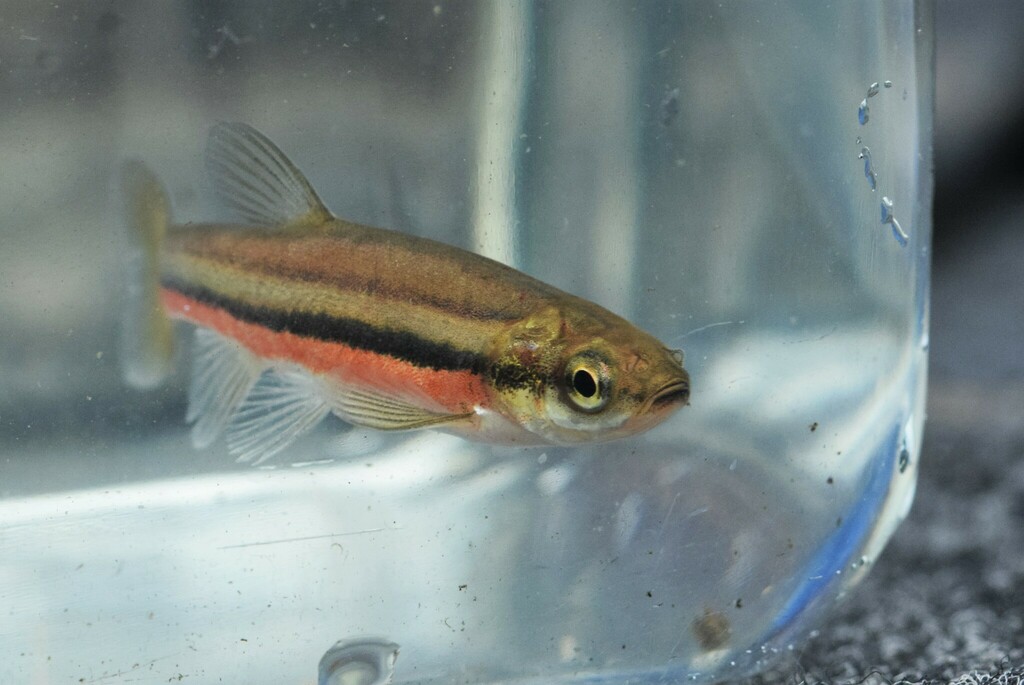
Then, the enclosures would transition from saltwater to freshwater with a 300 gallon aquarium being next. It would have sandy patches, plants, open swimming areas, rocks, and driftwood which would allow a school of 0.0.36 Northern Redbelly Dace Chrosomus eos.

large.jpeg

Northern Redbelly Dace, Image Credit -> iNaturalist
full

Possible Tank Look (without pumpkin), Image Credit -> @TinoPup

After that, there would be a 32 sq. ft. large enclosure with a height of 3 ft. It has vegetation, rocks, and a shallow pool. It would be home to a bale of 1.2 Wood Turtle Glyptemys insculpta rescues.

full

Wood Turtle, Image Credit -> @Astrotom3000
full

Possible Tank Look, Image Credit -> @CarnotaurusSastrei

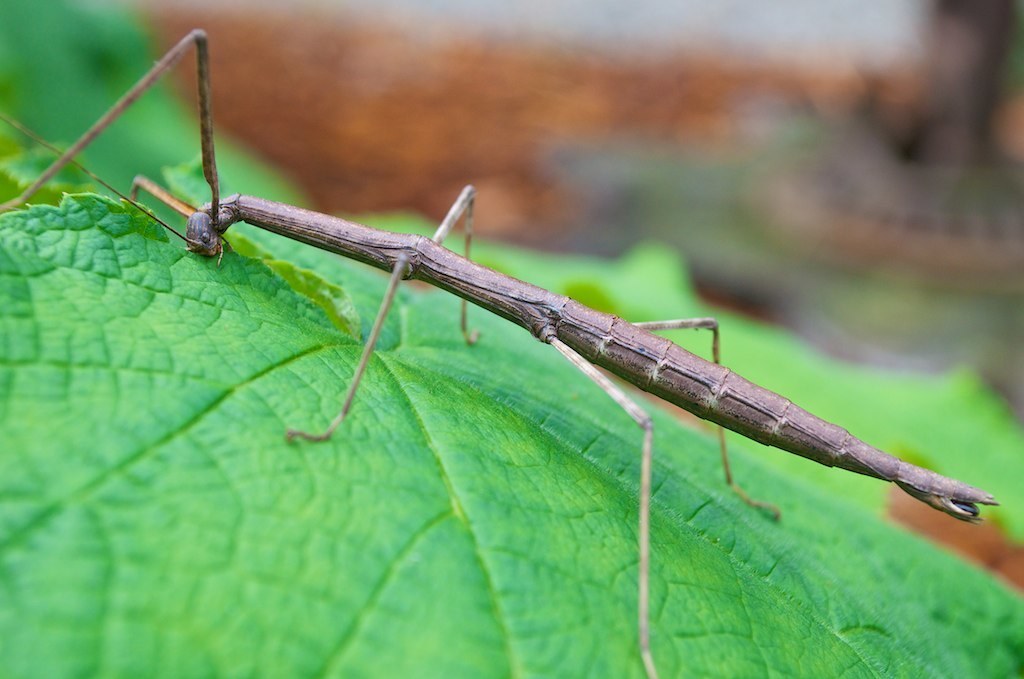
After these aquatic enclosures, there would be an education room about different species in New England and how they adapt to the cold. The first enclosure is 2 ft. tall, 1.5 ft wide, and 1.5 ft deep. It has branches, twigs, vegetation, and has a group of 0.0.6 Northern Walkingstick Diapheromera femorata.

large.jpg

Northern Walking stick, Image Credit -> iNaturalist
full

Possible Enclosure Look, Image Credit -> @TinoPup

The second enclosure there is 18 inches long, 18 inches wide, and 24 inches tall. There are plants, a shallow water dish, cork bark, branches, and vines. It would house an army of 2.2 Grey Treefrog Hyla versicolor.

full

Possible Enclosure Look, Image Credit -> @Neil chace
The final enclosure is 6 sq. ft. large, with hollow logs, and bark pieces. It's home to a breeding swarm of 3.3 American Burying Beetle Nicrophorus americanus.
american-burying-beetle-nicrophorus-americanus.jpg

American Burying Beetle, Image Credit -> Xerces Society
full

Possible Look of Tank, Image Credit -> @Moebelle

I’ll continue with the next exhibit, later this week.
 
Here's a zoo I made as a bit of an example. For part 2, I decided to go with option 2

Number of Exhibits: 11
I've decided to try and theme each exhibit around some sort of broad biome/geographical region.

Exhibit 1: Deserts (23 taxa)
  1. Scimitar-Horned Oryx
  2. Dama Gazelle
  3. Fennec Fox
  4. Sand Cat
  5. Black-Footed Cat
  6. Addax
  7. Northwest African Cheetah
  8. Meerkat
  9. Domestic Bactrian Camel
  10. Mongolian Wild Ass
  11. Southern Viscacha
  12. South American Gray Fox
  13. Gila Monster
  14. Mojave Sidewinder
  15. Common Chuckwalla
  16. Javelina
  17. Crested Caracara
  18. Zebra-Tailed Lizard
  19. Greater Roadrunner
  20. Burrowing Owl
  21. Perentie
  22. Thorny Devil
  23. Red Kangaroo

Exhibit 2: Mountains (18 taxa)
  1. Snow Leopard
  2. Himalayan Red Panda
  3. Puma
  4. Bighorn Sheep
  5. Alpine Ibex
  6. Alpine Chamois
  7. Llama
  8. Mountain Tapir
  9. Lesser Rhea
  10. Domestic Yak
  11. Eurasian Brown Bear
  12. Eastern Imperial Eagle
  13. Markhor
  14. Argali
  15. West Caucasian Tur
  16. Spider-Tailed Horned Viper
  17. Mangshan Pit Viper
  18. Ethiopian Mountain Viper

Exhibit 3: Tropical Grasslands (24 taxa)
  1. African Savanna Elephant
  2. Reticulated Giraffe
  3. Eastern Black Rhinoceros
  4. Ostrich
  5. Grévy's Zebra
  6. Common Impala
  7. Water Buffalo
  8. Black-Tailed Wildebeest
  9. African Lion
  10. Common Warthog
  11. Olive Baboon
  12. Maned Wolf
  13. Brazilian Tapir
  14. Red-Legged Seriema
  15. Common Wallaroo
  16. Short-Beaked Echidna
  17. Eastern Gray Kangaroo
  18. Roan Antelope
  19. Giant Eland
  20. African Wild Dog
  21. Greater Kudu
  22. Black-Crowned Crane
  23. Gerenuk
  24. Kori Bustard

Exhibit 4: Lakes (17 taxa)
  1. Baikal Teal
  2. Lake Sturgeon
  3. Baikal Seal
  4. Caspian Turtle
  5. Beluga Sturgeon
  6. Spotted-Necked Otter
  7. Haplochromis nyererei
  8. Burbot
  9. Lake Whitefish
  10. Titicaca Water Frog
  11. East African Black Mud Turtle
  12. Nile Crocodile
  13. Greater Flamingo
  14. Ninespine Stickleback
  15. Bigmouth Buffalo
  16. Lake Erie Watersnake
  17. Wels Catfish

Exhibit 5: Wetlands (15 taxa)
  1. Nile Hippopotamus
  2. African Spoonbill
  3. West Indian Manatee
  4. Scarlet Ibis
  5. Snowy Egret
  6. Wattled Jacana
  7. American Alligator
  8. Greater Capybara
  9. American Bullfrog
  10. Giant Otter
  11. Alligator Snapping Turtle
  12. Mangrove Whipray
  13. Atlantic Mudskipper
  14. Great Blue Heron
  15. Coconut Crab

Exhibit 6: Tropical Forests (24 taxa)
  1. Eastern Bongo
  2. Okapi
  3. Red-Flanked Duiker
  4. Western Lowland Gorilla
  5. Bornean Orangutan
  6. Malayan Tapir
  7. Sumatran Tiger
  8. Green Anaconda
  9. African Gray Parrot
  10. Jaguar
  11. Ocelot
  12. Mainland Clouded Leopard
  13. Binturong
  14. Prevost's Squirrel
  15. Orinoco Crocodile
  16. Red Piranha
  17. Arapaima
  18. Electric Eel
  19. Arrau Turtle
  20. Eastern Green Mamba
  21. Pygmy Slow Loris
  22. Mandrill
  23. Angolan Colobus
  24. Scarlet Macaw

Exhibit 7: Islands (20 taxa)
  1. Galápagos Tortoise
  2. Laysan Teal
  3. Guam Kingfisher
  4. Santa Catalina Rattlesnake
  5. Japanese Giant Salamander
  6. Madagascar Hissing Cockroach
  7. Ring-Tailed Lemur
  8. Fossa
  9. Black and White Ruffed Lemur
  10. Ryukyu Black-Breasted Leaf Turtle
  11. Socotra Chameleon
  12. Fiji Crested Iguana
  13. Rhinoceros Iguana
  14. Aldabra Tortoise
  15. North Island Brown Kiwi
  16. Golden Jellyfish
  17. Milos Viper
  18. Taiwan Macaque
  19. Komodo Dragon
  20. North Sulawesi Babirusa

Exhibit 8: Oceans (18 taxa)
  1. California Moray
  2. Leopard Shark
  3. Giant Sea Bass
  4. Garibaldi
  5. Striped Surfperch
  6. Ocellaris Clownfish
  7. Regal Blue Tang
  8. Yellow Tang
  9. Lookdown
  10. Green Sea Turtle
  11. Atlantic Tarpon
  12. Bonnethead Shark
  13. Atlantic Horseshoe Crab
  14. Moon Jelly
  15. Peacock Mantis Shrimp
  16. Epaulette Shark
  17. Striped Burrfish
  18. Cownose Ray

Exhibit 9: Polar Regions (18 taxa)
  1. Beluga Whale
  2. Emperor Penguin
  3. Chinstrap Penguin
  4. Gentoo Penguin
  5. Adélie Penguin
  6. Southern Rockhopper Penguin
  7. Polar Bear
  8. Reindeer
  9. Arctic Fox
  10. Snowshoe Hare
  11. Moose
  12. Snowy Owl
  13. Crested Auklet
  14. King Eider
  15. Walrus
  16. Pigeon Guillemot
  17. Atlantic Puffin
  18. Arctic Grayling

Exhibit 10: Temperate Grasslands (18 taxa)
  1. American Bison
  2. Pronghorn
  3. Coyote
  4. Sandhill Crane
  5. Black-Tailed Prairie Dog
  6. Greater Prairie Chicken
  7. Eurasian Badger
  8. Striped Hyena
  9. Wild Boar
  10. Corsac Fox
  11. Red Deer
  12. Przewalski's Horse
  13. Prairie Rattlesnake
  14. Nine-Banded Armadillo
  15. Patagonian Mara
  16. Striped Skunk
  17. Elegant Crested Tinamou
  18. Eastern Cottontail

Exhibit 11: Temperate Forests (17 taxa)
  1. Amur Leopard
  2. American Black Bear
  3. White-Tailed Deer
  4. Wisent
  5. Eastern Gray Squirrel
  6. Eastern Wolf
  7. Raccoon Dog
  8. Western Capercaillie
  9. North American Beaver
  10. Golden Eagle
  11. Red Fox
  12. Stoat
  13. Tasmanian Devil
  14. New Zealand Forest Gecko
  15. Koala
  16. Albert's Lyrebird
  17. Virginia Opossum
 
I feel like this should have more rules to make it more of a challenge. Also, I'm not going to finish my zoo for this as I'm no longer interested in it. However, I would happily do another version of this, albeit it has a lot harder rules to make it more fun
 
Back
Top