Santa Ana Zoo at Prentice Park Santa Ana Zoo News

Duckbill

Active Member
The Santa Ana Zoo at Prentice Park

SANTA ANA, CA – The Santa Ana Zoo in Prentice Park is pleased to announce the birth of a silvery langur (trachypithecus cristatus) on the 10th of February, 2011. The proud parents are Oliver and Daria. The yet to be named baby is the first offspring of this pair. Mom, dad and baby can be found at home in the primate area at the Zoo.


Photo by Ethan Fisher

Bright orange at birth with pale skin, over the first three to five months of life silvery langurs change to a grayish coat with a darker face and hands, and eventually weighing up to fifteen pounds. Silvery langurs are at home in the dense tropical forests of Indonesia and Malaysia where they are considered near threatened with a decreasing population mostly due to land clearance, often for palm oil plantations. Silvery langurs are specialist leaf eaters with a digestive system adapted to ferment the tough cellulose material in leaves. With a diet high in vegetation, langurs will sit quietly for many hours digesting their food.

The Santa Ana Zoo has housed silvery langurs since 1984, and holds the longevity record for this species with a female reaching over 35 years of age. This is the first birth of this species at the Santa Ana Zoo and was a collaborative effort of the Species Survival Plan Program through the Association of Zoos and Aquariums. The mission of the AZA Species Survival Plan Programs is to manage and conserve select threatened or endangered, ex situ populations through the cooperation of AZA-accredited Zoos and Aquariums.

Pictures available on the blog, i've seen the new little one out on display and the whole family seems enamored with it! 2010 was a good year for births there and 2011 might be just as good.
 
Since that birth there have been three others. A second silvery langur (female), a golden headed lion tamarin, and a crested capuchin (genders undetermined for the latter two last I checked).
 
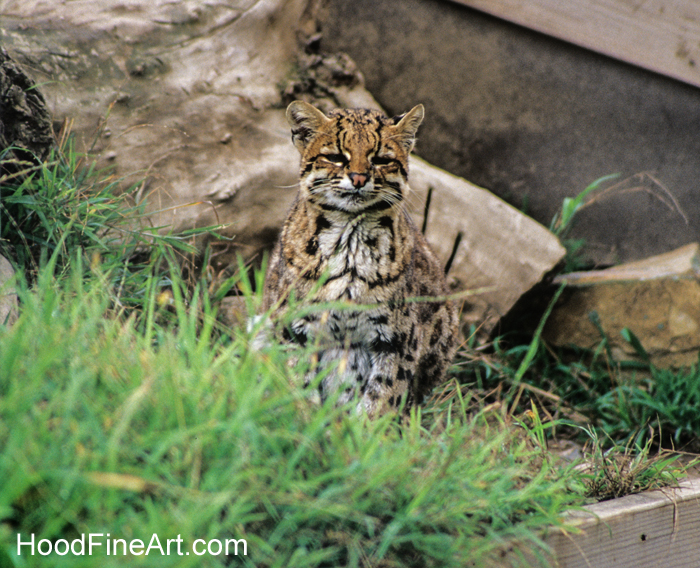
This is an interesting discussion of the design process for the new Santa Ana Zoo ocelot exhibit. If they can actually design and build what they describe here it might be quite cool: Santa Ana Zoo - Planning Workshop - ELM | ELM

I LOVE the fact that a small animal is being given the same exhibit consideration that a big star animal like tiger or elephant would get. I also like number two on their list of top ten goals/ideas: the job gets done. :D
 
Looks really nice. There seems to be a difference in size from habitat 1 (502 SF) and habitat 2 (4498 SF)? Both habitats look to be about the same size. Oh, well. I hope it is planted nicely, as the drawings have the viewing areas looking at each other.
 
A Southern Brazilian Ocelot was born in December 2015.
Anyone have an update on the zoo's plans for a new Ocelot exhibit?
 
The new exhibits opened a year ago according to a quick search using google.
Thanks, Gulo. I suspect this small zoo often gets overlooked because of its bigger and more famous neighbours in southern California.

Other news: 2 Black Howlers (Alouatta caraya) were born in December.
 
Forgot to mention: during my visit last week, I observed that the Santa Ana Zoo has constructed a "frog pod": a very small shed/trailer building with a couple of glass windows for viewing. Inside will be breeding space for mountain yellow-legged frog, an endangered California endemic. Both the San Diego and Los Angeles zoos have been doing breeding and conservation work with this species as well.

Construction is also under way on a Ferris wheel.

Does anyone know what the timeline is on the giant otters, or if that plan somehow fell through?
 
Last edited:

While I am a proponent of pressing zoos to make significant improvements to the enclosures and welfare of their animals, that excuse is some load of bull. Bigger zoos with much worse cages, including for primates, have historically been and continue to be re-accredited. Case in point, this, said by the director himself:

"Yamaguchi admitted that the monkey row cages, which since the 1990s have been expanded to more than double the original size, are not habitats that would be found at the Los Angeles or San Diego zoos."

At the risk of correcting him/criticizing the two zoos cited (I greatly support and respect both), this is just factually wrong. There are monkey cages of both comparable size and furnishings at both SD and LA, both of which have significantly more funding than Santa Ana. In fact, there are some monkey cages at the "world-class" San Diego Zoo that are worse than anything at Santa Ana! Nevertheless, those zoos never have any issues with getting re-accredited.

Additionally, while the enclosures are not ideal, all of them have ample climbing opportunities and the animals appeared to be healthy and were all housed with others of their kind.

Just to clarify: while I disagree with the verdict, I am more frustrated with the failure to implement consistency and treat all institutions equally than I am with the actual decision (which is, nevertheless, also very frustrating).
 
Back
Top