"Savanna" exhibits for Asian ungulates

GiratinaIsGod

Well-Known Member
5+ year member
The typical savanna mixed exhibit is probely the most iconic, but aswell most over done zoo exhibit type on earth. After seeing how many zoochaters complained over to loss of ungulates (espicially asian species). Maby would it be a good sollution to create more "savanna style" exhibits for asian species. Like it is commenly done for african species, and even animnals of the south american pampa. Most asian ungulate enclosures are either with a single species or not more than 2 species. With very few big open mixed exhibits done in the style of the afrcan savanna. I know of very few zoo however that do this. (like the big ungulate exhibit in the Burgeri's Zoo) It would create both better living conditions for the animals and make this "unattractive" species (espicially asian deer) more intersting for the visitors. And it could even be very easy done in diffrent enviroments (rain forrest, tropical savanna, or steppe)
 
I know the San Diego Zoo Safari Park has what they call an Asian Savannah consisting of endangered/vulnerable ungulates. It is accessible via paid tour but I believe before there was a monorail that would pass by before being discontinued. Some species contained are Greater One Horned Rhinoceros, Indochinese Sika, Indian Guar, Javan Banteng, and Sambar are some off the top of my head :) and seeing these species mixed together certainly makes it way more interesting to see the herding dynamics of every species.
 
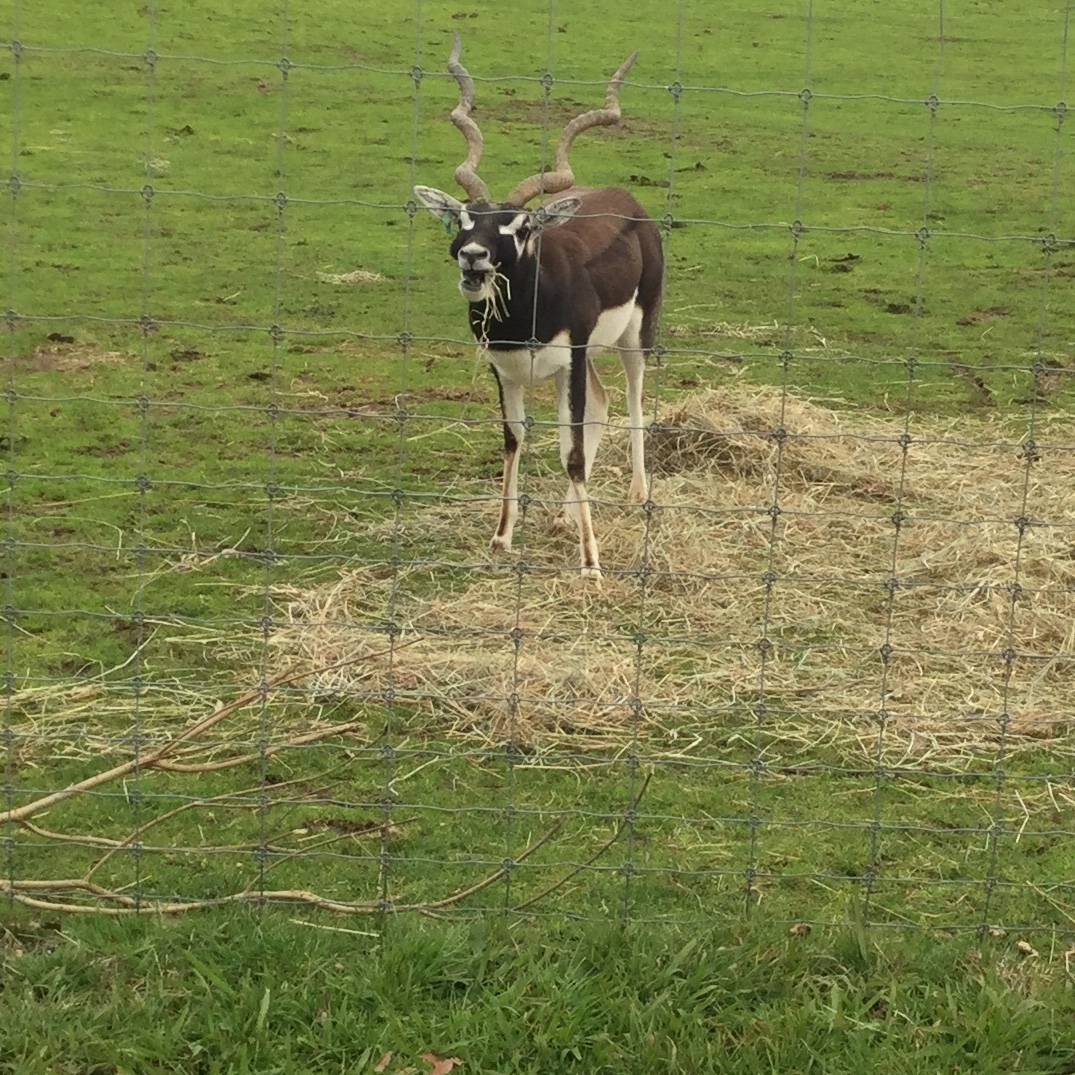
Munich zoo had a mixed exhibits of axis deer, sambar deer, blackbuck and nilghai. These mixes were quite common in the 20. century.

India and Malayan peninsula indeed has / had open dry forests, savannas, and floodplain grassland with big densities of large ungulates resembling African savannas.

In the terai belt of northern India, for example Kaziranga, one can still see open grasslands dotted with elephants, indian rhinos, wild buffalos, barasingha, hog deer etc. In central India there are elephants and gaur, sambar, axis, peacocks etc. I am afraid such herds are practically gone from the Indochina, but in Bali Barat there are still open areas with herds of banteng, rusa deer and green peacocks.

In Tibet, there are still areas where herds of kiangs and tibetan gazelles graze next to domestic camels and yaks. Further north, I am afraid, wild horses, kulans, wild camels, goitred gazelles and saiga were hunted to very low density. Similar sights were gone many centuries ago from the Middle East, where in Biblical times there were Indian elephants, Arabian oryx, hartebeest, gazelles, Mesopotamian fallow deer and ostriches, making a mix of African and Asian animals.
 
Last edited:
In France there is a large mixed exhibit for Indian rhino, blackbuck, nilgai and axis deer. Safaripark beekse bergen might also have several species together like blackbuck, nilgai and chital.
 
Monde Sauvage has an Asian exhibit with camels, kiang, nilgai, domestic water buffalo, Indian water deer and domestic yak.
 
Passage through Asia at Whipsnade,

Bactrian camels, yak, pere david deer, axis deer and possibly other Asian deer or antelope species that I cannot remember in one large paddock.

It is part of a section of the zoo dedicated to Asian animals with elephants, Indian rhino, Amur tiger, gaur (although last time I visited they had been moved to another paddock elsewhere in the zoo) and sloth bear nearby.
 
I know the San Diego Zoo Safari Park has what they call an Asian Savannah consisting of endangered/vulnerable ungulates. It is accessible via paid tour but I believe before there was a monorail that would pass by before being discontinued. Some species contained are Greater One Horned Rhinoceros, Indochinese Sika, Indian Guar, Javan Banteng, and Sambar are some off the top of my head :) and seeing these species mixed together certainly makes it way more interesting to see the herding dynamics of every species.
Here are the species from @Anteaterman post San Diego Zoo Safari Park Complete Species List [San Diego Zoo Safari Park]
The Asian Savvanah Habitat includes Javan Banteng, Greater-One horned Rhino, Blackbuck, Nilagi, Indian Guar, Bactrian Wapitit, Eld's Deer, Barasingha Deer, and Mandarin Sika Deer. Hillside exhibits include Markhor, Arabian Oryx, and a mixed exhibit with Bactrian Camels and Preswalskis Horse.
 
I've seen some pictures and apparently Montgomery Zoo in Alabama has one. According to their website, it contains axis deer, black buck, fallow deer, nilgai, Reeve's muntjac, sarus crane and swan goose
 
  • Like
Reactions: JVM
I would love to see more savanna type exhibits in general, regardless of what continent or habitat is represented. It really illustrates how the animals interact.
I was talking specificly about asian animals, since the asian ungaltes are disapearing from collections. And North American, European and Australien "Savannah" exhibits would have far less and in gnerall less endangred exhibits. While South American pampa exhibits are very commen (and Iam a great ffan of them) llamas,alpacas, guanakos, vikunjas, capybaras, giant ant eater, maras, reas and tapirs are a classic. With animals like pacaries or maned wolf are sometimes in these mixed exhibits too.
 
  • Like
Reactions: JVM
I was talking specificly about asian animals, since the asian ungaltes are disapearing from collections. And North American, European and Australien "Savannah" exhibits would have far less and in gnerall less endangred exhibits. While South American pampa exhibits are very commen (and Iam a great ffan of them) llamas,alpacas, guanakos, vikunjas, capybaras, giant ant eater, maras, reas and tapirs are a classic. With animals like pacaries or maned wolf are sometimes in these mixed exhibits too.
Most of these animals aren't actually from the pampas. Only the maned wolf (only the Northern wetter part in a few remaining pockets), capybara, guanako (only the dry southernmost part, which could be considered part of the Patagonian steppes rather then the pampa) and greater rhea are relatively clearly part of the pampa. Peccary and giant anteater live in tiny pockets inside the pampa region, but possibly not in the true pampa biome. Most of those species are more typically from places like the Cerrados, the Andean deserts and grasslands and the Patagonian steppes.
 
Last edited:
  • Like
Reactions: JVM
Most of these animals aren't actually from the pampas. Only the maned wolf (only the Northern wetter part in a few remaining pockets), capybara, guanako (only the dry southernmost part, which could be considered part of the Patagonian steppes rather then the pampa) and greater rhea are relatively clearly part of the pampa. Peccary and giant anteater live in tiny pockets inside the pampa region, but possibly not in the true pampa biome. Most of those species are more typically from places like the Cerrados, the Andean deserts and grasslands and the Patagonian steppes.
Well, it still makes a great type of exhibit. And when you realizing how many animals from diffrent habitats live together in african "Savannah" exhibits. With the diffrent grassland types, desserts, wetlands and forrest habitats. It is used as a generalized term for the south american grass lands.
 
Most of these animals aren't actually from the pampas. Only the maned wolf (only the Northern wetter part in a few remaining pockets), capybara, guanako (only the dry southernmost part, which could be considered part of the Patagonian steppes rather then the pampa) and greater rhea are relatively clearly part of the pampa. Peccary and giant anteater live in tiny pockets inside the pampa region, but possibly not in the true pampa biome. Most of those species are more typically from places like the Cerrados, the Andean deserts and grasslands and the Patagonian steppes.
even most mixed species exhibits, have species from diffrent areas who would never meet. Most Lemur live in compleate different habitats. And don't even start with the tropical rainforrest halls.
 
One major challenge to keeping large Asian ungulate collections is that Deer are banned from a lot of places due to disease risk. It is a lot harder to Exhibit large mixes of Asian species when deer are removed from the mix. Indian rhino, Onager, Przewalskis Horse, Gaur, and Banteng would be viable options for Asian exhibits.
 
One major challenge to keeping large Asian ungulate collections is that Deer are banned from a lot of places due to disease risk. It is a lot harder to Exhibit large mixes of Asian species when deer are removed from the mix. Indian rhino, Onager, Przewalskis Horse, Gaur, and Banteng would be viable options for Asian exhibits.
Which places for examples? I'm sure they haven't been banished anywhere in Brazil. Perhaps, these places are in North America and Europe?
 
Which places for examples? I'm sure they haven't been banished anywhere in Brazil. Perhaps, these places are in North America and Europe?
Also, I mis-worded what I said a little. A lot of US states, but not all, have an all-inclusive ban on transporting cervids over state lines (that AZA zoos are not exempt from). Exemptions can be made for something like a Pudu or Muntjac, but not for larger species which makes conservation programs very difficult. Someone else might be able to talk more in depth on this, and I think there might be another thread talking about this as well.
 
Back
Top