Seattle Aquarium Seattle Aquarium $113M, 50,000sqft Expansion expected to open in 2024

Some old faces return, as it looks like both the Devil Scorpionfish (Scorpaenopsis diabolus) which was previously in the old 'Ocean Oddities' exhibit on Pier 59 & some Leaf Scorpionfish (Scorpaenopsis diabolus) (they haven't been on exhibit in a few years but were a featured species when in the collection) will be in the OP. The Devil Scorpionfish should be in the 'Watch out!' tank. The Leaf Scorpionfish I'm actually unsure if they'll be in this tank as some of the other Lionfish could potentially eat them if they tried (and fail horribly), or could be housed in one of the smaller, unsigned tanks as they hardly move at all.

Each of the tanks that have the engraving on the top, the main message is to try and connect with the guests on a personal level which is why they all end with a question mark. Along with conservation messages, such as the 'Can we be friends?' tank being about how far Aquaculture has come and why hobbyists should always choose aquaculture if given the chance. The main message with the 'Watch out!' tank is to talk about invasive species (hence the lionfish) and also about venomous fish as I mentioned earlier. Personally, I believe the tank is too small to house a group of Volitan Lionfish (Pterois volitans) that get really big and are one of 2 species who have invaded the Caribbean. Instead, I believe we might be using other, smaller species of Lionfish to convey the same message such as the Fuzzy Dwarf Lionfish (Dendrochirus brachypterus), Zebra Dwarf Lionfish (Dendrochirus zebra), and Clearfin Lionfish (Pterois radiata). All of these species stay on the smaller side and still make for great display animals. We'll have to wait and see.
 
Corals are now starting to move over to the OP. The Non-Photosynthetic Tank in the PCR Gallery on Pier 59 is no more :( End of an era. That display was highly regarded by public aquarists and one of my personal favorites. All of the corals in that tank are moving over the new Non-Photosynthetic tank in the OP which is the 'Are you a Night Owl too?' Tank. The smaller displays are now being stocked, and I believe the Mangroves are moving over soon as well.
As for the PCR gallery, I'm sure that tank will be used for something else temporarily. I believe the space has another few years before it'll be torn down with the next set of renovations that will happen to that area, and there are talks of building a classroom in that space for the future.
(Photo via a friend because I wasn't in today)

Edit: also via my friend, all of the Elasmobranchs are now in the main tank, which means 'The Reef' is fully stocked and ready to go for opening! Photos coming next Sunday
IMG_20240810_144842_237.jpg
 

Attachments

  • IMG_20240810_144842_237.jpg
    IMG_20240810_144842_237.jpg
    94.5 KB · Views: 148
Last edited:
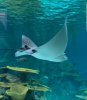
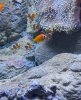
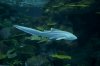
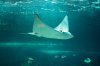
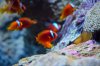
Well to back that up, someone posted some pictures on Facebook of some of the species in the building. I believe they got in through a friend of a friend they said. But you can see the Eagle Rays, Zebra Sharks, Clownfish, and tons of other Reef Fish.
The Sharks are going to be kind of small, they're still juveniles since they're captive bred. The rays are all adults for the most part since they are from other Aquariums who've had them for years prior.
Screenshot_20240811_084247_Gallery.jpg Screenshot_20240811_011557_Facebook.jpg Screenshot_20240811_011638_Facebook.jpg Screenshot_20240811_011620_Facebook.jpg
 

Attachments

  • Screenshot_20240811_084247_Gallery.jpg
    Screenshot_20240811_084247_Gallery.jpg
    61.6 KB · Views: 145
  • Screenshot_20240811_011557_Facebook.jpg
    Screenshot_20240811_011557_Facebook.jpg
    75.9 KB · Views: 134
  • Screenshot_20240811_011638_Facebook.jpg
    Screenshot_20240811_011638_Facebook.jpg
    103.4 KB · Views: 132
  • Screenshot_20240811_011620_Facebook.jpg
    Screenshot_20240811_011620_Facebook.jpg
    137.6 KB · Views: 134
This really neat video came out today by a local Chef YouTuber of all people. It's a behind the scenes of the Animal Care Center, but in the video you can see glimpses of the Black Tip Reef Sharks, and Leopard Whipray which for some reason hasn't seen the light of day on the Aquarium's socials even though she is a confirmed Himantura leoparda.

You also see towards the end my suspicion was right, the Seahorses are infact Yellow Seahorses (Hippocampus kuda). There are also plans to add some pipefish to their tank in the OP.
Screenshot_20240813_122036_YouTube.jpg
 

Attachments

  • Screenshot_20240813_122036_YouTube.jpg
    Screenshot_20240813_122036_YouTube.jpg
    89.1 KB · Views: 130
This is shaping up to be one of the best Indo-Pacific exhibits out there.
The Sharks themselves are kind of scarce for a tank this size but I'm sure it'll expand overtime. I'm so excited, Sunday is when all the photos are dropping since I'm allowed to release them that day. Can't wait to see how the Aquarium shapes up over the next decade with the renovations to Pier 59 & 60 after this
 
Good news and bad news:

Good news! It's photo time! I'm posting everything I've gotten so far for OP today as we're allowed to.

Bad news: The species list will be coming later than I had thought. A lot of tanks for the delicate animals (such as the seadragons and cuttlefish are two of them) are currently empty or have placeholder species that will be moved out once ready for the main species. I'd love to be wrong but I don't think the OP will be 100% stocked until a few weeks after public opening due to the delays that happened earlier in the year. However, some species that are currently in their homes or OP and will be moved later include:

Razor Fish (Aeoliscus strigatus) will end up the mangrove tank.
Saddleback Butterflyfishes, Porcupine Puffer, and a Dogface Puffer now live in 'The Reef'. The rest of the fish will be moved over soon, including the remaining elasmobranchs.

The Mangrove Trees are moving in soon, once those are in, the fish and rays will be moved in.

OP will look a little sparce at first but don't worry, in a short amount of time, it'll be even more incredible than it already is.
 
The nice thing about the public being able to view the Quarantine area from outside - in means I get to talk about some of the new additions that are going in since it's no secret. Most of these are pretty boring but one in particular is really cool. Each time you visit, I would encourage to look around the Quarantine Tanks since most likely, those are new animals moving in to public display soon.
Currently in quarantine we have:
  • 3 White Sea Apples (Pseudocolochirus sp) (Possibly P. violaceus? I can't remember if these white ones are a different species or just a color morph)
  • A lot of Sand Sifting Stars, Chocolate Chip Stars, and Pink & Black Sea Cucumbers.
The last 3 are pretty uninteresting since they're main use is to keep the sand clean, however I wouldn't be surprised if the Chocolate Chip Stars also mean there will be Harlequin Shrimp in OP. While I haven't heard any plans about them, the Chocolate Chip Stars are the most common food item used in captivity for the shrimp so it would work out, the shrimp in general are also just really cool.
The Sea Apples I'm really excited about, not many aquariums tend to display them because of their toxic capabilities (when stressed from injury or die, they tend to release their guts and it makes the water extremely toxic). I was hoping we'd get some and I'm so glad we did. As long as nothing bothers them (which shouldn't happen since they'll be in their own tank), they make for really cool display animals.

The word of mouth is also that there will be 3 Juvenile Black Tip Reef Sharks, which if true, means the Elasmobranch count looks something like: 3 Black Tips, 3 Spotted Eagle Rays, 2 Zebra Sharks, 1 Bowmouth Guitarfish, and 1 Leopard Whiptail Ray (plus the 2 Mask Rays and (at least so far) 1 Epaulette Shark in the Mangrove Tank.
 
SEA APPLES!
Even better, some new species went into their homes, and here's one I wasn't expecting.

The Yellow Seahorses have gone into their Tank which has the roots of a fake Mangrove tree they hang on, but also in AHITO (At home in the ocean), one of the tanks now contains Indo-Pacific Upside Down Jellies (Cassiopea sp). I'm not entirely sure what species they are, I'll have to confirm with someone on the Jelly team but there a few species that reside through the Indo-Pacific. I'm interested to hear about how we got them since most aquariums I know of display the Caribbean species that are found in Florida.
 
Even better, some new species went into their homes, and here's one I wasn't expecting.

The Yellow Seahorses have gone into their Tank which has the roots of a fake Mangrove tree they hang on, but also in AHITO (At home in the ocean), one of the tanks now contains Indo-Pacific Upside Down Jellies (Cassiopea sp). I'm not entirely sure what species they are, I'll have to confirm with someone on the Jelly team but there a few species that reside through the Indo-Pacific. I'm interested to hear about how we got them since most aquariums I know of display the Caribbean species that are found in Florida.

I can't wait for photos!
 
I can't wait for photos!
I posted most of them to the media section for the Aquarium, but some examples (The first 5 are my photos I took, but the last 4 are from a friend since most of those species went in within the last 2 days, except the Giant Moray, that guy just likes to hide a lot and I haven't gotten a good glimpse of him yet so my friend got lucky with that)
DSC07244.jpg DSC07222.jpg DSC07207.jpg DSC07213.jpg DSC07208.jpg Screenshot_20240827_113603_Instagram.jpg IMG_20240818_184649_183.jpg IMG_20240825_100218_953.jpg IMG_20240827_113555_031.jpg
 

Attachments

  • DSC07244.jpg
    DSC07244.jpg
    86.6 KB · Views: 77
  • DSC07222.jpg
    DSC07222.jpg
    82.7 KB · Views: 76
  • DSC07207.jpg
    DSC07207.jpg
    117.4 KB · Views: 75
  • DSC07213.jpg
    DSC07213.jpg
    34.1 KB · Views: 76
  • DSC07208.jpg
    DSC07208.jpg
    100.3 KB · Views: 76
  • Screenshot_20240827_113603_Instagram.jpg
    Screenshot_20240827_113603_Instagram.jpg
    84.9 KB · Views: 77
  • IMG_20240818_184649_183.jpg
    IMG_20240818_184649_183.jpg
    81.1 KB · Views: 78
  • IMG_20240825_100218_953.jpg
    IMG_20240825_100218_953.jpg
    152.9 KB · Views: 78
  • IMG_20240827_113555_031.jpg
    IMG_20240827_113555_031.jpg
    67.1 KB · Views: 76
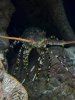
I forgot to mention, because I wasn't able to ID him until now, there is an Ornate Spiny Lobster (Panulirus ornatus) that resides in the 'Watch Out!' Tank so he's tank mates with the Blunt Slipper Lobster and Venomous Fish. Until yesterday when my friend sent a pic, I've only seen him in the corner so I wasn't able to get a clear shot but the spotted legs in the pic 100% give it away. These guys are also from the Indo-Pacific so I'm glad that even with smaller things such as the inverts, we're sticking to the true species and not any out of region substitutions
IMG_20240827_160250_850.jpg IMG_20240827_160842_830.jpg
 

Attachments

  • IMG_20240827_160250_850.jpg
    IMG_20240827_160250_850.jpg
    84 KB · Views: 73
  • IMG_20240827_160842_830.jpg
    IMG_20240827_160842_830.jpg
    68.1 KB · Views: 76
The Seattle Aquarium's Ocean Pavilion finally opens to the public today! I anxiously await reviews from Zoochatters. Hopefully this expansion firmly establishes the Seattle Aquarium among the first class aquaria in the country, if not the world.

Along the way, the aquarium has gone especially deep on immersive technology such as touch screens and audio/video stations to tell the story of the Coral Triangle and the connection between all ocean waters. There’s also a behind-the-scenes look at how aquarium residents are cared for and the sustainable practices used to power the building’s systems.

The centerpiece of the tech-enabled Pavilion is “One Ocean Hall,” a large, curvy space that uses 12 projectors to create a 360-degree video and interactive experience, including scenes projected on the floor. Through five separate feature films or via talks led by aquarium staff, guests might feel like they’re in the middle of a coral reef in the Indo-Pacific, a kelp forest in the Puget Sound, or swimming alongside whales in the Salish Sea.

Inside Seattle Aquarium’s new Ocean Pavilion, a high-tech showcase for the tropical deep sea

A good overview of Seattle Aquarium's ongoing conservation efforts:

“The other program area I oversee is big: our research policy, advocacy and species recovery work. It covers everything from microplastics to sea otters. One of the projects I’m excited about – we launched it just a few years ago – is helping to understand what’s happening with kelp forests in the Salish Sea here in Washington.

Beyond the research work, she adds, there are active species recovery projects:

“One, locally, focuses on Pinto abalone. This is an endangered species of abalone and the only one native to our waters here in Washington. We are working with state agencies, federal agencies, and other nonprofits to help recover that species. We have an abalone nursery at our animal care centre. Here, we rear thousands of them yearly and release them into the Salish Sea every spring.”

97% of the pinto abalone population has been wiped out in 50 years of recreational fishing.

“We closed the fishery, and taking any abalone from Washington waters is now illegal. We’re hopeful that we can bring that population back through this breeding, rearing and release program.”

The other major species recovery program in which Seattle Aquarium is involved is ReShark. This an international collective of over 90 conservation organisations, aquariums, government agencies, and more working to recover threatened sharks and rays around the world by re-establishing healthy, genetically diverse, and self-sustaining populations:

‘The wild’ is a concept that people sometimes have problems with, imagining it as a vast, beautiful space where all animals should be. In fact, it can be fragmented and often compromised:

“For example, about a decade ago, the last time sea star wasting disease made its way through the west coast of North America, it wiped out populations of over a dozen species up and down the coast, in the wild waters, because of the interplay between climate change and bacteria and viruses that are out in the waterways, and the lack of resilience against those kinds of changes.

“In those cases, the sea stars impacted – over a dozen species – are receiving better care and have a far greater chance of survival in our care than they do out in the wild.”

“A West Coast of North America-wide coalition has been working together since that moment. We’ve listed the species now with the IUCN Red List of Threatened Species. We have developed a framework and a pathway toward recovery for that species.

“It’s complicated because the virus and the bacteria that impacted that species are still out there, native to the environment. They have just become over-abundant in these heat waves. We are focusing on trying to understand the disease’s intricacies. This will help inform where we think we can release animals when we’re ready.”

At some point, breeding in a degree of resilience might be possible, something that is being explored with coral:

“There has been a lot of research on the genetic factors impacting whether a reef can survive a heatwave. Research is being proposed to understand the sunflower sea star populations that survived that marine disease. Is it environmental? Were they in a pocket of cool water, for instance – or is there a genetic factor? If it’s genetic, can we breed those animals so that the ones we’re releasing back out will be more resilient the next time it comes around?”

Conservation at Seattle Aquarium: storytelling as a superpower

And some nice photos of the new exhibits:

Photos: Seattle Aquarium debuts stunning new Ocean Pavilion
 
The Seattle Aquarium's Ocean Pavilion finally opens to the public today! I anxiously await reviews from Zoochatters. Hopefully this expansion firmly establishes the Seattle Aquarium among the first class aquaria in the country, if not the world.


Inside Seattle Aquarium’s new Ocean Pavilion, a high-tech showcase for the tropical deep sea

A good overview of Seattle Aquarium's ongoing conservation efforts:


Conservation at Seattle Aquarium: storytelling as a superpower

And some nice photos of the new exhibits:

Photos: Seattle Aquarium debuts stunning new Ocean Pavilion
While I'm currently helping with the opening ceremony, I would like to note since I was in the building this morning, I would say only 25% of the species are actually in the exhibits right now. WHICH IS STILL A LOT, don't get me wrong, but a lot of what you see / have heard from me is yet to come. Expect a majority of the species to be added over the next few weeks just because of acclimation delays. A lot of tanks have place holder signs & species such as the "Read my mind tank?" Which is meant for Flamboyant cuttlefish, currently has some place holder Dwarf Cuttlefish. So a lot of the more delicate species aren't moved in yet.

Only the Zebra Sharks and Ocellated Eagle Rays are in the Reef, all the other Elasmobranchs and Large Reef Fish are moving in over the next few weeks hopefully is what I've heard.

And just to confirm some things, The Javanese Cownose Rays are confirmed and going in soon. The Blue Spotted Stingrays I haven't heard anything about, but the Javanese Cownose Rays are a lock which is awesome. Also a Day Octopus is signed so that's a future Ceph you'll see soon.
 
OCEAN PAVILION!!! WOOO!!!! :):):)
cute-colorful-fish-wearig-party-hat-little-sea-vector-23188052.jpg
 
I've really appreciated all of your updates and knowledge about the recent aquarium projects in the Pacific Northwest.

If the number is still right, there are 26 Sharks and Rays that will be in the OP
What are the total numbers and numbers of each species looking like now?

The owners put her into a holding tank where almost overnight, she gave birth to a number of pups (I believe it was 8) and weren't able to be released back into the wild because that area has no marine protection acts. So a conservation partner donated all 9 Bowmouth Guitarfish with the intent of starting a breeding program in the US in the future.
What facilities had them before the pregnant female was caught?


https://wwThisw.seattleaquarium.org/stories/bowmouth-guitarfish-safe-home/ article states that there were nine pups, and all of them were moved to the United States. I'm assuming the mother was not transferred with them based on the wording. Do you have better/updated information about where all of the pups were sent?

a smaller species of shark I don't think I'm allowed to say yet. Based on it's habitat and size, I'd expect this species to be living in the Offshore / Coastal Reef that'll be apart of the Archipelago exhibit. I believe it's a pretty rare species to see in Public Aquariums so that's exciting
You weren't referring to the epaulette shark here were you?
 
What are the total numbers and numbers of each species looking like now?
So now it's looking like 2 Zebra Sharks, 2 Black Tip Reef Sharks, 3 Ocellated Eagle Rays, 1 Bowmouth Guitarfish, 1 Leopard Whipray for the main tank, and 2 Blue Spotted Mask Rays and 1 Epaullete Shark in the Mangrove Lagoon. Which makes for a total of 12 Elasmobranchs that we currently have, I'm not sure how many Javanese Cownose Rays were getting but I'd imagine at least 3 so a total of 15 for the foreseeable future. I believe we'll be getting some of PDZA's Black Tips and Grey Reef Sharks once they outgrow their tank, and also we're leaving room for other potential species that could join us depending on what species is nominated next for the ReShark program. If it fits the space requirements and we can source them sustainably, it could find a home here in Seattle.
What facilities had them before the pregnant female was caught?
Fred Fan of 'Fred Fan Aquatics' in Taiwan, who now looking more into the facility, has supplied Bowmouth Guitarfish to other aquariums such as the Newport Aquarium. Unfortunately they're not a protected species there so it looks like whenever they're caught, Fred will go and save them before reaching out to Aquariums that could be a potential home.
article states that there were nine pups, and all of them were moved to the United States. I'm assuming the mother was not transferred with them based on the wording. Do you have better/updated information about where all of the pups were sent?
I might be wrong on 1 facility since it's been a while but to my knowledge, the distribution was:
Us (Seattle): 1 pup
Shedd Aquarium: 3 pups
Georgia Aquarium: unspecified
Disney's Epcot Aquarium: unspecified
Shark Reef at Mandalay Bay: 1 (I believe) (This is the one I'm unsure on but it looks like they just put a Bowmouth Guitarfish on exhibit within the last year / year & half which lines up with the timeline of the pups being moved from here to other aquariums).

You weren't referring to the epaulette shark here were you?
Unfortunately no, the original species I was referring to was the Bali Catshark, but they ended up being taken out of the species list drafts. AFAIK they're just really hard to find in the aquarium scene, and then captive bred is even harder, so those plans changed and we ended up going with the regular Epaulette Shark.
 
Back
Top