Colchesters Pygmy hippo female went on public view :
https://www.facebook.com/Colchester...1.66009.26017858261/10153289185293262/?type=3
https://www.facebook.com/Colchester...1.66009.26017858261/10153289185293262/?type=3

a bald figure of 286 animals sounds really bad in a one year period, but it is rather meaningless without an account of which species were involved. The article naturally focuses on the big animals (in fact the only species even mentioned are jaguar and leopard), but the zoo has a very large invertebrate and reptile collection.

 :
:


That is a great question and I am curious about this too. I remember reading a couple years ago that wild Amur tigers were seen after a longtime absence in the DMZ (human free zone between North and South Korea), so maybe this would be the place for reintroduction?Does anybody know if there is a large enough contiguous area of wilderness in SK to support leopards?


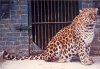
The Seoul Zoo used to have leopards caught in the wild in Korea during the old days of Changgyeongwon. When Korea was a colony of Japan, there seemed to be more than four to five Amur leopards caught in the wild of Korea, but since Korea was liberated from Japan in 1945, only one Amur leopard has been in Changgyeongwon.Two male North China leopard Panthera pardus japonensis were sent to Hagenbeck Tierpark in Hamburg to become part of the European breeding program.
Link: Seoul Zoo sends 2 leopards to Germany, Denmark
A somewhat longer feature appeared in a German news outlet:
Link: Hamburger Tierpark Hagenbeck bekommt zwei Nordchinesische Leoparden - Hamburger Abendblatt
The exchange operation seems to have been first initiated in 2017 as the Seoul Zoo wished to create an Amur leopard Panthera pardus orientalis breeding complex to restore the subspecies to the Korean Peninsula. Right now, the Seoul Zoo maintains 2 Amur leopards and is keen to acquire more. Also question: which zoos sent Seoul Zoo Amur leopard???
Elsewhere it had been discussed the Seoul Zoo actually maintained 4 North China leopards prior to this transfer of 2 males to Hamburg. It would be interesting to know if and when any captive-breeding took place in Seoul Zoo with the North China leopard and what the origins of their leopards was (zoos in P.R. China?)!!!


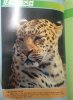
Although IUCN announced that the two are same subspecies based on the lack of clear boundaries between Amur and North chinese leopard's habitats, my opinion is a little different. The amur leopards of north eastern China(Jilin Province) and some leopards of central China(Shaanxi Province, Shanxi Province) have somewhat different size and patterns of rosette spots, so I think the leopards of central China may be somewhat different from the amur leopards.Some taxonomists recently suggested that North China leopards and Amur leopards are the same subspecies.
Yes, Gangsan/Maehwa are from the Frankfurt\Center Hill line and their male was another subspecies hence both where genetically "contaminated" and not pure Amur leopard.Although IUCN announced that the two are same subspecies based on the lack of clear boundaries between Amur and North chinese leopard's habitats, my opinion is a little different. The amur leopards of north eastern China(Jilin Province) and some leopards of central China(Shaanxi Province, Shanxi Province) have somewhat different size and patterns of rosette spots, so I think the leopards of central China may be somewhat different from the amur leopards.
I think it would be very important to determine whether the two subspecies are the same or different subspecies through a more solid genetic test of this.
To tell a little different story, at Daejeon O-world, a zoo in Korea, there were Amur leopard male 'Gangsan' and female 'Maehwa' siblings brought in from Hiroshima Asa Zoological Garden when they opened in 2002, but Korean zoo enthusiasts thought that the patterns of Gangsan were probably North China leopards because his spots were not look like Amur leopards. But when I checked amur leopard studbook 2002, Gangsan and Maehwa were direct descendants of Amur leopard founder No. 2. who is famous for not being Amur Leopard.
And here's one more problem: Maehwa died in 2012 and samples taken from Maehwa were used to map the Amur leopard genome. I think this is quite a complicated problem.
It is just that a suggestion from some quarters within the profession: While the age old debate among taxonomists is one between splitters and lumpers.Some taxonomists recently suggested that North China leopards and Amur leopards are the same subspecies.