"Shooting" British Birds

Prochilodus246

Well-Known Member
This thread is for the sharing of photos as well as the tips on tricks on how to snap British birds in the wild.

A few rules for the thread:

1) Please don't expose the location of especially rare, sensitive or Schedule 1 birds under the
Wildlife & Countryside Act 1981! This is to protect the birds in question.

2) All bird photos should be taken within the UK

3) Try and vary the species which you post. As nice as robins may be, not every photo has to be one
:D

4) Try and share your photos occasionally.

5) Discussions on general birdwatching within the UK is welcome too
 
Since this is ZooChat, of course it should be mentioned that zoos themselves are great places to see wild birds. At a day at Chester for example, you can easily see 10-15 bird species without even trying, as I did yesterday.

Does anyone have any particularly good memories of seeing wild birds in zoos? :)
 
Since this is ZooChat, of course it should be mentioned that zoos themselves are great places to see wild birds. At a day at Chester for example, you can easily see 10-15 bird species without even trying, as I did yesterday.

Does anyone have any particularly good memories of seeing wild birds in zoos? :)

Strangest wild bird I've ever seen in a zoo was this white stork at Colchester in 2022. At first, I thought it was a zoo bird until it picked up a stick and flew away with it. Later learned that this bird had been in the area for a while, commuting between a nearby rubbish dump and a reservoir, and local birders think it may have been a genuine vagrant bird.

285219353_5604376366241852_7955968007076993453_n.jpg
 
Since this is ZooChat, of course it should be mentioned that zoos themselves are great places to see wild birds. At a day at Chester for example, you can easily see 10-15 bird species without even trying, as I did yesterday.

Does anyone have any particularly good memories of seeing wild birds in zoos? :)

I get loads of wild birds at the zoo.

The pest control and the abundance of bird feeders in zoos make them great places to find wild species and they are often happy to be near people.

Herons in penguin pools and exotic bird lakes are a favourite of mine. I also got some fine Chaffinch last week at Hamerton. There were some lovely thrushes at Chester on my last visit. And robins are great at Whipsnade, Hamerton and recently Twycross. Pied wagtail at Hamerton and of course the kites there are excellent.

I enjoy ducklings and young moorhens and coots on the bird lakes at the zoo; even on a poor day for animals you can get a good duckling! Moorhens breed on the ponds in the Ostrich and cheetah enclosures at Whipsnade.

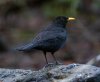
I like the blackbirds at CWP sneaking into the free flight aviary and being pointed out as the resident Choughs by visitors.

Ducklings taking a jump and blackbird impersonating a Chough in the aviary, both CWP.
cwpducks.jpg cwpblackbird.jpg
 

Attachments

  • cwpducks.jpg
    cwpducks.jpg
    113 KB · Views: 289
  • cwpblackbird.jpg
    cwpblackbird.jpg
    75.3 KB · Views: 276
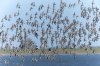
welney.jpg I do also visit wetland centres and that sort of reserve as I like the variety of birds and a less deserted space can be a bit more appealing.

Slimbridge is of course more on the 'zoo' front as it has exotics but there are lots of really interesting birds (native and wintering here) to see in the other centres. Welney is great, had some nice lapwing and godwits coming off the headland (a buzzard was in the area so they kept taking flight and settling again) the other day. I am sure lots of zoochatters visit but these are great places to see birds in big numbers which is always a bit of a wow.
 

Attachments

  • welney.jpg
    welney.jpg
    179.5 KB · Views: 287
As @Fallax has pointed out, Chester is a great place to see wild birds without even trying. The location of the zoo also sees large numbers of Pink-footed geese flying over during the autumn months due to the zoo's proximity to the Dee Estuary where lots of the geese spend the winter.


I particularly enjoyed the sheer amounts of kites when I made my first visits to Woburn & Whipsnade in April. A large density of kites is always a site to behold and seeing their various different colour variations was also interesting to note. Amongst the kites, carrion crows, jackdaws, rooks etc there was a lone raven. They always surprise me with their size and in particular the bill!
Both these collections also had very tantalising calls of green woodpeckers, which eluded my camera the whole time. I did manage a brief view of one of the birds in question though.


IMG_9530.JPG
 
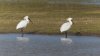
Spoonbills - Farlington Marsh 2024 - ZooChat
Can't be that shabby...
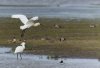
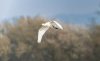
A bit blown out [this is post-recovery, and it was a sunny day today]; but the highlight of a day at the Marsh! I recall in the area some Egrets were flying around which I tried to photograph but failed to. Then some more egret-like birds came over in flight but were more camera-friendly. It was only talking with an RSPB official later in the day that I was shown just how valuable this shot was!

The Marsh was a pleasant place to spend a day; though a bit emptier than usual. In the official's words, the best time to go there is usually high tide; but today was exceptionally high tide. The first thing seen was a kestrel but it flew away whilst putting the lens together. It's a rather enclosed space - with many things behind fences. The difference between that and a bona-fide zoo then being that there's no guarantee as to what's inside the pen. Seen today aside of what I have mentioned were plenty of lovely Brant geese, oystercatcher, some other nice waterfowl, plenty of coots in one area.
My only grievance really was in regards to avocets who I had set out to see but had escaped the high tide.
 
Farlington Marshes is a site I've never managed to reach but does seem good with your photos of spoonbills being particularly nice. I personally have seen spoonbill at about four sites in the UK. It's a shame that you didn't manage avocet but I'm sure you'll get round to seeing some.
 
In the lucky theme of the thread, I was also lucky with Spoonbills, at WWT Slimbridge last Friday.

Added a couple of photos to the gallery but I took quite a few as you can imagine! Saw them from the Estuary tower and then went down to one of the land level hides to find them feeding out in front.

slim9marchspoons.jpg

flying up and down for the best spots

wwtslim9marchspoons.jpg

and standing at the right angle for full appreciation of the spoon. Just amazing.

wwtslim9marspoons4.jpg

They also have some nice small bird feeders near two of their hides at Slimbridge (one is a dedicated small bird viewing hide) and you can get some good shots in those.

If you watch for a while you can find the place the birds queue to get onto the feeders and get good angles with them perching about the place (as well as on the feeders themselves if you want both sorts).

Wetlands and nature reserves that have bird feeders out are often great places to take photos as the people placing the feeders find nice spots with good distances from the woods or land at the back. Sometimes of course they place them just for viewing (the ones at Welney are all the other side of glass in the best viewing spots which is a shame as their feeders are like the M25) but if you find a good one they are fun. I never tire of photographing small birds.

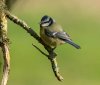
wwtslim9marchbtit.jpg

Zoos are often active with their feeders too - Hamerton has lots of busy bird feeders over the winter. You can of course capture this in a garden if you have somewhere to hide. I have a little project coming for the better weather garden bird wise, but the garden isn't big enough for anything permanent or extensive.

While Slimbridge have a large number of captive avocet in their wetlands area, there were also lots of them on the South Lake on my visit, which was great to see. I photograph captive ones a lot as they are such pretty birds, but I don't always get a nice view of them in the wild.

wwtslim9marchavocet.jpg
 

Attachments

  • slim9marchspoons.jpg
    slim9marchspoons.jpg
    94.9 KB · Views: 183
  • wwtslim9marchspoons.jpg
    wwtslim9marchspoons.jpg
    38 KB · Views: 193
  • wwtslim9marchbtit.jpg
    wwtslim9marchbtit.jpg
    83.5 KB · Views: 182
  • wwtslim9marchavocet.jpg
    wwtslim9marchavocet.jpg
    79.8 KB · Views: 191
  • wwtslim9marspoons4.jpg
    wwtslim9marspoons4.jpg
    87.2 KB · Views: 189
Some lovely shots of the spoonbill. They are never a species not matter whether they are captive or wild, they are always an attractive species. Avocets are always a delight and I don't see enough wild ones so they're a treat.

Feeding stations are always pleasant to watch however, I do prefer variety at feeders as at work we have Lesser redpoll, siskins & a number of other finches that visit the feeders. At home we've recently decided to make the birds less reliant on feeders which helps reduce the spread of disease such as trichomonosis. We instead grow the plants that the birds require such as teasels & trees such as alder & rowan.
 
Some lovely shots of the spoonbill. They are never a species not matter whether they are captive or wild, they are always an attractive species. Avocets are always a delight and I don't see enough wild ones so they're a treat.

Feeding stations are always pleasant to watch however, I do prefer variety at feeders as at work we have Lesser redpoll, siskins & a number of other finches that visit the feeders. At home we've recently decided to make the birds less reliant on feeders which helps reduce the spread of disease such as trichomonosis. We instead grow the plants that the birds require such as teasels & trees such as alder & rowan.

Yes very lucky indeed with the Spoonbills, hadn't expected a pair at all. Saw them down on the piece area, rushed down to the hide to find them not too far from it, very happy indeed.

There's a lot of Alder at Slimbridge so you can see siskins and red polls which is great.

I always clean and disinfect the feeders at home, always the best policy. Did away with flat feeders etc a while ago. Have a Pyracantha and a rather too huge Buddleia which fill the space, makes for a nice balance.
 
Glad to hear you have strict feeder cleaning regimes. If you don't mind me asking what species do you get visiting the garden?

Pyracantha is a very good shrub for the thrushes and other fructivorus species and buddleia is always a hive of activity for the pollinators in the garden.
 
Glad to hear you have strict feeder cleaning regimes. If you don't mind me asking what species do you get visiting the garden?

Pyracantha is a very good shrub for the thrushes and other fructivorus species and buddleia is always a hive of activity for the pollinators in the garden.

The commonest visitors are sparrows and starlings then blue tits, blackbirds (one female and what seems to be two males), robin, wrens then the usual pigeons, and what seem to be the same pair of collared doves. Last year a few short visits from long tailed tits and occasionally also see a woodpecker from the woods at the back (greater spotted). The Buddleia also makes for good butterflies of course.
 
It's always a treat whenever a woodpecker gets on the feeder.

Again, sorry for asking but what butterfly species do you get visiting? I know this is a British birds thread but I am always interested in what biodiversity people are supporting in their gardens, no matter the species.
 
It's always a treat whenever a woodpecker gets on the feeder.

Again, sorry for asking but what butterfly species do you get visiting? I know this is a British birds thread but I am always interested in what biodiversity people are supporting in their gardens, no matter the species.

It really is! It was exciting when we had a sparrow hawk come in once too though I don’t want all the small birds taken out! So fast though.

Painted lady and red admiral are the main ones and then the cabbage white. Not a lot of different ones but good volume! I did think we had orange tips too but I didn’t see them well enough so assumed I was simply mis identifying them. I’m not too up on butterflies but I do look them up. It’s great to get a mix of different wildlife (we also get hedgehogs) and although it’s a small garden it’s well established hedge wise as are the neighbours and the house dates from when they put hedges around gardens vs just walls.
 
It really is! It was exciting when we had a sparrow hawk come in once too though I don’t want all the small birds taken out! So fast though.

The avian spitfires is what I like to call them. In and out in a flash and all that's left behind are a cloud of feathers. We get a pair on and off with the male visiting most frequently.

Painted lady and red admiral are the main ones and then the cabbage white. Not a lot of different ones but good volume! I did think we had orange tips too but I didn’t see them well enough so assumed I was simply mis identifying them. I’m not too up on butterflies but I do look them up. It’s great to get a mix of different wildlife (we also get hedgehogs) and although it’s a small garden it’s well established hedge wise as are the neighbours and the house dates from when they put hedges around gardens vs just walls.

I cannot see why you wouldn't be getting Orange tip in the garden. Their foodplant being crucifers (cuckooflower, garlic mustard etc) so anywhere where these will grow, I'm sure you'll encounter at least one. Just note that female OT look very similar to Small white and there are 3 whites that commonly occur in gardens. Interestingly I've not had any Painted lady in the garden for the best part of about 8 years but I know they are migratory and I cannot remember when the last big influx of the species was.
 
Back
Top