Signage in zoos on individual animals

Signage for "Bokito" the silverback gorilla at Rotterdam zoo:

full


Signage for "Bente" the lionness (Asiatic ?) at Rotterdam zoo:

full


Asiatic lion signage at Chessington zoo, UK :

full


Photo credit to @vogelcommando and @Crowthorne.
 
Last edited:
Signage on individual animals from the Cincinnati zoo, USA:


Bonobo ID ipad function / app:

full


Gorilla ID signage for "Jomo's" group:

full


Gorilla ID signage for "M'shindis group"

full


Signage for infant hippo "Fiona":

full


Signage detailing stereotypical behaviour shown by "Anana" the polar bear:

full


Signage detailing the wellbeing of an elderly and solitary sealion "Duke":

full


Photo credits to @Moebelle.
 
I love signs that talk about the individual animals! It's really interesting to hear about where zoo animals come from. And I think it adds to the whole "animal ambassador" aspect of zoos, maybe it gets people to care more about the species as a whole if they can get attached to the individual. If nothing else, I think it's good to inform people about how zoos work, and these signs add an aspect of that.
 
I love signs that talk about the individual animals! It's really interesting to hear about where zoo animals come from. And I think it adds to the whole "animal ambassador" aspect of zoos, maybe it gets people to care more about the species as a whole if they can get attached to the individual. If nothing else, I think it's good to inform people about how zoos work, and these signs add an aspect of that.

I agree with you and I do personally think that this kind of signage is effective for creating "animal ambassadors" and augmenting empathy and awareness of the plight of species.

I've often thought that on a zoo level formenting a connection with the individual animal could in some cases and in environmental education terms be more effective then discussions about the wider species. I think this would be the case particularly with younger visitors / children (they are the next generation of environmental stewards / conservationists afterall).

For many people a species or an ecosystem are merely abstractions whereas they can engage far more with the "story" / "narrative" of the life of an individual animal.

This is actually why so many conservation NGO's create children books about their focal species because it is a great way of educating an audience about wider conservation issues through the narrative of the individual.
 
Last edited:
I agree with you and I do personally think that this kind of signage is effective for creating "animal ambassadors" and augmenting empathy and awareness of the plight of species.

I've often thought that on a zoo level formenting a connection with the individual animal could in some cases and in environmental education terms be more effective then discussions about the wider species. I think this would be the case particularly with younger visitors / children (they are the next generation of environmental stewards / conservationists afterall).

For many people a species or an ecosystem are merely abstractions whereas they can engage far more with the "story" / "narrative" of the life of an individual animal.

This is actually why so many conservation NGO's create children books about their focal species because it is a great way of educating an audience about wider conservation issues through the narrative of the individual.

I always liked that subgenre of books. (there are a few written for adult readers too!) Last of the Curlews is on my reading list, though it's pretty far down since I have a lot of books on my reading list and I haven't been reading much the past couple months lol. (though it seems like a short book so maybe I'll bump it up) But I did finally get a copy of the animated adaptation so I'm checking that out in the meantime.

I figure that this kind of signage is especially effective when the animals are rescued. (whether it's from the wild or from a bad captive situation) It doesn't just tell the visitor about the issue that effects animals, it SHOWS the impact. Like, hey, this turtle lost his flipper from a discarded net and now he can't survive in the wild. Don't throw your discarded net in the ocean. Or, hey, this monkey was taken from the wild as a baby so she could be sold as a pet and now she can't survive in the wild. Don't support the exotic pet trade.
 
I always liked that subgenre of books. (there are a few written for adult readers too!) Last of the Curlews is on my reading list, though it's pretty far down since I have a lot of books on my reading list and I haven't been reading much the past couple months lol. (though it seems like a short book so maybe I'll bump it up) But I did finally get a copy of the animated adaptation so I'm checking that out in the meantime.

I figure that this kind of signage is especially effective when the animals are rescued. (whether it's from the wild or from a bad captive situation) It doesn't just tell the visitor about the issue that effects animals, it SHOWS the impact. Like, hey, this turtle lost his flipper from a discarded net and now he can't survive in the wild. Don't throw your discarded net in the ocean. Or, hey, this monkey was taken from the wild as a baby so she could be sold as a pet and now she can't survive in the wild. Don't support the exotic pet trade.

I think they are great books for raising awareness indeed !

In fact, you know what ?

If I'm honest with you, these kind of illustrated books for kids do far more in a meaningful real world sense for conservation than any jargon filled journal paper published by some pretentious academic.

This is because they educate and they instill an awareness and empathy for a species and its plight in the next generation.

If we are to effectively conserve biodiversity then essentially it all comes down to educating the next generation who will have to take on the responsibility of conservation at such a critical time.
 
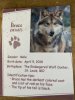
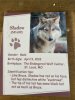
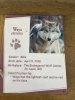
Signs for the Cincinnati Zoos Mexican Wolves
upload_2021-3-2_17-22-19.jpeg
upload_2021-3-2_17-22-32.jpeg
upload_2021-3-2_17-22-49.jpeg
 

Attachments

  • upload_2021-3-2_17-22-19.jpeg
    upload_2021-3-2_17-22-19.jpeg
    87 KB · Views: 20
  • upload_2021-3-2_17-22-32.jpeg
    upload_2021-3-2_17-22-32.jpeg
    88.2 KB · Views: 19
  • upload_2021-3-2_17-22-49.jpeg
    upload_2021-3-2_17-22-49.jpeg
    78.7 KB · Views: 19
Back
Top