Among all of Mandai's zoos, the Singapore Zoo has been the closest to my heart and is of course the one I've visited the most. It's best known for its immersive exhibits and rainforest setting. Inspired by @Zoofan15's Melbourne Zoo review which is a great read, I've decided to do a detailed account of the Zoo, which may be useful for those who're visiting for the first time. Warning for rambling. Photos are mine unless stated otherwise. Photos taken from visits on July 2023, October 2023, December 2023, April 2024 and July 2024.
Part 1: Treetops Trail and Misc Exhibits
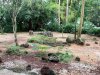
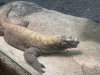
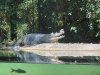
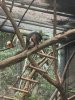
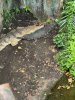
Right after entering, you can cross a boardwalk with siamangs on an island surrounded by a moat with some very large false gharials. It's also a good place to spot the wild long-tailed macaques, other good spots to see them are at Primate Kingdom and outside Reptopia. The Crocodile Hunter himself, Steve Irwin, helped move the false gharials to this enclosure, there are pictures of the move outside one of the zoo's restaurants.
False gharials:


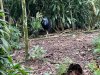
Of course, the key drawcard to many Zoochatters is the proboscis monkey which is 1 of 2 Asian monkeys that are rare in captivity. They also share their enclosure with barking deer who are almost never visible and fish. Unlike the other rare Asian monkey which I'll cover in another part, the proboscis monkeys are easily viewable and make for an engaging display.
Proboscis monkey:


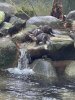
These enclosures are not part of a themed area like the others beyond a very general "Asian rainforest animals" theme. The Asian small-clawed otters can be smelled immediately upon entering this area and they have have two exhibits: their main exhibit as well as another exhibit that can be seen from their underwater viewing area.
Otters:


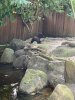
Next to the otters are 2 enclosures which both house Sulawesi endemics: a male lowland anoa named Henk and a pair of babirusa. The anoa enclosure housed Malayan tapirs for many years, who are now at the Night Safari. I don't think the zoo intended for it but having the babirusa and anoa enclosures side by side creates a little Sulawesi area. The other well-known Sulawesi animal, the Celebes crested macaque, is located on the other side of the zoo. Strangely, Mandai signs their babirusas as Babyrousa babyrussa rather than the Sulawesi babirusas that they are but it's not the only signing error they have.
Male babirusa:


Henk the anoa:


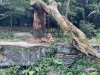
The tiger enclosure is lush and nicely planted with a large moat and you can often see the tigers playing in the water. The Zoo has housed white tigers for many years but since 2024 is now the permanent home of their Malayan tigers, the sibling pair Sali and Arhaa and their parents Bongsu and Intan who time-share the habitat. The large walls at the back of the enclosure do ruin the "immersion" that Singapore Zoo heavily sells itself on. The tigers are usually quite active, particularly the younger duo.
Malayan tiger:


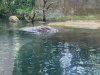
An endangered species that the zoo has been very successful in breeding is the pygmy hippopotamus, which has 3 enclosures dedicated to them. The pygmy hippo gallery has a few other tanks which used to house aquatic reptiles like alligator snapping turtles and green anacondas but now just have lots of barbs and cichlids. Pygmy hippos are more terrestrial than their larger relatives and the zoo has a land habitat for the pygmy hippos. However, the two main exhibits are water-based and do feel rather small for them, although the land enclosure is accessible from the first exhibit.
Pygmy hippo:


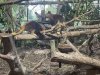
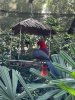
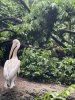
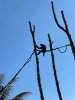
Next up is a series of primate islands, which each have buff-cheeked gibbons, Colombian black spider monkeys and red ruffed lemurs respectively. An active flock of great white pelicans swim in the moat. The pelicans are surprisingly popular with the visitors as they swim around, perch and even fight with each other occasionally. Rather than having flamingos as the entrance waterbird, pelicans should definitely be a top contendant for an entrance animal in more zoos. Yes, flamingos were kept in this enclosure before but the other 3 Mandai parks have them either way.
Gibbon:


Pelican intruding lemur island:


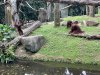
Last but not least before I wrap up the first post is the famed Orangutan Island. Orangutans are the zoo's mascot species, especially a Sumatran orangutan named Ah Meng, who was a local celebrity in her own right. The zoo currently has about 20 orangutans and has been successful at breeding both Sumatran and Bornean orangutans. The main island houses most of the males, the females are allowed to free-range and the older male Sumatran orangutan, Charlie, is kept in an indoor temple enclosure. Singapore has a great primate collection and they're all kept in beautiful lushly planted exhibits, a far cry compared to the enclosures primates get in many other Asian zoos. A trio of Asian small-clawed otters and a pair of pileated gibbons are also kept in the orangutan island.
Orangutan feeding time:


Part 1: Treetops Trail and Misc Exhibits
Right after entering, you can cross a boardwalk with siamangs on an island surrounded by a moat with some very large false gharials. It's also a good place to spot the wild long-tailed macaques, other good spots to see them are at Primate Kingdom and outside Reptopia. The Crocodile Hunter himself, Steve Irwin, helped move the false gharials to this enclosure, there are pictures of the move outside one of the zoo's restaurants.
False gharials:
Of course, the key drawcard to many Zoochatters is the proboscis monkey which is 1 of 2 Asian monkeys that are rare in captivity. They also share their enclosure with barking deer who are almost never visible and fish. Unlike the other rare Asian monkey which I'll cover in another part, the proboscis monkeys are easily viewable and make for an engaging display.
Proboscis monkey:
These enclosures are not part of a themed area like the others beyond a very general "Asian rainforest animals" theme. The Asian small-clawed otters can be smelled immediately upon entering this area and they have have two exhibits: their main exhibit as well as another exhibit that can be seen from their underwater viewing area.
Otters:
Next to the otters are 2 enclosures which both house Sulawesi endemics: a male lowland anoa named Henk and a pair of babirusa. The anoa enclosure housed Malayan tapirs for many years, who are now at the Night Safari. I don't think the zoo intended for it but having the babirusa and anoa enclosures side by side creates a little Sulawesi area. The other well-known Sulawesi animal, the Celebes crested macaque, is located on the other side of the zoo. Strangely, Mandai signs their babirusas as Babyrousa babyrussa rather than the Sulawesi babirusas that they are but it's not the only signing error they have.
Male babirusa:
Henk the anoa:
The tiger enclosure is lush and nicely planted with a large moat and you can often see the tigers playing in the water. The Zoo has housed white tigers for many years but since 2024 is now the permanent home of their Malayan tigers, the sibling pair Sali and Arhaa and their parents Bongsu and Intan who time-share the habitat. The large walls at the back of the enclosure do ruin the "immersion" that Singapore Zoo heavily sells itself on. The tigers are usually quite active, particularly the younger duo.
Malayan tiger:
An endangered species that the zoo has been very successful in breeding is the pygmy hippopotamus, which has 3 enclosures dedicated to them. The pygmy hippo gallery has a few other tanks which used to house aquatic reptiles like alligator snapping turtles and green anacondas but now just have lots of barbs and cichlids. Pygmy hippos are more terrestrial than their larger relatives and the zoo has a land habitat for the pygmy hippos. However, the two main exhibits are water-based and do feel rather small for them, although the land enclosure is accessible from the first exhibit.
Pygmy hippo:
Next up is a series of primate islands, which each have buff-cheeked gibbons, Colombian black spider monkeys and red ruffed lemurs respectively. An active flock of great white pelicans swim in the moat. The pelicans are surprisingly popular with the visitors as they swim around, perch and even fight with each other occasionally. Rather than having flamingos as the entrance waterbird, pelicans should definitely be a top contendant for an entrance animal in more zoos. Yes, flamingos were kept in this enclosure before but the other 3 Mandai parks have them either way.
Gibbon:
Pelican intruding lemur island:
Last but not least before I wrap up the first post is the famed Orangutan Island. Orangutans are the zoo's mascot species, especially a Sumatran orangutan named Ah Meng, who was a local celebrity in her own right. The zoo currently has about 20 orangutans and has been successful at breeding both Sumatran and Bornean orangutans. The main island houses most of the males, the females are allowed to free-range and the older male Sumatran orangutan, Charlie, is kept in an indoor temple enclosure. Singapore has a great primate collection and they're all kept in beautiful lushly planted exhibits, a far cry compared to the enclosures primates get in many other Asian zoos. A trio of Asian small-clawed otters and a pair of pileated gibbons are also kept in the orangutan island.
Orangutan feeding time:
Attachments
-
 false gharials.jpg201.3 KB · Views: 210
 -
 IMG_3391.jpg168.7 KB · Views: 223
 -
 Otters.jpg154 KB · Views: 216
 -
 anoa.jpg143.9 KB · Views: 212
 -
 babirusa.jpg281.4 KB · Views: 215
 -
 lemur&pelican.jpg179.9 KB · Views: 212
 -
 pygmyhippo.jpg220.7 KB · Views: 216
 -
 tiger.jpg333.5 KB · Views: 214
 -
 IMG_1393.jpg315 KB · Views: 207
 -
 gibbon.jpg51.9 KB · Views: 223
Last edited: