Singapore Zoo Singapore Zoo Review

NATY

Well-Known Member
5+ year member
Among all of Mandai's zoos, the Singapore Zoo has been the closest to my heart and is of course the one I've visited the most. It's best known for its immersive exhibits and rainforest setting. Inspired by @Zoofan15's Melbourne Zoo review which is a great read, I've decided to do a detailed account of the Zoo, which may be useful for those who're visiting for the first time. Warning for rambling. Photos are mine unless stated otherwise. Photos taken from visits on July 2023, October 2023, December 2023, April 2024 and July 2024.

Part 1: Treetops Trail and Misc Exhibits
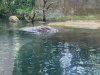
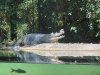
Right after entering, you can cross a boardwalk with siamangs on an island surrounded by a moat with some very large false gharials. It's also a good place to spot the wild long-tailed macaques, other good spots to see them are at Primate Kingdom and outside Reptopia. The Crocodile Hunter himself, Steve Irwin, helped move the false gharials to this enclosure, there are pictures of the move outside one of the zoo's restaurants.

False gharials:
AF1QipMhMNOCLUXkE3wawIvvO6GVPYFtbAq-qg1mzyVQ

false gharials.jpg

Of course, the key drawcard to many Zoochatters is the proboscis monkey which is 1 of 2 Asian monkeys that are rare in captivity. They also share their enclosure with barking deer who are almost never visible and fish. Unlike the other rare Asian monkey which I'll cover in another part, the proboscis monkeys are easily viewable and make for an engaging display.

Proboscis monkey:
IMG_3391.jpg

AP1GczPl0_oXrnVluvSWEnASQIXdxtveFY7JI7FunIo2YKvUg-04Ilx9cfEI=w715-h953-s-no-gm


These enclosures are not part of a themed area like the others beyond a very general "Asian rainforest animals" theme. The Asian small-clawed otters can be smelled immediately upon entering this area and they have have two exhibits: their main exhibit as well as another exhibit that can be seen from their underwater viewing area.

Otters:
Otters.jpg
AF1QipNUDCKhLNvDeQ6CTsyWNOie7IMoEa7Ut4XKWEEt


Next to the otters are 2 enclosures which both house Sulawesi endemics: a male lowland anoa named Henk and a pair of babirusa. The anoa enclosure housed Malayan tapirs for many years, who are now at the Night Safari. I don't think the zoo intended for it but having the babirusa and anoa enclosures side by side creates a little Sulawesi area. The other well-known Sulawesi animal, the Celebes crested macaque, is located on the other side of the zoo. Strangely, Mandai signs their babirusas as Babyrousa babyrussa rather than the Sulawesi babirusas that they are but it's not the only signing error they have.

Male babirusa:
AP1GczO-5nmjuR3neaUF_1rYO-ddsmUv0t5fB_aN5qFwJJKeG8qG3frt6M2o=w1270-h953-s-no-gm

babirusa.jpg

Henk the anoa:
AP1GczP1m_5-Q_oBBKy7_y2YLosTMjKmn7nPkP7nnBNPnU7F4FC75paMByNP=w715-h953-s-no-gm

anoa.jpg


The tiger enclosure is lush and nicely planted with a large moat and you can often see the tigers playing in the water. The Zoo has housed white tigers for many years but since 2024 is now the permanent home of their Malayan tigers, the sibling pair Sali and Arhaa and their parents Bongsu and Intan who time-share the habitat. The large walls at the back of the enclosure do ruin the "immersion" that Singapore Zoo heavily sells itself on. The tigers are usually quite active, particularly the younger duo.

Malayan tiger:
AP1GczNpkGgmXWZr94mCU6mpVQOTF8_d7uGi3DydA7njrHJ3Pq8ZXKffdTds=w1270-h953-s-no-gm

tiger.jpg

An endangered species that the zoo has been very successful in breeding is the pygmy hippopotamus, which has 3 enclosures dedicated to them. The pygmy hippo gallery has a few other tanks which used to house aquatic reptiles like alligator snapping turtles and green anacondas but now just have lots of barbs and cichlids. Pygmy hippos are more terrestrial than their larger relatives and the zoo has a land habitat for the pygmy hippos. However, the two main exhibits are water-based and do feel rather small for them, although the land enclosure is accessible from the first exhibit.

Pygmy hippo:
AP1GczP4-QjK82PouK4EoZmr5Ir1SpG4oUbYrwZjkpa6XhfsuAdvPeFxevyg=w1270-h953-s-no-gm

pygmyhippo.jpg

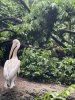
Next up is a series of primate islands, which each have buff-cheeked gibbons, Colombian black spider monkeys and red ruffed lemurs respectively. An active flock of great white pelicans swim in the moat. The pelicans are surprisingly popular with the visitors as they swim around, perch and even fight with each other occasionally. Rather than having flamingos as the entrance waterbird, pelicans should definitely be a top contendant for an entrance animal in more zoos. Yes, flamingos were kept in this enclosure before but the other 3 Mandai parks have them either way.

Gibbon:
AP1GczPTz0ZUX1yeYWk49i4NlywMK4CBr2WscLTxswmNY5ZzNoQJPr-OBVcJ=w715-h953-s-no-gm

AP1GczOSa79BkinTX1M6rnqy3x2-8w-kLPabhM33vL2PdUNLxpHtTUW6ZdiG=w1270-h953-s-no-gm

gibbon.jpg

Pelican intruding lemur island:
lemur&pelican.jpg
intruder-alert.720708


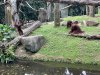
Last but not least before I wrap up the first post is the famed Orangutan Island. Orangutans are the zoo's mascot species, especially a Sumatran orangutan named Ah Meng, who was a local celebrity in her own right. The zoo currently has about 20 orangutans and has been successful at breeding both Sumatran and Bornean orangutans. The main island houses most of the males, the females are allowed to free-range and the older male Sumatran orangutan, Charlie, is kept in an indoor temple enclosure. Singapore has a great primate collection and they're all kept in beautiful lushly planted exhibits, a far cry compared to the enclosures primates get in many other Asian zoos. A trio of Asian small-clawed otters and a pair of pileated gibbons are also kept in the orangutan island.

Orangutan feeding time:
AP1GczMWy6PRx9Dzlr_DgI57K2Xq3CEjcE9qU6C_JLz2sMTZOM0a2Nen3Snu=w1270-h953-s-no-gm

IMG_1393.jpg
 

Attachments

  • false gharials.jpg
    false gharials.jpg
    201.3 KB · Views: 210
  • IMG_3391.jpg
    IMG_3391.jpg
    168.7 KB · Views: 223
  • Otters.jpg
    Otters.jpg
    154 KB · Views: 216
  • anoa.jpg
    anoa.jpg
    143.9 KB · Views: 212
  • babirusa.jpg
    babirusa.jpg
    281.4 KB · Views: 215
  • lemur&pelican.jpg
    lemur&pelican.jpg
    179.9 KB · Views: 212
  • pygmyhippo.jpg
    pygmyhippo.jpg
    220.7 KB · Views: 216
  • tiger.jpg
    tiger.jpg
    333.5 KB · Views: 214
  • IMG_1393.jpg
    IMG_1393.jpg
    315 KB · Views: 207
  • gibbon.jpg
    gibbon.jpg
    51.9 KB · Views: 223
Last edited:
Part 2: Australasia & Great Rift Valley of Ethiopia

Australasia is a pretty low-key area and is located on the western part of the zoo. It is sort of a generic Walkaroo Kangabout but not entirely. The entrance hut has a tank displaying two species of stick insects. The former emu paddock is now surrounded by protective wire fencing now that it temporarily houses a female northern cassowary who will be displayed at Rainforest Wild once it opens. No clue if they have any future plans for this enclosure.

Northern cassowary:
IMG_2457.jpg

Eastern grey kangaroos, Bennett’s wallabies and magpie geese share the main yard. The yard is fenced off, meaning that visitors aren’t actually walking into the habitat.

Kangaroo:
IMG_1932.jpg

Next up is a building for Goodfellow’s tree kangaroos, an indoor enclosure that first housed koalas on loan from Australia temporarily before housing the tree kangaroos. The good fellow himself Makaia was born in the Adelaide Zoo and is known for being raised by a wallaby surrogate mother after his mother died in an accident. Together with the female, Nupela, two joeys have been born in 2020 and 2023.

Makaia and Nupela:
IMG_2458.jpg

The final enclosure is a rather small island enclosure for southern cassowaries. Another island next to them is the outdoor enclosure for the tree kangaroos but since they have an air-conditioned room, they do not see any reason to go out in the Singaporean heat.

Cassowary:
IMG_1934.jpg

The Great Rift Valley of Ethiopia features the animals that reside around well, the actual Great Rift Valley, a habitat not too commonly seen in zoos. Themed after a Konso village, the little huts have several educational displays of Ethiopian culture and art and some of the exhibits are also built into the huts, making this a very immersive experience. Before getting into the animals, the theming for this area is one of the zoo's best with an army of Konso waga sculptures lining up the entryway. Rock hyraxes and South African ground squirrels share a small exhibit.

Rock hyraxes:
IMG_1940.jpg

South African ground squirrel:
IMG_1941.jpg

The centrepiece habitat houses a large troop of about over 80 hamadryas baboons and a pair of male Nubian ibexes. Back when the ibexes were a breeding herd, they were confined to the ledge but with only two males left now, they’re now integrated with the baboons. The baboon exhibit mostly consists of mock rock and cliffs unlike most of the other enclosures and is not surrounded by as much greenery. It is quite a large enclosure and surrounds the whole area.

Baboons and ibexes:
IMG_1944.jpg IMG_3446.jpg

Surrounding the baboon habitat is a small rocky enclosure that rotates common cusimanse and meerkats, species which do not live anywhere near Ethiopia. Be sure to come on Tuesdays, Thursdays and Saturdays to see the cusimanses. A bridge from which you can view the baboons overlooks an enclosure with a pond, home to a pair of spur-winged geese after having sat empty for a while. And in the last hut display is a cage for servals which I have never seen once in 5 visits.

Common cusimanse:
IMG_1455.jpg


A few other Ethiopian animals were kept here in the past including banded mongoose, black-backed jackals, blue-winged geese, saddle-billed storks and southern ground-hornbills (stand-in for northern ground-hornbill).
 

Attachments

  • IMG_2457.jpg
    IMG_2457.jpg
    324.9 KB · Views: 186
  • IMG_1932.jpg
    IMG_1932.jpg
    334.5 KB · Views: 189
  • IMG_1934.jpg
    IMG_1934.jpg
    302.5 KB · Views: 187
  • IMG_2458.jpg
    IMG_2458.jpg
    259.5 KB · Views: 191
  • IMG_1455.jpg
    IMG_1455.jpg
    163.9 KB · Views: 189
  • IMG_1941.jpg
    IMG_1941.jpg
    235.9 KB · Views: 187
  • IMG_1940.jpg
    IMG_1940.jpg
    247.8 KB · Views: 181
  • IMG_1944.jpg
    IMG_1944.jpg
    268.3 KB · Views: 194
  • IMG_3446.jpg
    IMG_3446.jpg
    249.5 KB · Views: 185
Part 3: Reptile Garden, Tortoise Shell-ter and a bear...
Being a reptile fan, Singapore Zoo is definitely one of my favourite zoos for its great reptile collection. So many reptiles to the point that it's better to make 2 posts about them!

While not a reptile, the sun bear habitat is unofficially considered as part of the Reptile Garden. The enclosure has glass and a moat viewing area with a trench and hot wire separating the bears though it does feel like you are quite close to them. The area has educational displays about bears with a globe diagram showing the bears of the world, a size chart comparing the size of the sun bear to the brown and polar bear and a teddy bear display of all things. At one point, Mandai’s zoos used to house all Asian bear species (also including the polar bear), but the polar bear and Asiatic black bear have been phased out.

Sun bear:
IMG_0625.jpg

Passing the sun bears is a small pond for various Asian turtle species and the entrance to Reptile Garden, starting off strong with the world’s largest lizard, the Komodo dragon. Outside of Indonesia, Singapore is the first zoo in Asia to successfully hatch a Komodo dragon in 2009. There are two enclosures for the dragons due to their solitary nature and one of the hatchlings from the first batch, Mario, is still in the zoo.

Mario:
IMG_2356.jpg

A large sandy yard has the zoo’s herd of Aldabra giant tortoises together with African spurred tortoises. A male giant tortoise named Astove is the oldest animal at the zoo, he is estimated to be more than 80 years old. Another African spurred tortoise is kept together with a rhinoceros iguana in the other yard.

Giant tortoises:
IMG_0599.jpg

Rhinoceros iguana & sulcata tortoise:
IMG_1961.jpg

Going down another path leads you to the Bornean Marsh enclosure, which is now home ot the zoo’s saltwater crocodile Panjang (who is being moved to neighbouring park Rainforest Wild soon so I hear). The Sungei Buaya exhibit is a large enclosure with underwater viewing for the Indian gharial pair and 20+ Burmese roofed turtles. The gharials are definitely great to see in this large enclosure, having swapped enclosures with Panjang around 2022. Outside Sungei Buaya are two more enclosures for Chinese alligators and Siamese crocodiles.

Panjang:
IMG_0604.jpg

Gharial:
IMG_0619.jpg

Taking the path down by Panjang’s exhibit leads to the Tortoise Shell-ter, a small tunnel like building housing many rare species of tortoises, many of which were seized from smuggling attempts. Tortoise species here include ploughshare tortoises, radiated tortoises, leopard tortoises, Indian star tortoises, Burmese star tortoises, elongated tortoises, Indochinese box turtles and Chinese three-striped box turtles. The zoo used to house several non-tortoise species like lizards and birds along with them, only a wattled starling and a blue-spotted wood-dove are left. It is definitely an interesting exhibit focusing on tortoises and the enclosures are all large and nicely decorated. Definitely a pity that there aren't as many other animals here now, there used to be Solomon Islands skinks, tegus and monitor lizards mixed with them, hopefully they will try out other mixes that are safe for the tortoises.

Ploughshare tortoise & blue-spotted wood-dove:
IMG_3504.jpg

Chinese three-striped box turtles:
IMG_0609.jpg

Indian star tortoises:
IMG_0610.jpg

Leopard tortoise hatchlings & wattled starling:
IMG_1469.jpg
 

Attachments

  • IMG_0625.jpg
    IMG_0625.jpg
    175.6 KB · Views: 164
  • IMG_0599.jpg
    IMG_0599.jpg
    259.3 KB · Views: 173
  • IMG_2356.jpg
    IMG_2356.jpg
    261.6 KB · Views: 171
  • IMG_0604.jpg
    IMG_0604.jpg
    217 KB · Views: 162
  • IMG_0619.jpg
    IMG_0619.jpg
    210.3 KB · Views: 167
  • IMG_3504.jpg
    IMG_3504.jpg
    238.3 KB · Views: 160
  • IMG_0609.jpg
    IMG_0609.jpg
    182.5 KB · Views: 162
  • IMG_0610.jpg
    IMG_0610.jpg
    264.4 KB · Views: 162
  • IMG_1469.jpg
    IMG_1469.jpg
    263.2 KB · Views: 167
  • IMG_1961.jpg
    IMG_1961.jpg
    282.4 KB · Views: 167
Part 4: RepTopia
One of the newer attractions, having opened in 2017. This is one of the best reptile houses I've seen although I haven't been to too many zoos. The on-display roster changes almost quarterly. Despite featuring a panther chameleon on the logo, this species has not been on display for a while.

There’s two entrances to Reptopia, one by cutting through the fossa exhibit and the other next to the giant tortoises where you can see the hatchery and have a quick peek at several of their off-display reptiles also visible. The hatchery features a few tanks with different reptiles, including several critically endangered electric blue geckos, of which the zoo has had multiple successful hatchings.

RepTopia is separated into desert and rainforest themed exhibits. As the inhabitants change pretty regularly, I would list the regulars.

From the hatchery entrance, the first area is an array of desert exhibits. An open-topped enclosure features Australian blue-tongued skinks and shingleback skinks, and the next two habitats are large exhibits for another rhinoceros iguana and a western diamondback rattlesnake. Many of the RepTopia tanks also have smaller inset tanks, the one here housing a Mexican redleg tarantula.

Skinks:
IMG_3479.jpg

Rattlesnake:

IMG_3484.jpg

At the middle of RepTopia is the large centerpiece tank with a land area and a large pool. Now home to an exceptionally large reticulated python, this was originally a mixed habitat for caiman lizards and a couple of other South American reptiles. A walkthrough aviary is also featured which is an unintentional nice touch as birds (aka avian dinosaurs) are reptiles cladistically but it has been closed ever since Bird Paradise’s opening with the birds being moved there, and is used as a quarantine for birds being moved to Bird Paradise in the meantime.

Caiman lizard in its old large exhibit:
IMG_0578.jpg

Now empty aviary:
IMG_3488.jpg

And that's where the somewhat consistent geographic theming is thrown out of the window as following up is a series of displays originally meant for African and Madagascan reptiles but now house West African Gaboon vipers, a veiled chameleon and a northern white-lipped python. And next to them is a large tank with several Rio Fuerte beaded lizards which are signed as Mexican beaded lizards.

West African Gaboon viper:
IMG_3487.jpg

Veiled chameleon:
IMG_3486.jpg


Rio Fuerte beaded lizards:

IMG_3491.jpg

Roti Island snake-necked turtles share their exhibit with emerald tree monitors, and the zoo participates in an international breeding programme for the turtles, having repatriated several hatchlings to Indonesia. The caiman lizards are now kept in a significantly smaller exhibit.

Roti Island snake-necked turtle:
IMG_2384.jpg

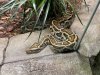
An enormous reticulated python named Bubbles shares her habitat with an equally enormous Burmese python. Right by is a large king cobra exhibit, complete with a pond. There are also a series of paludariums with at least two of those housing Chinese crocodile lizards and one for a big-headed turtle but the water is usually too murky to see the turtle properly.

King cobra:
IMG_1495.jpg

Burmese python:
IMG_1496.jpg

Besides the indoor exhibits, there are also a couple of outdoor habitats. At the first entrance to RepTopia is a pen for Asian giant tortoises and elongated tortoises and a door from inside the building brings you to two exhibits with a crocodile monitor and another with red-footed tortoises.

There's probably little competition for the best reptile house in Asia but RepTopia is probably one of the nicest looking ones period. The enclosures are all large and well decorated, no small wall tanks where all the guests have to squeeze to look at the reptiles. The on-display reptile collection is merely a fraction of the Zoo's reptile collection, with a large number of the collection only being accessible from a paid backstage tour that costs more than a hundred dollars.
 

Attachments

  • IMG_3484.jpg
    IMG_3484.jpg
    218.8 KB · Views: 143
  • IMG_3487.jpg
    IMG_3487.jpg
    159 KB · Views: 142
  • IMG_0578.jpg
    IMG_0578.jpg
    304.7 KB · Views: 144
  • IMG_3479.jpg
    IMG_3479.jpg
    157.2 KB · Views: 143
  • IMG_3491.jpg
    IMG_3491.jpg
    240.1 KB · Views: 148
  • IMG_1496.jpg
    IMG_1496.jpg
    283.1 KB · Views: 141
  • IMG_1495.jpg
    IMG_1495.jpg
    252.5 KB · Views: 141
  • IMG_2384.jpg
    IMG_2384.jpg
    92.4 KB · Views: 150
  • IMG_3486.jpg
    IMG_3486.jpg
    95.1 KB · Views: 144
  • IMG_3488.jpg
    IMG_3488.jpg
    250.9 KB · Views: 147
Part 5: Fragile Forest
Hands down my personal favourite part of the zoo. Fragile Forest is the zoo’s rainforest habitat consisting of four parts. A small room houses several species of amphibians, including the fattest axolotl in existence. Glad to see that it is a wild type axolotl. The biodome begins with a walkthrough butterfly aviary with several native butterfly species.

Fat axolotl:
IMG_0516.jpg

Butterflies:
IMG_1506.jpg

Like most zoo rainforest habitats, Fragile Forest keeps several rainforest animals from all around the world together. Lesser mousedeer and Malayan flying foxes from Asia, ring-tailed lemurs from Madagascar and Linne’s two-toed sloths and white-faced sakis from South America just to name a few.

Sloth & flying fox:
IMG_0537.jpg

Lesser mousedeer:
IMG_1987.jpg


A majority of the zoo’s small but beautiful bird collection is kept here. American white ibises, some pigeons, numerous turacos, great argus pheasants, spotted whistling ducks, red-sided eclectus parrots, western crowned pigeons, Bali mynas, red-billed blue magpies, Chaco chachalacas, grey junglefowl and a female black-casqued hornbill round up the free-flight birds.

Ducks & white ibises:
IMG_0522.jpg

Nicobar pigeon & crowned pigeon:

IMG_1996.jpg

White-cheeked turaco & eclectus parrot:
IMG_0550.jpg

Although the animals can be anywhere in the biodome, some species often have their favourite hangout spots. The mousedeer are shy but they can be spotted laying low in the plants close to the pavements. A small pond and waterfall is where you’d spot the ducks and ibises, as well as some freshwater stingrays. Flying foxes, sloths, squirrels and turacos like to be by the high branches on the viewing deck, where the keepers place out some fruit for the flying foxes that the squirrels and turacos like to steal. And in almost all my visits I’ve spotted the junglefowl hens hanging around by the exit airlock.

Exiting the biodome in the airlock are 2 caged enclosures, one for Prevost's squirrels and the other for golden lion tamarins.

Prevost's squirrel:
IMG_3559.jpg

Next is a display for numerous species of invertebrates with hundreds more off-display but their tanks are visible, followed by a row of tanks for different poison dart frog species and last but not least, an open-topped mangrove swamp tank.

Golden poison frog:
IMG_0558.jpg

Madagascan hissing cockroaches:
IMG_0556.jpg

As you can tell, this is probably the best of the zoo’s enclosures. There’s not only a great variety of species but it’s also a beautiful habitat and a nice slow walkthrough. The main downside though is that many of the birds are unsigned.
 

Attachments

  • IMG_0516.jpg
    IMG_0516.jpg
    128.5 KB · Views: 129
  • IMG_0537.jpg
    IMG_0537.jpg
    163.8 KB · Views: 133
  • IMG_1506.jpg
    IMG_1506.jpg
    224.1 KB · Views: 131
  • IMG_1987.jpg
    IMG_1987.jpg
    170.3 KB · Views: 130
  • IMG_1996.jpg
    IMG_1996.jpg
    299.6 KB · Views: 131
  • IMG_0522.jpg
    IMG_0522.jpg
    211.8 KB · Views: 131
  • IMG_3559.jpg
    IMG_3559.jpg
    151.5 KB · Views: 126
  • IMG_0550.jpg
    IMG_0550.jpg
    175.2 KB · Views: 129
  • IMG_0558.jpg
    IMG_0558.jpg
    185.4 KB · Views: 133
  • IMG_0556.jpg
    IMG_0556.jpg
    119.9 KB · Views: 132
Part 6: Wild Africa
Wild Africa is very much a typical African savanna area that almost every zoo has. Although many of the enclosures do feel a bit lush to represent the plains of Africa. Being a very standard zoo exhibit, the animals here are standard African savanna animals

First off is a large herd of southern white rhinos, which have produced several calves, most of which were sired by bull Hoepel and cows Shova and Donsa.

White rhinos:
IMG_2046.jpg

Next to the rhinos is an enclosure for African painted dogs; the pack has only grown in numbers since last year. Several pups were born and there are now about 20 dogs in total.

Painted dogs:
IMG_3567.jpg

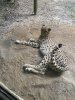
The southern cheetah habitat is next to the painted dogs. Both enclosures have viewing huts with glass windows and educational displays. The cheetahs are often sleeping by the window at the back, to my knowledge there's a male and two sisters who were all imported from South Africa.

Cheetah:

IMG_3564.jpg

In 2021, the zoo replaced their plains zebras with 4 Grevy's zebras, and have even introduced zebra hand feeding. The zebras share their enclosure with a marabou stork. I had a particularly memorable experience one time when a visitor shook the gate to the zebra feeding platform, causing Desta the stallion to lose it. It was also on that same day when he marked his territory in front of everyone.

Zebras:
IMG_2487.jpg

This is one of the few zoos which does not mix giraffes and zebras, despite their enclosures being next to each other. The zoo has a bachelor herd: Marco, his son Jubilee (born on Singapore's 50th year of independence), Adhil and Balaji. They have recently introduced some Nile lechwe into the enclosure which are not on permanent display yet afaik.
Giraffes:
IMG_2041.jpg

Ahead of the cheetah habitat is a sandy yard which is now a rotational exhibit for red river hogs and a trio of female nyala. Red river hogs do not fit the African savannah theme but the zoo used to have warthogs. The second meerkat exhibit is also here and happens to be right next to the lions in Lion King fashion.

Red river hogs:
IMG_2044.jpg

Meerkat:
IMG_3580.jpg

Singapore is known as the Lion City and of course has African lions here. Two groups of lions are displayed on a rotational basis: an adult male named TImba, a younger male born in the zoo named Simba and two females Kiara and Shani. Simba and Kiara were named after Lion King characters and Simba's father was even named Mufasa!

Timba:
IMG_2491.jpg


Passing through a viewing gallery for the lions leads to a large forested cage for Sri Lankan leopards, although Mandai signs the leopards at species level.

Leopard:
IMG_2038.jpg

Up next is an enclosure for naked mole-rats, complete with an off-putting sculpture of a naked mole-rat's head sticking out of the rocks. I do remember at one point they displayed a ball python in a separate enclosure by the mole-rats to show their predator-prey relationship but its no longer there, which is a shame as it was a rather unique idea to display them.

And last but not least is a relatively new addition, a cage for Madagascar's predator, fossas. The enclosure used to have jaguars and pumas and it was definitely too small for them so thankfully they have a much more fitting animal in it now. One of the fossas has a stumpy tail.

Fossa:
IMG_2394.jpg
 

Attachments

  • IMG_2038.jpg
    IMG_2038.jpg
    261.5 KB · Views: 97
  • IMG_2041.jpg
    IMG_2041.jpg
    269.9 KB · Views: 98
  • IMG_2044.jpg
    IMG_2044.jpg
    329.4 KB · Views: 98
  • IMG_2046.jpg
    IMG_2046.jpg
    301.5 KB · Views: 100
  • IMG_2394.jpg
    IMG_2394.jpg
    166.4 KB · Views: 98
  • IMG_2487.jpg
    IMG_2487.jpg
    247.8 KB · Views: 99
  • IMG_2491.jpg
    IMG_2491.jpg
    314.8 KB · Views: 98
  • IMG_3564.jpg
    IMG_3564.jpg
    184.3 KB · Views: 100
  • IMG_3567.jpg
    IMG_3567.jpg
    286 KB · Views: 103
  • IMG_3580.jpg
    IMG_3580.jpg
    135.5 KB · Views: 96
Back
Top