Slimbridge WWT Slimbridge WWT

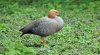
Following on from the 'Bird Gardens Scotland' thread which mentions among other species, that 'Ashy-headed geese are being received from Slimbridge.' I have not seen Ashy-headed geese at Slimbridge on my last two visits, though I've looked for them at the individual pens where all the aggressive sheldgeese are kept in individual pairs. Ruddy-headed-yes, Ashy-headed-no. Does anyone know exactly where they are at Slimbridge?
Ashy-headed goose are signed today in a pen next to the Cape Barren Goose - none seen though! Didn't see any Ruddy headed signed anywhere
 
Ashy-headed goose are signed today in a pen next to the Cape Barren Goose - none seen though! Didn't see any Ruddy headed signed anywhere
That's interesting as I contacted them just the other day about this and they confirmed that they were offshow! Maybe its now the Ruddy-headed that are offshow instead? Somewhat confusing...;)
 
Last edited:
These were in the same exhibit as the Freckled Ducks in June but may have moved now.
 

Attachments

  • RUDDY HEADED GOOSE - SLIMBRIDGE WWT 25 04 2019 (686).JPG
    RUDDY HEADED GOOSE - SLIMBRIDGE WWT 25 04 2019 (686).JPG
    147.3 KB · Views: 2
Notes on a brief visit yesterday;

60 + wild Bewick Swans now present.
Good number of wild duck(Pintail,Wigeon, Shoveler etc) but the only wild geese seen were Canadas and several hundred Barnacles(feral or wild?) visible from the new Estuary hide. No Whitefronteds seen. No wild Cranes seen this time either.

The new Wetlands area aviary is pretty much completed but not landscaped or stocked yet.

'Mr James', the lone James Flamingo, is still with the Andean flock.

Still 12 Freckled Ducks present, but Cereopsis geese sharing with them, not evident. No Ashy-headed geese again either (or even a label) and now the Ruddy-headed seem to have disappeared too as there was no label for them this time either... The water in some of the sheldgeese enclosures looked rather foetid, which may be why some of them appeared to be empty (the birds taken offshow?). A high spot was at least four Baikal teal drakes in the Asian section and three of them at close quarters on the grass too.

I do think its a pity the numbers of the ornamental geese(Hawaian, Red-breasted, Emperor, Snows etc) have declined such a lot over the years and they are now restricted to a rather sad-looking small group in the out of the way 'geese of the world' section which is little-visited, apart from being the access to the quiet South Hide. Feral greylags are everywhere however, including one or possibly two, buff-coloured 'sports'. I still like Slimbridge best of the WWT sites though, being the original one.
 
Last edited:
Couldn't agree more about the reduction in geese, both numbers and species. The 'Buff-lags' are, IMHO, very attractive in small numbers.
 
Couldn't agree more about the reduction in geese, both numbers and species. The 'Buff-lags' are, IMHO, very attractive in small numbers.

I like all 'buff' domestic geese. Last visit to Slimbridge I saw one buff greylag, first one I've seen. This time I saw one twice, in two entirely different places, so may be more than one. Greylags certainly seem to have replaced the flocks of the rarer geese that were a feature of Slimbridge in the earlier days- the place is over-run with them nowadays.
 
WWT still holds the vast majority of the fascinating wildfowl species it originally held, including the Ashy headed, Ruddy headed and cereopsis geese mentioned, as well as a large and healthy population of Freckled ducks. Individuals are often moved between the WWT sites, so every site doesnt always hold every species, but they do remain within WWT as a whole. Each centre will have holding facilities off display and just like every other zoo, I'm sure they move birds on and off show to allow proper management.

When it comes to Greylags, modern and ethical prodedures must be followed by all modern zoological facilities when it comes to the control of wild and or feral species in the UK. I am sure WWT struggled like everyone did when the licensing changed around 'general licenses' thanks to Chris Packham and others.

WWT still holds the largest and most representative collections of Wildfowl and flamingos in Europe, and the oppportunity to see wild birds within the reserve and exotic species within the collection, makes it a unique and fascinating place to visit :)
 
I have just noticed that a new video has been uploaded to Youtube about the Living Wetlands Theatre, which will be opening in July 2021. Species shown or mentioned as taking part in these displays are pink-backed pelicans, magpie geese and a grey crowned crane, which appears to be a new species for Slimbridge.

 
I have just noticed that a new video has been uploaded to Youtube about the Living Wetlands Theatre, which will be opening in July 2021. Species shown or mentioned as taking part in these displays are pink-backed pelicans, magpie geese and a grey crowned crane, which appears to be a new species for Slimbridge.


Visited this week and thought I’d get lucky!:( However, the new Estuary Tower near the main gate and Mission Possible (housing the Hawaiian goose and showcasing other WWT projects) are excellent.
 
- The August 2017 video shows that two species of glass frog arrived and were off-show in the Toad Hall facility. One of them, the reticulated or La Palma glass frog Hyalinobatrachium valerioi, was successfully bred in 2018. The other species, which I cannot catch the common name of, is a male-only group. The news about the arrival of the two species comes from the video below:

I was looking for the identity of the second species of glass frog at Slimbridge again and this time I managed to find it - it is the Yuruani glass frog Hyalinobatrachium iaspidiense. I am not sure if they are still there or not. Joel Sartore has photographed them there - it seems that the short clips of the species were uploaded in August 2021.

Other species of amphibian that Joel Sartore photographed at Slimbridge that are not mentioned on their Zootierliste page include:
- Southern Italian alpine newt Ichthyosaura alpestris inexpectatus
- Pyrenees fire salamander Salamandra salamandra fastuosa
- Palmate newt Triturus helveticus
- Pool frog Pelophylax lessonae
 
Log into Facebook

The Carribean flamingoes have moved into the Lesser flamingo enclosure and the lessers have joined the Andeans and the James. This is because of work being done on the Carribeans enclosure.
 
Do Flamingo species interbreed potentially? Three species in one enclosure does seem like it might lead to that possibility, depending if they are still together in the breeding season.
Pretty sure I've not come across mention of any, but you never know....
 
Do Flamingo species interbreed potentially? Three species in one enclosure does seem like it might lead to that possibility, depending if they are still together in the breeding season.
Pretty sure I've not come across mention of any, but you never know....
Greater and Caribbean hybridise fairly freely given the chance. WWT will be well aware
 
Greater and Caribbean hybridise fairly freely given the chance. WWT will be well aware

Also with Chilean I believe. Not heard of it happening involving non-Phoenicopterus I don't think but of course those species are mostly much less widely kept anyway.

On past history I'm not honestly sure breeding of any kind is much of a risk for Slimbridge's Andeans or Mr. James in any case..!
 
Also with Chilean I believe. Not heard of it happening involving non-Phoenicopterus I don't think but of course those species are mostly much less widely kept anyway.

On past history I'm not honestly sure breeding of any kind is much of a risk for Slimbridge's Andeans or Mr. James in any case..!

Which is a terrible shame, really. I can remember those beautifully illustrated pamphlets that The Wildfowl Trust produced showing their birds in the 1970s, and desperately wanting to see those jewels.

I don't know, although I suspect, Sir Peter painted those. I did meet him once when I was kid and had his autograph, but sadly lost it in the mists of time....
 
Slimbridge have recently released a video on Youtube about the new 'Waterscapes Aviary'. It is based on various British wetland habitats including estuary, ponds and lakes, reedbeds and wooded wetlands; it also has a diving duck tank.

Species mentioned or shown during the video include European spoonbill, little egret, smew, garganey, pied avocet, Eurasian oystercatcher, common redshank, ruff and a pair of common ringed plover. All the birds came from either other zoological collections or private aviculturists.

The video can be seen here:
 
Slimbridge have recently released a video on Youtube about the new 'Waterscapes Aviary'. It is based on various British wetland habitats including estuary, ponds and lakes, reedbeds and wooded wetlands; it also has a diving duck tank.

Species mentioned or shown during the video include European spoonbill, little egret, smew, garganey, pied avocet, Eurasian oystercatcher, common redshank, ruff and a pair of common ringed plover. All the birds came from either other zoological collections or private aviculturists.

The video can be seen here:
I visited it yesterday and it is very impressive (not quite sure about the diving duck tank though). A seperate aviary is planned to hold Bearded Reedling as well but they are not there yet.
 
News from Slimbridge's Facebook page today - 'Haha' the North American river otter has recently died. She was born at Slimbridge in February 2009. According to Zootierliste, she was the last otter at the centre.
 
Visited for the first time in four years and to not put a point on it I won’t be going back any time soon.
I was a little shocked to find so many species no longer on display or even at the collection, many of the exhibits were in a state of untidy, overgrown wildflowers.
Even some of the updates are looking tired already.
What's the point of having a hide inside an exhibit only to allow the reeds to completely block any chance of viewing any species within that area?
On the wild bird hides the new tower hide is great but the seating inside is a little wobbly.
Species no longer on display since my last visit includes the following –

Black winged stilt
White winged duck
Fulvous whistling duck,
Bar-head goose,
Red breasted goose,
Ruddy shelduck,
Chinese spot-billed duck,
Falcated duck,
Lesser white fronted goose,
Red crested pochard,
White-headed duck
Wigeon,
Eurasian white fronted goose,
Pintail,
Maccoa duck,
Cape teal,
South African black duck,
South African shelduck
South African pochard
Blue winged goose
Black swan,
Australian shelduck,
Black-backed radjah shelduck,
Australian black duck,
Australian shoveler,
Magpie goose,
Orinoco goose
Wandering whistling duck
Hardhead.
Magpie goose,
Plumed whistling duck
Australian wood/Maned goose
Lesser whistling duck,
Baikal teal,
Mandarin duck,
Marbled teal
Ferruginous duck
Freckled duck,
Cape barren goose
Spotted whistling duck.
Andean goose
Ruddy headed goose
Greater Magellan goose
Bronze-winged duck,
Coscoroba swan,
Puna teal
Ringed teal
Greater white cheeked pintail
Argentine ruddy duck.
West indian whistling duck,
Black necked swan, Black bellied whistling duck
American wigeon,
Tundra/Whistling swan,
Richardson’s Canada goose &
Laysan duck


These species had no signage any where around the collection there may also be more missing species.
Did send an E-Mail requesting a little information on the above species from the collection as yet I have recieved no reply.
 
Back
Top