Smithsonian National Zoo Smithsonian National Zoo News 2016

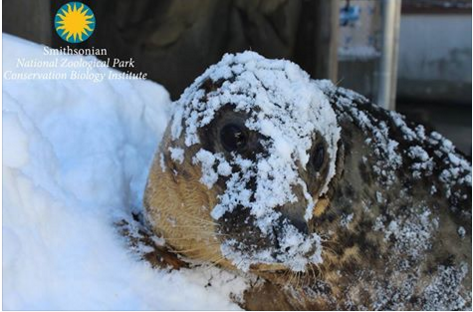
THE ZOO WILL CLOSE AT NOON, FRIDAY, JAN. 22, AND REMAIN CLOSED THROUGH SUNDAY, JAN. 24.

Emergency Message - National Zoo

The Zoo will also be closed Monday, Jan. 25.
TcdKObp.png
 
The last couple of times I have visited the zoo I saw 4 female elephants together - I think Ambika, Shanthi, Bozie and possibly Swarna. Hopefully the whole herd can be integrated soon.

Some sad elephant news as it appears that Kamala's granddaughter Sumitra (also Kandula's half sibling) has passed away in Zoo Ostrava.

On a happier note, the DC snowpocalypse seems to suit Tian Tian the panda just fine! https://www.youtube.com/watch?v=viu1UgZ7gwM
 
The Fiscal year 2017 budget request is in. The zoos section starts on page 76. Sorry for the long post.

http://www.si.edu/content/pdf/about/FY2017-BudgetRequest.pdf

Highlights:

The zoos collection (Rock creek only) went from 1,768 to 2,083 animals.

New animals brought in/births: "a screaming hairy armadillo and tamandua — both education/program animals; four Allen’s swamp monkeys and three Schmidt’s red-tailed monkeys on exhibit at the Zoo’s Think Tank; four ring-tailed lemurs on exhibit at Lemur Island; gibbon and gorilla females for breeding; two spectacled bear births and a male sea lion for breeding." (Maybe the volunteer was wrong when she said the zoo brought in black and white ruffed lemurs as this document says ring tailed.)

The zoos bird collection went down as the zoo prepares to start the construction of "Experience Migration".

The zoos fish collection went up dramatically. Including 32 new species "as the Amazonia pool populations are revitalized."

"During FY 2015, NZP completed a digital signs pilot program
throughout the Park. Digital signs accomplish multiple goals, one of which is to
provide an early warning system for events that need to be communicated quickly,
such as adverse weather conditions, an escaped animal, or other security
incidents in the Park. On a daily basis, digital signs help provide visitors with maps
of exhibits and facilities, schedules of activities such as keeper demonstrations,
and more in-depth information about the animal collection. The digital sign pilot
program was successful and, as funds become available, we will continue
permanent installations of this new signage."

"In FY 2016, NZP is launching a revamped website using new
technology that will be more mobile friendly, allow for easier updating of content,
and enable us to leverage the interest in our site with a deeper engagement."

My excitement when I first read this.

http://gifsec.com/wp-content/upload...-when-my-crush-finally-texts-me-back.gif?gs=a

"FY 2016 will mark the completion of the North Road/General Services Building
(GSB) project, utility upgrades at the Front Royal campus, and safety upgrades,
including the planning and design for a safer circulation pattern at the lower part of
the Rock Creek campus, as well as the planning for needed upgrades to
restrooms. Although mostly invisible to the visiting public, these infrastructure
improvements are important building blocks for the NZP master plan. "

"The next planned public-facing exhibit renovation is of the historic 1928
Bird House and surrounding plateau, which will turn the facility into an educational
celebration of birds and bird migration. FY 2016 will mark the completion of the
design phase for this first-of-its-kind zoo attraction that immerses visitors in birds’
miraculous annual journeys. It will engage visitors directly in NZP’s worldrenowned
and pioneering research led by scientists at the Smithsonian Migratory
Bird Center, while also inspiring the public to participate in protecting migratory
birds and their shrinking habitats. It was an NZP scientist, along with more than 20
other conservation organizations, who developed The State of the Birds 2014 —
the most comprehensive review of long-term trend data for U.S. birds ever
conducted. The report finds bird populations declining across several key habitats
and includes a “watch list” of bird species in need of immediate conservation
help. This exhibit is essential to tell that important story"

"Planning a Zoo renovation is a major undertaking that must ensure the
safety of the existing live collection while expanding the number and variety of the
species on exhibit. In FY 2016, the collection will be transferred to a suitable
location so that construction can safely begin."

"NZP has been tightly focused on safety as well as security. NZP was a
leader in the AZA move to ensure protected contact for all interactions with
elephants and has been developing and sharing its protocols for working with
dangerous carnivores, including lock-out protocols and two-person rules. A study
was performed for visitor safety needs — with a particular emphasis on the
human-animal interface. The barrier around the lion/tiger exhibit was identified as
the highest priority for improvement and work was completed in that area.
FY 2016 will see improvements in the barriers for the Great Apes exhibit, with
additional improvements in other areas to follow. "

This explains the work being done on the Gorilla and Orangutan exhibits.
 
Last edited:
New animals brought in/births: "a screaming hairy armadillo and tamandua — both education/program animals; four Allen’s swamp monkeys and three Schmidt’s red-tailed monkeys on exhibit at the Zoo’s Think Tank; four ring-tailed lemurs on exhibit at Lemur Island; gibbon and gorilla females for breeding; two spectacled bear births and a male sea lion for breeding." (Maybe the volunteer was wrong when she said the zoo brought in black and white ruffed lemurs as this document says ring tailed.)

Darn, you got me excited. I saw tamandua by "births", but then concluded it meant new animal brought in. And yes, the zoo has both ring tailed and black and white ruffed lemurs now.
 
The zoo has shared a post on its Facebook page that sadly Shanti is experiencing mobility issues due to progressive arthritis which has resulted in damage to her nails.

Really hoping this isn't a post foreshadowing disclaimer of a possible euthanization to come...
 
How old is Shanthi

Correct me if I'm wrong, anyone who is more familiar with her, but i believe she is 40. Which, when elephants pass is advertised as "old" for an elephant but I'm critical of this and find Asian elephants don't necessarily fit the bill of "old/geriatric" unit late 40's mid 50's but like humans, there is a margin for exception and variations upon individuals.
 
I start to consider elephants to be old when they are 50, since they have been known to live to 70.

I really really hope that Shanthis foot problems get fixed or healed and she doesn't die since she is just really an amazing elephant with a great personality and I loved watching her when I went to SNZ late 2015. but also for like all the other reasons to like so anti zoo groups don't say anything and yeah
 
I start to consider elephants to be old when they are 50, since they have been known to live to 70.

I really really hope that Shanthis foot problems get fixed or healed and she doesn't die since she is just really an amazing elephant with a great personality and I loved watching her when I went to SNZ late 2015. but also for like all the other reasons to like so anti zoo groups don't say anything and yeah

Maybe its just the weather and she'll turn a corner after it has warmed up for a while. I want to give her a hot pack on each foot now, I hope she feels better.
 
The zoo has shared a post on its Facebook page that sadly Shanti is experiencing mobility issues due to progressive arthritis which has resulted in damage to her nails.

Really hoping this isn't a post foreshadowing disclaimer of a possible euthanization to come...

In case some people have no clue what you're talking about.

Born in Sri Lanka around 1975, Asian elephant Shanthi developed arthritis in her front-left leg more than a decade ago. While there is no cure for arthritis, there are ways to alleviate the symptoms, and our animal care experts have focused on her comfort. The team regularly administers anti-inflammatories and encourages Shanthi to move and flex her joints through exercise and hydrotherapy. More recently, Shanthi has been placing her weight disproportionally on her other feet which has led to some wear-and-tear on her front toenails. To protect her feet, the team applied an acrylic cover to stabilize the split nails and treat her with daily pedicures. Our team continues to closely monitor changes in Shanthi’s mobility as well as the serious condition of her feet. We will continue to provide updates.

Someone asked how the zoo will prevent similar problems from occurring to their other elephants.

Have you any thoughts about the reasons for the arthritis, and now the foot and toe problems? Treating the symptoms after the problems develop is perhaps of some help, but prevention of such ailments is surely a more sound medical and husbandry approach. How will Shanthi's problems be prevented for the other elephants you hold?


Thanks for your comment. In designing the Zoo’s new facility, a lot of thought and research went into selecting different substrates for the elephants. The bulk of the elephant space is covered in natural substrates such as grass, dirt, and sand. The sand flooring indoors is 1.2 meters deep and sits atop a heated concrete slab. In the Elephant Barn, four suites contain rubber flooring, which provides good cushioning and a cleanable surface for the elephants' baths. There are also a few areas that have broom-finished concrete or pavement. The combination of hard and soft surfaces gives elephants the opportunity to choose the area most comfortable to them, encourages healthy wear on their toenails and foot pads, and is good cushioning for their joints.
 
From the zoos facebook.

Veterinarians radiographed Asian elephant Shanthi’s foot recently to evaluate the progression of her arthritis and infection. The radiograph image revealed that the infection was localized and had not spread to her bones. Our team was pleased about that news but remains vigilant about her care. They are treating the serious infection topically with antimicrobials and disinfectants. To minimize the impact of the disease, the team helps her exercise her joints and administers anti-inflammatories. Watch the elephant team evaluate Shanthi.

https://www.facebook.com/nationalzoo/videos/10153912452862902/
 
Back
Top