Smithsonian National Zoo Smithsonian National Zoo News 2016

You can vote to name the baby Swamp Monkey.

https://nationalzoo.si.edu/Animals/Vote/swamp-monkey.cfm

Options:

Nyana (Lingala): means "to swim"

Zawadi (Swahili): means "gift"

Mayi (Lingala): means "water"

Also in case anyone is curious about what the names of the animals are.

five Allen's swamp monkeys: three females, Layla, Kinah and Deiriai; and one male, Num Armstrong. They live together with three Schmidt's red-tailed monkeys; male, Tiko, and females, Indi and Chi Chi

Also. According to the spring 2016 Zoogoer. Fonz is opening a temporary exhibit in late May that will run through mid September.

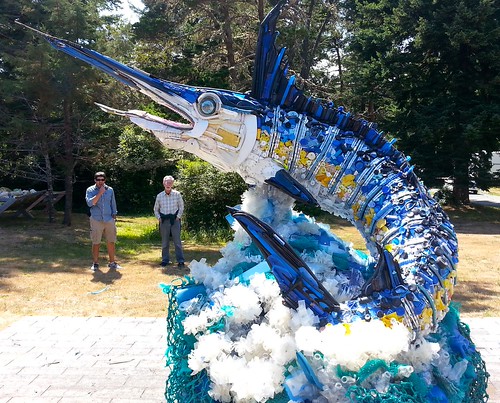
The exhibit is called "Washed Ashore" and is a collection of 16 sculptures of ocean animals made from trashed that washed up on different beaches.

Here's the zoos page about it.

http://nationalzoo.si.edu/ActivitiesAndEvents/Celebrations/washed-ashore.cfm

And here's the projects website.

http://washedashore.org/events/

The zoo was also able to meet their goal of $150,000 and soon will be able to renovate the Sloth Bear exhibit on Asial Trail and install a webcam.
 
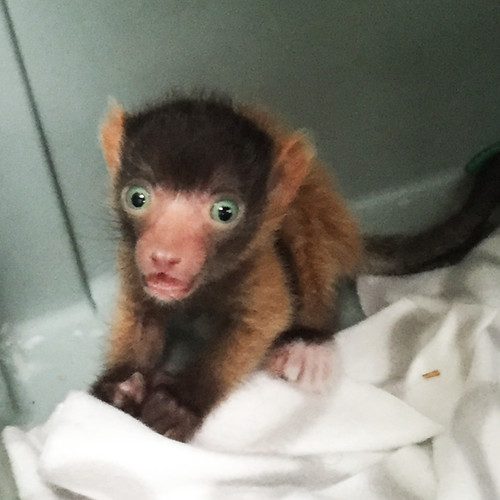
Introducing Zawadi! Our wee Allen's swamp monkey’s name means “gift” in Swahili. Her name was chosen by Friends of the National Zoo members. Swahili is a Bantu language spoken in central Africa, the monkeys' native habitat. You can visit baby Zawadi along with the other Allen’s swamp monkeys and Schmidt's red-tailed monkeys at Think Tank. Join FONZ today and become part of our Zoo family.

Zoos facebook.
 
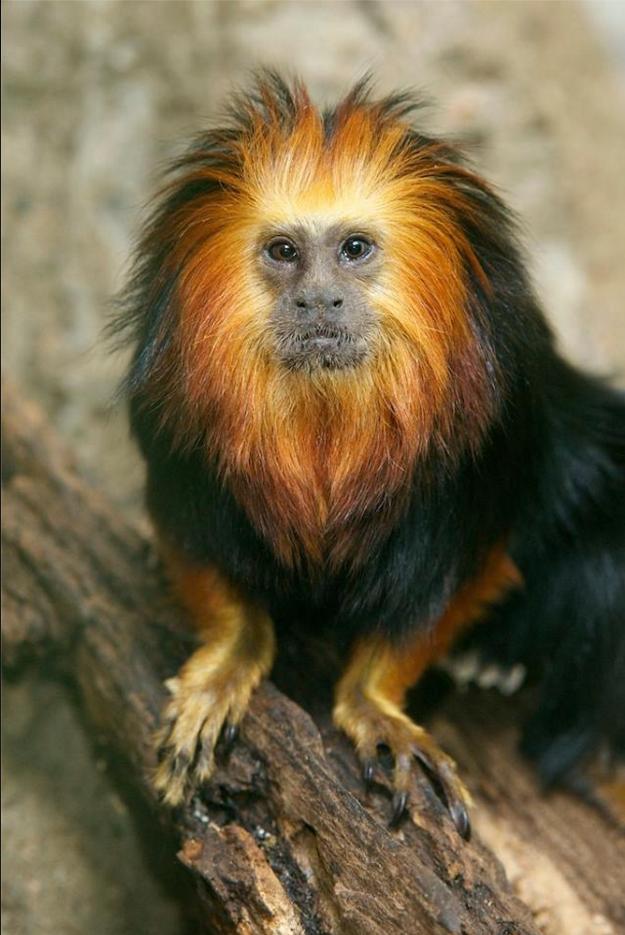
We are sad to share that Mattie, one of our geriatric golden-headed lion tamarins died on Friday. He was 15 years old and had lived several years past the median life expectancy of 11 years old for his species. Mattie had been treated for liver issues during the past several years. His last ultrasound revealed a mass that was terminal. Due to a sudden decline in his health and quality of life last week, our animal care team made the difficult decision to humanely euthanize him. Zikki, Mattie’s mate, and Amber, one of his sons, still live at the Small Mammal House. During his life, Mattie sired 8 offspring. Keepers say he was a very attentive father, often helping to care for newborns shortly after their births.

23RZj5B.jpg


Does anyone know how many Golden and Golden Headed lion tamarins the zoo has? A volunteer told me that the two center exhibits (under renovation currently) are gonna be used for the lion tamarins but the zoo doesn't seem to have more than 3 of each.
 
Asian elephant Shanthi has had some improvements in her mobility and activity. This indicates that our animal care staff’s treatments have been helping. Arthritis is a chronic disease regardless of the species and is not curable. Our team continues to treat Shanthi’s infection caused by the arthritis’ impact on her feet. Her care includes administering topical treatments such as antibiotics and disinfectants, exercising her joints and administering anti-inflammatories.

Zoos Facebook
 
BLACK FOOTED FERRET DIES AT SMITHSONIAN CONSERVATION BIOLOGY INSTITUTE


The Smithsonian Conservation Biology Institute (SCBI) lost a senior male black-footed ferret following a routine procedure Wednesday, April 6. Staff were assessing whether the male was reproductively ready for the 2016 breeding season. Initial necropsy information indicates that the black-footed ferret developed sepsis from a small perforation in the colon which occurred from the procedure.

The male, born in 2012, was not genetically valuable, but it is important to assess the quantity and quality of semen prior to pairing males with females. Eight years ago, SCBI scientists determined that just because black-footed ferret males appear to be reproductively ready based on manual palpation of testes, they may not actually be producing sufficient quantities of semen. Additionally, a number of black-footed ferrets do not breed because of behavioral incompatibility or improper breeding positioning so this annual assessment of semen characteristics also provides an opportunity for animal managers to work with scientists on freezing semen for future assisted reproductive techniques (artificial insemination).

Reproductive technologies are used routinely at the six different breeding facilities located throughout North America for management including: checking male fertility before mating, overcoming infertility, and ensuring that every genetically valuable individual reproduces to maintain as much genetic diversity as possible. SCBI's black-footed ferret colony has allowed scientists to study the biology of the black-footed ferret to enhance reproduction, maintain genetic diversity, and provide animals for reintroduction to the western Great Plains. Black-footed ferrets are classified as endangered on the IUCN red list.

Press Release - National Zoo| FONZ
 
Three red-ruffed lemurs were born.
Jeepers! We really love those peepers. The Zoo is celebrating the birth of three critically endangered red-ruffed lemurs. Visit our three adult red-ruffed lemurs and the babies at the Small Mammal House. #WeSaveSpecies
Zoo's Facebook
 
The zoos website says that parts of the Asia Trail are closed.

It says the fishing cat exhibit to the Olmsted Walk at the sloth bears are closed.

It says nothing else, anyone know what happened?
 
I went to the zoo today and heres some updates.

* The baby Red Ruffed Lemurs might be on exhibit. All three Lemurs were on exhibit and there were more crates then usual in the exhibit and the window was blocked off.

* A male Pale-Headed Saki was added to the big exhibit next to the Lemurs and the lone male was gone (volunteer said it was a different animal) and the exhibit he was in was covered in paper.

* The second Fennec Fox exhibit was covered in paper. A volunteer said that the kits would go on exhibit soon the last time I went so i'm assuming that they're letting them get used to the exhibit before they put them on public display.

* The main exhibits are done construction wise. They haven't actually put any plants or branches in it yet but they look like that's all they need to do (besides put the animals in them).

* The zoo no longer has any tarantulas in Amazonia. I don't know if the zoo just got rid of them or just moved them somewhere but all their exhibits were given to different Frog species.

* The viewing area for the smaller of the two Andean Bear exhibits was blocked off. You can still get a good view (not with a lot of people though). It looked like they were doing some kinda small construction in the area.

* The two Grey Wolves are still separated. Last time I went the volunteer said the first time they fought the zoo tried putting them back together as soon as possible but it looks like after the second fight they're taking their time.

* Does anyone know what animal they keep in the exhibit attached to the staff only building behind the Bald Eagle viewing? It was a type of bird but I couldn't really see any details.

* The Red Panda exhibit on Asia Trail looks like some progress has been made. They blocked off the upper level viewing.

* Parts of the Asia Trail were repaved. Either that or i'm not very attentive.

* For what it's worth the roof (inside) of the Great Ape house looks like it was repainted. Either that or once again, i'm not very attentive.

And that is it. Photos should be up soon.
 
Last edited:
* The second Fennec Fox exhibit was covered in paper. A volunteer said that the kits would go on exhibit soon the last time I went so i'm assuming that they're letting them get used to the exhibit before they put them on public display.

* The viewing area for the smaller of the two Andean Bear exhibits was blocked off. You can still get a good view (not with a lot of people though). It looked like they were doing some kinda small construction in the area.


* The second Fennec Fox exhibit had its paper removed and yesterday was the first day the kit were on exhibit. However, after a couple hours, they put up black cardboard so the kit had privacy from visitors. When I encountered them, they were a bit startled of humans and kept hiding in the back.

* I saw a platform similar to the one they had when they remodeled the main Andean bear exhibit's pool last year. However, this exhibit does not have a pool so I am not sure what modifications on their exhibit they are making. I don't know if it's been noted, but the cubs have been separated from their mother, Billie Jean. Billie Jean is on exhibit with the adult male Andean bear, Cisco. I am assuming the zoo wants them to mate again.
 
We’ve had some indications that our animal care staff’s treatments have been helping Asian elephant Shanthi. She has had some improvements in her flexibility and her feet and nails are looking better. Although signs like this are encouraging, arthritis is a chronic disease regardless of the species and is not curable. Our team continues to treat Shanthi’s infection caused by the arthritis’ impact on her feet. Her care includes administering topical treatments such as antibiotics and disinfectants, exercising her joints and administering anti-inflammatories and joint treatments.

Zoos Facebook.

Teddy and Hokees (Fennec Fox kits) are now on exhibit.

https://www.facebook.com/nationalzoo/videos/10154102729787902/
 
SMITHSONIAN’S NATIONAL ZOO PRESENTS “WASHED ASHORE: ART TO SAVE THE SEA”

26750453276_e347704bcf.jpg


On exhibit for the first time in the Washington, D.C. region, the Smithsonian's National Zoo presents "Washed Ashore: Art to Save the Sea" from May 27 through Sept. 5. Made completely of plastic debris collected from beaches, the colorful and dramatic sculptures of marine animals represent the more than 315 billion pounds of plastic in oceans today and underscore the need for wildlife conservation. Admission to the Zoo and this exhibit is free.

Made possible with the support of Friends of the National Zoo, visitors are invited to get up close to view the sculptures, which range from a 12-foot-long shark and 16-foot-long parrot fish to an 8-foot-wide octopus and a 20-foot-long coral reef. Seventeen sculptures of marine life will be installed along the Zoo's Olmsted Walk, in the Visitor Center and at the Amazonia exhibit. Visitors can see marine animals affected by wast--including sea lions, brown pelicans and coral--on view at the Zoo's American Trail and Amazonia Science Gallery, respectively.

"We're excited to bring conservation science and art together to connect our visitors to the impact of trash on ocean health," said Dennis Kelly, Zoo director. "The Smithsonian's National Zoo and Conservation Biology Institute is committed to saving marine species and is a pioneer in coral-reef research and conservation. While intricate and captivating, these sculptures are a powerful reminder of our personal role and responsibility in preserving global biodiversity on land and in the sea."

Press Release - National Zoo| FONZ
 
The red pandas are back!

RED PANDAS DEBUT ON ASIA TRAIL AT THE SMITHSONIAN’S NATIONAL ZOO

The Smithsonian's National Zoo's red panda habitat on Asia Trail reopened to the public Tuesday, May 10. Tusa (male) and Asa (female) explored their new home which has a brand new "retreat." The retreat includes four indoor enclosures complete with air-conditioning and heating. The retreat has a viewing window, allowing visitors to see the red pandas when they choose to spend time inside. Three of the indoor enclosures reach 11 feet high and one reaches 9 feet. There are ample structures inside for the arboreal animals to climb. Native to China, Nepal, India, and Bhutan red pandas are listed as endangered by the International Union for Conservation of Nature.

Press Release - National Zoo| FONZ

Two new faces are on Asia Trail: Tusa and Asa! Starting today, visitors can see the red pandas in their outdoor habitat and in their retreat. Thanks to donors + Friends of the National Zoo members who helped us provide Tusa + Asa with an indoor place to climb, relax, and play. Learn more

Facebook


https://www.youtube.com/watch?v=C9wlchYfNjc

I was gonna include the photos in the post but they were to big. The photo release has a link to the flickr page.
 
The Smithsonian Conservation Biology Institute is celebrating ‪#‎EndangeredSpeciesDay‬ with a bundle of black-footed ferrets! Four kits were born May 11 to mother Wachapi and father Kah, who are both 2 years old. According to keepers, the kits are doing well and growing very quickly! Today, they weighed-in at a whopping 45 grams.‪#‎WeSaveSpecies‬

Zoos facebook.

https://www.facebook.com/nationalzoo/videos/10154154629012902/
 
Back
Top