You are using an out of date browser. It may not display this or other websites correctly.
You should upgrade or use an alternative browser.
You should upgrade or use an alternative browser.
Smithsonian National Zoo Smithsonian National Zoo News 2019
- Thread starter Hipporex
- Start date
- Status
- Not open for further replies.

I went to the zoo Oct 6th.
-Calli the sea lion isn't well, and her and the pup are being kept off exhibit. The pup might need to be hand fed, so her body can focus on itself. The person I spoke with doesn't work in that section and wasn't sure what was wrong, only that it wasn't contagious or anything like that.
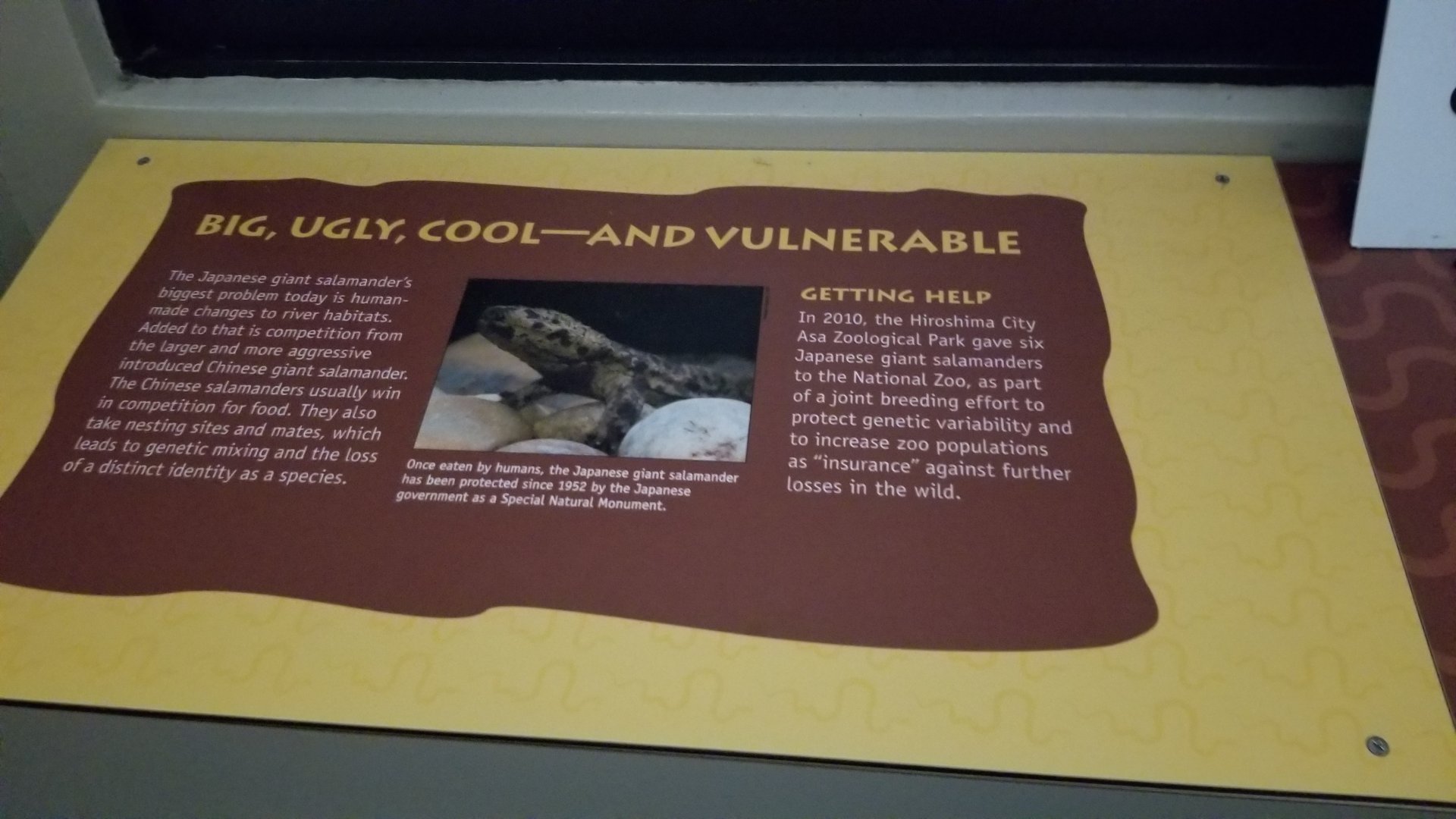
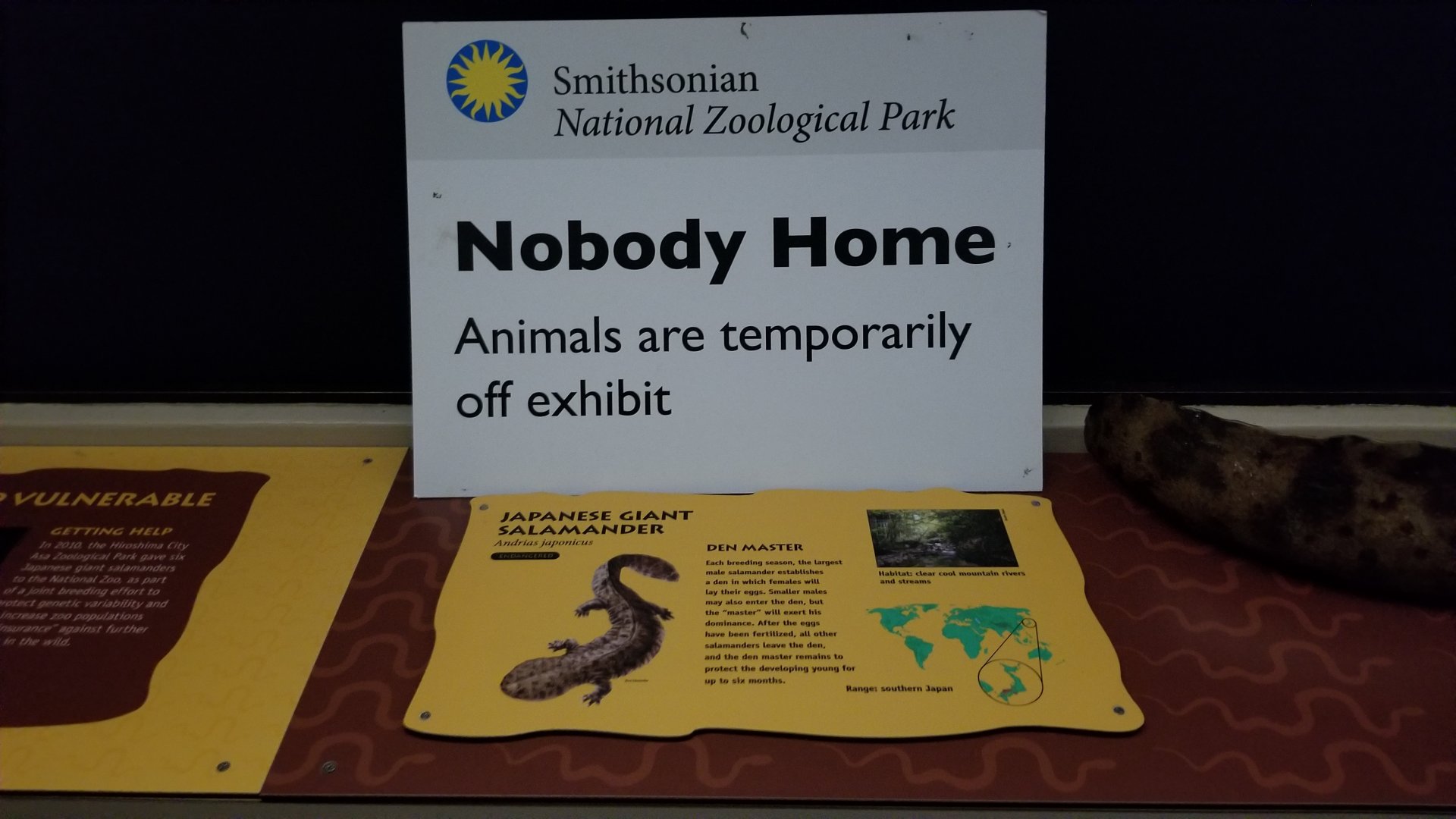
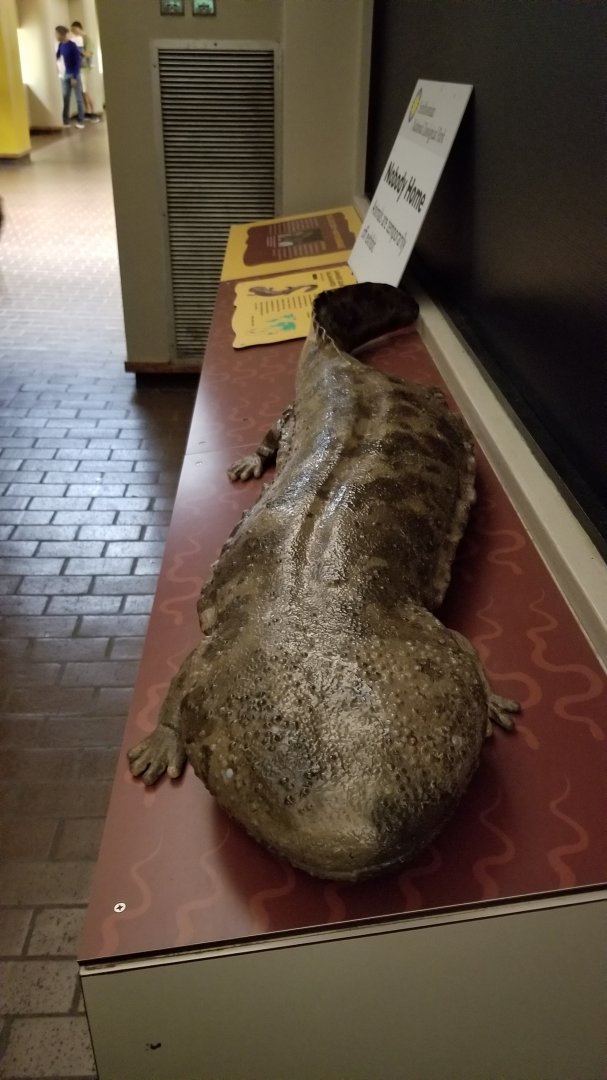
- The salamander exhibit is all set up. It's across from the snapping turtle, near the end of the reptile building.
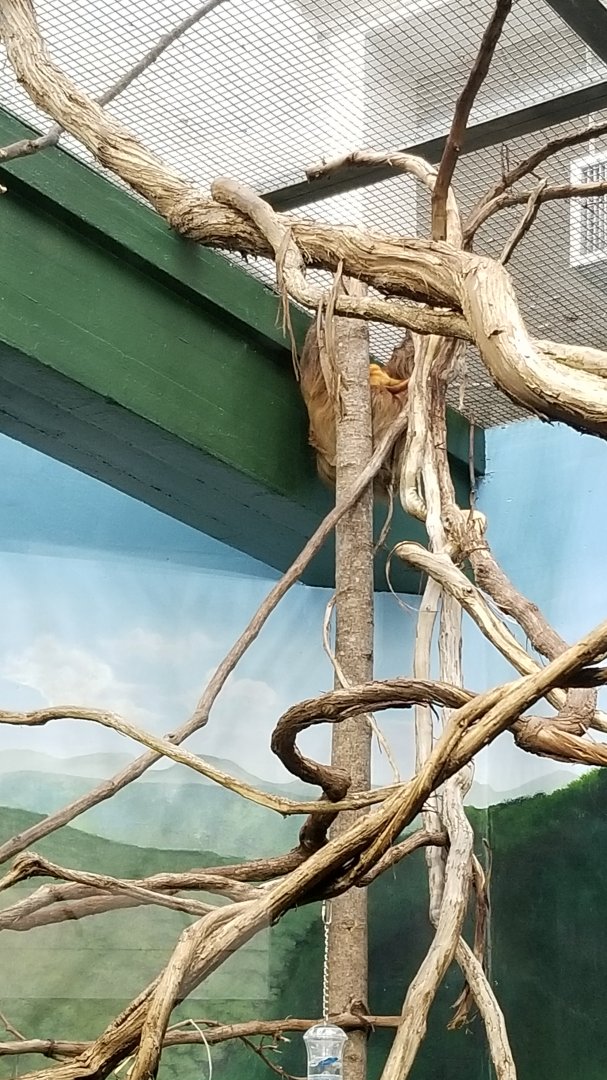
-There's work being done in several exhibits in the small mammal house, including the sloth and tamarin ones near the front and the left side of the sand cats'. The sloth and tamarins are currently in the large exhibit that houses the green aracaris. One of the tamarins was hanging out on the sloth's belly
-The siamangs were having a very vocal party outside!
-The clouded cubs are ADORABLE. Get to their exhibit at least a half hour early if you want a chance at being up front when they first come out (and are most active). By now they're probably too heavy to do most of their acrobatics, they were breaking branches and learning that they couldn't have as much fun as they used to when I was there.
-I saw a maned wolf catch a chipmunk! Then play with it a bit before eating it. I wish I'd been closer and had gotten photos, but I was half way along the front when the chipmunk came down that big tree in the bottom right corner and the wolf diverted from its path to grab it.
-They're trying out some different arrangements with the elephants. Shanthi's arthritis is bad and the advanced treatments they were doing were no longer helping much, so they've cut back on most of them (the amount of stress for her wasn't worth it). She will likely be the first to pass, baring some freak thing with someone else.
Someone asked about it before, here's the small mammal house list as of Oct 6 2019:
-Calli the sea lion isn't well, and her and the pup are being kept off exhibit. The pup might need to be hand fed, so her body can focus on itself. The person I spoke with doesn't work in that section and wasn't sure what was wrong, only that it wasn't contagious or anything like that.
- The salamander exhibit is all set up. It's across from the snapping turtle, near the end of the reptile building.
-There's work being done in several exhibits in the small mammal house, including the sloth and tamarin ones near the front and the left side of the sand cats'. The sloth and tamarins are currently in the large exhibit that houses the green aracaris. One of the tamarins was hanging out on the sloth's belly
-The siamangs were having a very vocal party outside!
-The clouded cubs are ADORABLE. Get to their exhibit at least a half hour early if you want a chance at being up front when they first come out (and are most active). By now they're probably too heavy to do most of their acrobatics, they were breaking branches and learning that they couldn't have as much fun as they used to when I was there.
-I saw a maned wolf catch a chipmunk! Then play with it a bit before eating it. I wish I'd been closer and had gotten photos, but I was half way along the front when the chipmunk came down that big tree in the bottom right corner and the wolf diverted from its path to grab it.
-They're trying out some different arrangements with the elephants. Shanthi's arthritis is bad and the advanced treatments they were doing were no longer helping much, so they've cut back on most of them (the amount of stress for her wasn't worth it). She will likely be the first to pass, baring some freak thing with someone else.
Someone asked about it before, here's the small mammal house list as of Oct 6 2019:
- Northern Treeshrew Tupaia belangeri
- Geoffroy's Marmoset Callithrix geoffroyi and La Plata Three-banded Armadillo Tolypeutes matacus
- Screaming Hairy Armadillo Chaetophractus vellerosus
- Fennec Fox Vulpes zerda, 2 connected exhibits
- Prehensile-tailed Porcupine Coendou prehensilis
- Nobody Home
- Nobody Home
- Prehensile-tailed Porcupine Coendou prehensilis
- Rock Hyrax Procavia capensis
- Brush-tailed Bettong Bettongia penicillata
- Common Opossum Didelphis marsupialis
- Exhibit Closed
- Sand Cat Felis margarita
- Naked Mole-rat Heterocephalus glaber
- Red Ruffed Lemur Varecia variegata
- Golden Lion Tamarin Leontopithecus rosalia, Linnaeus's Two-toed Sloth Choloepus didactylus, Brazilian Agouti Dasyprocta lepronina, Green Aracari Pteroglossus viridis
- Chinchilla Chinchilla lanigera
- Prevost's Squirrel Callosciurus prevostii
- Golden-headed Lion Tamarin Leontopithecus chrysomelas and Screaming Hairy Armadillo Chaetophractus vellerosus
- Black-footed Ferret Mustela nigripes, 2 connected exhibits
- Dwarf Mongoose Helogale parvula
- Damaraland Mole-rat Cryptomys damarensis and Naked Mole-rat Heterocephalus glaber
- Degu Octodon degus
- Goeldi's Monkey Callimico goeldii
- Slender-tailed Meerkat Suricata suricatta and Von der Decken's Hornbill Tockus deckeni
- Pale-headed Saki Pithecia pithecia
- Southern Tamandua Tamandua tetradactyla
- Prevost's Squirrel Callosciurus prevostii
- Northern Treeshrew Tupaia belangeri
- Northern Luzon Giant Cloud Rat Phloeomys palidus, 2 exhibits
- Striped Skunk Mephitis mephitis
- Small Madagascar Tenrec Echinops telfairi

Someone asked about it before, here's the small mammal house list as of Oct 6 2019:
There's also three bennett's wallabys in the exhibit along the side of the building, a sister pair of white-nosed coatis, and a male/female pair of black howler monkeys behind the building. These are all technically members of the small mammal house.
Galapagos tortoise ...Just curious:. Who are the Zoo's oldest residents? I know Rulon and Chyna would be near or at the top, elephant Ambika is a remarkable 71, and there is another tortoise who I think may be Galapagos, but are there other residents I'm missing, like parrots perhaps?
Galapagos tortoise old living here ... Surprised! You sure???Just curious:. Who are the Zoo's oldest residents? I know Rulon and Chyna would be near or at the top, elephant Ambika is a remarkable 71, and there is another tortoise who I think may be Galapagos, but are there other residents I'm missing, like parrots perhaps?
Might they not be Seychelles/Aldabrans in origins?!!!

AmbikaFan
Well-Known Member
I'm not sure! But I'm going to visit on Sunday and will find out. There has always been one smaller tortoise among the group, and the announcement about the two new young Aldabrans specifically mention Rulon and Chyna as being 80-100 years old, ie full size. Lol. Hopefully I won't be too wrapped up in Sloth Day to get an answer!
The zoo does not have any Galapagos tortoises. The smaller tortoise is a radiated tortoise.

Am here in the pouring rain for Sloth Day! But Ambika swims when it rains, and we're pretty much guaranteed to see more of a sloth than just a distant patch of fur high up in a tree. Watch this space!
I hope you were able to see Vlad the two toed sloth up close! I was sad I couldn't make it as the special day featured sloth relatives and they had a time where you could see one of the tamanduas up close too.
AmbikaFan
Well-Known Member
Well, a special day it was not. It was pouring all day, and many things were curtailed to prepare for Boo at the Zoo. If my friend Tinopup (the famous Zoochatter!) Hadn't brought me a heavy hooded raincoat, my day being pelted in the thin plastic poncho I had brought would have been grim.
Vlad had no interest in coming out of the exhibit to meet people. They had removed his best box and hammock to literally make him move, but sadly the keepers would
Vlad had no interest in coming out of the exhibit to meet people. They had removed his best box and hammock to literally make him move, but sadly the keepers would
AmbikaFan
Well-Known Member
not carry him out, saying it had to be his decision. I realize that this is the accepted tenet of behavior reinforcement that has fended off attacks by activists, but I've seen sloths being moved, either for educational demonstrations or to move them from nighttime housing to outside exhibits. I really thought they'd make the sloth available on the heavily-advertised International Sloth Day or maybe even bring the one from Amazonia to ensure a good experience. However, the male in Amazonia goes days without being seen, even by his keepers. I did get to witness Vlad move across the exhibit to a keeper on a tall ladder holding a special treat. But as early as 10:30, they had given up and brought out the tamandua, saying they'd keep trying to get Vlad down for the 12:45 demo. At that point, there was an even taller ladder, but no luck. All that was to be had was info: Vlad is 33, bred here at NZP, and will soon have the companionship of a young female who is just finishing quarantine. They're not sure if there will be breeding or not; Vlad spent 11 years with a female and didn't ever seem interested. To capture either sloth for a health check every two years, a keeper must stay overnight on a night when the sloth is due to come down to the floor to eliminate.
I had come on this day because I was worried that Shanthi, the 44-year-old Asian elephant, might be near the end of her days. She has had arthritis for more than 20 years, and it has become so severe that on regular meds, she would not lie down, play, or even swim. In response, over the last five years, the medical staff have come up with new and hitherto remedies untried on elephants. See this link for these treatments as recently as May and going back years:
Elephant Update: Treating Shanthi’s Arthritis
I heard recently that these treatments were no longer working, and that the vets had decided to stop everything except basic NSAIDS and medications for foot infections. Unfortunately, I was not encouraged when I saw her. She was not moving around very much and stood still for long stretches. She repositioned her feet very frequently to redistribute the weight, sometimes in very odd positions that looked almost "unbalanced," like two feet side-by-side almost touching, or one foot far in front of the other to be more comfortable. I was dismayed to see her swinging her trunk for five minutes at one point, a repetitive behavior from the old days long ago when she only had a small stall. NZP has always kept its elephants' feet in pristine condition--and this could be witnessed in the other elephants, but Shanthi's nails were cracked vertically with heavy cuticles, leaving me to wonder if they were just too painful to touch or work on. She has had absesses and pressure sores on her footpads, and I can only imagine how bad these could be with all the repositioning. The advanced treatments had enabled her to lie down, play and swim for the first time in months, but I found she hasn't been in the pool for quite a while now. Ambika is known for loving to swim in the rain, so I've never hesitated to go on a rainy day to see Ambika, Shanthi, and Bozie swim in Spike's big pool. The pool was being filled when I first arrived, but no swimming ever happened. The keepers and docents have a long explanation ready of how carefully decisions about euthanasia like this are made and who is involved, etc., but I knew all of that and just wanted to know if she was close to that "red line." She is. When her quality of life has been irrevocably compromised and there are no more solutions, she will be humanely euthanized. There are no more solutions, so it's now only a matter of how much pain can be controlled. This is why I came, because it might have been the last time I'll ever see her.
Many of us blithely assumed it would be 71-year-old Ambika who would go first. Remarkably, she has delighted everyone by enjoying robust health and passing birthday after birthday. She has become arthritic only in the last few years, and at the usual pace of its progression, she would presumably die of old age and not necessarily the effects of arthritis. However, her degree of stiffness just since I saw her 5 months ago has increased noticeably, and her feet don't look good either. Keepers arrived to work on her front feet through the bars, and at one point, she actually withdrew a foot from the procedure, but it ended up being a very endearing sight. Longtime elephant manager Marie Galloway fed Ambika celery to keep her occupied, but anyone who knows Ambika knows how smart and how mischievous she can be. With a loving laugh, Galloway tried to keep her slim body between Ambika's eye and her foot, hoping she wouldn't see what was being done. Then she laughed even harder and used the clicker, that usually is an animal's sign that they've done something asked well in operant conditioning, every other second, almost in rapid succession, even laughing that Ambika was not being THAT good, she was just trying drown out the sounds of the clipper. I must have 100 stories like this of times when you could clearly see Ambika's personality. Those personalities are why people can be so attached and moved by elephants. But she is 71, and Shanthi is being felled by crippling arthritis, and every time I make the 400-mile round trip to see the girls I grew up with, I know it might be the last time I see them. Ambika and Shanthi have been the elephants so many generations of families have grown up seeing and loving. It's difficult to think of the zoo without them. Now, for the first time, it looks as if that time may be sooner than later.
I had come on this day because I was worried that Shanthi, the 44-year-old Asian elephant, might be near the end of her days. She has had arthritis for more than 20 years, and it has become so severe that on regular meds, she would not lie down, play, or even swim. In response, over the last five years, the medical staff have come up with new and hitherto remedies untried on elephants. See this link for these treatments as recently as May and going back years:
Elephant Update: Treating Shanthi’s Arthritis
I heard recently that these treatments were no longer working, and that the vets had decided to stop everything except basic NSAIDS and medications for foot infections. Unfortunately, I was not encouraged when I saw her. She was not moving around very much and stood still for long stretches. She repositioned her feet very frequently to redistribute the weight, sometimes in very odd positions that looked almost "unbalanced," like two feet side-by-side almost touching, or one foot far in front of the other to be more comfortable. I was dismayed to see her swinging her trunk for five minutes at one point, a repetitive behavior from the old days long ago when she only had a small stall. NZP has always kept its elephants' feet in pristine condition--and this could be witnessed in the other elephants, but Shanthi's nails were cracked vertically with heavy cuticles, leaving me to wonder if they were just too painful to touch or work on. She has had absesses and pressure sores on her footpads, and I can only imagine how bad these could be with all the repositioning. The advanced treatments had enabled her to lie down, play and swim for the first time in months, but I found she hasn't been in the pool for quite a while now. Ambika is known for loving to swim in the rain, so I've never hesitated to go on a rainy day to see Ambika, Shanthi, and Bozie swim in Spike's big pool. The pool was being filled when I first arrived, but no swimming ever happened. The keepers and docents have a long explanation ready of how carefully decisions about euthanasia like this are made and who is involved, etc., but I knew all of that and just wanted to know if she was close to that "red line." She is. When her quality of life has been irrevocably compromised and there are no more solutions, she will be humanely euthanized. There are no more solutions, so it's now only a matter of how much pain can be controlled. This is why I came, because it might have been the last time I'll ever see her.
Many of us blithely assumed it would be 71-year-old Ambika who would go first. Remarkably, she has delighted everyone by enjoying robust health and passing birthday after birthday. She has become arthritic only in the last few years, and at the usual pace of its progression, she would presumably die of old age and not necessarily the effects of arthritis. However, her degree of stiffness just since I saw her 5 months ago has increased noticeably, and her feet don't look good either. Keepers arrived to work on her front feet through the bars, and at one point, she actually withdrew a foot from the procedure, but it ended up being a very endearing sight. Longtime elephant manager Marie Galloway fed Ambika celery to keep her occupied, but anyone who knows Ambika knows how smart and how mischievous she can be. With a loving laugh, Galloway tried to keep her slim body between Ambika's eye and her foot, hoping she wouldn't see what was being done. Then she laughed even harder and used the clicker, that usually is an animal's sign that they've done something asked well in operant conditioning, every other second, almost in rapid succession, even laughing that Ambika was not being THAT good, she was just trying drown out the sounds of the clipper. I must have 100 stories like this of times when you could clearly see Ambika's personality. Those personalities are why people can be so attached and moved by elephants. But she is 71, and Shanthi is being felled by crippling arthritis, and every time I make the 400-mile round trip to see the girls I grew up with, I know it might be the last time I see them. Ambika and Shanthi have been the elephants so many generations of families have grown up seeing and loving. It's difficult to think of the zoo without them. Now, for the first time, it looks as if that time may be sooner than later.
Last edited:
AmbikaFan
Well-Known Member
Photos:
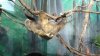
 Vlad brachiating. (Is the term used for sloths?)
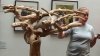
 Tamandua. Because I still miss the giant anteaters and wanted to see Vlad, this was a bit underwhelming for me....
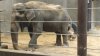
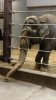
Shanthi

Shanthi
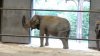
 Ambika
Vlad brachiating. (Is the term used for sloths?) Tamandua. Because I still miss the giant anteaters and wanted to see Vlad, this was a bit underwhelming for me.... Shanthi
Shanthi
AmbikaAttachments

Elephantelephant
Well-Known Member
It is sad to hear these reports about Shanti, but fate cannot be changed. Unfortunately, it does not seem to be grandchildren. The Kandula in Oklahoma City may be a father in a few years, but Shanti probably won't. I hope Ambika will keep us happy for a long time. At the age of 71, he is one of the oldest elephants in America and zoos in the world at all. At her age, it is not surprising that she has arthritis. In the pool, however, always returns to youth and enjoys it. I hope he will live a long time and honor Washington.not carry him out, saying it had to be his decision. I realize that this is the accepted tenet of behavior reinforcement that has fended off attacks by activists, but I've seen sloths being moved, either for educational demonstrations or to move them from nighttime housing to outside exhibits. I really thought they'd make the sloth available on the heavily-advertised International Sloth Day or maybe even bring the one from Amazonia to ensure a good experience. However, the male in Amazonia goes days without being seen, even by his keepers. I did get to witness Vlad move across the exhibit to a keeper on a tall ladder holding a special treat. But as early as 10:30, they had given up and brought out the tamandua, saying they'd keep trying to get Vlad down for the 12:45 demo. At that point, there was an even taller ladder, but no luck. All that was to be had was info: Vlad is 33, bred here at NZP, and will soon have the companionship of a young female who is just finishing quarantine. They're not sure if there will be breeding or not; Vlad spent 11 years with a female and didn't ever seem interested. To capture either sloth for a health check every two years, a keeper must stay overnight on a night when the sloth is due to come down to the floor to eliminate.
I had come on this day because I was worried that Shanthi, the 44-year-old Asian elephant, might be near the end of her days. She has had arthritis for more than 20 years, and it has become so severe that on regular meds, she would not lie down, play, or even swim. In response, over the last five years, the medical staff have come up with new and hitherto remedies untried on elephants. See this link for these treatments as recently as May and going back years:
Elephant Update: Treating Shanthi’s Arthritis
I heard recently that these treatments were no longer working, and that the vets had decided to stop everything except basic NSAIDS and medications for foot infections. Unfortunately, I was not encouraged when I saw her. She was not moving around very much and stood still for long stretches. She repositioned her feet very frequently to redistribute the weight, sometimes in very odd positions that looked almost "unbalanced," like two feet side-by-side almost touching, or one foot far in front of the other to be more comfortable. I was dismayed to see her swinging her trunk for five minutes at one point, a repetitive behavior from the old days long ago when she only had a small stall. NZP has always kept its elephants' feet in pristine condition--and this could be witnessed in the other elephants, but Shanthi's nails were cracked vertically with heavy cuticles, leaving me to wonder if they were just too painful to touch or work on. She has had absesses and pressure sores on her footpads, and I can only imagine how bad these could be with all the repositioning. The advanced treatments had enabled her to lie down, play and swim for the first time in months, but I found she hasn't been in the pool for quite a while now. Ambika is known for loving to swim in the rain, so I've never hesitated to go on a rainy day to see Ambika, Shanthi, and Bozie swim in Spike's big pool. The pool was being filled when I first arrived, but no swimming ever happened. The keepers and docents have a long explanation ready of how carefully decisions about euthanasia like this are made and who is involved, etc., but I knew all of that and just wanted to know if she was close to that "red line." She is. When her quality of life has been irrevocably compromised and there are no more solutions, she will be humanely euthanized. There are no more solutions, so it's now only a matter of how much pain can be controlled. This is why I came, because it might have been the last time I'll ever see her.
Many of us blithely assumed it would be 71-year-old Ambika who would go first. Remarkably, she has delighted everyone by enjoying robust health and passing birthday after birthday. She has become arthritic only in the last few years, and at the usual pace of its progression, she would presumably die of old age and not necessarily the effects of arthritis. However, her degree of stiffness just since I saw her 5 months ago has increased noticeably, and her feet don't look good either. Keepers arrived to work on her front feet through the bars, and at one point, she actually withdrew a foot from the procedure, but it ended up being a very endearing sight. Longtime elephant manager Marie Galloway fed Ambika celery to keep her occupied, but anyone who knows Ambika knows how smart and how mischievous she can be. With a loving laugh, Galloway tried to keep her slim body between Ambika's eye and her foot, hoping she wouldn't see what was being done. Then she laughed even harder and used the clicker, that usually is an animal's sign that they've done something asked well in operant conditioning, every other second, almost in rapid succession, even laughing that Ambika was not being THAT good, she was just trying drown out the sounds of the clipper. I must have 100 stories like this of times when you could clearly see Ambika's personality. Those personalities are why people can be so attached and moved by elephants. But she is 71, and Shanthi is being felled by crippling arthritis, and every time I make the 400-mile round trip to see the girls I grew up with, I know it might be the last time I see them. Ambika and Shanthi have been the elephants so many generations of families have grown up seeing and loving. It's difficult to think of the zoo without them. Now, for the first time, it looks as if that time may be sooner than later.
I hope Bozie will live a long time. Even though it had seemed bad once, she was cured. Swarna and Kamala are probably healthy, as far as I know. However, I wonder how the breeding with Maharani and Spike continues. No pregnancy has been reported. Why is she still not pregnant?
AmbikaFan
Well-Known Member
Frankly, I was so worried about Shanthi and Ambika that I didn't even ask about Maharani. It's been so long now that I'd almost forgotten about a potential pregnancy. If I had inquired, I'd ask if they've tried AI. They've succeeded with three pregnancies in the past, presumably naturally, but I wonder if AI would increase the chances. Kandula was the first to be conceived by AI, which would have been done 20 years ago, so the technology is certainly there and has been improved upon since.
The news about Kamala is that she's now receiving IRAP treatment and cold laser in the hopes of preventing her budding arthritis to ever become as debilitating as Shanthi's. She is very, very smart (clearly the source of Kandula's intelligence!) and can find any medication hidden in her food. If it's a tub of grain, she'll even lift the tub in the air and let its contents fly, so the only way to give Kamala her daily meds is rectally. Every day, all the boli are removed, she gets an enema, and then she gets her meds, presumably in suppository form.
From what I saw yesterday, I wonder if Ambika is still swimming. The arthritis has stopped Shanthi from swimming, and the change in Ambika's movement suggests that she too is in pain and it may not feel good to swim. Perhaps even the walk to the pool in Spike's yard is a lot. There is an indoor pool, but I've only ever known her to swim outside in the rain. The pool was being filled in the morning, so I was hoping, but maybe this was being done to feature another elephant swimming that night for Boo at the Zoo.
I'm sorry the report isn't more comprehensive, but rain and the Boo at the Zoo limited what we could see. There was little outdoor activity, and security began to hustle us out of buildings as early as 2:00. I also lost a lot of time getting to, waiting for, and returning from an Elephant Outpost session that never happened, despite signs in the Elephant House advertising it.
The news about Kamala is that she's now receiving IRAP treatment and cold laser in the hopes of preventing her budding arthritis to ever become as debilitating as Shanthi's. She is very, very smart (clearly the source of Kandula's intelligence!) and can find any medication hidden in her food. If it's a tub of grain, she'll even lift the tub in the air and let its contents fly, so the only way to give Kamala her daily meds is rectally. Every day, all the boli are removed, she gets an enema, and then she gets her meds, presumably in suppository form.
From what I saw yesterday, I wonder if Ambika is still swimming. The arthritis has stopped Shanthi from swimming, and the change in Ambika's movement suggests that she too is in pain and it may not feel good to swim. Perhaps even the walk to the pool in Spike's yard is a lot. There is an indoor pool, but I've only ever known her to swim outside in the rain. The pool was being filled in the morning, so I was hoping, but maybe this was being done to feature another elephant swimming that night for Boo at the Zoo.
I'm sorry the report isn't more comprehensive, but rain and the Boo at the Zoo limited what we could see. There was little outdoor activity, and security began to hustle us out of buildings as early as 2:00. I also lost a lot of time getting to, waiting for, and returning from an Elephant Outpost session that never happened, despite signs in the Elephant House advertising it.
Elephantelephant
Well-Known Member
Thanks for the information. I didn't even know that Kamala already had arthritis. So the only healthy older elephants are Swarna and Bozie, right? Shanthi's life is probably near the end. I hope that at least Ambika will live for several years, because arthritis is no surprise at her age. I also wish Kamala all the best for healing. Strangely, Maharani is still not pregnant. With Spike already had three calves, which originated natural breeding. AI would be a possibility. However, the situation is best understood by caregivers, so it is up to them to decide.Frankly, I was so worried about Shanthi and Ambika that I didn't even ask about Maharani. It's been so long now that I'd almost forgotten about a potential pregnancy. If I had inquired, I'd ask if they've tried AI. They've succeeded with three pregnancies in the past, presumably naturally, but I wonder if AI would increase the chances. Kandula was the first to be conceived by AI, which would have been done 20 years ago, so the technology is certainly there and has been improved upon since.
The news about Kamala is that she's now receiving IRAP treatment and cold laser in the hopes of preventing her budding arthritis to ever become as debilitating as Shanthi's. She is very, very smart (clearly the source of Kandula's intelligence!) and can find any medication hidden in her food. If it's a tub of grain, she'll even lift the tub in the air and let its contents fly, so the only way to give Kamala her daily meds is rectally. Every day, all the boli are removed, she gets an enema, and then she gets her meds, presumably in suppository form.
From what I saw yesterday, I wonder if Ambika is still swimming. The arthritis has stopped Shanthi from swimming, and the change in Ambika's movement suggests that she too is in pain and it may not feel good to swim. Perhaps even the walk to the pool in Spike's yard is a lot. There is an indoor pool, but I've only ever known her to swim outside in the rain. The pool was being filled in the morning, so I was hoping, but maybe this was being done to feature another elephant swimming that night for Boo at the Zoo.
I'm sorry the report isn't more comprehensive, but rain and the Boo at the Zoo limited what we could see. There was little outdoor activity, and security began to hustle us out of buildings as early as 2:00. I also lost a lot of time getting to, waiting for, and returning from an Elephant Outpost session that never happened, despite signs in the Elephant House advertising it.
AmbikaFan
Well-Known Member
Thanks for the information. I didn't even know that Kamala already had arthritis. So the only healthy older elephants are Swarna and Bozie, right? Shanthi's life is probably near the end. I hope that at least Ambika will live for several years, because arthritis is no surprise at her age. I also wish Kamala all the best for healing. Strangely, Maharani is still not pregnant. With Spike already had three calves, which originated natural breeding. AI would be a possibility. However, the situation is best understood by caregivers, so it is up to them to decide.
Well, healthy is a rather broad term; even "healthy" people can have a problem or two. I would say that Ambika is still heathy, even with her new arthritis. Kamala is in the initial stages and will benefit from preventive treatment, but she too is otherwise heathy. Swarna has dental issues, for which they've trained her to hold still while a radiograph plate is placed by her head, but is otherwise healthy. Right now Bozie is simply huge! A docent said it's because she eats in Ambika's group, and Ambika gets pre-cut hay to help save her last set of teeth. Bozie has no trouble chewing, so this simply enables her to eat more and more. Surprisingly, Shanthi is in this group and is the foodie of all foodies--and she doesn't seem overweight. That's good for her weight, but it could also be a behavioral change that indicates she's not feeling well. Spike is hale, hearty, and handsome, as always! Stress always plays a role in anyone getting pregnant, and Maharani is highly dramatic and excitable, flipping out over a bird that tweets near her ear, trumpeting and running for keepers. Perhaps this has played a role in not conceiving yet?
Rogue, the zoos female lesser kudu, gave birth to her second calf in the last year on the 14th.
Lesser Kudu Born at Smithsonian’s National Zoo
Lesser Kudu Born at Smithsonian’s National Zoo
A brother pair of Emperor tamarins from the Como Park Zoo named Fleck and Poe are now on display in Amazonia.
New Emperor Tamarins On Exhibit at the Smithsonian’s National Zoo
New Emperor Tamarins On Exhibit at the Smithsonian’s National Zoo

- The salamander exhibit is all set up. It's across from the snapping turtle, near the end of the reptile building.
Anyone know when they are going on show?

And for that matter, what's going to happen to the perfectly good Japanese giant salamander exhibit in Asia Trail?Anyone know when they are going on show?
- Status
- Not open for further replies.