Snowleopard's Mammals: A Lifetime List of Species Mammalian and Non-Mammalian

Here is the only photo of a Drill at Lincoln Park Zoo (USA) on this site and it was taken by me in the summer of 2008. Does anyone know when the species left that Chicago city?
I looked up "drill Lincoln Park Zoo" on google to see if I could find anything, and all I could find was information about safety drills :p.

I can tell you this to narrow it down, though. In 2012, I visited Chicago. While I don't remember much (I was still a child), I do have a few memories of both zoos and the aquarium. My only source of information about either zoo before the trip was the book "America's Best Zoos" by Allen Nyhuis and Jon Wassner, published four years prior in 2008. I distinctly remember at Lincoln Park Zoo wanting to see the drill, as the book mentioned it was rare in zoos (looks like I was already a ZooChatter in the making :D). After not seeing it in the primate house, my mother asked a staff member for me, who said the drill was no longer there. What's so funny, is that I think I have about three memories total of that zoo, and one of them is of the animal I didn't see. Crazy what you do or don't remember sometimes.
 
That's a great memory @Neil chace and it appears that Drills didn't last too long at Lincoln Park Zoo after I was there in 2008. On a side note, I'm great friends with both Allen Nyhuis (we send big email updates to each other all the time) and Jon Wassner (we text almost daily) and they are super nice 'zoo nerds' with busy family lives.

Aha @pachyderm pro! Maybe there aren't any Mandrills at Tampa as I originally guessed. But who knows, as zoo websites are sometimes notoriously outdated. It could go either way. ;)

Whether or not I saw Drills at Detroit Zoo was a major conundrum for me when I spent months doing all my research for this thread. In my 2008 review I mention that Gorillas, Diana Monkeys and Mandrills were all together in the same exhibit, and those three species are the ones listed on the zoo's detailed map, and there aren't any ZooChat photos from 2008 of Drills. However, there are ZooChat photos of Drills in the gallery from 2009, 2010, 2012, 2016 and 2017. It's always been a bit of a grey area for me and it's funny that you asked about the Drills in Detroit. It seems that I missed them by a year.
 
Next up are Hamadryas Baboons, which are an interesting, active species. I've seen them at 31 zoos, but in some cases they've been showcased in absolutely massive numbers. The two Australian zoos and 15 American zoos listed below have never reached the volume of 50 to 100 baboons that are at some of the 14 European establishments. It's also fascinating that I've watched the species at approximately the same number of zoos in Europe as in North America, even though I've visited triple the zoos in that latter continent. For sure, baboons in general are more common in Europe.

Some of these zoos are ones I’ve visited on several occasions, but I’ve listed them only once and that is based on the first time I ever saw Hamadryas Baboons at each zoo.

1- Adelaide Zoo (Australia) – Hamadryas Baboon – 2007
2- Melbourne Zoo (Australia) – Hamadryas Baboon – 2007
3- Phoenix Zoo (USA) – Hamadryas Baboon – 2008
4- Sedgwick County Zoo (USA) – Hamadryas Baboon – 2010
5- Cleveland Zoo (USA) – Hamadryas Baboon – 2010
6- North Carolina Zoo (USA) – Hamadryas Baboon – 2010
7- Riverbanks Zoo (USA) – Hamadryas Baboon – 2010
8- Oakland Zoo (USA) – Hamadryas Baboon – 2011
9- G W Exotic Animal Park (USA) – Hamadryas Baboon – 2015
10- Wild Wilderness Drive-Through Safari (USA) – Hamadryas Baboon – 2015
11- Sierra Safari Zoo (USA) – Hamadryas Baboon – 2015
12- West Coast Game Park Safari (USA) – Hamadryas Baboon – 2015
13- Monterey Zoo (USA) – Hamadryas Baboon – 2017
14- America’s Teaching Zoo: Moorpark College (USA) – Hamadryas Baboon – 2017
15- Special Memories Zoo (USA) – Hamadryas Baboon – 2018
16- Stichting AAP (Netherlands) – Hamadryas Baboon – 2019
17- Van Blanckendaell Park (Netherlands) – Hamadryas Baboon – 2019
18- Frankfurt Zoo (Germany) – Hamadryas Baboon – 2019
19- Cologne Zoo (Germany) – Hamadryas Baboon – 2019
20- Krefeld Zoo (Germany) – Hamadryas Baboon – 2019
21- Safaripark Beekse Bergen (Netherlands) – Hamadryas Baboon – 2019
22- Tierpark Hagenbeck (Germany) – Hamadryas Baboon – 2019
23- Berlin Zoo (Germany) – Hamadryas Baboon – 2019
24- Serengeti-Park (Germany) – Hamadryas Baboon – 2019
25- Wildlands Adventure Zoo Emmen (Netherlands) – Hamadryas Baboon – 2019
26- Dierenpark Amersfoort (Netherlands) – Hamadryas Baboon – 2019
27- Jyllands Park Zoo (Denmark) – Hamadryas Baboon – 2022
28- Aalborg Zoo (Denmark) – Hamadryas Baboon – 2022
29- Copenhagen Zoo (Denmark) – Hamadryas Baboon – 2022
30- San Diego Zoo (USA) – Hamadryas Baboon – 2023
31- Wildlife World Zoo, Aquarium & Safari Park (USA) – Hamadryas Baboon – 2023

I've certainly come across some dreadful Hamadryas Baboon exhibits over the years.

I saw Hamadryas Baboons on cement at Melbourne Zoo (Australia) back in 2007. Does anyone remember this exhibit? It was horrendous, but at least the zoo has since built a beautiful new one.

full


@Triffle

I saw Hamadryas Baboons in this all-indoor disaster at Cleveland Metroparks Zoo (USA) in 2010:

full


America's Teaching Zoo: Moorpark College (USA) in 2017 had baboons (Hamadryas and Olive) in corn-crib cages:

full


This photo shows TWO joined, yet separate, cages for Hamadryas Baboons at Wild Wilderness Drive-Through Safari (USA). Scandalous.

full


Even famous Copenhagen Zoo (Denmark) keeps Hamadryas Baboons on blistering cement ('Giant's Causeway'?) in this enclosure that was built in the 1920s. They were all huddled in the shade during my visit.

full


And there's the legendary Krefeld Zoo (Germany) exhibit for Hamadryas Baboons. When I was there in 2019, I could scarcely believe that the baboons are actually contained. It's a European zoo, so anything goes! It's not outside the realm of possibility that the baboons can escape but perhaps are scared to, or perhaps they wander around the zoo whenever it's a quiet day. Ha!

full


@Maguari

So what about some great Hamadryas Baboon exhibits?

Oakland Zoo (USA) has a decent one, built for Giant Pandas but the black-and-white blobs never arrived.

full


Wildlands Adventure Zoo Emmen (Netherlands) has an imposing entrance and has gone with a ruined temple type theme and there's a LOT of baboons running around everywhere.

full


full


@RonBurrgundy

There's also a fairly new exhibit at San Diego Zoo (USA) for Hamadryas Baboons, in the Africa Rocks zone that offers visitors many vantage points for viewing the primates.

full


@Moebelle

Cologne Zoo (Germany) doesn't have the best Hamadryas Baboon exhibit as there's too much mock-rock and a crazy amount of overcrowding, but the number of primates scampering around everywhere is certainly memorable. Someone told me that this exhibit held 150 baboons around a decade ago. Is that true? Does anyone know how many there are now? They won't stand still long enough to be counted!

full


@Green_mamba

It was nice to see Hamadryas Baboons in a big, grassy exhibit that was built in 2019 at Van Blanckendaell Park (Netherlands). For the animals, this type of enclosure might be the best.

full


full


Lastly, it was a shock to see Hamadryas Baboons together with African Elephants (!!) at Safaripark Beekse Bergen (Netherlands) in 2019. The mix seems to work, with the baboons apparently hanging out in the central, rocky area and avoiding their lumbering buddies. This photo shows just a fraction of the entire space.

full


@KevinB

Mammal Lists:

Gibbons - 143 zoos (64 White-handed, 62 Siamang, 36 White-cheeked, 12 Yellow-cheeked, 7 Southern Grey, 5 Pileated, 3 Silvery, 2 Agile, 1 Eastern Hoolock, with some zoos obviously having multiple types of gibbon)

Elephants - 105 zoos (62 Asian, 53 African, including some zoos with both)

Gorillas - 74
Orangutans - 74
Chimpanzees - 64
Mandrills - 41
Hamadryas Baboons - 31
Bonobos - 14
Drills - 8
 
Last edited:
I saw Hamadryas Baboons in this all-indoor disaster at Cleveland Metroparks Zoo (USA) in 2010:

full
Interesting, I didn't know Cleveland used to have Hamadryas baboons in PCA. Gorillas aside the primate section of the building has become rather nice as they've started combining exhibits and focusing on smaller species, but they were certainly inappropriate for Hamadryas baboons, mandrills, chimpanzees, and the other large animals that used to be housed in there.
 
Next up are Hamadryas Baboons, which are an interesting, active species. I've seen them at 31 zoos, but in some cases they've been showcased in absolutely massive numbers. The two Australian zoos and 15 American zoos listed below have never reached the volume of 50 to 100 baboons that are at some of the 14 European establishments. It's also fascinating that I've watched the species at approximately the same number of zoos in Europe as in North America, even though I've visited triple the zoos in that latter continent. For sure, baboons in general are more common in Europe.

Some of these zoos are ones I’ve visited on several occasions, but I’ve listed them only once and that is based on the first time I ever saw Hamadryas Baboons at each zoo.

1- Adelaide Zoo (Australia) – Hamadryas Baboon – 2007
2- Melbourne Zoo (Australia) – Hamadryas Baboon – 2007
3- Phoenix Zoo (USA) – Hamadryas Baboon – 2008
4- Sedgwick County Zoo (USA) – Hamadryas Baboon – 2010
5- Cleveland Zoo (USA) – Hamadryas Baboon – 2010
6- North Carolina Zoo (USA) – Hamadryas Baboon – 2010
7- Riverbanks Zoo (USA) – Hamadryas Baboon – 2010
8- Oakland Zoo (USA) – Hamadryas Baboon – 2011
9- G W Exotic Animal Park (USA) – Hamadryas Baboon – 2015
10- Wild Wilderness Drive-Through Safari (USA) – Hamadryas Baboon – 2015
11- Sierra Safari Zoo (USA) – Hamadryas Baboon – 2015
12- West Coast Game Park Safari (USA) – Hamadryas Baboon – 2015
13- Monterey Zoo (USA) – Hamadryas Baboon – 2017
14- America’s Teaching Zoo: Moorpark College (USA) – Hamadryas Baboon – 2017
15- Special Memories Zoo (USA) – Hamadryas Baboon – 2018
16- Stichting AAP (Netherlands) – Hamadryas Baboon – 2019
17- Van Blanckendaell Park (Netherlands) – Hamadryas Baboon – 2019
18- Frankfurt Zoo (Germany) – Hamadryas Baboon – 2019
19- Cologne Zoo (Germany) – Hamadryas Baboon – 2019
20- Krefeld Zoo (Germany) – Hamadryas Baboon – 2019
21- Safaripark Beekse Bergen (Netherlands) – Hamadryas Baboon – 2019
22- Tierpark Hagenbeck (Germany) – Hamadryas Baboon – 2019
23- Berlin Zoo (Germany) – Hamadryas Baboon – 2019
24- Serengeti-Park (Germany) – Hamadryas Baboon – 2019
25- Wildlands Adventure Zoo Emmen (Netherlands) – Hamadryas Baboon – 2019
26- Dierenpark Amersfoort (Netherlands) – Hamadryas Baboon – 2019
27- Jyllands Park Zoo (Denmark) – Hamadryas Baboon – 2022
28- Aalborg Zoo (Denmark) – Hamadryas Baboon – 2022
29- Copenhagen Zoo (Denmark) – Hamadryas Baboon – 2022
30- San Diego Zoo (USA) – Hamadryas Baboon – 2023
31- Wildlife World Zoo, Aquarium & Safari Park (USA) – Hamadryas Baboon – 2023

I've certainly come across some dreadful Hamadryas Baboon exhibits over the years.

I saw Hamadryas Baboons on cement at Melbourne Zoo (Australia) back in 2007. Does anyone remember this exhibit? It was horrendous, but at least the zoo has since built a beautiful new one.

full


@Triffle

I saw Hamadryas Baboons in this all-indoor disaster at Cleveland Metroparks Zoo (USA) in 2010:

full


America's Teaching Zoo: Moorpark College (USA) in 2017 had baboons (Hamadryas and Olive) in corn-crib cages:

full


This photo shows TWO joined, yet separate, cages for Hamadryas Baboons at Wild Wilderness Drive-Through Safari (USA). Scandalous.

full


Even famous Copenhagen Zoo (Denmark) keeps Hamadryas Baboons on blistering cement ('Giant's Causeway'?) in this enclosure that was built in the 1920s. They were all huddled in the shade during my visit.

full


And there's the legendary Krefeld Zoo (Germany) exhibit for Hamadryas Baboons. When I was there in 2019, I could scarcely believe that the baboons are actually contained. It's a European zoo, so anything goes! It's not outside the realm of possibility that the baboons can escape but perhaps are scared to, or perhaps they wander around the zoo whenever it's a quiet day. Ha!

full


@Maguari

So what about some great Hamadryas Baboon exhibits?

Oakland Zoo (USA) has a decent one, built for Giant Pandas but the black-and-white blobs never arrived.

full


Wildlands Adventure Zoo Emmen (Netherlands) has an imposing entrance and has gone with a ruined temple type theme and there's a LOT of baboons running around everywhere.

full


full


@RonBurrgundy

There's also a fairly new exhibit at San Diego Zoo (USA) for Hamadryas Baboons, in the Africa Rocks zone that offers visitors many vantage points for viewing the primates.

full


@Moebelle

Cologne Zoo (Germany) doesn't have the best Hamadryas Baboon exhibit as there's too much mock-rock and a crazy amount of overcrowding, but the number of primates scampering around everywhere is certainly memorable. Someone told me that this exhibit held 150 baboons around a decade ago. Is that true? Does anyone know how many there are now? They won't stand still long enough to be counted!

full


@Green_mamba

It was nice to see Hamadryas Baboons in a big, grassy exhibit that was built in 2019 at Van Blanckendaell Park (Netherlands). For the animals, this type of enclosure might be the best.

full


full


Lastly, it was a shock to see Hamadryas Baboons together with African Elephants (!!) at Safaripark Beekse Bergen (Netherlands) in 2019. The mix seems to work, with the baboons apparently hanging out in the central, rocky area and avoiding their lumbering buddies. This photo shows just a fraction of the entire space.

full


@KevinB

Mammal Lists:

Gibbons - 143 zoos (64 White-handed, 62 Siamang, 36 White-cheeked, 12 Yellow-cheeked, 7 Southern Grey, 5 Pileated, 3 Silvery, 2 Agile, 1 Eastern Hoolock, with some zoos obviously having multiple types of gibbon)

Elephants - 105 zoos (62 Asian, 53 African, including some zoos with both)

Gorillas - 74
Orangutans - 74
Chimpanzees - 64
Mandrills - 41
Hamadryas Baboons - 31
Bonobos - 14
Drills - 8
I expect the number to be way higher, they just feel like quite a common species but maybe im wrong.
 
or perhaps they wander around the zoo whenever it's a quiet day.
The juvenile Colobus monkeys at Krefeld zoo actually do this; they are small enough to squeeze through the bars. They explore the immediate neighbourhood, but always return to their mothers. At least they did so during my last visit.

The hamadryas baboon / African buffalo mixed exhibit at Zoo Augsburg is pretty good, too.
hamadryas-baboon-and-african-forest-buffalo-enclosure.586296


Hamadryas baboons used to be a popular species in many European zoos, often kept in great numbers in mostly rocky / concrete exhibits (Berlin, Munich, Frankfurt, Hamburg etc). In the last few decades, however, more and more zoos are trying to phase them out. Which isn't easy, as less and less facilities want to take them.
„Schämt euch!“: Tiere an Versuchslabor abgegeben? Shitstorm für Augsburger Zoo
 
Last edited:
Geladas have been another primate rarity for me as I've only seen them at 6 zoos.

1- Zurich Zoo (Switzerland) – Gelada – 2003
2- Bronx Zoo (USA) – Gelada – 2008
3- Diergaarde Blijdorp (Netherlands) – Gelada – 2019
4- Berlin Tierpark (Germany) – Gelada – 2019
5- NaturZoo Rheine (Germany) – Gelada – 2019
6- San Diego Zoo (USA) – Gelada – 2023

The very first time I ever saw Geladas was back in October 2003, when I was at Zurich Zoo (Switzerland). The famous Ethiopian Highlands complex, which was a very expensive project, didn't open until late 2008 and so this is what I saw during my visit:

full


@Baldur (this Icelandic ex-zoo nerd is no longer active on ZooChat)

In the summer of 2008 I visited the legendary NYC attraction known as the Bronx Zoo (USA) and I spent quite a long time watching Geladas, Nubian Ibex and Rock Hyrax in the superb, multi-acre exhibit there.

full


full


@Ding Lingwei

full

@Dhole dude

After Zurich and Bronx, a long stretch of 11 years and hundreds of zoos later, I would see Geladas on three occasions in the summer of 2019.

Blijdorp Zoo (Netherlands) showed the zoo world what can be done with historical architecture by adding Geladas to a renovated building that used to be the Big Cat House. It re-opened in late 2018:

full


full


full


full


full


Much different in appearance is the Gelada exhibit at Berlin Tierpark (Germany), with its forested backdrop. The Tierpark is so large that many animal enclosures are not even labeled on the zoo's map, including this one during my 2019 visit. I was astounded to walk along the path and come across a real zoo rarity as I had no idea that the Tierpark held the species.

full


full


Then there is NaturZoo Rheine (Germany), a delightful, mid-sized zoo that has been known as the epicenter for captive Geladas. I spent a few hours with the zoo's director during my 2019 visit and he explained how zookeepers from across the globe come to Rheine to learn about these primates in order to then care for the animals at their home zoo. During that summer, the zoo held 78 Geladas (with a few Barbary Sheep as well) in two enclosures and two separate groups. I think that Rheine was up to something like 110 Geladas until some of them were sent to other zoos in the past couple of years. It's one of the great European zoo exhibits.

full


full


full


full


My 6th and final time seeing Geladas was last summer at San Diego Zoo (USA). This area is part of the excellent new Africa Rocks zone, but what happened to the Nubian Ibex?

full


@Julio C Castro

full


@pachyderm pro

full


@Arizona Docent

Mammal Lists:

Gibbons - 143 zoos (64 White-handed, 62 Siamang, 36 White-cheeked, 12 Yellow-cheeked, 7 Southern Grey, 5 Pileated, 3 Silvery, 2 Agile, 1 Eastern Hoolock, with some zoos obviously having multiple types of gibbon)

Elephants - 105 zoos (62 Asian, 53 African, including some zoos with both)

Gorillas - 74
Orangutans - 74
Chimpanzees - 64
Mandrills - 41
Hamadryas Baboons - 31
Bonobos - 14
Drills - 8
Geladas - 6
 
Geladas are excellent exhibit animals that I wish I saw more regularly. They may be rare in North America currently, but have slowly but surely become more prevalent as of late. San Diego and Sauvage have added them in recent years and they are pegged to be one of the headlining species at the new Sacramento Zoo. It wouldn't surprise me if at least a few other collections here decide to pick them up.
My 6th and final time seeing Geladas was last summer at San Diego Zoo (USA). This area is part of the excellent new Africa Rocks zone, but what happened to the Nubian Ibex?
As I understand it, the ibex began having confrontations with the geladas so the decision was made to move the herd to the Safari Park. What I don't get is why they couldn't just be moved to the adjacent exhibit, as the hamadryas baboons now have access to two of the three enclosure in the Ethiopian Highlands area. I'm sure there's a good reason for it, but from at outsiders perspective I feel like simple fix would to move them to their own exhibit just like when Africa Rocks first opened.
 
It's very unusual for me to come across Olive Baboons on my zoological travels, having only seen the species at 11 zoos. At least 7 of these are non-AZA-accredited American facilities, one is a Dutch primate rescue center, one is a privately-owned German safari park, and that really only leaves Toronto and ZOOM as the two accredited zoos (AZA and EAZA).

1- Toronto Zoo (Canada) – Olive Baboon – 2008
2- DeYoung Family Zoo (USA) – Olive Baboon – 2014
3- Wild Wilderness Drive-Through Safari (USA) – Olive Baboon – 2015
4- Sierra Safari Zoo (USA) – Olive Baboon – 2015
5- America’s Teaching Zoo: Moorpark College (USA) – Olive Baboon – 2017
6- Indian Creek Zoo (USA) – Olive Baboon – 2018
7- Special Memories Zoo (USA) – Olive Baboon – 2018
8- Stichting AAP (Netherlands) – Olive Baboon – 2019
9- ZOOM Erlebniswelt (Germany) – Olive Baboon – 2019
10- Serengeti-Park (Germany) – Olive Baboon – 2019
11- Wildlife World Zoo, Aquarium & Safari Park (USA) – Olive Baboon – 2023

At ZOOM Erlebniswelt (Germany), a visitor can see Olive Baboons on foot or even via a boat ride. The large, sprawling exhibit is home to a massive troop of the animals.

full


@FunkyGibbon

full


@RonBurrgundy

Toronto Zoo (Canada) has had Olive Baboons for many years in an excellent exhibit:

full


@m30t

full


@arcticwolf

Olive Baboons are seen from across a wide moat at Serengeti-Park (Germany):

full


Then there's the non-accredited American zoos. Ugh. DeYoung Family Zoo (USA) had a pair of Olive Baboons in this cage when I was there in 2014:

full


Special Memories Zoo (USA), now shut down, had one Olive Baboon and one Hamadryas Baboon in this tiny enclosure:

full


Sierra Safari Zoo (USA) had a couple of Olive Baboons in this travesty:

full


Then there's Wild Wilderness Drive-Through Safari (USA), here with an employee hand-feeding some Olive Baboons:

full


Here are two baboons in their outdoor "exhibit":

full


Mammal Lists:

Gibbons - 143 zoos (64 White-handed, 62 Siamang, 36 White-cheeked, 12 Yellow-cheeked, 7 Southern Grey, 5 Pileated, 3 Silvery, 2 Agile, 1 Eastern Hoolock, with some zoos obviously having multiple types of gibbon)

Elephants - 105 zoos (62 Asian, 53 African, including some zoos with both)

Gorillas - 74
Orangutans - 74
Chimpanzees - 64
Mandrills - 41
Hamadryas Baboons - 31
Bonobos - 14
Olive Baboons - 11
Drills - 8
Geladas - 6
 
It's very unusual for me to come across Olive Baboons on my zoological travels, having only seen the species at 11 zoos. At least 7 of these are non-AZA-accredited American facilities, one is a Dutch primate rescue center, one is a privately-owned German safari park, and that really only leaves Toronto and ZOOM as the two accredited zoos (AZA and EAZA).

1- Toronto Zoo (Canada) – Olive Baboon – 2008
2- DeYoung Family Zoo (USA) – Olive Baboon – 2014
3- Wild Wilderness Drive-Through Safari (USA) – Olive Baboon – 2015
4- Sierra Safari Zoo (USA) – Olive Baboon – 2015
5- America’s Teaching Zoo: Moorpark College (USA) – Olive Baboon – 2017
6- Indian Creek Zoo (USA) – Olive Baboon – 2018
7- Special Memories Zoo (USA) – Olive Baboon – 2018
8- Stichting AAP (Netherlands) – Olive Baboon – 2019
9- ZOOM Erlebniswelt (Germany) – Olive Baboon – 2019
10- Serengeti-Park (Germany) – Olive Baboon – 2019
11- Wildlife World Zoo, Aquarium & Safari Park (USA) – Olive Baboon – 2023

At ZOOM Erlebniswelt (Germany), a visitor can see Olive Baboons on foot or even via a boat ride. The large, sprawling exhibit is home to a massive troop of the animals.

full


@FunkyGibbon

full


@RonBurrgundy

Toronto Zoo (Canada) has had Olive Baboons for many years in an excellent exhibit:

full


@m30t

full


@arcticwolf

Olive Baboons are seen from across a wide moat at Serengeti-Park (Germany):

full


Then there's the non-accredited American zoos. Ugh. DeYoung Family Zoo (USA) had a pair of Olive Baboons in this cage when I was there in 2014:

full


Special Memories Zoo (USA), now shut down, had one Olive Baboon and one Hamadryas Baboon in this tiny enclosure:

full


Sierra Safari Zoo (USA) had a couple of Olive Baboons in this travesty:

full


Then there's Wild Wilderness Drive-Through Safari (USA), here with an employee hand-feeding some Olive Baboons:

full


Here are two baboons in their outdoor "exhibit":

full


Mammal Lists:

Gibbons - 143 zoos (64 White-handed, 62 Siamang, 36 White-cheeked, 12 Yellow-cheeked, 7 Southern Grey, 5 Pileated, 3 Silvery, 2 Agile, 1 Eastern Hoolock, with some zoos obviously having multiple types of gibbon)

Elephants - 105 zoos (62 Asian, 53 African, including some zoos with both)

Gorillas - 74
Orangutans - 74
Chimpanzees - 64
Mandrills - 41
Hamadryas Baboons - 31
Bonobos - 14
Olive Baboons - 11
Drills - 8
Geladas - 6

Olives really get the short end of the stick :( A lot of places tend to only have 1-2 animals, at least, which is awful for socialization but means they aren't breeding as much as they could be. There's still a supply though - Safari North has 7, WWZ has 8, Catoctin has 9, Safari Zoological Park has 15, and Six Flags NJ has 33.
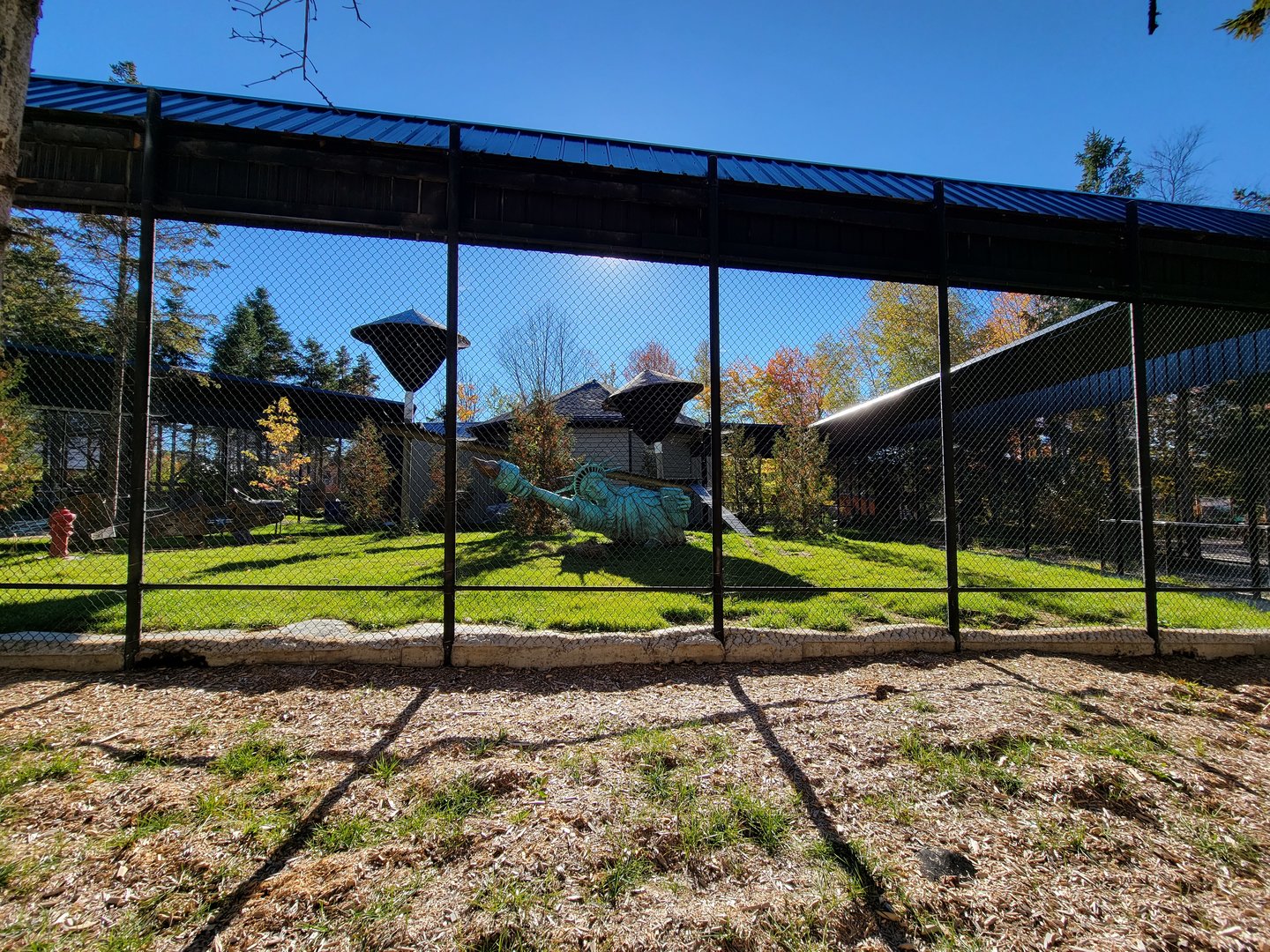

I can't let you show baboon exhibits without reminding you of this one, at Miller Zoo in Quebec ;)


It's very unusual for me to come across Olive Baboons on my zoological travels, having only seen the species at 11 zoos. At least 7 of these are non-AZA-accredited American facilities, one is a Dutch primate rescue center, one is a privately-owned German safari park, and that really only leaves Toronto and ZOOM as the two accredited zoos (AZA and EAZA).

1- Toronto Zoo (Canada) – Olive Baboon – 2008
2- DeYoung Family Zoo (USA) – Olive Baboon – 2014
3- Wild Wilderness Drive-Through Safari (USA) – Olive Baboon – 2015
4- Sierra Safari Zoo (USA) – Olive Baboon – 2015
5- America’s Teaching Zoo: Moorpark College (USA) – Olive Baboon – 2017
6- Indian Creek Zoo (USA) – Olive Baboon – 2018
7- Special Memories Zoo (USA) – Olive Baboon – 2018
8- Stichting AAP (Netherlands) – Olive Baboon – 2019
9- ZOOM Erlebniswelt (Germany) – Olive Baboon – 2019
10- Serengeti-Park (Germany) – Olive Baboon – 2019
11- Wildlife World Zoo, Aquarium & Safari Park (USA) – Olive Baboon – 2023

At ZOOM Erlebniswelt (Germany), a visitor can see Olive Baboons on foot or even via a boat ride. The large, sprawling exhibit is home to a massive troop of the animals.

full


@FunkyGibbon

full


@RonBurrgundy

Toronto Zoo (Canada) has had Olive Baboons for many years in an excellent exhibit:

full


@m30t

full


@arcticwolf

Olive Baboons are seen from across a wide moat at Serengeti-Park (Germany):

full


Then there's the non-accredited American zoos. Ugh. DeYoung Family Zoo (USA) had a pair of Olive Baboons in this cage when I was there in 2014:

full


Special Memories Zoo (USA), now shut down, had one Olive Baboon and one Hamadryas Baboon in this tiny enclosure:

full


Sierra Safari Zoo (USA) had a couple of Olive Baboons in this travesty:

full


Then there's Wild Wilderness Drive-Through Safari (USA), here with an employee hand-feeding some Olive Baboons:

full


Here are two baboons in their outdoor "exhibit":

full


Mammal Lists:

Gibbons - 143 zoos (64 White-handed, 62 Siamang, 36 White-cheeked, 12 Yellow-cheeked, 7 Southern Grey, 5 Pileated, 3 Silvery, 2 Agile, 1 Eastern Hoolock, with some zoos obviously having multiple types of gibbon)

Elephants - 105 zoos (62 Asian, 53 African, including some zoos with both)

Gorillas - 74
Orangutans - 74
Chimpanzees - 64
Mandrills - 41
Hamadryas Baboons - 31
Bonobos - 14
Olive Baboons - 11
Drills - 8
Geladas - 6
You didn't see Olive Baboon at Menominee Park Zoo? You must have visited a couple weeks or so after their last individual died.

It's always weird for me to remember this is a rare species, since I was a frequent visitor to Menominee Park, Special Memories and DeYoung as a kid it made me think of it as a common species.
 
It's very unusual for me to come across Olive Baboons on my zoological travels, having only seen the species at 11 zoos. At least 7 of these are non-AZA-accredited American facilities, one is a Dutch primate rescue center, one is a privately-owned German safari park, and that really only leaves Toronto and ZOOM as the two accredited zoos (AZA and EAZA).

1- Toronto Zoo (Canada) – Olive Baboon – 2008
2- DeYoung Family Zoo (USA) – Olive Baboon – 2014
3- Wild Wilderness Drive-Through Safari (USA) – Olive Baboon – 2015
4- Sierra Safari Zoo (USA) – Olive Baboon – 2015
5- America’s Teaching Zoo: Moorpark College (USA) – Olive Baboon – 2017
6- Indian Creek Zoo (USA) – Olive Baboon – 2018
7- Special Memories Zoo (USA) – Olive Baboon – 2018
8- Stichting AAP (Netherlands) – Olive Baboon – 2019
9- ZOOM Erlebniswelt (Germany) – Olive Baboon – 2019
10- Serengeti-Park (Germany) – Olive Baboon – 2019
11- Wildlife World Zoo, Aquarium & Safari Park (USA) – Olive Baboon – 2023

At ZOOM Erlebniswelt (Germany), a visitor can see Olive Baboons on foot or even via a boat ride. The large, sprawling exhibit is home to a massive troop of the animals.

full


@FunkyGibbon

full


@RonBurrgundy

Toronto Zoo (Canada) has had Olive Baboons for many years in an excellent exhibit:

full


@m30t

full


@arcticwolf

Olive Baboons are seen from across a wide moat at Serengeti-Park (Germany):

full


Then there's the non-accredited American zoos. Ugh. DeYoung Family Zoo (USA) had a pair of Olive Baboons in this cage when I was there in 2014:

full


Special Memories Zoo (USA), now shut down, had one Olive Baboon and one Hamadryas Baboon in this tiny enclosure:

full


Sierra Safari Zoo (USA) had a couple of Olive Baboons in this travesty:

full


Then there's Wild Wilderness Drive-Through Safari (USA), here with an employee hand-feeding some Olive Baboons:

full


Here are two baboons in their outdoor "exhibit":

full


Mammal Lists:

Gibbons - 143 zoos (64 White-handed, 62 Siamang, 36 White-cheeked, 12 Yellow-cheeked, 7 Southern Grey, 5 Pileated, 3 Silvery, 2 Agile, 1 Eastern Hoolock, with some zoos obviously having multiple types of gibbon)

Elephants - 105 zoos (62 Asian, 53 African, including some zoos with both)

Gorillas - 74
Orangutans - 74
Chimpanzees - 64
Mandrills - 41
Hamadryas Baboons - 31
Bonobos - 14
Olive Baboons - 11
Drills - 8
Geladas - 6

Fascinating travels!

Looking at some of those incredibly poor exhibits you do have to wonder how it is legal let alone morally right to be able to keep a baboon or other animal in that sort of accommodation. I find those just flat out appalling whatever the owners best intent.

Some standout exhibits though, must have been amazing to see those in person.
 
Thanks for the reminder of that crazy baboon exhibit, @TinoPup as it's the only one I know that has a replica of the Statue of Liberty inside the enclosure. Ha!

Yes, @Lafone some of the baboon accommodation in roadside American zoos is indeed appalling. After my 2018 road trip, when I spent a lot of time touring home-made Michigan and Wisconsin zoos, I decided to go on some European zoo trips and I did exactly that in 2019 and 2022. Those were a breath of fresh air.

And @birdsandbats, I didn't see an Olive Baboon at Menominee Park Zoo, but you have brought up an excellent point when it comes to the perception of what constitutes a rare species. I've been to 551 different zoos and aquariums and I've only seen Olive Baboons on 11 occasions and that's it. From my perspective, they are an incredibly rare zoological sighting. But when you were a kid you would see them at three zoos in your neck of the woods. Amazing. I love to hear about other people's opinions on the species I've seen.

It's like that with Sea Otters for me. I used to visit Vancouver Aquarium 5 times each year and there would be a half-dozen otters in two enclosures. Trips down to Seattle Aquarium and Point Defiance Zoo would reveal yet more Sea Otters at both facilities. Then I found out that at one point, a few years ago, Sea Otters were practically nonexistent in European collections. I remember being shocked and even today there are hardly any European zoos or aquariums with Sea Otters. Yet I can see them all the time if I choose.

Getting back to Olive Baboons, I have been studying this photo I took in 2014 when I visited DeYoung Family Zoo (USA) in Michigan. I know there can be a ton of snow in the winter, especially because this zoo is located in Wallace, a northern city. I have so many questions: Are the baboons left outside year-round in this cage? Is there any kind of shelter besides a plywood roof in one corner? Or are the baboons shifted elsewhere in the colder months? How is this enclosure cleaned on a daily basis? Are the baboons tame enough to allow a keeper into the cage? It just seems like such a tiny, cramped space and the logistics of having large, potentially dangerous primates inside is downright cruel.

full


The same zoo had a single Olive Baboon going absolutely crazy inside its exhibit as it was showing awful stereotypy behaviour. The experience of seeing these animals was rather depressing, but at least this specimen had a sheltered area at the back of the cage for the winter months. And of course a swinging tire. :(

full
 
Looking at some of those incredibly poor exhibits you do have to wonder how it is legal let alone morally right to be able to keep a baboon or other animal in that sort of accommodation. I find those just flat out appalling whatever the owners best intent.
Unfortunately, the United States Animal Welfare Act (AWA) is an incredibly flawed piece of legislation. The standards are very relaxed, allowing for animals to be kept in extremely small habitats with little to no enrichment or socialization. Even for great apes, the AWA only requires a total of 25 square feet! Completely ridiculous to think that this is what's considered acceptable, but unfortunately it is the reality we live in. At least primates are covered under the law, however. A lot of other animals (all herps, all fish, all inverts, and certain mammal species when used in research or agriculture) aren't given legal protection at all.

It's like that with Sea Otters for me. I used to visit Vancouver Aquarium 5 times each year and there would be a half-dozen otters in two enclosures. Trips down to Seattle Aquarium and Point Defiance Zoo would reveal yet more Sea Otters at both facilities. Then I found out that at one point, a few years ago, Sea Otters were practically nonexistent in European collections. I remember being shocked and even today there are hardly any European zoos or aquariums with Sea Otters. Yet I can see them all the time if I choose.
Indeed, I suspect for all of us our idea of a "rarity" is subjective based on location. I've always thought of orangutans, and until recently naked mole rats, as being much rarer than they are since no zoos near me house them. On the flip side, growing up I was under the impression Masai giraffes are the most common giraffes in zoos because two out of three New England holders have Masai, so I'd rarely see generic/"reticulated" giraffes.

Sometimes, even just one zoo having a species means you can take it for granted as a common sight. Growing up, my hometown zoo had an Indian crested porcupine (he was one of my favorites at the zoo, and a really unique individual who was missing an eye), and I had never realized that I was looking at such a rare in zoo animal until after he passed away. I haven't seen the species since his passing. Until recently, I had taken for granted Roger Williams' Asiatic black bear as well, as it was an animal I grew up seeing and as such felt like a common sight for me, despite their elderly individual now being one of only four in the entire AZA. While I don't think "rarity status" is what makes an animal valuable (some of my favorite animals to see in zoos are actually very common species), it still remains interesting how each of our perceptions of rarity, and what animals we do or do not consider unique can be so variable based on location.
 
Unfortunately, the United States Animal Welfare Act (AWA) is an incredibly flawed piece of legislation. The standards are very relaxed, allowing for animals to be kept in extremely small habitats with little to no enrichment or socialization. Even for great apes, the AWA only requires a total of 25 square feet! Completely ridiculous to think that this is what's considered acceptable, but unfortunately it is the reality we live in. At least primates are covered under the law, however. A lot of other animals (all herps, all fish, all inverts, and certain mammal species when used in research or agriculture) aren't given legal protection at all.

How do the (legislative) responsibilities of the federal state and the states relate to each other, in terms of zoo and animal welfare legislation?

Is this power exclusively assigned to the federal state, through the AWA? Or can the states disregard it, and enact stricter or more lenient legislation?
 
I saw Hamadryas Baboons on cement at Melbourne Zoo (Australia) back in 2007. Does anyone remember this exhibit? It was horrendous, but at least the zoo has since built a beautiful new one.

full


@Triffle
Indeed yes, as Melbourne was my home zoo and the subject of a visit most school holidays. However worse still it used to be divided into five enclosures, known for decades as the "top 5". The right-hand enclosure (which was the smallest) held European badgers, while the other four each contained a different species of baboon. Except that on a very early visit I remember there was an enclosure on the left side that contained domestic rabbits and guinea pigs.
 
How do the (legislative) responsibilities of the federal state and the states relate to each other, in terms of zoo and animal welfare legislation?

Is this power exclusively assigned to the federal state, through the AWA? Or can the states disregard it, and enact stricter or more lenient legislation?
States cannot disregard it, but I see no reason they can't enact additional regulations. While I can't think of any zoo related examples, a number of states have enacted additional regulation related to pets or farm animals. One place that has a lot of control over these sorts of issues, however, is local governments. Through zoning, permitting, etc., the majority of animal welfare related rules in the country are at the local level. Granted, most of these are related to pets or farm animals. For instance, many municipalities require dogs to be licensed and have vaccine requirements for dogs. Many zoning laws dictate whether or not someone can keep farm animals, and how many. My home city recently became the first in Massachusetts to ban the sale of dogs and cats at pet stores.

I don't know many zoo-related laws at the local level, but they do exist- San Francisco set up very stringent regulations on keeping elephants in the city. A number of (primarily more reputable) zoos are either currently or formerly run by the municipality, and in many of these cases cities have additional oversight, such as adding stipulations to the lease agreements (e.g., Pittsburgh ran into issues since the lease requires AZA accreditation). Any cases where zoos receive state or local funding, which many at least partially rely on, that's another time there is additional oversight. Unfortunately, most of the extreme examples of bad zoos are privately-run facilities, on privately owned land and without any government funding, which means a lot of the additional oversight that some zoos have doesn't apply.
 
And @birdsandbats, I didn't see an Olive Baboon at Menominee Park Zoo, but you have brought up an excellent point when it comes to the perception of what constitutes a rare species. I've been to 551 different zoos and aquariums and I've only seen Olive Baboons on 11 occasions and that's it. From my perspective, they are an incredibly rare zoological sighting. But when you were a kid you would see them at three zoos in your neck of the woods. Amazing. I love to hear about other people's opinions on the species I've seen.

It's like that with Sea Otters for me. I used to visit Vancouver Aquarium 5 times each year and there would be a half-dozen otters in two enclosures. Trips down to Seattle Aquarium and Point Defiance Zoo would reveal yet more Sea Otters at both facilities. Then I found out that at one point, a few years ago, Sea Otters were practically nonexistent in European collections. I remember being shocked and even today there are hardly any European zoos or aquariums with Sea Otters. Yet I can see them all the time if I choose.
I used to think that gorillas and orangs were these rare zoological gems since, back when I was younger, I have only seen them in western zoos and never saw them in Turkey while I thought chimpanzees were more common since I saw them in Ankara, Faruk Yalçın, and one roadside attraction whose name I cannot recall. I also thought gorillas would be rarer because during the time I was looking up Japanese zoos I learned that the number of chimpanzees and chimpanzee holders dwarfed the number of gorillas and gorilla holders.

Another thing that warps my perception with animal holding numbers is Turkey’s state as a country that unfortunately tends to be two steps behind in the zoo world. When certain species (especially managed species such as giant anteaters, pygmy hippopotami, and red pandas) reach to Turkey then chances are, this species is doing really well in Europe to the point which Turkish zoos are able to accept surplus animals or even contribute back to Europe. I sometimes consider these animals really common. Of course there will be exceptions but I don’t think it’s an irrational idea to go by.
 
Last edited:
To finish off my lists of baboon and baboon-like primates, there's two species on this post.

It makes me chuckle to think that I've been to a plethora of zoos around the world and yet have only seen Yellow Baboons at one zoo and it was the closest one to me! In fact, there aren't many zoos anywhere with this species.

1- Greater Vancouver Zoo (Canada) – Yellow Baboon – 2003

This is a zoo that is approximately 20 minutes from my house and I used to visit on a regular basis in the 2000s. However, I've been there perhaps a half-dozen times in the last decade. There used to be a boisterous troop of Yellow Baboons, before their numbers dwindled and they disappeared. This enclosure now has additional climbing frames and is home to Snow Leopards, but here is what it looked like during its 'baboon heyday'.

full


full


@Elephant Enthusiast

Almost as rare are Guinea Baboons, which I've seen at only 6 zoos. The first 5 are all AZA-accredited, with a roadside one tossed in at the end.

1- Brookfield Zoo (USA) – Guinea Baboon – 2008
2- Indianapolis Zoo (USA) – Guinea Baboon – 2008
3- Memphis Zoo (USA) – Guinea Baboon – 2008
4- Kansas City Zoo (USA) – Guinea Baboon – 2010
5- John Ball Zoo (USA) – Guinea Baboon – 2012
6- Wild Wilderness Drive-Through Safari (USA) – Guinea Baboon – 2015

When I was at Brookfield Zoo (USA), I saw this mock-rock blob habitat. It opened in 1934 and originally held Rhesus Macaques and eventually those monkeys shared the space with Sun Bears! This exhibit has also been home to species such as Dall Sheep, Alpine Ibex, Aoudad, African Crested Porcupine, Rock Hyrax, Meerkat, Rainbow Agama and even Nile Crocodile (for a summer). I got all that information from a couple of Brookfield Zoo history books, but in recent times it was Guinea Baboons on the rocks and now the exhibit has been demolished.

full


Indianapolis Zoo (USA) has held Guinea Baboons for many years, in a netted enclosure with massive boulders.

full


Memphis Zoo (USA) had Guinea Baboons there during my 2008 visit and I noted that the enclosure was the weakest one in the entire primate area. I'm not sure what happened to it or if the zoo still maintains the species.

full


A fantastic Guinea Baboon exhibit is to be found at Kansas City Zoo (USA), with a couple of acres set aside for the troop there.

full


A moat keeps the baboons inside their grassy enclosure:

full


full


@Andrew_NZP

That leaves John Ball Zoo (USA) and Wild Wilderness Drive Through Safari (USA), both showcasing Guinea Baboons in substandard exhibits which I won't advertise here.

Mammal Lists:

Gibbons - 143 zoos (64 White-handed, 62 Siamang, 36 White-cheeked, 12 Yellow-cheeked, 7 Southern Grey, 5 Pileated, 3 Silvery, 2 Agile, 1 Eastern Hoolock, with some zoos obviously having multiple types of gibbon)

Elephants - 105 zoos (62 Asian, 53 African, including some zoos with both)

Gorillas - 74
Orangutans - 74
Chimpanzees - 64
Mandrills - 41
Hamadryas Baboons - 31
Bonobos - 14
Olive Baboons - 11
Drills - 8
Geladas - 6
Guinea Baboons - 6
Yellow Baboons - 1
 
Back
Top