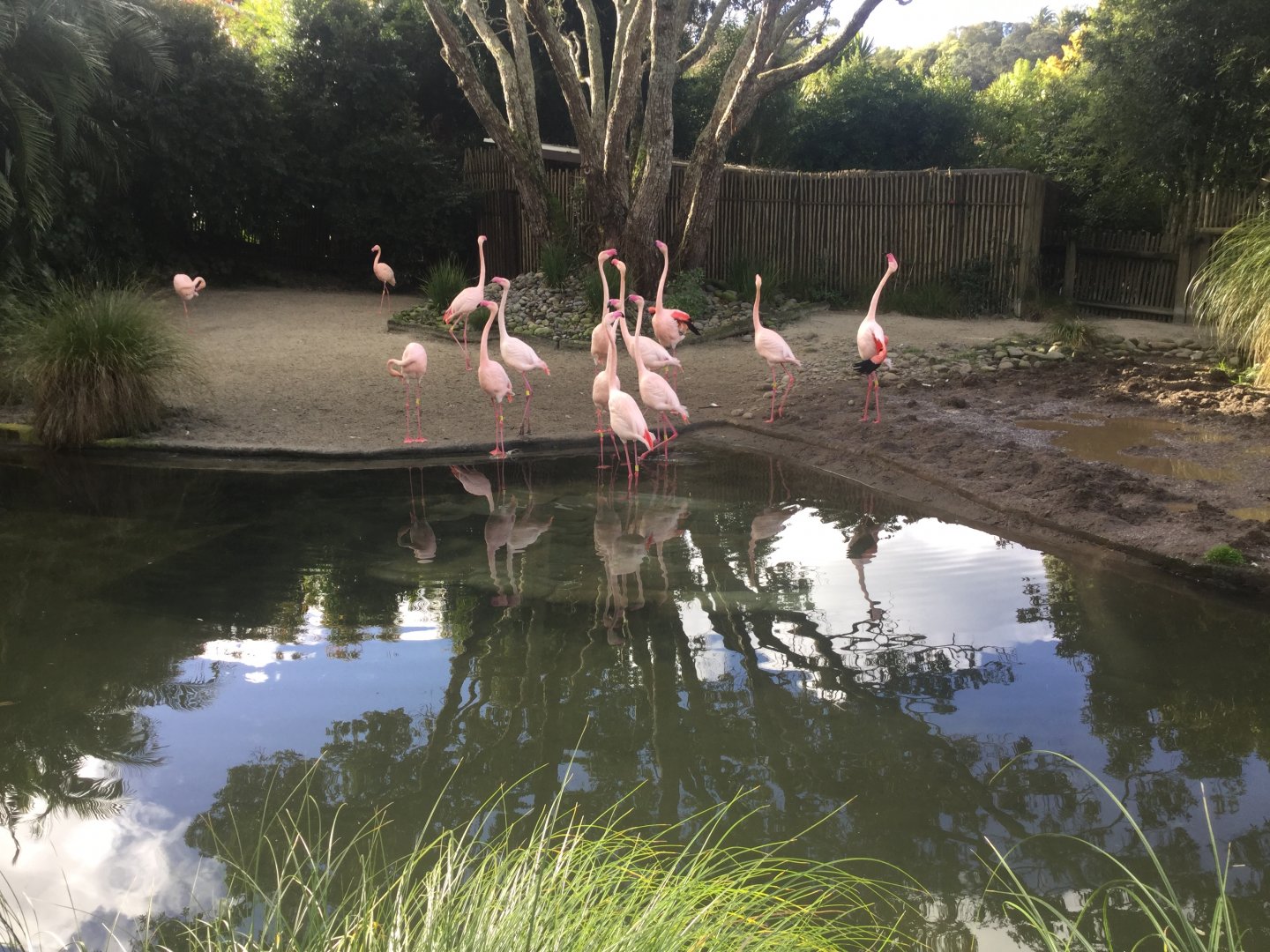
Adelaide Zoo So what happened to Greater???

Just for the odd case Australia would allow import of flamingos or their eggs in future, please import enough birds of one species and keep them as a single group. Auckland got 20 birds and still struggles with few chicks (fingers crossed for better results).

Look how just doubling of starting stock can make a difference. Example Ohrada zoo. They imported 38 Greater flamingos from wild animal trader in Tanzania in autumn 2001, the same year like Auckland (at cost of ca 20.000 euro including transport). Built a pen and winter house at bank of carp fishpond, bough factory-produced flamingo pellets and let birds in. No incubators, no hand-rearing, no mirrors or other gimmicks. Their inventory lists over the years:

31.12.2001: 0,0,37; chicks 2001: zero
31.12.2002: 13,15,7; chicks 2002: zero
31.12.2003: 13,15,12; chicks 2003: 0,0,6
31.12.2004: 13,15,22; chicks 2004: 0,0,12
31.12.2005: 21,18,19; chicks 2005: 0,0,12
31.12.2006: 20,20,25; chicks 2006: 0,0,13
31.12.2007: 33,25,21; chicks 2007: 0,0,14
31.12.2008: 46,37,2; chicks 2008: 0,0,11
31.12.2009: 35,36,8; chicks 2009: 0,0,16
31.12.2010: 39,36,4; chicks 2010: 0,0,16
31.12.2011: 35,42,19; chicks 2011: 0,0,15
31.12.2012: 35,41,22; chicks 2012: 0,0,13
31.12.2013: 33,40,11; chicks 2013: 0,0,8
31.12.2014: 38,48,11; chicks 2014: 5,8
31.12.2015: 38,46,25; chicks 2015: 0,0,15
31.12.2016: 36,44,25; chicks 2016: zero
31.12.2017: 37,44,46; chicks 2017: 0,0,28
31.12.2018: 37,45,60; chicks 2018: 0,0,29
31.12.2019: 33,42,78; chicks 2019: 0,0,30

They lost 3 birds before the flock started to breed (two of them I think due to really stupid reason - new plastic colored/ numbered leg rings were incorrectly closed and birds caught their bill in them when searching for food in deep pond and they drowned. After second bird was fished out, keepers realized the problem and redid the rings). Nowadays Ohrada keeps a flock of 150 birds, maximum what their winter house can host and sends young birds to other zoos regularly.

Theoretically, if Auckland zoo invested more into initial import, half of NZ/Australia could have their own flamingos today.

That’s staggering when you illustrate it like that. Auckland Zoo’s record does indeed look rather sad by comparison:

Auckland Zoo Flamingo Numbers (change since last count):

Dec 2001: 20 flamingo
Dec 2006: 17 flamingo (-3)
Dec 2013: 16 flamingo (-1)
Dec 2014: 17 flamingo (+1)
Dec 2017: 20 flamingo (+3)
Dec 2018: 22 flamingo (+2)
Jan 2021: 23 flamingo (+1)

That said, the staff should be proud of what they’ve accomplished with the resources they’ve had. They remain the only zoo in Australasia to successfully breed this species; and in 2014 made headlines as the only zoo in the world to breed from an entirely handraised flock.

If the steady progress they’ve made over the last seven years (a net gain of eight flamingos) continues, they could probably go into full scale production mode in a couple of decades - proving opportunities for transfer when they do.

In the meantime, Auckland Zoo have held the only flock of flamingos in a New Zealand zoo; and now the only flock in the region. From a marketing perspective, it certainly pays to have a point of difference.
 
That’s staggering when you illustrate it like that. Auckland Zoo’s record does indeed look rather sad by comparison:

Auckland Zoo Flamingo Numbers (change since last count):

Dec 2001: 20 flamingo
Dec 2006: 17 flamingo (-3)
Dec 2013: 16 flamingo (-1)
Dec 2014: 17 flamingo (+1)
Dec 2017: 20 flamingo (+3)
Dec 2018: 22 flamingo (+2)
Jan 2021: 23 flamingo (+1)

That said, the staff should be proud of what they’ve accomplished with the resources they’ve had. They remain the only zoo in Australasia to successfully breed this species; and in 2014 made headlines as the only zoo in the world to breed from an entirely handraised flock.

If the steady progress they’ve made over the last seven years (a net gain of eight flamingos) continues, they could probably go into full scale production mode in a couple of decades - proving opportunities for transfer when they do.

In the meantime, Auckland Zoo have held the only flock of flamingos in a New Zealand zoo; and now the only flock in the region. From a marketing perspective, it certainly pays to have a point of difference.
Your quite right the staff should be proud of what they have accomplished with such a small founder base to start with which is always a problem when only one zoo within a whole region takes on this kind of project on alone. If they could of found another partner with such an endeavor things would have moved along at a faster pace with quicker results, perhaps even now all these years later another zoo that would like to help out could jump in for a second import even if all of the birds went to fill out Aucklands flock then later any young could be moved to the other partner zoo location!
 
Your quite right the staff should be proud of what they have accomplished with such a small founder base to start with which is always a problem when only one zoo within a whole region takes on this kind of project on alone. If they could of found another partner with such an endeavor things would have moved along at a faster pace with quicker results, perhaps even now all these years later another zoo that would like to help out could jump in for a second import even if all of the birds went to fill out Aucklands flock then later any young could be moved to the other partner zoo location!

If another zoo could import that would be ideal, though sadly only the only facility in New Zealand that has them in their plans are the privately owned Keystone Wildlife Park; and even then, they were hoping to obtain surplus from Auckland Zoo (join the very long queue lads).

From Auckland Zoo’s flock of 23 (which includes 16 founders), 7-11 of the founders have yet to successfully breed (the zoo hasn’t confirmed parentage for two of the chicks, allowing a discrepancy of up to four flamingos). If there had been a second flock in the country, a swap could provide the shake up these 7-11 birds clearly need.
 
If another zoo could import that would be ideal, though sadly only the only facility in New Zealand that has them in their plans are the privately owned Keystone Wildlife Park; and even then, they were hoping to obtain surplus from Auckland Zoo (join the very long queue lads).

From Auckland Zoo’s flock of 23 (which includes 16 founders), 7-11 of the founders have yet to successfully breed (the zoo hasn’t confirmed parentage for two of the chicks, allowing a discrepancy of up to four flamingos). If there had been a second flock in the country, a swap could provide the shake up these 7-11 birds clearly need.
Theres going to be a very long wait indeed for other zoos to get any young, clearly it needs another shot in the arm to kick this along there must be at least one zoo out there that would have an interest in doing so!
 
If another zoo could import that would be ideal, though sadly only the only facility in New Zealand that has them in their plans are the privately owned Keystone Wildlife Park; and even then, they were hoping to obtain surplus from Auckland Zoo (join the very long queue lads).

From Auckland Zoo’s flock of 23 (which includes 16 founders), 7-11 of the founders have yet to successfully breed (the zoo hasn’t confirmed parentage for two of the chicks, allowing a discrepancy of up to four flamingos). If there had been a second flock in the country, a swap could provide the shake up these 7-11 birds clearly need.

This flock is small for a breeding flock of Greaters; and the results are very creditable. Given our experience, yes another dozen or so added to it would certainly speed things up; but now the flock has started to breed regularly, it should build in momentum. Do not write of the 7-11, these birds are very long lived, and these individuals could well come into their own as numbers build.
 
This flock is small for a breeding flock of Greaters; and the results are very creditable. Given our experience, yes another dozen or so added to it would certainly speed things up; but now the flock has started to breed regularly, it should build in momentum. Do not write of the 7-11, these birds are very long lived, and these individuals could well come into their own as numbers build.

You’re correct, as thinking about it, Richard’s mate was a non breeder for well over a decade until Richard reached maturity in 2017. It’s entirely possible that the females that have not bred to date could take a mate from the offspring that have hatched over the last four years. These include chicks that have been raised by the flock, so it will be interesting to compare their reproductive success against that of the hand raised birds.

It’s exciting to think of the potential for this flock, where regular breeding becomes a possibility, producing chicks that could live in our zoos for up to 80 years.
 
An interesting side note regarding flamingoes is that several species once lived in Australia, including the modern Greater flamingo. By default Australia could claim to be re-wilding an extinct native species. Same with Komodo dragons...
Flamingo imports were a bandied around argument for years, but as has been alluded to the will of the zoos hasn't been strong. I don't understand it. Can be an impressive display. Auckland is a perfect example of how to get it right. And in addition to the overseas zoos mentioned, I saw huge flocks of various species in South African zoos.
@tetrapod I share your views, Also you are quite correct that Auckland zoo is a perfect example of how to get it right. When I see the huge amounts of money which some zoos spend on guest hotels and redundant elephant exhibits it would take only a fraction of that money to put Flamingos back into some Australian zoos even if they went via New Zealand. Flamingos are very exotic looking for most zoo visitors and with a very long life span, such exhibits if done properly would I am sure increase visitor attendance and make a great centre show piece for any zoo :)
 
Last edited:
From what I understand there are no plans to import more anytime soon, So the numbers will take a long time to creep up, if others are waiting for young its going to take a very long time if ever :(
 
From what I understand there are no plans to import more anytime soon, So the numbers will take a long time to creep up, if others are waiting for young its going to take a very long time if ever :(

If they can produce eight chicks in seven years, it’s not unreasonable to expect a minimum of ten over the next seven years (factoring in the increased size of the flock; and the fact they’re in the rhythm of reproducing). If we assumed ten again for the following seven years; and factor in three assumed deaths - that’s 14 years (2035) to reach a flock size of 40.

In the example used by @Jana, the starting flock of around 40 reliably produced chicks numbering in the early to mid teens annually during the first few years; so potentially the zoo could have the ideal of 60 birds around 2037; with transfers becoming a necessity around 2040.

I would consider these projections conservative based on the progress we’ve seen to date. It wouldn’t surprise me if the flock exceeded these expectations.
 
If they can produce eight chicks in seven years, it’s not unreasonable to expect a minimum of ten over the next seven years (factoring in the increased size of the flock; and the fact they’re in the rhythm of reproducing). If we assumed ten again for the following seven years; and factor in three assumed deaths - that’s 14 years (2035) to reach a flock size of 40.

In the example used by @Jana, the starting flock of around 40 reliably produced chicks numbering in the early to mid teens annually during the first few years; so potentially the zoo could have the ideal of 60 birds around 2037; with transfers becoming a necessity around 2040.

I would consider these projections conservative based on the progress we’ve seen to date. It wouldn’t surprise me if the flock exceeded these expectations.
Lets hope that happens, its going to be a slow road and with luck no deaths along the way!
 
How many pairs have actually successfully bred and raised chicks? Is it just the same pair every year?
 
How many pairs have actually successfully bred and raised chicks? Is it just the same pair every year?

The first chick (Richard) was born to one pair.

Richard and another female, Lizzie, have produced two chicks.

A third pair, Cheviot and Neil, have produced three chicks.

That leaves two chicks unaccounted for.

That means of the 16 founders that are still alive, 7-11 still haven’t bred.
 
The first chick (Richard) was born to one pair.

Richard and another female, Lizzie, have produced two chicks.

A third pair, Cheviot and Neil, have produced three chicks.

That leaves two chicks unaccounted for.

That means of the 16 founders that are still alive, 7-11 still haven’t bred.
So what would one consider a normal age for Flamingos to start breeding!
 
So what would one consider a normal age for Flamingos to start breeding!

Typically 5-6 years, so if Richard (2014) was indeed the sire of his mate Lizzie’s first chick in 2017, that would be impressive.

What’s also possible is that a female pairs with a male, but mates with another male, so maybe Richard’s father (or another male) helped him become a dad? :p
 
Typically 5-6 years, so if Richard (2014) was indeed the sire of his mate Lizzie’s first chick in 2017, that would be impressive.

What’s also possible is that a female pairs with a male, but mates with another male, so maybe Richard’s father (or another male) helped him become a dad? :p
My main concern would be the small founder base since there have been a number of losses from the original group!
 
Am I right that 2.3 founders have bred? With the potential that others may have done so.
 
Am I right that 2.3 founders have bred? With the potential that others may have done so.

Yes:

1.0 Richard’s dad
0.1 Richard’s mum

1.0 Cheviot
0.1 Neil

0.1 Lizzie (Richard’s mate)

The surviving chicks that are unaccounted for may have been born to Richard’s parents; they also may have been born to two seperate pairs (another four founders).

There was also another chick (hatched 2014) that was actually the first flamingo chick hatched at Auckland Zoo. It hatched a few days before Richard (the first surviving chick), but died the same year. I suspect it was born to Cheviot and Neil (who have since been the most successful breeding pair, but don’t know for sure).

 
Back
Top