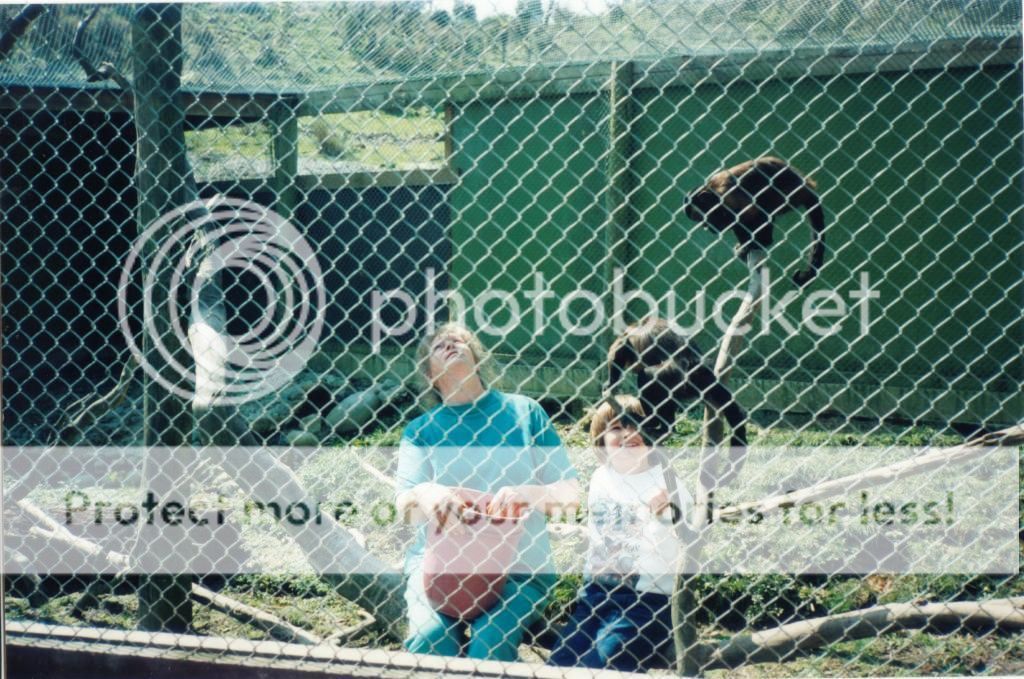
The following is the latest installment of my intermittent historical zoo series, following on from the North Brighton Zoo (closed 1996 – North Brighton Zoo - North Brighton "Mini" Zoo, historical review) and Hadlow Game Park (closed 1986 – some history of Hadlow Game Park, Timaru (now closed)). They are tricky things to write because there is almost zero information on the internet on these small zoos, existing as they did in that dead zone of internet history between the 1960s to 1990s.
The Moana Zoo opened in 1986 and closed in 2000, and it went through a string of name changes (often with one or more names being used simultaneously). Here I shall use “Moana Zoo” throughout, for the sake of simplicity. As far as I can make out from the tangle of names, on opening in 1986 it was called Moana Wildlife Park, which morphed into Kotuku Wildlife Park when the Kotuku Wildlife Trust was formed in 1988. The name of the trust later changed to Te Moana Kotuku Wildlife And Bird Trust. When a kiwi house was built in 1995 the name of the zoo changed to Moana Kiwi House And Conservation Park, but was also called Moana Kiwi House And Zoological Garden, Moana Zoo And Kiwi House, and simply Moana Zoo. The names National Kiwi Centre and National Kiwi Trust were also in use at this time for the kiwi house (which was situated outside the perimeter fence of the zoo itself).
The person behind the Moana Zoo was one Jacquie Grant (originally spelled Jackie Grant) who was born in Gippsland, Australia, in April 1944 as Jack Grant. He moved to New Zealand in 1964 to avoid being jailed for cross-dressing, and after a spell in the merchant navy settled down and became a woman in 1970. From 1979 Jacquie and her new husband lived on a 40 hectare dairy farm named Kotuku Farm outside the tiny country town of Moana, next to Lake Brunner on the West Coast near Greymouth. It was on this farm that the Moana Zoo was built.
Construction of the wildlife park began in 1984 and it opened in 1986 with a variety of farm animals including donkeys, highland cattle, chickens, pigs and ducks, as well as deer, possums and peafowl. The labour on the property was largely carried out by ACCESS workers (a government employment scheme of the 1980s which subsidised the unskilled and long-term unemployed to try to get them into permanent work – as with many of these types of schemes it was heavily abused by employers as a means of getting cheap labour; in the 1990s a similar scheme was called Task Force Green, also used here). Jacquie and her husband also fostered and cared for over seventy children between 1979 and the 1990s (her husband died in 1992).
In 1994 a pair of kiwi were obtained from the Department of Conservation, housed in an outside breeding enclosure, and the following year a nocturnal kiwi house was constructed. The wildlife park had stayed as basic farm stock and common animals for quite some time but the closure of the North Brighton Zoo in Christchurch in 1996 may (or may not - see the following posts) have allowed the Moana Zoo to obtain a number of proper “zoo animals”. Most of the exotic animals from North Brighton went to the Franklin and Pouakai Zoos in the North Island, but Jacquie may (or may not - ditto) have got hold of at least small-clawed otters, rhesus macaques and capuchin monkeys - I have been told differing accounts. I had thought (based on information I had been given) that the pair of bobcats housed at Moana had came from North Brighton but have since found they were imported from Adelaide Zoo (see later posts), apparently in 1992 (as I found through other sources). Other additions were agoutis and little red flying foxes from Wellington Zoo and maras from Auckland Zoo. Less exotic fare housed during this period were llamas, alpacas, emus, red-necked wallabies, Cape Barren geese, and a variety of aviary birds.
The few years between 1997 and 2000 were the zoo's high point. It covered eight hectares – four hectares of gardens and four hectares of native forest – and had thirteen aviaries, eleven mammal cages, seven paddocks, and there were a large number of free-ranging birds and farm animals. There was also an entrance building, actually situated outside the perimeter fence, which included numerous aquariums and reptile tanks and the nocturnal house for kiwi. However it was also the zoo's lowest point: I have talked to a number of people who had visited and there is a common opinion that the place was a filthy dump. Jacquie Grant seemed to be one of those people who obviously love animals and care about conservation, but at the same time simply cannot see the conditions in which their animals are being kept.
Jacquie already owned businesses in Greymouth and Hokitika at the same time as running the zoo. As might be expected, Moana is not exactly a tourist hub and the zoo was not in what one might call a successful position. In 2000 she decided to close the zoo and move to Hokitika to open a stand-alone kiwi house. This was called the Hokitika Kiwi House and also the National Kiwi Centre (with, once again, more than one name being used simultaneously for the same business). There isn't much good to be heard about this place in Hokitika – from people who worked there I have been told the conditions were deplorable and the death rates of animals extraordinary – and it did not in any case last very long because Jacquie teamed up with a local aquarium called Westland's Water World and became manager there, moving all the animals (kiwi and reptiles) to that premises. True to form, this establishment then also went through numerous name changes (such as “Jacquie Grant's Eco-Centre”). From what people in Hokitika say, her employment as manager marked the start of a rapid fall in the conditions at the aquarium. Her role as manager lasted about five years. The aquarium still retains the name National Kiwi Centre.
A pamphlet from about 1997-ish is depicted here: http://www.zoochat.com/679/pamphlet-moana-zoo-side-one-369740/ and http://www.zoochat.com/679/pamphlet-moana-zoo-side-two-369741/
The Moana Zoo opened in 1986 and closed in 2000, and it went through a string of name changes (often with one or more names being used simultaneously). Here I shall use “Moana Zoo” throughout, for the sake of simplicity. As far as I can make out from the tangle of names, on opening in 1986 it was called Moana Wildlife Park, which morphed into Kotuku Wildlife Park when the Kotuku Wildlife Trust was formed in 1988. The name of the trust later changed to Te Moana Kotuku Wildlife And Bird Trust. When a kiwi house was built in 1995 the name of the zoo changed to Moana Kiwi House And Conservation Park, but was also called Moana Kiwi House And Zoological Garden, Moana Zoo And Kiwi House, and simply Moana Zoo. The names National Kiwi Centre and National Kiwi Trust were also in use at this time for the kiwi house (which was situated outside the perimeter fence of the zoo itself).
The person behind the Moana Zoo was one Jacquie Grant (originally spelled Jackie Grant) who was born in Gippsland, Australia, in April 1944 as Jack Grant. He moved to New Zealand in 1964 to avoid being jailed for cross-dressing, and after a spell in the merchant navy settled down and became a woman in 1970. From 1979 Jacquie and her new husband lived on a 40 hectare dairy farm named Kotuku Farm outside the tiny country town of Moana, next to Lake Brunner on the West Coast near Greymouth. It was on this farm that the Moana Zoo was built.
Construction of the wildlife park began in 1984 and it opened in 1986 with a variety of farm animals including donkeys, highland cattle, chickens, pigs and ducks, as well as deer, possums and peafowl. The labour on the property was largely carried out by ACCESS workers (a government employment scheme of the 1980s which subsidised the unskilled and long-term unemployed to try to get them into permanent work – as with many of these types of schemes it was heavily abused by employers as a means of getting cheap labour; in the 1990s a similar scheme was called Task Force Green, also used here). Jacquie and her husband also fostered and cared for over seventy children between 1979 and the 1990s (her husband died in 1992).
In 1994 a pair of kiwi were obtained from the Department of Conservation, housed in an outside breeding enclosure, and the following year a nocturnal kiwi house was constructed. The wildlife park had stayed as basic farm stock and common animals for quite some time but the closure of the North Brighton Zoo in Christchurch in 1996 may (or may not - see the following posts) have allowed the Moana Zoo to obtain a number of proper “zoo animals”. Most of the exotic animals from North Brighton went to the Franklin and Pouakai Zoos in the North Island, but Jacquie may (or may not - ditto) have got hold of at least small-clawed otters, rhesus macaques and capuchin monkeys - I have been told differing accounts. I had thought (based on information I had been given) that the pair of bobcats housed at Moana had came from North Brighton but have since found they were imported from Adelaide Zoo (see later posts), apparently in 1992 (as I found through other sources). Other additions were agoutis and little red flying foxes from Wellington Zoo and maras from Auckland Zoo. Less exotic fare housed during this period were llamas, alpacas, emus, red-necked wallabies, Cape Barren geese, and a variety of aviary birds.
The few years between 1997 and 2000 were the zoo's high point. It covered eight hectares – four hectares of gardens and four hectares of native forest – and had thirteen aviaries, eleven mammal cages, seven paddocks, and there were a large number of free-ranging birds and farm animals. There was also an entrance building, actually situated outside the perimeter fence, which included numerous aquariums and reptile tanks and the nocturnal house for kiwi. However it was also the zoo's lowest point: I have talked to a number of people who had visited and there is a common opinion that the place was a filthy dump. Jacquie Grant seemed to be one of those people who obviously love animals and care about conservation, but at the same time simply cannot see the conditions in which their animals are being kept.
Jacquie already owned businesses in Greymouth and Hokitika at the same time as running the zoo. As might be expected, Moana is not exactly a tourist hub and the zoo was not in what one might call a successful position. In 2000 she decided to close the zoo and move to Hokitika to open a stand-alone kiwi house. This was called the Hokitika Kiwi House and also the National Kiwi Centre (with, once again, more than one name being used simultaneously for the same business). There isn't much good to be heard about this place in Hokitika – from people who worked there I have been told the conditions were deplorable and the death rates of animals extraordinary – and it did not in any case last very long because Jacquie teamed up with a local aquarium called Westland's Water World and became manager there, moving all the animals (kiwi and reptiles) to that premises. True to form, this establishment then also went through numerous name changes (such as “Jacquie Grant's Eco-Centre”). From what people in Hokitika say, her employment as manager marked the start of a rapid fall in the conditions at the aquarium. Her role as manager lasted about five years. The aquarium still retains the name National Kiwi Centre.
A pamphlet from about 1997-ish is depicted here: http://www.zoochat.com/679/pamphlet-moana-zoo-side-one-369740/ and http://www.zoochat.com/679/pamphlet-moana-zoo-side-two-369741/
Last edited: