Species NOT in captivity that you'd like to see in captivity

Just a bit of info I found to try and help out our friend ARIZONA DOCENT I to was unaware of the Saharan Wild dog until now also I will put a bit of Info on about the Saharan Cheetah too I didn't know about untill today

SAHARAN WILD DOG

saharan wild dog, very distinct from common african wild dog and more similar to dhole. This animal is estimate for only a few, relic individuals.

Numbers are estimated to be as low just 400 in the wild

SAHARAN CHEETAH

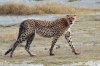
There are thought to be less than 250 adult Northwest African or Saharan cheetahs, making the subspecies critically endangered, but very little is known about the cat.
The first camera-trap photographs of the cheetah, taken as part of a systematic survey of 1,750 square miles of the central Sahara, are providing scientists with information on population numbers, movement and how it interacts with its environment.
The cheetah is found across the Sahara desert and savannah of north and west Africa in small, fragmented populations, the biggest of which is thought to be in Algeria.

I hope this info is useful
 

Attachments

  • saharan wild dog.jpg
    saharan wild dog.jpg
    12.9 KB · Views: 10
  • saharan cheetah 1.jpg
    saharan cheetah 1.jpg
    43.2 KB · Views: 9
Thank you Adrian. If the thumbnail is a saharan wild dog, then it is a subspecies of the typical african wild dog, because it sure looks the same to me, just maybe less colorful.

The saharan cheetah is of course a subspecies of cheetah, but one I would like to see as well. I thought there was only one subspecies in northern africa, but recently I came across mention of perhaps two subspecies - the northwest african cheetah and the sahara cheetah. Anyone with clarification of this please help. I would particularly love to see the unusual pale form of sahara cheetah, which has only been photographed (as far as I know) by the late Alain Dragesco-Joffe. Here's a thumbnail - if you've never seen this, very bizarre - note the complete lack of teardrops or other markings on the head.
 

Attachments

  • DragescoCht2.jpg
    DragescoCht2.jpg
    26.4 KB · Views: 24
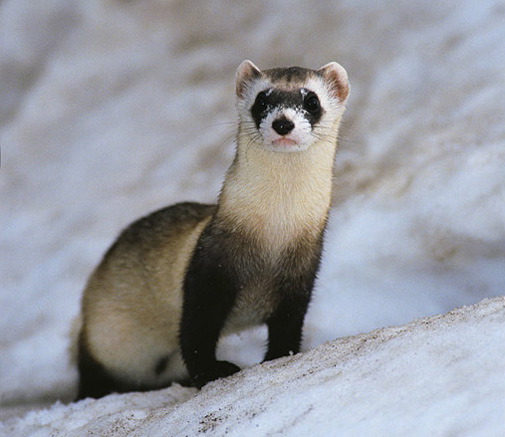
I would like to see Black Footed Ferrets represented somewhere in the UK.

black_footed_ferret2.jpg


This is an animal I would love to have the chance to see. I keep domestic ferrets.
 
Do you think it would be a good idea to have a thread in the gallery so we could put our wanted animals in saving us putting them in thumbnail format any idea's please
 
Northern Hairy-nosed Wombat
Kouprey
Chiru
Hoatzin
 
Hix said:
Northern Hairy-nosed Wombat
I was told by an Australian National Park officer I met in Sarawak that Australia Zoo may be getting northern hairy-noses....just hearsay, mind.
 
Do you think it would be a good idea to have a thread in the gallery so we could put our wanted animals in saving us putting them in thumbnail format any idea's please

If it was a single thread, then all except the first photo would still be put in as thumbnails just like they are here.
 
The saharan cheetah is of course a subspecies of cheetah, but one I would like to see as well. I thought there was only one subspecies in northern africa, but recently I came across mention of perhaps two subspecies - the northwest african cheetah and the sahara cheetah. Anyone with clarification of this please help.


The name saharan cheetah is a bit bad because it is mainly found in the highland belt in the region and the band between the Sahara and Sahel. Northwest African cheetah is just another name for the same race. I like that name more. This latin name of this race is Acinonyx jubatus hecki. It is a bit variable but face pattern is pale and the spots are paler or smaller than in normal cheetahs. Camera trap:
A critically endangered Northwest African or Saharan cheetah
New evidence of critically-endangered cat

The photo in post by adrian1963 is a normal east Africa cheetah. The other cheetah in north Africa is Acinonyx jubatus venaticus. Same race in Asia. It looks more similar to normal cheetah than Acinonyx jubatus hecki. Acinonyx jubatus venaticus is now probably extinct in Africa but some think it never was found in Africa or that the name Acinonyx jubatus venaticus really belongs to part of the population usually called Acinonyx jubatus hecki. Problem is that the type specimen of Acinonyx jubatus venaticus is very old and doesn't have a location. Some now think DNA work is the only way we can know.

Possible existence of very distinct Saharan wild dog is a mystery. Some webpages have said they had photo of Saharan wild dog (the photo used in post by adrian1963) but that is just a normal wild dog. This happened because of mixed up stories of the first camera trap photos published of the Northwest African cheetah where they said Saharan wild dog perhaps was possible in the region. Someone added a photo of a normal wild dog and the story ended up changed and was copied by other people on the net. Mostly on small blogs and that sort of thing. Locals say wild dogs in Sahara exist but no evidence confirm their survival. There used to be scattered populations of wild dogs in Sahara but they are not that distinct and look no more like a dhole than other wild dog populations. They could still be there but IUCN Canid Specialist Group officially classify it as extinct there. It is perhaps a separate race (like Lycaon pictus lupinus from east Africa is darker and less colorful than Lycaon pictus pictus from southern Africa) but some think variation in the wild dog is just clinal. There are still small wild dog populations along the southern edge of the Sahara. In ancient times a species from same genus as the wild dog existed in Middle East but unclear if it was same species or a close relative.
 
Last edited:
Sorry if I gave out wrong information but I was only quoting what I'd found in the official Endangered Species of the World book 2008 I used the photo's from the same website as the one below

New evidence of critically-endangered cat

The problem with extremely endangered animals is people don't know exactly how many are left if any, So if no photo's have been taken for a while they will reproduce an old photograph and that's when confusion starts to set in

The black and white photograph looks very much like the one in a book called Cheetah's of the World first published in 1996 it may not be but again confusion reigns

I do hope these animals still do exsist as both are beautiful animals and live in extreme conditions
 
Both the black and white and the color photo are from the new survey. I think I have more photos from the survey somewhere but can't find them right now. They photographed 4 cheetahs and it has been guessed that there are perhaps 250 left of this race but nobody really knows how many there are. According to isis there are two Northwest African cheetahs at the Cheetah Conservation Fund in USA but I guess that is only where the fund is registered and the cheetahs are somewhere else because they are involved in the project in south Algeria where most Northwest African cheetahs are found. The race Acinonyx jubatus soemmeringii in east Sahel to Horn of Africa is probably almost as rare in the wild and they are in more zoos but it looks more like a normal cheetah.
 
@condor: the North African cheetahs of subspecies venaticus which you mention are thought to be a different subspecies. Hunted specimens do keep turning up, mostly from the Libyan desert, but occassionally a few from Western Egypt. These small populations, and perhaps others, are thought to be of a different subspecies to both venaticus and hecki. Many studies have proposed this, most convincingly in 2001 when various skeletal measurements were shown to be significantly different to those of recognised subspecies, but they have not yet been classified as such.
 
@condor - thanks for the very useful information. When I said possibly two in northern Africa, I was thinking of A.j. hecki and A.j. soemmerengi. Both of these you have clarified. As for the apparent differences, I have seen recent camera trap photos of both saharan and asian cheetahs and compared to the common southern africa cheetah they really all look the same to me.
 
@nayer: It is disputed. The most recent large review of subspecies of the cheetah (Krausman and Morales, 2005: Mammalian Species 771) said they should be included in venaticus. The claimed records in the late 90s from Egypt are still unverified (Hoath, 2003: A Field guide to the Mammals of Egypt). Most recent review considers it possibly extinct in Libya. No recent confirmed records and inquiries to locals in some parts of the country where earlier considered most likely to persist indicated it was extinct. If they are separate subspecies than the Asian this can't be resolved until it has been checked against the very old type specimen for venaticus which didn't have a location. To make sure exactly what population the name belongs to and to find out exactly where the border between the two cheetah races in north African is. Problem can possibly only be solved via DNA (Belchabir, 2007: Compte-rendu de la deuxièmeréunion de l’Observatoire du Guépard en Régions d’Afrique du Nord).

Species not in captivity that I would like to see if it was possible to keep them well. Some of the strange deep-water fish like coelacanth, pelican eel, viperfish, opah, oarfish, lancetfish, frilled shark and goblin shark. The two sharks have been in aquariums in Japan but always die very fast.
 
Last edited:
Species not in captivity that I would like to see if it was possible to keep them well. Some of the strange deep-water fish like coelacanth, pelican eel, viperfish, opah, oarfish, lancetfish, frilled shark and goblin shark. The two sharks have been in aquariums in Japan but always die very fast.

Yes! Some of the strangest and least known animals.

At least avocet snipe eel (or related species) was kept in aquarium for some time.

It is assumed that deepsea fish obligately need high pressure to live, but actually there were no attempts to bring these creatures to the surface gently and keep them alive in cold water.
 
It is assumed that deepsea fish obligately need high pressure to live, but actually there were no attempts to bring these creatures to the surface gently and keep them alive in cold water.

Another problem is that most deep water fish are found in very low densities. Without a big trawl net or long-lines it is very difficult to catch them. Trawl net and long-lines damage the fish badly. Some smaller fish like peppermint angelfish, garish hind, checked swallowtail and Lipogramma in depth of 100-200 meter are highly sought by marine aquarium trade but they exist in low densities and to bring them up completely safe without causing damage to eyes or swim bladder take around 2 days. This is a very long time and they sometimes die of stress instead then. Some species mentioned in my last post are much bigger and not often found as 'shallow' as 100-200 meter depth. Bringing them up would be even more difficult. In a Japanse blog I recently saw two other deep water species I didn't know from aquariums but these two can sometimes be seen in relatively shallow cold upwelling water like off Japan and I guess they were not caught below 150 meter.
deepbody boarfish on photo 3 blog.so-net.ne.jp
many largehead hairtail on last photo blog.so-net.ne.jp

You remember where they kept the snipe eel?
 
I didn't see the place mentioned. Possibly one of US research centres/aquariums.

Anyway, incredible species.
 
Back
Top