Spectaculative Wilhelma Project

Paul.Haerle

Well-Known Member
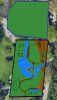
Welcome to my project in which I present to you my plans for Wilhelma.
The lower part of the park, i.e. the large aviary, greenhouses, Amazon house, butterfly house, crane enclosure and sea lions, are assigned to the South and Central America area. The Damascene Hall is an exception.
Let's start with the South American aviary in one of the greenhouses at the entrance.
Almost all current residents are moving into the Amazon House.
The only residents that will remain are two pairs of blue ground doves and a pair of turquoise tanagers.
There are also the Violaceous euphonia and the red-legged honeycreepers from the small mammal and bird house, as their aviary there is too small.
New residents include a pair of Red-and-white crakes, a pair of Blue-necked Tanagers, a pair of Paradise Tanagers and a pair of Black-faced Dacnis.
Everything else in the aviary remains as it is.
Suggestions for improvement are welcome.
 
Last edited:
It takes a step back into the cactus house. The topic here will be the Sonoran Desert.
Free-flying birds in the cactus house: common ground dove, western bluebird, painted bunting Planting for the cactus house (just a few examples) Pachycereus pringlei, Ferocactus wislizeni, Atriplex hymenelytra, Stenocereus thurberi.
 
Flamingo aviary
The flamingo enclosure is over-netted, the net is pulled approx. 4.5 meters above the ground. The greater flamingos are being replaced by Chilean flamingos. There are also white-faced whistling ducks, black-bellied whistling ducks, blue-winged teals, boat-billed herons, cattle egrets, boat-billed herons, roseate spoonbills and scarlet ibises.
The aviary should look similar to the one in Leipzig.
The penguin pool will be filled in and planted with smaller bushes. Chacoan maras and southern pudus move in. However, the penguins will remain in Wilhelma, but more on that later.
 
After a somewhat longer break, I'm returning to this project.
I'm also trying to add more pictures to this project.
A small addendum to my last post, the African penguins are being replaced by Humboldt penguins
 
The entrances are replaced by wooden huts, with specific signs for the birds and information about their habitat.
 
So, some of my ideas for bigger projects:

• a large Southeast Asia/Indonesia greenhouse with Sumatra Orangutan, Malayan Tapir, Great Argus, many fruit doves and imperial pigeons and others

• a large North African desert enclousre + desert house with Scimitar Oryx, Dorcas Gazelle, Fennec Fox and others

• a Giant Otter enclousre

• a North American Beaver aviary with beavers, North American Porcupine, Red Cardinal and others

• a Gelada aviary with Gelada, Rock Hyrax, Nubian Ibex, Vulturine Guineafowl and others

• a breeding station for estrilid finches behind the scenes

• a bigger giraffe house

• a Pygmy Hippo complex outside the Wilhelma at the Neckar with Diana Monkey, Bee-eaters, Hamerkops and others
 
The Greenhouse “Aula Surga“ (Indonesian for paradise hall)
Part 1

Aula Surga will replace the old predator house.
It‘s structured into two parts.
The first part is a greenhouse which is 2,130 m² large.

IMG_0023.jpeg


Description:

You enter the greenhouse after you have seen the African mountain region.
At the right you can see glass panes of a terrarium but you only see a wide reptilian tail. Maybe you can see the whole reptile later, but that‘s uninteresting now.
A Sumatra Laughingthrush just set down on the overgrown terrarium roof and it sings something to lure a female. He‘s successful; a female flies in a tree next to the path.
We leave them alone and go on, until we come to a cross. We take the right way to see the terrarium.
You can see terrarium more precise, because there‘s no distance between the terrarium and the path. There‘s a Timor Python in the water next to the glass panel. You can see the body of the python that we saw before; it lies in a tree hollow.
Right next to the first terrarium is a secound terrarium where you see an active Crocodile Monitor. It climbs on one of the branches in its terrarium.
We want to go on, but that‘s a dead end. A small brown mammal runs suddenly runs across the path. It looks like a mouse but we heard there are free-roaming treeshrews in this house so we follow it. And it wasn‘t for nothing; we see a Nothern Treeshrew which sits on a bowl with berries. The treeshrew led us to one of five feeding stations in the greenhouse. In addition to the treeshrew there are also a few birds. A Muellers Western Hooded Pitta flies away as we came; a Ruby-throated Bulbul sits together with the threeshrew on a bowl; two brown ground doves which we can‘t identify run between two bowls back and forth and three Superb Fruit Doves sit on higher bowls.
We watch this feeding station a bit longer, but we go on now.
At the glass pane of the python terrarium is a brown spot. We look more precise and see a Common Tree Frog, our first amphibious.
We come to the cross again and take the left way now. After we walked a bit along there‘s a enclosure which fences are logs at the left. This enclosure is very muddy and houses a group of five Southern Asian Forest Tortoises. On their feeding bowl you see another free-flying bird: a White-eared Catbird which is looking unsuccessful for something to eat. Suddenly it flies away and we hear cackle like that from chickens. A group of Green Junglefowl comes out of the forest and begins to peck at the ground. Another noisy bird species settled down in the trees next to the tortoise enclosure: two couples of Solomon Island Eclectus.
A few steps further is the next feeding station which is lively attended. A flock of Brown Lorys and Goldie‘s Lorikeets flies around between five bowls; three Victoria Crowned Pigeons peck relaxed for food; another Nothern Treeshrew sits between these big pigeons; a single Nicobar Pigeons sits in a higher feeding bowl circled by lorikeets; Crested Partridges with chicks running around everywhere there and Ruby-throated Bulbuls argue with lorikeets over berries.
We continue our walk and come to the mangrove forest which is on the shore of the big river. A couple of Asian Fairy-bluebirds welcome us to the mangrove and a Wompoo Fruit Dove flies across our way. The path leads us now over a bridge over which we reach a group of islands covered in mangroves. We can watch out from these islands the river residents: on a sandbank lies a young Malaysian Giant Turtle; three Sunda teals are chased away by a couple of White-winged Ducks which has chicks; everywhere Asian Common Toads sit on stones, rocks or logs; Giant Gouramis swim relaxed through the river and Lesser Whistling Ducks and Amboina Box Turtles share a log to sit.
On one island is the third feeding station where wee see the Wompoo Fruit Dove Ruby-throated Bulbuls and Asian Fairy-bluebirds again; a Chinese Water Dragon serves itself at the duck food; a couple of Silver-tipped Imperial Pigeons lands in the trees around the station and waits until we leave the station.
We reach finally the other shore and are welcomed by a flug of Grosbeak Starlings in rice fields. We enjoy our view from a higher wooden platform over the rice fields and spot a Chinese Water Dragon before we continue our walk. There‘s another cross and we take the right way into the jungle. Nicobar Pigeons, Northern Treeshrews and Crested Partridges cross our path while we here a loud splashing. The path becomes steeper and we reach a platform from which we can see and reach a hanging bridge next to the waterfall. We walk over it, get a bit wet and reach the other side where the fourth feeding station is. A couple of Muellers Western Hooded Pittas picks for berries; Kalongs and Orange-fronted Fruit Doves eat bigger fruit slices and we missed the Sulawesi Hornbill which just flies away and we only see its tail. For going back to the main path are two ways: the first is the same with which we came here, the second leads over stones in the river; we choose the secound.
As we walk to the stones we see the Sulawesi Hornbill again. It‘s flying to a nesting box which is bricked up.
We all know what that means, right?
Arrived at the stones we see the next rarity: 6 adult Cotton Pygmy Geese with goslings.

Feedback is welcome
To be continued
 

Attachments

  • IMG_0023.jpeg
    IMG_0023.jpeg
    79.5 KB · Views: 130
Last edited:
Part 2
So, we continue where we stopped yesterday.
We cross the stones successfully and reach the last feeding station in the greenhouse. There we see a couple of adult ground doves namely Red-necked Sulawesi Ground Dove which run so nervously like the joung brown ground doves at the first feeding station; a female Great Argus arrives just at the feeding station and chases the ground doves away; Grosbeak Starlings, Brown Lorys and Goldie‘s Lorikeets fly all around there and a Prevost‘s Squirrel disappears just than as we came. Behind the feeding station you can see the nets of an aviary and we hear the squeak of zebra finches, so we walk along to see them.
In this aviary we can see a mixed flock of Timor Zebra Finches, Timor Sparrows, Javan Munias and Red Avadavats which flies wild through the aviary, some sit down on branches and others land on the feeding bowl to peck up some seeds. If you look closely you can see a dove between the estrilid finches namely the Zebra Dove. When it sees us it flies away to their nest which is on a higher position and we notice another resident: a couple of Chestnut-bellied Partridge with chicks explores the aviary.
A few steps further is the next aviary which doesn‘t have such active residents as the last aviary. This aviary is more densely planted and it‘s more difficult to spot its residents. We only see two Cinnamon Ground Doves until we notice movement into the trees. A red bird flies back and further so we can‘t identify it. It sit just down for a moment and we identify it as a male King Bird-of-paradise. Because of its activity we notice the last resident in this aviary which sits quietly on a tree next to the path: a couple of Rose-crowned Fruit Doves preens its feathers.
On the wooden post of the aviary sits another Common Tree Frog.
We go on and see another aviary (also the last aviary in this greenhouse) which looks similar like the second aviary. Right next to the path sit three Collared Imperial Pigeons and two more pigeons sit at the feeding bowl in the back. At the feeding bowl we see also a Tokay Gecko which shouldn’t be in this aviary but free-roaming in the greenhouse. A couple of Green-naped Pheasant Pigeon runs nervously through the aviary. On the rock wall sits a male Lesser Bird-of-paradise the last resident of this aviary.
We enjoy the view from the higher platform and go on to the left path into the deep jungle.
Two Victoria Crowned Pigeon cross our way and a Golden-crested Myna flies quickly over our heads.
Suddenly we hear a rustle in the bushes and catch a glimpse of a Lesser Mouse-deer until it disappears into the forest.
Now we we arrive at the river again and we see a fence. We see a muddy enclosure but its resident isn’t there. Only Bala Sharks and Hoven‘s Carps swim in the river but they can swim in the other river parts too. A few moments later three Pinon‘s Imperial Pigeons fly over our heads in the trees in the enclosure and we look more precisely in the trees and notice there are also Kalongs.
We walk on and see another enclosure that looks similar to the last. There we see its resident namely a Malayan Tapir.
Under a big leave we notice a sign which says that there are two Malayan Tapirs which have two separate indoor enclosures and a huge outdoor enclosure.
In the tapir enclosure are also a few free-roamers like Grosbeak Starlings and Black-winged Mynas which sit on the tapirs back or a Masked Lapwing which picks at invertebrates in the mud.
We turn back to the platform at the bird-of-paradise aviaries where we see the last free-roamer the Common House Gecko. We enjoy the view from the platform a last time and than enter the orang-utan house.

Maybe I’ll add or remove something to this greenhouse but I won‘t make big changes.
Feedback is welcome
 
Last edited:
It takes a step back into the cactus house. The topic here will be the Sonoran Desert.
Free-flying birds in the cactus house: common ground dove, western bluebird, painted bunting Planting for the cactus house (just a few examples) Pachycereus pringlei, Ferocactus wislizeni, Atriplex hymenelytra, Stenocereus thurberi.
I really like this idea and I have two ideas for free flying birds and two ideas for birds that doesn’t fly and two ideas for a reptile for the cactus house and the two free flying birds are the cactus wren and one of my favorite birds and this one bird is my favorite so much that I try to copy it and the bird is the mourning dove and they are called mourning doves because of their mournful owl like cooing and the ideas for the birds that don’t fly are the Gambles Quail and the Roadrunner and the ideas for the reptiles are one that can be free roaming and one that can’t however these two reptiles they aren’t venomous but they can bite however the one that can be free roaming is not likely to bite people and also they are not known to be aggressive towards people and this one reptile is the chuckwalla and chuckwallas are the largest non venomous lizards in the United States and they live in deserts the reptile that can’t be free roaming is the desert tortoise and these animals can bite with the males being the most aggressive while the females can be less aggressive but will still bite sometimes when they bite it’s on accident but when they are threatened, Pregnant aka gravid and defending their nests they are aggressive.
 
I really like this idea and I have two ideas for free flying birds and two ideas for birds that doesn’t fly and two ideas for a reptile for the cactus house and the two free flying birds are the cactus wren and one of my favorite birds and this one bird is my favorite so much that I try to copy it and the bird is the mourning dove and they are called mourning doves because of their mournful owl like cooing and the ideas for the birds that don’t fly are the Gambles Quail and the Roadrunner and the ideas for the reptiles are one that can be free roaming and one that can’t however these two reptiles they aren’t venomous but they can bite however the one that can be free roaming is not likely to bite people and also they are not known to be aggressive towards people and this one reptile is the chuckwalla and chuckwallas are the largest non venomous lizards in the United States and they live in deserts the reptile that can’t be free roaming is the desert tortoise and these animals can bite with the males being the most aggressive while the females can be less aggressive but will still bite sometimes when they bite it’s on accident but when they are threatened, Pregnant aka gravid and defending their nests they are aggressive.
Thank you for the ideas.
I already thought about reptiles in this house and the chuckwallas are already kept in the Wilhelma so they have good chances.
I think three birds are enough for the catctus house because this house is small but the roadrunners (that are already kept) will get an enclosure at the Damaszener hall and the Mourning Dove will be part of the beaver aviary.
 
Last edited:
Thank you for the ideas.
I already thought about reptiles in this house and the chuckwallas are already kept in the Wilhelma so they have good chances.
I think three birds are enough for the catctus house because this house is small but the roadrunner (that are already kept) will get an enclosure at the Damaszener hall and the Mourning Dove will be part of the beaver aviary.
Your welcome and I am glad that the mourning doves will be in your spectaculative project.
 
The Greenhouse “Aula Surga“ (Indonesian for paradise hall)
Part 1

Aula Surga will replace the old predator house.
It‘s structured into two parts.
The first part is a greenhouse which is 2,130 m² large.

View attachment 774294


Description:

You enter the greenhouse after you have seen the African mountain region.
At the right you can see glass panes of a terrarium but you only see a wide reptilian tail. Maybe you can see the whole reptile later, but that‘s uninteresting now.
A Sumatra Laughingthrush just set down on the overgrown terrarium roof and it sings something to lure a female. He‘s successful; a female flies in a tree next to the path.
We leave them alone and go on, until we come to a cross. We take the right way to see the terrarium.
You can see terrarium more precise, because there‘s no distance between the terrarium and the path. There‘s a Timor Python in the water next to the glass panel. You can see the body of the python that we saw before; it lies in a tree hollow.
Right next to the first terrarium is a secound terrarium where you see an active Crocodile Monitor. It climbs on one of the branches in its terrarium.
We want to go on, but that‘s a dead end. A small brown mammal runs suddenly runs across the path. It looks like a mouse but we heard there are free-roaming treeshrews in this house so we follow it. And it wasn‘t for nothing; we see a Nothern Treeshrew which sits on a bowl with berries. The treeshrew led us to one of five feeding stations in the greenhouse. In addition to the treeshrew there are also a few birds. A Muellers Western Hooded Pitta flies away as we came; a Ruby-throated Bulbul sits together with the threeshrew on a bowl; two brown ground doves which we can‘t identify run between two bowls back and forth and three Superb Fruit Doves sit on higher bowls.
We watch this feeding station a bit longer, but we go on now.
At the glass pane of the python terrarium is a brown spot. We look more precise and see a Common Tree Frog, our first amphibious.
We come to the cross again and take the left way now. After we walked a bit along there‘s a enclosure which fences are logs at the left. This enclosure is very muddy and houses a group of five Southern Asian Forest Tortoises. On their feeding bowl you see another free-flying bird: a White-eared Catbird which is looking unsuccessful for something to eat. Suddenly it flies away and we hear cackle like that from chickens. A group of Green Junglefowl comes out of the forest and begins to peck at the ground. Another noisy bird species settled down in the trees next to the tortoise enclosure: two couples of Solomon Island Eclectus.
A few steps further is the next feeding station which is lively attended. A flock of Brown Lorys and Goldie‘s Lorikeets flies around between five bowls; three Victoria Crowned Pigeons peck relaxed for food; another Nothern Treeshrew sits between these big pigeons; a single Nicobar Pigeons sits in a higher feeding bowl circled by lorikeets; Crested Partridges with chicks running around everywhere there and Ruby-throated Bulbuls argue with lorikeets over berries.
We continue our walk and come to the mangrove forest which is on the shore of the big river. A couple of Asian Fairy-bluebirds welcome us to the mangrove and a Wompoo Fruit Dove flies across our way. The path leads us now over a bridge over which we reach a group of islands covered in mangroves. We can watch out from these islands the river residents: on a sandbank lies a young Malaysian Giant Turtle; three Sunda teals are chased away by a couple of White-winged Ducks which has chicks; everywhere Asian Common Toads sit on stones, rocks or logs; Giant Gouramis swim relaxed through the river and Lesser Whistling Ducks and Amboina Box Turtles share a log to sit.
On one island is the third feeding station where wee see the Wompoo Fruit Dove Ruby-throated Bulbuls and Asian Fairy-bluebirds again; a Chinese Water Dragon serves itself at the duck food; a couple of Silver-tipped Imperial Pigeons lands in the trees around the station and waits until we leave the station.
We reach finally the other shore and are welcomed by a flug of Grosbeak Starlings in rice fields. We enjoy our view from a higher wooden platform over the rice fields and spot a Chinese Water Dragon before we continue our walk. There‘s another cross and we take the right way into the jungle. Nicobar Pigeons, Northern Treeshrews and Crested Partridges cross our path while we here a loud splashing. The path becomes steeper and we reach a platform from which we can see and reach a hanging bridge next to the waterfall. We walk over it, get a bit wet and reach the other side where the fourth feeding station is. A couple of Muellers Western Hooded Pittas picks for berries; Kalongs and Orange-fronted Fruit Doves eat bigger fruit slices and we missed the Sulawesi Hornbill which just flies away and we only see its tail. For going back to the main path are two ways: the first is the same with which we came here, the second leads over stones in the river; we choose the secound.
As we walk to the stones we see the Sulawesi Hornbill again. It‘s flying to a nesting box which is bricked up.
We all know what that means, right?
Arrived at the stones we see the next rarity: 6 adult Cotton Pygmy Geese with goslings.

Feedback is welcome
To be continued

Part 2
So, we continue where we stopped yesterday.
We cross the stones successfully and reach the last feeding station in the greenhouse. There we see a couple of adult ground doves namely Red-necked Sulawesi Ground Dove which run so nervously like the joung brown ground doves at the first feeding station; a female Great Argus arrives just at the feeding station and chases the ground doves away; Grosbeak Starlings, Brown Lorys and Goldie‘s Lorikeets fly all around there and a Prevost‘s Squirrel disappears just than as we came. Behind the feeding station you can see the nets of an aviary and we hear the squeak of zebra finches, so we walk along to see them.
In this aviary we can see a mixed flock of Timor Zebra Finches, Timor Sparrows, Javan Munias and Red Avadavats which flies wild through the aviary, some sit down on branches and others land on the feeding bowl to peck up some seeds. If you look closely you can see a dove between the estrilid finches namely the Zebra Dove. When it sees us it flies away to their nest which is on a higher position and we notice another resident: a couple of Chestnut-bellied Partridge with chicks explores the aviary.
A few steps further is the next aviary which doesn‘t have such active residents as the last aviary. This aviary is more densely planted and it‘s more difficult to spot its residents. We only see two Cinnamon Ground Doves until we notice movement into the trees. A red bird flies back and further so we can‘t identify it. It sit just down for a moment and we identify it as a male King Bird-of-paradise. Because of its activity we notice the last resident in this aviary which sits quietly on a tree next to the path: a couple of Rose-crowned Fruit Doves preens its feathers.
On the wooden post of the aviary sits another Common Tree Frog.
We go on and see another aviary (also the last aviary in this greenhouse) which looks similar like the second aviary. Right next to the path sit three Collared Imperial Pigeons and two more pigeons sit at the feeding bowl in the back. At the feeding bowl we see also a Tokay Gecko which shouldn’t be in this aviary but free-roaming in the greenhouse. A couple of Green-naped Pheasant Pigeon runs nervously through the aviary. On the rock wall sits a male Lesser Bird-of-paradise the last resident of this aviary.
We enjoy the view from the higher platform and go on to the left path into the deep jungle.
Two Victoria Crowned Pigeon cross our way and a Golden-crested Myna flies quickly over our heads.
Suddenly we hear a rustle in the bushes and catch a glimpse of a Lesser Mouse-deer until it disappears into the forest.
Now we we arrive at the river again and we see a fence. We see a muddy enclosure but its resident isn’t there. Only Bala Sharks and Hoven‘s Carps swim in the river but they can swim in the other river parts too. A few moments later three Pinon‘s Imperial Pigeons fly over our heads in the trees in the enclosure and we look more precisely in the trees and notice there are also Kalongs.
We walk on and see another enclosure that looks similar to the last. There we see its resident namely a Malayan Tapir.
Under a big leave we notice a sign which says that there are two Malayan Tapirs which have two separate indoor enclosures and a huge outdoor enclosure.
In the tapir enclosure are also a few free-roamers like Grosbeak Starlings and Black-winged Mynas which sit on the tapirs back or a Masked Lapwing which picks at invertebrates in the mud.
We turn back to the platform at the bird-of-paradise aviaries where we see the last free-roamer the Common House Gecko. We enjoy the view from the platform a last time and than enter the orang-utan house.

Maybe I’ll add or remove something to this greenhouse but I won‘t make big changes.
Feedback is welcome

Species list for Aula Surga greenhouse
(There are also some new species [underlined] that were mentioned on ZooChat:D, because our visit was before the regular opening)
Terrarium 1: Crocodile Monitor
Terrarium 2: Timor Python
Tortoise enclosure (3): Southern Asian Forest Tortoise
River residents: Malaysian Giant Turtle, Amboina Box Turtle, Giant Gourami, Three Spot Gourami, Kissing Gourami, Clown Loach, Bala Shark, Hoven‘s Carp
Aviary 1: Chestnut-bellied Partridge, Zebra Dove, Timor Zebra Finch, Timor Sparrow, Javan Munia, Red Avadavat
Aviary 2: Cinnamon Ground Dove, Rose-crowned Fruit Dove, King Bird-of-paradise
Aviary 3: Green-naped Pheasant Pigeon, Collared Imperial Pigeon, Lesser Bird-of-paradise
Tapir enclosure: Malayan Tapir
Free-roamers: Northern Treeshrew, Kalong, Prevost‘s Squirrel, Lesser Mouse-deer, Great Argus, Green Junglefowl, Crested Partridge, White-winged Duck, Cotton Pygmy Goose, Lesser Whistling Duck, Sunda Teal, Victoria Crowned Pigeon, Nicobar Pigeon, Red-necked Sulawesi Ground Dove, Pinon's Imperial Pigeon, Silver-tipped Imperial Pigeon, Wompoo Fruit Dove, Superb Fruit Dove, Orange-fronted Fruit Dove, Masked Lapwing, Sulawesi Hornbill, Solomon Island Eclectus, Brown Lory, Goldie's Lorikeet, Muellers Western Hooded Pitta, White-eared Catbird, Sulawesi Black-naped Oriole, Asian Fairy-bluebird, Ruby-throated Bulbul, Sumatra Laughingthrush, Grosbeak Starling, Golden-crested Myna, Black-winged Myna, Asian Glossy Starling, Chinese Water Dragon, Tokay Gecko, Asian House Gecko, Oriental Garden Lizard, Common Tree Frog, Asian Common Toad, Borneo Eared Frog, Green Pudle Frog
 
Asian Glossy Starling
I forgot to mark the Asian Glossy Starling which is also new and often found at the rice fields, in the mangrove islands or in the tapir enclosure.
Three Spot Gourami, Kissing Gourami,
Green Pudle Frog
Those were seen in the big river before the tapir enclosure. You can see them well if you choose the left path from the rice fields.
Clown Loach
They were seen in the river in the tapir enclosure.
Sulawesi Black-naped Oriole,
Borneo Eared Frog
Both were seen in the area around the waterfall.
Oriental Garden Lizard,
This lizard can turn up everywhere; you find it often at the first feeding station, in the waterfall area or near to the aviaries.
 
So here's the final design for the big aviary
2. First cerrado aviary (former Australia aviary)
The sand at the left side will be replaced by a little pond for the ducks.
2,2 Ringed Teal (Callonetta leucophrys)
1,1 Chaco Chachalaca (Ortalis canicollis)
1,1 Picazuro Piegon (Patagioenas picazuro)
1,1 Giant Wood-Rail (Aramides ypecaha)
1,1 Black-headed Parrot (Pionites melanocephalus)
6,6 Monk Parakeet (Myiopsitta monachus)
5,5 Crimson-bellied Parakeet (Pyrrhura perlata)
1,1 Yellow-collared Macaw ( Primolius auricollis)

3. Second cerrado aviary (former Africa aviary)
1,1 Solitary Tinamou (Tinamus solitarius)
2,2 Red Shoveler (Spatula platalea)
2,2 Ringed Teal (Callonetta leucophrys)
1,1 Picazuro Pigeon (Patagioenas picazuro)
3,3 Eared Dove (Zenaida auriculata)
3,3 Guira Cuckoo (Guira guira)
1,1 Wattled Jacana (Jacana jacana)
1,1 Great Kiskadee (Pitangus sulphuratus)
5,5 Scarlet-headed Blackbird (Amblyramphus holosericeus)
1,1 Ultramarine Grosbeak (Cyanoloxia brissonii)
1,1 Red-crested Cardinal (Paroaria coronata)

4. Chilean coast aviary (former Europe aviary)
The net between this and the second cerrado aviary will be replaced by a rock wall.
A wave pool will be built-in the left water pool.
2,2 Spectacled Duck (Speculanas specularis)
4,4 Puna Teal (Spatula puna)
2,2 Chiloe Wigeon (Mareca sibilatrix)
1,1 Southern Lapwing (Vanellus chilensis)
1,1 Peruvian Thick-knee (Hesperoburhinus superciliaris)
4,4 Black-necked Stilt (Himantopus mexicanus)
5,5 Inca Tern (Larosterna inca)
0,7 Humboldt Penguin (Spheniscus humboldti)

Non-walkthrough aviaries
1. Gallery forest aviary (former Black Stork/duck aviary)
2,3 Rosy-billed Pochard (Netta peposaca)
4,4 Lake Duck (Oxyura vittata)
2,2 Black-necked Stilt (Himantopus mexicanus)
1,1 Wattled Jacana (Jacana jacana)
2,3 Green Oropendola (Psarocolius viridis)

2. Pantanal aviary (former ibis/egret aviary)
1,1 Horned Screamer (Anhima cornuta)
1,1 Hyacinth Macaw (Anodorhynchus hyacinthinus)

3. Atlantic rainforest aviary (former toucan/oropendola/cuckoo aviary)
1,1 Red-billed Curassow (Crax blumenbachii)
2,2 Vinaceous-breasted Amazon (Amazona vinacea)
2,2 Painted Parakeet (Pyrrhura picta)

5. Yucatan aviary (former Oriental Stork/spoonbill aviary)
1,1 Muscovy Duck (Cairina moschata)
1,3 Ocellated Turkey (Meleagris ocellata)
1,1 Striated Heron (Butorides striata)
1,1 Yucatan Jay
(Cyanocorax yucatanius)

6. First Guyanas aviary (former laughingthrush aviary)
1,1 Lesser Chachalaca (Ortalis motmot)
1,1 Scaled Pigeon (Patagioenas speciosa)
1,1 Guianan Toucanet (Selenidera piperivor)

7. Second Guyanas aviary (former oropendola/cuckoo/Greater Hornbill aviary)
1,3 Crested Bobwhite (Colinus cristatus)
2,2 Bare-eyed Pigeon (Patagioneas corensis)
1,1 Guianan Cock-of-the-rock (Rupicola rupicola)
 
Species list for Aula Surga greenhouse
(There are also some new species [underlined] that were mentioned on ZooChat:D, because our visit was before the regular opening)
Terrarium 1: Crocodile Monitor
Terrarium 2: Timor Python
Tortoise enclosure (3): Southern Asian Forest Tortoise
River residents: Malaysian Giant Turtle, Amboina Box Turtle, Giant Gourami, Three Spot Gourami, Kissing Gourami, Clown Loach, Bala Shark, Hoven‘s Carp
Aviary 1: Chestnut-bellied Partridge, Zebra Dove, Timor Zebra Finch, Timor Sparrow, Javan Munia, Red Avadavat
Aviary 2: Cinnamon Ground Dove, Rose-crowned Fruit Dove, King Bird-of-paradise
Aviary 3: Green-naped Pheasant Pigeon, Collared Imperial Pigeon, Lesser Bird-of-paradise
Tapir enclosure: Malayan Tapir
Free-roamers: Northern Treeshrew, Kalong, Prevost‘s Squirrel, Lesser Mouse-deer, Great Argus, Green Junglefowl, Crested Partridge, White-winged Duck, Cotton Pygmy Goose, Lesser Whistling Duck, Sunda Teal, Victoria Crowned Pigeon, Nicobar Pigeon, Red-necked Sulawesi Ground Dove, Pinon's Imperial Pigeon, Silver-tipped Imperial Pigeon, Wompoo Fruit Dove, Superb Fruit Dove, Orange-fronted Fruit Dove, Masked Lapwing, Sulawesi Hornbill, Solomon Island Eclectus, Brown Lory, Goldie's Lorikeet, Muellers Western Hooded Pitta, White-eared Catbird, Sulawesi Black-naped Oriole, Asian Fairy-bluebird, Ruby-throated Bulbul, Sumatra Laughingthrush, Grosbeak Starling, Golden-crested Myna, Black-winged Myna, Asian Glossy Starling, Chinese Water Dragon, Tokay Gecko, Asian House Gecko, Oriental Garden Lizard, Common Tree Frog, Asian Common Toad, Borneo Eared Frog, Green Pudle Frog
Some changes:
The Sulawesi Hornbill and the Green Junglefowl moved together with Chestnut-napped Green Imperial Pigeon and Sulawesi Myna in aviary 3.
The former inhabitants moved together with the White-eared Catbird (it's just a single female) in aviary 2, in which the Cinnamon Ground Dove still is kept.
The King Bird-of-paradise (1,0; there're breed behaind the scenes) and the Rose-crowned Fruit Dove now are kept free-flying, as well as Chestnut-bellied Partridges (their parents still live in aviary 1), Pink-necked Green Pigeons, Ornate Lorikeets, a single Sulawesi Collared Kingfisher, Philippine Metallic Pigeons and White-eared Brown Doves.
A couple of Oriental Magpie Robins were spotted in aviary 1
 
The Orangutan House

The outdoor enclosure will be extended slightly forwards, as the path to the new tropical hall has to be relocated anyway.
The outdoor enclosure has a small moat for the tapirs, which can also use this enclosure (to prevent the orangutans from entering the tropical hall, the tapirs' exit is directly in front of the moat.
Various trees, which are also connected with ropes, serve as climbing facilities.
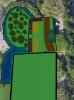
The indoor enclosure is divided into two parts: a large shared indoor enclosure, which can also be seen by visitors and is 5 metres above the ground, with access to the outdoor enclosure and climbing facilities. There are two individual cages under the large communal enclosure so that the two females can be separated if necessary. The employees have a corridor between the communal enclosure and the outside wall, which provides access to the outside enclosure (the area marked in purple).
A small pond in the house houses two Malaysian Giant Turtles.IMG_0041.jpeg

Species list:
0,2 Sumatran Orangutan
1,1 Malayan Tapir
1,1 Malaysian Giant Turtle
 

Attachments

  • IMG_0041.jpeg
    IMG_0041.jpeg
    92.8 KB · Views: 59
Last edited:
I decided to start this project all over again. Therefore I will start a new thread to have a consistent style in the future.
 
Back
Top