Port Lympne Wild Animal Park Sumatran Rhino History

Shirokuma

Well-Known Member
I'm sure something has been posted on this topic but various searches have failed to come up with anything.

I'd like to know any information on the keeping of Sumatran rhino at Port Lympne. In particular I'd like to know where in the park they were housed and any information about their husbandry.

By the way, their website says they returned Sumatran rhino to the wild, I bit cheeky really in my view as it was only one and not really comparable with, for example, their black rhino releases.

The Aspinall Foundation has so far returned to the wild: Przewalski's horses, black rhino, Sumatran rhino, Cape buffalo, ocelots, pythons and gorillas.
 
I'd like to know any information on the keeping of Sumatran rhino at Port Lympne. In particular I'd like to know where in the park they were housed and any information about their husbandry.

By the way, their website says they returned Sumatran rhino to the wild, I bit cheeky really in my view as it was only one and not really comparable with, for example, their black rhino releases.

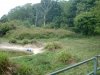
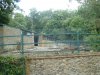
The Sumatran rhinos lived in the long narrow paddock directly south of the Palace of the Apes- on the right hand side going down the hill. The top half is wooded and the lower part open grassland. Their indoor building was on the other/left hand side about halfway down, below the Monkey enclosures. There are kissing gates across the path to allow animals' access. These enclosures are now used for Malayan Tapirs.

They originally imported two rhinos- male Torgamba and female ?. The female had a damaged leg from a snare and did not live very long. She was replaced by a 2nd one, Meranti. She too died and was found to be an old animal which may explain the lack of breeding. They were fed a huge variety of exotic fruits and also hay soaked in fruit juices. They seemed to have no problems getting them to feed or adapt to captivity as happened in the USA. The outside enclosure had a couple of mud wallows but apart from that is the same now as when the Rhinos were using it. I believe there was a heated wallow inside as well, this from Mark(the Australian Moderator) who has seen inside which I never did.

Torgamba was later returned to Sumatra and is still at Way Kambas. Their claim to have 'returned Sumatran Rhino to the wild' is not really correct in any sense.
 
Last edited:
Just a quick question, do you think that the UK will ever see Sumatran Rhinos again in the future? From what you have said it seems that they settled into captivity better over here than over in the states. I would love to see one and hope that a captive population can become a little more established.

If they were to come over, where do you think would be the best place to house them? I think Port Lympne (though I've never been, they have experience keeping them) or Chester (simply because its the biggest British zoo and I can imagine that they would have the space/money to invest).
 
I don't think they will come to the UK again. Despite their good care, Port Lympne effectively failed with them so definately wouldn't repeat it- no-one else has any experience with them.

You need to go to Sumatra or the USA!;)
 
Just a quick question, do you think that the UK will ever see Sumatran Rhinos again in the future? From what you have said it seems that they settled into captivity better over here than over in the states. I would love to see one and hope that a captive population can become a little more established.

Pertinax is right, and there indeed was a heated mud wallow... (at least, thats what they claimed).

The fact that they settled better in the UK then in the USA is purely due to dietry. The americans fed them hay, which they didn't like at all. Not untill someone in cincy zoo tried to feed them Ficus leaves (which they ate readily) did they manage to keep them alive properly.

Port lympne started with giving them fruits, which they did a lot better on...

I don't see them coming back to the UK unless they start breeding them very well at Way Kambas, and sofar they haven't managed to get at least one offspring. The other option would be for an animal to get a stop-over while traveling from the states to Indonesia or back and i don't see that happening anytime soon neither...
 
Despite their good care, Port Lympne effectively failed with them so definately wouldn't repeat it- no-one else has any experience with them.

This why the statement on their website annoys me so much; releasing animals into the wild following successes in captive breeding is quite different to sending an animal back to Indonesia following a failed experiment.

Thank you for the info by the way!

Does anyone have memories of seeing them? I vaguely remember a Blue Peter or Newsround report on them but that's all.
 
I can see what you mean, but part of the reason that they never bred was because both females mentioned were not up to it. One had a seriously injured leg (I don't know if that's what killed her) but she was hardly healthy and they later found that the second female was probably past breeding. I think it might be unfair to say that they 'failed' with the species when they never had a fit and healthy pair to start with. Perhaps if they were given a healthy pair they would have had more success.

Alas, I think I may need to take a trip to America (though I'd love to do Indonesia and try and spot a Javan Rhino as well, as elusive as they are).
 
Does anyone have memories of seeing them?

I saw Torgamba and Meranti(2nd female) about three times and Torgamba alone, shortly before he was returned to Sumatra. Torgamba was typically friendly as are most captive rhinos.

I have one photo of the female in the yard threatening the Malayan tapir next door- there's not a lot of difference in their sizes!
 
I think it might be unfair to say that they 'failed' with the species when they never had a fit and healthy pair to start with. Perhaps if they were given a healthy pair they would have had more success.

Its true, they had bad luck with the ages/condition of the females they were allocated. But I think they still saw it as 'failure' with such a rare animal and wouldn't like to repeat it- though unlike in America they did manage to acclimatise/maintain them far better. With a young pair they might very well have succeeded in breeding too. Unfortunately I just don't think any more will become available like that again as that whole experiment was so costly in terms of the number of animals that were lost.
 
This why the statement on their website annoys me so much; releasing animals into the wild following successes in captive breeding is quite different to sending an animal back to Indonesia following a failed experiment.

It is wrong as its misleading- I too don't like to see them present it like that. It is almost a lie....:(
 
Quite. I visited the park for the first time and whilst I loved much of it - the woodland area was magical in a rain storm on a humid afternoon - I found their mantra of 'we're not like other zoos' somewhat irritating and I have gone through their brochure with a red pen and sent the errors in an email to Port Lympne: there were many!
 
Rhinos at Port Lympne

The following is taken from www.asianrhinos.org.au

'Torgamba is the first Sumatran rhino captured for the Sumatran Rhino Capture Project of Howletts and Port Lympne Zoos in Indonesia on 25 November 1985 in Torgamba forest, Riau province, Sumatra. He was transferred to Port Lympne in England on 5 April 1986, where he was paired with a female Sumatran Rhino named SUBUR. This female Sumatran rhino only survived for two months. In April 1988 another female MERANTI arrived in England to accompany Torgamba, but she died in November 1994, without producing offspring. Torgamba was returned to Indonesia on the 7 January 1998.'

I only ever saw Torgamba at PL (I didnt visit until 1995), but was lucky enough to go inside the house (usually off limits to visitors) and watched Torgamba crossing the road to his house and inside munching on carrots - amazing - along with 4 Malayan Tapirs in the adjacent enclosure. A treasured memory.

The following pictures may help you to visualise the enclosure & house....

http://www.zoochat.com/748/sumatran-rhino-port-lympne-1995-a-48456/
 

Attachments

  • Malayan Tapir Enclosure 7, Port Lympne - July 2009.jpg
    Malayan Tapir Enclosure 7, Port Lympne - July 2009.jpg
    324.6 KB · Views: 46
  • Malayan Tapir House & Hardstand, Port Lympne - July 2009.jpg
    Malayan Tapir House & Hardstand, Port Lympne - July 2009.jpg
    335.7 KB · Views: 37
The house and paddock complex in the photos above was built specifically for Sumatran rhino. The paddock in the photo was the main one the rhino were housed in, but they also used a second, woodland paddock, to the right of the more open one over the path.

After Meranti died, Torgamba was regularly mixed with the Malayan tapirs, some of which had been housed in the complex for some time (possibly 2.2 imported from Indonesia around the time of the rhino imports, one becoming the main breeding female throughout the 90s and into the early 2000s), which were then later joined by the other Malayans from the orchard paddock (now a car park).

I will always remember watching Torgamba with a pair of Malyan tapirs in the woods coming over to the barrier on an overcast late afternoon with thunderclouds gathering and knowing I would never see such an animal for the rest of my lifetime. He wasn't much bigger than a tapir, and was beautiful, in a prehistoric way.
 
They originally imported two rhinos- male Torgamba and female ?. The female had a damaged leg from a snare and did not live very long. She was replaced by a 2nd one, Meranti. She too died and was found to be an old animal which may explain the lack of breeding. They were fed a huge variety of exotic fruits and also hay soaked in fruit juices. They seemed to have no problems getting them to feed or adapt to captivity as happened in the USA. The outside enclosure had a couple of mud wallows but apart from that is the same now as when the Rhinos were using it. I believe there was a heated wallow inside as well, this from Mark(the Australian Moderator) who has seen inside which I never did.

This is correct they did have a large cold room in one corner of the house to store all the tropical fruits (which I was shown in to) which were flown in every few days just for these rhinos. From what I can remember pineapple juice was put on the hay to flavour it. There were also many stalls for a number of animals. I was also told they did indeed have a heated indoor mud holes which was heated with a heat cord. They were treated like Royalty, they had the best of everything :cool:
 
I went down to see Torgamba when he was still in the off-show farm stable block before he was moved into the zoo. I was told that a lot of rhinos had died or were injured when they fell into the capture pits. So I think that episode of Sumatran rhinos being 'saved' by western zoos will definitely not be repeated. I have a hundred or more transparencies of the newly arrived Torgamba, sorry but I can't scan them for uploading.
 
I believe that when they PM'd the second female she had tumors on her ovaries and would not have bred anyway. Such terrible bad luck considering the huge investment that Mr A made in this species. Torgamba was a wonderful individual, I had the pleasure of giving him a scratch a few times and he really seemed to enjoy the company of people and in particular his keeper Martin. I agree that the Sumatran enclosure was fantastic to view on a humid summers evening, and the rhinos looked at home there. Great to see that a new male Malayan tapir recently arrived from London Zoo to join the female tapirs who now occupy the the Sumatra house. At least the facility is still being put to good use!
 
I believe if PL had of had younger animals they may of bred them It was a bit of bad luck to end up with two post reproductive females but other than that I feel John was on the right track.
 
Back
Top