What species are in roo heaven?
Species I have photos of are red necked wallaby and eastern grey kangaroo. There website also say's that they have black footed rock wallaby in the enclosure.
What species are in roo heaven?

In the last exhibits are Mandarin duck and turtles, ruddy shelducks, bearded dragons and red handed tamarinsDay 3 (8 ½ hrs, 729km) Dubbo to Toowoomba
Another early start saw me depart Dubbo at 4am. The next 8 ½ hours was spent on the road driving from Dubbo to Toowoomba. Along the way the scenery changed from barren plains to forest then farmland. One small highlight was seeing a wild major Mitchell’s cockatoo. Also, interestingly on this drive I saw the only wild live macropod of my trip which was a swamp wallaby. Normally back home I see macropods on the road almost every day and I had expected to see them daily on this trip.
By 12.30pm I had arrived at Darling Downs Zoo. The entrance is small but nice with a selection of gifts, some reptile tanks and a small selection of food and drinks. I grabbed a couple of sausages for my lunch and went out to begin exploring the zoo. Generally, I go through each new zoo I visit twice. One lap is without my camera just looking at the enclosures and the second is with my camera taking photos of each enclosure as well as some of the animals.
Darling Downs Zoo is arranged as a circuit with enclosures on both sides of the path and then a side path taking you up to the newer African enclosures. I began by walking around ¾ of the circuit in a half hour to make my way back to the Afternoon talks for South American birds and monkeys. These were rather interesting, and the presenter did a very good job.
Following this I went back to the start to begin my walk around with the camera. The park is roughly splint in to Australian, Asian, South American and African zones. The first is Australia. This begins with a series of aviaries. These housed black cockatoos, galahs, corellas and sulphur crested cockatoos. Next to these a large grassy yard fitted out with a series of small ponds connected by a stream ending in a large pond that was home to an Australian pelican, plumed whistling ducks, Burdekin ducks and water whistling ducks.
Across from this habitat was the koala exhibit. This is one of the largest koala exhibits I have seen with many branches for them to sit in and a nice undercover area. This was surrounded by a corrugated iron fence. A pair of bush stone curlews and some tammar wallabies lived on the ground. I also spotted an aldabra giant tortoise in this yard. Viewing is from a small raised boardwalk.
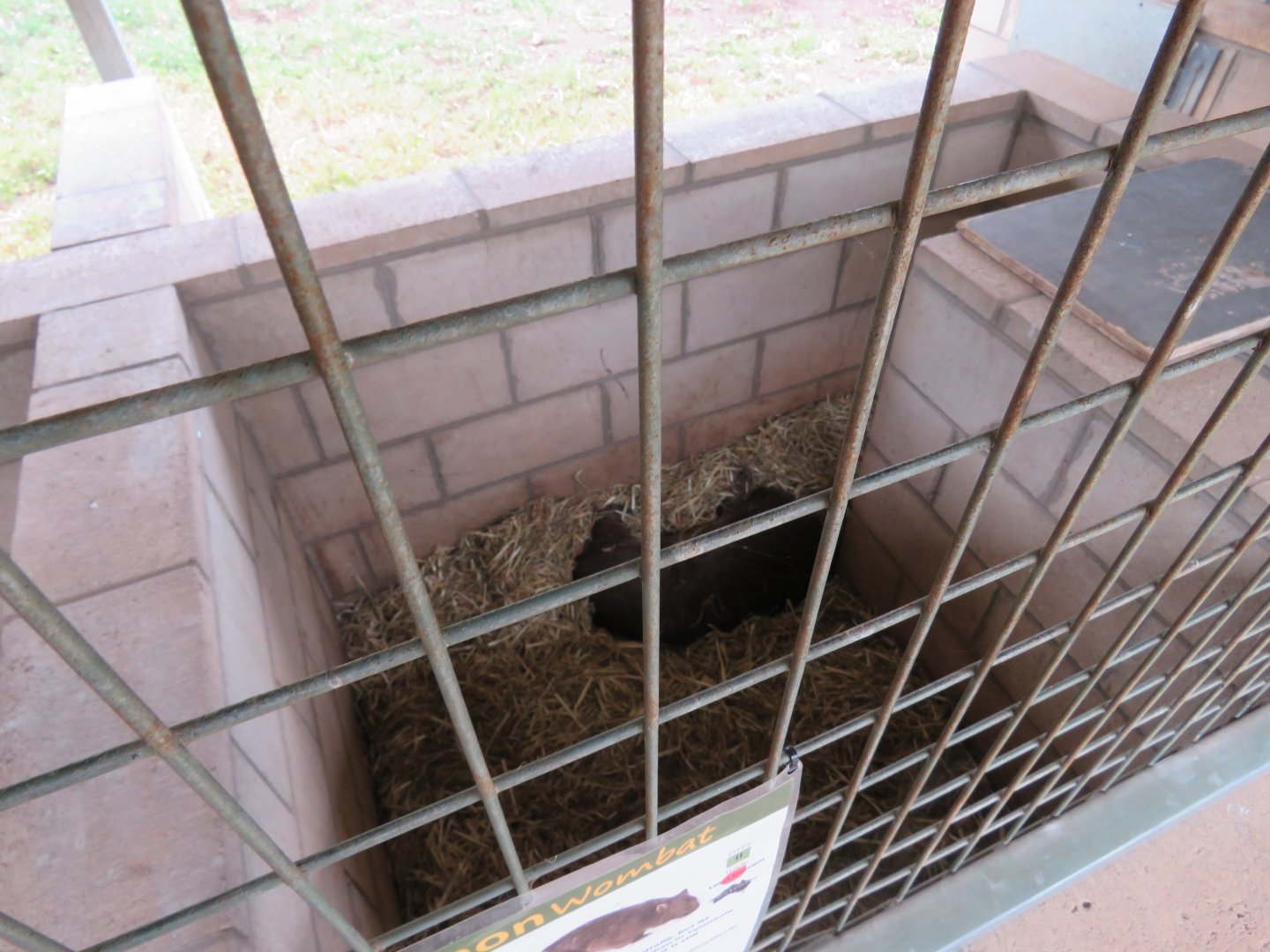
Next door a similar yard was home to some common wombats. This featured a couple of hills and a tree. The dens were of an interesting design with breezeblock walls and an open top which was viewed through a mesh fence. Also housed in this yard were some cape barren geese.
Next to this was the yard which houses some wallabies (I did not note the species) along with the greater rhea. Another yard across from this was home to some emus and red kangaroos.
Across from that yard is the water bird aviary. This is a good-sized aviary which is nice and tall. It features a range of nice sized trees and was home to black winged stilts, torres strait pigeons, white headed pigeons, Wonga pigeons, topknot pigeons, nankeen night herons, spur winged plovers, royal spoonbills, glossy ibis, purple swamphens and lady Amherst pheasant. These were the signed species and there may have been others.
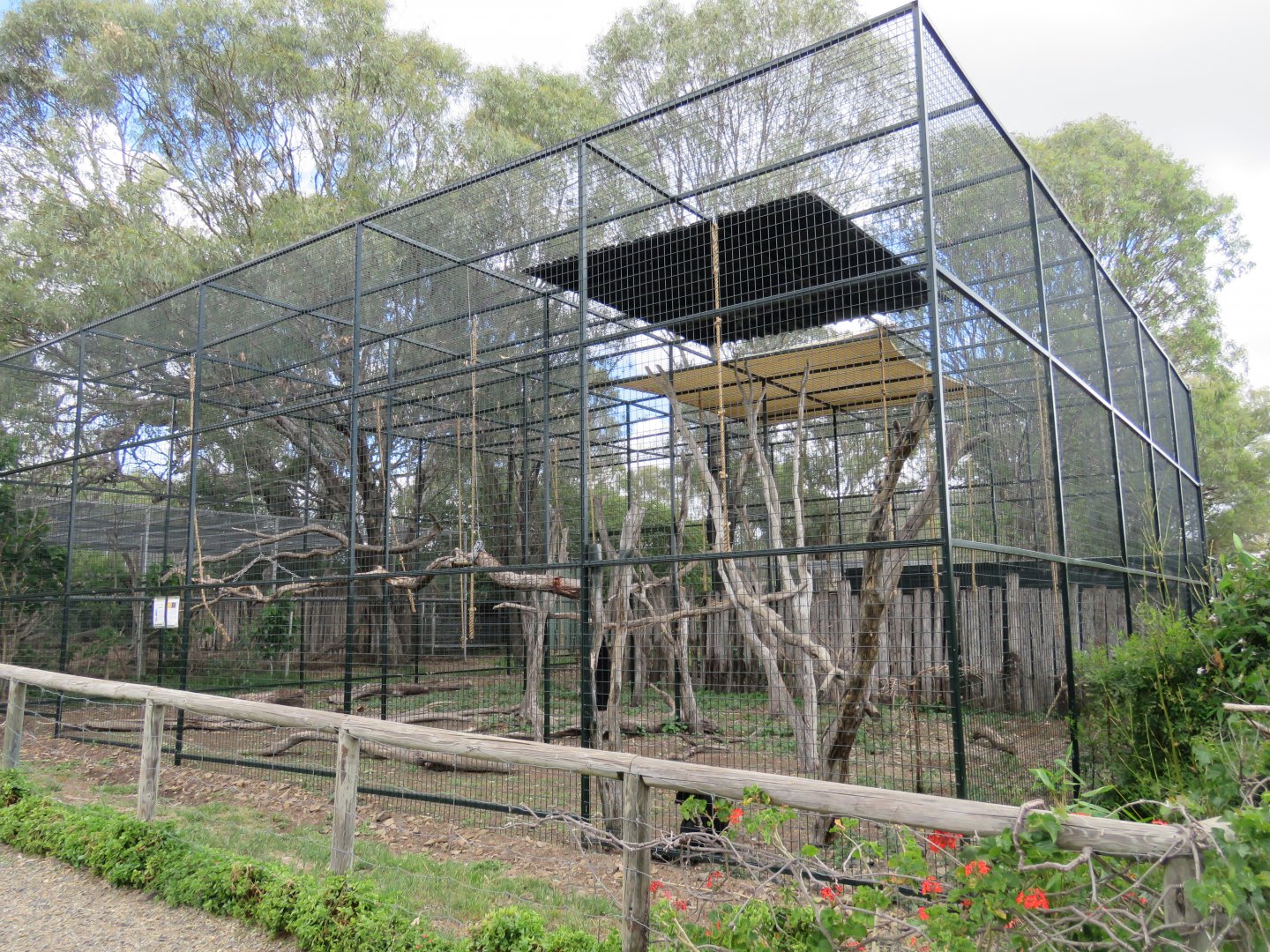
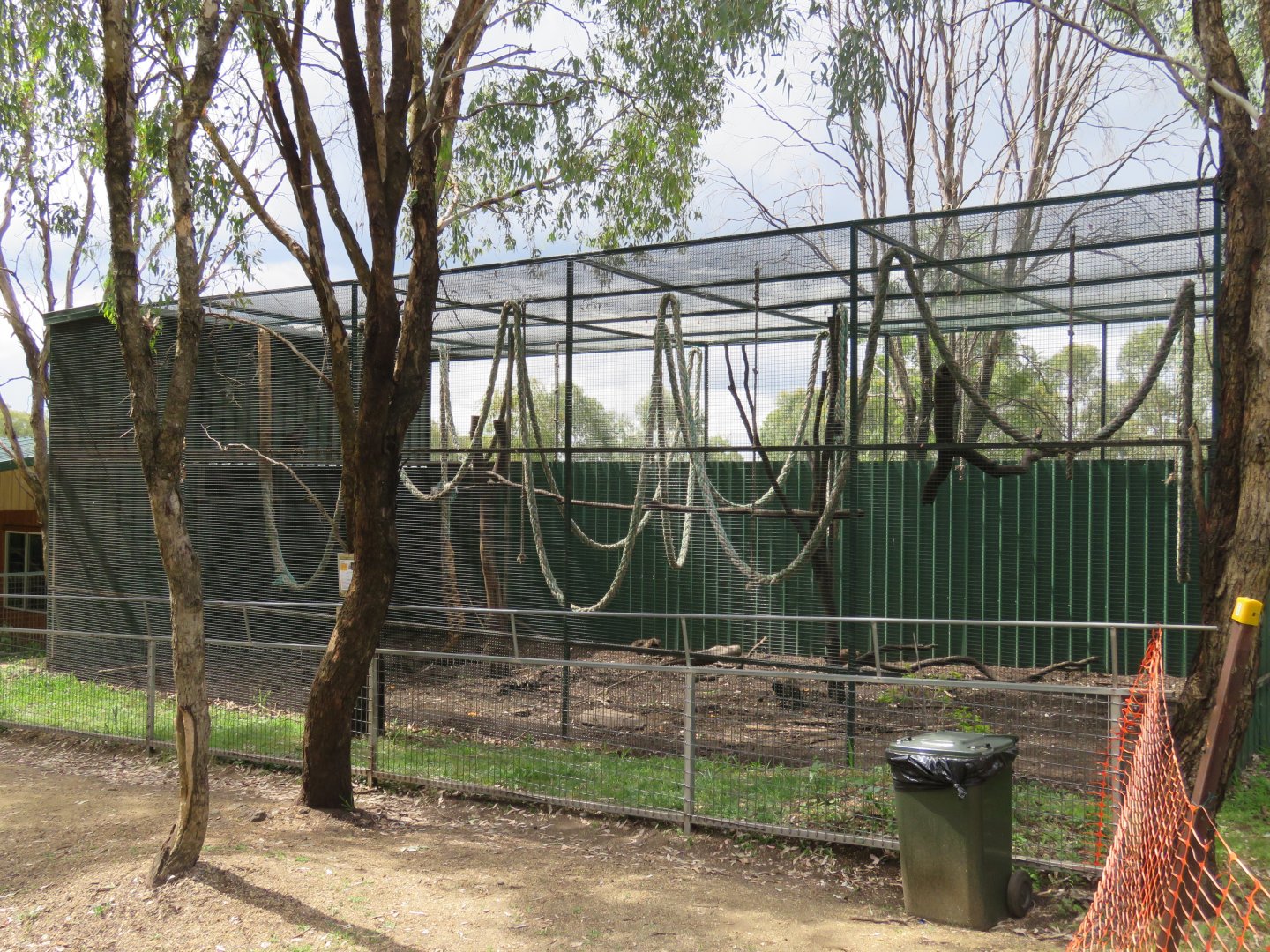
Next is the Asian section. This begins with the siamang exhibit. This is a decent sized aviary style habitat with many branches and ropes from which they can swing. Next door another aviary has the zoo’s troop of rhesus macaques. Further along is the zoo’s tiger yard which is well planted.
Running the length of these three habitats on the other side of the path is a yard for red deer, blackbuck and ostrich. Finishing off the Asian section a small aviary was home to some bleeding-heart pigeons.
From here a short walk through a space allotted for future developments takes you to the new African section which currently houses three species. One is the cheetah. Their complex features one large long yard with a shade shelter. At the end are the house and some small separation yards. Across from this habitat is a spacious giraffe yard. This is a nice size with a large barn at the back. Also sharing this yard are some addax. At the back in a smaller yard I could see some zebra which are marked on the map as being mixed with the giraffe and addax. At the back of the park is a yard for camels which has a small viewing area alongside the giraffe yard.
Coming back down to the other side of the park you pass the yard which houses the llamas and gunaco. The rest of the African section is located on the second side of the circuit. It begins with the meerkat habitat. This is well done with a spacious outdoor yard with a series of logs for them to climb. Next to this is a house with an indoor viewing section plus some more off display housing.
Next to the meerkats are the 2 lion yards. These are nice with grass floors though my preference would be for them to be slightly larger. It was interesting to see my first white lions though.
Across from the lions a large yard housed the main herd of zebras including their 2 foals and a pair of ostrich.
The African exhibit finishes with a hamadryas baboon habitat with a large group which was nice and active making them interesting to watch and the serval habitat. This is a nice aviary style exhibit with wooden cladding and glass viewing windows on the front. Inside are some small trees and logs.
The final section of the park is South America. First is the large yard with a good-sized pond for Brazilian tapir capybara and mara. Next door to this a large aviary housing sun conure, tawny frogmouth, bleeding heart pigeons and the first of the Brazilian agoutis.
Across from these a pair of similar sized aviaries were home to pairs of blue and gold macaw and scarlet macaws. The scarlet macaw aviary was also housing a capybara on the floor who had been causing troubles for the other capybara.
Following the path, you come to the reptile section. On one side of the reptile house an outdoor yard housed some of the zoo’s aldabra giant tortoise collection along with some rhinoceros iguana.
Inside were four habitats for green iguana, boa constrictor, reticulated python and I did not note the fourth species but if I remember correctly it was a yellow anaconda. On the other side of the reptile house is an American alligator exhibit.
Across from here 2 small aviaries house African grey and amazon parrots. Finishing off the South American section was a series of primate exhibits. The first was a large aviary style habitat for a bachelor group of brown capuchins fitted out with a range of branches and ropes.
Next to this a series of three similar aviaries housed pygmy marmosets, cotton top tamarins and emperor tamarins. These were clad on the front with wood and had windows for viewing. Inside were several plants and ropes. These made for nice habitats though the reflections on the glass made viewing slightly difficult.
Across from this a larger aviary featured a large family group of common marmosets. This is one of the best exhibits for the species I have seen with the group being so large that there is plenty of activity going on in the habitat. Also on the ground of this exhibit were the Brazilian agouti including some recent babies.
The final habitats at the zoo are some more Australian species. An aviary housed eclectus parrots, metallic starlings, white browed wood swallows, black winged stilts and rose crowned fruit doves.
A series of three aviaries was home to some owls along with a mixed exhibit housing brush tailed possums, perentie and if I remember correctly there was also a wombat in here. Across the picnic area were the last exhibits I visited home to some lizards and another aviary. Unfortunately, I did not note the species in either.
Darling Downs Zoo is a very nice zoo. In the end I spent 3 hours there and went around 3 times. I spent a large amount of time watching the cheetahs and giraffes and having a look at their exhibit. If development continues to meet the standard of these 2 new habitats the Darling Downs Zoo will develop in to a very nice facility.