Taman Mini Indonesia Indah Taman Mini Indonesia Indah news

One of the paludariums housed a Chinese giant salamander according to this vid:

Interesting.. they're planning on housing X. javanicus, which is a reportedly difficult species to work with, even by local keepers. Looking forward to visiting this place.

Though I appreciate the dedication to naturalism the whole building is sticking to, I can't help but criticize how "samey" they made many of the enclosures, there doesn't seem to be a lot of effort to mimic the natural rockwork and/or foliage where each species comes from (Lots of haphazard bromeliads lol).
 
One of the paludariums housed a Chinese giant salamander according to this vid:
I feel like Chinese giant salamanders are more fitting for Dunia Air Tawar and the paludarium design aren't to great as a display for these interesting species.

A mixed paludarium would work well, maybe a Chinese-themed one with Chinese box turtle and Chinese water dragon.
 
I feel like Chinese giant salamanders are more fitting for Dunia Air Tawar and the paludarium design aren't to great as a display for these interesting species.

A mixed paludarium would work well, maybe a Chinese-themed one with Chinese box turtle and Chinese water dragon.

Good idea on that. I actually suggested DAT to add Chinese giant salamanders, but yeah it was back in 2018 or 2019.
 
As seen on JKTGO, Dunia Air Tawar and Dunia Serangga (Freshwater and Insect World) has started renovation and hopefully it reopens early or mid this year depending on progress. It is not known if the place is closed for public or not, but likely closed. The lake is drained as well, temporarily.

Screenshot_20240126-113629.jpg
 

Attachments

  • Screenshot_20240126-113629.jpg
    Screenshot_20240126-113629.jpg
    81.1 KB · Views: 7
Some more additional sneak peeks of the new DAT/DS from the official Jagad Satwa account. The first 2 is the new waterfall/stream exhibit, which might be no longer housing kois but rather native Indonesian species (presumably) and the last pic is a lake exhibit with a gangplank on it. IDK what will be in there. Kois? Arapaimas and its ilk? More native species? Presumably Arapaimas IMO, or if it's kois, visitors could feed them from the fenced areas or from the gangplank.

upload_2024-1-26_18-30-29.png upload_2024-1-26_18-30-51.png upload_2024-1-26_18-31-28.png
 

Attachments

  • upload_2024-1-26_18-30-29.png
    upload_2024-1-26_18-30-29.png
    411.5 KB · Views: 11
  • upload_2024-1-26_18-30-51.png
    upload_2024-1-26_18-30-51.png
    427.8 KB · Views: 11
  • upload_2024-1-26_18-31-28.png
    upload_2024-1-26_18-31-28.png
    381.1 KB · Views: 11
I went to Dunia Air Tawar and Komodo museum last month. I'm planning to do a proper review and write-up when I have some time to breathe, but for now here is a species list for the Komodo museum as of 16/02/2024

Herpetarium Area:
> King Cobra
> Trimeresurus insularis "blue"
> Trimeresurus insularis "wetar"
> Green Tree Python
> Banded Krait
> Malayan Krait (No show)
> Papuan Biotope: Hysilurus sp., Fly River Turtles, Red-bellied Turtle, NewGuinea Snake-necked turtle. (Signage and social media also suggests Irian Blue-tongue Skink, Lophosaurus sp., and White's Tree Frog)
> Gonocephalus grandis
> Elephant Trunk Snake
> Yellow Anaconda
> Western Diamondback Rattlesnake
> Cyrtodactylus irianjayaensis, Gekko vittatus, and Gehyra vorax (Signed, may be empty)
> Reticulated Python
> Panther Chameleon
> Mexican Spinytailed Iguana
> Carpet Python
> Blue Poison Dart Frog, Yellow and Blue Poison Dart Frog
> Green and Black Poison Dart Frog
> Reinwardt's Flying Frog (Signed, not seen)
> Unknown frog (Unsigned)
> Emerald Tree Skink, Sulawesi Forest Turtle, Sulawesi Spiny Water Skink

Additional notes:
> The Bornean eared monitor, Matamata and Giant salamander are no longer there and no longer signed
> An axolotl enclosure is in the map, but the enclosure is not there
> I'm fairly certain the enclosure cohabiting the 3 geckos is now empty. The only individual I could find was a Irian Jaya Gecko which was lying on the floor being inspected by ants, which probably means it was deceased.

Will list the species list for Zona Sauria, Zona Crocodilia and Zona Testudines soon
 
I went to Dunia Air Tawar and Komodo museum last month. I'm planning to do a proper review and write-up when I have some time to breathe, but for now here is a species list for the Komodo museum as of 16/02/2024

Herpetarium Area:
> King Cobra
> Trimeresurus insularis "blue"
> Trimeresurus insularis "wetar"
> Green Tree Python
> Banded Krait
> Malayan Krait (No show)
> Papuan Biotope: Hysilurus sp., Fly River Turtles, Red-bellied Turtle, NewGuinea Snake-necked turtle. (Signage and social media also suggests Irian Blue-tongue Skink, Lophosaurus sp., and White's Tree Frog)
> Gonocephalus grandis
> Elephant Trunk Snake
> Yellow Anaconda
> Western Diamondback Rattlesnake
> Cyrtodactylus irianjayaensis, Gekko vittatus, and Gehyra vorax (Signed, may be empty)
> Reticulated Python
> Panther Chameleon
> Mexican Spinytailed Iguana
> Carpet Python
> Blue Poison Dart Frog, Yellow and Blue Poison Dart Frog
> Green and Black Poison Dart Frog
> Reinwardt's Flying Frog (Signed, not seen)
> Unknown frog (Unsigned)
> Emerald Tree Skink, Sulawesi Forest Turtle, Sulawesi Spiny Water Skink

Additional notes:
> The Bornean eared monitor, Matamata and Giant salamander are no longer there and no longer signed
> An axolotl enclosure is in the map, but the enclosure is not there
> I'm fairly certain the enclosure cohabiting the 3 geckos is now empty. The only individual I could find was a Irian Jaya Gecko which was lying on the floor being inspected by ants, which probably means it was deceased.

Will list the species list for Zona Sauria, Zona Crocodilia and Zona Testudines soon

Hopefully the Chinese giant salamander gets moved to Dunia Air Tawar once it's fully revitalized
 
Hopefully the Chinese giant salamander gets moved to Dunia Air Tawar once it's fully revitalized
About that.. I believe the revitalization of the area is almost complete. I asked the staff and the only thing they need to do now is to create a new cafe area. I didn't see any giant salamander or any herp species within the Dunia Air Tawar
 
About that.. I believe the revitalization of the area is almost complete. I asked the staff and the only thing they need to do now is to create a new cafe area. I didn't see any giant salamander or any herp species within the Dunia Air Tawar

Nothing about the Arapaimas? Where are they going?
Also, the swamp/marsh exhibit which also connected to the Resto Bakau restaurant houses arowanas (silver very likely) and stingrays, and unidentified small white fish (likely butterfly kois or tilapias), almost resembling a Brazilian wetland/pantanal. Hoping there's a feeding show where diners can see the arowanas hopping for food.

Screenshot_20240310-112955.jpg
 

Attachments

  • Screenshot_20240310-112955.jpg
    Screenshot_20240310-112955.jpg
    91.5 KB · Views: 4
Nothing about the Arapaimas? Where are they going?
Also, the swamp/marsh exhibit which also connected to the Resto Bakau restaurant houses arowanas (silver very likely) and stingrays, and unidentified small white fish (likely butterfly kois or tilapias), almost resembling a Brazilian wetland/pantanal. Hoping there's a feeding show where diners can see the arowanas hopping for food.

Nope, have not seen them
There actually weren't many staff on duty that day that I could ask questions to, probably because I visited on a weekday morning
 
Nope, have not seen them
There actually weren't many staff on duty that day that I could ask questions to, probably because I visited on a weekday morning

I see
I just hope they'll start working on the Arapaimas' new exhibit soon, which will replace the back paludarium
 
Zona Sauria
> Varanus doreanus and Varanus cumingi(?)
> Red eared Slider and Sulawesi Sailfin Lizard
> Varanus beccarii, Varanus prasina and a yellow Varanid
> Varanus salvator komaini
> Varanus salvadorii
> Cuban Rock Iguana
> Rhinoceros Iguana
> Blue Tongued Skink

Zona Crocodilia
> Saltwater Crocodile
> Albino Saltwater Crocodile
> Siamese Crocodile
> Common Snapping Turtle
> False Gharial

Zona Testudines
> Sulcata Tortoise
> Leopard Tortoise
> Pancake Tortoise (Unsigned)
> Alligator Snapping Turtle
> Common Snapping Turtle
> Redfooted Turtle
> Heosemys spinosa
> Amyda cartilaginea
> Bornean River Turtle

Komodo Area
> Komodo Dragons (4 enclosures with an adult in some, and sub-adults in others)

Interactable Animals
> Reticulated Python
> Green Iguana

Additional notes:
> I forgot to mention that in the herpetarium, many of the larger vivariums have white mould growing on the branches. Likely due to stagnant air despite the fact that they have fans running at the top of the enclosure.
> The crocodile area DOES have one large enclosure with underwater viewing. Hilariously, there wasn't a crocodilian in sight, but instead a tiny (around 15cm long) Common Snapper which swam up to greet me as I inspected the enclosure.


Overall. I'm personally more fond of the outdoor enclosures than the indoor enclosures overall. They're quite large and give plenty of space for species that aren't traditionally kept in larger spaces such as Alligator Snapper, Water Monitor and others. They also provide shelter areas for each animal, though I suspect this is just to protect them from the rain.
 
Dunia Air Tawar recently re-acquired american paddlefish (polyodon spathula). They brought it from Buddyfish who's a predator-fish seller and also a youtuber. As seen in the video, the fishes were immediately quarantined at the quarantine house because the fish had just arrived. Since the fishes were still small, looks like the fishes will be raised in the quarantine house and it will be displayed when the fishes got larger. I hope Dunia Air Tawar also brought more rare fishes from him like crenicichlas or firewood catfishes since Buddyfish also sells those rare fishes.
 
Last edited:
Dunia Air Tawar recently re-acquired american paddlefish (polyodon spathula). They brought it from Buddyfish who's a predator-fish seller and also a youtuber. As seen in the video, the fishes were immediately quarantined at the quarantine house because the fish had just arrived. Since the fishes were still small, looks like the fishes will be raised in the quarantine house and it will be displayed when the fishes got larger. I hope Dunia Air Tawar also brought more rare fishes from him like crenicichlas or firewood catfishes since Buddyfish also sells those rare fishes.

I just hope they re-aquire sturgeons (hoping for Russian sturgeons like in BXSea since now that they're getting commoner here among private keepers) to go with the paddlefishes.
 
I just hope they re-aquire sturgeons (hoping for Russian sturgeons like in BXSea since now that they're getting commoner here among private keepers) to go with the paddlefishes.
Well, Buddyfish used to sell russian sturgeons back in 2023. I hope Dunia Air Tawar immediately acquired the sturgeons when Buddyfish started resell the sturgeons.
 
Some interesting snippets from Dunia Air Tawar (March 2024).

Dunia Air Tawar
  • The aquarium's entrance and well-known tunnel tanks as dismantled, in turned becoming a prehistoric sea diorama with an dunkleosteus replica and a couple projected screens which plays some video about sea and freshwater lifes. Additionaly an large fully-scaped tank was present, though at the time of the video recording it was still empty. Its possible that this tank is one of the remnant of the large tunnel aquarium.
  • The gourami corner was seemingly dismantled as well, though there was a plan to revamp this section of the aquarium into an amphibian corner in the past with axolotls. No more update regarding this plan.
  • The large indoor pond received some minor scaping with some additions of rocks and woods as well as plants around the background. The pirarucus weren't present, but instead an large redtail catfish became the pond's sole occupant. This individual could also possibly a former inhabitant of the tunnel aquarium.
  • The aquarium's arowana tanks was completely dismantled. Replacing them was an large L-shaped scaped aquarium with smaller fishes
  • On the second floor, the tanks housing silver scats and goonch catfish, separately, were also dismantled. Only an mounted pirarucu skeloton was present.
  • The aquarium's indoor waterfall received major scaping with more plants and foliage in and around the area. A bunch of albino tinfoil barbs inhabited the pond, plans to add mahseer and other native fishes to this section might come later.
  • The aquarium's archerfish pond were seemingly still under reconstruction or possibly even fully dismantled, I'm not sure on which
  • A new, scaped tank was still yet to be unveiled, though it was rumored to be the aquarium's new pirarucu tank.
  • Several species and tanks from the entrance were moved all the way back near the larger indoor ponds, which include a tank for black ghost knifefish as well as a tank for leucistic giant gourami and giant red-tailed gourami from the former gourami corner along with a couple of tilapias.
The rest of the aquarium after that doesn't seem to have significant changes from the previous pre-Jagat Satwa era, aside from better lightings and minor scaping for most of the the tanks. Despite this fact, several new species were added or re-added which include (Exluding the paddlefish that were previously reported):
  • Hemiarius stormii
  • Horabagrus brachysoma
  • Neoarius graeffei
  • Lates calcarifer
The Nusantara Aquarium are also still present and also received minor changes as well, here's the update on the interesting fishes displayed there based on the video that are attached below:
  • West Sumatra: Rasbora argyrotaenia
  • Aceh: Rasbora myersi and epalzeorhynchos kalopterus
  • North Sumatra: Tor tambroides
  • South Sumatra: Labeo chrysophekadion
  • Bengkulu: Puntigrus tetrazona
  • Riau: Trigonostigma heteromorpha
  • South Sumatra: Desmopuntius rhomboocellatus
  • Bangka Belitung: Rasbora sp.
  • Jambi: Channa pleurophtalma
  • Jakarta: Belontia hasselti
  • Banten: Hemibagrus nemurus
  • West Java: Oryzias sp.
  • Central Java: Osteochilus vittatus
  • East Java: Hampala macrolepidota
  • Yogyakarta: Rasbora argyrotaenia
  • Bali: Nemacheilus sp.
  • West Nusa Tenggara: Monodactylus kottelati
  • East Nusa Tenggara: Lutjanus argentimaculatus
  • West Kalimantan: Rasbora trilineata
  • South Kalimantan: Puntioplites bulu
  • Central Kalimantan: Balantiocheilos melanopterus
  • East Kalimantan: Pristolepis fasciatus
  • South Sulawesi: Marosatherina ladigesi
  • Southeast Sulawesi: Pseudomugil sp.
  • Central Sulawesi: Pseudomugil gertrudae
  • Gorontalo: Oxyeleotris marmorata
  • North Sulawesi: Giuris margaritacea
  • North Maluku: Rhinogobius sp.
  • Maluku: Ophiocara porocephala
  • West Papua: Glossolepis incisa
  • Papua: Mogurnda mogurnda
A couple of paludariums were also present, one displaying a group of barbodes binotatus while the other displays three to four melanotaenia boesemani.

Video source

 
I've visited Jagat Satwa Nusantara today (28/07/24), here's some update:

Bird Park/Taman Burung
  • Jagat Satwa Nusantara has proudly claimed themself as the first and currently only Indonesian park to have the golden eagle. The eagle is displayed in the bird show, seemingly replacing the Harris's hawk.
  • Presumebly several freshwater stingray has been added to the riverine area of the park, after an ocellate river stingray is spotted.
  • The park's lone lesser adjutant on display seems to had been pulled off-display.
  • The cassowary exhibit seems to have been closed off for unknown reason, though an red-necked cassowary is still present there.
  • The small walkthrough aviary that previous houses domestic pigeons during the pre-Jagat Satwa era now underwent a massive upgrade, now having eclectus parrots, bar-shouldered dove, pitohui, rose-crowned fruit dove, and iris lorikeet, among others.
Museum Komodo
  • Several albino tiger salamanders has been added as the park's newest roster in an paludarium next to the one housing rhacophorus reinwardtii and feihyla vittiger.
  • An hypsilurus magnus has occupy the former axolotl paludarium. It was a rather big exhibit, could've had another individual or species.
  • In the tree monitor exhibit, a pair of Timor monitor has been added inhabiting the ground level of the exhibit.
  • The gecko terrarium has seemingly be empty, with no signage as well. I wonder what will it houses in the future.
  • An emerald tree boa has become another of the park's newest roster, next to the morelia azurea pulcher.
Dunia Air Tawar
  • The remnant of the former tunnel aquarium has been separated into two aquarium. One have an Asian arowana while the other have a pair of lungfish, each of different species (Marbled and South American).
  • The indoor pond that previously houses arapaima has been landscaped and has been planned to house sturgeon in the future.
  • In the L-shaped tank, which has now been focused to showcase aquatic plants, houses the park's dwarf pufferfish.
  • Some of the tanks in the first few tanks has underwent massive upgrade through landscaping, lighting, and theming. These tanks are;
    • Scleropages formosus + Hemibagrus nemurus + datnioides microlepis + Barbonymus schwanenfeldii + Osphronemus goramy + Wallagonia leeri + Channa marulioides
    • Tor douronensis + Chromobotia macracanthus + Chitala hypselonotus + Pao palembangensis
    • Balantiocheilos melanopterus + Puntigrus tetrazona + Trigonostigma heteromorpha + Rasbora trilineata + Macrobrachium rosenbergii + Unidentified danio/tetra species
    • Osteochilus melanopleura + Osphronemus septemfasciatus
    • Notopterus notopterus + Hemibagrus hoevenii + Osphronemus goramy
    • Nemacheilus fasciatus + Helostoma temminckii + Rasbora argyrotaenia
    • Barbodes binotatus + Butis butis + Unidentified goby species
    • Lates calcarifer + Neoarius graffei + Megalops cyprinoides + Neosilurus novaeguineae
    • Scleropages jardinii + Hephaestus carbo
    • Melanotaenia boesemani + Several other unidentified rainbowfish species
  • The rest of the aquarium doesn't seems to underwent anything significant, aside from the return of mormyrus longirostris, though things might change in the coming future and upgrades for these areas coe later on.
  • The aquarium has added four young Mekong giant catfish for display.
 
I've visited Jagat Satwa Nusantara today (28/07/24), here's some update:

Bird Park/Taman Burung
  • Jagat Satwa Nusantara has proudly claimed themself as the first and currently only Indonesian park to have the golden eagle. The eagle is displayed in the bird show, seemingly replacing the Harris's hawk.
  • Presumebly several freshwater stingray has been added to the riverine area of the park, after an ocellate river stingray is spotted.
  • The park's lone lesser adjutant on display seems to had been pulled off-display.
  • The cassowary exhibit seems to have been closed off for unknown reason, though an red-necked cassowary is still present there.
  • The small walkthrough aviary that previous houses domestic pigeons during the pre-Jagat Satwa era now underwent a massive upgrade, now having eclectus parrots, bar-shouldered dove, pitohui, rose-crowned fruit dove, and iris lorikeet, among others.
Museum Komodo
  • Several albino tiger salamanders has been added as the park's newest roster in an paludarium next to the one housing rhacophorus reinwardtii and feihyla vittiger.
  • An hypsilurus magnus has occupy the former axolotl paludarium. It was a rather big exhibit, could've had another individual or species.
  • In the tree monitor exhibit, a pair of Timor monitor has been added inhabiting the ground level of the exhibit.
  • The gecko terrarium has seemingly be empty, with no signage as well. I wonder what will it houses in the future.
  • An emerald tree boa has become another of the park's newest roster, next to the morelia azurea pulcher.
Dunia Air Tawar
  • The remnant of the former tunnel aquarium has been separated into two aquarium. One have an Asian arowana while the other have a pair of lungfish, each of different species (Marbled and South American).
  • The indoor pond that previously houses arapaima has been landscaped and has been planned to house sturgeon in the future.
  • In the L-shaped tank, which has now been focused to showcase aquatic plants, houses the park's dwarf pufferfish.
  • Some of the tanks in the first few tanks has underwent massive upgrade through landscaping, lighting, and theming. These tanks are;
    • Scleropages formosus + Hemibagrus nemurus + datnioides microlepis + Barbonymus schwanenfeldii + Osphronemus goramy + Wallagonia leeri + Channa marulioides
    • Tor douronensis + Chromobotia macracanthus + Chitala hypselonotus + Pao palembangensis
    • Balantiocheilos melanopterus + Puntigrus tetrazona + Trigonostigma heteromorpha + Rasbora trilineata + Macrobrachium rosenbergii + Unidentified danio/tetra species
    • Osteochilus melanopleura + Osphronemus septemfasciatus
    • Notopterus notopterus + Hemibagrus hoevenii + Osphronemus goramy
    • Nemacheilus fasciatus + Helostoma temminckii + Rasbora argyrotaenia
    • Barbodes binotatus + Butis butis + Unidentified goby species
    • Lates calcarifer + Neoarius graffei + Megalops cyprinoides + Neosilurus novaeguineae
    • Scleropages jardinii + Hephaestus carbo
    • Melanotaenia boesemani + Several other unidentified rainbowfish species
  • The rest of the aquarium doesn't seems to underwent anything significant, aside from the return of mormyrus longirostris, though things might change in the coming future and upgrades for these areas coe later on.
  • The aquarium has added four young Mekong giant catfish for display.
I need to go to TMII soon seeing the massive update it's been getting. Hopefully the rest of DAT gets worked on soon, and it seems the first half of the area now focuses on local fishes from Indonesia, as well as ancient fishes.
 
The park's lone lesser adjutant on display seems to had been pulled off-display.

I believe there are still Lesser Adjutants roaming the parks, right? An acquaintance saw a pair all the way in Dunia Air Tawar.

An hypsilurus magnus has occupy the former axolotl paludarium. It was a rather big exhibit, could've had another individual or species.

Are you able to confirm that the multiple agamids displayed in the Papuan Biotope is also Hypsilurus magnus?

The gecko terrarium has seemingly be empty, with no signage as well. I wonder what will it houses in the future.

This seemingly confirms what I saw last time then, that the inhabitants were moved/deceased. I believe the exhibit could benefit from a less flighty arboreal species like a Tokay or Smith's gecko.
 
I believe there are still Lesser Adjutants roaming the parks, right? An acquaintance saw a pair all the way in Dunia Air Tawar.


Are you able to confirm that the multiple agamids displayed in the Papuan Biotope is also Hypsilurus magnus?


This seemingly confirms what I saw last time then, that the inhabitants were moved/deceased. I believe the exhibit could benefit from a less flighty arboreal species like a Tokay or Smith's gecko.
1. I've circled around the bird park like three time during my visit and the adjutants are nowhere to be seen. Though I remember watching a video and learn that the adjutants prior to the Jagat Satwa rebranding weren't wing-clipped, so they're not only be able to roam around the Bird Park, but even also be able to fly over Taman Mini Indonesia Indah. That kind of explain why they're spotted in DAT, but though that don't explain much about their absence post-Jagat Satwa despite being very predominat prior to that.

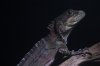
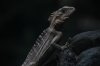
2. Physicaly, these two are different, though both maybe still are part of hypsilurus. It's not a lophosaurus as well. The fact that the Papuan biotope didn't have any signage despite being the centerpiece didn't help at all at IDing the agamid in that biotope. These are the picture of those individuals if you're interested:

The signed hypsilurus magnus:
IMG_0979.JPG


The unsigned agamid in the Papuan biotope:
IMG_0997.JPG

3. The exhibit, though vacant, is quite pretty with those three, thick branches. Also wish to see it filled with native, rarely displayed reptiles (Hoping for a chance Museum Komodo displaying xenopeltis unicolor or calliophis bivirgatus).
 

Attachments

  • IMG_0979.JPG
    IMG_0979.JPG
    134.6 KB · Views: 58
  • IMG_0997.JPG
    IMG_0997.JPG
    125.9 KB · Views: 57
Back
Top