Taman Mini Indonesia Indah Taman Mini Indonesia Indah news

Both agamids are still quite similar, perhaps different species or different life stages? I'm unfortunstely not very familiar with this genus

The exhibit, though vacant, is quite pretty with those three, thick branches. Also wish to see it filled with native, rarely displayed reptiles (Hoping for a chance Museum Komodo displaying xenopeltis unicolor or calliophis bivirgatus).

It's a beautiful enclosure for sure, all of the vivariums for Museum Komodo are, in my opinion (appropriateness for the species aside). I just wish that it provides a bit more shade/shelter, as having the enclosure be exposed on all sides would surely be stress-inducing for a lot of species. The flying lizards, Draco, would also be fairly appropriate for the enclosure if they were provided some place to retreat.
 
Both agamids are still quite similar, perhaps different species or different life stages? I'm unfortunstely not very familiar with this genus
I've done research, after a bit of physical comparison, it looks like the agamid in the Papuan biotope during my visit is an hypsilurus godeffroyi.
 
Jagat Satwa has partook in a release program to commemorate Indonesia's national nature conservation day and world's mangrove day. After a long habituation period, Jagat Satwa and BKSDA released a large group of eastern cattle egret, Javan pond heron, and black-crowned night heron into the Muara Angke wildlife reserve.

Reference
JAGAT SATWA NUSANTARA on Instagram: "Hai #sobatjagat, Dalam rangka Road to Hari Konservasi Alam Nasional (HKAN) 2024 & Action Indonesia Day. Jagat Satwa Nusantara sebagai salah satu Lembaga Konservasi turut berpartisipasi dengan melepasliarkan beberapa satwa kembali ke habitatnya di alam. Dengan penuh semangat, kita melihat burung-burung kembali ke alam bebas, memberikan harapan baru bagi ekosistem. Ada tiga jenis burung yang berhasil dilepasliarkan yaitu Kowak Malam Abu, Kuntul Kerbau, dan Blekok Sawah. Mau tau seperti apa burung-burung ini? yuk kita lihat lebih dekat. #SobatJagat #JagatSatwaNusantara #JagatSatwa #JagatSavanna #JagatLangit #JagatAir #JSN #TMII #TamanMiniIndonesiaIndah #PesonaJagatSatwaNusantara #WajahBaruTMII #TamanJelajahIndonesia #TMIISeruGaAdaHabisnya #lepasliarsatwa #HKAN #ActionIndonesia #ActionIndonesiaDay"

JAGAT SATWA NUSANTARA on Instagram: "Hai #sobatjagat, sebelum melakukan pelepasliaran satwa di Suaka Marga Satwa Muara Angke, burung Kowak Malam Abu, Kuntul Kerbau, dan Blekok Sawah melewati proses habituasi. Proses ini bertujuan agar satwa dapat beradaptasi dengan lingkungan alaminya sebelum dilepasliarkan. Selain itu, satwa yang melalui proses habituasi juga akan menjalani pengecekan kesehatan untuk memastikan mereka dalam kondisi sehat dan layak dilepasliarkan. #sobatjagat, mau tahu seperti apa proses habituasi itu? Yuk, ikuti terus! #SobatJagat #JagatSatwaNusantara #JagatSatwa #JagatSavanna #JagatLangit #JagatAir #JSN #TMII #TamanMiniIndonesiaIndah #PesonaJagatSatwaNusantara #WajahBaruTMII #TamanJelajahIndonesia #TMIISeruGaAdaHabisnya #lepasliarsatwa #HKAN #ActionIndonesia #ActionIndonesiaDay"

JAGAT SATWA NUSANTARA on Instagram: "Hai #sobatjagat, Acara pelepasliaran satwa di Suaka Margasatwa Muara Angke dalam rangka Road to Hari Konservasi Alam Nasional yang juga bertepatan dengan Hari Mangrove Sedunia berjalan dengan penuh keseruan dan semangat. Kegiatan ini tidak hanya berfokus pada pelepasliaran satwa, tetapi juga mencakup penanaman mangrove, yang mendapat antusiasme tinggi dari berbagai kalangan yang peduli terhadap pelestarian alam. Atmosfer acara penuh dengan kegembiraan dan semangat menunjukkan harapan besar dari para peserta bahwa satwa yang dilepasliarkan dapat hidup dan berkembang dengan baik di habitat alaminya. Selain itu, penanaman mangrove diharapkan dapat memberikan manfaat jangka panjang bagi kelestarian lingkungan sekitar. Jagat Satwa Nusantara berterima kasih kepada @Balai_ksdajakarta, @Dyandraglobal @tmiiofficial @dehakims_official yang telah mendukung terselenggaranya kegiatan pelepasliaran satwa ke habitatnya. SobatJagat #JagatSatwaNusantara #JagatSatwa #JagatSavanna #JagatLangit #JagatAir #JSN #TMII #TamanMiniIndonesiaIndah #PesonaJagatSatwaNusantara #WajahBaruTMII #TamanJelajahIndonesia #TMIISeruGaAdaHabisnya #lepasliarsatwa #HKAN #ActionIndonesia #ActionIndonesiaDay #Harimangrovesedunia"
 
I don't know if it was mentioned before, but I noticed two ferruginous partridges (Caloperdix oculeus) in TMII Bird Park. They were free-walking on the ground in the largest walkthrough.
 
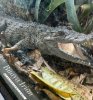
The white saltwater crocodile has been moved to its new, larger exhibit which I'm aware was previously a habituation exhibit for the park's false gharial and presumebly other crocodilians. It was moved in order to accelarate its growt, arguing that a larger exhibit might help with that.

Unlike its previous glassed exhibit, this new exhibit has a rather limited view through chain-link fences that were also confined around wooden fences. Its not known and announced what the previous exhibit will be inhabited by, the park has history in keeping a New Guinean crocodile and smooth-fronted caiman.

Reference
JAGAT SATWA NUSANTARA on Instagram: "Hai #sobatjagat, Keberanian dan keahlian bersatu saat Tim Jagat Satwa Nusantara memindahkan buaya albino di Museum Komodo ke enclosure barunya . Karena tubuhnya yang semakin besar, sang predator cantik ini akhirnya mendapat rumah yang lebih luas dan nyaman. Proses pemindahan yang menegangkan ini dilakukan oleh para ahli, dan pastinya terus memperhatikan keselamatan satwa dan tim. yuk #sobatjagat kita saksikan momen seru ini dan lihat betapa pentingnya menjaga habitat satwa di Jagat Satwa Nusantara. #SobatJagat #JagatSatwaNusantara #JagatSatwa #JagatSavanna #JagatLangit #JagatAir #JSN #TMII #TamanMiniIndonesiaIndah #PesonaJagatSatwaNusantara #WajahBaruTMII #TamanJelajahIndonesia #TMIISeruGaAdaHabisnya #crocodilusporosus #buayaalbino"
 
The white saltwater crocodile has been moved to its new, larger exhibit which I'm aware was previously a habituation exhibit for the park's false gharial and presumebly other crocodilians. It was moved in order to accelarate its growt, arguing that a larger exhibit might help with that.

Unlike its previous glassed exhibit, this new exhibit has a rather limited view through chain-link fences that were also confined around wooden fences. Its not known and announced what the previous exhibit will be inhabited by, the park has history in keeping a New Guinean crocodile and smooth-fronted caiman.

Reference
JAGAT SATWA NUSANTARA on Instagram: "Hai #sobatjagat, Keberanian dan keahlian bersatu saat Tim Jagat Satwa Nusantara memindahkan buaya albino di Museum Komodo ke enclosure barunya . Karena tubuhnya yang semakin besar, sang predator cantik ini akhirnya mendapat rumah yang lebih luas dan nyaman. Proses pemindahan yang menegangkan ini dilakukan oleh para ahli, dan pastinya terus memperhatikan keselamatan satwa dan tim. yuk #sobatjagat kita saksikan momen seru ini dan lihat betapa pentingnya menjaga habitat satwa di Jagat Satwa Nusantara. #SobatJagat #JagatSatwaNusantara #JagatSatwa #JagatSavanna #JagatLangit #JagatAir #JSN #TMII #TamanMiniIndonesiaIndah #PesonaJagatSatwaNusantara #WajahBaruTMII #TamanJelajahIndonesia #TMIISeruGaAdaHabisnya #crocodilusporosus #buayaalbino"
Photo from Instagram suggest that Jagat Satwa have put their New Guinean crocodile (Either novaeguinae or halli) on display for the first time since the rebranding. It can be safely assumed that the individual had took over the glassed exhibit previously housing the white saltwater crocodile.

IMG_20240826_204140.jpg
 

Attachments

  • IMG_20240826_204140.jpg
    IMG_20240826_204140.jpg
    220.1 KB · Views: 90
It appears the show in the Bird Park will now entirely focus on birds-of-prey, branded as "Jagat Raptor". Previously, eclectus parrots, cockatoos, macaws, kookaburra, and hornbills were part of the show. The park's Harris's hawk will be displayed once again after a while in this new BoP focused show.

Additionaly, Jagat Satwa has showcased two of their owl collection, which include spotted wood owl and interestingly an Sulawesi masked owl (Tyto rosenbergii), the latter is presumebly a very new species in the park's history and very rarely kept in Indonesian zoos or bird parks (I'm aware Surabaya had kept them in the past). The "Owl House" is signed for the Pacific barn owl, which are rarely present. The Bird Park displayed barred eagle-owl and buffy fish owl pre-Jagat Satwa in a specific owl complex, it can be assumed these two species are kept off-display.

Source
JAGAT SATWA NUSANTARA on Instagram: "Hai #sobatjagat, Yuk, ikuti perjalanan seru bersama kami untuk mengenal burung pemangsa yang menakjubkan ini! Berbagai elang gagah menunjukkan kemampuan berburu yang memukau. Pengalaman seru ini akan membawa kamu lebih dekat dengan para Raja langit yang keren ini. Jangan sampai kelewatan ya! JAGAT RAPTOR Mulai 15 September 2024 Di Amphitheater Maleo #SobatJagat #JagatSatwaNusantara #JagatSatwa #JagatSavanna #JagatLangit #JagatAir #JSN #TMII #TamanMiniIndonesiaIndah #PesonaJagatSatwaNusantara #WajahBaruTMII #TamanJelajahIndonesia #TMIISeruGaAdaHabisnya #Eagle #Raptor #Birds #FlightExperience"

JAGAT SATWA NUSANTARA on Instagram: "Hai #sobatjagat, Burung hantu yang satu ini merupakan satwa endemik di pulau Sulawesi lho, dia adalah Serak Sulawesi (Tyto rosenbergii) . Dengan panjang tubuh sekitar 33–39 cm dan rentang sayap mencapai 85–95 cm, Serak Sulawesi memiliki bulu coklat dengan bercak putih dan wajah berbentuk hati, yang merupakan ciri khas genus Tyto. Sebagai pemangsa nokturnal, mereka memakan mamalia kecil, burung, reptil, dan serangga. Suara panggilan mereka yang menyeramkan menambah daya tarik dari satwa ini. Selain itu, Serak Sulawesi memainkan peran ekologis penting sebagai predator puncak, membantu mengontrol populasi mamalia kecil seperti tikus dan menjaga keseimbangan ekosistem di wilayahnya. Yuk #sobatjagat tambah terus pengetahuan tentang satwa bersama Jagat Satwa Nusantara. #SobatJagat #JagatSatwaNusantara #JagatSatwa #JagatSavanna #JagatLangit #JagatAir #JSN #TMII #TamanMiniIndonesiaIndah #PesonaJagatSatwaNusantara #WajahBaruTMII #TamanJelajahIndonesia #TMIISeruGaAdaHabisnya #seraksulawesi #burunghantu #owl #owls"
 
What species of sturgeon are present in Indonesia?
Does this have any (undesirable) effects on the local fish fauna?
( viz also establishment of arapaima in Indonesia and SE Asia).


NOTA BENE: In Continental Europe have issues with ornamental pond gardens where ppl buy sturgeons of what not species from the local garden center .... and as they get to big chove them off to the local pond or river. This constitutes invasive / non endemic species introductions that will threaten the local surgeon species (and from their re-establishment given the rate at which releases are taking place vs fully. grown sturgeon of non-native species not being investigated with positive conservation action).
 
What species of sturgeon are present in Indonesia?
Does this have any (undesirable) effects on the local fish fauna?
( viz also establishment of arapaima in Indonesia and SE Asia).

As of now, I've only seen Russian Sturgeon (Acipenser gueldenstaedtii) being sold in online markets. I believe the risk of this species and sturgeons in general being invasive in Indonesia is quite low, as these animals are still quite limited and expensive to buy, as well the tropical temperatures may make it difficult to breed.

We do have an extensive invasive fish problem in Indonesia, with Arapaima, South-American stingrays, Convict cichlids, Red devil cichlids and many others being found in increasingly greater numbers in rivers and lakes. Some of these fish including Arapaima and Alligator Gars are now illegal to keep in Indonesia, but others like Nile Tilapia are still often released into waterways due to their value as a food fish, it's a whole mess.
 
What species of sturgeon are present in Indonesia?
Does this have any (undesirable) effects on the local fish fauna?
( viz also establishment of arapaima in Indonesia and SE Asia).


NOTA BENE: In Continental Europe have issues with ornamental pond gardens where ppl buy sturgeons of what not species from the local garden center .... and as they get to big chove them off to the local pond or river. This constitutes invasive / non endemic species introductions that will threaten the local surgeon species (and from their re-establishment given the rate at which releases are taking place vs fully. grown sturgeon of non-native species not being investigated with positive conservation action).
Huso huso, acipenser ruthneus, acipenser baerii, and acipenser gueldenstaedtii I'm aware of are available in the Indonesian trade. Like @Mossman Joe said, the general price and cost of care for sturgeons are rather expensive in Indonesia, making them more accesible to the more experienced fish keeper instead.
 
We do have an extensive invasive fish problem in Indonesia, with Arapaima, South-American stingrays, Convict cichlids, Red devil cichlids and many others being found in increasingly greater numbers in rivers and lakes. Some of these fish including Arapaima and Alligator Gars are now illegal to keep in Indonesia, but others like Nile Tilapia are still often released into waterways due to their value as a food fish, it's a whole mess.
Most of these fishes are still very much available and widespread in the trade, including the arapaima and gar that are supposed to be illegal but are still widely kept and sold. It's probably already too costly for authority to enforce this sadly, especially due to how popular these fishes are in the trade.
 
Huso huso, acipenser ruthneus, acipenser baerii, and acipenser gueldenstaedtii I'm aware of are available in the Indonesian trade. Like @Mossman Joe said, the general price and cost of care for sturgeons are rather expensive in Indonesia, making them more accesible to the more experienced fish keeper instead.
Then there is a duty on the specialist care groups to prevent any releases into Indonesia's freshwater or marine ecosystems (all the same), even if the present risk is low.

Most of these fishes are still very much available and widespread in the trade, including the arapaima and gar that are supposed to be illegal but are still widely kept and sold. It's probably already too costly for authority to enforce this sadly, especially due to how popular these fishes are in the trade.
Once more responsible care by aquarists and traders.


As of now, I've only seen Russian Sturgeon (Acipenser gueldenstaedtii) being sold in online markets. I believe the risk of this species and sturgeons in general being invasive in Indonesia is quite low, as these animals are still quite limited and expensive to buy, as well the tropical temperatures may make it difficult to breed.

We do have an extensive invasive fish problem in Indonesia, with Arapaima, South-American stingrays, Convict cichlids, Red devil cichlids and many others being found in increasingly greater numbers in rivers and lakes. Some of these fish including Arapaima and Alligator Gars are now illegal to keep in Indonesia, but others like Nile Tilapia are still often released into waterways due to their value as a food fish, it's a whole mess.
I do believe there is a good case for zoological facilities and public aquaria and responsible breeders in Indonesia to refocus on local fish faunas, both marine and freshwater.

There are a few projects dealing with freshwater fish in Sumatera and Sulawesi ...., that I know of.
 
From a youtube video, Dunia Air Tawar displayed their american paddlefish. From the same video, Dunia Air Tawar also displayed their sturgeons and also had freshwater whipray in their collection. Not sure what species it is, but it should be white-edge freshwater whipray (fluvitrygon signifer).
upload_2024-9-18_17-53-41.png
 

Attachments

  • upload_2024-9-18_17-53-41.png
    upload_2024-9-18_17-53-41.png
    254.7 KB · Views: 46
From a youtube video, Dunia Air Tawar displayed their american paddlefish. From the same video, Dunia Air Tawar also displayed their sturgeons and also had freshwater whipray in their collection. Not sure what species it is, but it should be white-edge freshwater whipray (fluvitrygon signifer).
View attachment 731100
Again, this would mean It had be re-displayed again, a practice very common for Dunia Air Tawar.

It does looks like a fluvitrygon signifer, it appears to be more than just one individual kept there.

The sturgeon shown in the video appears to be a small acipenser ruthneus. I wonder if there are already inhabitants in the indoor pond (Presumebly with larger sturgeon) or this sturgeon will be eventually destined to be sent to the pond as it grew larger (Though I still doubt it will survive for long).
 
I do believe there is a good case for zoological facilities and public aquaria and responsible breeders in Indonesia to refocus on local fish faunas, both marine and freshwater.

There are a few projects dealing with freshwater fish in Sumatera and Sulawesi ...., that I know of.

I agree completely. I'm glad that interest in native fauna is slowly growing within Indonesian people and institutions.

Dunia Air Tawar in Taman Mini Indonesia has a whole room with aquariums that represent each of Indonesia's 38 provinces, and outside of that houses many local Indonesian species. I'm hoping they continue to revamp the facility to make it more comfortable and interesting to guests.

The PCBA has bred many threatened Indonesian fish species including native bettas, ricefish and a few species of Papuan rainbowfish that are supposedly now extinct in the wild.
 
I agree completely. I'm glad that interest in native fauna is slowly growing within Indonesian people and institutions.

Dunia Air Tawar in Taman Mini Indonesia has a whole room with aquariums that represent each of Indonesia's 38 provinces, and outside of that houses many local Indonesian species. I'm hoping they continue to revamp the facility to make it more comfortable and interesting to guests.

The PCBA has bred many threatened Indonesian fish species including native bettas, ricefish and a few species of Papuan rainbowfish that are supposedly now extinct in the wild.
Dunia Air Tawar itself already has a robust breeding effort and experience with their native fishes (Notably mogurnda mogurnda and some native carps), so does the rest of Jagat Satwa parks with their native species.

Regarding the attention towards native species, it certaintly been growing especially thanks to Jagat Satwa Nusantara. Though I wouldn't say that this is a big improvement, as the more popular, exotic animals still have more attention in larger facilities. Still, TMII, especially after the rebranding, definitely does contributed to the slow rise of interest of native wildlifes.
 
Jagat Satwa has labelled their sturgeons as acipenser sturio, which appears to be innacurate. This species are much more threatened (Classified as critically endangered by IUCN) and is very unlikely to frequently arrived in the aquarium fish trade (Where the majority of Dunia Air Tawar's collection came from).

The sturgeons shown in the post appears to be two different species instead. One, lighter colored and short-snouted individual is an a. gueldenstaedtii, while the longer-snouted and darker colored individual might either be a. baerii or a. ruthneus.

JAGAT SATWA NUSANTARA on Instagram: "Hai #sobatjagat, Ikan Acipenser Sturio atau European Sea Sturgeon adalah salah satu spesies purba yang keberadaannya telah ada sejak zaman dinosaurus, dan kini terancaman dari kepunahan. Dulu, ikan ini diburu secara besar-besaran untuk kaviarnya, yang dianggap sebagai salah satu makanan mewah termahal. Namun, karena penurunan drastis pada populasinya, perdagangan kaviar dari spesies ini kini telah dilarang. Mau lihat lebih dekat dengan ikan penghasil kaviar ini? Yuk temui langsung di Dunia Air Tawar Jagat Satwa Nusantara. #SobatJagat #JagatSatwaNusantara #JagatSatwa #JagatSavanna #JagatLangit #JagatAir #JSN #TMII #TamanMiniIndonesiaIndah #PesonaJagatSatwaNusantara #WajahBaruTMII #TamanJelajahIndonesia #TMIISeruGaAdaHabisnya #acipenser #fish #sturgeon #caviar"
 
Jagat Satwa's Komodo Museum has added three Indochinese box turtle on display, taking over the former Sulawesi mixed exhibit.

The vivarium received a small pond for the turtles, as it appears that these turtles are quite a special addition for the park. It does seem that the turtles came directly from foreign suppliers as this species are, to my very best knowledge, non-existant in the local pet trade. I wonder what's with the specific interest from Jagat Satwa to this species, which are pretty much unknown for most Indonesians and very new in the country as well.

Still, suck to see the Sulawesi mix gone (Regardless that I never see the tropidophorus grayi), though I do wish seeing an Chinese water dragon (Which are already available in the local market) with these turtles to compensate for that.

Source
JAGAT SATWA NUSANTARA on Instagram: "Hai #sobatjagat, Kura Asia satu ini suka sekali Bersembunyi! Dia adalah Kura-kura Kotak Indochina adalah spesies kura-kura Asia yang berasal dari China (Hainan dan Guangxi), Vietnam utara dan tengah, serta Laos. Mereka dikenal karena kebiasaan bersembunyi di semak-semak hutan beraltitud tinggi. Hal yang menarik dari satwa ini adalah pada penampilannya, mereka memiliki engsel di kedua ujung di sisi plastron, yang memungkinkan kura ini menyegel diri sepenuhnya di dalam cangkangnya. sehingga dapat terlindung dari ancaman predator! Menarik kan? Yuk #sobatjagat, temui kura-kura ini di Jagat Satwa Nusantara dan terus dukung konservasinya! #SobatJagat #JagatSatwaNusantara #JagatSatwa #JagatSavanna #JagatLangit #JagatAir #JSN #TMII #TamanMiniIndonesiaIndah #PesonaJagatSatwaNusantara #WajahBaruTMII #TamanJelajahIndonesia #TMIISeruGaAdaHabisnya #kurakotak #turtle #kuraindochina"
 
Back
Top