Taronga Zoo Taronga Zoo News 2024

I am on the way home from Taronga. Here are today’s updates.

- Talked to a keeper at the Aldabra Giant Tortoises. They are hoping to breed them and will soon be putting in a heated mud wallow.
- The Lady Amherst Pheasant has moved from the Wetlands Aviary to the Palm Aviary. The Golden Pheasant I presume is no longer on display.
- The outside of the ARC looks pretty much finished, and incredible. According to a reptile keeper though, the inside is nowhere near finished, and there is “no chance in hell” it will be open by July.
- The former Cunningham Skink terrarium in the Blue Mountains Bushwalk is no longer empty. While the skinks are still signed, the actual inhabitants are Spiny Leaf Insects.
- Also in BMB, 1.2 Blue-billed Ducks have arrived! This is the first time this species has been on display since the old Wetland Birds Lake closed.
- Following the near completion of the exterior of the ARC, the main Cotton-top Tamarin viewing area has reopened.
- Finally, signage has been installed in the Semi-Arid Aviary for the Rainbow Bee-eater, Masked Woodswallow, Eastern Yellow Robin, Turquoise Parrot, Purple-backed Fairy Wren and Silvereye.
 
Last edited:
I am on the way home from Taronga. Here are today’s updates.

- Talked to a keeper at the Aldabra Giant Tortoises. They are hoping to breed them and will soon be putting in a heated mud wallow.
- The Lady Amherst Pheasant has moved from the Wetlands Aviary to the Palm Aviary. The Golden Pheasant I presume is no longer on display.
- The outside of the ARC looks pretty much finished, and incredible. According to a reptile keeper though, the inside is nowhere near finished, and there is “no chance in hell” it will be open by July.
- The former Cunningham Skink terrarium in the Blue Mountains Bushwalk is no longer empty. While the skinks are still signed, the actual inhabitants are Spiny Leaf Insects.
- Also in BMB, 1.2 Blue-billed Ducks have arrived! This is the first time this species has been on display since the old Wetland Birds Lake closed.
- Following the near completion of the exterior of the ARC, the main Cotton-top Tamarin viewing area has reopened.
- Finally, signage has been installed in the Semi-Arid Aviary for the Rainbow Bee-eater, Masked Woodswallow, Eastern Yellow Robin, Turquoise Parrot, Purple-backed Fairy Wren and Silvereye.
It was my understanding and I am no expert on reptiles that tortoises bred better in groups, I don't know how many TZ have but it may explain why they have not bred them before if they only have a small number of them?
Thank you for the update! :)
 
Last edited:
- Talked to a keeper at the Aldabra Giant Tortoises. They are hoping to breed them and will soon be putting in a heated mud wallow.
Interesting news to hear considering Esmerelda (the female) is over 100 years old! Hopefully there is success though as both are obviously valuable wild-born tortoises. I don't believe Taronga has ever successfully bred this species before in their history too, so it would be exciting if they managed to with this pair.
 
It was my understanding and I am no expert on reptiles that tortoises bred better in groups, I don't know how many TZ have but it may explain why they have not bred them before if they only have a small number of them?
They only have a pair; Lance and Esmerelda. Lance is 70 and Esmerelda is 107, and they've been together for many decades now there.

Not sure why they haven't breed as of yet; I'd presume they've attempted in the past, but can't confirm that.
 
It was my understanding and I am no expert on reptiles that tortoises bred better in groups, I don't know how many TZ have but it may explain why they have not bred them before if they only have a small number of them?
Thank you for the update! :)

Auckland Zoo have achieved decent breeding results in recent years with just 2.2 Galapagos giant tortoise. It was noted the return of the (non viable breeding) male motivated the breeding male to mate the females, whose absence may have otherwise been a factor.

In any case, having multiple tortoises increases the chance of having viable breeders within the group.
 
They only have a pair; Lance and Esmerelda. Lance is 70 and Esmerelda is 107, and they've been together for many decades now there.

Not sure why they haven't breed as of yet; I'd presume they've attempted in the past, but can't confirm that.

Dubbo’s Galapagos giant tortoise Audrey Grace bred into her 80’s, so I wouldn’t be too daunted by Esmeralda’s age, though I feel like Lance would be more motivated to breed if he had the perception of competition from another male. I therefore won’t hold my breath on Taronga’s 1.1 pairing, but would be happy to be proved wrong.
 
I am on the way home from Taronga. Here are today’s updates.

- Talked to a keeper at the Aldabra Giant Tortoises. They are hoping to breed them and will soon be putting in a heated mud wallow.
- The Lady Amherst Pheasant has moved from the Wetlands Aviary to the Palm Aviary. The Golden Pheasant I presume is no longer on display.
- The outside of the ARC looks pretty much finished, and incredible. According to a reptile keeper though, the inside is nowhere near finished, and there is “no chance in hell” it will be open by July.
- The former Cunningham Skink terrarium in the Blue Mountains Bushwalk is no longer empty. While the skinks are still signed, the actual inhabitants are Spiny Leaf Insects.
- Also in BMB, 1.2 Blue-billed Ducks have arrived! This is the first time this species has been on display since the old Wetland Birds Lake closed.
- Following the near completion of the exterior of the ARC, the main Cotton-top Tamarin viewing area has reopened.
- Finally, signage has been installed in the Semi-Arid Aviary for the Rainbow Bee-eater, Masked Woodswallow, Eastern Yellow Robin, Turquoise Parrot, Purple-backed Fairy Wren and Silvereye.
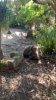
Last time I was there I captured a video of the Tortoises engaging in what I assume is an attempt to mate. I heard loud sounds I thought were from the Tigers, but what do you know. Good to know about the birds though, I should be there on Thursday so it'll be interesting to see the changes, especially the Lady Amherst Pheasant, although I thought the Golden Pheasant was still there.

I had a minute long video, but I can't import it here, instead I have this poorly taken photo:D

IMG_8343.JPG
 

Attachments

  • IMG_8343.JPG
    IMG_8343.JPG
    19.7 KB · Views: 9
Last time I was there I captured a video of the Tortoises engaging in what I assume is an attempt to mate. I heard loud sounds I thought were from the Tigers, but what do you know. Good to know about the birds though, I should be there on Thursday so it'll be interesting to see the changes, especially the Lady Amherst Pheasant, although I thought the Golden Pheasant was still there.

I had a minute long video, but I can't import it here, instead I have this poorly taken photo:D

IMG_8343.JPG
They do that a lot. Apparently Lance doesn't understand the idea of 'consent'.
 
I am on the way home from Taronga. Here are today’s updates.

- Talked to a keeper at the Aldabra Giant Tortoises. They are hoping to breed them and will soon be putting in a heated mud wallow.
- The Lady Amherst Pheasant has moved from the Wetlands Aviary to the Palm Aviary. The Golden Pheasant I presume is no longer on display.
- The outside of the ARC looks pretty much finished, and incredible. According to a reptile keeper though, the inside is nowhere near finished, and there is “no chance in hell” it will be open by July.
- The former Cunningham Skink terrarium in the Blue Mountains Bushwalk is no longer empty. While the skinks are still signed, the actual inhabitants are Spiny Leaf Insects.
- Also in BMB, 1.2 Blue-billed Ducks have arrived! This is the first time this species has been on display since the old Wetland Birds Lake closed.
- Following the near completion of the exterior of the ARC, the main Cotton-top Tamarin viewing area has reopened.
- Finally, signage has been installed in the Semi-Arid Aviary for the Rainbow Bee-eater, Masked Woodswallow, Eastern Yellow Robin, Turquoise Parrot, Purple-backed Fairy Wren and Silvereye.
I forgot to mention that there are no longer adult Eastern Dwarf Tree Frogs on display. They have been replaced by tadpoles of the same species. This is the first time I have seen tadpoles in Reptile World.
 
Update from today.
. The Red Kangaroos formally in Backyard to Bush have now settled into Bura Nura following their recent move.
. The Short-Beaked Echidna in Reptile World have been resigned, although unpresent.
. A 24 year old Tawny Frogmouth has begun training and is responding well to Keepers.
. Finally, the zoo map on the official site has been updated and includes Emu next to the Quokka, as I previously mentioned.

Great to hear regarding the Red Panda cubs as well!

Edit: Information about the ARC is now available on their website.
 
Here’s the link: Amphibian & Reptile Conservation Centre

It looks like they’re still hopeful of a July opening date at this stage.
The building itself seems to be completed entirely, it's just a matter of exhibits and exterior plants and finer details left. But climatising the animals and getting them used to their new exhibits will be a while away I suspect.
 
I was also at Taronga today. A few things to report.

- I saw Lololi (Pygmy Hippo calf) briefly in the underwater viewing with Kambiri just after opening. Something that people might like to know is that while all of the signage about Lololi is at the first exhibit near the langurs, she and Kambiri are actually in the second exhibit next to the otters.

- Four sheep have arrived in Backyard to Bush. They are still off display.

- Something I forgot to mention on Tuesday is that the entrance to the Australian Rainforest Aviary closest to the entry is currently closed off. The aviary can still be accessed via the other entrance near Buru Nura.
 
Last edited:
Last time I was there I captured a video of the Tortoises engaging in what I assume is an attempt to mate. I heard loud sounds I thought were from the Tigers, but what do you know. Good to know about the birds though, I should be there on Thursday so it'll be interesting to see the changes, especially the Lady Amherst Pheasant, although I thought the Golden Pheasant was still there.

I had a minute long video, but I can't import it here, instead I have this poorly taken photo:D

IMG_8343.JPG
Can agree about the noise. There are giant tortoise on Changuu island off Zanzibar, and when there in December we witnessed several mating. The noises were as you describe!
 
I was also at Taronga today. A few things to report.

- I saw Lololi (Pygmy Hippo calf) briefly in the underwater viewing with Kambiri just after opening. Something that people might like to know is that while all of the signage about Lololi is at the first exhibit near the langurs, she and Kambiri are actually in the second exhibit next to the otters.

- Four sheep have arrived in Backyard to Bush. They are still off display.

- Something I forgot to mention on Tuesday is that the entrance to the Australian Rainforest Aviary closest to the entry is currently closed off. The aviary can still be accessed via the other entrance near Buru Nura.
I forgot to say that the Ruddy Shelducks that usually live in the second Pygmy Hippo exhibit are currently off display, to give Lololi a chance to explore the exhibit without them.
 
Following the Red Kangaroos’ move, the majority of their old walkthrough exhibit in Backyard to Bush is empty. However, the old kangaroo rest area has now been fenced off and turf has been laid, creating a new exhibit for the emu who used to live in a separate exhibit that the roos could access. Signage is present saying that “an exciting new arrival” will be arriving in the walkthrough soon. I’m guessing this is the new sheep. Kind of undermines the whole “bush” thing. Also, behind the new emu exhibit it is possible to see into the off display Regent Honeyeater breeding aviary.
From a visit today.
 
Asian elephants Tang mo and Pak boon will be moving to monarto safari park and Greater one horned rhino hari will be moving to taronga zoo sydney in 2025!!!!

Have you herd the news? Big changes are a foot as we plan to farewell our two beloved Elephant girls and welcome Hari the Greater One-horned Rhinoceros to Taronga Zoo Sydney

Asian Elephants Tang Mo and Pak Boon are set to depart the zoo in mid-2025 and will move to a new home at Monarto Safari Park in South Australia, where they will join a larger social herd in a new, open-range habitat, joining three other elephants from Perth Zoo and Auckland Zoo.

As part of a Great Migration, the elephants’ departure will welcome Hari, a two-year-old Greater One-horned Rhino from Taronga Western Plains Zoo, who will be making himself at home, in a new, multi-species habitat with Water Buffalo

Taronga’s journey with elephants is far from over and we will continue to play an important role in conservation programs across Asia and of course in the regional breeding program with seven elephants in the thriving, multi-generational herd at Taronga Western Plains Zoo in Dubbo.

Over the coming year, we has big plans to celebrate Pak Boon and Tang Mo and ensure the community can say their farewells and to thank the dedicated Elephant Keepers who have cared for them for almost two decades

Log in to Facebook
 
Asian elephants Tang mo and Pak boon will be moving to monarto safari park and Greater one horned rhino hari will be moving to taronga zoo sydney in 2025!!!!

Have you herd the news? Big changes are a foot as we plan to farewell our two beloved Elephant girls and welcome Hari the Greater One-horned Rhinoceros to Taronga Zoo Sydney

Asian Elephants Tang Mo and Pak Boon are set to depart the zoo in mid-2025 and will move to a new home at Monarto Safari Park in South Australia, where they will join a larger social herd in a new, open-range habitat, joining three other elephants from Perth Zoo and Auckland Zoo.

As part of a Great Migration, the elephants’ departure will welcome Hari, a two-year-old Greater One-horned Rhino from Taronga Western Plains Zoo, who will be making himself at home, in a new, multi-species habitat with Water Buffalo

Taronga’s journey with elephants is far from over and we will continue to play an important role in conservation programs across Asia and of course in the regional breeding program with seven elephants in the thriving, multi-generational herd at Taronga Western Plains Zoo in Dubbo.

Over the coming year, we has big plans to celebrate Pak Boon and Tang Mo and ensure the community can say their farewells and to thank the dedicated Elephant Keepers who have cared for them for almost two decades

Log in to Facebook

That’s great news. I would have preferred to have seen Monarto receive two reproductive cows i.e. Thong Dee and Pak Boon, but this is the simplest move and will allow less disruption to Dubbo’s herd.
 
Back
Top