Taronga Zoo Taronga Zoo Species List

Jambo

Well-Known Member
5+ year member
Species List:

I visited Taronga yesterday and decided to compile a Species list based on species I’ve seen and signage. Even though I don’t visit Taronga often (I’m not a local); hopefully this can be a helpful resource for those who use this website.

Keep in mind there are also species kept off display.

Any species signed but seen are marked with an asterisk.

Mammals:

Marsupials: (11)
Goodfellows Tree Kangaroo *
Koala
Quokka *
Swamp Wallaby
Southern Hairy Nosed Wombat
Short Beaked Echidna
Red Kangaroo
Tasmanian Devil
Long Beaked Echidna *
Brush Tailed Rock Wallaby
Platypus *

Primates: (7)
Bolivian Squirrel Monkey
Chimps
White Cheeked Gibbon
Francois Langur
Cotton Top Tamiran
Western Lowland Gorilla
Ring Tailed Lemur

Carnivores: (9)
African Lion
Slender Tailed Meerkat
Fennec Fox
Malayan Sun Bear
Sumatran Tiger
Binturong (not seen)
Asian Short Clawed Otter
Red Panda
Fishing Cat

Ungulates: (7)
Plains Zebra
Giraffe
Asian Elephant
Pygmy Hippo
Dromedary Camel
Alpaca
Domestic Goat

Pinnipeds: (2)
Australian Sea Lion
Long Nosed Fur Seal

Rodents: (3)
Domestic Guinea pig
Capybara
Spinifex Hopping Mouse

Rabbits: (1)
Domestic Rabbit

Taronga have 39 mammal species in total.

Notes:
-Only a single Fennec Fox was seen. From their recent Social Media posts about them it also seems to indicate they have a single individual left which is likely Zalika (2017).
-Only the trio of Sumatran Tiger Cubs were on display. Their mother Kartika was interestingly not with them.
-Only a pair of Asian Short Clawed Otters were out on exhibit.
-A single Fishing Cat was seen. The smaller indoor enclosure was empty. I saw both Cats in both enclosures last year.
-Taronga are attempting to breed their Red Panda pair again. The exhibit was roped off to give them space.
-It appears Taronga only has a single Capybara too. There was only one out on exhibit, and this was the same case when I visited last year.


Birds:

(Note: I didn’t manage to get through the Australian Rainforest Aviary, so this population list isn’t fully completed)

Helmeted Guineafowl (free roaming)
Andean Condor
Little Penguin
Fiorland Penguin
Budgerigar
Domestic Ducks
Emu
Golden Pheasant
Double Eyed Fig Parrot
Nicobar Pigeon
Superb Fruit Dove
White Rumped Shama
Pied Imperial Pigeon
Red Whiskered Bulbul
White Bibbed Ground Dove
Luzon Bleeding Heart Pigeon
Yellow Figbird
Red Lory
Java Sparrow
Red Lored Amazon
Lady Amherst’s Pheasant
Wandering Whistling Duck
Mandarin Duck
Little Pied Cormorant
Pied Imperial Pigeon
Pheasant Coucal
Pied Heron
Royal Spoonbill
Glossy Ibis
Clamourous Reed Warbler
Chestnut Breasted Mannikin
Superb Parrot
Dollarbird
Gang Gang
Noisy Pitta
Masked Lapwing
Brush Bronzewing
Brown Cuckoo Dove
Superb Lyrebird
Regent Bowerbird
Peaceful Dove
Striped Honeyeater
Little Lorikeet
Common Bronzewing
White Browed Wood Swallower
Red Rumped Parrot
Scaly Breasted Lorikeet
Zebra Finch
Buff Banded Rail
Wonga Pigeon
Rose Crowned Fruit Dove
Plumed Whistling Duck
Eastern Whipbird
Grey Crowned Babbler
Emerald Dove
Glossy Black Cockatoo
Southern Cassowary

59 Bird species (and counting)

Reptiles:

Aldabra Giant Tortoise
Red Bellied Black Snake
Cunningham’s Spiny Tailed Skink
Eastern Water Dragon (free roaming)
Komodo Dragon
Freshwater Crocodile
Boyd’s Forest Dragon
Golden Tailed Gecko
Schletopusik
Bellinger River Turtle
Salifin Lizard
Shingleback Lizard
Reticulated Python
Elongated Tortoise
River Cooter
Boa Constrictor
Coastal Taipan
Monocled Cobra
Corn Snake
Eastern Diamondback Rattlesnake
Gila Monster
Broad Headed Snake
Star Tortoise
Land Mullet
Green Anaconda
Fijian Crested Iguana
Basilisk
Amethystine Python
Green Python
Green Iguana
Short Necked Turtle
Rhinoceros Iguana
Eastern Blue Tongue Lizard

33 Reptile species in total.

Amphibians

Red Eyed Tree Frog
White Lipped Tree Frog
Dwarf Tree Frog
Yellow Spotted Bell Frog

Arachnids

Communal Huntsmen
Flinders Range Scorpion
Sydney Funnel Web Spider
Bird Eating Spider

Insects

Goliath Stick Insect
Spiny Leaf Stick Insect
Spiny Rainforest Katydid
Locusts
Honey Bee
Burrowing Cockroach

Fish

Koi
 
Thanks for the list, wonderful job!
-Only the trio of Sumatran Tiger Cubs were on display. Their mother Kartika was interestingly not with them.
Perhaps the trio have finally been weaned and separated from Kartika, it's amazing that they've managed to keep them with her for 3 years now, especially since one of the "cubs" is male. Hopefully this means they are getting ready to rebreed Clarence and Kartika and more cubs are on the way! I'm assuming they have the space for another litter of cubs.
 
Thanks for the list, wonderful job!

Perhaps the trio have finally been weaned and separated from Kartika, it's amazing that they've managed to keep them with her for 3 years now, especially since one of the "cubs" is male. Hopefully this means they are getting ready to rebreed Clarence and Kartika and more cubs are on the way! I'm assuming they have the space for another litter of cubs.

Taronga were having issues with Kartika becoming aggressive to her cubs as early as 2020. This was remedied by placing her on contraception, but obviously the cubs have since outworn their welcome as they enter adulthood and seek their own space. Like you say, it was an achievement to keep them together this long.

The Taronga facility can hold eight tigers, so with 3.3 adults, they’re almost at capacity. The 2019 offspring are well represented on their maternal side, so I’m guessing that’s influenced the delay in placing them. My prediction is one will be paired with one of the offspring from Auckland’s new pair, which will help continue the Indonesian line the Taronga cubs represent via their paternal side.
 
Thanks for the list, wonderful job!

Perhaps the trio have finally been weaned and separated from Kartika, it's amazing that they've managed to keep them with her for 3 years now, especially since one of the "cubs" is male. Hopefully this means they are getting ready to rebreed Clarence and Kartika and more cubs are on the way! I'm assuming they have the space for another litter of cubs.

It was quite a humid day and the Cubs had access to the last two enclosures. There was one lying right up on top of the Safari truck next to the viewing window, which meant there had to be a line to access the enclosure.

It’ll be interesting to see the size of their indoor house, as they are now managing six tigers in four groups across three enclosures.
 
It’ll be interesting to see the size of their indoor house, as they are now managing six tigers in four groups across three enclosures.

The night house comprises of six dens, including one double den that functions as a hospital area. Previously, the tigers had to be carried off site to the vet clinic. The dens, which are interconnected can be used as exhibit space for one or more groups, while the others are outside.

Long term, it’d be ideal for the female cubs to remain together as this maximises efficiency of space and eliminates the need to apply contraception - which has the potential to impact upon reproductive health. My prediction is they’ll move to another zoo together, with Taronga importing a tigress (likely from Auckland) to pair with the male cub.
 
In the Tasmanian Devil House. There was signage for the species in front of the enclosure. His name is JR.
Pretty significant news to know that the last long-beaked echidna is on-show (not sure how easy it would be to actually see him though)! It had been assumed with the closure of the nocturnal house for renovations he would have been off-display for the remainder of his days.
 
Pretty significant news to know that the last long-beaked echidna is on-show! It had been assumed with the closure of the nocturnal house for renovations he would have been off-display for the remainder of his days.

It’s great news!

Unfortunately I didn’t catch a glimpse of him. But one of the keepers mentioned he was in a burrow he had dug at the back of his enclosure.
 
Last edited:
Does anyone know if the shamas at Taronga are in a breeding situation or are likely to be bred in the future?
 
Does anyone know if the shamas at Taronga are in a breeding situation or are likely to be bred in the future?
Here is the response I received from Taronga last year about them:

“Yes, we do have White-rumped Shamas now in the collection at Taronga Zoo, Sydney. There is currently one male on display in the Palm Aviary (next to the elephants). We do have a couple of pairs off display in breeding aviaries too. Hopefully with breeding success there’ll be more for you to see in the Asian Walkthrough Aviaries.We brought this species into the collection, and with the help of our interps team, to highlight the illegal songbird trade in Asia.”
 
Notes:
-Only a single Fennec Fox was seen. From their recent Social Media posts about them it also seems to indicate they have a single individual left which is likely Zalika (2017).
-Only the trio of Sumatran Tiger Cubs were on display. Their mother Kartika was interestingly not with them.
-Only a pair of Asian Short Clawed Otters were out on exhibit.
-A single Fishing Cat was seen. The smaller indoor enclosure was empty. I saw both Cats in both enclosures last year.
-Taronga are attempting to breed their Red Panda pair again. The exhibit was roped off to give them space.
-It appears Taronga only has a single Capybara too. There was only one out on exhibit, and this was the same case when I visited last year.

Some more updates from my visit today;

  • Taronga is indeed down to a single Fennec Fox.

  • I saw both Fishing Cats.

  • Right as it looked ready, unfortunately a fence has been installed in front of the Chimp enclosure and it appears some more work will be done on it.

  • Kembali was in the first Tiger enclosure, and was having a dip in his pool (it was an extremely hot day)
    The trio of cubs were in the second enclosure, two of which, Pemanah and one of the girls, were resting on the Safari Jeep right next to the viewing window. Quite an experience getting to see them so up close!
    Kartika was in the final enclosure, where she was resting on a shaded platform underneath a giant fig tree.
    The complex has two den areas; one which Kartika and the Cubs share and the other for the two males.
 
Last edited:
This is the complete species list for Taronga Zoo (27/01/2022)

Mammals:

Marsupials: (11)
Goodfellows Tree Kangaroo *
Koala
Quokka *
Swamp Wallaby
Southern Hairy Nosed Wombat
Short Beaked Echidna
Red Kangaroo
Tasmanian Devil
Long Beaked Echidna *
Brush Tailed Rock Wallaby
Platypus *

Primates: (7)
Bolivian Squirrel Monkey
Chimps
White Cheeked Gibbon
Francois Langur
Cotton Top Tamiran
Western Lowland Gorilla
Ring Tailed Lemur

Carnivores: (9)
African Lion
Slender Tailed Meerkat
Fennec Fox
Malayan Sun Bear
Sumatran Tiger
Binturong
Asian Short Clawed Otter
Red Panda
Fishing Cat

Ungulates: (7)
Plains Zebra
Giraffe
Asian Elephant
Pygmy Hippo
Dromedary Camel
Alpaca
Domestic Goat

Pinnipeds: (3)
Australian Sea Lion
Long Nosed Fur Seal
Californian Sea Lion

Rodents: (3)
Domestic Guinea pig
Capybara
Spinifex Hopping Mouse

Rabbits: (1)
Domestic Rabbit

Taronga have 40 mammal species in total.

Birds:
Palm Aviary, Wetland Aviary, Blue Mountains Bushwalk, Australian Rainforest Aviary

Helmeted Guineafowl (free roaming)
Andean Condor
Little Penguin
Fiorland Penguin
Budgerigar
Domestic Ducks
Emu
Golden Pheasant
Double Eyed Fig Parrot
Nicobar Pigeon
Superb Fruit Dove
White Rumped Shama
Pied Imperial Pigeon
Red Whiskered Bulbul
White Bibbed Ground Dove
Luzon Bleeding Heart Pigeon

Yellow Figbird
Red Lory
Java Sparrow
Red Lored Amazon
Lady Amherst’s Pheasant
Wandering Whistling Duck
Mandarin Duck
Little Pied Cormorant
Pied Imperial Pigeon
Pheasant Coucal
Pied Heron
Royal Spoonbill
Glossy Ibis
Clamourous Reed Warbler

Chestnut Breasted Mannikin
Superb Parrot
Dollarbird
Gang Gang
Noisy Pitta
Masked Lapwing
Brush Bronzewing
Brown Cuckoo Dove
Superb Lyrebird
Regent Bowerbird
Peaceful Dove
Striped Honeyeater
Little Lorikeet
Common Bronzewing
White Browed Wood Swallower
Red Rumped Parrot
Scaly Breasted Lorikeet
Zebra Finch
Buff Banded Rail
Wonga Pigeon
Rose Crowned Fruit Dove
Plumed Whistling Duck
Eastern Whipbird
Grey Crowned Babbler
Emerald Dove
Glossy Black Cockatoo

Southern Cassowary
King Parrot
Rainbow Lorikeet
Topknot Pigeon
Metallic Starling
Eclectus Parrot
Musk Lorikeet
Superb Fruit Dove
White Headed Pigeon
Silver Eye
Forest Kingfisher
Regent Bowerbird
Black Faced Monarch
Rose Crowned Fruit Dove

Variegated Fairy Wren
Green Pygmy Goose
Crimson Finch
Gouldian Finch
Rufous Whistler
Crimson Finch
Masked Finch


79 Bird species

Reptiles:

Aldabra Giant Tortoise
Red Bellied Black Snake
Cunningham’s Spiny Tailed Skink
Eastern Water Dragon (free roaming)
Komodo Dragon
Freshwater Crocodile
Boyd’s Forest Dragon
Golden Tailed Gecko
Schletopusik
Bellinger River Turtle
Salifin Lizard
Shingleback Lizard
Reticulated Python
Elongated Tortoise
River Cooter
Boa Constrictor
Coastal Taipan
Monocled Cobra
Corn Snake
Eastern Diamondback Rattlesnake
Gila Monster
Broad Headed Snake
Star Tortoise
Land Mullet
Green Anaconda
Fijian Crested Iguana
Basilisk
Amethystine Python
Green Python
Green Iguana
Short Necked Turtle
Rhinoceros Iguana
Eastern Blue Tongue Lizard

33 Reptile species in total.

Amphibians

Red Eyed Tree Frog
White Lipped Tree Frog
Dwarf Tree Frog
Yellow Spotted Bell Frog
Southern Corroberee Frog
Northern Corroberee Frog

Arachnids

Communal Huntsmen
Flinders Range Scorpion
Sydney Funnel Web Spider
Bird Eating Spider

Insects

Goliath Stick Insect
Spiny Leaf Stick Insect
Spiny Rainforest Katydid
Locusts
Honey Bee
Burrowing Cockroach

Fish

Koi
 
@Jambo So awesome, thanks so much for doing this species list, its so cool you took the time doing a full inventory of all the species across the zoo currently. Really interesting to read through (have more than once today) can see where the species numbers have dwindled in the birds and reptiles also not only the mammals. But the return of some too which is great (pretty sure Basilisk lizards that were there in the mid 90s through the 00s were gone for a while but are back if not mistaken about them being gone for a few years, just one example; also changing certain species from a genus like Forest Kingfisher now instead of Azure or Sacred Kingfisher's before).
 
Updates from my visit today (30/03/2022)

  • Saw a single Tree Kangaroo; the other enclosure was empty and looked like it hadn't been inhabited for ages.
  • The Chimps have access to the main enclosure once again.
  • Didn't see Ekundu.. hopefully all is well with him.
  • Taronga have no immediate plans to breed from their gorillas.
  • Charlie the Australian Sea lion bull's enclosure was under construction. He was off display.
  • Seba the Red Panda was in the Moore Park Aviary; Amala had access to both main enclosures.
 
Updates from my visit today (30/03/2022)

  • Saw a single Tree Kangaroo; the other enclosure was empty and looked like it hadn't been inhabited for ages.
  • The Chimps have access to the main enclosure once again.
  • Didn't see Ekundu.. hopefully all is well with him.
  • Taronga have no immediate plans to breed from their gorillas.
  • Charlie the Australian Sea lion bull's enclosure was under construction. He was off display.
  • Seba the Red Panda was in the Moore Park Aviary; Amala had access to both main enclosures.

I visited on Monday and saw Ekundu in his exhibit.

That said, I did see Charlie on Monday as well (if we're thinking of the right exhibit - is that Seal Cove at the bottom of the zoo?), so if something has happened to poor Ekundu, it's been in the last 48 hours. Hopefully just off-display for the day for a checkup or some other reason.
 
I visited on Monday and saw Ekundu in his exhibit.

That said, I did see Charlie on Monday as well (if we're thinking of the right exhibit - is that Seal Cove at the bottom of the zoo?), so if something has happened to poor Ekundu, it's been in the last 48 hours. Hopefully just off-display for the day for a checkup or some other reason.

No, didn’t see Ekundu. His enclosure is quite small and open so there was definitely no where he could have been hiding. He could’ve been in the house but it looked like it was closed off meaning he was locked in there which doesn't make a lot of sense.

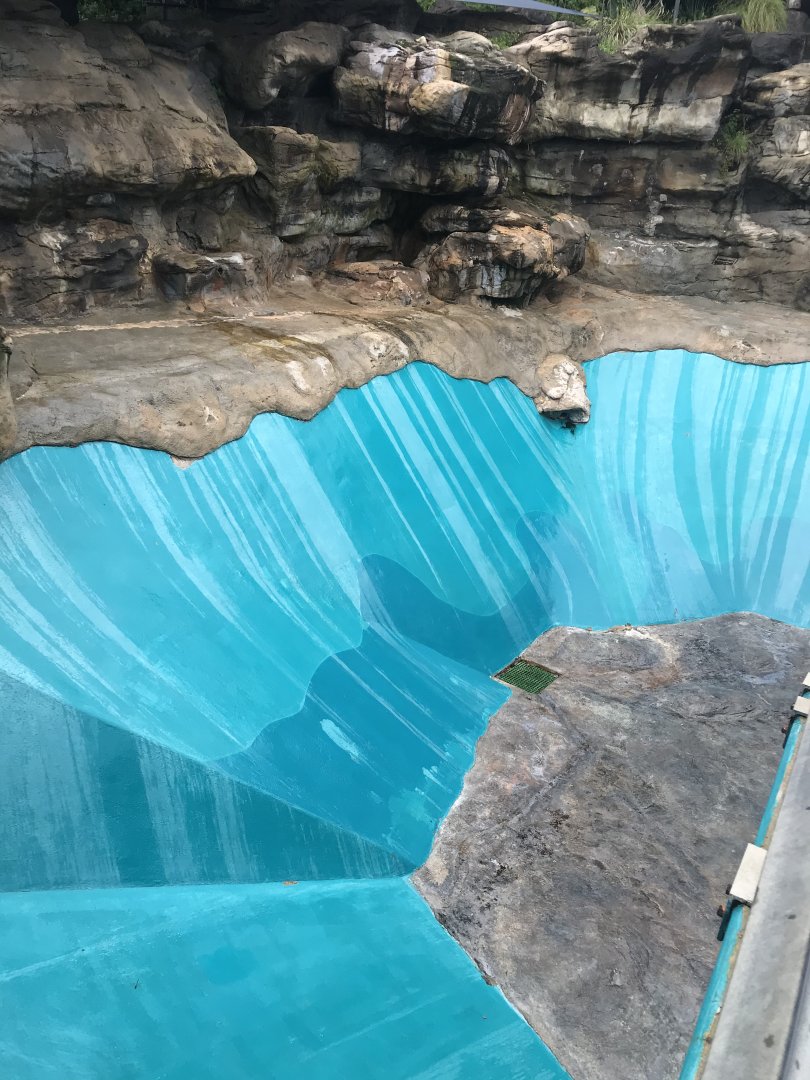
Charlie’s enclosure in seal cove was drained with signs up saying it was being renovated. He was off display behind the other enclosure for the females.


Charlie can be seen here:
 
@Abbey @Jambo Hi guys, I called Taronga last friday and asked if Erkundu was ok. They said they'd email the keepers who work with him and would call back or email back (gave them email) but haven't heard back from them unfortunately
 
Last edited:
Back
Top