Taxonomic news on captive animals

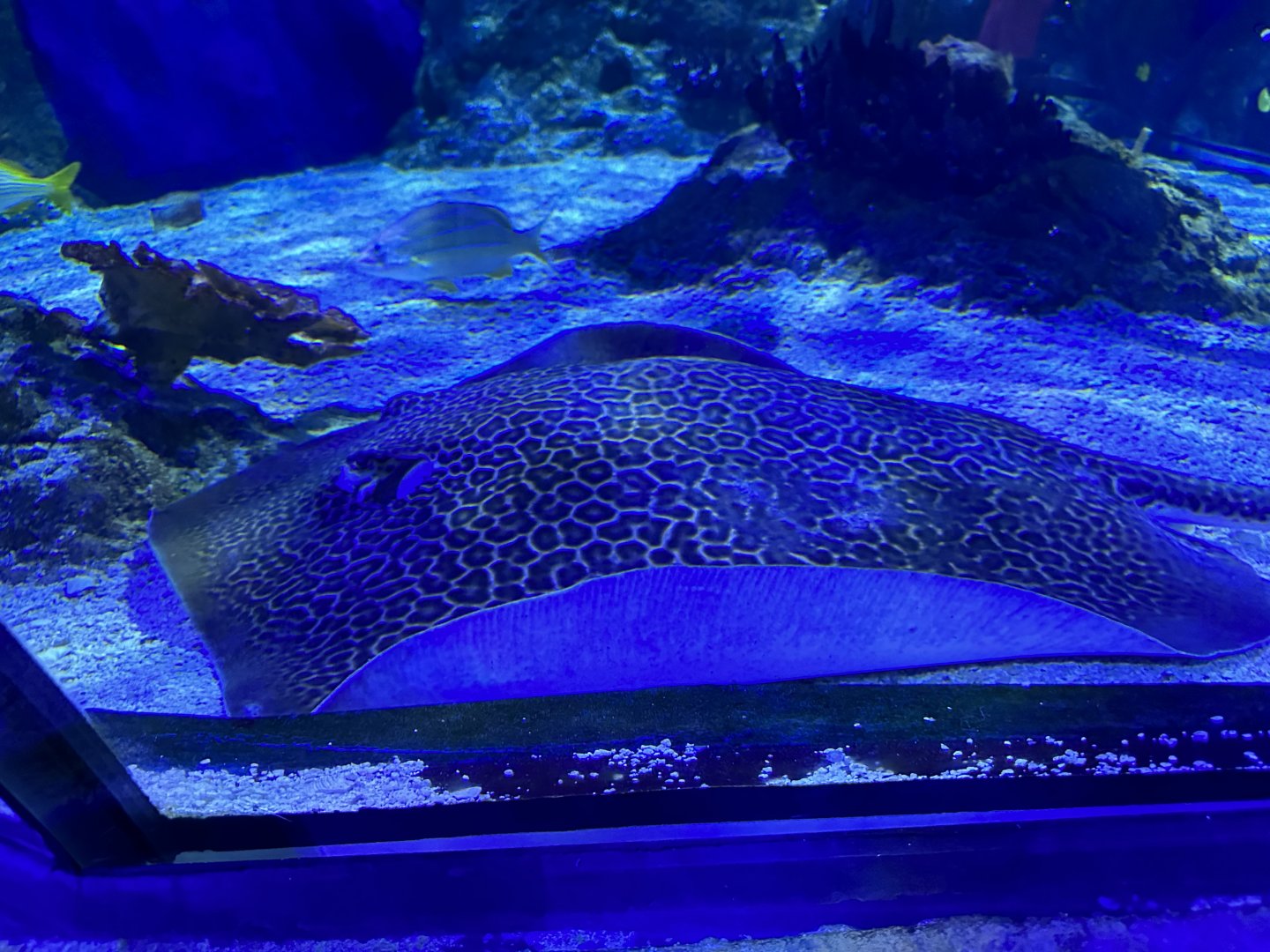
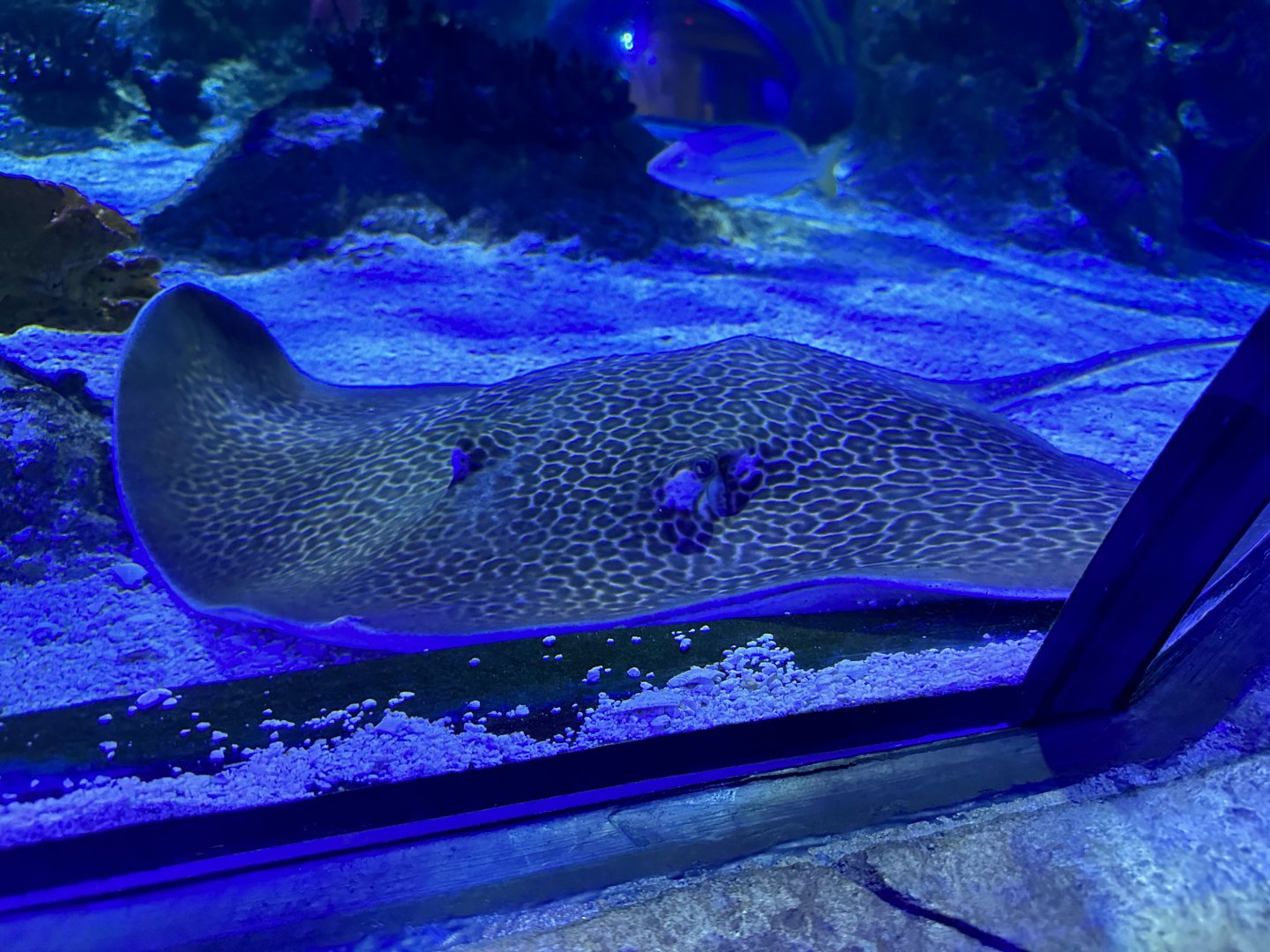
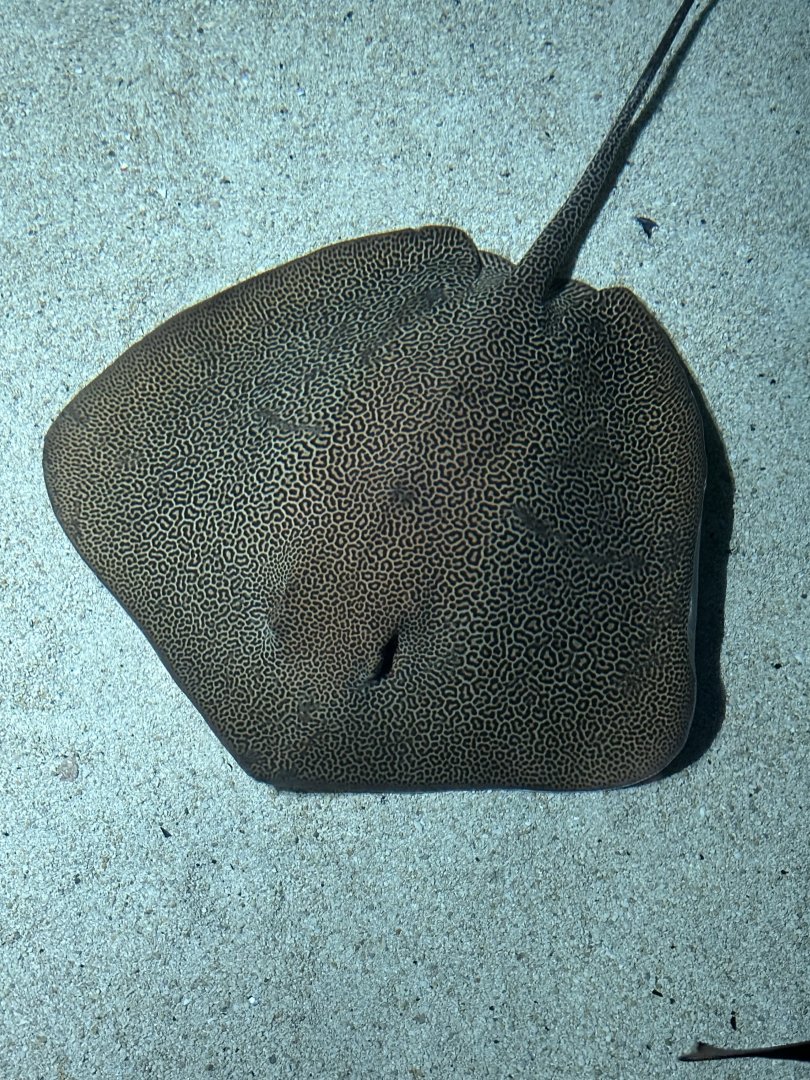
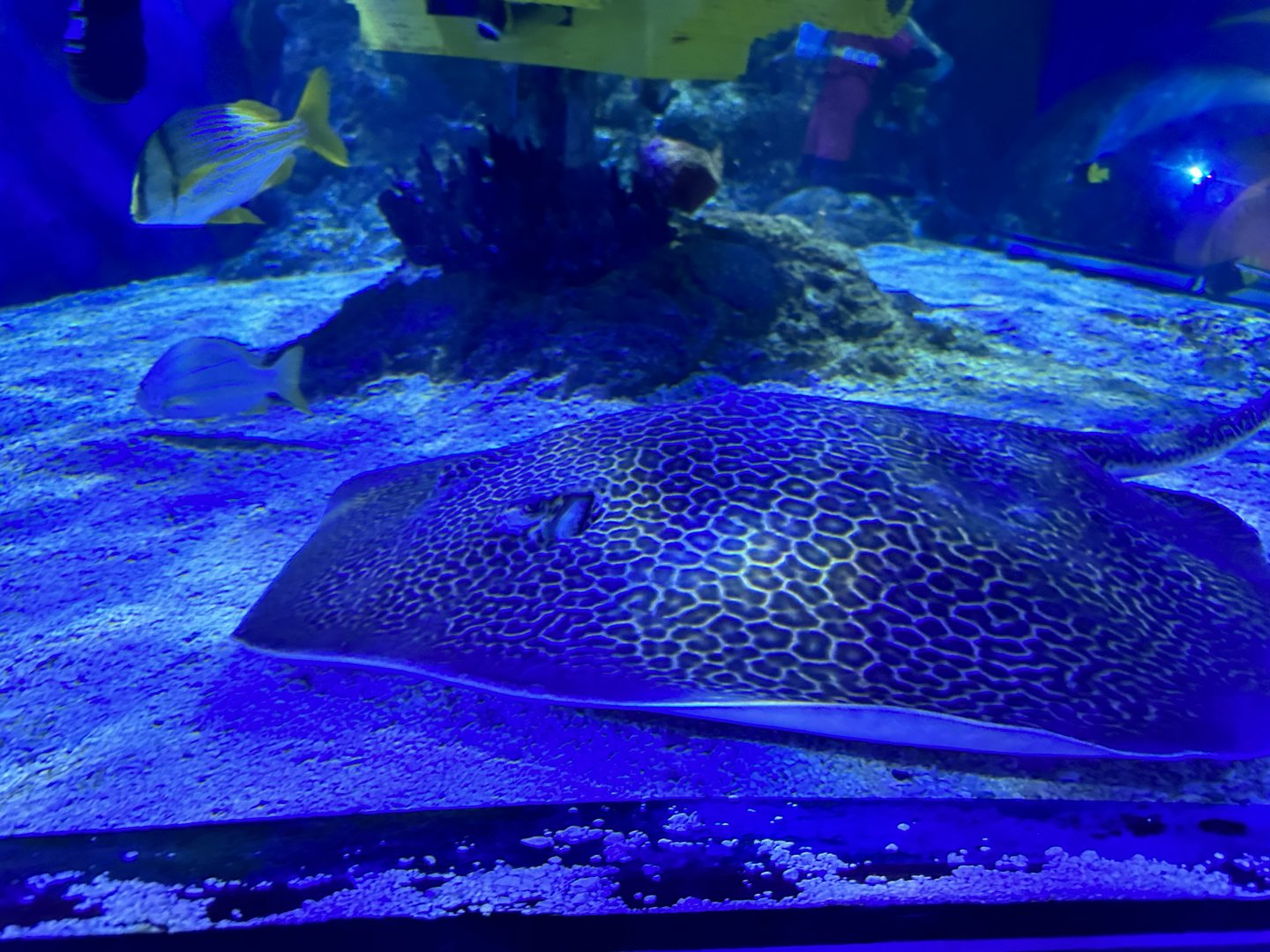
I've got another batch of photos from my archives of an unidentified whiptail. This one is from SEA LIFE Carlsbad and I genuinely think it might be a honeycomb - it has a totally different pattern from all the others I've seen and looks significantly more like the photos I can find on the web and here. It definitely matches the description of "large, dark brown rings and reticulations delineated by thin yellow lines", and I even have another photo that I haven't uploaded (bad quality) of it as a juvenile that features large dark spots as they allegedly should. I'll let those here evaluate it, particularly @Sicarius if they'd like.
 
Last edited:
If this genetic study does state the truth, does it mean that every “North Sulawesi” babirusa in North America is really the following?
  • Babyrousa celebensis x togeanensis
Correct.

Fascinating! So if true, Georgia actually has a leopard. The other one I saw I don’t have very clear pictures of, and it may not be on display anymore, but it does actually look somewhat like your confirmed honeycomb. I suppose that may have to remain a mystery.

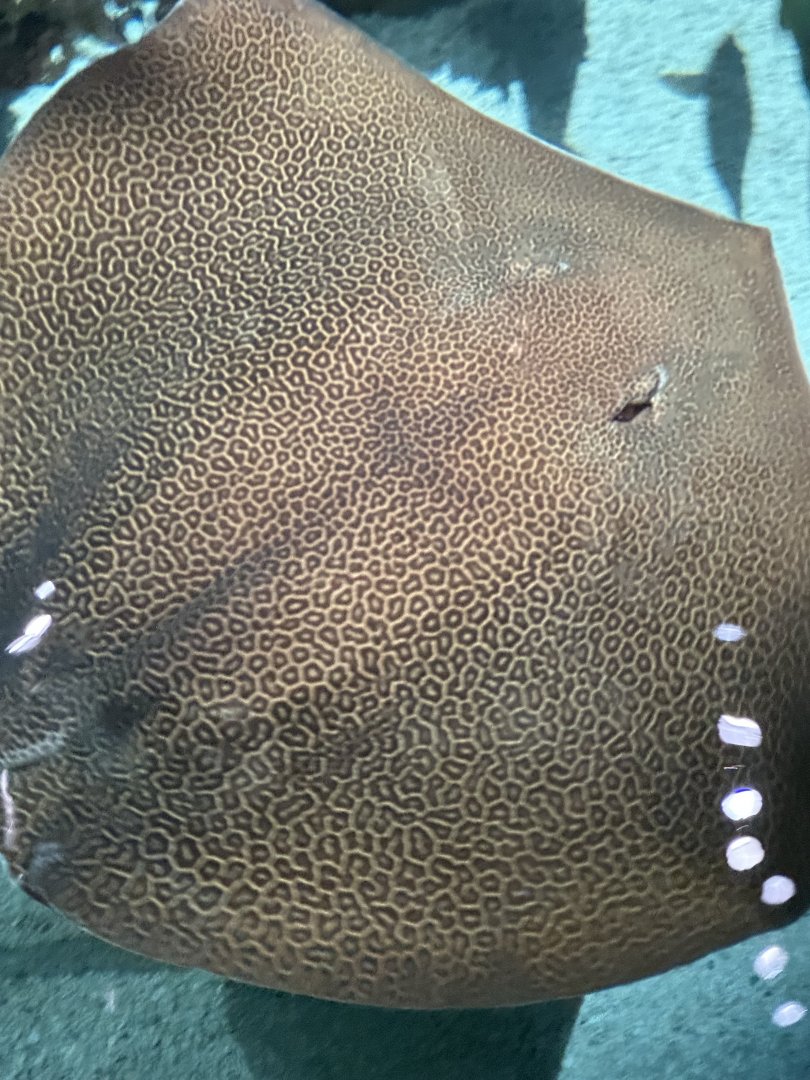
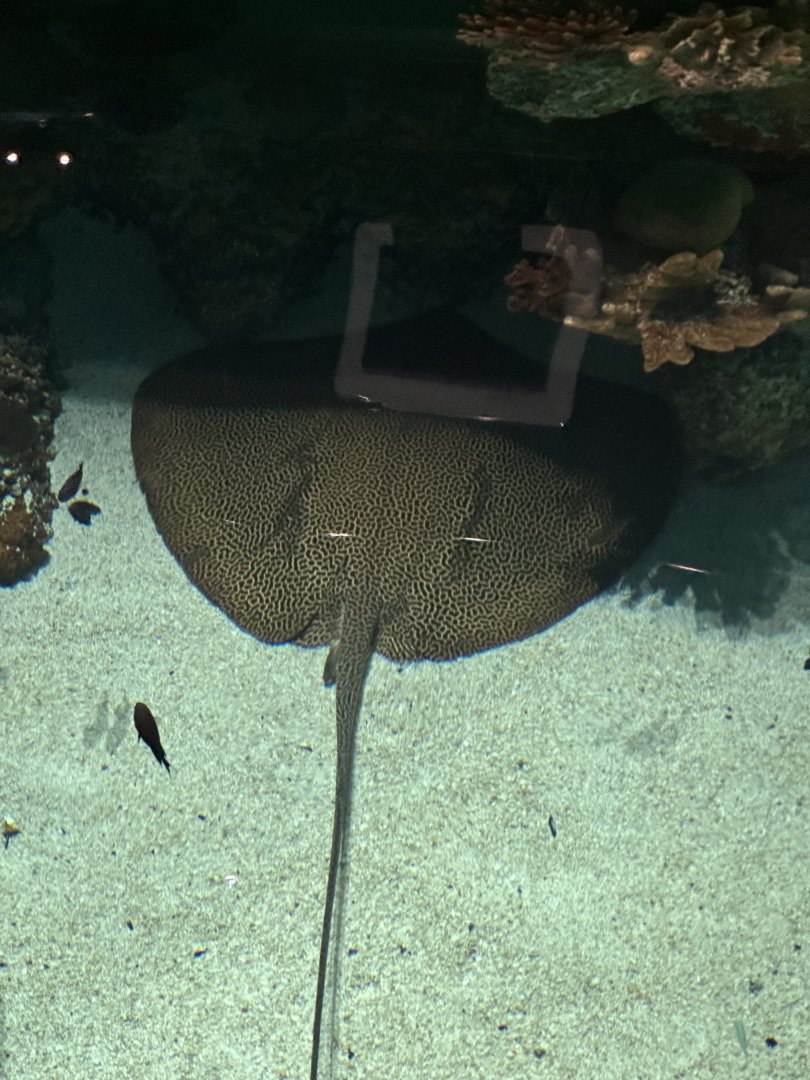
Now I’m curious as to what you and/or your friend would think of the three rays in Baltimore. I just uploaded my best images of all three in media, all with distinct patterns - your descriptions make me suspect that at least two are H. tutul but I am not 100% on the third (I have that one labeled as #2, the only male who the aquarists have named “Whippy”).

My intentions for this thread were to keep this purely informative to list up the taxonomic changes and corrections of animals in captivity. Perhaps it is a good idea to keep individual identifications for other places on this forum, just to remain organised.
 
Correct.


My intentions for this thread were to keep this purely informative to list up the taxonomic changes and corrections of animals in captivity. Perhaps it is a good idea to keep individual identifications for other places on this forum, just to remain organised.

My apologies! I only posted here because you mentioned in the initial post that you wanted people to offer up any observations they'd made themselves in here so you could add them to your list. I'm happy to move to a different thread or create one if need be.
 
- The three catfishes Synodontis grandiops, Synodontis ilebrevis & Synodontis lucipinnis are no longer considered valid. They are now treated as junior synonyms of Synodontis multipunctatus, Synodontis polli and Synodontis petricola, respectively. Especially S. grandiops is found in public aquariums in Europe, but all three species are kept in captivity. I'm down a species because of these lumpings.
Source: Revised taxonomy of Synodontis catfishes (Siluriformes: Mochokidae) from the Lake Tanganyika basin reveals lower species diversity than expected
 
My apologies! I only posted here because you mentioned in the initial post that you wanted people to offer up any observations they'd made themselves in here so you could add them to your list. I'm happy to move to a different thread or create one if need be.
Sure I do, just want to make sure that the overview remains clear to all. Drop me a private message and I'm more than happy to take a look at your rays :)
 
Sure I do, just want to make sure that the overview remains clear to all. Drop me a private message and I'm more than happy to take a look at your rays :)
Will do! I also created a new thread to discuss this specific complex and see if anyone else has any observations they would like to post.
 
I have one that nobody will like :D Red howlers, the identification on ZTL of Alouatta seniculus seniculus is fiction. I assume this identification came from the following train of thought: the founding animals were imported from Venezuela back when all red howlers in northern South America were lumped under seniculus. After the split, three species of red howler exist in Venezuela, with seniculus having the smallest range. Zoos still list their monkeys as seniculus because that's what they imported them as. Someone finds that the subspecies of seniculus in Venezuela is nominate, and therefore the whole international population gets identified as nominate seniculus.

The truth is a little more complicated.

Starting with the more straight-forward case: Dallas World Aquarium. The aquarium imported their stock in the late 90's from Barquisimeto, Venezuela. This is within the range of Alouatta arctoidea.

Now Europe is where it gets funky. From what I've been able to find, most of the European population descends from imports by Cologne between the late 80's and early 2000's. Most of these animals were imported from the Carabobo and Capital Districts in Venezuela, which is within the range of arctoidea. The snag comes from their most prolific breeding male, who they acquired from Loro Parque in 1988. This animal was sourced from the private trade and I have not been able to find any record of where he was imported from apart from "South America". Additionally, a female was sent to Cologne from Vallee de Singes via Frankfurt around 2006 who came to Europe from Guyana, which would be the species macconnelli. From what I can tell, this female never bred, but it's interesting to know she was around. She was at Cologne from 2006-2010 before being transferred to Aqua Zoo where she died in 2013. On top of that, DWA has sent two male howlers to Europe, which have been integrated into the gene pool. I believe one of these males is still alive at Apenhuel. While it's entirely possible that the captive population of red howlers in Europe is also pure arctoidea, unless someone can uncover the true origins of the Loro Parque male or DNA analysis is conducted on the captive population, it's not possible to say for sure. It is definitely incorrect to label these animals as A. seniculus seniculus, however.

~Thylo
 
A recent article in the Journal of Mammalogy suggests recognition of two extant hutias on mainland Cuba: Capromys geayi (western Cuba) and C. pilorides (central/eastern Cuba). In the light of these findings, it would be interesting to know the origins of the European zoo population.
Source: "Genomics of historical museum collections clarifies species diversity in Cuban hutias (Capromys)" in
Journal of Mammalogy Vol. 105 · No. 6 / December 2024
 
I have one that nobody will like :D Red howlers, the identification on ZTL of Alouatta seniculus seniculus is fiction. I assume this identification came from the following train of thought: the founding animals were imported from Venezuela back when all red howlers in northern South America were lumped under seniculus. After the split, three species of red howler exist in Venezuela, with seniculus having the smallest range. Zoos still list their monkeys as seniculus because that's what they imported them as. Someone finds that the subspecies of seniculus in Venezuela is nominate, and therefore the whole international population gets identified as nominate seniculus.

The truth is a little more complicated.

Starting with the more straight-forward case: Dallas World Aquarium. The aquarium imported their stock in the late 90's from Barquisimeto, Venezuela. This is within the range of Alouatta arctoidea.

Now Europe is where it gets funky. From what I've been able to find, most of the European population descends from imports by Cologne between the late 80's and early 2000's. Most of these animals were imported from the Carabobo and Capital Districts in Venezuela, which is within the range of arctoidea. The snag comes from their most prolific breeding male, who they acquired from Loro Parque in 1988. This animal was sourced from the private trade and I have not been able to find any record of where he was imported from apart from "South America". Additionally, a female was sent to Cologne from Vallee de Singes via Frankfurt around 2006 who came to Europe from Guyana, which would be the species macconnelli. From what I can tell, this female never bred, but it's interesting to know she was around. She was at Cologne from 2006-2010 before being transferred to Aqua Zoo where she died in 2013. On top of that, DWA has sent two male howlers to Europe, which have been integrated into the gene pool. I believe one of these males is still alive at Apenhuel. While it's entirely possible that the captive population of red howlers in Europe is also pure arctoidea, unless someone can uncover the true origins of the Loro Parque male or DNA analysis is conducted on the captive population, it's not possible to say for sure. It is definitely incorrect to label these animals as A. seniculus seniculus, however.

~Thylo

You are completely right. Even for the animals from Venezuela, that Cologne imported, we ar enot sure of their origins as they lived in zoos. The female that VdS received from French Guyana never bred. But we can conclude that we ar enot sure of the taxonomic identity of the red howler monkeys in Europe, and their genetic bases is too small for a viable population. Therefore this species should be phased out, to use the space for the black-and-golden howler monkeys, for which the population shooudl grow to make it more viable.
 
I strongly suspect that recent divisions within howler monkeys are simply over-splitting. Otherwise, it is likely that all red howlers in zoos come from the same population, due to the limitations of trade / animal sourcing.

Even if one accepts these splits, there is no guarantee that black howler monkeys have no similar divisions.

Sadly, there is no accepted definition what constitutes a species, but declaring new species is a good way to raise prominence of a scientific publication. So there exists an unhealthy incentive to split species too much in primatology or ornithology.
 
Last edited:
There are several genetic studies that support the split of red howler monkeys in different species. And no, not all red howlers monkeys in zoos came from the same source.

There is indeed some evidence that we should split the black howler monkeys into two species, but additional research is necessary to confirm this.

Yes, the definition of a species (and genus) is complicated. I think that the real problem is that human always try to get some order in the biodiverse world (which is handy to understand the biodiversity and evolution, but also to define on what animals we should focus our conservation efforts), but nature = chaos. Some populations of animals (incl. red howlers) are very well separated from others and can "easily" be distinguished by phenotype or genotype. Other populations are not well separated, due to rivers changing their course, or they are still in a process of speciation.
 
Even if we lumped all the red howlers back together, the known captive population would still be A. s. arctoidea and not A. s. seniculus. ;)

~Thylo
 
Back
Top