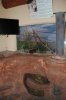
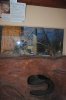
The black footed ferret in US zoos

Onychorhynchus coronatus

Well-Known Member
The black footed ferret is both an iconic native endangered species and a conservation success story which serves to highlight the role and importance of zoos for ex-situ conservation.

I'm quite curious about the species and wanted to ask a few questions to zoochatters in the USA relating to the black footed ferret in zoos:

How many zoos hold the species across the country ?

What is the best zoo enclosure for this species that you have seen in terms of meeting both the animals needs, aesthetic appearance and educational content and engagement with the visitor ?

Look forward to reading your replies !
 
My list:
Abilene Zoo, TX
Amarillo Zoo, TX
Cheyenne Mountain Zoo, CO
Dakota Zoo, ND
El Paso Zoo, TX
Elmwood Park Zoo, PA
Fort Collins Museum of Discovery, CO
Howell Nature Center, MI?
Hutchinson Zoo, KS
Lee Richardson Zoo, KS
Louisville Zoo, KY
Navajo Nation Zoo, AZ
NEW Zoo, WI
Phoenix Zoo, AZ
Prairie Park Nature Center, KS
Red River Zoo, ND
Roosevelt Park Zoo, ND
Smithsonian Conservation Biology Institute, VA
Smithsonian National Zoo, DC
Topeka Zoo, KS
ZooAmerica, PA

I can't say that any I've seen have been very aesthetically pleasing. Animals on display are usually ones not being bred.
 
My list:
Abilene Zoo, TX
Amarillo Zoo, TX
Cheyenne Mountain Zoo, CO
Dakota Zoo, ND
El Paso Zoo, TX
Elmwood Park Zoo, PA
Fort Collins Museum of Discovery, CO
Howell Nature Center, MI?
Hutchinson Zoo, KS
Lee Richardson Zoo, KS
Louisville Zoo, KY
Navajo Nation Zoo, AZ
NEW Zoo, WI
Phoenix Zoo, AZ
Prairie Park Nature Center, KS
Red River Zoo, ND
Roosevelt Park Zoo, ND
Smithsonian Conservation Biology Institute, VA
Smithsonian National Zoo, DC
Topeka Zoo, KS
ZooAmerica, PA

I can't say that any I've seen have been very aesthetically pleasing. Animals on display are usually ones not being bred.

Thanks for sharing @TinoPup !

That seems to be quite a lot of zoos across the country that are holding the species !

I can understand why those on display are not being bred from as the captive breeding centers will be either behind the scenes or private facilities.

I do think it is great that they are being kept on display though as it really showcases the role of zoos in conservation of a native endangered species.
 
Thanks for sharing @TinoPup !

That seems to be quite a lot of zoos across the country that are holding the species !

I can understand why those on display are not being bred from as the captive breeding centers will be either behind the scenes or private facilities.

I do think it is great that they are being kept on display though as it really showcases the role of zoos in conservation of a native endangered species.

Maybe it's different for zoos closer to their native range, but here on the east coast, I don't feel that there is much emphasis put on their survival story or how zoos helped them. Their exhibits blend in with the rest, so unless someone is reading all of the signs, I don't think anyone reads the small tidbits about them. I wish they had more prominent exhibits that really highlight how being able to look at those animals today is because of zoos.
 
Maybe it's different for zoos closer to their native range, but here on the east coast, I don't feel that there is much emphasis put on their survival story or how zoos helped them. Their exhibits blend in with the rest, so unless someone is reading all of the signs, I don't think anyone reads the small tidbits about them. I wish they had more prominent exhibits that really highlight how being able to look at those animals today is because of zoos.

I suppose you might be right, I mean it does make sense for a zoo in Texas or Arizona to highlight the species (given this being the core of its natural range) and its plight / story more than a zoo in say New York or Florida but I guess it is a species whose story is relevant all across the USA (and indeed around the world too).

I think its a shame what you mention about the signage as I really would like to think that people do take something away from having seen them at a zoo and just how remarkable their story is and how close they were to the brink.
 
The San Diego Safari Park used to have a black-footed ferret exhibit next to prairie dogs so people who cared to learn more about them could at least see them in context. That was the best exhibit that I have seen for the species. The BFF had plenty of room to run around, and I did see it active a couple times. Other times it was a sleeping ball of fur in the glass-fronted tunnel at the front of the exhibit. That exhibit has long since been converted to other species (now ocelot I think?).

The Smithsonian National Zoo has their BFF in a terrarium exhibit in the small mammal building, next to the prairie dogs (at least as of 2015 when I saw them). Again, you can get ecological context if you care to learn about them. The BFF was a sleeping ball of fur when I saw it. I think most visitors probably see BFFs as sleeping balls of fur, and most of their exhibits in zoos are terrariums in buildings. Generally BFF exhibits seem unremarkable as Tino mentioned.

An intriguing exhibit for them is at the Rocky Mountain Arsenal Wildlife Refuge near Denver, Colorado, which has both wild ferrets and a zoo exhibit for them with outdoor yards and inside exhibits (pictures shown of the complex here: Black-footed Ferrets - Rocky Mountain Arsenal - U.S. Fish and Wildlife Service). I have not been there yet, but if I ever get to Denver I will go see it.
 
Last edited:
The San Diego Safari Park used to have a black-footed ferret exhibit next to prairie dogs so people who cared to learn more about them could at least see them in context. That was the best exhibit that I have seen for the species. The BFF had plenty of room to run around, and I did see it active a couple times. Other times it was a sleeping ball of fur in the glass-fronted tunnel at the front of the exhibit. That exhibit has long since been converted to other species (now ocelot I think?).

The Smithsonian National Zoo has their BFF in a terrarium exhibit in the small mammal building, next to the prairie dogs (at least as of 2015 when I saw them). Again, you can get ecological context if you care to learn about them. The BFF was a sleeping ball of fur when I saw it. I think most visitors probably see BFFs as sleeping balls of fur, and most of their exhibits in zoos are terrariums in buildings. Generally BFF exhibits seem unremarkable as Tino mentioned.

An intriguing exhibit for them is at the Rocky Mountain Arsenal Wildlife Refuge near Denver, Colorado, which has both wild ferrets and a zoo exhibit for them with outdoor yards and inside exhibits (pictures shown of the complex here: Black-footed Ferrets - Rocky Mountain Arsenal - U.S. Fish and Wildlife Service). I have not been there yet, but if I ever get to Denver I will go see it.

Smithsonian hasn't had prairie dogs there in years. The ferrets are between golden-headed lion tamarin/screaming hairy armadillo and dwarf mongoose. I don't think I have a photo of the small exhibit, but here's the signage.

20191006_141555.jpg
 

Attachments

  • 20191006_141555.jpg
    20191006_141555.jpg
    45.1 KB · Views: 8
Smithsonian hasn't had prairie dogs there in years. The ferrets are between golden-headed lion tamarin/screaming hairy armadillo and dwarf mongoose. I don't think I have a photo of the small exhibit, but here's the signage.
View attachment 480091

I remember it seeming odd to see a prairie dog exhibit indoors.

At least they have a conservation sign for the BFF, even if it is tiny and obscure.
 
I've seen Black-footed ferrets twice- at National Zoo and ZooAmerica. Both exhibits were adequate for the species, but nothing special. The main difference is that National Zoo Exhibit was diurnal, in the small mammal house, while ZooAmerica held them in a nocturnal habitat in their Great Southwest building. The ferrets at ZooAmerica were more active, possibly due to the nocturnal display.
 
The San Diego Safari Park used to have a black-footed ferret exhibit next to prairie dogs so people who cared to learn more about them could at least see them in context. That was the best exhibit that I have seen for the species. The BFF had plenty of room to run around, and I did see it active a couple times. Other times it was a sleeping ball of fur in the glass-fronted tunnel at the front of the exhibit. That exhibit has long since been converted to other species (now ocelot I think?).

The Smithsonian National Zoo has their BFF in a terrarium exhibit in the small mammal building, next to the prairie dogs (at least as of 2015 when I saw them). Again, you can get ecological context if you care to learn about them. The BFF was a sleeping ball of fur when I saw it. I think most visitors probably see BFFs as sleeping balls of fur, and most of their exhibits in zoos are terrariums in buildings. Generally BFF exhibits seem unremarkable as Tino mentioned.

An intriguing exhibit for them is at the Rocky Mountain Arsenal Wildlife Refuge near Denver, Colorado, which has both wild ferrets and a zoo exhibit for them with outdoor yards and inside exhibits (pictures shown of the complex here: Black-footed Ferrets - Rocky Mountain Arsenal - U.S. Fish and Wildlife Service). I have not been there yet, but if I ever get to Denver I will go see it.

I really like the idea / concept of exhibiting the black footed ferret alongside prarie dogs in US zoos and I agree with you that it is a great way of highlighting ecosystem conservation and putting in context the praries and predator / prey dynamics.

Its interesting what you observed about the species being inactive in zoos and I think this does seem to be a wider problem with many mustelids in zoos in the sense that they often don't make the best exhibits in terms of being active and this probably encourages many zoos to lose interest and eventually phase them out.

It does seem from the photos in the gallery that this species is often dozing away in zoos and the glass fronted windows allow visitors to see animals that otherwise wouldn't be seen:

Smithsonian
full

full


Elmwood Park Zoo
full


Louiseville zoo
full


The enclosure at the Rocky Mountain Arsenal Wildlife Refuge looks awesome and with a lot of attention paid to mimicking natural conditions, quoting from the link you sent it includes "80 feet of simulated burrows topped with prairie habitat" !

Photo credits to @ThylacineAlive, @Jusko , @Ding Lingwei , @Kudu21
 
Last edited:
Smithsonian hasn't had prairie dogs there in years. The ferrets are between golden-headed lion tamarin/screaming hairy armadillo and dwarf mongoose. I don't think I have a photo of the small exhibit, but here's the signage.

View attachment 480091

What do you think about the signage @TinoPup ?

It seems alright to me, but its a bit of a shame that the signage couldn't be bigger and highlight the species and its conservation story more.
 
I've seen Black-footed ferrets twice- at National Zoo and ZooAmerica. Both exhibits were adequate for the species, but nothing special. The main difference is that National Zoo Exhibit was diurnal, in the small mammal house, while ZooAmerica held them in a nocturnal habitat in their Great Southwest building. The ferrets at ZooAmerica were more active, possibly due to the nocturnal display.

Thanks for sharing @Neil chace !

Pretty interesting but not too suprising that the nocturnal display at ZooAmerica encouraged more activity as the species is nocturnal.

Found some shots of the ZooAmerica exhibits you mentioned in the gallery and it definitely seems that as you say they are more active there than in other zoos:

full

full

full

full


(Photo credits to @TinoPup and @Giant Eland)
 
Last edited:
Thanks for sharing @Neil chace !

Pretty interesting but not too suprising that the nocturnal display at ZooAmerica encouraged more activity as the species is nocturnal.

Found some shots of the ZooAmerica exhibits you mentioned in the gallery and it definitely seems they are more active than in other zoos:

full

full

full


(Photo credits to @TinoPup and @Giant Eland)
Viewing in this exhibit is nice since the animals don't have anywhere to go out of view. They switch out their ferrets throughout the day, though, so they're not always being looked at.

For Elmwood Park, the ferret is in a small pavilion next to the prairie dog exhibit. They're exhibited in a tunnel underground below an exhibit for Gila Monsters. The only drawback for me is that he's very hard to see.
 
Viewing in this exhibit is nice since the animals don't have anywhere to go out of view. They switch out their ferrets throughout the day, though, so they're not always being looked at.

For Elmwood Park, the ferret is in a small pavilion next to the prairie dog exhibit. They're exhibited in a tunnel underground below an exhibit for Gila Monsters. The only drawback for me is that he's very hard to see.

Thats an interesting setup, how many ferrets do they have ?

I think the Elmwood Park exhibit sounds interesting in the sense of housing other species from the same habitat and showcasing / highlighting the ecosystem to the public.

I'll check out some pictures of the Elmwood exhibit in the gallery.
 
Thats an interesting setup, how many ferrets do they have ?

I think the Elmwood Park exhibit sounds interesting in the sense of housing other species from the same habitat and showcasing / highlighting the ecosystem to the public.

I'll check out some pictures of the Elmwood exhibit in the gallery.
I believe that ZooAmerica has two of them.

Here’s my photo of the Grasslands pavilion.
upload_2021-3-30_11-35-50.jpeg

These are photos of the Gila Monster exhibit with the ferrets below. Taken by @zoo_enthusiast
upload_2021-3-30_11-38-43.jpeg
upload_2021-3-30_11-39-7.jpeg
At the time these were taken, the top one had a Burrowing Owl, but the owl is now at Trail of the Jaguar. The ferret also used to have access to the left side of the top portion, but now are confined to the tunnels.
 

Attachments

  • upload_2021-3-30_11-35-50.jpeg
    upload_2021-3-30_11-35-50.jpeg
    103.3 KB · Views: 36
  • upload_2021-3-30_11-38-43.jpeg
    upload_2021-3-30_11-38-43.jpeg
    72.3 KB · Views: 38
  • upload_2021-3-30_11-39-7.jpeg
    upload_2021-3-30_11-39-7.jpeg
    70.7 KB · Views: 37
I believe that ZooAmerica has two of them.

Here’s my photo of the Grasslands pavilion.
View attachment 480103

These are photos of the Gila Monster exhibit with the ferrets below. Taken by @zoo_enthusiast
View attachment 480104
View attachment 480105
At the time these were taken, the top one had a Burrowing Owl, but the owl is now at Trail of the Jaguar. The ferret also used to have access to the left side of the top portion, but now are confined to the tunnels.

I like how the complex where they are kept is made to look like a Pueblo indigenous style building and unlike many of these sorts of cultural style exhibits it doesn't look tacky or overblown.

That said, I have to ask, the ferrets do have access to an outdoor enclosure don't they (or are these for prarie dogs?) ? or are the tunnels all they have ?

The burrowing owl enclosure also looks a little small IMO so it is good to know it was only a temporary setup.
 
Last edited:
I like how the complex where they are kept is made to look like a Pueblo indigenous style building and unlike many of these sorts of cultural style exhibits it doesn't look tacky or overblown.

That said, I have to ask, the ferrets do have access to an outdoor enclosure don't they (or are these for prarie dogs?) ? or area the tunnels all they have ?

The burrowing owl enclosure also looks a little small IMO so it is good to know it was only a temporary setup.
The outdoor enclosure is only for the prairie dogs. And yes, the ferrets only have access to the tunnels, but they have access to the whole are under the Gila Monster exhibit, rather than just where the viewing glass is, if that makes sense.
 
The outdoor enclosure is only for the prairie dogs. And yes, the ferrets only have access to the tunnels, but they have access to the whole are under the Gila Monster exhibit, rather than just where the viewing glass is, if that makes sense.

Ah I see, yes, it makes sense.

Have to say that I'm a little disappointed that they don't have access to an outdoor area, seems like quite a shame to me.
 
Last edited:
I haven’t heard of an outdoor Black-footed Ferret exhibit, but I’d agree that it would be much better if they had outdoor access.

I wonder why zoos do not regularly give this species access to outdoor enclosures, kind of strange.

From what I can gather through looking at shots in the gallery there seems to be a tendency to house this species in education buildings / exhibits (which is awesome in educational terms) like these:

Louiseville zoo:
full


Amarillo zoo:
full


Smithsonian National zoo:
full


El Paso zoo :
full


But though I like the idea of visitors being able to see these species and learn about them I do think that these animals should have access to outdoor enclosures.

The only image in the gallery that I can find that shows an outside enclosure (sort of) for the species is this one in Fort Worth Zoo:

full


I'm curious as to why this isn't being done, maybe a zoochatter who knows more about this species in zoos could explain why ?


Photo credits to @Moebelle, @Arizona Docent, @geomorph and @snowleopard.
 
Last edited:
Back
Top