ZSL London Zoo The Death of London Zoo’s Last Chimp

Mugcake

Well-Known Member
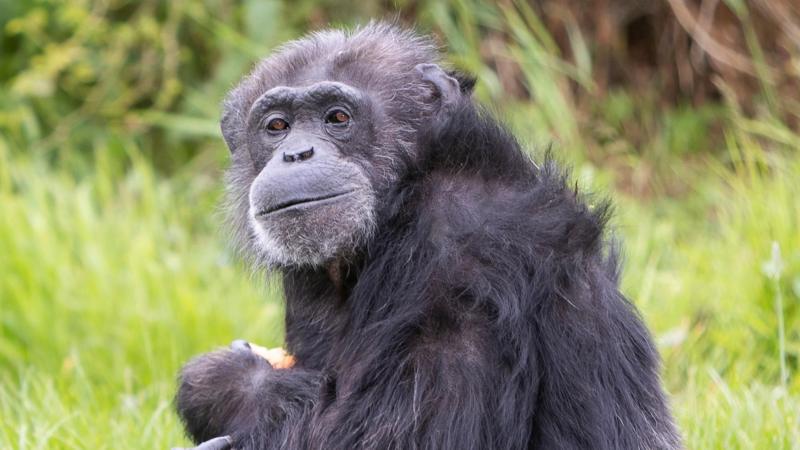
Last week, on the 24th of October 2025, we lost Regent’s Park’s final resident chimpanzee:
63f0ab60-b0ed-11f0-b2a1-6f537f66f9aa.jpg


Koko (called Coco in older sources) was one of the last two chimps to reside at London Zoo, before the demolition of the Sobell Pavilion and restructuring of the area into Gorilla Kingdom.

Leaving in 2006, her contemporary - a male chimp named Jonnie - died in 2007 after both escaped their temporary enclosure at Whipsnade, with Jonnie being shot by staff due to the risk posed to guests.

For those interested, this was also discussed on ZooChat at the time, and the thread for that can be found below:
This morning two chimpanzees Coco and Jonnie managed to find a way out of their enclosure at Whipsnade and gained access to the public area of the zoo. Coco was recaptured but sadly staff were not able to capture Jonnie and he was shot.

You can also read the full statement released by Whipsnade Zoo, which goes into further detail on the circumstances. I’m unsure if she was the last surviving chimp to have lived at London Zoo, but she was the only one I ever got the chance to see there myself. And regardless, as one of the last chimps to live at the Sobell Pavillion, her legacy is historically important to the zoo as a whole.

My memories of them are vague, but I do definitely recall her and Jonnie in their tall cage, along with the gorilla’s original indoor enclosures with the green-painted brick walls.

Unfortunately, I haven’t been able to find any photos or videos of the pair during their final stay in Regent’s Park, which I would have loved to include here. If anybody has some then please do share, I would likewise love to hear any stories/memories people have of them from that time.
 
Last week, on the 24th of October 2025, we lost Regent’s Park’s final resident chimpanzee:

63f0ab60-b0ed-11f0-b2a1-6f537f66f9aa.jpg


Koko (called Coco in older sources) was one of the last two chimps to reside at London Zoo, before the demolition of the Sobell Pavilion and restructuring of the area into Gorilla Kingdom.

Leaving in 2006, her contemporary - a male chimp named Jonnie - died in 2007 after both escaped their temporary enclosure at Whipsnade, with Jonnie being shot by staff due to the risk posed to guests.

For those interested, this was also discussed on ZooChat at the time, and the thread for that can be found below:


You can also read the full statement released by Whipsnade Zoo, which goes into further detail on the circumstances. I’m unsure if she was the last surviving chimp to have lived at London Zoo, but she was the only one I ever got the chance to see there myself. And regardless, as one of the last chimps to live at the Sobell Pavillion, her legacy is historically important to the zoo as a whole.

My memories of them are vague, but I do definitely recall her and Jonnie in their tall cage, along with the gorilla’s original indoor enclosures with the green-painted brick walls.

Unfortunately, I haven’t been able to find any photos or videos of the pair during their final stay in Regent’s Park, which I would have loved to include here. If anybody has some then please do share, I would likewise love to hear any stories/memories people have of them from that time.

This was also discussed on the Whipsnade thread (I recognise you’re focused only on London but there is some discussion about her time there).

Both Johnnie and Koko had their names spelled differently over time including in the news reports around the escape.

Other ex London chimps are still alive at Dudley (Fanny for example) so while Johnnie and Koko were the last to leave not all former London chimps are dead.

When the London females initially went to Dudley, Cherry & Bella went to London to join Johnnie & Koko - Cherry was Koko’s mother.
 
In ~1999, the following 9 females moved from London to Dudley...

Fanny (b. 1974)
Mandy (b. 1977)
Barbie (b. 1978, d. 2025)
Malaika (b. 1988)
Binti (b. 1990)
Mali (b. 1993)
Banika (b. 1994)
Tupelo
Maisha


Tupelo and Maisha left Dudley in Spring 2005 for Flamingo Land. Does anyone know if they are still alive?
 
In ~1999, the following 9 females moved from London to Dudley...

Fanny (b. 1974)
Mandy (b. 1977)
Barbie (b. 1978, d. 2025)
Malaika (b. 1988)
Binti (b. 1990)
Mali (b. 1993)
Banika (b. 1994)
Tupelo
Maisha


Tupelo and Maisha left Dudley in Spring 2005 for Flamingo Land. Does anyone know if they are still alive?

A female called ‘Mischa’ was shot at flamingoland after escaping the enclosure in 2005, not sure if that’s the same female given the difference in name but reports in the Northern Echo indicate she had arrived at the zoo earlier that year, escaping and being shot at the top of the log flume ride. Sad end.

Tuppelo appears to have gone to Blair Drummond at some point in 2012 though she’s not listed there now. A chimp named Tupelo moved from Blair Drummond to Edinburgh where she died in 2019 however so that may have been her.
 
Last edited:
Thanks for the info. Although at this point we can't be 100% sure, it does seem highly likely to be them.

Indeed, on Maisha, the date of death in the historic 2014 studbook document matches the day of the reported escape / shooting at Flamingoland (9th December 2005) so I'd say that's fairly conclusive. It does say euthanasia medical but I guess they don't really have a designation for shot while escaping.

maisha.jpg

BBC article about the shooting on that date. There aren't many references to the name (one is in the Mirror from the time, the other in the Northern Echo) so it may have been misspelled like Johnnie and Koko in other articles.

BBC NEWS | UK | England | North Yorkshire | Marksman shoots chimpanzee dead

The same studbook mentions Tupelo moving to Blair Drummond from Flamingoland but it pre dates any Edinburgh move.

tupelo.jpg
 

Attachments

  • maisha.jpg
    maisha.jpg
    18.5 KB · Views: 38
  • tupelo.jpg
    tupelo.jpg
    13.7 KB · Views: 36
Johnnie had a reputation as bit of a troublemaker when he arrived with Koko, which made it difficult to fully integrate both of them into the main group. Attempts were made, but I never saw them in the main outer paddock for example. He had a habit, and appeared very good, at winding up the dominant male at the time Nikki. I also saw him displaying humanised behaviours toward visitors - smiling, clapping, nodding and begging. Im not sure if that was learned behaviour or something in his background (which I know nothing about)
 
I also saw him displaying humanised behaviours toward visitors - smiling, clapping, nodding and begging. Im not sure if that was learned behaviour or something in his background (which I know nothing about)

It is possible he got fed by visitors at some point in his life, which would definitely account for the begging in particular. Afaik London Zoo officially banned that in the 70s following the death of Guy the Gorilla (before which it was actually an encouraged/expected activity), but many visitors kept doing it regardless out of habit/because they didn’t care about the rules.

Thankfully the rates of that have gone down decade by decade, and it’s now incredibly rare for someone to try feeding them given all the surveillance and consequences of being caught.

I still recall people feeding the giraffes stale bread as recently as the 2000s (I was a kid at the time, and to the best of my knowledge didn’t condone/partake in it), but I haven’t seen anything like that happen since.

Alternatively, Jonnie might have experienced it prior to his arrival at Regent’s Park (assuming he came from elsewhere?), so by the time he was at Whipsnade it could indeed be a persistent behaviour.
 
It is possible he got fed by visitors at some point in his life, which would definitely account for the begging in particular. Afaik London Zoo officially banned that in the 70s following the death of Guy the Gorilla.......
.....
No, London Zoo banned visitors feeding the animals in 1968, ten years before "Guy", the famous gorilla, died.

In 1967, London Zoo's African elephant “Diksie” leaned forward to take food from a visitor and, whilst she was balancing rather precariously on the edge of the moat, one of the other elephants pushed her, knocking her into the moat and, very sadly, "Diksie" died of injuries received.

As a result of this accident, the Zoological Society of London prohibited visitors feeding the animals in January 1968, ten years before "Guy" died.
 
It is possible he got fed by visitors at some point in his life, which would definitely account for the begging in particular. Afaik London Zoo officially banned that in the 70s following the death of Guy the Gorilla (before which it was actually an encouraged/expected activity), but many visitors kept doing it regardless out of habit/because they didn’t care about the rules.

Thankfully the rates of that have gone down decade by decade, and it’s now incredibly rare for someone to try feeding them given all the surveillance and consequences of being caught.

I still recall people feeding the giraffes stale bread as recently as the 2000s (I was a kid at the time, and to the best of my knowledge didn’t condone/partake in it), but I haven’t seen anything like that happen since.

Alternatively, Jonnie might have experienced it prior to his arrival at Regent’s Park (assuming he came from elsewhere?), so by the time he was at Whipsnade it could indeed be a persistent behaviour.

The variously named Johnny / Johnnie / Jonnie (depending on the press coverage) was born at Longleat and lived at Woburn before arriving in London in 1983.

johnny.jpg

The chimps at the time had an island home at Woburn, interestingly there is an old photo of them here, looks like they came out onto trees on the island to see the boat, the one at the front is making a begging motion. It might have been something the chimps 'did'.

I don't know the history of the Woburn chimps or their behaviour at all however, but someone may know more.

Log in to Facebook

A few people mentioned the issues integrating Johnnie with the established chimps in this and other threads and they were widely discussed at talks at the time...it's possible he and Koko would have remained separate had he not escaped and been shot, though that was an awful outcome.
 

Attachments

  • johnny.jpg
    johnny.jpg
    17 KB · Views: 27
No, London Zoo banned visitors feeding the animals in 1968, ten years before "Guy", the famous gorilla, died.

In 1967, London Zoo's African elephant “Diksie” leaned forward to take food from a visitor and, whilst she was balancing rather precariously on the edge of the moat, one of the other elephants pushed her, knocking her into the moat and, very sadly, "Diksie" died of injuries received.

As a result of this accident, the Zoological Society of London prohibited visitors feeding the animals in January 1968, ten years before "Guy" died.

Oh, I’ve heard about Diksie, although I had no idea it had prompted the total ban on animal feeding that early. As far as I knew they still sold monkey nuts at the zoo into the 1970s, and I thought that primate feeding was still regularly occurring until Guy’s death.

In fairness, one of the primary causes of his death (or at least his health decline) was tooth decay, which was linked to being fed by visitors and may have been connected to his heart attack, alongside being put under for surgery.

So even if feeding wasn’t condoned officially, it may have been occurring on a regular basis amongst guests until the 80s. Either way, @Lafone makes a good point on the behaviour when they say this:
The chimps at the time had an island home at Woburn, interestingly there is an old photo of them here, looks like they came out onto trees on the island to see the boat, the one at the front is making a begging motion. It might have been something the chimps 'did'.

So it might not be related to guest feeding, but it certainly seems like an unnatural behaviour either way :T
 
The variously named Johnny / Johnnie / Jonnie (depending on the press coverage) was born at Longleat and lived at Woburn before arriving in London in 1983.

View attachment 839381

The chimps at the time had an island home at Woburn, interestingly there is an old photo of them here, looks like they came out onto trees on the island to see the boat, the one at the front is making a begging motion. It might have been something the chimps 'did'.

I don't know the history of the Woburn chimps or their behaviour at all however, but someone may know more.

Log in to Facebook

A few people mentioned the issues integrating Johnnie with the established chimps in this and other threads and they were widely discussed at talks at the time...it's possible he and Koko would have remained separate had he not escaped and been shot, though that was an awful outcome.
Oh, I’ve heard about Diksie, although I had no idea it had prompted the total ban on animal feeding that early. As far as I knew they still sold monkey nuts at the zoo into the 1970s, and I thought that primate feeding was still regularly occurring until Guy’s death.

In fairness, one of the primary causes of his death (or at least his health decline) was tooth decay, which was linked to being fed by visitors and may have been connected to his heart attack, alongside being put under for surgery.

So even if feeding wasn’t condoned officially, it may have been occurring on a regular basis amongst guests until the 80s. Either way, @Lafone makes a good point on the behaviour when they say this:


So it might not be related to guest feeding, but it certainly seems like an unnatural behaviour either way :T

I’ve observed a few chimpanzees in New Zealand beg the public for food when they notice them eating fruit; and your comments made me realise they were all chimpanzees born in the 1970’s or 1980’s.

Like London Zoo, feeding was prohibited in New Zealand zoos decades ago; and it’s fair to say the public in this day and age are largely compliant with requests not to feed the animals (to the point I struggle to recall a single instance of the public throwing food to the animals). It’s not hard to imagine people were less respectful of this in the 80’s and 90’s for a number of reasons such as public perception seeing animals as entertainment (which has progressed considerably since then); and the fact anything anyone does in public these days can be recorded by anyone with a phone.
 
In fairness, one of the primary causes of his death (or at least his health decline) was tooth decay, which was linked to being fed by visitors and may have been connected to his heart attack, alongside being put under for surgery.
Indeed "Guy" suffered from tooth decay and he died under anaesthetic whilst his rotten teeth were being extracted.

Many years of being fed unsuitable food by the visiting public unquestionably contributed to his dental problems so indirectly led to his death.

However the ZSL banned public feeding after the elephant's death, ten years before "Guy" died.
 
However the ZSL banned public feeding after the elephant's death, ten years before "Guy" died.

That’s true, but you have to remember that it would have been difficult to enforce. It went from something encouraged by the zoo to being prohibited by them in a fairly short period, so there could have been visitors who weren’t aware of the change, or who decided not to follow it due to how abrupt it was at the time.

It also would have been difficult for them to properly keep a watch on everything. The zoo at that time had considerably more enclosures and animals than it does today (not counting the numerous tiny animals, which make up a good bulk of their current collection), so the keeper workload may have been far more spread out.

Additionally, widespread CCTV would probably not have been viable until at least the 80s, so there would be no way to constantly monitor the throngs of people who would have been to visit Guy and other animals. All this is to say that when they banned public feeding isn’t necessarily when it firmly ended, it’s just when the zoo stopped condoning it.
 
All this is to say that when they banned public feeding isn’t necessarily when it firmly ended, it’s just when the zoo stopped condoning it.
Yes of course the no feeding ban was difficult to enforce and some visitors continued to feed the animals after feeding by the public was officially banned. Even today, nearly sixty years after the ban, some visitors still feed the animals.
 
Yes of course the no feeding ban was difficult to enforce and some visitors continued to feed the animals after feeding by the public was officially banned. Even today, nearly sixty years after the ban, some visitors still feed the animals.

Yes it’s not common any more but you do see people doing it - had to go and fetch a keeper after people were throwing stuff to the orangs at Dudley last year and wouldn’t stop when asked. I guess it’s less habit for people now though.
 
I’ve observed a few chimpanzees in New Zealand beg the public for food when they notice them eating fruit; and your comments made me realise they were all chimpanzees born in the 1970’s or 1980’s.

Apes have long memories. I've seen Apes in many zoos (Gorillas, Orangutan and Chimp) even in more recent years, still use the outstretched hand/arm gesture, the so- called 'begging' posture, if they think someone might be going to feed them. Usually these are the older animals in the group who may have experienced public feeding in the past, though it can easily be picked up by any members.
 
Last edited:
Yes of course the no feeding ban was difficult to enforce and some visitors continued to feed the animals after feeding by the public was officially banned. Even today, nearly sixty years after the ban, some visitors still feed the animals.

During the 1960's era at London during the busy months of the year, a keeper would go 'on duty' in the afternoon wearing best uniform outside the Ape cages, standing inside the barrier to answer questions and equally importantly, to prevent anyone feeding the Apes. Not only London, I remember keepers at Bristol had the same practise during the 1950-60's period. Any errant would be cautioned with a loud 'no feeding please' which would often make the offender slink away into the crowd. Of course this sort of policing didn't prevent it entirely and I don't know when this practise was dropped by the zoos, probably 70-80's.

As to Guy, I think while his tooth decay was attributed to the past public feeding, his own diet was very rich in fruit and low on vegetables etc which may have contributed to an extent also.
 
Last edited:
Back
Top