The endangered ground cuckoos ex-situ / in zoos

Onychorhynchus coronatus

Well-Known Member
There are a couple of ground cuckoos from the families Carpococcyx and Neomorphus which are either critically endangered, endangered or vulnerable yet these do not appear to be kept ex-situ.

These would include the Sumatran ground cuckoo, the banded ground cuckoo and the scaled ground cuckoo all of which are greatly threatened by deforestation / land conversion to agriculture.

Some of these birds are EDGE species (Carpococcyx viridis and Neomorphus radiolosus).


Does anyone know any more about why these species have never made it into the collections of zoos or whether there are plans to establish insurance populations ex-situ ?
 
It seems like this species, the coral billed ground cuckoo is held by a number of European zoos

I personally think that this is great as it is a vulnerable species in its native range throughout Indo-China.

full


That said, I do think that the other ground cuckoo species that I've mentioned in the post above are also deserving of ex-situ populations given the enormity of the threats they face in the wild.

Photo credit to @Tomek.
 
They are low density, secretive and unattractive compared to pheasants and curassows. Even seeing them in the wild is challenge.

Yes I know and I agree.

Perhaps this cryptic behaviour and dull colouration could well be a reason why zoos have not kept them.

However, many bird species have similar behavioural characteristics and low aesthetic appeal and that has not stopped them being kept and bred by zoos.

Moreover, these are very endangered species and in dire need of ex-situ insurance populations.
 
Last edited:
So there was a paper published last year in "Zoo Biology" called "Guiding the prioritization of the most endangered and evolutionary distinct birds for new zoo conservation programs" (will put in link below).

In this article both the Sumatran ground cuckoo and the banded ground cuckoo are listed as being among the species recommended by the authors for ex-situ conservation within zoos.

Some interesting quotes from the paper are:

(on the rarity or husbandry challenges not being a valid excuse not to keep species)

"We caution ex situ planners, however, not to reject all species which are very rare or possess highly specialized ecologies, given that highly specialized species have been kept and bred in the past (e.g. Maleo Macrocephalon maleo and Shoebill Balaeniceps rex, albeit in low numbers (Cornejo, Iorizzo, & Clum, 2014; Tomita, Killmar, Ball, Rottman, & Kowitz, 2013)), as have species with very small founder populations (e.g. the Mauritius kestrel Falco punctatus (Jones et al., 1995))"

(On the need to assess avian EDGE species for inclusion within zoo collections)

"In summary, (a) we find that highly evolutionary distinct species are more likely to be found in zoos while imperiled species remain underrepresented, (b) we recommend that metrics of evolutionary distinctness be used explicitly to prioritize among species of otherwise equal conservation need, and (c) we provide a global list of highly distinct and imperiled species not currently found in zoos and encourage the ex situ community (including the respective Avian TAGs) to assess their suitability for both captive breeding and field‐ based initiatives. The inclusion within zoos of just the top 10 species in our global prioritization list would add an additional 331 million years of evolutionary history to ex situ collections. If active conservation of evolutionary history is a desired societal goal (Redding & Mooers, 2010), then the addition of even one of these species might be considered a success."

(Need for improvements in prioritization criteria for threatened birds in ex-situ)

"Our other finding indicates that threatened birds remain underrepresented in zoo collections—a result that corroborates findings reported elsewhere (Martin, Lurbiecki, et al., 2014). However, we focus here not on current zoo holdings but on the prioritization of species for future acquisition. While in situ methods are preferable where possible for most species, the unfolding biodiversity crisis (Barnosky et al., 2011) may intensify the political will to bring imperiled species into breeding."


Link to paper (Use scihub to read it ;)) : https://onlinelibrary.wiley.com/doi/abs/10.1002/zoo.21482
 
Last edited:
The coral billed ground cuckoo was according to Zootierliste held by the following zoos in Europe:

UK

Birdland

Bristol zoo

Chester zoo

London zoo

Tropical bird gardens


France

Le Parc des Cleres

Germany

Berlin zoo

Duisberg zoo

Cologne zoo

Walsrode Vogelpark

Denmark

Kobenhavn zoo

Austria

Zoo Schmidling


Today according to the same site there are none of these birds currently held in captivity.

Where did they all go ?

Did anyone see any of these birds before they disappeared from these zoos ?


The coral billed ground cuckoo was according to Zootierliste held by the following zoos in Europe:
Today according to the same site there are none of these birds currently held in captivity.
Where did they all go ?
Did anyone see any of these birds before they disappeared from these zoos ?

I saw them at Alphen a/d Rijn in Holland.
They were bright, attractive and bold; and showed well in a sparsely planted aviary.
 
I've seen Coral-billed at Walsrode and Cologne in the past - superb birds (one species that definitely can hold its own against pheasants and cracids). I'm not aware of any dramatic reasons for their decline, just deaths outnumbering hatchings I suspect.
 
I saw them at Alphen a/d Rijn in Holland.
They were bright, attractive and bold; and showed well in an sparsely planted aviary.

Totally agree, a beautiful looking species indeed, you were very lucky to have seen them.

Its a shame they are now gone from zoos as I think this species could have benefitted from an ex-situ insurance population.
 
I've seen Coral-billed at Walsrode and Cologne in the past - superb birds (one species that definitely can hold its own against pheasants and cracids). I'm not aware of any dramatic reasons for their decline, just deaths outnumbering hatchings I suspect.

So they were kept in mixed species aviaries at Cologne and Walsrode ?

Yes, you could be right there, either way a great shame IMO.
 
I'm pretty sure that Wassenaar had them too.
The Alphen birds were on their own (on the ground anyway) and I would doubt that they would have been mixed with other terrestrial spp.
Were they ever bred, or did we see what were the results of a short-lived import 'opportunity'?
 
So this is from a paper "Breeding the Renauld's or Coral-billed ground cuckoo at the Metro Toronto Zoo" (1982) about the first success in breeding the species in captivity at the Metro zoo of Toronto in Canada :

First breeding of species in captivity:

"To the best of our knowledge the species had not been bred and reared in captivity until 1977 when Philadelphia and Metro Toronto Zoos both recorded successful clutches. Between June 1977 and the end of 1979 the pair at Metro Toronto had produced 13 surviving young."

Mixed species aviary exhibit and challenges of mixed-species setup:

"At the time of writing other bird species in the exhibit were Nicobar pigeon Caloenas nicobarica, Pied imperial pigeon Ducula bicolor bicolor, Red-crested wood partridge Rollulus rouloul, Zebra dove Geopelia striata, Blackwinged starling Sturnus melanopterus and Pekin robin Leiothrix lutea. There has been little difficulty in housing the species together, although occasionally other birds, particularly the Zebra dove fledglings, have fallen prey to the cuckoos, and the Red-crested wood partridges have disturbed the cuckoos' nests."

"The wood partridge have been observed to roll eggs out of ground nests and generally harass the pair and the presence of the public in the vicinity of the nests has also caused disturbances in the incubation and feeding of hatchlings."

Breeding behaviour of pair at zoo:

"The remaining two birds proved to be a pair and since 1976 have bred regularly. During this time they have never been separated or removed from the exhibit. Their breeding history as observed throughout the three breeding seasons of 1976-1979 is summarised below."

The pair appears to choose the site and initiate nest construction but most of the work of building, as well as incubation, feeding and caring for the young, appears to be shared equally between the sexes. The nest which is made exclusively from Ficus benjamina and/or F: nttida is of twigs, lined with leaves, and measures c. 36 cm in diameter and 8 cm deep. It may be used more than once in a season. Nests which have been built in the large branching Ficus trees some 3-4 m from the ground are the only ones in which fledglings have been successfully reared. The majority of reproductive failures can probably be blamed on the stresses of ground nesting."


"As the egg-laying period begins the pair becomes increasingly intolerant of its own kind and the male in particular chases and pecks any subadult cuckoos. The previous year’s hatchlings, which may have lived peacefully with their parents for up to seven months, must be removed at this time and the young of the first brood are driven off as soon as the second clutch hatches."

Appearance and behaviour of fledgelings :

"Some 30 days after hatching the young start to feed themselves and the first moult begins. The plumage of the juvenile and subadult birds differs very little from the definitive adult plumage. The brown-black colour of the mandibles, eye-ring, iris, tarsometatarsus and toes gradually assumes the adult colour during the first year and becomes more distinct thereafter. By 60 days of age the young birds are quite independent of their parents, and young from first or second clutches may be as young as 55 days when actively driven off by the male."

Difficulty of handrearing:

"Several eggs have been removed for artificial incubation and placed in a converted model 252 Jamesway Incubator Hatcher, at a temperature of around 37 * 5°C; the incubator has no humidity control. On hatching the chicks were placed in a home-made plywood brooder c. 58 x 58 x 36 cm high with a sliding plexiglas front c. 45 x 23 cm. Heat was supplied from two light bulbs in the roof and by a heating pad on the floor. They were fed on the same schedule and the same diet as the naturally-reared chicks. Unfortunately none survived more than a few days."
 
Were they ever bred, or did we see what were the results of a short-lived import 'opportunity'?

It appears there was some breeding, but noy much - Zootierliste lists some hatchings at Walsrode in the 1990s and suggests Chester bred them at some point between 1977 and 1986. Everywhere else either confirms no breeding or has no comment.
 
This is from another old article (1996) by a Maarten de Ruiter called "Renauld's ground cuckoo" published in "AFA Watchbird magazine":


First breeding / zoos that achieved breeding success:

"Although R.W. Atkinson (1982) gives the world's first breeding of this species to the Metro Toronto Zoo, and the Philadelphia 'Zoo in 1977, the Birdpark at Walsrode, Germany reproduced this species at least a year earlier."

"The Renauld's Ground-cuckoo has been bred at Birdpark Walsrode (Ger.), Philadelphia Zoo (USA), Toronto Zoo (Can.), Washington Zoo (USA), Bronx Zoo (USA), San Diego Zoo (USA), Minneapolis Zoo (USA), and the Pittsburgh Aviary (USA)."

Aviary recommendations / mixing species in aviaries / diet :

"Measuring around 70 cm (27-28 in? in length, the Renauld's is a large bird and should be kept in a large well planted aviary of 100 sq meters (120 sq yards) or more. It has to be kept with larger non-aggressive birds because smaller birds (if they are not fast enough) can become a food item for this carnivorous bird. The standard captive diet consists of pieces of meat, dead mice, baby rats, and large insects (crickets, locusts, etc.), If this food is powdered with a vitamin supplement twice a week, the birds will stay in good condition"

"The aviary was shared by ibises, spoonbills, storks, secretary birds, ducks, Imperial Pigeons and many other birds. Although it has been written that these ground-cuckoos will build their nests on the ground, this pair built their nests in small bushes around 1.5 m (5 ft) above the ground. Their clutch size averaged 3-4 eggs but due to the danger of predation by storks and others, several clutches were removed for artificial incubation. The incubation period, whether by the parents or artificially, averaged 27-28 days and in those cases where the adult pair succeeded in hatching their young, they proved to be perfect parents."
 
This is from another old article (1996) by a Maarten de Ruiter called "Renauld's ground cuckoo" published in "AFA Watchbird magazine":


First breeding / zoos that achieved breeding success:

"Although R.W. Atkinson (1982) gives the world's first breeding of this species to the Metro Toronto Zoo, and the Philadelphia 'Zoo in 1977, the Birdpark at Walsrode, Germany reproduced this species at least a year earlier."

"The Renauld's Ground-cuckoo has been bred at Birdpark Walsrode (Ger.), Philadelphia Zoo (USA), Toronto Zoo (Can.), Washington Zoo (USA), Bronx Zoo (USA), San Diego Zoo (USA), Minneapolis Zoo (USA), and the Pittsburgh Aviary (USA)."

Aviary recommendations / mixing species in aviaries / diet :

"Measuring around 70 cm (27-28 in? in length, the Renauld's is a large bird and should be kept in a large well planted aviary of 100 sq meters (120 sq yards) or more. It has to be kept with larger non-aggressive birds because smaller birds (if they are not fast enough) can become a food item for this carnivorous bird. The standard captive diet consists of pieces of meat, dead mice, baby rats, and large insects (crickets, locusts, etc.), If this food is powdered with a vitamin supplement twice a week, the birds will stay in good condition"

"The aviary was shared by ibises, spoonbills, storks, secretary birds, ducks, Imperial Pigeons and many other birds. Although it has been written that these ground-cuckoos will build their nests on the ground, this pair built their nests in small bushes around 1.5 m (5 ft) above the ground. Their clutch size averaged 3-4 eggs but due to the danger of predation by storks and others, several clutches were removed for artificial incubation. The incubation period, whether by the parents or artificially, averaged 27-28 days and in those cases where the adult pair succeeded in hatching their young, they proved to be perfect parents."


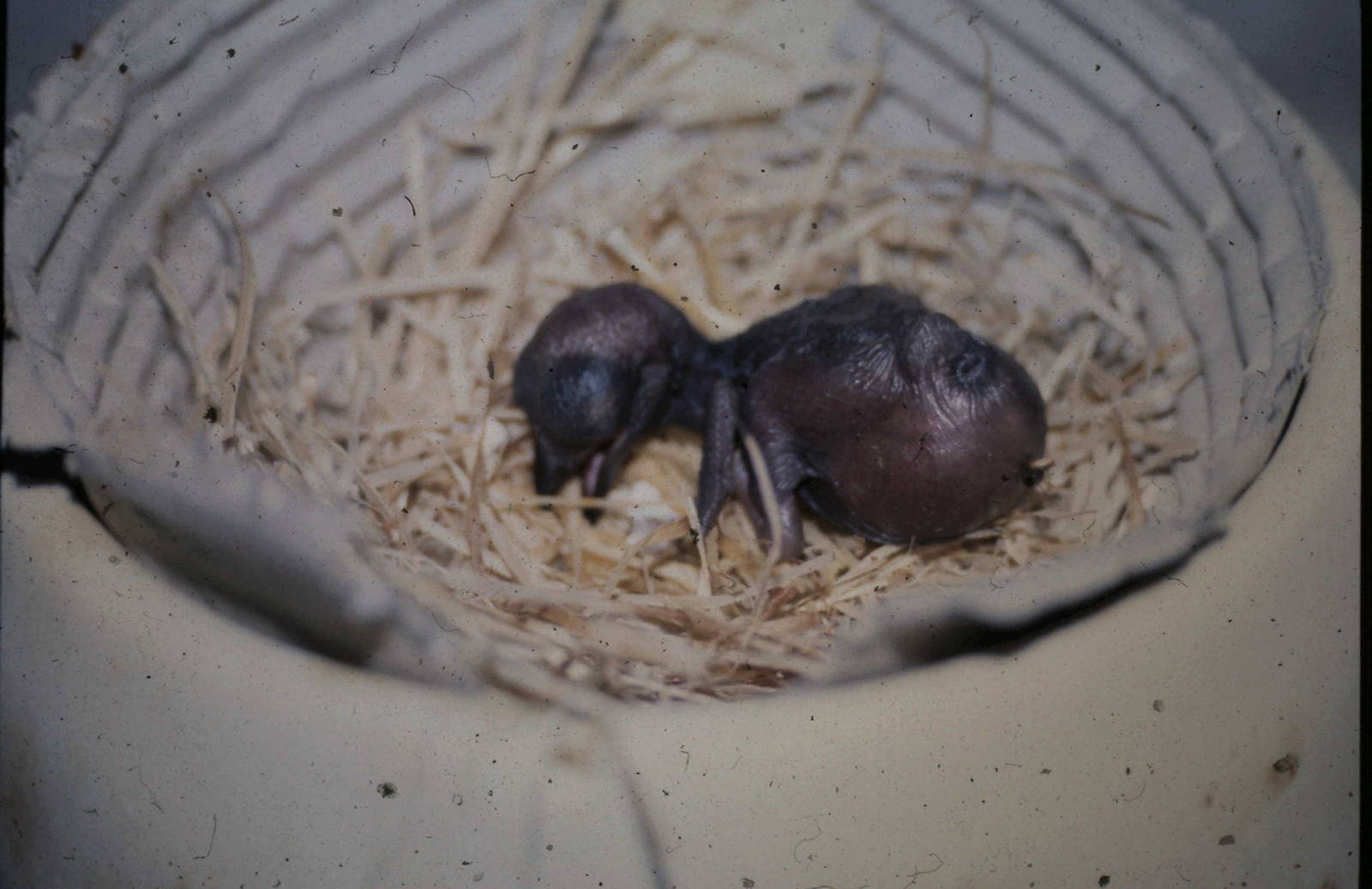
I know the article in AFA Watchbird very well ( good article by the way ;) ! ) and in our Gallery we already had proof that the species had been bred at Walsrode because I already had uploaded a photo of a very young chick at the hand-raising station, made around 1988 :

 
I know the article in AFA Watchbird very well ( good article by the way ;) ! ) and in our Gallery we already had proof that the species had been bred at Walsrode because I already had uploaded a photo of a very young chick at the hand-raising station, made around 1988 :


Did you write the article @vogelcommando ?

Sorry I didn't see that picture but it is great !

Why do you think that the species disappeared from collections ?
 
Back
Top