The Future of Zoos Victoria 2024 (Speculation/Fantasy)

Came here to say it so as not to misuse the news thread - IMHO - the baboon enclosure is low-key awful. Baboon troop great, enclosure awful, from a planning perspective.

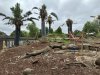
I can't fathom why the BoH area runs along one of the path sides of the enclosure rather than along the backside. That's just makes for a boring track (which is heightened by the opposite side being a recycling plant and plant nursery), and then the palm trees look shocking. I know they tried to prevent them climbing them with hot wires, but what remains looks gross.

I do think the troop is great, and the enrichment is done well and size is good, but I think the whole thing was poorly thought through and not a great outcome all things considered.
 
Came here to say it so as not to misuse the news thread - IMHO - the baboon enclosure is low-key awful. Baboon troop great, enclosure awful, from a planning perspective.

I can't fathom why the BoH area runs along one of the path sides of the enclosure rather than along the backside. That's just makes for a boring track (which is heightened by the opposite side being a recycling plant and plant nursery), and then the palm trees look shocking. I know they tried to prevent them climbing them with hot wires, but what remains looks gross.

I do think the troop is great, and the enrichment is done well and size is good, but I think the whole thing was poorly thought through and not a great outcome all things considered.

I would assume the placement of the BOH area is for access reasons (i.e. for vehicles etc) as well as affording the baboons increased privacy by blocking off the view of them from that side.

I took this photo eight months ago and agree the palm trees aren’t looking very presentable. The Hamadryas baboon favours cliffs/rock faces as a habitat; so while palm trees are associated with the arid environment their species inhabits, they’re largely redundant here beyond providing aesthetics and limited shade.

upload_2024-7-27_14-4-7.jpeg

The zoo are currently taking a pause in breeding. It’s difficult to introduce unrelated males and the three youngest males are related to all the reproductive aged females.

If/when breeding resumes, the logical candidates are Gana (2017); Hudson (2018); and Makali (2019). They each represent a different maternal line and have had adequate exposure to the raising of young. Qetesh, who is 14 years old and an experienced mother, could arguably join this line up. Her daughter has recently produced two offspring at Adelaide Zoo; and combined with her two sons in Melbourne’s, this could be considered sufficient representation.

0.1 Huddo (1999) Grijs x Unknown
0.1 Macey (2004) Imported 2015 (New Zealand)
0.1 Qetesh (2010) Imported 2015 (New Zealand)
1.0 Jabari (2010) Imported 2012 (USA)
1.0 Azizi (2010) Imported 2012 (USA)
0.1 Juju (2015) Jabari x Huddo
1.0 Melako (2017) Jabari x Macey
0.1 Gana (2017) Unknown x Grace
0.1 Hudson (2018) Unknown x Huddo
1.0 Quimby (2018) Unknown x Qetesh
0.1 Makali (2019) Unknown x Macey
1.0 Quill (2019) Unknown x Qetesh
0.1 Quilton (2020) Unknown x Qetesh
0.1 Muna (2020) Unknown x Macey
0.1 Mei (2021) Unknown x Macey
 

Attachments

  • upload_2024-7-27_14-4-7.jpeg
    upload_2024-7-27_14-4-7.jpeg
    262.4 KB · Views: 57
Came here to say it so as not to misuse the news thread - IMHO - the baboon enclosure is low-key awful. Baboon troop great, enclosure awful, from a planning perspective.

I can't fathom why the BoH area runs along one of the path sides of the enclosure rather than along the backside. That's just makes for a boring track (which is heightened by the opposite side being a recycling plant and plant nursery), and then the palm trees look shocking. I know they tried to prevent them climbing them with hot wires, but what remains looks gross.

I do think the troop is great, and the enrichment is done well and size is good, but I think the whole thing was poorly thought through and not a great outcome all things considered.
I would assume the placement of the BOH area is for access reasons (i.e. for vehicles etc) as well as affording the baboons increased privacy by blocking off the view of them from that side.

I took this photo eight months ago and agree the palm trees aren’t looking very presentable. The Hamadryas baboon favours cliffs/rock faces as a habitat; so while palm trees are associated with the arid environment their species inhabits, they’re largely redundant here beyond providing aesthetics and limited shade.

View attachment 719428

The zoo are currently taking a pause in breeding. It’s difficult to introduce unrelated males and the three youngest males are related to all the reproductive aged females.

If/when breeding resumes, the logical candidates are Gana (2017); Hudson (2018); and Makali (2019). They each represent a different maternal line and have had adequate exposure to the raising of young. Qetesh, who is 14 years old and an experienced mother, could arguably join this line up. Her daughter has recently produced two offspring at Adelaide Zoo; and combined with her two sons in Melbourne’s, this could be considered sufficient representation.

0.1 Huddo (1999) Grijs x Unknown
0.1 Macey (2004) Imported 2015 (New Zealand)
0.1 Qetesh (2010) Imported 2015 (New Zealand)
1.0 Jabari (2010) Imported 2012 (USA)
1.0 Azizi (2010) Imported 2012 (USA)
0.1 Juju (2015) Jabari x Huddo
1.0 Melako (2017) Jabari x Macey
0.1 Gana (2017) Unknown x Grace
0.1 Hudson (2018) Unknown x Huddo
1.0 Quimby (2018) Unknown x Qetesh
0.1 Makali (2019) Unknown x Macey
1.0 Quill (2019) Unknown x Qetesh
0.1 Quilton (2020) Unknown x Qetesh
0.1 Muna (2020) Unknown x Macey
0.1 Mei (2021) Unknown x Macey
If Melbourne were to construct the BOH facilities at the back side it would take up a fair portion of the lawn behind; so I assume that's the reason why they elected to implement them on that side of the exhibit instead. I guess they could've built the BOH area at the back, but it instead would've lessened the exhibit's depth size which was essential for the whole design of a 'baboon hill'.
 
If Melbourne were to construct the BOH facilities at the back side it would take up a fair portion of the lawn behind; so I assume that's the reason why they elected to implement them on that side of the exhibit instead. I guess they could've built the BOH area at the back, but it instead would've lessened the exhibit's depth size which was essential for the whole design of a 'baboon hill'.

It interests me how the original capacity was quoted as 40-45 baboons, which would look very cramped by today’s standards. A lot can change in a decade and in any case, it was a massive upgrade on the cages they occupied prior to this, which were long overdue for an upgrade. Auckland held their Chacma baboon in a similar cage block, before the opening of Baboon Hill in 1999.

Long term, I do feel like a move to Werribee will eventuate. There’s many higher priorities - both at Melbourne and Werribee; but 10-15 years from now and who knows.
 
It interests me how the original capacity was quoted as 40-45 baboons, which would look very cramped by today’s standards. A lot can change in a decade and in any case, it was a massive upgrade on the cages they occupied prior to this, which were long overdue for an upgrade. Auckland held their Chacma baboon in a similar cage block, before the opening of Baboon Hill in 1999.

Long term, I do feel like a move to Werribee will eventuate. There’s many higher priorities - both at Melbourne and Werribee; but 10-15 years from now and who knows.
I think it was just a rough comparison regarding their actual increase in space. At the time they had around ten baboons in the old cages, so an enclosure more than four times the size would've given them the opportunity to accommodate up to 40 baboons. Not a reasonable estimation and obviously the max is probably more around 25 baboons.

Werribee have similarly said the same thing about their upcoming elephant complex (of which can supposedly hold up to 40 individuals), but in reality a herd of only 20-25 individuals will probably be the capacity.

Long term I do agree a move to Werribee will probably be likely. The gorilla enclosure is suitable but perhaps they find the space to construct a new exhibit for them over there; there is a lot of unused space along the walking trail.
 
I think it was just a rough comparison regarding their actual increase in space. At the time they had around ten baboons in the old cages, so an enclosure more than four times the size would've given them the opportunity to accommodate up to 40 baboons. Not a reasonable estimation and obviously the max is probably more around 25 baboons.

Werribee have similarly said the same thing about their upcoming elephant complex (of which can supposedly hold up to 40 individuals), but in reality a herd of only 20-25 individuals will probably be the capacity.

Long term I do agree a move to Werribee will probably be likely. The gorilla enclosure is suitable but perhaps they find the space to construct a new exhibit for them over there; there is a lot of unused space along the walking trail.

Unfortunately with Hamadryas, their society is very much geared towards harems, so the inevitable 50:50 ratio of male offspring to female offspring creates management challenges. That said, even with an adequate gender ratio (Melbourne have two females to every male), I agree 25 baboons is likely the capacity.

Due to overcrowding, Melbourne ceased breeding for 15 years until the move to the new exhibit and consequently only Grace (1996) and Huddo (1999) were reproductive from the old troop. The majority of the Melbourne animals were elderly females than died in the years following the move; with the youngest females from the import from Wellington bolstering numbers. Despite plans for four offspring to each female, I note the bulk of the infants were born to Macey and Qetesh. Macey has produced an impressive eight infants in her lifetime, considering she had three at Wellington!
 
Felids at Melbourne Zoo

Melbourne Zoo currently has three felids in its collection:

African lion
Sumatran tiger
Snow leopard

It’s a drastic reduction from the number of species held 15-20 years, with numerous phase outs including Jaguar, Persian leopard and all small cat species.

Additional felid species held in the region are as follows:

Sri Lankan leopard
Cheetah
Clouded leopard
Caracal
Serval
Fishing cat

It’s reasonable to assume that Melbourne Zoo won’t be importing a species not currently held in the region; but I hope the redevelopment will involve the acquisition of at least one additional felid species - bearing in mind we can rule out Cheetah, which is better suited to open range zoos; and potentially Serval/Caracal, which are grassland cats.

Sri Lankan would be the obvious choice for TOTE. There’s the space to build either a complex with male and female exhibits for breeding; or at a minimum, allocate space to a non-breeding sibling pair. If Sumatran tiger are to remain in this precinct, smaller felids would be unsettled at being housed in such close proximity; but the Sri Lankan leopard could be housed in the precinct without issue.
 
Felids at Melbourne Zoo

Melbourne Zoo currently has three felids in its collection:

African lion
Sumatran tiger
Snow leopard

It’s a drastic reduction from the number of species held 15-20 years, with numerous phase outs including Jaguar, Persian leopard and all small cat species.

Additional felid species held in the region are as follows:

Sri Lankan leopard
Cheetah
Clouded leopard
Caracal
Serval
Fishing cat

It’s reasonable to assume that Melbourne Zoo won’t be importing a species not currently held in the region; but I hope the redevelopment will involve the acquisition of at least one additional felid species - bearing in mind we can rule out Cheetah, which is better suited to open range zoos; and potentially Serval/Caracal, which are grassland cats.

Sri Lankan would be the obvious choice for TOTE. There’s the space to build either a complex with male and female exhibits for breeding; or at a minimum, allocate space to a non-breeding sibling pair. If Sumatran tiger are to remain in this precinct, smaller felids would be unsettled at being housed in such close proximity; but the Sri Lankan leopard could be housed in the precinct without issue.

Given the loss of elephants, the zoo should really look at what can compare. A tiger, Sri lankan leopard and sunbear complex would create an area that would be just about as popular as the elephants were. It's a hugely missed opportunity at taronga, large cats and bears are some of the most popular species. That plus an expansion or orangs and gibbons would make for a great use of the space.
 
Given the loss of elephants, the zoo should really look at what can compare. A tiger, Sri lankan leopard and sunbear complex would create an area that would be just about as popular as the elephants were. It's a hugely missed opportunity at taronga, large cats and bears are some of the most popular species. That plus an expansion or orangs and gibbons would make for a great use of the space.

You make a good point. With the exception of Giant panda, no one species alone could ever match the elephants in popularity; so the best solution is multiple high profile species.

The concept of a rotational exhibit system for sun bears and tigers has been floated at Perth and Melbourne could look at something similar if they don’t want to build seperate exhibits for tigers, leopards and sun bears. It could also be hugely enriching for the animals and visitors, who would effectively see something different on each visit.
 
I still think Vervet monkeys near a cafe would be far better... At any of the sites...

@The Sleepy Hippo

They are an underrated critter Vervets monkeys hey, very charismatic and interesting to see and watch for lengthy times. If a zoo's cafe had enough space for an area with a viewing area for Vervets and another section bordering Meerkat exhibit would be fantastic (Meerkats still being very popular with general visitors). The Vervets would probably try asking for food through the glass though unless viewing was one way.

It’s a great shame that Vervet monkeys are inevitably headed for a phase out, both within Werribee’s collection and the Australasian region. I’ve been reading a lot about Patas monkey recently, formerly held at Dubbo and Orana; and it’s clear medium sized monkeys like these are ideal for open range zoos. Open range exhibits are typically expansive (islands etc) and visitors want to be able to see something (which discounts small monkeys like tamarins). Holding large, continuously breeding troops is beneficial to welfare and open range zoos have the space to facilitate this.

Werribee were considering holding Chacma baboon in the early 1990’s, which though considerably larger than the medium sized monkey species discussed above, could have still been accommodated in reasonable numbers (10-15). I’m still of the opinion that Melbourne should transfer their Hamadryas troop to Werribee; with the bachelor gorillas accommodated at Melbourne. The Gorilla Rainforest remains an impressive complex; but in the current state, functions as a single exhibit. It could be a much greater attraction imo.
 
Considering it's a state run organisation, does running at a deficit matter. Taronga for a very long time ran at a deficit. Im not even sure if it's making a profit today. NSW did a similar thing back 10 years ago, except they made redundant up to of memory 30% or national parks and staff throughout the botanic gardens. Then a few short years later announced large scale projects like the revamp of there African theme, the sumatran tiger enclosures etc.

Wonder if perhaps Melbourne Zoo might consider have some Sloths, Anteaters and Armadillos in couple of years (c.2027) when Xenarthra IRA completed; exciting and increasingly worldly popular animals with zoogoers (partiacuarly Sloths and Anteaters) that Steve Robinson mentioned on other thread are unlikely to be as costly importing when compared to large megafauna. Could imagine a zoo like Melbourne would be interested in the above when the IRA is finished (*stating this last point just as a potential example for medium term possibility for MZ during few years of probable need to use funds for maintenence purposes and smaller new exhibit in about 2 to 4 years time approx', complete personal conjecture though.
 
The fencing would need to be modified for Nyala - so we can probably throw that idea out the window.

I remember Melbourne were planning to acquire Malayan Tapir and since their previous enclosure is currently being occupied by the Nyala, perhaps they'll be housed in part of the Elephant complex. The barn may help with their eye issues per se.

Hypothetically an Orangutan expansion wouldn't need to take up as much space of the current elephant complex if they utilised the island opposite too, which would be preferable.

With Malayan Tapir, while would love Australian zoos to try again with what they know now about how to house them with immense shade for preventing blindness from the intense ozone layer compromised Australian sunrays, isnt it sort of unfortunately decided medium term at least that Malayan Tapirs are a no-go again for Australian zoos but theres hope for a return to numbers of Brazilian Tapirs (ie probable future imports at some point).
 
Think MZ's new exhibits/upgraded exhibits/replacement exhibits run of recent years has stopped for a few years now. It'll start again in near-ish future.
Their last main precinct was the Carnivores precinct which opened seven years ago now. Since then, they have completed a few renovations around the zoo; mainly small ones around TOTE and Growing Wild, the Giant Tortoise yard expansion and refurbishment of the Kangaroo walkabout. Healseville's been in a similar boat.

Conversely, Werribee hasn't had much developments too, barring the recent elephant complex. Sky Safari should follow, and then hopefully the Waterhole precinct and Rhino complex extension to round out Werribee's masterplan. The way things are going this all presumably still at least a decade away before full completion. Unless the other two projects (besides Sky Safari) are scrapped, it's likely there won't be any investment into Melbourne for a while until the balls picked up so to speak.
 
With Malayan Tapir, while would love Australian zoos to try again with what they know now about how to house them with immense shade for preventing blindness from the intense ozone layer compromised Australian sunrays, isnt it sort of unfortunately decided medium term at least that Malayan Tapirs are a no-go again for Australian zoos but theres hope for a return to numbers of Brazilian Tapirs (ie probable future imports at some point).

It’s been reported that Melbourne, Adelaide and Darling Downs Zoo all plan to import Brazilian tapir, which will ensure a reasonable founder base. Three pairs minimum would be advisable to ensure a semi-sustainable population.

Malayan tapirs are my favourite species of tapir, but sadly have to be realistic the Australian climate doesn’t suit them.
 
I think Brazilian tapir are a strong likelihood given regional interest in this species and plans to import several new founders in the coming years. It makes even more sense with the upcoming Xenarthra IRA - a true South American revival. All we need now is Jaguar to make a comeback!


I’d love to see this eventuate, with the adjacent island utilised too. The existing orangutan exhibit is adequate; but new supporting infrastructure, including a second night house and day room as well as aerial pathways, could turn it into so much more.
Very true - I do wonder where Melbourne would accommodate these species if they were to import.

Taking everything into consideration I would do the following;

First and foremost, move the Colobus into the current Black and white ruffed lemur enclosure. They should be mixed in with the Ring Tails in the main walk through enclosure.

Then expand the current Pygmy Hippo complex into the former Mandrill enclosure.

The current Treetop complex could then be renovated and be utilised to accommodate some of the newer species such as Two toed sloths, Tamandua and Armadillos alongside some of the current species, Squirrel Monkeys, Spider Monkeys, and Emperor Tamarins.

The current elephant complex could then be refurbished for the Brazilian Tapir in half, and the Orangutan expansion in the other. The Orangutan expansion should include additional night dens and two additional interconnected enclosures, one on the island opposite the current complex and another a roundabouts where the current Waterhole elephant enclosure is. A new cafe could even be built to overlook the new islands. The White Cheeked Gibbon pair would also theoretically be accommodated here.
 
Very true - I do wonder where Melbourne would accommodate these species if they were to import.

Taking everything into consideration I would do the following;

First and foremost, move the Colobus into the current Black and white ruffed lemur enclosure. They should be mixed in with the Ring Tails in the main walk through enclosure.

Then expand the current Pygmy Hippo complex into the former Mandrill enclosure.

The current Treetop complex could then be renovated and be utilised to accommodate some of the newer species such as Two toed sloths, Tamandua and Armadillos alongside some of the current species, Squirrel Monkeys, Spider Monkeys, and Emperor Tamarins.

The current elephant complex could then be refurbished for the Brazilian Tapir in half, and the Orangutan expansion in the other. The Orangutan expansion should include additional night dens and two additional interconnected enclosures, one on the island opposite the current complex and another a roundabouts where the current Waterhole elephant enclosure is. A new cafe could even be built to overlook the new islands. The White Cheeked Gibbon pair would also theoretically be accommodated here.

Great ideas!

I really like the concept of further developing geographic zones within Melbourne Zoo’s collection. Their layout is similar to Auckland Zoo in regards to trails/precincts; but unlike Auckland’s precincts, Melbourne’s are jumbled - with the theming much more loose.

Treetops is basically South America with colobus. Moving them to the Black and white lemur exhibit would align nicely with the Ring-tailed lemur and Western lowland gorilla exhibits; but I’d also give consideration to housing colobus at Werribee long term (replacing the Vervet monkey) and so in this scenario, would favour Red ruffed lemur replacing Black and white ruffed lemur and Black and white colobus (managed across two exhibits).

An additional two orangutan exhibits would enable them to hold a colony. Along with the gorillas and big cats, they’d surely be one of the zoo’s biggest drawcards, with orangutan infants drawing the crowds well into their late juvenile phase. Presumably there’d be some effort to integrate them with the lesser apes, but rotational exhibits and aerial lines would allow multiple groupings of ape species in any case.
 
Their last main precinct was the Carnivores precinct which opened seven years ago now. Since then, they have completed a few renovations around the zoo; mainly small ones around TOTE and Growing Wild, the Giant Tortoise yard expansion and refurbishment of the Kangaroo walkabout. Healseville's been in a similar boat.

Conversely, Werribee hasn't had much developments too, barring the recent elephant complex. Sky Safari should follow, and then hopefully the Waterhole precinct and Rhino complex extension to round out Werribee's masterplan. The way things are going this all presumably still at least a decade away before full completion. Unless the other two projects (besides Sky Safari) are scrapped, it's likely there won't be any investment into Melbourne for a while until the balls picked up so to speak.
Looking at things from afar, funding's probably been an issue. Combine that with Covid and the after effects a lot of industries have been experiencing, it's indicative a lot of the previous plans that have been delayed will start to be pushed into motion once everything elevates back to normal.

There also hasn't been any outstanding reasons to make any significant changes. I know for a fact it's been the same for Taronga who now seem content with their zoo overall. The only potential changes there being a gorilla expansion. Likewise, Melbourne's next focus will certainly be on the elephants and deducing a suitable replacement for them. This should already be decided by management. I wouldn't think too harshly if they plan to just close the whole thing off for a few years or just throw a few surplus animals like Zebra into the enclosures in the mean time until they can afford a bigger project. This seems to be the direction they're tracking in, all things combined.
 
@Zoofan15

Agree totally

@Jambo

Yeah really really great ideas man like Zoofan said, really shows what MZ means to you and you have a spark of really excellent 'whatif' concepts that if they went with your ideas and suggestions would be some really good moves. Finances aside (a huge thing to 'aside', but if current financial situo' wasnt a bit of a 'sore foot' really like your strategic ideas for the zoo if they had the means to do).

@Trua

Yeah see your point with financially. Really like some of the ideas floated though of course as sure you do too like Jambos just now. It's a tricky current ladscape currenly financially unfortunately hey.

@Jambo

Yeah wow the passage of time, didnt realise had been 7 years+ since Lion Gorge & Snow Leopard Ridge was completed and opened to visitors.

When outlining major (either new or revamped) precincts at our two biggest city zoos in Aus', comparatively Taronga has had a lot more recently with Nura Diya Australia as a whole (actually will count ARC as another big precinct too), African Savannah and Tiger Trek in last 7 years (seven years in time frame of being completed, work on the latter obviously began 8+ years ago as we all know).

Definitely appears for Zoos Victoria zoos specifically, its a Werribee focus time period which it definitely deserves, but would be nice if currently same could be done for MZ.
 
Last edited:
Back
Top