The Great Southern State: WhistlingKite24 does South Australia

Adelaide Zoo [Part 5]: Nocturnal House, Carnivores, Variety Children’s Zoo and Reptile House

On the final stretch for this review. The next section of the zoo leads onto a very old section with lots of mock rock and dated walls. On one side two exhibits have been opened to make a larger space for a new pair of Cape Porcupine from Monarto and on the other side was a larger former bear enclosure for Ring-tailed Lemurs. Their exhibit was a decent size for them and contained a thick hedge of plantings and a big shadecloth. Not the most attractive exhibits but they were fit for purpose for their inhabitants. Containing eleven enclosures and being the area where Australia’s last sloth was housed, the ageing nocturnal house was nearby and contained largely a standard mix of species (by Australian standards) with a few double-ups across enclosures. Most spaces were of a similar size and contained sandy substrate which was odd for a few of the woodland species but I think it largely reflects that this space is very flexible especially for an intensely managed species like Bilbies which were held across three enclosures and would require close management. Plenty of activity among hopping-mice, gliders and dunnarts but the stick nest-rats refused to emerged from their nests. Additional species like Ghost Bats and Northern Quolls used to be housed here as well and they definitely would have supported in diversity the line up further. Also, there is something I find odd about frogmouths or owls housed in nocturnal houses; while interesting behaviours can be observed, best keep them outdoors I think when the opportunity is possible. Like many older Aussie nocturnal houses, this one will be drastically reshaped in the masterplan.
1. Spinifex Hopping-Mouse
2. Greater Stick-nest Rat
3. Squirrel Glider
4. Tawny Frogmouth
5. Fat-tailed Dunnart
6. Greater Bilby, Tawny Frogmouth
7. Greater Bilby
8. Brush-tailed Bettong, Common Ringtail Possum
9. Olive Python
10. Olive Python
11. Greater Bilby
full

Ring-tailed Lemur enclosure

full

Nocturnal house – centre yellow-lighted enclosure is empty

Opposite the nocturnal house, there is a complex of old but well-established aviaries with a wisteria growing over them that are unfortunately poorly stocked and are random mix of leftover birds mainly focussed around housing for free flight birds along with surplus stock. The front aviary in front of the nocturnal house was unfortunately empty and was for many years a smart little mix of African waxbills, Namaqua doves, lovebirds, weavers and Spur-thighed Tortoises. All gone now without a trace. The neighbouring aviary for Timneh Grey Parrots and a Congo Grey Parrot remains and it’s always good to see a zoo keep a flock of grey parrots. A few years ago, there were hardly any housed in Australasian zoos but there are now a few more holders. Along the aviary walk itself there was an aviary for Barking Owl, and Black-breasted Buzzard that were very thick with plants for an arid species that needs space. Opposite them a pair of Yellow-crowned Amazon Parrots mixed with Lady Amherst’s Pheasant, a single Sacred Kingfisher with seemingly no other species and additional housing for Cottontop Tamarins that backed onto the tamarin house. Very attractive aviaries but their occupants didn’t match the grandeur. A touch underwhelming. There was also the old enclosure for their breeding troop of Eastern Black-and-white Colobus which is drastically improved by the aerial pathway. Seeing colobus infants play around with the adults was a highlight.

full

Aviary walk

Another dead end towards the carnivores. There was a long row for four aviary-style enclosures for Binturong, Serval, Fennec Fox and Brown-nosed Coati to the left. Only the binturong was seen but the best exhibit of the lot was for the Serval I thought; nicely planted, plenty of height etc. I tried several times to see the coati but wasn’t successful. To the right was an old meshed (yet charming) enclosure for Adelaide’s old pair of lion that included several different spaces where the lions could be managed. The main space was grassed and had good tree coverage for shade. It was feeding time so the lions were up and about. It seemed fine for their elderly pair and Adelaide seem committed to keeping lion and will build a new enclosure for surplus males from Monarto. The former enclosures for Goodfellow’s Tree-Kangaroos which would have been excellent for tree-roos have been opened up into one space for Tammar Wallaby and Quokka. I would like to see the return of the species to Adelaide but there aren’t many surplus Goodfellows around currently.

full

Lion enclosure

full

Lioness Amani

Back towards the centre of the zoo are a set of larger exhibits that sit around the main South-east Asia. There are a pair of enclosures for Sumatran Tigers; a rather cramped enclosure viewed from a platform for a female resting on a top platform and three adult-sized cubs sheltering among the bamboo. The pathway led to a second tiger enclosure that was much nicer with a pool and expansive viewing areas for their male. This was connected thematically via a longhouse towards the enclosure for Sumatran Orangutan, enhanced by the recent addition of an aerial pathway for the orangutans and an additional shelter with new interpretative signage. Their male Kluet was a striking individual that came out with his blanket on the sunny afternoon collecting empty enrichment bottles around the exhibit in hopes of giving them back to keepers to receive a treat according to one passing volunteer.

full

Tiger enclosure #2 towards orangutan enclosure in distance

full

Orang enclosure

full

Sumatran Orangutan – Kluet

The mandrill enclosure was disappointing. A very small island that was moated with water, sacrificing valuable space, with hotwired palms and a sad pair of branches in the centre of the exhibit as the only real opportunity at reaching a higher vantage point from human stares. I’m glad they have access off-show during the day where they spent most of their time. All three of them – the last in Australia unfortunately – did emerge into full view once the crowds died down to feed. The neighbouring enclosure for Hamadryas Baboon was fenced off as the troop have had various management issues. Looking forward to seeing the baboons transferred out to Monarto hopefully. After seeing the topography of Monarto, couldn’t think of a better species.

full

Mandrill – male Jumoke

full

Mandrill enclosure

Second last was the Children’s Zoo as I made my way back to the front of the zoo which contained a large fenced off section with frontal exhibits for Quokkas in shady space. Then there were a set of three similar-sized aviaries; one contained an ambassador Black-footed Tree-Rat that was tucked away in its bag, followed by a Dollarbird which are Australia’s only rollers and one signed for Brush-tailed Bettong but it contained two active Long-nosed Potoroo when I visited. This was then followed by various domestics – goats, rabbits, guinea pigs and chickens in a clean space even complete with a goat overhead walkway where the goats can sit over visitor’s heads. There is furthermore a large playground for children which is finished by another new aviary for a dynamic mix of exotic parrots including some rare ones like three Brown-throated Conures, two Red-bellied Parrots and a singleton each of Black-capped Caique and White-bellied Caique that were clearly bonded.

full

Two species of caique

full

Dollarbird and potoroo enclosure

full

Children’s zoo


Lucky last, the reptile house was definitely looking a touch dated but each exhibit was spacious for their occupants. There is definitely not much glass banging by visitors in the reptile house as their exhibits are framed by wood and seen from behind a barrier. It was odd to visit a reptile house and not see a single mixed exhibit anywhere; all species were housing singly with one enclosure currently under development for the new species. The highlight reptile if seen would have been Pygmy Bluetongue Lizard. It’s unfortunately a poor display animal living in burrows. It disappeared for many years and was thought to be extinct until it was rediscovered in 1992. Aruba Island Rattlesnake was another great species to see here at Adelaide as there are two left in Australia; a pale but striking species. With the recent importation of Western Diamondback and breeding of Eastern Diamondback, rattlesnakes have a relatively secure future in Australian zoos but the Aruba Island taxa is only kept at Adelaide.
1. Central Netted Dragon
2. Southern Angle-Headed Dragon
3. Rough-scaled Python
4. Broad-headed Snake
5. Centralian Knob-Tailed Gecko
6. Hosmer's Skink
7. Corn Snak
8. Woma Python
9. Green Anaconda
10. Pygmy Blue-Tongued Lizard
11. Aruba Island Rattlesnake
12. Gila Monster
13. Pig-nosed Turtle
14. under renovation
15. Common Death Adder
16. Inland Taipan
17. Boyd's Forest Dragon
18. Red-Bellied Black Snake
19. Aldabra Giant Tortoise (one juvenile)
full

Reptile house enclosures

full

Aruba Island Rattlesnake

Overall, it’s very easy to like Adelaide Zoo and I liked it so much I did squeeze in a second visit. It’s a charming zoo on a small footprint with some excellent parts that really shine through (panda complex, South-east Asian primates, walkthrough aviaries), gorgeous architecture (toilet aviaries) but there are still some poorer areas that required careful management especially for their megafauna and a clearer evaluation going forwards considering the expansive Monarto is far closer to Adelaide than Taronga is to Dubbo. Their masterplan promises clear designated sections with small changes already having been implemented towards this goal (orang aerial pathway, Komodos, kid’s zoo etc.). Time permitting, Gorge Wildlife Park is next; the Featherdale of South Australia with an exotic twist.

full

Adelaide Zoo masterplan
 
Completely agree. What bothers me most about the revised Adelaide Zoo masterplan is that the original masterplan was perfect - with Adelaide’s collection complimenting Monarto’s; not mirroring it on a smaller scale like what they’re planning now.

Monarto Safari Park has the largest lion exhibit in the region, which houses a multigenerational pride. Rather than Adelaide building a small exhibit to house a pair of bachelor males, I’d much rather see Sri Lankan leopards. City zoos are confident in phasing out Asian elephants and Common hippopotamus, often without any direct replacement. African lions have four counterparts from the Panthera genus, all of which thrive living solitary lives.

@WhistlingKite24 @Zoofan15

(ps fantastic photos and great review again WhistlingKite)

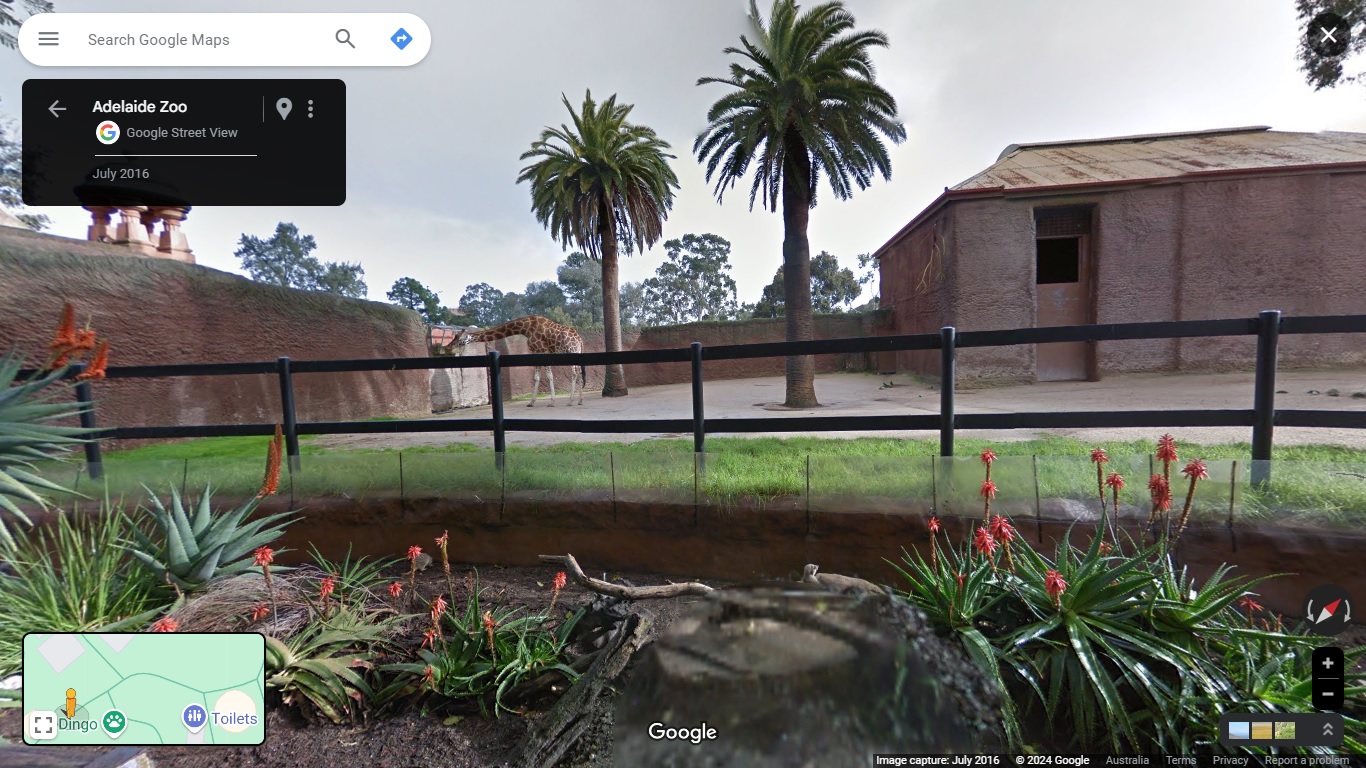
Wow also thought the Giraffes had access to the area past the old Elephant house all these years...thought that was pretty much the reason for Samorn's move to Monarto in 1991, to give the Giraffes more space. Thats shocking must say, that space they have is tiny, less than 500 sq m (even Taronga's old Giraffe space was twice that size), the only good thing about that exhibit is the Meerkat exhibit in the front of as an aesthetic. Now they want to expand it when they should have done so 30 years ago...they should just send those three females to Monarto like you suggested and look more at their previous masterplan that included Gorillas and Sri Lankan Leopards.

source: ShortURL - URL Shortener (Google Earth images) its like the Giraffe here is looking over the barrier yearningly (or at least curiously) for that extra space that could of been provided years ago. Sorry know it sounds like a scathing comment towards the zoo, but what they do great they do wonderfully and this is just one of their shortfalls.

Giraffe.jpg
 
Last edited:
@WhistlingKite24 @Zoofan15

(ps fantastic photos and great review again WhistlingKite)

Wow also thought the Giraffes had access to the area past the old Elephant house all these years...thought that was pretty much the reason for Samorn's move to Monarto in 1991, to give the Giraffes more space. Thats shocking must say, that space they have is tiny, less than 500 sq m (even Taronga's old Giraffe space was twice that size), the only good thing about that exhibit is the Meerkat exhibit in the front of as an aesthetic. Now they want to expand it when they should have done so 30 years ago...they should just send those three females to Monarto like you suggested and look more at their previous masterplan that included Gorillas and Sri Lankan Leopards.

source: ShortURL - URL Shortener (Google Earth images) its like the Giraffe here is looking over the barrier yearningly (or at least curiously) for that extra space that could of been provided years ago. Sorry know it sounds like a scathing comment towards the zoo, but what they do great they do wonderfully and this is just one of their shortfalls.

Giraffe.jpg

Adelaide’s giraffe exhibit is very dated. It’s comparable to Auckland and Wellington’s old giraffe exhibits (at least from what I’ve seen heard of the former) which presumably opened with the import of their first breeding bulls in 1960 and 1988 respectively. Auckland’s giraffes moved to the current exhibit decades ago; and Wellington Zoo opened their current exhibit in 2009.

Adelaide and Melbourne are the only two zoos in the region with a sister zoo better equipped to exhibit giraffes within an hour’s drive. I would much rather see Adelaide Zoo, which is also the region’s smallest main zoo, replace this species with something better suited to a city zoo as it has done with elephants and hippopotamus.
 
Adelaide Zoo [Part 5]: Nocturnal House, Carnivores, Variety Children’s Zoo and Reptile House

On the final stretch for this review. The next section of the zoo leads onto a very old section with lots of mock rock and dated walls. On one side two exhibits have been opened to make a larger space for a new pair of Cape Porcupine from Monarto and on the other side was a larger former bear enclosure for Ring-tailed Lemurs. Their exhibit was a decent size for them and contained a thick hedge of plantings and a big shadecloth. Not the most attractive exhibits but they were fit for purpose for their inhabitants. Containing eleven enclosures and being the area where Australia’s last sloth was housed, the ageing nocturnal house was nearby and contained largely a standard mix of species (by Australian standards) with a few double-ups across enclosures. Most spaces were of a similar size and contained sandy substrate which was odd for a few of the woodland species but I think it largely reflects that this space is very flexible especially for an intensely managed species like Bilbies which were held across three enclosures and would require close management. Plenty of activity among hopping-mice, gliders and dunnarts but the stick nest-rats refused to emerged from their nests. Additional species like Ghost Bats and Northern Quolls used to be housed here as well and they definitely would have supported in diversity the line up further. Also, there is something I find odd about frogmouths or owls housed in nocturnal houses; while interesting behaviours can be observed, best keep them outdoors I think when the opportunity is possible. Like many older Aussie nocturnal houses, this one will be drastically reshaped in the masterplan.
1. Spinifex Hopping-Mouse
2. Greater Stick-nest Rat
3. Squirrel Glider
4. Tawny Frogmouth
5. Fat-tailed Dunnart
6. Greater Bilby, Tawny Frogmouth
7. Greater Bilby
8. Brush-tailed Bettong, Common Ringtail Possum
9. Olive Python
10. Olive Python
11. Greater Bilby
full

Ring-tailed Lemur enclosure

full

Nocturnal house – centre yellow-lighted enclosure is empty

Opposite the nocturnal house, there is a complex of old but well-established aviaries with a wisteria growing over them that are unfortunately poorly stocked and are random mix of leftover birds mainly focussed around housing for free flight birds along with surplus stock. The front aviary in front of the nocturnal house was unfortunately empty and was for many years a smart little mix of African waxbills, Namaqua doves, lovebirds, weavers and Spur-thighed Tortoises. All gone now without a trace. The neighbouring aviary for Timneh Grey Parrots and a Congo Grey Parrot remains and it’s always good to see a zoo keep a flock of grey parrots. A few years ago, there were hardly any housed in Australasian zoos but there are now a few more holders. Along the aviary walk itself there was an aviary for Barking Owl, and Black-breasted Buzzard that were very thick with plants for an arid species that needs space. Opposite them a pair of Yellow-crowned Amazon Parrots mixed with Lady Amherst’s Pheasant, a single Sacred Kingfisher with seemingly no other species and additional housing for Cottontop Tamarins that backed onto the tamarin house. Very attractive aviaries but their occupants didn’t match the grandeur. A touch underwhelming. There was also the old enclosure for their breeding troop of Eastern Black-and-white Colobus which is drastically improved by the aerial pathway. Seeing colobus infants play around with the adults was a highlight.

full

Aviary walk

Another dead end towards the carnivores. There was a long row for four aviary-style enclosures for Binturong, Serval, Fennec Fox and Brown-nosed Coati to the left. Only the binturong was seen but the best exhibit of the lot was for the Serval I thought; nicely planted, plenty of height etc. I tried several times to see the coati but wasn’t successful. To the right was an old meshed (yet charming) enclosure for Adelaide’s old pair of lion that included several different spaces where the lions could be managed. The main space was grassed and had good tree coverage for shade. It was feeding time so the lions were up and about. It seemed fine for their elderly pair and Adelaide seem committed to keeping lion and will build a new enclosure for surplus males from Monarto. The former enclosures for Goodfellow’s Tree-Kangaroos which would have been excellent for tree-roos have been opened up into one space for Tammar Wallaby and Quokka. I would like to see the return of the species to Adelaide but there aren’t many surplus Goodfellows around currently.

full

Lion enclosure

full

Lioness Amani

Back towards the centre of the zoo are a set of larger exhibits that sit around the main South-east Asia. There are a pair of enclosures for Sumatran Tigers; a rather cramped enclosure viewed from a platform for a female resting on a top platform and three adult-sized cubs sheltering among the bamboo. The pathway led to a second tiger enclosure that was much nicer with a pool and expansive viewing areas for their male. This was connected thematically via a longhouse towards the enclosure for Sumatran Orangutan, enhanced by the recent addition of an aerial pathway for the orangutans and an additional shelter with new interpretative signage. Their male Kluet was a striking individual that came out with his blanket on the sunny afternoon collecting empty enrichment bottles around the exhibit in hopes of giving them back to keepers to receive a treat according to one passing volunteer.

full

Tiger enclosure #2 towards orangutan enclosure in distance

full

Orang enclosure

full

Sumatran Orangutan – Kluet

The mandrill enclosure was disappointing. A very small island that was moated with water, sacrificing valuable space, with hotwired palms and a sad pair of branches in the centre of the exhibit as the only real opportunity at reaching a higher vantage point from human stares. I’m glad they have access off-show during the day where they spent most of their time. All three of them – the last in Australia unfortunately – did emerge into full view once the crowds died down to feed. The neighbouring enclosure for Hamadryas Baboon was fenced off as the troop have had various management issues. Looking forward to seeing the baboons transferred out to Monarto hopefully. After seeing the topography of Monarto, couldn’t think of a better species.

full

Mandrill – male Jumoke

full

Mandrill enclosure

Second last was the Children’s Zoo as I made my way back to the front of the zoo which contained a large fenced off section with frontal exhibits for Quokkas in shady space. Then there were a set of three similar-sized aviaries; one contained an ambassador Black-footed Tree-Rat that was tucked away in its bag, followed by a Dollarbird which are Australia’s only rollers and one signed for Brush-tailed Bettong but it contained two active Long-nosed Potoroo when I visited. This was then followed by various domestics – goats, rabbits, guinea pigs and chickens in a clean space even complete with a goat overhead walkway where the goats can sit over visitor’s heads. There is furthermore a large playground for children which is finished by another new aviary for a dynamic mix of exotic parrots including some rare ones like three Brown-throated Conures, two Red-bellied Parrots and a singleton each of Black-capped Caique and White-bellied Caique that were clearly bonded.

full

Two species of caique

full

Dollarbird and potoroo enclosure

full

Children’s zoo


Lucky last, the reptile house was definitely looking a touch dated but each exhibit was spacious for their occupants. There is definitely not much glass banging by visitors in the reptile house as their exhibits are framed by wood and seen from behind a barrier. It was odd to visit a reptile house and not see a single mixed exhibit anywhere; all species were housing singly with one enclosure currently under development for the new species. The highlight reptile if seen would have been Pygmy Bluetongue Lizard. It’s unfortunately a poor display animal living in burrows. It disappeared for many years and was thought to be extinct until it was rediscovered in 1992. Aruba Island Rattlesnake was another great species to see here at Adelaide as there are two left in Australia; a pale but striking species. With the recent importation of Western Diamondback and breeding of Eastern Diamondback, rattlesnakes have a relatively secure future in Australian zoos but the Aruba Island taxa is only kept at Adelaide.
1. Central Netted Dragon
2. Southern Angle-Headed Dragon
3. Rough-scaled Python
4. Broad-headed Snake
5. Centralian Knob-Tailed Gecko
6. Hosmer's Skink
7. Corn Snak
8. Woma Python
9. Green Anaconda
10. Pygmy Blue-Tongued Lizard
11. Aruba Island Rattlesnake
12. Gila Monster
13. Pig-nosed Turtle
14. under renovation
15. Common Death Adder
16. Inland Taipan
17. Boyd's Forest Dragon
18. Red-Bellied Black Snake
19. Aldabra Giant Tortoise (one juvenile)
full

Reptile house enclosures

full

Aruba Island Rattlesnake

Overall, it’s very easy to like Adelaide Zoo and I liked it so much I did squeeze in a second visit. It’s a charming zoo on a small footprint with some excellent parts that really shine through (panda complex, South-east Asian primates, walkthrough aviaries), gorgeous architecture (toilet aviaries) but there are still some poorer areas that required careful management especially for their megafauna and a clearer evaluation going forwards considering the expansive Monarto is far closer to Adelaide than Taronga is to Dubbo. Their masterplan promises clear designated sections with small changes already having been implemented towards this goal (orang aerial pathway, Komodos, kid’s zoo etc.). Time permitting, Gorge Wildlife Park is next; the Featherdale of South Australia with an exotic twist.

full

Adelaide Zoo masterplan

Thanks for the review, which is well written as always.

I never knew there were still such outdated enclosures in one of Australia's largest zoos. These giraffes really don't fit there. Also interesting to still see so much chain link cages everywhere.

Keep them coming!
 
Thanks for the review, which is well written as always.

I never knew there were still such outdated enclosures in one of Australia's largest zoos. These giraffes really don't fit there. Also interesting to still see so much chain link cages everywhere.

Keep them coming!
Adelaide/Monarto are not Government zoos, they are owned and run by a Zoological Society. They do get some Government support, but a fraction of what Melbourne, for instance, gets. Add to that their attendance is not all that high (you can find that in their annual report).

So, in many respects they have more in common with some of the smaller private zoos than the Government zoos.

Edit: Also worth saying Adelaide has the smallest land area of any of the four city zoos.
 
Last edited:
Adelaide/Monarto are not Government zoos, they are owned and run by a Zoological Society. They do get some Government support, but a fraction of what Melbourne, for instance, gets. Add to that their attendance is not all that high (you can find that in their annual report).

So, in many respects they have more in common with some of the smaller private zoos than the Government zoos.

Edit: Also worth saying Adelaide has the smallest land area of any of the four city zoos.

Interesting, I obviously don't know too much about these zoos, but I always imagined that Perth, Sydney, Melbourne & Adelaide had similarly run zoos. Knowing this background I find it even more baffling that Adelaide ever went for giant panda, that must be a huge financial risk for a zoo with attendance of <500.000 (which I find remarkably low for such a big city).
 
Thanks for wrapping up a fantastic, highly-detailed review of Adelaide Zoo. I really enjoyed my visit there in 2007 and it was great to read of the changes since then. In truth, there hasn't really been enough changes, as the zoo has clearly not kicked onwards to the next level as was the plan with the addition of Giant Pandas in 2009. I am a big fan of Adelaide, a neat city with cool architecture, a lot of historical areas, a fantastic climate, etc., but with 1.4 million people it seems odd that Adelaide Zoo only receives around 500,000 visitors each year. Perhaps there's just so much else to do and see nature-wise in South Australia and so an older, small zoo might not be as appealing as it once was. Also, Adelaide is quite remote and doesn't receive nearly as many tourists as Melbourne (now Oz's #1 city for population as of last year) and Sydney.

In the 2022-23 annual report, Adelaide Zoo and Monarto Safari Park combined only had 662,000 visitors. These are a pair of zoological gems and the new Visitor Centre at Monarto looks amazing, but even with the 2025 addition of elephants I wonder if that will be enough to dramatically improve attendance numbers at that park. I would love to see these zoos prosper and Monarto's new Wild Africa complex, which will include a 5-star hotel and 'glamping' opportunities, might be the key to entice more people to tour the facility.
 
but with 1.4 million people it seems odd that Adelaide Zoo only receives around 500,000 visitors each year... In the 2022-23 annual report, Adelaide Zoo and Monarto Safari Park combined only had 662,000 visitors.
Actually, Adelaide does OK with its visitation. The annual visitation for Zoos SA (2 properties) and Zoos Victoria (4 properties) each equals 36% of their respective States population.
Knowing this background I find it even more baffling that Adelaide ever went for giant panda, that must be a huge financial risk...
It sent them broke. The only thing that saved them was a very co-operative bank. As we know pandas are very expensive and sourcing all that bamboo in the driest State of the driest continent must be a nightmare. Keeping them and paying back the bank (which I believe has now been fully repaid) would limit what you could do otherwise.

It should be noted Adelaide Zoo did not seek out giant pandas. Currumbin Sanctuary in Queensland floated the idea of obtaining them. This prompted the Minister of Foreign Affairs, then the most senior South Australian in Federal Parliament to decide he wanted them for Adelaide. The rest as they say is history. However this does mean that Adelaide does not have to pay the $1million per annum rent. That is paid out of the Federal budget.
 
It sent them broke. The only thing that saved them was a very co-operative bank. As we know pandas are very expensive and sourcing all that bamboo in the driest State of the driest continent must be a nightmare. Keeping them and paying back the bank (which I believe has now been fully repaid) would limit what you could do otherwise.

It should be noted Adelaide Zoo did not seek out giant pandas. Currumbin Sanctuary in Queensland floated the idea of obtaining them. This prompted the Minister of Foreign Affairs, then the most senior South Australian in Federal Parliament to decide he wanted them for Adelaide. The rest as they say is history. However this does mean that Adelaide does not have to pay the $1million per annum rent. That is paid out of the Federal budget.

About time that this was publicly stated!

The penchant for pandas [among other things] did cost the then director of Currumbin her job.

The Feds picking up the tab for the Pandas has made it much easier for ZooSA to trade themselves out of the hole that they were previously in.

Mind you, they do now have a much more astute director than they had back then as well.
 
Gorge Wildlife Park [Part 1]:

Opened in 1965, Gorge Wildlife Park is a windy 40-minute drive from the centre of the city and is situated within the scenic yet frosty Adelaide Hills where wild chattering rosellas and grey kangaroos are abundant along the roadside with blossoming stone fruit trees. Corellas are constant and bronzewing booms are far-reaching. Gorge is one of the larger privately-owned zoos in Australia and has focussed on housing a growing range of exotics while maintaining Aussie natives at its core. It also quietly has one of the best bird collections in the country with several species I noted that you would be hard-pressed to find at other facilities. The layout of the place is wonderfully confusing I found; aviaries around every corner, displays within walkthrough exhibits and enclosures tucked up away with looping pathways. A bit like Featherdale. So I think I missed an enclosure or two but generally got a good taste of Gorge and was really quite impressed with the majority of their enclosures especially their newer ones. On my Sunday visit, it was incredibly busy as well and clearly a very popular attraction for day-trippers and international tourists alike. The first enclosure I came across was a walkthrough enclosure that looked new with only a small lookout area past the doors with the vast majority of the aviary space out of bounds for the public which I think is a plus. The mix was a pretty fantastic way to start with Beach Stone-Curlews roaming around the bottom. This species is very rare in zoos and I remember reading the first captive breeding only occurred within the past couple of years at Territory Wildlife Park and Gorge has since bred them as well. They are bigger and more striking than the commoner Bush Stone-Curlews. The stone-curlews are mixed with a handful of parrots being Red-collared Lorikeets and Crimson-winged Parrots adding a great deal of colour as the morning light shone on their plumage along with a good range of familiar columbids like White-headed Pigeon, Torresian Imperial-Pigeon, Pacific Emerald Dove and retreating Brush Bronzewing for a nice little point of difference against the abundant wild Common Bronzewings literally everywhere. Freckled Ducks were a stellar species housed here along with Buff-banded Rails that had a chick, glimpses of Satin Bowerbird that never stop moving along with unseen Tawny Frogmouth. Boy, a great first impression! Nearby was a small enclosure for Brolga and Magpie Goose as well and a rocky enclosure for a breeding colony of Quokka complete with a joey.

full

Entrance aviary

full

Beach Stone-Curlew – a Gorge signature species

I retraced my steps back towards the entrance area and realised directly in front of the admission area was a large but rather unassuming aviary-style exhibit for Ring-tailed Lemur that were under the heat lamp. The lemurs were mixed with Chukar which Gorge breed well. Then as the path opens up there are two large and tall aviaries with eclectic mixes of mainly exotics. The first contained more Chukar, Golden Pheasant, Eclectus Parrot, Black-capped Lory, Satin Bowerbird and even Noisy Friarbird. The second had Blue and Gold Macaw, Yellow-crowned Amazon, Red Lory, Dusky Lory, three species of conures being Sun, Janday and Nanday, Mandarin Duck, yet more Chukar and a couple of Brazilian Agouti among the lomandras cleaning up after the macaws. One of the loudest aviaries ever! The mixes were rather nonconventional but entertaining. Then there was a exhibit with an outdoor yard and a glass-fronted den that was heated. I thought it would surely contain wombats but was pleasantly surprised to find a large mixed-aged group of over a dozen Leopard and Hermann’s Tortoises. The tortoises were all huddled up but later came out in the afternoon sun. There was indeed a nearby enclosure for Common Wombat.

full

Tortoise enclosure

My attention was drawn to calling gibbons. I somehow forgot momentarily that Gorge had gibbons and saw three ageing White-handed Gibbons youthfully calling and brachiating around their enclosure that was deeper than it was long. Perhaps it lacked a bit height but there was good complexity and choice for the trio. A real treat to see this species before it disappears from Australia. A small open-topped enclosure had Paradise Shelduck that was next door; another rarity. A fully-flighted pair of Black-necked Storks, which are among one of the few proven pairs in captivity, were housed in a large wetlands aviary. It was interesting to observe their behaviour with full flight capacity and how they moved around their enclosure. The storks shared their exhibit with a large breeding colony of Little Egrets that covered the trees with their nests, Cattle Egret, Masked Lapwing, Radjah Shelduck and their ever-present Beach Stone-Curlew. The final occupant of the aviary took a few times to find but I managed to wait by its huge mound and spied an Orange-footed Scrubfowl which I didn’t know was even kept in zoos.

full

Gibbon enclosure

full

Paradise Shelduck

full

Orange-footed Scrubfowl

Onwards back towards the quokkas, were some reptiles with an outdoor enclosure of Lace Monitor with two unsigned glass-fronted enclosures set within a corrugated shed for Australian Scrub and Olive Python. These looked very new. Nearby was a large open-topped enclosure with a large rusty old car for a pack of eleven Dingoes. Rarely do you see a large number of dingoes in the single enclosure but their adult trio recently had eight pups; some tan, some white. This was one of my favourite displays as the eight pups were of course very engaging and used every corner of their exhibit. Opposite them a roomy aviary for Wedge-tailed Eagle that were nest building. Interestingly their exhibit has large gaps in the mesh so a visitor could actually put their whole hand into the aviary… not that I did.

full

Dingo pups

full

Dingo enclosure


full

Lace monitor enclosure

There was large aviary nearby for big birds; one of the largest aviaries at Gorge with generous vertical space. It started with a white currawong (either Grey or Pied – not sure). The Chestnut Rail that lived with it would chase the currawong whenever it hopped down and then the currawong would fly back to its perch. They played this game for a good while. They shared the space with a juvenile Gorge-bred Black-necked Stork, Brahminy Kite that had the ability to fly decent laps of its aviary, an Australasian Darter perched high up, Nankeen Kestrel, Radjah Shelduck and Nankeen Night-Heron in the bushes. I then noted a shady enclosure for unseen Serval and a similar-sized enclosure for two elderly Japanese Macaque which was surprisingly well-vegetated.

full

Wetlands aviary – use the roosting darter in shelter for scale

full

White currawong

full

Japanese Macaque
 
Gorge Wildlife Park [Part 2]:

Continuing through a large walkthrough enclosure for Swamp Wallaby, Bennett’s Wallaby, Australian Shelduck, Cape Barren Goose and assorted domestic guineafowl, there was a large enclosure with a small aerial pathway for a handful of White-fronted Capuchin that had access to two different enclosures through the tunnel. There are very few of these wonderful light-coloured capuchins remaining in the country. They did have a birth in 2021 but I am unsure if it remains in the group. The walkthrough space further contained a pair of very popular Dromedary that readily accepted pellets from visitors from their small paddock, there was a distant view of a Southern Cassowary and an awkwardly-positioned enclosure for Yellow-footed Rock-Wallabies. Past the gate out of the wallaby walkthrough was a large modern enclosure for a very large group of Black-capped Capuchins with a large and tall aerial pathway and lots of sturdy branches and ropes. The position was excellent as well with the morning sun hitting the exhibit perfectly. Towards the zoo’s perimeter fence was a long enclosure that had two main viewing areas on either side. It contained a breeding group of Capybara complete with several young pups with a lone Patagonian Mara and Canada Geese. There were wild bronzewings, cockatoos, galahs, corellas and chestnut teal enjoyed a free meal with the capybaras.

full

White-fronted Capuchin

full

Black-capped Capuchin enclosure

There was then a complex of large aviaries; two for Black-breasted Buzzards with one buzzard sitting on a large nest platform and a corner aviary for a large group of Grey-headed Flying Foxes in a simple enclosure. There was also an aviary near the buzzards for Blue-winged Kookaburra, a trio of Australian Bustard and unseen Beach Stone-Curlew. There were also a pair of roomy aviaries that are new at Gorge; one contained Nankeen Kestrel, Laughing Kookaburra and Boobook Owl while the other had Tawny Frogmouth, Barn Owl, Blue-winged Kookaburra and Chestnut Rail. Also, a standalone aviary for Barking Owl. Featherdale flashbacks definitely. Down a path was a strange meerkat enclosure in the fact that you have to look down past a barrier to observe the meerkats as the enclosure sits under the visitor pathway. Gorge churn out meerkats and a nice big mob were popular of course. Wild Western Grey Kangaroos were hanging out just past the road that can be seen from the meerkats. There was also an enclosure with Southern Hairy-nosed Wombat including a pale-looking individual that looked golden out open in the sun with a normal one. Cleland and Ballarat have also housed and even bred these wombat oddities.

full

Aviaries

full

Golden wombat


Nearby was a converted shed-like structure that housed around 40 species of Gorge’s large collection of birds. It contained a narrow walkthrough portion with its perimeter to the left being a neat row around the whole complex with several aviaries separate from the central walkthrough aviary surrounding the edge. The pathway was very narrow and I did feel a touch too close for certain free-ranging species like the territorial Pied Stilts that did swoop some visitors. In saying this, it was a rather euphoric feeling being surrounded by the calls and sights of so many species. Probably the closest thing we have to a ‘bird house’ in Australia. The free ranging species were dominated by White-breasted Ground-Doves of which Gorge breed a lot of; there were several chicks and fledglings roaming around the aviary and all of the doves were nesting in a corner of the aviary. The metallic sounds of Scaly-breasted and Musk Lorikeets were common as they fed. A pair of Golden-shouldered Parrots was another pleasing sight and Gorge has a few individuals dispersed around these aviary complexes. There were a few shier species and I think I missed a few of them in the free-range space; among them was a male Australasian Figbird calling, flocks of White-browed Woodswallows, a sheltering Sacred Kingfisher, a Topknot Pigeon high above, Mandarin Ducks and a Dollarbird that would swoop down from its high exposed perch (important for this species) and grabbed the mesh at eye-level several times, often within centimetres of my head. Satin Bowerbird and Bush Stone-Curlew were signed in the entrance but not seen here.

full

Walkthrough aviary (row of aviaries to left)

full

Dollarbird

The aviaries that surrounded the walkthrough space were rich in diversity. It started with Eastern Whipbird that were nesting I believe and Inland Dotterel which is a species that inhabits some of the remotest gibber plains and is a poorly-understood species. They are also at Featherdale among a few other places and present in aviculture. Next door, there were little Painted Buttonquail, more Sacred Kingfisher, tiny Peaceful Doves and hefty Brown Cuckoo-Dove. Reaching the first corner, there was a mix that heighted the senses including a pair of Green Catbird, Golden-shouldered Parrot, Noisy Pitta in coverage, Little Lorikeets providing constant movement and eye-popping Yellow-tufted Honeyeaters. There were two exotics as well here in this aviary; Northern Bobwhite and Laughing Dove. The fourth aviary had a little flock of Swift Parrots which would have been quite the sight with the Purple-crowned Lorikeets but I couldn’t locate the latter. There was an extra Dollarbird here as well, Dusky Woodswallows, Scarlet-chested Parrot, sunbathing Brown Quail, Peaceful Dove and the ever-engaging Crested Bellbird filling all levels of the aviary. Two smaller aviaries finished the walk; one with Chiming Wedgebill, White-cheeked Honeyeater, Dollarbird, Scarlet-chested Parrot and the fluffy ground blobs of choice for the aviary were Stubble Quail. The final aviary had a flighty Rose-crowned Fruit-Dove, unseen Hooded Parrot, Eastern Whipbird and a new species for me with Little Buttonquail. An exceptional space for the bird lover.

full

Green Catbird

full

Yellow-tufted Honeyeater

full

Golden-shouldered Parrot

Exiting the warm aviary back into the cold, there were a pair of modern primate exhibits which both met together with a central glass-fronting heated space with one side for Common Marmoset and the other for Golden Lion Tamarin. Pleasant design. There was a small section with various farm animals with Little Corella and two Emu chicks among the barnyard mix. There was a small enclosure for Cottontop Tamarins and a small old little aviary with Gouldian Finches, Diamond Dove, more of the elegant Dusky Woodswallows and a single little Grey-headed Honeyeater peering behind the scrub. There could have been more species as it was unsigned. A large arid aviary had a very large flock of Bush Budgerigars, Zebra Finches with a handful of Cockatiel, Princess Parrot, Red-rumped Parrot and a Banded Lapwing or two for good measure.

full

Dusky Woodswallows

full

Grey-headed Honeyeater

I noted two small enclosures for Ruddy and Australian Shelducks on my way to their largest wetlands aviary; technically their third wetland aviary and this one was the real showstopper. There is a visitor viewing platform allowing you to enter the space and get great views of all the species. The tall grass sheltered Bar-shouldered Doves and the splash of colour was provided by Regent and Superb Parrots. There was lots of nesting activity among their Royal Spoonbill, Pied Heron, Glossy Ibis and notably Yellow-billed Spoonbills which had several nests. Blue-billed Ducks were the dominant waterfowl species with Little Pied Cormorants darting around with them. A pair of Pied Butcherbirds were also nesting here; I wouldn’t want to be in that in aviary in a few months as they are notorious swoopers. While Blue-faced Honeyeater were unseen in this aviary, I did see three Pied Oystercatchers and yet another pair of Beach Stone-Curlew in a more open section of the aviary that was completely sheltered off from viewing from inside the aviary but could be seen from the outside.

full

Wetlands aviary

full

Yellow-billed Spoonbill

The next is a bit of blur but it involved American Alligators, a large (much larger than Adelaide’s) enclosure for Asian Small-clawed Otter that remained unseen, Koalas earning their keep as encounter cash cows and a small costal theme with Little Penguins on one side and Australian Pelican with Pied Cormorant on the other side. Tassie devils were meant to be around but I don’t recall seeing them. There was then two callitrichid enclosure for Cottontop Tamarin and Emperor Tamarin with two reptile enclosures that weren’t signed and I didn’t see anything in them opposite the monkeys. It would be interesting to know what they contained; looked like turtles according to the map. The final major section at the front besides big bird repeats like Brolgas was their reptile/nocturnal house which I liked. It was a sort of reptile room set-up but was presented with a clean modern finish. There were a few enclosures that seemed very small but I think that was largely due to the front viewing area showing a section of the entire enclosure to be viewed (i.e. Sugar Glider den box, section covering the front glass panel). The signage was pointless though as it was showing some crazy species like Black Marsh Turtle which aren’t in Australia afaik so I relied off my questionable reptile id skills so feel free to correct me for anyone who knows Gorge’s collection. Firstly was an outdoor enclosure that connected to a indoor exhibit for a monitor if I remember correctly. The first main enclosure had a nice big Green Iguana followed by a mix of Pink-tongued Lizard with several Major Skinks as an interesting display. Underneath them was a Common Death Adder, a gorgeous Blood Python which I couldn’t get enough of and a glass-fronted den box for Sugar Glider with their actual enclosure off-show. On the next wall were two large, probably the nicest of the lot, for Fijian Crested Iguana and Plumed Basilisk as well. There were the obligatory Woma Python, Hosmer’s Skinks with Central Netted Dragons, Children’s Python, a mix of Corn Snake and Gila Monster and finally Boa Constrictor. Next door was a separate, nice and deep enclosure for Greater Bilby and a decent colony of Ghost Bats.

full

Reptile enclosures

full

Fijian crested iguana enclosure

full

Bilby/Ghost Bat enclosure

I paused for a break and assessed the map. I had realised there was a kangaroo walkthrough area which I did wonder if Gorge had one (surely it did). Within the walkthrough with Red and Western Grey Kangaroos were several newer enclosures that were all excellent. Four tall aviaries for some avian gems; Gang-gang Cockatoo in the first one, Glossy Black-Cockatoo, Red-tailed Black-Cockatoo, King Parrot, Chestnut Rail and Red-collared Lorikeet in the next one, Galah (looked different to the local subspecies), Yellow-tailed Black Cockatoo, Mallee Ringneck and Bush Stone-Curlew in the third one and my favourite one of the lot had Red-tailed Black Cockatoo, a colony of Apostlebirds, striking Spiny-cheeked Honeyeaters, Mulga Parrot and Buff-banded Rail. Near a random enclosure of Ostrich, Gorge’s new enclosure for two sub-adult Aldabra Giant Tortoise was excellent with a raised viewing platform and sloping complex topography in one of the hillier parts of the zoo.

full

Apostlebird

full

Aldabra Giant Tortoise enclosure – use tortoise in the enclosure for scale

Past a large well-shaded enclosure for Tiger Quoll was a truly first-rate island enclosure for their breeding troop of Black-handed Spider-Monkey with Egyptian Geese. What was very impressive about this enclosure was the amount of vegetation withstanding the spider monkey antics with layers of thick grasses and palms with bushy scrub towards the rear of the enclosure. Their most recent infant was sitting in the boat popping its tail in the water with intense concentration. A triumph of an enclosure for this private zoo. Finally, a few breeding aviaries for Yellow-tailed Black Cockatoos were just visible, a large waterfowl pond with lots of wild birds but also Radjah Shelduck and Black Swan and a long exhibit for Parma Wallaby and Emu. Overall, Gorge is currently undergoing lots of meaningful changes that are creating a coherent vision with consistent developments. There is a great diversity across the collection and I thoroughly enjoyed touring this humble achiever. I look forward to see where Gorge heads in the future as their old remnant primates inevitably die out. They seem committed to their birds with lots of new signage going up and new aviaries being a common thread interwoven throughout the park. Interesting to note I also saw more species at Gorge (158 species seen; not including signed but not seen ones) than I did at Adelaide. Time for some local wildlife watching before Kangaroo Island.

full

Spider Monkey enclosure

full

Black-handed Spider-Monkey infant
 
Thanks for another superb review. With some of your write-ups, it probably took more time to type it all out and compile the photos than actually walking around the facility. I know the feeling. ;)

Gorge Wildlife Park having 158 species and more than Adelaide Zoo is revealing, as it's a park that's apparently only 14 acres/5.6 hectares in size. It's smaller than the urban zoo and yet seems to have a much larger than expected collection of animals.
 
Actually, Adelaide does OK with its visitation. The annual visitation for Zoos SA (2 properties) and Zoos Victoria (4 properties) each equals 36% of their respective States population.

It sent them broke. The only thing that saved them was a very co-operative bank. As we know pandas are very expensive and sourcing all that bamboo in the driest State of the driest continent must be a nightmare. Keeping them and paying back the bank (which I believe has now been fully repaid) would limit what you could do otherwise.

It should be noted Adelaide Zoo did not seek out giant pandas. Currumbin Sanctuary in Queensland floated the idea of obtaining them. This prompted the Minister of Foreign Affairs, then the most senior South Australian in Federal Parliament to decide he wanted them for Adelaide. The rest as they say is history. However this does mean that Adelaide does not have to pay the $1million per annum rent. That is paid out of the Federal budget.

It'll be interesting to see when the new monarto accomodation is up and running, the elephants are there and the acquisition of hippos will influence visitation. It is in a relatively high touristy area and not far from some of SA big tourist centres.

I do remember that there was a public campaign for growing bamboo for pandas and anyone with decent lots of it to send it to the zoo sort of deals. Surely these days they would be growing there own.
 
I do remember that there was a public campaign for growing bamboo for pandas and anyone with decent lots of it to send it to the zoo sort of deals. Surely these days they would be growing there own.

There’s a comprehensive article about Adelaide Zoo’s bamboo supply here:

Bamboo for Two - Gardening Australia

There’s a bamboo plantation on the outskirts of Adelaide with hectares of bamboo. The plantation has 20 species of bamboo currently, grown in rows across 9-10 hectares. Jason: “Once the bamboo gets going it can look after itself.” The plantation is also feeding the Zoo’s red pandas (bamboo) and has Eucalypt browse crops for koalas.

The Plantation is mostly golden bamboo (running) as this is what they were able to source from gardens, but the pandas’ number one favourite is Oldhamii bamboo (Bambusa oldhamii), but we just don’t have enough of the clumping species to get them through.”
 
It is in a relatively high touristy area and not far from some of SA big tourist centres.
Um, have you been there? There is literally nothing else for miles around except for empty paddocks. Monarto was to be South Australia's second city and the zoo was the first project built towards that aim. Problem is nothing else was ever built.
It'll be interesting to see when the new monarto accomodation is up and running,
Accommodation at zoos seems to work very well, and hopefully it will work well here to.
Surely these days they would be growing there own.
There is no problem in growing bamboo, in that it is just a grass. However it requires water, which is at a premium in South Australia.
 
Last edited:
Um, have you been there? There is literally nothing else for miles around except for empty paddocks. Monarto was to be South Australia's second city and the zoo was the first project built towards that aim. Problem is nothing else was ever built.

Accommodation at zoos seems to work very well, and hopefully it will work well here to.

There is no problem in growing bamboo, in that it is just a grass. However it requires water, which is at a premium in South Australia.

Yeah i have been to Monarto. Of memory it wasn't a bad drive out there, i was staying in Adelaide. My coment was more aimed at the fact that with it being a short drive from Adelaide. It's well placed for the tourists that come through, youve got the baroossa and kangaroo island as two big draw cards. It's in the middle of no where but it is also well placed to be added to peoples plans when they are moving through.

It's a zoo like Dubbo that will benefit from accommodation and having more of the steryotypical zoo type animals of elephants and hippos added.

Itll be interesting to see how the zoo fairs when they go back into drought times. The last few years they have been luck with water.
 
Yeah i have been to Monarto. Of memory it wasn't a bad drive out there, i was staying in Adelaide. My coment was more aimed at the fact that with it being a short drive from Adelaide. It's well placed for the tourists that come through, youve got the baroossa and kangaroo island as two big draw cards. It's in the middle of no where but it is also well placed to be added to peoples plans when they are moving through.

It's a zoo like Dubbo that will benefit from accommodation and having more of the steryotypical zoo type animals of elephants and hippos added.

Itll be interesting to see how the zoo fairs when they go back into drought times. The last few years they have been luck with water.
I don't want to dominate @WhistlingKite24 's thread, but for a number of reasons both destinations you mentioned are irrelevant to Monarto.

The only tourism advantage Monarto has is it is on Highway 8 (edit: Highway 1 at Monarto), which links to Melbourne. But you have to ask how many Melbournians would turn right onto the Bolte Bridge to take the seven-and-a-half-hour drive to Monarto, when they could see much the same animals by going straight ahead over the Westgate for a 44-minute drive to Werribee.

Both Dubbo and Monarto have the same issue, they are condemned to mediocre attendance figures because political machinations placed them in obscure locations.
 
Last edited:
Back
Top