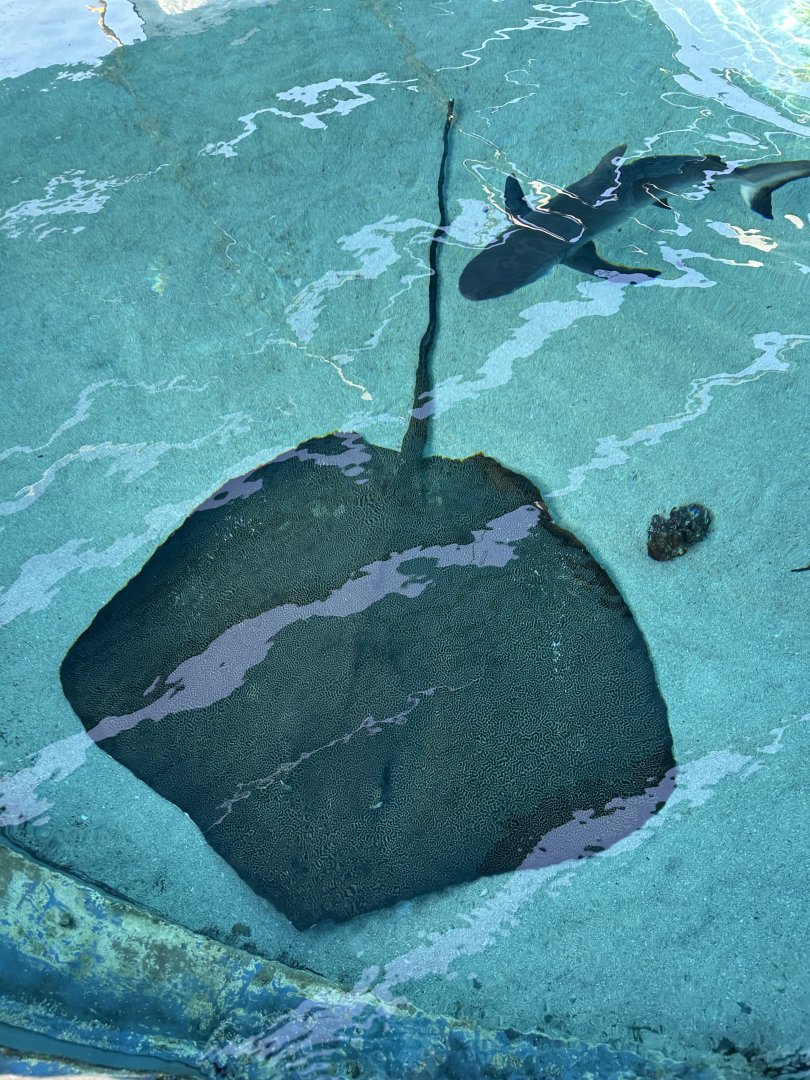
The Spotted Whiptail Ray Species Complex

Local_Shark

Well-Known Member
Hey everybody! Inspired by Sicarius' thread on new taxonomic divisions among zoo and aquarium species, I wanted to start a thread on one particular species complex that has caused myself and other elasmobranch enjoyers some trouble. That would be the spotted whiptail rays of the Himantura genus, found in the Indo-Pacific and recently divided into at least five separate species. They are:
  • Himantura australis, the Australian whipray - has a striking pattern of smaller, dark brown or black spots that often are more ovular or even linear in design
  • Himantura leoparda, the leopard whipray - these feature large and distinct leopard-like rosette spots with visible, defined borders
  • Himantura tutul, the fine-spotted (leopard) whipray - very similar to H. leoparda but with much smaller leopard-type rosette spots and sometimes a lighter coloration on the whole
  • Himantura uarnak, the reticulate whipray - usually the largest of the five species, featuring smaller and darker spots without fully rosette shaping
  • Himantura undulata, the honeycomb whipray - features a unique pattern of large dark brown rings and reticulations that are delineated by thin and lighter yellow lines
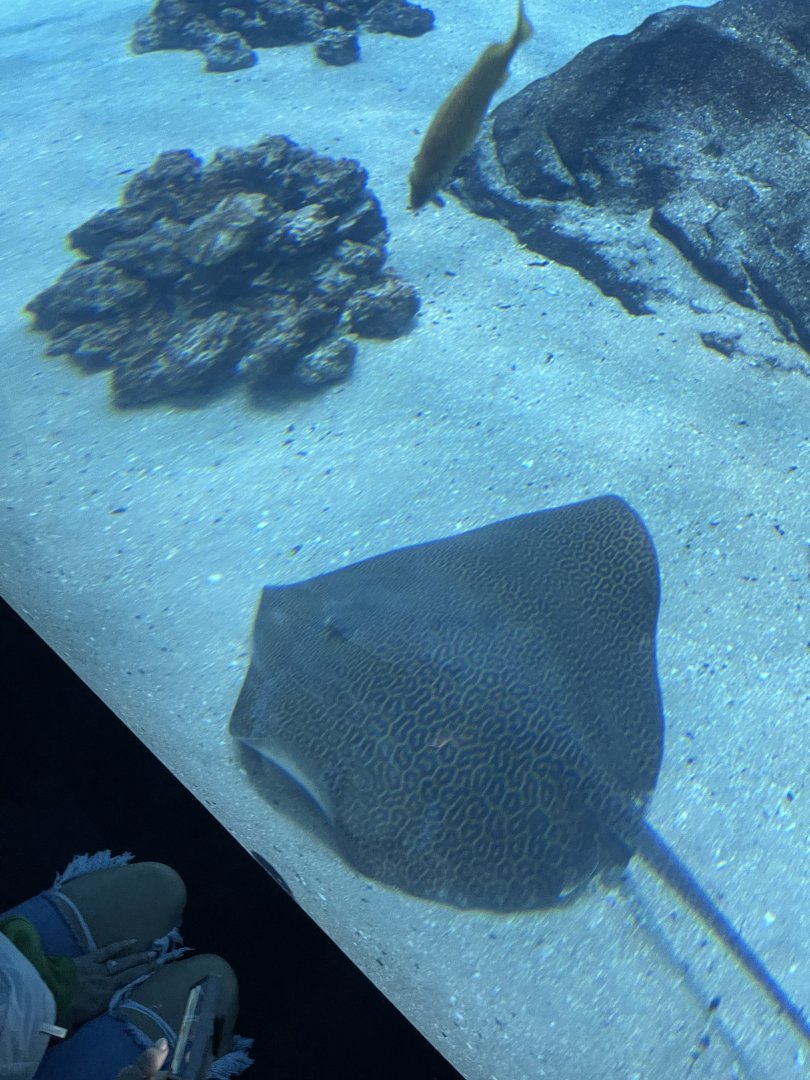
From what I and others here can gather, the honeycomb whiptail is probably the rarest of the lot in captivity if it's even found at all. Leopards are common in Asian aquaria and may be more common than previously thought in American aquaria, and fine-spotted are seemingly often viewable here in the US. There are a handful of reticulates here but most likely very few or no Australians. I believe that all of these species may be observable in captivity, and I've posted a few of my own observations in my media here. I'd love to see any other observations of them people have made, and where you've seen them - perhaps Sicarius and I can help in identifying exactly which aquariums have what. I'll be reposting some of my media in this thread with its locations as I make progress identifying the ones I've seen. Thanks!
 
For our first seemingly confirmed ID, it appears that at least one of the individuals at the Georgia Aquarium is a leopard whiptail (H. leoparda). Both myself and @King of Komodo Dragons have observed this animal in the last two years and it is still correctly listed on their website.
 
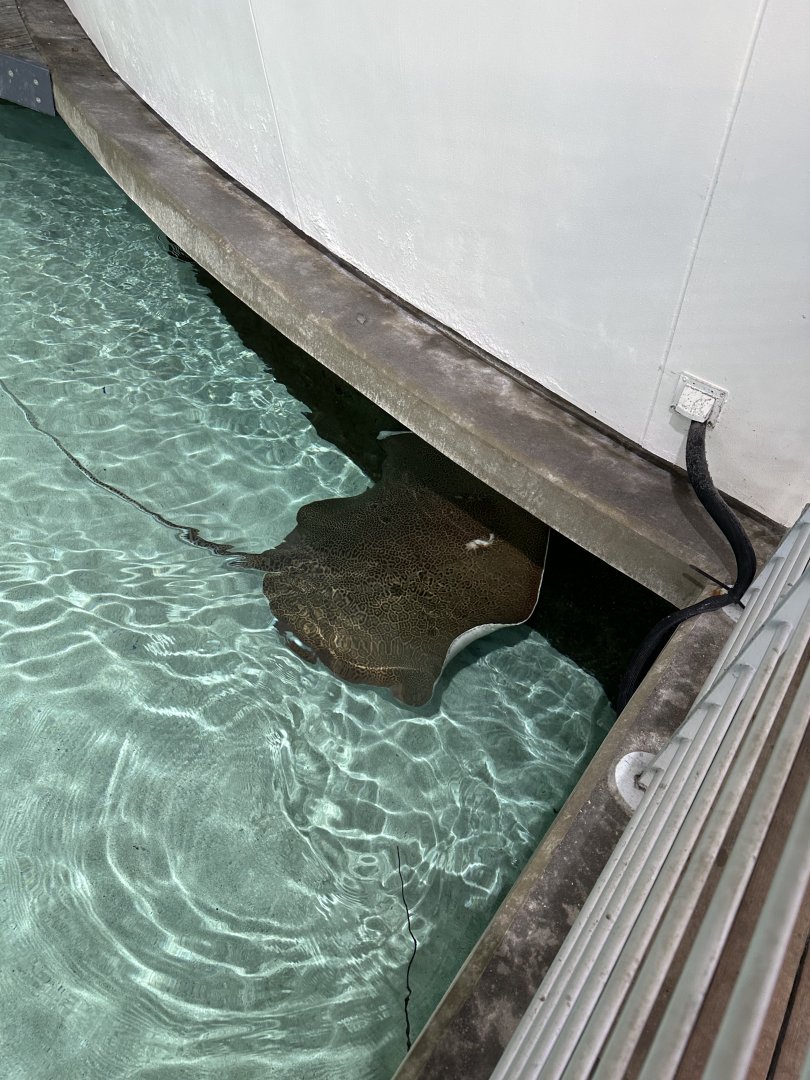
Per your invite, here is a picture that I took of one of the (they have two) rays at Florida Aquarium. They don't specify which species other than to say "honeycomb ray", but I think that it is H. uarnak. They are in the large tank in "Waves of Wonder".
full
 
Per your invite, here is a picture that I took of one of the (they have two) rays at Florida Aquarium. They don't specify which species other than to say "honeycomb ray", but I think that it is H. uarnak. They are in the large tank in "Waves of Wonder".
full

I definitely suspect that’s the species, which would be one of only a handful in US care if there are any at all! When I visited in May of 2023 these were not yet present, so it’s really great to know.
 
Another entry for the archive here - it would certainly appear that the individual at the Steinhart Aquarium (California Academy of Sciences) is a large and mature fine-spotted leopard whipray (H. tutul). They have been at Steinhart for at least eight years now.
 
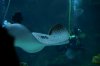
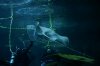
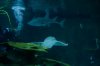
This is our Leopard Whipray (H. leoparda) that went on exhibit just yesterday at the Seattle Aquarium. It should be a confirmed H. leoparda based on the lineage (She was first kept I believe at Ocean Park Hong Kong, then moved over to Seattle). The species profile on the website also lists her H. leoparda, as well as in the species logs BTS.
She's currently confined to the upper half of the tank while she settles in, so I've only been able to photograph her from 1 of the viewing areas, but you should get a good look at the pattern to confirm.
DSC08440.jpg DSC08432.jpg DSC08434.jpg
 

Attachments

  • DSC08440.jpg
    DSC08440.jpg
    48.5 KB · Views: 138
  • DSC08432.jpg
    DSC08432.jpg
    83.1 KB · Views: 143
  • DSC08434.jpg
    DSC08434.jpg
    62.3 KB · Views: 141
This is our Leopard Whipray (H. leoparda) that went on exhibit just yesterday at the Seattle Aquarium. It should be a confirmed H. leoparda based on the lineage (She was first kept I believe at Ocean Park Hong Kong, then moved over to Seattle). The species profile on the website also lists her H. leoparda, as well as in the species logs BTS.
She's currently confined to the upper half of the tank while she settles in, so I've only been able to photograph her from 1 of the viewing areas, but you should get a good look at the pattern to confirm.
View attachment 745507 View attachment 745508 View attachment 745509
She’s so beautiful man. You guys are so lucky to have her! Can’t wait to see her myself if and when I can get up there.
 
She’s so beautiful man. You guys are so lucky to have her! Can’t wait to see her myself if and when I can get up there.
I lied, she isn't from Ocean Park (I was thinking of the Javanese Cownose Rays), she was born in Okinawa (so I'm guessing from Okinawa Churaumi Aquarium) on May 23, 2021. I think she's still fully grown though, if not I'd be super surprised.
 
I lied, she isn't from Ocean Park (I was thinking of the Javanese Cownose Rays), she was born in Okinawa (so I'm guessing from Okinawa Churaumi Aquarium) on May 23, 2021. I think she's still fully grown though, if not I'd be super surprised.
She looks to be pretty sizable, I’d wager if she grows it would only be in small increments but they do grow their entire lives. The biggest of these rays that I have ever encountered is at my former place of volunteer work, Aquarium of the Pacific in Long Beach - she’s a 20+ year old reticulate whiptail (H. uarnak) who I believe was sent to us from Denver’s Downtown Aquarium when Shark Lagoon opened. She’s now 10+ feet long, 6.5 feet wide and well over 400 lbs. Retics are the biggest of the five species in the complex typically so I wouldn’t expect your leopard to vastly exceed 4-5 feet in disc width.
 
Also whoops @SwampDonkey let me correct myself, yours appears to be an honest-to-goodness honeycomb (H. undulata)! That’s the one that’s actually rare in captivity as I mentioned. It really doesn’t look like it could be anything else - no distinct rosettes like either a regular or fine-spotted leopard, no small spots like an Australian or reticulate. That would make it one of very few visible in any facility worldwide.
 
Last edited:
This photo belongs to @Elephantlover but is this a genuine undulata at Adventure Aquarium? can someone id this ray - ZooChat

Also, anyone know how long the leoparda has been at Georgia Aquarium? I visited back in 2019 and have the animal I saw down as undulata as well.

~Thylo

Great questions! First things first, that image looks to me like a reticulate (H. uarnak). Having spent so much time around the one at AOP, I think I know that species the best of the five, and the spot pattern there is smaller, darker, not rosettes, and not necessarily delineated by yellowish lines. That would tend to match all of the reticulate descriptions I have compiled. It’s possible that it’s an Australian (H. australis), but I don’t think that to be likely.

As for Georgia’s rays, I visited in 2021 and at the time they claimed to have both H. leoparda and H. undulata. My images of the individual that my contact there stated to be the latter species are not particularly clear, so I really can’t be sure. I do however have clearer images of the alleged leoparda from both that year and 2022, which include the one I’ve posted above in this thread. Hope that helps in any way!

FUN EDIT: I also have a photo from 2009 that appears to feature a leoparda - maybe that exact individual! It’s fuzzy so I’m not gonna bother uploading it as media, but I just found it and it looks very similar to the one above.
 
Last edited:
Great questions! First things first, that image looks to me like a reticulate (H. uarnak). Having spent so much time around the one at AOP, I think I know that species the best of the five, and the spot pattern there is smaller, darker, not rosettes, and not necessarily delineated by yellowish lines. That would tend to match all of the reticulate descriptions I have compiled. It’s possible that it’s an Australian (H. australis), but I don’t think that to be likely.

As for Georgia’s rays, I visited in 2021 and at the time they claimed to have both H. leoparda and H. undulata. My images of the individual that my contact there stated to be the latter species are not particularly clear, so I really can’t be sure. I do however have clearer images of the alleged leoparda from both that year and 2022, which include the one I’ve posted above in this thread. Hope that helps in any way!

FUN EDIT: I also have a photo from 2009 that appears to feature a leoparda - maybe that exact individual! It’s fuzzy so I’m not gonna bother uploading it as media, but I just found it and it looks very similar to the one above.

Thank you!

From what I've found online, it appears as though Georgia had a whipray they signed as leoparda that they acquired in 2008. By 2019, they signed their animal as undulata, and then by 2021 they claimed both species. I'm going to stick with the undulata ID for now, as that's what the aquarium seemed to believe they held at the time.

~Thylo
 
Thank you!

From what I've found online, it appears as though Georgia had a whipray they signed as leoparda that they acquired in 2008. By 2019, they signed their animal as undulata, and then by 2021 they claimed both species. I'm going to stick with the undulata ID for now, as that's what the aquarium seemed to believe they held at the time.

~Thylo

My guess is that you can probably credit yourself as having seen both. They definitely had a leopard as of 2021, and it was still there in 2022. I’d be surprised if they claimed both without the leopard or perhaps leopards having been there all the way since 2008. I’d wager the honeycomb was also around in 2019, I just didn’t see it on my second visit to get any clearer pictures. It may have passed on by ‘22.
 
here’s my contribution to the discussion. This animal was at SeaWorld Orlando in 2016.
upload_2024-11-10_13-28-18.jpeg
This animal was at the Silverton Casino in Las Vegas
upload_2024-11-10_13-29-26.jpeg
I’d appreciate help with identification
 

Attachments

  • upload_2024-11-10_13-28-18.jpeg
    upload_2024-11-10_13-28-18.jpeg
    83.6 KB · Views: 126
  • upload_2024-11-10_13-29-26.jpeg
    upload_2024-11-10_13-29-26.jpeg
    119.8 KB · Views: 128
here’s my contribution to the discussion. This animal was at SeaWorld Orlando in 2016.
View attachment 746157
This animal was at the Silverton Casino in Las Vegas
View attachment 746163
I’d appreciate help with identification
Thank you for these! I can do my best with them both.

That one at SeaWorld was actually also spotted by Sicarius and posted in his original thread. It’s definitely a fine-spotted leopard whipray (Himantura tutul). They may also have a classic leopard but we cannot find any photos of that one presently - yours is definitely the same tutul individual that both Sicarius and I have images of.

As for the Silverton one I’d actually need a bit more info to be sure. It looks like a juvenile - about how large would you say the animal was? And when was the photo taken exactly? They didn’t have an individual of any of these species when I visited in March of this year.
 
Thank you for these! I can do my best with them both.

That one at SeaWorld was actually also spotted by Sicarius and posted in his original thread. It’s definitely a fine-spotted leopard whipray (Himantura tutul). They may also have a classic leopard but we cannot find any photos of that one presently - yours is definitely the same tutul individual that both Sicarius and I have images of.

As for the Silverton one I’d actually need a bit more info to be sure. It looks like a juvenile - about how large would you say the animal was? And when was the photo taken exactly? They didn’t have an individual of any of these species when I visited in March of this year.

The Silverton animal was at least 2-3 feet in diameter. It was a LONG time ago, back in 2012 or so
 
The Silverton animal was at least 2-3 feet in diameter. It was a LONG time ago, back in 2012 or so
Okay yeah, so they definitely don’t have that animal any longer. Funny thing is, though, even at that size it’s probably still on the younger side. My best guess would be that it’s probably a juvenile reticulate whipray (H. uarnak) given the more distinct but small spot pattern. However all of these species look nearly identical as juveniles or even subadults so it’s hard to be absolutely certain. Hope that’s some help!
 
Also whoops @SwampDonkey let me correct myself, yours appears to be an honest-to-goodness honeycomb (H. undulata)! That’s the one that’s actually rare in captivity as I mentioned. It really doesn’t look like it could be anything else - no distinct rosettes like either a regular or fine-spotted leopard, no small spots like an Australian or reticulate. That would make it one of very few visible in any facility worldwide.
Oh wow, that's really cool!
 
Back
Top