The Spotted Whiptail Ray Species Complex

Thank you so much for helping! Most of the rays in Jakarta Aquarium were locally sourced.
Awesome! Okay, so based on that, many scientists are now saying that reticulate whiprays are only found outside of Australia, so it could be that my ID on the last one is right as they’re native to Indonesia. Honeycombs also are as well. If either had come from Australia I’d say it was more likely they were H. australis (the Australian whipray, haha) but if not then I’d tentatively go with my initial IDs.
 
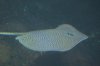
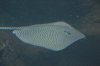
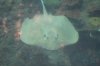
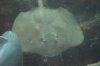
Hello, I photographed several himantura ray in SeaWorld Ancol, also located in Jakarta. These guys are signed as leoparda, but I couldn't tell, these are one confusing genus :p

The first two photos are taken in the same tank, the third to fifth photos are in a different and larger tank. So, they could either be the same or different species. For additional informations, most of their current marine faunas are collected off the coast of Java from what I'm aware, hope that help with the ID!

IMG_1556.JPG

IMG_1557.JPG

IMG_1608.JPG

IMG_1609.JPG

IMG_1611.JPG

Additionaly, I also found some himanturas and confidently labelled them as certain taxas, first picture I labelled as tutul while the second I labelled uarnak. But, I'm not certain anymore hahaha. Both taken in separate aquariums, also in the Jakarta metropolitan area. These rays might not be taken from around Java, since these aquariums have a wider range of supply as I'm aware.

I'll appreciate any help, thank you!

IMG_0799.JPG

IMG_4435.JPG
 

Attachments

  • IMG_1556.JPG
    IMG_1556.JPG
    217.3 KB · Views: 35
  • IMG_1557.JPG
    IMG_1557.JPG
    218.5 KB · Views: 39
  • IMG_1608.JPG
    IMG_1608.JPG
    217.5 KB · Views: 40
  • IMG_1609.JPG
    IMG_1609.JPG
    218.6 KB · Views: 40
  • IMG_1611.JPG
    IMG_1611.JPG
    201.4 KB · Views: 40
  • IMG_0799.JPG
    IMG_0799.JPG
    299.1 KB · Views: 39
  • IMG_4435.JPG
    IMG_4435.JPG
    93.4 KB · Views: 40
Hello, I photographed several himantura ray in SeaWorld Ancol, also located in Jakarta. These guys are signed as leoparda, but I couldn't tell, these are one confusing genus :p

The first two photos are taken in the same tank, the third to fifth photos are in a different and larger tank. So, they could either be the same or different species. For additional informations, most of their current marine faunas are collected off the coast of Java from what I'm aware, hope that help with the ID!

View attachment 813257

View attachment 813258

View attachment 813259

View attachment 813260

View attachment 813261

Additionaly, I also found some himanturas and confidently labelled them as certain taxas, first picture I labelled as tutul while the second I labelled uarnak. But, I'm not certain anymore hahaha. Both taken in separate aquariums, also in the Jakarta metropolitan area. These rays might not be taken from around Java, since these aquariums have a wider range of supply as I'm aware.

I'll appreciate any help, thank you!

View attachment 813264

View attachment 813265
Okay, so, these are tough haha, just like any of this species. I always qualify that it's somewhat impossible to be certain about any of these without genetic testing or provenance haha, but I'll do my best.

Starting with the SeaWorld Ancol ones, I'm fairly convinced that none of those are actual H. leoparda because of the spots being too small and not truly roseate (like the actual leopard cat, is how I usually differentiate). My best educated guess right now is that the first is either a juvenile or male reticulate (H. uarnak) or a fine-spotted (H. tutul), but it would depend on how large it was when you saw it - the males are smaller generally and can have fully formed spots despite their size. The second I am almost positive is a fine-spotted (H. tutul), as its pattern is fairly familiar to me. The third one looks to me like it could be a real honeycomb (H. undulata), but fine-spotted isn't off the table.

As for the ones from the Jakarta facilities, the first one definitely looks to me like a reticulate (H. uarnak) and the second a fine-spotted (H. tutul). That's just my best view on both, the patterns look clear enough to decipher and very reminiscent of ones I've seen at Aquarium of the Pacific for the former and Steinhart for the latter. Thank you for posting these, hope this helps!
 
Okay, so, these are tough haha, just like any of this species. I always qualify that it's somewhat impossible to be certain about any of these without genetic testing or provenance haha, but I'll do my best.

Starting with the SeaWorld Ancol ones, I'm fairly convinced that none of those are actual H. leoparda because of the spots being too small and not truly roseate (like the actual leopard cat, is how I usually differentiate). My best educated guess right now is that the first is either a juvenile or male reticulate (H. uarnak) or a fine-spotted (H. tutul), but it would depend on how large it was when you saw it - the males are smaller generally and can have fully formed spots despite their size. The second I am almost positive is a fine-spotted (H. tutul), as its pattern is fairly familiar to me. The third one looks to me like it could be a real honeycomb (H. undulata), but fine-spotted isn't off the table.

As for the ones from the Jakarta facilities, the first one definitely looks to me like a reticulate (H. uarnak) and the second a fine-spotted (H. tutul). That's just my best view on both, the patterns look clear enough to decipher and very reminiscent of ones I've seen at Aquarium of the Pacific for the former and Steinhart for the latter. Thank you for posting these, hope this helps!
Thanks a lot @Local_Shark! Your contribution in making and being active in this threat is appreciable!

I forgot to ask about one more photo of mine of an himantura ray, taken in Jakarta Aquarium. That facility have signages for both uarnak and leoparda. This fish have quite a large spot, but I'll need more confirmation if this could be either of that species. This fish could be locally-sourced in Indonesia, but it could be acquired anywhere aside from Java!

Thanks in advance!!
IMG_2033.JPG
 

Attachments

  • IMG_2033.JPG
    IMG_2033.JPG
    173 KB · Views: 30
Thanks a lot @Local_Shark! Your contribution in making and being active in this threat is appreciable!

I forgot to ask about one more photo of mine of an himantura ray, taken in Jakarta Aquarium. That facility have signages for both uarnak and leoparda. This fish have quite a large spot, but I'll need more confirmation if this could be either of that species. This fish could be locally-sourced in Indonesia, but it could be acquired anywhere aside from Java!

Thanks in advance!!
View attachment 813391
Of course! It was something that plagued me for a long time in my elasmobranch cataloguing project, so I figure I would bring it up here to let everyone collaborate. I'm glad others have found it and my educated guesses helpful haha.

That one looks to me like a fine-spotted leopard whip ray (Himantura tutul). The spots are roseate but significantly smaller and more numerous, in keeping with all of the fine-spotted I've seen here in the US. True leopards (H. leoparda), also have roseate spots but they're significantly larger in proportion to their body than that individual's. They're found all through the Indo-Pacific, including the Indonesian-Malay archipelago. Hope this is of some help!
 
Back
Top