The Zoochat Photographic Guide To Cetaceans

Orcaella
Two species, both of which are represented in the Zoochat galleries.


Irrawaddy Dolphin Orcaella brevirostris
Monotypic.


Both photos below by @Giant Eland at Pattaya Dolphin World (Thailand).

full

Irrawaddy dolphin (Orcaella brevirostris) - ZooChat


full
Irrawaddy dolphin (Orcaella brevirostris) - ZooChat


Australian Snubfin Dolphin Orcaella heinsohni

Monotypic.


Photo by @Najade in the wild, Australia.

full

Australian Snubfin Dolphin (Orcaella heinsohni) - ZooChat
 
Last edited by a moderator:
PHOCOENIDAE
Porpoises


Neophocaena
One to three species

Indo-Pacific Finless Porpoise Neophocaena phocaeniodes
East Asian Finless Porpoise Neophocaena sunameri
Yangtze Finless Porpoise Neophocaena asiaeorientalis


Phocoena
Four species

Harbour Porpoise Phocoena phocoena
Vaquita Phocoena sinus
Spectacled Porpoise Phocoena dioptrica
Burmeister's Porpoise Phocoena spinipinnis


Phocoenoides
One species

Dall's Porpoise Phocoenoides dalli
 
Last edited by a moderator:
Neophocaena
One to three species.


Traditionally this genus had a single species, the Finless Porpoise Neophocaena phocaeniodes, found in coastal regions from the Red Sea to Japan.

The East Asian Finless Porpoise is now typically treated as a distinct species, Neophocaena asiaeorientalis, with two subspecies, the coastal N. a. sunameri and the freshwater N. a . asiaeorientalis of the Yangtze River.

Recently the subspecies sunameri has been split as a full species in some sources, although the grounds for this seem tenuous.

In this thread N. phocaeniodes and N. asiaeorientalis are treated separately, but sunameri is retained as a subspecies of N. asiaeorientalis.


East Asian Finless Porpoise Neophocaena asiaeorientalis
Two subspecies (as above): asiaeorientalis and sunameri.


Both photos below by @YuanChang at the Tongling Freshwater Dolphin Reserve (China) (the freshwater Yangtze River subspecies asiaeorientalis)

full

Yangtze finless porpoise (Neophocaena asiaeorientalis) - ZooChat


full

Yangtze finless porpoise (Neophocaena asiaeorientalis) - ZooChat


Photo by @Giant Eland at Toba Aquarium (Japan) (subspecies sunameri)

full

Finless porpoise (Neophocaena phocaenoides) - ZooChat


Photo by @Jakub at Toba Aquarium (Japan) (subspecies sunameri)

full

Finless porpoise - ZooChat


Indo-Pacific Finless Porpoise Neophocaena phocaeniodes
Monotypic.


There are no photos of this species in the Zoochat galleries (photos labeled as such are all of Neophocaena asiaeorientalis sunameri).
 
Last edited by a moderator:
Phocoena
Four species, of which three are represented in the Zoochat galleries.


Spectacled Porpoise Phocoena dioptrica
Monotypic.


There are no photos of this species in the Zoochat galleries.


Harbour Porpoise Phocoena phocoena
At least three subspecies (phocoena, relicta, vomerina) but other populations remain unnamed.


Photo by @Tomek at Dolfinarium Harderwijk (Netherlands) (North Atlantic subspecies phocoena)

full

Harbour Porpoise ( Phocoena phocoena); June 2015 - ZooChat


Photo by @Newzooboy at the Vancouver Aquarium (Canada) (northeast Pacific subspecies vomerina)

full

Harbour Porpoise - Nov 2014 - ZooChat


Photo by @Toki at Kamogawa Sea World (Japan) (of the unnamed northwest Pacific population)

full

Harbour Porpoise (Phocoena phocoena) - ZooChat


Vaquita Phocoena sinus
Monotypic.


Photo by @carlos77 at Tijuana Zoo (Mexico) (preserved specimen)

full

Vaquita Porpoise phocena sinus Acuario Centro Cultural Tijuana - ZooChat


Burmeister's Porpoise Phocoena spinipinnis
Monotypic.


Photo by @Giant Eland in the wild, Chile

full

Burmeister's porpoise (Phocoena spinipinnis) - ZooChat
 
Last edited by a moderator:
MONODONTIDAE
Beluga and Narwhal


Subfamily Delphinapterinae

Delphinapterus

Beluga Delphinapterus leucas


Subfamily Monodontinae

Monodon

Narwhal Monodon monoceros


....................................................................................


Delphinapterus

One species.


Beluga Delphinapterus leucas
Monotypic.


Photo by @HowlerMonkey at Marineland Canada (Canada)

full

Belugas - ZooChat


Photo by @bubblywums at Vancouver Aquarium (Canada)

full

Qila, beluga whale (Delphinapterus leucas) - ZooChat


Photo by @RatioTile at Mystic Aquarium (USA)

full

Beluga Whale (Delphinapterus leucas) - "Juno" - ZooChat
 
Last edited by a moderator:
Monodon
One species.


Narwhal Monodon monoceros
Monotypic.


The only photos representing this species in the Zoochat galleries are of skeletal material and models.
 
Last edited by a moderator:
Pacific bottlenose dolphin Tursiops truncatus gillii
Taxonomic note: Sometimes elevated to species level (Tursiops gillii), this is not widely accepted.
No photos of this subspecies have been uploaded to the Gallery yet.

I have added a photo of this taxon taken by @alexkant
 
Very cool thread but correct me if I'm wrong but I thought Cetacea was no longer consider it's own order but rather a clade or infraorder within Artiodactyla?
 
You're not wrong, that is how this Order is now considered by the craziest people on Earth.
 
I actually must agree with you here. I mean, whales and hoofstock? :rolleyes: Come on!

No stranger than the fact pangolins are the sister group to the carnivora, or that tenrecs and hedgehogs are entirely unrelated.... or indeed that birds are the closest living kin to crocodilians :p I'd be curious to know what group yourself and @Kakapo prefer to classify as the closest kin to the cetaceans, given how derived from the initial form the group has become.

The concept of the whales being deeply nested within the Artiodactyla would perhaps seen less strange if more people were aware of two things:

1) The earliest cetaceans we have discovered basically looked like dog-headed chevrotains, complete with hooves.
2) There's a lot more range in diet in prehistoric Artiodactyls, from obligate herbivore through omnivore to obligate carnivore, than there is in modern hoofstock.
 
Last edited:
We're all aware of both things, dear Dave, tough "dog-headed" is a strange way to describe the head shape of the terrestrial cetaceans - they can look like more crocodilian than doggish. And we're not talking of what group is the close relative of nothing, dear bony fish :-) (or you don't include mammals and birds into bony fish class? It would be very weird if you put whales into hoofed mammals, but you refuse to accept that tetrapods are Osteichthyes!). But it's logic that you have a different point of view because we're different species of humans (or at least, we would be if taxonoms apply to humans the same criteria (I mean, every slightest difference in voice, habitat preference or DNA) that apply to every taxon of animals on Earth and that most zoochatters just defend to death without think if its logic or not!)

Call the order of Cetacea (the most distinctive of all the current mammal orders) as just a subgroup of Artiodactyla is just deny Evolution..
 
tough "dog-headed" is a strange way to describe the head shape of the terrestrial cetaceans - they can look like more crocodilian than doggish.

Depends how early one is talking - the ambulocetids definitely looked more crocodilian, but the pakicetids did have a reasonably dog-like skull.

paki_ambulo.png


It would be very weird if you put whales into hoofed mammals, but you refuse to accept that tetrapods are Osteichthyes!

Good thing I never said that then :p the Tetrapoda are firmly nested within the Sarcopterygii, and hence are members of the Osteichthyes.... just as the cetaceans are the sister group to the Hippopotamidae, with the latter group closer kin to the cetaceans than they are to groups such as camels, ruminants and suids. So the only way to maintain a monophyletic Artiodactyla is to include the Cetacea.

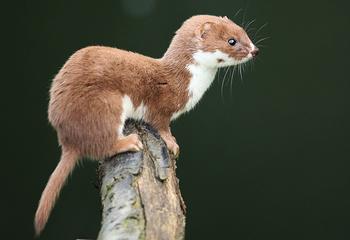
The level of physical distinctiveness between two given groups doesn't affect this, elsewise you would presumably be claiming that the Least Weasel (five inches long and weighing as little as 50g) should belong in a different order to the Southern Elephant Seal (up to 18 feet long and weighing up to 4 tonnes), given how different they are in appearance, form and size:

The-Least-Weasel.jpg


Southern-Elephant-Seal-624x416.jpg


I won't even dignify your claims that anyone who disagrees with you is "crazy" and an evolutionary-denialist with a rebuttal, let along your (possibly-accidental) implication that they would support the kind of scientific racism and eugenics you describe .......
 
Last edited:
No stranger than the fact pangolins are the sister group to the carnivora, or that tenrecs and hedgehogs are entirely unrelated.... or indeed that birds are the closest living kin to crocodilians :p I'd be curious to know what group yourself and @Kakapo prefer to classify as the closest kin to the cetaceans, given how derived from the initial form the group has become.
The concept of the whales being deeply nested within the Artiodactyla would perhaps seen less strange if more people were aware of two things:

1) The earliest cetaceans we have discovered basically looked like dog-headed chevrotains, complete with hooves.
2) There's a lot more range in diet in prehistoric Artiodactyls, from obligate herbivore through omnivore to obligate carnivore, than there is in modern hoofstock.
I won't deny that ungulates and cetaceans are sister groups, but I cannot call them the same order!
 
Yeah, Artiodactyla and Cetacea.

No, as @TeaLovingDave explained, if you remove cetaceans from Artiodactyla you have to remove ungulates such as hippos as well that are closer to cetaceans than other ungulates.

I refused to include Cetacea for a long time as well, but eventually came to the conclusion that that splitting just doesn't hold up against the evidence.

~Thylo
 
Back
Top