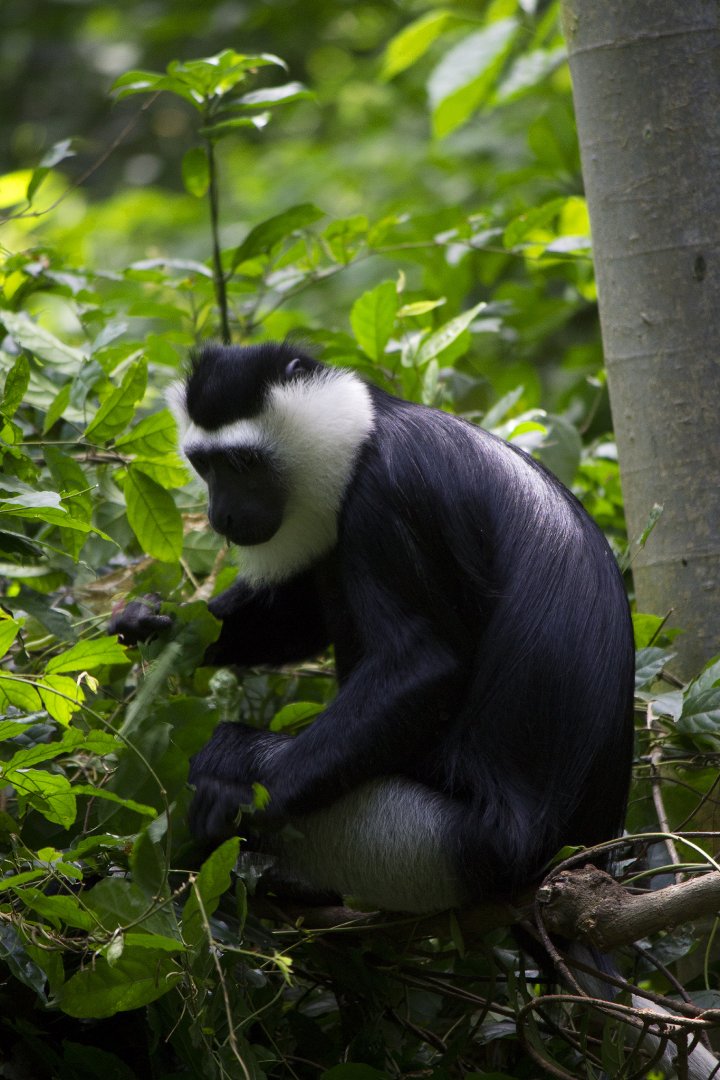
The Zoochat Photographic Guide to Old World Primates

Chlidonias

Moderator
Staff member
15+ year member
There are over 400 species of Primates currently recognised worldwide, along with many more subspecies, so this Order will be separated into three threads: Prosimians (lemurs, lorises, bushbabies, etc); New World Primates (American monkeys); and Old World Primates (tarsiers, African and Asian monkeys, and apes).


The Prosimian thread can be found here: TLD's Photographic Guide to Prosimians
The New World Primate thread can be found here: TLD's Photographic Guide To New World Primates


The basic classification of Primates is as follows (the groups in bold are those covered in this current thread):

ORDER: Primates

SUBORDER: Strepsirrhini (prosimians)

Infraorder: Lemuriformes

Superfamily: Lemuroidea (Madagascan prosimians)
*Family: Cheirogaleidae (dwarf and mouse lemurs)
*Family: Daubentoniidae (Aye-aye)
*Family: Lemuridae (typical lemurs)
*Family: Lepilemuridae (sportive lemurs)
*Family: Indriidae (Indri, sifakas, etc)

Superfamily: Lorisoidea (African and Asian prosimians)
*Family: Lorisidae (lorises, pottos , and angwantibos)
*Family: Galagidae (bushbabies)

SUBORDER: Haplorrhini (tarsiers, monkeys, and apes)

Infraorder: Tarsiiformes (tarsiers)

*Family: Tarsiidae (tarsiers)

Infraorder: Simiiformes (monkeys and apes)

Parvorder: Platyrrhini (New World monkeys)
*Family: Callitrichidae (marmosets and tamarins)
*Family: Cebidae (capuchin and squirrel monkeys)
*Family: Aotidae (night monkeys)
*Family: Pitheciidae (titis, sakis, and uakaris)
*Family: Atelidae (spider, woolly, and howler monkeys)

Parvorder: Catarrhini (Old World monkeys, and apes)
Superfamily: Cercopithecoidea (Old World monkeys)
*Family: Cercopithecidae (Old World monkeys)
Superfamily: Hominoidea (apes)
*Family: Hylobatidae (gibbons)
*Family: Hominidae (great apes and humans)


.....................................................................................


Primates have been subject to heavy taxonomic splitting over the last few decades, second only to the more recent efforts in expanding the ungulate species. There are various methods used in splitting Primates, including genetics, morphology, colouration, distribution, and vocalisations. Sometimes they are used in combination, more often in bald isolation. In the following accounts I will usually follow the splits whether I agree with them or not, but I will always have a "taxonomic note" regarding different opinions on their status.

Where photos of known subspecies are available I have used these in preference to (or in addition to) photos of "generic" or "unknown" individuals. I particularly prefer using good photos of wild animals, as the subspecies can usually be easily determined based on range.

I have used photos of museum specimens in rare cases, if these are the only examples available in the galleries.

Of course thanks are given to all the hard-working photographers who make these threads (and the future threads) possible. The list of members whose photos have been used in this thread is here on page 8 - The Zoochat Photographic Guide to Old World Primates
 
Last edited:
The genera and numbers of species in this thread's families are listed below.


TARSIIDAE
Tarsiers


Fourteen species in three genera. There are only three (identifiable) species represented in the Zoochat galleries.

Cephalopachus (Horsfield's Tarsier) - one species, depicted.
Carlito (Philippine Tarsier) - one species, depicted.
Tarsius (Sulawesi Tarsiers) - twelve species, only one of which is depicted here as definitely-identified to species, and a second as a labelled museum specimen.

CERCOPITHECIDAE
Old World Monkeys


About 155 species in two subfamilies, Colobinae (c.10-20 species of colobus in Africa, and c.50-60 species of langurs in Asia) and Cercopithecinae (c.60 species of baboons and guenons in Africa, and c.20-25 species of macaques in Asia). In total, 127 of these species are represented in the Zoochat galleries.

Subfamily Colobinae

About 70 species in 10 genera. There are 56 species represented in the Zoochat galleries.

Colobus (Black-and-White Colobus) - five species, all of which are depicted here.
Procolobus (Olive Colobus) - one species, not depicted here.
Piliocolobus (Red Colobus) - about ten (eight to sixteen) species, six of which are depicted here (and one of those only as a museum specimen).

Semnopithecus (Grey Langurs) - nine species, eight of which are depicted here.
Trachypithecus (Leaf Monkeys) - about twenty-one species, twenty of which are depicted here.
Presbytis (Leaf Monkeys) - ten to fifteen species, eight of which are depicted here.
Pygathrix (Douc Langurs) - three species, all of which are depicted here.
Rhinopithecus (Snub-nosed Monkeys) - five species, four of which are depicted here.
Nasalis (Proboscis Monkey) - one species, depicted.
Simias (Pig-tailed Langur) - one species, depicted.

Subfamily Cercopithecinae

About 80 species in 12 genera. There are 71 species represented in the Zoochat galleries.

Allenopithecus (Allen's Swamp Monkey) - one species, depicted.
Miopithecus (Talapoins) - two species, both depicted here.
Erythrocebus (Patas Monkey) - one or two species, both depicted here.
Chlorocebus (Vervets or Green Monkeys) - six species, all of which are depicted here.
Cercopithecus (Guenons) - about twenty-six species, twenty-one of which are depicted here.
Macaca (Macaques) - about twenty-three species, twenty-one of which are depicted here.
Cercocebus (White-eyelid Mangabeys) - six species, all of which are depicted here.
Mandrillus (Mandrill and Drill) - two species, both depicted here.
Lophocebus (Crested Mangabeys) - six species, four of which are depicted here.
Rungwecebus (Kipunji) - one species, not depicted here.
Papio (Baboons) - five species, all of which are depicted here.
Theropithecus (Gelada) - one species, depicted.


HYLOBATIDAE
Gibbons


About 18 species in four genera. There are 16 species represented in the Zoochat galleries.

Hylobates ("Typical" Gibbons) - seven species, all of which are depicted here.
Hoolock (Hoolock Gibbons) - three species, all of which are depicted here.
Symphalamgus (Siamang) - one species, depicted.
Nomascus (Crested Gibbons) - seven species, five of which are depicted here.


HOMINIDAE
Great Apes and Humans


Seven or eight species in four genera. There are seven species represented in the Zoochat galleries.

Pongo (Orangutans) - two or three species, two of which are depicted here.
Gorilla (Gorillas) - two species, both depicted here.
Pan (Chimpanzees) - two species, both depicted here.
Homo (Humans) - one species, depicted.
 
Last edited:
TARSIIDAE
Tarsiers

Fourteen species currently described, in three genera. There are three species represented in the Zoochat galleries (and maybe a fourth as an old taxidermy specimen).

The number of tarsier species has increased dramatically over the last decade or so. Initially there were only three species recognised, all in the genus Tarsius. There was one in Borneo and Sumatra (the Horsfield's Tarsier Tarsius bancanus), one in the Philippines (the Philippine Tarsier Tarsius syrichta), and one in Sulawesi and the surrounding islands (the Spectral Tarsier Tarsius spectrum).

Currently the Horsfield's and Philippine Tarsiers remain as one species, although the former may be split in two in the future and the latter will almost certainly become at least three species. Both have also been moved into their own genera, Cephalopachus and Carlito respectively. Meanwhile, the Spectral Tarsier has been divided, and divided, and divided again. There are now twelve accepted species in the Sulawesi region, and probably a number more not yet recognised.
 
Last edited:
Cephalopachus
One species.


Horsfield's or Western Tarsier Cephalopachus bancanus
Four subspecies: bancanus, borneanus, natunensis, saltator.

Formerly in the genus Tarsius. The species may end up being split into two species in the future, with bancanus on Sumatra and borneanus on Borneo. Of the other two subspecies, natunensis is found on the Natuna Islands close to Borneo, while saltator is from Belitung Island off Sumatra.


Photo by @Nick@Amsterdam at Lok Kawi Wildlife Park, Sabah (Malaysia) (Bornean subspecies borneanus).

full

Horsfield's Tarsier (Tarsius bancanus) | ZooChat


Photo by @TheoV of a taxidermy specimen at the National Museum of Ireland (Ireland), of the Sumatran subspecies bancanus (the scientific name used on the museum label is incorrect). The "Bauka Island" of the label is a misprint for Banka Island - now Bangka Island - off Sumatra, and is the origin of the specific name bancanus.

full

Horsfield's tarsier [2016] - ZooChat
 
Last edited:
Carlito
One species.


Philippine Tarsier Carlito syrichta
Three or more subspecies: carbonarius, fraterculus, syrichta, plus at least one additional unnamed form (the Dinagat-Caraga Tarsier).

Formerly in the genus Tarsius. Traditionally separated into three subspecies - carbonarius on Mindanao, fraterculus on Bohol, and syrichta on Samar and Leyte. Genetics suggest that there are three evolutionary lines in the archipelago which do not align completely with these subspecies. A proposed three-way specific split would have Carlito syrichta containing the subspecies fraterculus and syrichta; a Mindanao species Carlito carbonarius; and an as-yet-unnamed species in northern Mindanao and Dinagat Island (dubbed the Dinagat-Caraga Tarsier).


Photo by @gentle lemur at Frankfurt Zoo, Germany (Mindanao subspecies carbonarius).

full

Mindanao tarsier | ZooChat


Photo by @alexkant at the Tarsier Conservation Area, Philippines (Bohol subspecies fraterculus).

full

Philippine tarsier / Carlito syrichta. Tarsier Conservation Area. Bohol | ZooChat


Photo by @alexkant at Crocolandia Foundation, Philippines (Samar and Leyte subspecies syrichta).

full

Philippine tarsier/ Carlito syrichta | ZooChat
 
Last edited:
Tarsius
Twelve species currently-described, only one of which is (definitely) represented in the Zoochat galleries.

Formerly all the species of tarsier in the Sulawesi region were treated as a single species, the Spectral Tarsier Tarsius spectrum. Currently they are split as twelve distinct species (with probably several more cryptic species yet to be split). The "original" Spectral Tarsier is now restricted taxonomically to Selayar Island in the south of Sulawesi (and the scientific name has reverted to the older Tarsius tarsier). None of the Sulawesi tarsiers kept in captivity (either currently or in the past) can be assigned to species without knowing their specific origin on the island.


The full list of currently-recognised Tarsius species is as follows (all species are monotypic). All species are found only on the Indonesian island of Sulawesi or the surrounding island groups. The tarsiers on the southeast peninsula of Sulawesi (and on the islands of Buton, Muna, and Kabaena which lie off that peninsula) have not yet been re-described since the splitting of "T. spectrum" but will probably be additional species.


Dian's Tarsier Tarsius dentatus (syn. Tarsius dianae)
Found on the northeastern peninsula of Sulawesi.

Makassar Tarsier Tarsius fuscus
Found on the southwestern peninsula of Sulawesi.

Lariang Tarsier Tarsius lariang
Found in west-central Sulawesi.

Togean Tarsier Tarsius niemitzi
Endemic to the Togean Islands, off the coast of Sulawesi. Only described in 2019.

Peleng Tarsier Tarsius pelengensis
Endemic to Peleng Island, off the east coast of Sulawesi.

Pigmy Tarsier Tarsius pumilus
Found only in montane forests in central Sulawesi, and known from only a few localities.

Sangihe Tarsier Tarsius sangirensis
Endemic to Sangihe Island, north of Sulawesi.

Northern Sulawesi or Gursky's Tarsier Tarsius spectrumgurskyae
Found only at the northeastern end of the northern peninsula of Sulawesi.

Gorontalo Tarsier Tarsius supriatnai
Found only in the central portion of the northern peninsula of Sulawesi.

Selayar Tarsier Tarsius tarsier
Endemic to the island of Selayar, off the south coast of Sulawesi.

Siau Tarsier Tarsius tumpara
Endemic to the island of Siau, north of Sulawesi. Previously included within T. sangirensis (split in 2008).

Wallace's Tarsier Tarsius wallacei
Found in central Sulawesi, including onto the southern end of the northern peninsula.


The identity of only one species can be accurately determined from the Zoochat galleries, and that is a photo of a wild Tarsius spectrumgurskyae at the Tangkoko National Park in northern Sulawesi. There is also a photo of an old museum specimen labelled as being Tarsius fuscus. I have used both of these, as well as a number of photos of zoo animals originating from Sulawesi which are identified as being Spectral Tarsiers but could be from any of several species.


.....................................................................................


Northern Sulawesi Tarsier Tarsius spectrumgurskyae
Monotypic.


Photo by @Chlidonias in the wild, Indonesia.

full

northern tarsier (Tarsius spectrumgurskyae) | ZooChat


Makassar Tarsier Tarsius fuscus
Monotypic.


Photo by @TheoV of an old taxidermy specimen in poor condition at the National Museum of Ireland (Ireland). The original label identifies the specimen as being "Tarsius fuscus" but I don't know if this is accurate (i.e. from where the specimen was collected).

full

Makassar tarsier [2016] - ZooChat


.....................................................................................


Indeterminate "Spectral Tarsiers" from the Zoochat galleries include:


Photo by @Tomek at Rare Species Conservation Centre, UK.

full

Sulawesi Tarsier (Tarsius tarsier), August 2014 | ZooChat


Photo by @Giant Eland at Ueno Zoo, Japan.

full

spectral tarsier (Tarsius spectrum) | ZooChat


Photo by @Vision at Batu Secret Zoo, Indonesia.

full

"Spectral" tarsier, Tarsier tarsius | ZooChat


Photo by @Najade at Singapore Night Safari, Singapore.

full

Spectral Tarsier (Tarsius spectrum) | ZooChat


Photo by @vogelcommando at Ouwehands Zoo, Netherlands.

full

Celebes tarsier | ZooChat
 
Last edited:
CERCOPITHECIDAE
Old World Monkeys


About 155 species in two subfamilies, Colobinae (c.10-20 species of colobus in Africa, and c.50-60 species of langurs in Asia) and Cercopithecinae (c.60 species of baboons and guenons in Africa, and c.20-25 species of macaques in Asia).
 
Last edited:
Subfamily COLOBINAE

About 70 species in 10 genera. There are 56 species represented in the Zoochat galleries.


The African colobus monkeys are comprised of 10 to 20 species in two or three genera, while the Asian langurs or leaf monkeys are comprised of about 50 to 60 species in seven genera.

Colobus (Black-and-White Colobus) - five species, all of which are depicted here.
Procolobus (Olive Colobus) - one species, not depicted here.
Piliocolobus (Red Colobus) - about ten (eight to sixteen) species, six of which are depicted here (and one of those only as a museum specimen).

Semnopithecus (Grey Langurs) - nine species, eight of which are depicted here.
Trachypithecus (Leaf Monkeys) - about twenty-one species, twenty of which are depicted here.
Presbytis (Leaf Monkeys) - ten to fifteen species, eight of which are depicted here.
Pygathrix (Douc Langurs) - three species, all of which are depicted here.
Rhinopithecus (Snub-nosed Monkeys) - five species, four of which are depicted here.
Nasalis (Proboscis Monkey) - one species, depicted.
Simias (Pig-tailed Langur) - one species, depicted.
 
Last edited:
Colobus
Five species, all of which are represented in the Zoochat galleries.


Angolan Colobus Colobus angolensis
Six subspecies: angolensis, cordieri, cottoni, palliatus, prigoginei, ruwenzorii.


Found in the Congo Basin, and also in east Africa in Tanzania and southernmost Kenya: angolensis covers the majority of the range, found in a broad swathe across northern Angola and the DRC; cordieri in eastern DRC; cottoni in northeastern DRC; palliatus in east Africa; prigoginei only on Mt Kabobo in eastern DRC; and ruwenzorii in the Ruwenzori Mountains in eastern DRC, Burundi, Rwanda, and western Uganda.


Photo by @alexkant at Ben Shemen Monkey Forest Park, Israel.
(The photo is labelled as being the subspecies angolensis; however Zootierliste has the park as holding palliatus).

full

Angolan colobus/ Colobus angolensis angolensis | ZooChat


Photo by @MagpieGoose at Magdeburg Zoo, Germany (subspecies palliatus).

full

Peter's Angolan Colobus | ZooChat


Photo by @gentle lemur at Zoo Basel, Switzerland (subspecies ruwenzorii).

full

Ruwenzori black & white colobus (Adolf Friedrich's colobus) 1973 | ZooChat


Abyssinian Black-and-White Colobus or Mantled Guereza Colobus guereza
Eight subspecies: caudatus, dodingae, gallarum, guereza, kikuyuensis, matschiei, occidentalis, percivali.


Found across central Africa, from eastern Nigeria and Cameroon to Uganda, with isolated mainly-mountain populations in eastern and northeastern Africa: caudatus at Mts Kilimanjaro and Meru at the border of Tanzania and Kenya; dodingae in the Didinga Hills at the border of South Sudan and northwest Uganda; gallarum in the Ethiopian highlands east of the Rift Valley; guereza in Ethiopia west of the Rift Valley; kikuyuensis in the Mt Kenya and Abedare ranges in Kenya; matschiei around Lake Victoria in Kenya, Tanzania and eastern Uganda; occidentalis over most of the range, from eastern Nigeria to western Uganda; and percivali in the Matthews Range in Kenya.


Photo by @Hix in the wild, Tanzania (Kilimanjaro Black-and-White Colobus C. g. caudatus).

full

Guereza Colobus (Highlands form) | ZooChat


Photo by @Giant Eland in the wild, Ethiopia (Djaffa Mountains Colobus C. g. gallarum - this subspecies, endemic to the highlands of eastern Ethiopia, is not recognised by all taxonomists but genetically it seems valid [see https://www.researchgate.net/public...reza_gallarum_a_valid_endemic_Ethiopian_taxon]. However, while the Harenna Forest form pictured here is found within the generally-accepted distribution of gallarum the paper linked above mentions that it is genetically different from both "true" gallarum and the more common Ethiopian subspecies guereza).

full

Djaffa Mountains Guereza (Colobus guereza gallarum) - ZooChat


Photo by @Maguari in the wild, Ethiopia (Eastern Black-and-White Colobus C. g. guereza).

full

Eastern Guereza at Hawassa, 16/10/14 | ZooChat


Photo by @Maguari at Howlett's Wild Animal Park, UK (Kikuyu Black-and-White Colobus C. g. kikuyuensis).

full

Kikuyu Colobus at Howletts, 31/07/10 | ZooChat


Photo by @ro6ca66 at Port Lympne Wild Animal Park, UK (Western Black-and-White Colobus C. g. occidentalis).

full

Guereza : Port Lympne : 15 Oct 2014 | ZooChat


King Colobus Colobus polykomos
Monotypic.

The Ursine Colobus C. vellerosus was formerly treated as a subspecies.


Found in a fairly small area on the western bulge of Africa, from southern Senegal to western Ivory Coast where it meets the range of C. vellerosus.


Photo by @Gigit at Paignton Zoo, UK.

full

King Colobus, March 2017 | ZooChat


Black Colobus Colobus satanas
Two subspecies: anthracinus and satanas.


Restricted to a small area of west Africa in the countries of Gabon, Equatorial Guinea, and southwest Cameroon. The nominate subspecies satanas is found only on the island of Bioko off the coast of Cameroon.

Apart for the photo used here, all other photos in the Zoochat galleries are of museum specimens.


Photo by @Giant Eland in the wild, Gabon (subspecies anthracinus).

full

black colobus (Colobus satanas) - ZooChat


Ursine or White-thighed Colobus Colobus vellerosus
Monotypic.

Formerly considered to be a subspecies of the King Colobus C. polykomos.


Found in a small area of west Africa, east of the range of C. polykomos, from the Ivory Coast to western Nigeria.


Photo by @KevinVar in the wild, Ghana.

full

Ursine Colobus | ZooChat
 
Last edited:
Procolobus
One species.


The red colobus are variously treated as being in this genus (in a subgenus Piliocolobus) or separated out as a full genus of their own. Here I have separated them as Piliocolobus, leaving Procolobus with just a single species, the Olive Colobus.


Olive Colobus Procolobus verus
Monotypic.


Found in a small range along the southern part of the bulge of west Africa, from Sierra Leone to Nigeria, roughly overlapping the ranges of the King Colobus Colobus polykomos and Ursine Colobus Colobus vellerosus.


There are no photos of this species in the Zoochat galleries.
 
Last edited:
Piliocolobus
Eight to sixteen species, six of which are represented in the Zoochat galleries.


Traditionally all the red colobus were treated as a single species, Procolobus badius. Now they are generally split into multiple species, from eight to sixteen depending on authority. The treatments of subspecies versus full species is diverse.


Western Red Colobus Piliocolobus badius
Three subspecies: badius, temminckii, waldronae. All three have been elevated to full species in recent publications.


Found around the bulge of west Africa, with badius in the central part of the range from Sierra Leone to Ivory Coast; temminckii in the western part from The Gambia to northwestern Guinea; and waldronae in the eastern part across the border region of Ivory Coast and Ghana. The last-named may be extinct.


Photo by @MagpieGoose in the wild, The Gambia (subspecies temminckii).

full

Temminck's red colobus group - ZooChat


Central African Red Colobus Piliocolobus foai
Six subspecies: foai, langi, lulindicus, oustaleti, parmentierorum, semlikiensis. The subspecies ellioti formerly recognised was actually given to a hybrid population. All of these taxa (except ellioti) have been elevated to full species in recent publications.

Distributed throughout the Congo Basin, albeit with most of the taxa being found solely within the DRC: foai in two locations in the Itombwe Mountains of eastern DRC; langi in northeastern DRC; lulindicus in eastern DRC; oustaleti across the northern Congo Basin from the northern Congo Republic across the southern CAR and northern DRC to southern South Sudan; parmentierorum in north-central DRC; and semlikiensis in northeastern DRC to the border with Uganda.


Photo by @Giant Eland in the wild, Uganda (subspecies semlikiensis).

full

Semliki red colobus (Piliocolobus semlikiensis) - ZooChat


Udzungwa Red Colobus Piliocolobus gordonorum
Monotypic.


Endemic to the Udzungwa Mountains in Tanzania.


Photo by @lintworm in the wild, Tanzania.

full

Udzungwa red colobus | ZooChat


Zanzibar Red Colobus Piliocolobus kirkii
Monotypic.


Endemic to the island of Zanzibar, off the coast of Tanzania.


Photo by @Azubaa in the wild, Zanzibar (Tanzania).

full

Zanzibar Red Colobus - ZooChat


Tana River Red Colobus Piliocolobus rufomitratus
Monotypic.


Found only along the Tana River in southeastern Kenya.


Photo by @ThylacineAlive in the wild, Kenya.

full

Tana River Red Colobus - ZooChat


Ugandan Red Colobus Piliocolobus tephrosceles
Monotypic (otherwise treated as a subspecies of Piliocolobus rufomitratus).


Found in scattered locations in Uganda and Tanzania, and possibly in the neighbouring countries of DRC, Burundi and Rwanda.


Photo by @Jogy in the wild, Uganda.

full

Red colobus (December 2019) - ZooChat


.....................................................................................


The remaining species of Piliocolobus are not represented in the Zoochat galleries:


Bouvier's Red Colobus Piliocolobus bouvieri
Monotypic (otherwise treated as a subspecies of pennantii).

Found in a small area in the eastern Congo Republic.


Niger Delta Red Colobus Piliocolobus epieni
Monotypic (otherwise treated as a subspecies of pennantii).

Found only in the western part of the Niger Delta in Nigeria.


Pennant's Red Colobus Piliocolobus pennantii
Monotypic.

Endemic to Bioko Island off Cameroon.


Preuss' Red Colobus Piliocolobus preussi
Monotypic.

Restricted to small areas of southwestern Cameroon, and possibly neighbouring parts of Nigeria.


Thollon's Red Colobus Piliocolobus tholloni
Monotypic.

Found across a large area of the Congo Basin.
 
Last edited:
Procolobus
One species

Taxonomic note: the red colobus are variously treated as being in this genus (in a subgenus Piliocolobus) or separated out as a full genus of their own. Here I have separated them as Piliocolobus, leaving Procolobus with just a single species, the Olive Colobus.


Olive Colobus Procolobus verus
Monotypic

There are no photos of this species in the Zoochat galleries.


.....................................................................................


Piliocolobus
Eight to eleven species

Taxonomic note:
traditionally all the red colobus were treated as a single species, Procolobus badius. Now they are generally split into multiple species, from eight to eleven depending on authority. The treatments of subspecies versus full species is diverse.


Ugandan Red Colobus Piliocolobus tephrosceles
Monotypic

Taxonomic note: has also been treated as a subspecies of Piliocolobus rufomitratus.


Photo by @Hix in the wild, Uganda

full


Western Red Colobus Piliocolobus badius
Three subspecies: badius, temminckii, waldronae


The only photos in the Zoochat galleries are of museum specimens.
Photo below by @Sarus Crane at the Harvard Museum of Natural History, USA (taxidermy specimen)

full


Zanzibar Red Colobus Piliocolobus kirkii
Monotypic


The only photos in the Zoochat galleries are of museum specimens and old photos from other sources.
Photo below by @Javan Rhino at the Manchester Museum, UK (taxidermy specimen)

full


.....................................................................................


The remaining species of Piliocolobus are not represented in the Zoochat galleries:

Pennant's Red Colobus Piliocolobus pennantii
Bouvier's Red Colobus Piliocolobus bouvieri (otherwise treated as a subspecies of pennantii)
Niger Delta Red Colobus Piliocolobus epieni (otherwise treated as a subspecies of pennantii)
Preuss' Red Colobus Piliocolobus preussi
Central African Red Colobus Piliocolobus foai
Tana River Red Colobus Piliocolobus rufomitratus
Udzungwa Red Colobus Piliocolobus gordonorum
Thollon's Red Colobus Piliocolobus tholloni

I'll upload pictures of wild Zanzibar and Udzungwa red colobus tomorrow, as well as Sanje mangabey...
 
I'll upload pictures of wild Zanzibar and Udzungwa red colobus tomorrow, as well as Sanje mangabey...
Excellent. I was looking through the galleries trying to find Zanzibar Red Colobus from you but there were none there!
 
Interesting thread, Chlidonias!
I have uploaded some pictures of wild Ursine colobus to the Ghana gallery. One showing perfectly why the species is also called ''white-thighed''.
That's brilliant.

When choosing photos I always try to find ones which show the whole animal, and especially which show the most distinguishing features (e.g. for the Mantled Guereza, pictures which show the tails), so that photo is perfect as an illustration.
 
Semnopithecus
Nine species, eight of which are represented in the Zoochat galleries.


The "grey langurs" of India were formerly all lumped as a single species, named the Entellus or Hanuman Langur Semnopithecus entellus. Now they are separated into seven different species, although there is not complete agreement on the boundaries of these species. In particular, the Southern Plains Langur S. dussumieri is often divided instead between the Northern Plains Langur S. entellus and the Black-footed Langur S. hypoleucos, considerably extending the distributional range of each of those two species. Zoo populations of grey langurs are usually of mixed origin, so most of the photos used below are ones which I took myself of wild animals (although there are three species I haven't seen yet).

The eighth and ninth species in the genus are the Purple-faced Langur of Sri Lanka and the Nilgiri Langur of southwest India, which have traditionally been placed in the genus Trachypithecus based on physical similarities, but from genetic studies fall firmly within Semnopithecus.


Kashmir Grey or Chamba Sacred Langur Semnopithecus ajax
Monotypic.


Found only in the Chamba Valley in the Himalayas of northwest India.


Photo by @Chlidonias in the wild, India.

full

Chamba Sacred Langur (Semnopithecus ajax) | ZooChat


Southern Plains Grey Langur Semnopithecus dussumieri
Monotypic.


Found across most of western and central India.


Photo by @Chlidonias in the wild, India.

full

Southern Plains Grey Langur (Semnopithecus dussumieri) | ZooChat


Northern Plains Grey Langur Semnopithecus entellus
Monotypic.


Found in northeastern India.


There do not appear to be any photos in the Zoochat galleries which could be safely assigned to this species (as opposed to being hybrids labelled as entellus), and it is one which I haven't seen in the wild yet.


Tarai Grey Langur Semnopithecus hector
Monotypic.


Found across the foothills of the Himalayas in northern India, Bhutan and Nepal.


Photo by @ThylacineAlive at Zoo Ostrava, Czech Republic
(This holding appears to be listed on Zootierliste as being non-(sub)specific).

full

Tarai Grey Langur | ZooChat


Black-footed Grey Langur Semnopithecus hypoleucos
Four subspecies: achates, aeneas, hypoleucos, iulus.


Found in a fairly restricted range in southwest India's Western Ghats, in the states of Karnataka and Kerala, with achates in dry forest of the Deccan Peninsula; aeneas on the Karnata-Kerala border; hypoleucos in wet forest and shola grassland of Karnataka; and iulus in the wet zone of the Western Ghats. (If S. dussumieri is considered invalid, the range of S. hypoleucus then extends considerably up through western and central India).


Photo by @Maguari in the wild, India (subspecies hypoleucos).

full

Travancore Black-footed Grey Langur, Nagarahole Tiger Reserve, 18th November 2024 - ZooChat


Nilgiri Langur Semnopithecus johnii
Monotypic.

This species is traditionally placed in the genus Trachypithecus.


Endemic to the hill forests of southwest India.


Photo by @Maguari at Thuringer Zoo Park Erfurt, Germany.

full

Nilgiri Langur at Erfurt, 18/03/15 | ZooChat


Tufted Grey Langur Semnopithecus priam
Two subspecies: priam and thersites.


Found in south and southeastern India (priam) and Sri Lanka (thersites).


Photo by @Chlidonias in the wild, India (subspecies priam). This photo was taken in the Chinnar Wildlife Reserve in Kerala, and some authorities are of the opinion that the langurs found here are of the subspecies thersites (otherwise restricted to Sri Lanka) rather than the Indian subspecies priam.

full

Tufted Grey Langur (Semnopithecus priam) | ZooChat


Photo by @ralph in the wild, Sri Lanka (subspecies thersites).

full

Tufted grey langur | ZooChat


Nepal Grey Langur Semnopithecus schistaceus
Monotypic.


Found across the southern Himalayas (north of the range of S. hector) from Tibet, Nepal and Bhutan, across northernmost India into northern Pakistan.


Photo by @Therabu in the wild, India.

full

Nepal grey langur Semnopithecus schistaceus - ZooChat


Purple-faced Langur Semnopithecus vetulus
Four subspecies: monticola, nestor, philbricki, vetulus.

Traditionally placed in the genus Trachypithecus, but genetics suggest it is more closely related to Semnopithecus.


Endemic to Sri Lanka, with monticola in the mountain forests; nestor in the western lowlands; philbricki in the Dry Zone forests; and vetulus in the Wet Zone rainforests.


Photo by @Chlidonias in the wild, Sri Lanka (montane subspecies monticola).

full

Purple-faced Langur (Trachypithecus vetulus monticola) | ZooChat


Photo by @OrangePerson at Cotswold Wildlife Park, UK (Western subspecies nestor). The animals of this (former) captive population were labelled at the time as being of the subspecies monticola.

full

Purple-faced langurs | ZooChat


Photo by @Chlidonias in the wild, Sri Lanka (Dry Zone subspecies philbricki).

full

Purple-faced Langur (Trachypithecus vetulus philbricki) | ZooChat


Photo by @Chlidonias in the wild, Sri Lanka (Wet Zone subspecies vetulus).

full

Purple-faced Langur (Trachypithecus vetulus vetulus) | ZooChat
 
Last edited:
Northern Plains Grey Langur is probably the one I have seen in the wild (Gir Forest?), but I have no photos of them anymore.
 
Back
Top