The Zoochat Photographic Guide to Rodents: part two

A couple of new species have been added to the thread, both of which are in the same photo by @BeardsleyZooFan


full

Bushveld Gerbil and Red Veld Rat - ZooChat


On the left is a Bushveld Gerbil Gerbilliscus leucogaster (on page 6 of this thread), and on the right is a Red Rock Rat Aethomys chrysophilus (on page 7 of this thread). Both are also new genera for the thread.
 
Another new photo (and new genus) for the thread, with an African Climbing Mouse Dendromus sp. by @Giant Eland - the exact species isn't clear (D. nyikae is suggested) but I have included it because it is one of the few represented species in the family Nesomyidae (African and Madagascan rats), of which only six species of c.70 species are depicted here.

full

Dendromus sp. - ZooChat
 
Last edited:
It's been four months since the last photo of a "new" species was added into this thread, but now @lintworm has uploaded a couple of photos of a White-tailed Antsangy Brachytarsomys albicauda from Wroclaw Zoo. I used both photos in the thread because even though one wasn't properly focused it does show the entire tail. The family Nesomyidae is on page two of this thread (this species makes seven depicted out of about seventy species total in that family).

full


full
 
Last edited:
It's been almost a year, but two more new species have been added to the Myomorpha thread; both photos are by @Najade

Romanian Hamster Mesocricetus newtoni - taking the family Cricetidae up to 37 pictured species (out of c.700 species) - and Cape York Rat Rattus leucopus - taking the family Muridae up to 83 pictured species (out of c.810 species). Myomorpha as a whole is now at 146 pictured species ... out of c.1680 species. There is a little way to go yet!


full

Romanian Hamster (Mesocricetus newtoni) - ZooChat


full

Cape York Rat (Rattus leucopus) - ZooChat
 
Oryzomys
Five extant species. Formerly a much larger genus (originally with over 100 species), but the majority of species have since been split off into new genera.


White-bellied Rice Rat Oryzomys albiventer
Jamaican Rice Rat Oryzomys antillarum (extinct since c.1870, probably due to the introduction of mongooses to Jamaica)
Coues' Rice Rat Oryzomys couesi (probably a species complex)
Thomas's Rice Rat Oryzomys dimidiatus
Gorgas' Rice Rat Oryzomys gorgasi
Nelson's Rice Rat Oryzomys nelsoni (extinct, known only from the original specimens collected on Maria Madre Island, Mexico, in 1897)
Marsh Rice Rat Oryzomys palustris
Lower California Rice Rat Oryzomys peninsulae (probably extinct, known only from a series of specimens collected c.1900)

Here's one I posted Jan 2020:

And here's two film ones:
07a.jpg

11a.jpg

Wild, but in a zoo exhibit (native waterfowl aviary).
 

Attachments

  • 07a.jpg
    07a.jpg
    191.5 KB · Views: 78
  • 11a.jpg
    11a.jpg
    232.8 KB · Views: 72
Meriones
Seventeen species, nine of which are represented in the Zoochat galleries.


Arabian Jird Meriones arimalius
Monotypic. Alternatively treated as a subspecies of M. lybicus.

Photo by @Maguari at Plzen Zoo (Czech Republic)

full

Arabian Jird at Pilsen, 01/09/12 - ZooChat


Sundevall's Jird Meriones crassus
Nine subspecies: asyutensis, charon, crassus, longifrons, pallidus, perpallidus, swinhoei, taureg, tripolius

Photo by @Maguari at Plzen Zoo (Czech Republic) (Egyptian subspecies perpallidus)

full

Egyptian Sundevall's Jird at Plzen, 25/05/10 - ZooChat


Libyan Jird Meriones libycus
Three subspecies: erythrourus, libycus, syrius. The Arabian M. arimalius has been split off as a full species. The Chinese subspecies erythrourus may likewise be split as a full species.

Photo by @Maguari at Plzen Zoo (Czech Republic) (subspecies syrius)

full

Libyan Jird at Pilsen, 01/09/12 - ZooChat


Midday Jird Meriones meridianus
A very large number of subspecies have been described (e.g. A Guide to the Mammals of China considers there to be nine subspecies in that country alone), and there is seemingly little agreement so I have not tried to sort them out. The species M. dahli may also be treated as a subspecies of M. meridianus.

Photo by @Giant Eland at Moscow Zoo (Russia) (subspecies nogaiorum)

full

(Meriones meridianus nogaiorum) Midday gerbil - ZooChat


Persian Jird Meriones persicus
Six subspecies have been described: ambrosius, baptistae, gurganensis, persicus, rossicus, suschkini

Photo by @HOMIN96 at Plzen Zoo (Czech Republic) (subspecies rossicus)

full

Persian jird (Meriones persicus rossicus) - ZooChat


Shaw's Jird Meriones shawi
Three subspecies are recognised in Mammals of Africa by Kingdon (grandis, shawi, trouessarti) but up to eleven have been described.

Photo by @vogelcommando

full

Shaw's gerbil - Meriones shawi - ZooChat


Tristram's Jird Meriones tristrami
At least six subspecies: bodenheimeri, bogdanovi, intraponticus, karieteni, kilisensis, tristrami

Photo by @Maguari at Plzen Zoo (Czech Republic)

full

Tristram's Jird at Pilsen, 01/09/12 - ZooChat


Mongolian Gerbil Meriones unguiculatus
Four subspecies have been described although they seem to be all synonymised now: kozlovi, kurauchii, selenginus, unguiculatus

Photo by @Giant Eland at Tierpark Schonebeck (Germany)

full

Mongolian gerbil (Meriones unguiculatus) - ZooChat


Vinogradov's Jird Meriones vinogradovi
Monotypic

Photo by @Giant Eland at Moscow Zoo (Russia)

full

(Meriones vinogradovi) Vinogradov's jird - ZooChat


The remaining eight species in the genus Meriones are below:

Cheng's Jird Meriones chengi
Dahl's Jird Meriones dahli
Moroccan Jird Meriones grandis
Indian Desert Jird Meriones hurrianae
King Jird Meriones rex
Buxton's Jird Meriones sacramenti
Tamarisk Jird Meriones tamariscinus
Zarudny's Jird Meriones zarudnyi

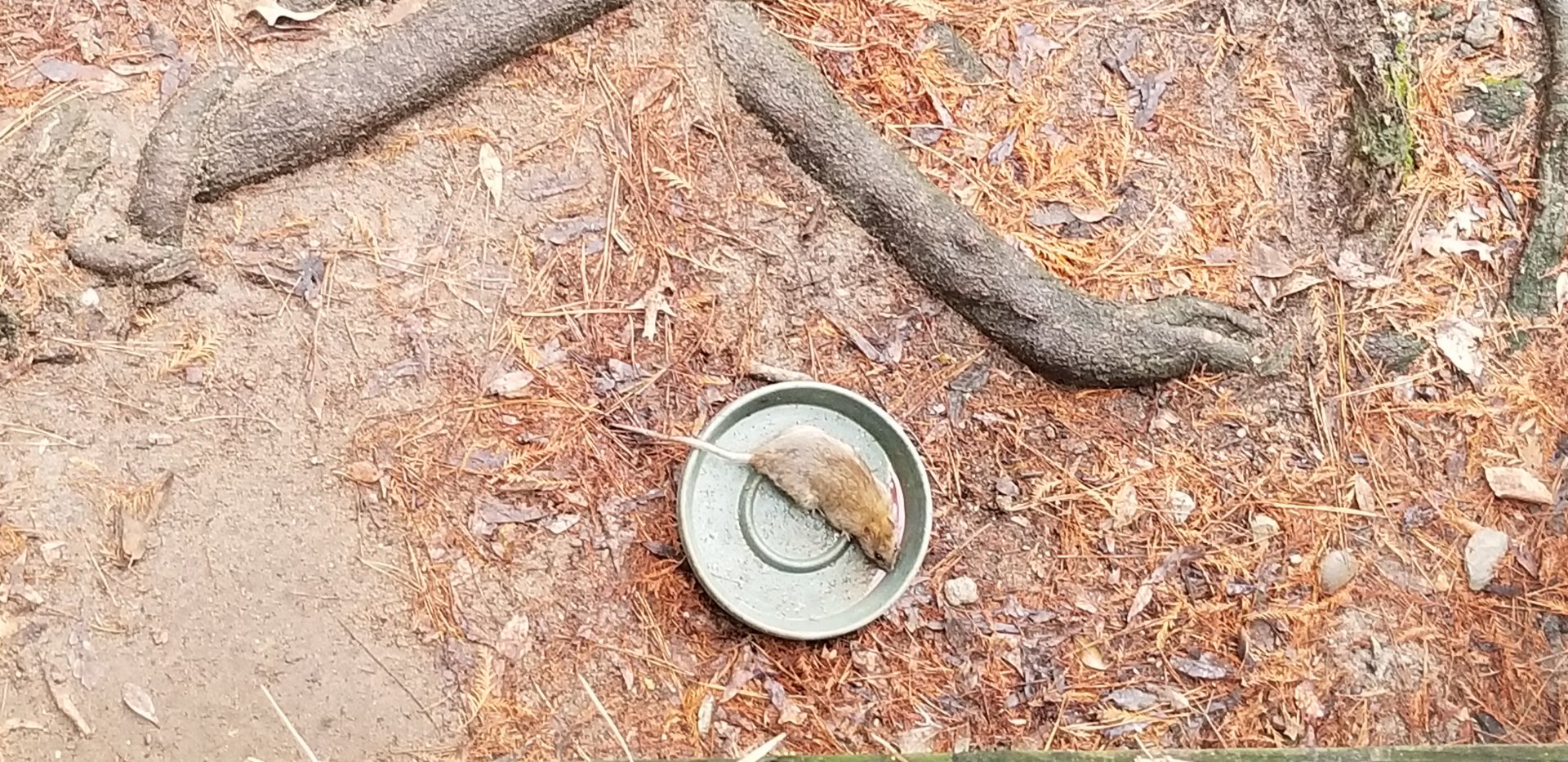
I added a crop of one of these few pics I took of a Moroccan jird this morning. :)
 
Four new species have been added to the thread, from the extremely under-represented New World myomorphs. All photos are by @Giant Eland taken in the wild in Chile.


Olive Grass Mouse Abrothrix olivacea (post #86 on page 5)

full

olive grass mouse (Abrothrix olivacea) - ZooChat


Bolivian Big-eared Mouse Auliscomys boliviensis (post #89 on page 5)

full

Bolivian big-eared mouse (Auliscomys boliviensis) - ZooChat


Chilean Climbing Mouse Irenomys tarsalis (post #90 on page 5)

full

Chilean Climbing Mouse (Irenomys tarsalis) - ZooChat


Bunny Rat Reithrodon auritus (post #90 on page 5)

full

bunny rat (Reithrodon auritus) - ZooChat


The number of rodents represented in this Part Two thread is now 152 species from 79 genera (out of a total of about 1680 species in about 346 genera, so not a great percentage of rats and mice being covered here). For the entire Rodentia combined there are 363 species from 162 genera represented in the Zoochat galleries (out of c.2400 species and c.500 genera).
 
A couple more photos by @Najade have been added, of wild animals in Paraguay. Both species are the first representatives of their genera, and are also amongst the few representatives of the New World subfamily Sigmodontinae - there are about 400 species, of which these two species take the total of depicted species in the thread to nine.


They are on page 5 of the thread, in posts 81 and 87 respectively.

Yellow Pigmy Rice Rat Oligoryzomys flavescens
full

Yellow Pygmy Rice Rat (Oligoryzomys flavescens) - ZooChat

Montane Grass Mouse Akodon montensis
full

Montane Grass Mouse (Akodon montensis) - ZooChat
 
Another new addition from @Najade - also from the subfamily Sigmodontinae as in the above post - the Chaco Leaf-eared Mouse Graomys chacoensis.

full

Chaco Leaf-eared Mouse (Graomys chacoensis) - ZooChat


The genus Graomys is probably a larger complex than the four species which are normally recognised currently (G. centralis, G. domorum, G. edithae, G. griseoflavus). Four further described species are usually treated as synonyms of G. griseoflavus (namely G. cachinus, G. chacoensis, G. lockwoodi, and G. medius) although these are, at least in part, probably valid species. In this thread I have followed the status quo and only listed the first four as valid, with a note on the others as being possibles, hence the photo above is placed under G. griseoflavus.
 
Back
Top