The Zoochat Photographic Guide to Shorebirds, Flamingos and Grebes

Xema


Sabine’s Gull (Xema sabini)

A distinctive species breeding in the arctic and subarctic: along the coasts of western and northern Alaska east across arctic Canada to the high-arctic zone in Greenland. From there further east to Spitsbergen and to Siberia. Winters much further south in subtropical and tropical coastal upwelling zones.

While this species is considered monotypic by the IOC, BoW recognised four subspecies: palaeartica from Spitsbergen east to the Taymyr Peninsula and Lena Delta; tschuktschorum on the Chukotskiy Peninsula; woznesenskii from northeast Siberia to Alaska; and sabini from arctic Canada to eastern Greenland.

palaearctica
tschuktschorum
woznesenskii
- photo by @Pleistohorse in the wild, United States (Alaska), adult breeding plumage

full


sabini

Photo by @Maguari in the wild (unknown subspecies), United Kingdom, showing a bird in first summer plumage

full


Day, R. H., I. J. Stenhouse, and H. G. Gilchrist (2020). Sabine's Gull (Xema sabini), version 1.0. In Birds of the World (S. M. Billerman, Editor). Cornell Lab of Ornithology, Ithaca, NY, USA. https://doi-org.ezproxy.library.wur.nl/10.2173/bow.sabgul.01

Gill F., Donsker D. and Rasmussen P. (Eds) (2021). IOC World Bird List (v11.2). doi : 10.14344/IOC.ML.11.2.
 
Chroicocephalus
Part 1/2


Slender-billed Gull (Chroicocephalus genei)

The breeding range of this species is scattered and disjunct, from Senegal, Mauritania and the Iberian Peninsula through the Mediterranean, Black Sea, Asia Minor and the Middle East towards eastern Kazakhstan, Afghanistan, Pakistan and India. Occasionally further east, as far as Lake Baikal in Russia. Winters south of breeding range south to the Horn of Africa, but many populations are only partly migratory.

Monotypic

Photo by @devilfish at Cañada de los Pájaros, Spain

full


Bonaparte’s Gull (Chroicocephalus philadelphia)

This small gull species occurs throughout North America. The breeding range is mostly limited to Canada and Alaska, and winters mostly in the southern and eastern United States, northern Mexico, as well as in the Bahamas, Bermuda and Cuba. Migrant in the area between breeding and wintering range.

Monotypic

Photo by @ThylacineAlive at Santa Barbara Zoo, United States (non-breeding plumage)

full


Photo by @Pleistohorse in the wild, United States (breeding plumage)

full


Andean Gull (Chroicocephalus serranus)

A montane breeding species, the Andean Gull breeds on Andean lakes from northern Ecuador, western Bolivia and northwest Argentina to central Chile. Also reported from Laguna La Cocha (Colombia). The non-breeding range is extended towards the Pacific coast.

Monotypic

Photo by @devilfish at Vesty Pakos Zoo, Bolivia (non-breeding plumage)

full


Brown-hooded Gull (Chroicocephalus maculipennis)

The breeding range of this species extends from south-central Chile and southeastern Brazil south to Tierra del Fuego and the Falkland Islands. Quite sedentary, but may winter further north as far as northern Chile and central-east Brazil, as individuals disperse to larger river systems and coastal areas.

Monotypic

Photo by @lintworm in the wild, Falkland Island (breeding plumage)

full


Photo by @carlos55 in the wild, Chile (non-breeding plumage)

full


Black-billed Gull (Chroicocephalus bulleri)

The breeding range of this species is restricted to New Zealand, mostly South Island and a few sites on North Island. Winters mainly on southern North Island and northern South Island.

Monotypic

Photo by @Gigit in the wild, New Zealand

full


Burger, J., M. Gochfeld, and E. F. J. Garcia (2020). Slender-billed Gull (Chroicocephalus genei), version 1.0. In Birds of the World (J. del Hoyo, A. Elliott, J. Sargatal, D. A. Christie, and E. de Juana, Editors). Cornell Lab of Ornithology, Ithaca, NY, USA. https://doi-org.ezproxy.library.wur.nl/10.2173/bow.slbgul1.01

Burger, J. and M. Gochfeld (2020). Bonaparte's Gull (Chroicocephalus philadelphia), version 1.0. In Birds of the World (A. F. Poole and F. B. Gill, Editors). Cornell Lab of Ornithology, Ithaca, NY, USA. https://doi-org.ezproxy.library.wur.nl/10.2173/bow.bongul.01

Burger, J., M. Gochfeld, E. de Juana, and E. F. J. Garcia (2020). Andean Gull (Chroicocephalus serranus), version 1.0. In Birds of the World (J. del Hoyo, A. Elliott, J. Sargatal, D. A. Christie, and E. de Juana, Editors). Cornell Lab of Ornithology, Ithaca, NY, USA. https://doi-org.ezproxy.library.wur.nl/10.2173/bow.andgul1.01

Burger, J., M. Gochfeld, and E. F. J. Garcia (2020). Brown-hooded Gull (Chroicocephalus maculipennis), version 1.0. In Birds of the World (J. del Hoyo, A. Elliott, J. Sargatal, D. A. Christie, and E. de Juana, Editors). Cornell Lab of Ornithology, Ithaca, NY, USA. https://doi-org.ezproxy.library.wur.nl/10.2173/bow.brhgul2.01

Burger, J., M. Gochfeld, E. F. J. Garcia, and P. F. D. Boesman (2020). Black-billed Gull (Chroicocephalus bulleri), version 1.0. In Birds of the World (J. del Hoyo, A. Elliott, J. Sargatal, D. A. Christie, and E. de Juana, Editors). Cornell Lab of Ornithology, Ithaca, NY, USA. https://doi-org.ezproxy.library.wur.nl/10.2173/bow.blbgul1.01

Gill F., Donsker D. and Rasmussen P. (Eds) (2021). IOC World Bird List (v11.2). doi : 10.14344/IOC.ML.11.2.
 
Last edited:
Chroicocephalus
Part 2/2


Silver Gull (Chroicocephalus novaehollandiae)

The breeding range of this species contains much of the Australian and New Zealand coasts. Also found on Tasmania, New Caledonia, the Loyalty Islands, Stewart Island, the Chathams, Bounties, Snares, Aucklands and Campbell Island.

BoW and IOC recognise three subspecies: forsteri of northern Australia, New Caledonia and the Loyalty Islands; novaehollandiae on south Australia and Tasmania; and scopulinus on New Zealand and surrounding islands. Former subspecies gunni from Tasmania now generally accepted to belong to novaehollandiae.

forsteri - photo by @Hix in the wild, Australia (Torres Strait)

full


novaehollandiae - photo by @Hix in the wild, Australia

full


scopulinus - photo by @lintworm in the wild, New Zealand

full


Grey-headed Gull (Chroicocephalus cirrocephalus)

The breeding range of this species is split between Africa and South America. The South American subspecies breeds along the eastern coast in Ecuador and Peru, and on the western coasts from southern Brazil to Argentina and inland through the Paraguay and Paraná basins to Santa Fe. The African subspecies breeds along the coasts and rivers of western Africa, along with a wide scattering of localities from Sudan and Ethiopia to Malawi and South Africa, including the Rift Valley Lakes. Also on Madagascar. The African subspecies disperses throughout sub-Saharan Africa.

Two subspecies recognised by BoW and IOC: cirrocephalus for the South American part of the distribution and poiocephalus for the African part.

cirrocephalus
poiocephalus
- photo by @Kudu21 in the wild, South Africa (breeding plumage)

full


Photo by @Tomek at Zoo Plzen, Czech Republic, adult non-breeding (ssp poiocephalus)

full


Hartlaub’s Gull (Chroicocephalus hartlaubii)

The breeding range of this species is restricted to the coasts of southwest Africa, from central Namibia south to southwest South Africa.

Monotypic

Photo by @Giant Eland in the wild, South Africa. Shows adults of the hooded form in breeding plumage (though one individual on the far left is an immature).

full


Black-headed Gull (Chroicocephalus ridibundus)

The breeding range of this species stretches from southern Greenland and Iceland throughout most of Europe and central Asia to Kamchatka, Ussuriland and northeast China. Also marginally in eastern North America (southeast Canada and northeast United States). The wintering range extends south of the breeding range to western and eastern Africa, India and southeast Asia. Birds breeding on lower latitudes can be resident or dispersive.

Monotypic

Photo by @LaughingDove in the wild, United Kingdom (adult non-breeding)

full


Photo by @Gigit in the wild, Iceland (adult breeding)

full


Photo by @vogelcommando in the wild, The Netherlands (adult breeding in flight)

full


Brown-headed Gull (Chroicocephalus brunnicephalus)

The breeding of this species is limited to the mountains of south-central Asia: from Turkestan and western China, south to Pamirs, Ladakh and Tibet. Winters mainly in coastal areas of India, Sri Lanka and southeast Asia, in smaller numbers also west to the Arabian Peninsula.

Monotypic

Photo by @LaughingDove in the wild, Thailand

full


Burger, J., M. Gochfeld, G. M. Kirwan, and E. F. J. Garcia (2020). Silver Gull (Chroicocephalus novaehollandiae), version 1.0. In Birds of the World (J. del Hoyo, A. Elliott, J. Sargatal, D. A. Christie, and E. de Juana, Editors). Cornell Lab of Ornithology, Ithaca, NY, USA. https://doi-org.ezproxy.library.wur.nl/10.2173/bow.silgul2.01

Burger, J., M. Gochfeld, G. M. Kirwan, and E. F. J. Garcia (2020). Gray-hooded Gull (Chroicocephalus cirrocephalus), version 1.0. In Birds of the World (J. del Hoyo, A. Elliott, J. Sargatal, D. A. Christie, and E. de Juana, Editors). Cornell Lab of Ornithology, Ithaca, NY, USA. https://doi-org.ezproxy.library.wur.nl/10.2173/bow.grhgul.01

Burger, J., M. Gochfeld, E. F. J. Garcia, and P. F. D. Boesman (2020). Hartlaub's Gull (Chroicocephalus hartlaubii), version 1.1. In Birds of the World (T. S. Schulenberg, Editor). Cornell Lab of Ornithology, Ithaca, NY, USA. https://doi-org.ezproxy.library.wur.nl/10.2173/bow.hargul1.01.1

Burger, J., M. Gochfeld, G. M. Kirwan, D. A. Christie, and E. F. J. Garcia (2020). Black-headed Gull (Chroicocephalus ridibundus), version 1.0. In Birds of the World (J. del Hoyo, A. Elliott, J. Sargatal, D. A. Christie, and E. de Juana, Editors). Cornell Lab of Ornithology, Ithaca, NY, USA. https://doi-org.ezproxy.library.wur.nl/10.2173/bow.bkhgul.01

Burger, J., M. Gochfeld, and E. F. J. Garcia (2020). Brown-headed Gull (Chroicocephalus brunnicephalus), version 1.0. In Birds of the World (J. del Hoyo, A. Elliott, J. Sargatal, D. A. Christie, and E. de Juana, Editors). Cornell Lab of Ornithology, Ithaca, NY, USA. https://doi-org.ezproxy.library.wur.nl/10.2173/bow.bnhgul1.01

Gill F., Donsker D. and Rasmussen P. (Eds) (2021). IOC World Bird List (v11.2). doi : 10.14344/IOC.ML.11.2.
 
Saundersilarus


Saunders’s Gull (Saundersilarus saundersi)

The breeding range of this species is restricted to the east coast of China, and sporadically on the west coast of Korea. Winters from southern Korea and Japan south to northern Vietnam. The taxonomic status of this species is unclear. A major study in gull phylogeny (Pons et al., 2005) found Saunders’s Gull to be separated from all other gull clades, but the lineage was poorly resolved. BoW recognises a separate genus for this species (Saundersilarus) while IOC retains it within Chroicocephalus, to which it is morphologically similar.

Monotypic

There are no pictures of this species in the Zoochat Gallery at the time of writing.


Burger, J., M. Gochfeld, E. de Juana, E. F. J. Garcia, and G. M. Kirwan (2020). Saunders's Gull (Saundersilarus saundersi), version 1.0. In Birds of the World (J. del Hoyo, A. Elliott, J. Sargatal, D. A. Christie, and E. de Juana, Editors). Cornell Lab of Ornithology, Ithaca, NY, USA. https://doi-org.ezproxy.library.wur.nl/10.2173/bow.saugul2.01

Gill F., Donsker D. and Rasmussen P. (Eds) (2021). IOC World Bird List (v11.2). doi : 10.14344/IOC.ML.11.2.

Pons, J. M., Hassanin, A., & Crochet, P. A. (2005). Phylogenetic relationships within the Laridae (Charadriiformes: Aves) inferred from mitochondrial markers. Molecular phylogenetics and evolution, 37(3), 686-699.
 
Hydrocoloeus


Little Gull (Hydrocoloeus minutus)

In the eastern Hemisphere, the breeding range of this species contains three disjunct areas: one in northeastern Europe, one in western Siberia and one in Eastern Siberia. In the western hemisphere the distribution is poorly known, but confirmed breeding is restricted to the Great Lakes-St. Lawrence River basin, southern Minnesota, and the Hudson Bay and James Bay lowlands. Migration patterns poorly known, but some birds (e.g., in eastern Siberia) are almost resident while others migrate south or west from their breeding range. In North America, the Great Lakes area and the Hudson-Delaware region have the largest number of reports of wintering Little Gulls. In the eastern Hemisphere, the eastern Mediterranean might in some years be of major importance.

Monotypic

Photo by @carl the birder in the wild, Sweden (adult breeding)

full


Photo by @d1am0ndback in the wild, United States (non-breeding)

full


Ewins, P. J. and D. V. Weseloh (2020). Little Gull (Hydrocoloeus minutus), version 1.0. In Birds of the World (S. M. Billerman, Editor). Cornell Lab of Ornithology, Ithaca, NY, USA. https://doi-org.ezproxy.library.wur.nl/10.2173/bow.litgul.01

Gill F., Donsker D. and Rasmussen P. (Eds) (2021). IOC World Bird List (v11.2). doi : 10.14344/IOC.ML.11.2.
 
Saundersilarus


Saunders’s Gull (Saundersilarus saundersi)

The breeding range of this species is restricted to the east coast of China, and sporadically on the west coast of Korea. Winters from southern Korea and Japan south to northern Vietnam. The taxonomic status of this species is unclear. A major study in gull phylogeny (Pons et al., 2005) found Saunders’s Gull to be separated from all other gull clades, but the lineage was poorly resolved. BoW recognises a separate genus for this species (Saundersilarus) while IOC retains it within Chroicocephalus, to which it is morphologically similar.

Monotypic

There are no pictures of this species in the Zoochat Gallery at the time of writing.


Burger, J., M. Gochfeld, E. de Juana, E. F. J. Garcia, and G. M. Kirwan (2020). Saunders's Gull (Saundersilarus saundersi), version 1.0. In Birds of the World (J. del Hoyo, A. Elliott, J. Sargatal, D. A. Christie, and E. de Juana, Editors). Cornell Lab of Ornithology, Ithaca, NY, USA. https://doi-org.ezproxy.library.wur.nl/10.2173/bow.saugul2.01

Gill F., Donsker D. and Rasmussen P. (Eds) (2021). IOC World Bird List (v11.2). doi : 10.14344/IOC.ML.11.2.
Pons, J. M., Hassanin, A., & Crochet, P. A. (2005). Phylogenetic relationships within the Laridae (Charadriiformes: Aves) inferred from mitochondrial markers. Molecular phylogenetics and evolution, 37(3), 686-699.

Added a photo of the above species to the gallery just now:

 
Anarhynchus


Wrybill (Anarhynchus frontalis)

This species with its unique bill shape occurs only in New Zealand, where it breeds along the river beds of (mostly central) South Island but winters mainly in North Island.

Monotypic

Photo by @Chlidonias in the wild, New Zealand

full


Clements, J. F., Schulenberg, T. S., Iliff, M. J., Roberson, D., Fredericks, T. A., Sullivan, B. L. & Wood, C. L. (2018). The eBird/Clements checklist of birds of the world: v2018. retrieved from Downloadable Checklist | Clements Checklist on 30 Januari 2019)

Gill, F & Donsker, D. (Eds). (2019). IOC World Bird List (v9.1). doi:10.14344/IOC.ML.9.1. retrieved from IOC Lists « IOC World Bird List on 30 january 2019)

Wiersma, P. & Kirwan, G.M. (2019). Wrybill (Anarhynchus frontalis). In: del Hoyo, J., Elliott, A., Sargatal, J., Christie, D.A. & de Juana, E. (eds.). Handbook of the Birds of the World Alive. Lynx Edicions, Barcelona. (retrieved from Wrybill (Anarhynchus frontalis) on 30 January 2019).
A unique wader, together with spoon-billed sandpiper
 
White-Faced Plover (Charadrius dealbatus)

Often considered a subspecies of the Kentish Plover, the breeding range of this species is poorly known. It possibly breeds in southeastern China and it winters on the coasts of Vietnam, along the Gulf of Thailand to the Malaysian Peninsula and Sumatra. There has been a lot of confusion on which birds actually belong to this taxon, especially considering that nihohensis Kentish Plovers were once erroneously labelled dealbatus. Kennerly et al 2008 provides a fine overview of this confusion.

Monotypic

There are no pictures of this species in the Zoochat Gallery at time of writing.

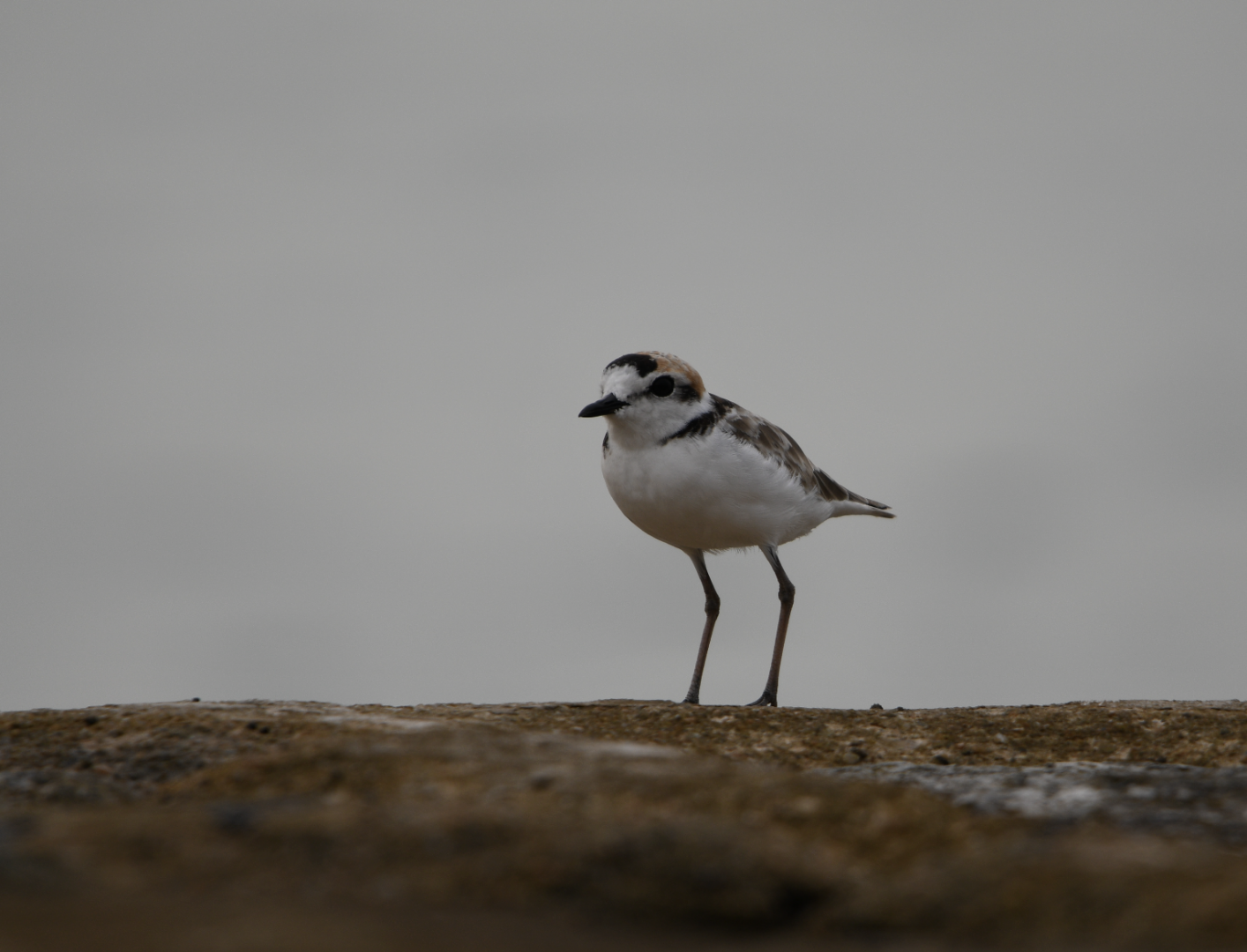
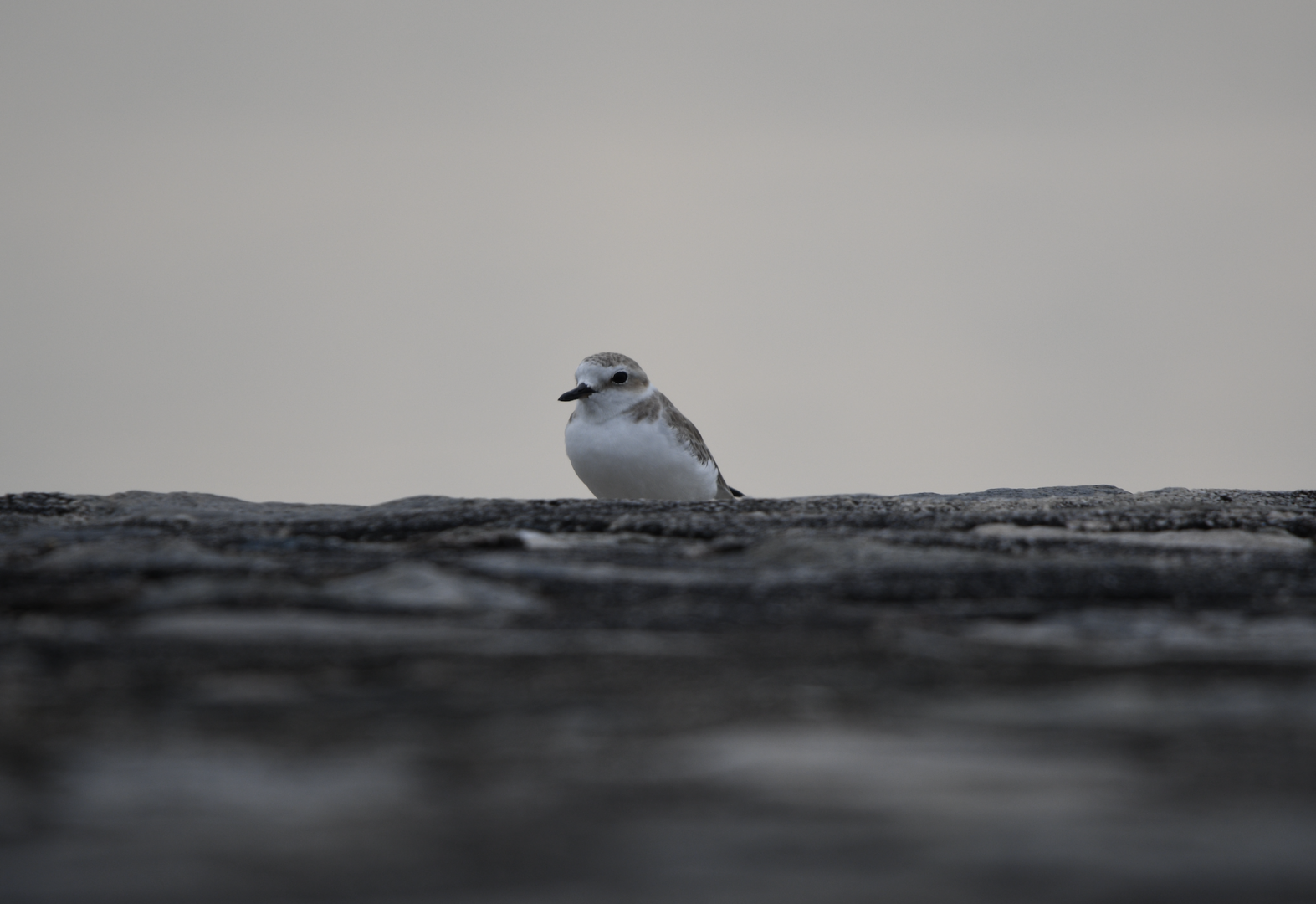
I have photos of wild White Faced Plover

 
Malay Plover (Charadrius peronii)

This species occurs in much of southeast Asia, from southern Thailand, Vietnam and Cambodia through the Malayan Peninsula far into Indonesia (including Borneo, Sumatra, Sulawesi, Timor and Bali) and the Philippines.

Monotypic

There are no pictures of this species in the Zoochat Gallery at time of writing.

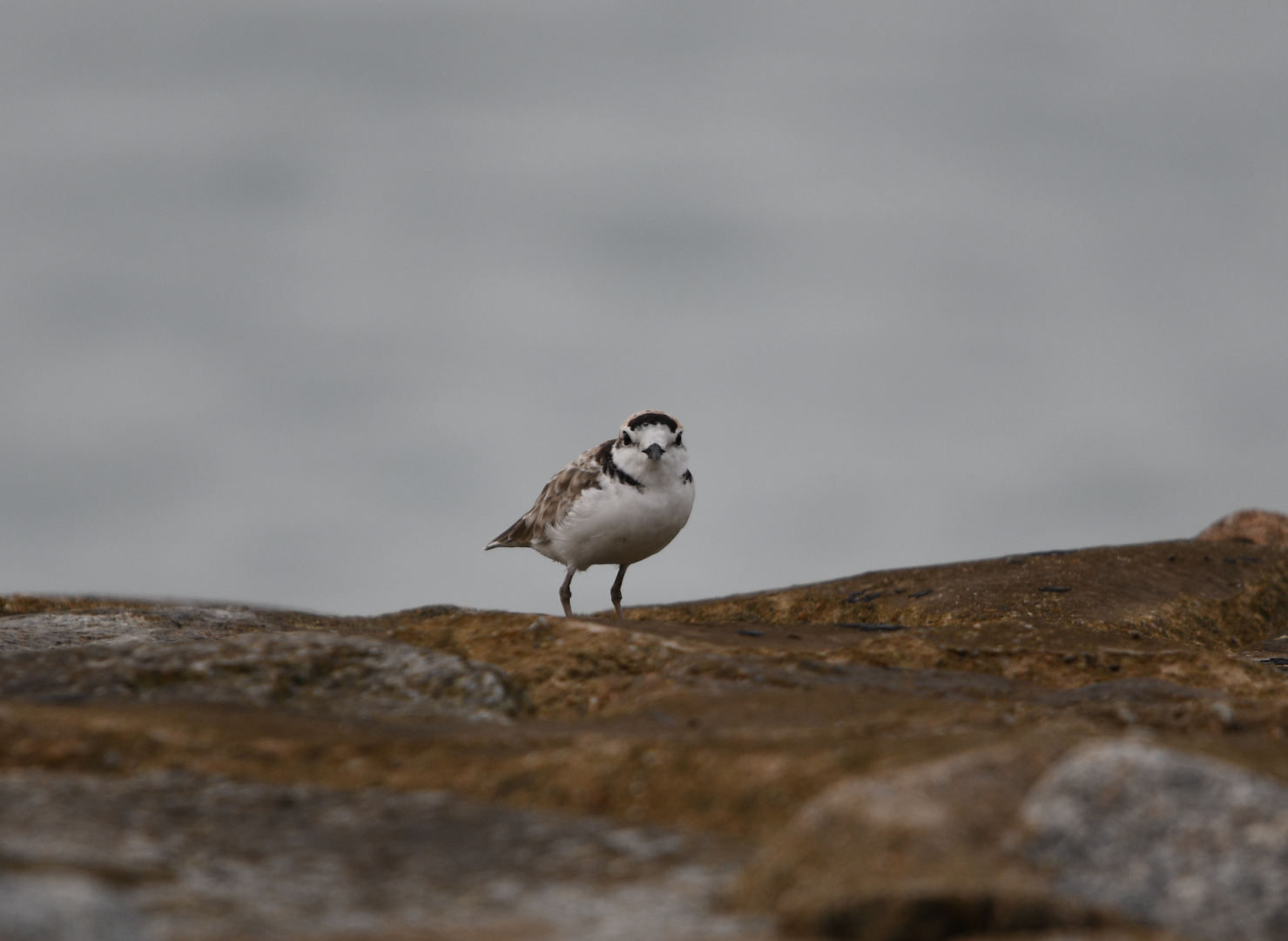
I have photos of Malaysian Plover in the wild


@Mr. Zootycoon I understand you're quite a busy person so I won't bother you too much, but I wonder would you revisit the thread and shift the taxonomy in here at some point in the future? (eg. the giant reshuffling of most of Charadrius into Anarhynchus, splitting of 'Lesser Sand Plover'...). I don't have a right to tell you what to do so I was just curious, : )
 
Back
Top