The Zoochat Photographic Guide to Small Carnivores

Unfortunately not; nor why they use the latter rather than henrici.

It's exactly this kind of misnaming populations I'm trying to help mitigate with my current project. By listing all valid taxa of Carnivora, their type localities, their salient features they were described by, and any published synonymies, I hope to be able to provide a reference for those working on phylogenetics to what the correct name would be. It's a big task and I'm still collecting references, but just know that threads like this are really valuable to me, in that I can spot gaps and find a potential audience.
 
The status of Wolverines in American zoos is a big mess. I know there have been American animals in our zoos in the past but I don't know when they were kept or who may have them now. I would take a guess that individuals at smaller non-AZA zoos like Alaska and New York State Zoo probably have the American subspecies while most AZA animals nowadays are going to be Eurasian.

~Thylo

The situation with American wolverines in US zoos is all related to the inability to import animals from Canada. Probably no Canadian wolverines coming into the US since the time there were no more Polar Bears coming in either.
 
The situation with American wolverines in US zoos is all related to the inability to import animals from Canada. Probably no Canadian wolverines coming into the US since the time there were no more Polar Bears coming in either.

Hmm that's interesting. What would the correlation between the two be since I thought the bear export ban was related to the MMPA?

~Thylo
 
Hmm that's interesting. What would the correlation between the two be since I thought the bear export ban was related to the MMPA?

~Thylo

Good point. I made an assumption based on something I read in the Small Carnivore RCP stating that imports from Canada were no longer possible. I may have conflated two different issues.
 
Fifth batch of edits:

The genus post for Neogale has been created here, merging some content previously posted within Neovison and Mustela, and containing photographs by @Giant Eland , @Ituri , @CheeseChameleon1945 , @Great Argus and @alexkant

The genus post for Mustela found here has been comprehensively updated, with the addition and removal of species and subspecies where splits/lumps demand, along with the inclusion of photographs taken by @Maguari , @Pleistohorse , @carl the birder , @littleRedPanda , @Ituri , @devilfish , @ro6ca66 , @Chlidonias , @Therabu , @Giant Eland and @MagpieGoose

The subfamily post for Lutrinae found here has been split from the genus accounts for Pteronura, Lontra, Enhydra, Hydrictis, Lutra, Aonyx and Lutrogale.

The genus post for Pteronura found here has undergone minor edits, and now includes a photograph taken by @gulogulogulo
 
Last edited:
Sixth batch of edits:

The genus post for Lontra found here has undergone several edits, including the addition of subspecies and photographs by @jayjds2 , @Pleistohorse , @Ituri , @devilfish and @Giant Eland

The genus post for Enhydra found here has undergone minor edits, with the inclusion of subspecies and photographs by @geomorph and @Zoological Point .

The genus post for Hydrictis found here has undergone very minor edits, and includes a photograph by @NigeW .

The genus post for Lutra found here has undergone minor edits, and includes photographs by @LaughingDove and @devilfish

The genus post for Aonyx found here has undergone minor edits, and includes photographs by @devilfish and @demonmoth

The genus post for Lutrogale found here has undergone minor edits, with the inclusion of subspecies and photographs by @Tomek and @J I N X

The family post for Procyonidae found here has undergone several edits to fit the formatting of other photographic guides.

Genus posts for Potos, Bassariscus, Procyon, Bassaricyon, Nasua and Nasuella have been created.
 
Excellent :) given the low quality of some of the images I'll be adding to this thread in the fullness of time, on account of the fact we have no other alternatives and the taxa in question are pretty unusual, this will be no problem!
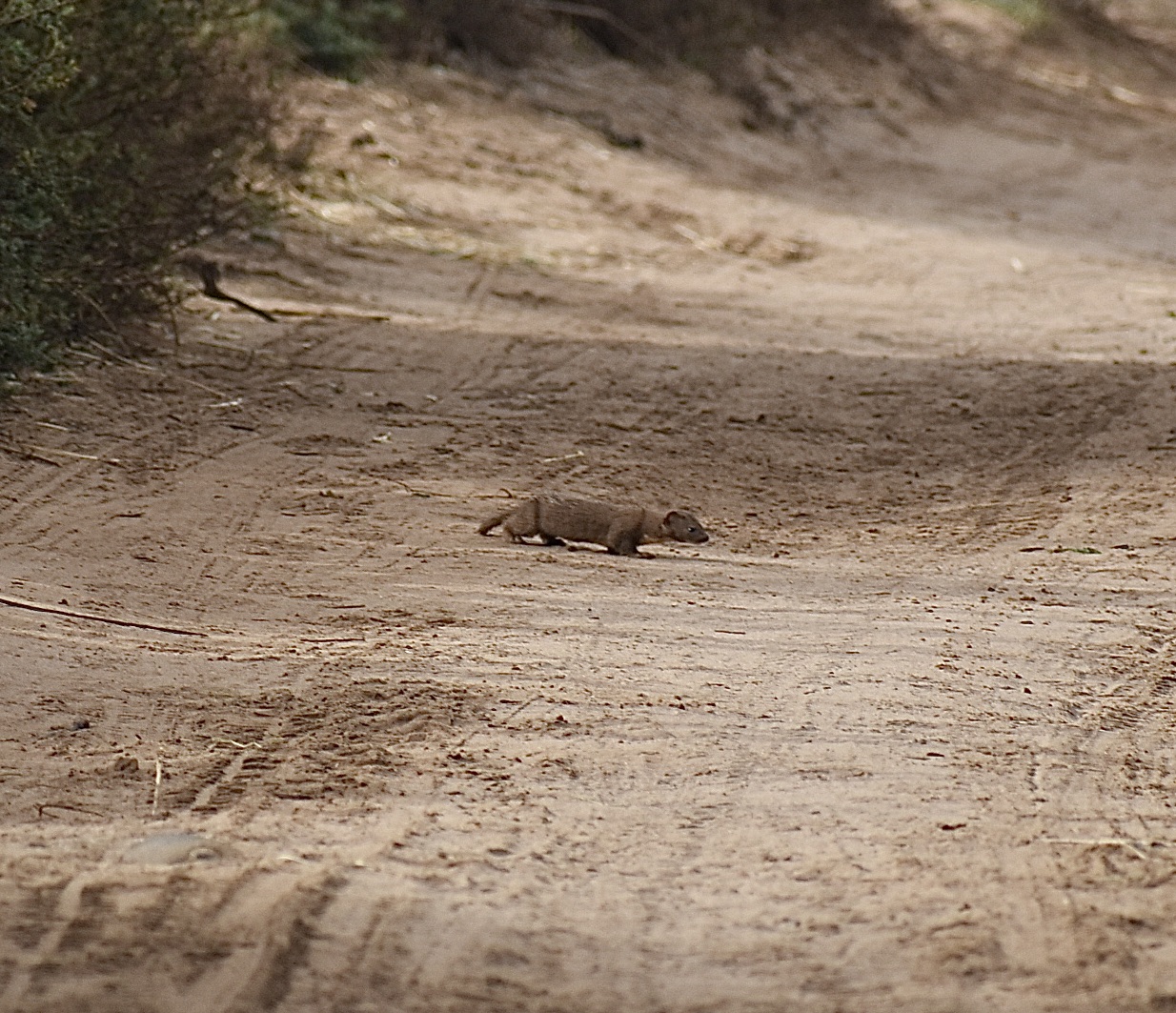
And of course, if you have any other photographs which you think may be of use, add them too!


Posted!
 
LUTRINAE


This lineage comprises 7 genera, as follows:

Pteronura - Giant Otter (monotypic)

Lontra - New World Otters (4 species)

Enhydra - Sea Otter (monotypic)

Hydrictis - Spot-necked Otter (monotypic)

Lutra -
Eurasian Otters (2 species)

Aonyx - Clawless Otters (3 species)

Lutrogale - Smooth-coated Otter (monotypic)
.
Paper published last month. It's only the abstract though.
Phylogenomics of the world’s otters - ScienceDirect

We found that genera Lutra, Aonyx, Amblonyx, and Lutrogale form a coherent clade that should be synonymized under Lutra, simplifying the taxonomic structure of the subfamily. The poorly known tropical African Aonyx congicus and the more widespread Aonyx capensis were found to be reciprocally monophyletic (having diverged 440,000 years ago), supporting the validity of the former as a distinct species.
 
Paper published last month. It's only the abstract though.
Phylogenomics of the world’s otters - ScienceDirect

We found that genera Lutra, Aonyx, Amblonyx, and Lutrogale form a coherent clade that should be synonymized under Lutra, simplifying the taxonomic structure of the subfamily. The poorly known tropical African Aonyx congicus and the more widespread Aonyx capensis were found to be reciprocally monophyletic (having diverged 440,000 years ago), supporting the validity of the former as a distinct species.

Well, it sounds like they are approaching matters with a specific aim of reducing the number of genera, rather than because all the species NEED to be synonymised :p unless the full paper makes it clear that excluding the other genera would make Lutra polyphyletic of course.
 
Well, it sounds like they are approaching matters with a specific aim of reducing the number of genera, rather than because all the species NEED to be synonymised :p unless the full paper makes it clear that excluding the other genera would make Lutra polyphyletic of course.

It has all to do with the divergence times. The "old" Lutra would still be monophyletic, but the genus only diversified about 4.5 million years ago, which they consider too short for multiple genera. If you want to keep the current genera Aonyx, Amblonyx, and Lutrogale as they are, you would also need to split Lontra into 3 different genera given divergence times within Lontra. Amblonyx and Lutrogale only split 1.5 million years ago and they only split from Aonyx 3 million years ago.
 
but the genus only diversified about 4.5 million years ago, which they consider too short for multiple genera.

Well, this rather demonstrates the problem with trying to define a set length of time before a genus can be accepted :p the same logic would require synonymisation of Felis, Prionailurus and Otocolobus for instance, or indeed Homo, Australopithecus, Paranthropus and Kenyanthropus!
 
Well, this rather demonstrates the problem with trying to define a set length of time before a genus can be accepted :p the same logic would require synonymisation of Felis, Prionailurus and Otocolobus for instance, or indeed Homo, Australopithecus, Paranthropus and Kenyanthropus!

It does, but keeping Aonyx, Lutrogale and Amblonyx as genera would mean you would need to create new genera for hairy-nosed otter, neotropical otter and marine+southern river otter. This means you would end up with 11 genera for 13 species, that would be much less workable. Trying to define what should be a genus is even more tricky than defining species (and arguably far less important) as you know, but I see no evidence for this paper having a specific aim to reduce the number of genera.
 
Back
Top