I visited Weltvogelpark Walsrode on Thursday the 9th of July for the full day and for a few hours on the next morning as a stopping point whilst driving from Warsaw, Poland to the UK (where I will be for the next month before driving back again).
I had very high expectations for Weltvogelpark Walsrode, largely based on the species list from Zootierliste and it didn’t disappoint at all. Weltvogelpark Walsrode is my favourite zoo that I have been to so far. Of course, the collection is very specialised, birds, birds and another helping of birds is all you will see there but what fantastic birds they are. The collection has a fantastic selection of rarities and I saw close to 200 bird species that I had never seen before (over 200 with the different subspecies too). The collection has reasonable numbers of birds in families that are otherwise rare in public collections such as three species of tinamou, two species of trogon, three hummingbird species, six cuckoo species (and supposedly a seventh off-show) and six species of cotinga! I have posted species lists on pictures of various areas of the zoo which can be seen here: Weltvogelpark Walsrode Gallery though I can provide species lists if you would like for any other areas of the zoo.
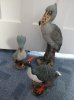
I will start by commenting on the signage, which I thought was really good. To start with, it was in English as well as German. Though I don’t think negatively of a place for only having signage in the language of the country that it is in (fair enough, it’s not like any zoos in the UK have the signs translated into German as well), English signage is a plus for me. The best thing about the signage though were the little labels (these were in German, though you could gather the meaning from similar words) marked on the relevant species species signs that said ‘World First Breeding’ , ‘Only here in Europe’ or ‘Germany First Breeding’. This may be just me, but I get rather annoyed when zoos put tiny, unremarkable signs on the super-rare species which live in enclosures stuck behind the bears or the tigers or gorillas etc. which are given the main focus and attention. The little notes on the signs at Walsrode made me feel like the zoo is proud to have something that can’t be seen anywhere else. The rarities are celebrated to the extent that the gift shop sells bird figurines depicting shoebills, kagus and horned guans! (which I couldn't help but purchase see attached picture)
Moving on to the grounds of the Weltvogelpark. A map can be seen from their website here: http://www.weltvogelpark.de/vogelpark/wp-content/uploads/2014/03/02a_parc_engl.pdf which should give you an idea of the layout of the place. Generally, the landscaping is very nice all over, particularly on the large flight show lawn which has a fountain, flowerbeds etc.
This takes me on to the flight show itself. Wow. The show is called the largest flight show in Europe and I can believe it. There is quite a range of species show starting with pelicans flying down the lawn followed by owls and various smaller birds of prey (including crested caracaras and bateleurs) flying over the heads of the audience which then builds up to an Andean Condor, a Ground hornbill, about a dozen crowned-cranes and at the end of the show roughly 20 ibis and several dozen parrots of varying species from Scarlet Macaws to Sun Conures and Sulphur-crested Cockatoos being released to fly around in the air over the show lawn. I don’t usually like animal shows and rarely watch them when I visit zoos, but this one was impressive.
The place then falters slightly on the enclosure quality which ranged from outstanding to (in only a couple of places) substandard. Most enclosures were rather average and looked something like this:

with wire mesh on a steel frame though nearly all were nicely decorated with varying amounts of cover depending on the species.
The bottom end of the enclosure quality included the very bare aviary for keas and the somewhat too small enclosures for cassowaries and ostriches. However, the top end consists of the fantastic walkthrough buildings such as the huge and well planted Rainforest Hall and the large Free-flight hall (below)

Overall though, the enclosures were of a good standard and I don’t want to give the impression of huge contrasts between the quality of different enclosures, which I didn't feel at all.
Another plus for the Weltvogelpark is the conservation programs which it has and there are displays showing these prominently to visitors, with signs showing Siberian Crane reintroduction, Kagu breeding programs, conservations projects in Madagascar and more.
Below is a picture of a row of ‘behind the scenes’ aviaries, which highlights the behind the scenes breeding work that Weltvogelpark Walsrode does. These help to show the average visitor that there is more than just a display of rare and pretty birds going on with a sign at the entrance to these aviaries that reads:
"Weltvogelpark Walsrode - more than a bird park. Our important work in the park: bringing the beauty and diversity of birds closer to you, giving you a day full of wonderful experiences. Our very important work: 'behind the scenes' breeding programs for conservation of endangered bird species. In order to bring you even closer to this work, we invite you to have a look at some of our conservation and breeding aviaries.
It is in these aviaries that we specifically breed endangered bird species to serve their international conservation and protection programs.
Help to support these programs by donating to the Weltvogelpark Foundation or become a sponsor of our birds, cages or enclosures. Further information on: www.weltvogelpark.de"

So I think that’s pretty much it. Weltvogelpark Walsrode is really a fantastic place; I wish there were more places like it! Apart from a few notably under-represented groups such as sunbirds (which are not represented at all) and Owls and Birds of Prey (where the collection is largely more common species with only one or two rarities), the diversity of birds is displayed fantastically where the birds are given centre stage, rather than as a side piece to the big mammals as is in many – if not most – zoos.
I had very high expectations for Weltvogelpark Walsrode, largely based on the species list from Zootierliste and it didn’t disappoint at all. Weltvogelpark Walsrode is my favourite zoo that I have been to so far. Of course, the collection is very specialised, birds, birds and another helping of birds is all you will see there but what fantastic birds they are. The collection has a fantastic selection of rarities and I saw close to 200 bird species that I had never seen before (over 200 with the different subspecies too). The collection has reasonable numbers of birds in families that are otherwise rare in public collections such as three species of tinamou, two species of trogon, three hummingbird species, six cuckoo species (and supposedly a seventh off-show) and six species of cotinga! I have posted species lists on pictures of various areas of the zoo which can be seen here: Weltvogelpark Walsrode Gallery though I can provide species lists if you would like for any other areas of the zoo.
I will start by commenting on the signage, which I thought was really good. To start with, it was in English as well as German. Though I don’t think negatively of a place for only having signage in the language of the country that it is in (fair enough, it’s not like any zoos in the UK have the signs translated into German as well), English signage is a plus for me. The best thing about the signage though were the little labels (these were in German, though you could gather the meaning from similar words) marked on the relevant species species signs that said ‘World First Breeding’ , ‘Only here in Europe’ or ‘Germany First Breeding’. This may be just me, but I get rather annoyed when zoos put tiny, unremarkable signs on the super-rare species which live in enclosures stuck behind the bears or the tigers or gorillas etc. which are given the main focus and attention. The little notes on the signs at Walsrode made me feel like the zoo is proud to have something that can’t be seen anywhere else. The rarities are celebrated to the extent that the gift shop sells bird figurines depicting shoebills, kagus and horned guans! (which I couldn't help but purchase
see attached picture)Moving on to the grounds of the Weltvogelpark. A map can be seen from their website here: http://www.weltvogelpark.de/vogelpark/wp-content/uploads/2014/03/02a_parc_engl.pdf which should give you an idea of the layout of the place. Generally, the landscaping is very nice all over, particularly on the large flight show lawn which has a fountain, flowerbeds etc.
This takes me on to the flight show itself. Wow. The show is called the largest flight show in Europe and I can believe it. There is quite a range of species show starting with pelicans flying down the lawn followed by owls and various smaller birds of prey (including crested caracaras and bateleurs) flying over the heads of the audience which then builds up to an Andean Condor, a Ground hornbill, about a dozen crowned-cranes and at the end of the show roughly 20 ibis and several dozen parrots of varying species from Scarlet Macaws to Sun Conures and Sulphur-crested Cockatoos being released to fly around in the air over the show lawn. I don’t usually like animal shows and rarely watch them when I visit zoos, but this one was impressive.
The place then falters slightly on the enclosure quality which ranged from outstanding to (in only a couple of places) substandard. Most enclosures were rather average and looked something like this:
with wire mesh on a steel frame though nearly all were nicely decorated with varying amounts of cover depending on the species.
The bottom end of the enclosure quality included the very bare aviary for keas and the somewhat too small enclosures for cassowaries and ostriches. However, the top end consists of the fantastic walkthrough buildings such as the huge and well planted Rainforest Hall and the large Free-flight hall (below)
Overall though, the enclosures were of a good standard and I don’t want to give the impression of huge contrasts between the quality of different enclosures, which I didn't feel at all.
Another plus for the Weltvogelpark is the conservation programs which it has and there are displays showing these prominently to visitors, with signs showing Siberian Crane reintroduction, Kagu breeding programs, conservations projects in Madagascar and more.
Below is a picture of a row of ‘behind the scenes’ aviaries, which highlights the behind the scenes breeding work that Weltvogelpark Walsrode does. These help to show the average visitor that there is more than just a display of rare and pretty birds going on with a sign at the entrance to these aviaries that reads:
"Weltvogelpark Walsrode - more than a bird park. Our important work in the park: bringing the beauty and diversity of birds closer to you, giving you a day full of wonderful experiences. Our very important work: 'behind the scenes' breeding programs for conservation of endangered bird species. In order to bring you even closer to this work, we invite you to have a look at some of our conservation and breeding aviaries.
It is in these aviaries that we specifically breed endangered bird species to serve their international conservation and protection programs.
Help to support these programs by donating to the Weltvogelpark Foundation or become a sponsor of our birds, cages or enclosures. Further information on: www.weltvogelpark.de"
So I think that’s pretty much it. Weltvogelpark Walsrode is really a fantastic place; I wish there were more places like it! Apart from a few notably under-represented groups such as sunbirds (which are not represented at all) and Owls and Birds of Prey (where the collection is largely more common species with only one or two rarities), the diversity of birds is displayed fantastically where the birds are given centre stage, rather than as a side piece to the big mammals as is in many – if not most – zoos.