Thunderstorm at the zoo

Mr. Bobcat

Well-Known Member
Premium Member
I was recently at a zoo when a pop up thunderstorm blew through. The zoo promptly brought all the outside animals indoors. It was only mid-afternoon and that was it.
Only things still open were indoors exhibits which is maybe a third of the zoo.
Has anyone else seen or heard of this happening?
In all my years visiting zoos, this was the only time I can remember it happing.
 
I was recently at a zoo when a pop up thunderstorm blew through. The zoo promptly brought all the outside animals indoors. It was only mid-afternoon and that was it.
Only things still open were indoors exhibits which is maybe a third of the zoo.
Has anyone else seen or heard of this happening?
In all my years visiting zoos, this was the only time I can remember it happing.
Obviously, with the onset of gales,certain animals are encouraged to be indoors.
In all my years with association with zoos, I have never heard of such a thing!
 
Sometimes New Zealand zoos close ahead of time (24-48 hours notice) due to government issued weather warnings; but for what I’d term routine thunderstorms, which happen around once a month on average, the zoo is open as normal.

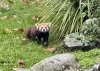
Every animal has the option to take some form of shelter and many actually enjoy it. I visited Hamilton Zoo during similar conditions last month and the tigers (despite having access to their den building) were chilling in the rain; while the (drenched) red panda happily ran laps of its exhibit:

upload_2025-7-31_10-57-35.jpeg
 

Attachments

  • upload_2025-7-31_10-57-35.jpeg
    upload_2025-7-31_10-57-35.jpeg
    240.1 KB · Views: 36
It was disappointing because I was visiting family after traveling 1300 miles to get to her home.
 
It's a North American Zoo response , policy isn't correct word but guidance is closer , to severe weather owing to the potential of severe structural enclosure damage. North American thunder storms depending on area can be extremely violent, blowup extremely suddenly, as in close to tornado scale. I've seen it 1st hand many times.

Lock up of species is for security and also to prevent animal losses depending on facility location in the risk of a lightning strike on mega herbivores.
That has happened in North American Zoological collections.
Not as far as I know in UK .

Thunderstorm changing to potential of an actual or very near tornado is a fact for a large percentage of zoological facilities In North America- a real summer nightmare . Standard practice I've dealt with is prioritize mega herbivores, large carnivores and large primates- get them in secure holding inside.
If time and staffing allows , severe storm alerts can blow out of nowhere with not a lot of warning, get pretty much anything else in as well .

Protocol usually states clearly to not allow stock back out until the weather alert is passed, and office clears a stand down .

If it's in afternoon close to time when a facility that night houses species, then the animals will not go back out. They will have their end of day routine during the storm and that gives keepers a chance to check for damage after weather alert is stood down and get repairs done in morning. We're not talking about just hot wire going off from potential electric outages or few ree limbs off- but actual fences coming down, severe flooding compromising moats , roofs disappearing , woodland trashed.
Some locations in north america at some points of year this could be happening several times a week for short periods .
North American Thunderstorms wind and hail damage , hail can be golf ball to apple sized ! in a zoological facility has to be seen to be believed.

If the facility is in an area than can experience these weather conditions the main office , security and usually guest services has the doppler alerts on at all times in season and will immediately notify head management, who then instigate lock up , even if facility is just outside the area as a precaution in most cases.

The real nightmare if there is a POTENTIAL , then response is instigated and it's still a blue sky summer day .if the storm direction changes but the facility is still in the at risk zone the stock stays locked up until alert is past . Then it appears it was done for no good reason. But animal, staff and visitors safety comes 1st.
It's a huge pain in the arse for animal management , and yes joe public are not always understanding, read are usually vocally angry but depending on location it's a very real , needed and vital security measure that will happen multiple times in a season.

Hope that explains Mr Bobcat why ur zoo afternoon got ruined . The facility was being responsible and accountable to its stock, staff, visitors and surrounding community. But they failed to explain WHY it happened and imo that's not fair on visitors.
 
It's a North American Zoo response , policy isn't correct word but guidance is closer , to severe weather owing to the potential of severe structural enclosure damage. North American thunder storms depending on area can be extremely violent, blowup extremely suddenly, as in close to tornado scale. I've seen it 1st hand many times.

Lock up of species is for security and also to prevent animal losses depending on facility location in the risk of a lightning strike on mega herbivores.
That has happened in North American Zoological collections.
Not as far as I know in UK .

Thunderstorm changing to potential of an actual or very near tornado is a fact for a large percentage of zoological facilities In North America- a real summer nightmare . Standard practice I've dealt with is prioritize mega herbivores, large carnivores and large primates- get them in secure holding inside.
If time and staffing allows , severe storm alerts can blow out of nowhere with not a lot of warning, get pretty much anything else in as well .

Protocol usually states clearly to not allow stock back out until the weather alert is passed, and office clears a stand down .

If it's in afternoon close to time when a facility that night houses species, then the animals will not go back out. They will have their end of day routine during the storm and that gives keepers a chance to check for damage after weather alert is stood down and get repairs done in morning. We're not talking about just hot wire going off from potential electric outages or few ree limbs off- but actual fences coming down, severe flooding compromising moats , roofs disappearing , woodland trashed.
Some locations in north america at some points of year this could be happening several times a week for short periods .
North American Thunderstorms wind and hail damage , hail can be golf ball to apple sized ! in a zoological facility has to be seen to be believed.

If the facility is in an area than can experience these weather conditions the main office , security and usually guest services has the doppler alerts on at all times in season and will immediately notify head management, who then instigate lock up , even if facility is just outside the area as a precaution in most cases.

The real nightmare if there is a POTENTIAL , then response is instigated and it's still a blue sky summer day .if the storm direction changes but the facility is still in the at risk zone the stock stays locked up until alert is past . Then it appears it was done for no good reason. But animal, staff and visitors safety comes 1st.
It's a huge pain in the arse for animal management , and yes joe public are not always understanding, read are usually vocally angry but depending on location it's a very real , needed and vital security measure that will happen multiple times in a season.

Hope that explains Mr Bobcat why ur zoo afternoon got ruined . The facility was being responsible and accountable to its stock, staff, visitors and surrounding community. But they failed to explain WHY it happened and imo that's not fair on visitors.

I can understand a severe thunderstorm but it was over in 40 or 45 minutes, no significant wind and clear skies immediately afterwards.
There was a few claps of thunder.
But I understand some facilities will be more cautious.
I grew up in Houston, so summer pop up storms are common, but only last a short time.
 
It's just risk management mr Bobcat
On your visit someone had to make the best decision relating to the storm, risk and aftermath and visitors are not privy to that.
Summer storms are common and usually don't cause total disaster but they can, have done and have to be taken seriously. Facilities have detailed written protocols on this.
For some facilities there's a 30 minute rule, code red until 30 mins after the last rumble of thunder. Which can drag on and on and on. Lightning strike on mega herbivores is real, happens in the wild , has happened in north American facilities.
Thats the rule even for humans in a water park, no return to water until after 30 minutes after last thunder rumble because of Lightning strike risk.

Others it's if stand down after 3pm stock doesn't go back out. Because of animal management issues.
If you do an animal recall early, some facilities do not have the training in place to even get the animals back in at usual lock in time. If facility management insists on class 1 animals being in secure holding at night inside thats a huge issue . in some facilities opinion if you can't get the cats in at usual lock in time because their schedule was interupted and they won't then cooperate that a serious security incident.
Then you also have the issue of the animals itself, brought in early, happy to be in out of the heat. Some simply won't go back out into the exhibit. What's the solution? force them back out?
Then you also have logistics, if you have a group of animals in a complex environment of overhead tunnels or races, separations, individual night dens etc it takes time to get them in , but it also takes time to get them back out onto exhibit. Normal Zoo routine starts early 7 or 8am. Visitors get in at 10am.Staff uses all that time 3 hours prep to check enclosure security, get animals from off show in place . So if the storm ends at 3pm there isn't time to actually do this. No responsible facility is going to skip the enclosure checks just to give visitors " their money's worth" at a security risk.
You grew up in tornado alley you've seen what damage can occur. If it's a responsible facility any severe weather risk means taking worse case scenario precautions for every risk.
I've seen moats compromised because suddenly their full of water unexpectedly and large carnivores still out because facility in question didn't get warning soon enough and animals were not well trained for recall. That was a very not good situation.
And dealt with drive through park aftermath of severe thunderstorm where multiple fences were downed and in those parks the hoofstock has to stay out because there isn't another option. With assorted ungulates then unexpectedly loose. Huge inconvenience but nothing outside perimeter fence.
And seen once a facility wanting animals back out after storm 20 mins later then dealing with unexpected power outage related to the now ended storm where suddenly an entire zoos electric is down, the electric fences are not working and the resultant sudden panic to get everything back into secure lock ups for security yet again with totally uncooperative animals refusing to be locked back in again. Thankfully some of the harder or time consuming species to shift were still in process of being shifted so were still not on exhibit where the now not working electric fences would have been a huge issue. As it was it was not a fun afternoon but at least there were no major escapes.
And multiple other storm related damage, incidents.
Yes it's frustrating if this happens as a zoo visitor, but seeing 1st hand how bloody minded complaining some zoo visitors were on being evacuated after the Dallas zoo gorilla escape, for " not getting their full day out at the zoo" I won't personally ever have any sympathy for needed security measures resulting in facility closure / early lock up to visitors.
Most facilities do and all should offer rain checks allowing visitors to come back free in these circumstances.
And in your case management failed you as they should have had that in place and explanations of what was going on. But end of day facility safety precautions trump visitor experience everytime. " guest satisfaction " is NOT the most important consideration in these cases.
 
One of my local zoos, Marwell, had a tornado go through their car park a few years ago. It was caught on camera.

 
The situation was a more complicated than just a storm (some staff "error" was also a major factor) but back in 1993 a major zoological park in Costa Rica was devastated by a tropical storm shortly before they had planned to open to the public. During the storm there was a power outage and security systems failed allowing some of the animals to escape their enclosures. Unfortunately there were several predation events and territorial fights between the parks' animals. Further, several staff members as well as consultants (who were ironically visiting for a safety assessment) were also killed. The park and remaining animals were abandoned afterwards.

They made a pretty good movie about it.
 
Back
Top