Tigers, Lions, & Leopards OH, MY! (Big Cats)

Good rule of thumb, if the BBC did it, it's ok, it is was done in America, then it's crap. America tend to only publish sensationalist media. Gone are the days of true scientific natural documentaries. We must look across the pond for quality.

I always trust BBC. I think we can trust old Animal Planet shows (Crocodile Hunter, Adventures of Jim Corwin (what happened to him), ect.)
BBC should make an updated version of Walking with Dinosaurs.:D
 
Since its gotten a little quiet on this thread I thought I'd ask you all what you positions are on Cougar (Puma Concolor) subspecies. There are currently six accepted subspecies- Argentine Cougar (Puma Concolor Cabrerae), Eastern South American Cougar (Puma Concolor Capricornensis), Northern South American Mountain Lion (Puma Concolor Concolor), and Southern South American Puma (Puma Concolor Puma) in South America and Costa Rican Cougar (Puma Concolor Costaricensis) and North American Mountain Lion (Puma Concolor Cougar) in North America. Dispite this, I believe that the North American Mountain Lion can be split into three subspecies- Western North American Mountain Lion (Puma Concolor Cougar), Eastern North American Cougar (Puma Concolor Schorgeri), and Florida Panther (Puma Concolor Coryi)
What are your opinions on this?
 
All right. Since no one wants to reply to that last topic, I want to know what are your opinions on Barbary Lions (Panthera leo leo)? Do you think they still exist as a pure subspecies? As a hybrid? As an Extinct subspecies?

I think they have been hybridnized and no longer exist in a pure form (much like North American Bengal Tigers) but there is still Barbary blood out there.

Also, what zoos have them and where in the world?

Texas Zoo, Austin Zoo, and G.W. Memorila Wildlife Park claim to have them in the U.S. (but who else?). Hannover Zoo in Germany also claims to hold the animal.
 
Barbary lions have been discussed on several of the Port Lympne (UK zoo) threads. Here is one for example:
http://www.zoochat.com/203/barbary-lion-males-port-lympne-27-a-119043/

Also a recent post mention lions in Ethiopia being genetically distinct:
http://www.zoochat.com/65/genetically-distinct-lion-panthera-leo-population-293835/

I forwarded this last article to a couple cat colleagues, who forwarded it to a genetic researcher here at the University of Arizona (who is currently studying jaguar genetics among other things). She said the Ethiopian lions are part of the Barbary lions, but more thorough testing is needed to determine whether or not the barbary (or atlas) lion is a valid subspecies.
 
Did anyone hear the news about those two male Asiatic Lions that have made their way to the Assiniboine Park Zoo in Winnipeg, Canada? As far as I know of, these are the only two Asiatic Lions in all of North America. I hope this will, one day, lead to more of this subspecies in North America and in the U.S. and for more pure Barbary Lions to be moved over here as well as other subspecies. What I want to know is weither or not the zoo is AZA accredited. If it is, it would be much more of an accomplishment since AZA has rejected the species in the past.

Arizona Docent must have had a heart attack after hearing this! :D
 
Last edited:
Lion genetics

Thylo got me thinking about the current state of Lion taxonomy and genetic research in the "phase-in" thread. So here is what is most current.

The IUCN only recognizes two subspecies of lions Panthera leo leo (African) and Panthera leo persica (Asian or as the Brits say "Asiatic").

If African Lions turn out to be separable into further subspecies, then leo has precedence over the others followed by senegalensis. (See ICZN rules of nomenclature). Properly senegalensis refers to just the West African lions, broadly it can refer to all sub-Saharan (if all sub-Saharan are monotypic).

However, Barnett et al. (2011) made the discovery that the West and Central African Lions are separated from those in East and South Africa. This makes sense as it follows the line of the Great Rift Valley which separates many taxa into either species or subspecies. There seems to be little diversity in the S/E Lions so it is not necessary to split them into recognizable taxa with the possible exception of the extinct Cape Lion, which oddly groups together with the Barbary Lion in mDNA (large models of African paleo-climate can explain this).

Surprisingly, leo (senso stricto) and persica seem to be very similar to one another, and in some scenarios in separable. If this is the case - hold on to your butts - leo and persica get synonymized and leo has precedence! (This means that Asian Lions could become Panthera leo leo and P. l. persica is a no longer a valid name).

This leaves the sub-Saharan Lions. Senegalensis has to be a valid name for the West African Lions. I currently cannot find which names have precedence for the lions in Central and South/East Africa. Going with normal trends, the Lions in S/E Africa are probably P. l. nubica (this includes krugeri and bleyenberghi. This would leave azandica as the name for the Central African Lions.

With the Central African Lions, we can probably group the Ethiopian Lions. The current thinking is that the Lions at the Addis Zoo came from southwest Ethiopia, very close to where the range of the Central African Lions are (azandica). If the Ethiopian Lions do prove distinct, I have yet to find a name in the literature that would correspond to them.

What the heck does all this mean? I dunno? Asian, Barbary, Central African (and Ethiopian), and probably West African Lions all seem to form one group, while South/East African Lions form a second. I think what we are looking at is two populations of Lions, one North of not the Sahara, but of the Congo, while the other is south and east of the Congo. It boils down to your definition of species (and subspecies). Someone who is a proponent of the Biologic Species Concept would have 1 species with at least 5 subspecies. Someone who is a proponent of the Philogenetic Species Concept would go a different route - 2 species with no subspecies. In this route we would have Panthera leo (North Africa and Eurasia) and Panthera nubica (South and East Africa).

Confused? I thought so.

The origin, current diversity and future conservation of the modern lion (Panthera leo)

Susann Bruche, Markus Gusset, Sebastian Lippold, Ross Barnett, Klaus Eulenberger, Jörg Junhold, Carlos A. Driscoll, Michael Hofreiter. A genetically distinct lion (Panthera leo) population from Ethiopia. European Journal of Wildlife Research, 2012; DOI:
[accessed via DNA confirms genetically distinct lion population for Ethiopia ]
 

Attachments

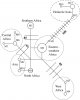
  • lion phylogeny.jpg
    lion phylogeny.jpg
    121.9 KB · Views: 9
Update: I found the dates and their order of precedence. Nubicus (1843) does have precedence over the other South/East types, but I don't know where the holotype is from. If, as I suspect, the holotype is from Nubia, then nubicus would be the default name for the Central African Lion, and the next name available for the S/E Lions would be bleyenberghei (1914) (although, I cannot find the date for massaicus).

From the San Diego Zoo's website

  • Panthera l. leo (Linnaeus 1758) North Africa / Barbary Lion / extinct
  • Panthera l. bleyenberghei (Lonnberg 1914) Angola & Zimbabwe / African Lion
  • Panthera l. krugeri (Roberts 1929) South Africa / African Lion
  • Panthera l. melanochaitus (Smith 1858) Cape province / extinct
  • Panthera l. nubicus (Blainville 1843) Tanzania / East African Lion
  • Panthera l. senegalensis (Meyer 1826) Senegal - Cameroon / African Lion
  • Panthera l. massaicus Masai Lion Uganda and Kenya / Masai Lion
  • Panthera l. persicus (Meyer 1826) Gir Forest, India / Asian Lion
 
Update: I found the dates and their order of precedence. Nubicus (1843) does have precedence over the other South/East types, but I don't know where the holotype is from. If, as I suspect, the holotype is from Nubia, then nubicus would be the default name for the Central African Lion, and the next name available for the S/E Lions would be bleyenberghei (1914) (although, I cannot find the date for massaicus).

From the San Diego Zoo's website

  • Panthera l. leo (Linnaeus 1758) North Africa / Barbary Lion / extinct
  • Panthera l. bleyenberghei (Lonnberg 1914) Angola & Zimbabwe / African Lion
  • Panthera l. krugeri (Roberts 1929) South Africa / African Lion
  • Panthera l. melanochaitus (Smith 1858) Cape province / extinct
  • Panthera l. nubicus (Blainville 1843) Tanzania / East African Lion
  • Panthera l. senegalensis (Meyer 1826) Senegal - Cameroon / African Lion
  • Panthera l. massaicus Masai Lion Uganda and Kenya / Masai Lion
  • Panthera l. persicus (Meyer 1826) Gir Forest, India / Asian Lion

What about the Northeast Congo Lion (P. l. azandica) and the Extinct subspecies of Asia, North America, and Europe.
 
I can't find the holotype data on azandica.

North American populations are now usually considered a different species probably equidistantly related to both lions and jaguars (the lion's closest relatives).

The graph attached to the first post I did (from the first cited paper) indicates that the Holartic (Eurasian) are branches off of the S/E African group. I'm sure more work needs to be done here.
 
After doing a bit of research, I've found that Asiatic has an extremely negative connotation in the US. It is akin to an anagram of "ginger" used for people of African descent. Probably why it is not used here.
 
After doing a bit of research, I've found that Asiatic has an extremely negative connotation in the US. It is akin to an anagram of "ginger" used for people of African descent. Probably why it is not used here.

Seems like a more proper name for the Big Cats to me. Unfortunetly, people still use the anagram for "ginger" here. A much better and less offensive (not saying that this isn't offensive) thing to say would have been: It is akin to the name ginger used for people with red hair.
 
[QUOTE= The recent trend (which I wholeheartedly endorse) seems to be to move amur tigers to northern climate zoos (Bronx, Minnesota, etc) and put malayan and sumatran in southern climate zoos (Tucson, Dallas, etc).

Re: Sumatran Tigers for a number of years was only held by 2 'northern climate zoos'. Both of the facilities still hold Sumatrans and the specimens have done quite well inspite of being in a northern zoo. If the species/subspecies cannot handle the climate I would agree completely, but in this particular case that isn't the situation. Just my thoughts.
 
A much better and less offensive (not saying that this isn't offensive) thing to say would have been: It is akin to the name ginger used for people with red hair.

No it isn't. Words have meanings. I chose my wording correctly. However, the real word would have been blocked out. As far as I know, ginger has never been considered truly offensive.
 
No it isn't. Words have meanings. I chose my wording correctly. However, the real word would have been blocked out. As far as I know, ginger has never been considered truly offensive.

zooretiree- The Bronx Zoo has Malayan Tiger and they've done amazingly with breeding them. Welcome to ZooChat.

jbnbsn- How is the term "Asiatic" offensive when refering to a Lion, Cheetah, or elephant (I don't use it for the elephants, it just sounds wrong to me). I understand if you said it to a person but not when talking about a species when that's their name. If us American find it offensive, how come Europe still uses it? They don't still use the anagram of "ginger".
 
Would it be okay if we posted the list of cats we've seen on this thread?
Here's mine:
Domestic/Feral Cat (as pets/feral/Connecticut's Beardsley Zoo)
Canada Lynx (at Connecticut's Beardsley Zoo)
Generic Tiger (at Disney's Animal Kingdom, Southwick's Zoo, Busch Gardens Tampa Bay, Tampa's Lowry Park Zoo)
Amur Tiger (at Connecticut's Beardsley Zoo and Bronx Zoo)
Malayan Tiger (at Bronx Zoo and Naples Zoo)
Brazilian Ocelot (at Connecticut's Beardsley Zoo)
Generic Lion (at Disney's Animal Kingdom, Bronx Zoo, Busch Gardens Tampa Bay, Southwick's Zoo, Naples Zoo)
South African Lion (at Naples Zoo)
Snow Leopard (at Bronx Zoo, Central Park Zoo, and Roger Williams Park Zoo)
Sand Cat (at Bronx Zoo)
Bobcat (at Shell Factory and Nature Park and Connecticut's Beardsley Zoo)
Caracal (at Shell Factory and Nature Park)
Generic Leopard (at Bronx Zoo and Naples Zoo)
Florida Panther (at Tampa's Lowry Park Zoo)
Clouded Leopard (at Tampa's Lowry Park Zoo)
Cheetah (at Busch Gardens Tampa Bay and possibly Disney's Animal Kingdom)
Serval (at Busch Gardens Tampa Bay)
 
Last edited:
Would it be okay if we posted the list of cats we've seen on this thread?
Here's mine:
Domestic/Feral Cat
Canada Lynx
Generic Tiger
Amur Tiger
Malayan Tiger
Brazilian Ocelot
Generic Lion
South African Lion
Snow Leopard
Sand Cat
Bobcat
Caracal
Generic Leopard
Florida Panther
Clouded Leopard
Cheetah
Serval

You didn't just get that idea from my list I posted on the Bornean Clouded Leopard picture you just replied to did you?:D

Here's all the felines I've seen (subspecies, too)-
Bobcat (Lynx rufus rufus)
Canada Lynx (Lynx canadensis canadensis)
Brazilian Ocelot (Leopardus pardalis mitis)
Texas Ocelot (Leopardus pardalis albescens)
Leopard (melanistic) (Panthera pardus genertic:D)
Snow Leopard (Uncia uncia)
Clouded Leopard (Neofelis nebulosa _____)
Fishing Cat (Prionailurus viverrinus)
Domestic Cat (Felis silvestris catus)
Caracal (Caracal caracal _____)
South African Cheetah (Acinonyx jubatus jubatus)
Transvaal Lion (Panthera leo krugeri)
Sumatran Tiger (Panthera tigris sumatrae)
Malayan Tiger (Panthera tigris jacksoni)
Amur Tiger (Panthera tigris altaica)
North American Mountain Lion (Puma concolor cougar)
 
Back
Top