Top 20 favourite birds you’ve seen & top 15 birds you want to see.

I will still limit my updated wish list to birds recorded in south-east Queensland as my list would simply be too difficult to make. I definitely want to see a boatbill though if I had the chance. Beach Stone-Curlews are relatively uncommon but I’m told Bribie Island is a good spot for them. I saw @akasha's wish list had Cotton Pygmy-Goose and I wholeheartedly agree.

1) Paradise Riflebird Ptiloris paradiseus
2) Rose-crowned Fruit Dove Ptilinopus regina
3) Brolga Antigone rubicunda
4) Beach Stone-curlew Esacus magnirostris
5) Topknot Pigeon Lopholaimus antarcticus
6) Noisy Pitta, Pitta versicolor

7) Square-tailed Kite Lophoictinia isura
8) Australian Owlet-nightjar Aegotheles cristatus
9) Cotton Pygmy-Goose Nettapus coromandelianus
10) Red-necked Avocet Recurvirostra novaehollandiae
11) Little Eagle Hieraaetus morphnoides
12) Speckled Warbler Chthonicola sagittata
13) Shining Flycatcher Myiagra alecto [recently recorded at Oxley Common]
14) Glossy Black Cockatoo, Calyptorhynchus lathami
15) Wonga Pigeon, Leucosarcia melanoleuca
Six out of 15 species on the wish list have now been seen.
 
Best 20:
1) Brown shrike, Lanius cristatus
2) Dusky thrush, Turdus eunomus
3) Eurasian wryneck, Jynx torquilla
4) Black woodpecker, Dryocopus martius
5) Pallas' leaf warbler, Phylloscopus proregulus
6) Little swift, Apus affinis
7) Wallcreeper, Tichodroma muraria
8) European roller, Coracias garrulus
9) Isabelline shrike, Lanius isabellinus (/phoenicuroides)
10) Woodchat shrike, Lanius senator
11) Black grouse, Lyrurus tetrix
12) Dark-eyed junco, Junco hyemalis
13) White-throated sparrow, Zonotrichia albicollis
14) Red-eyed vireo, Vireo olivaceus
15) Pallas' grasshopper warbler, Helopsaltes certhiola
16) Desert wheatear, Oenanthe deserti
17) Rosy starling, Pastor roseus
18) Leach's storm-petrel, Oceanodroma leucorhoa
19) Middle spotted woodpecker, Dendrocoptes medius
20) Ring ouzel, Turdus torquatus


-

My list of most-wanted species... Well, there's obviously some insanely rare stuff I'd love putting on here that are unrealistic to expect ever making it to Belgium in the first place... I'll limit myself to annual vagrants (or more common stuff). The first 10 are the 10 easiest lifers I can still get here (none of them easy at all, all of these are rare migrants/residents, or annual vagrants), the last 5 are birds I've seen elsewhere but I'd love to get in Belgium as well.

1) Red-flanked bluetail, Tarsiger cyanus
2) Tengmalm's owl, Aegolius funereus
3) Balearic shearwater, Puffinus mauretanicus
4) Little auk, Alle alle
5) Long-tailed jaeger, Stercorarius longicaudus
6) Sabine's gull, Xema sabini
7) Pallid swift, Apus pallidus
8) Great snipe, Gallinago media
9) Red-footed falcon, Falco vespertinus
10) Ortolan bunting, Emberiza hortulana

11) European bee-eater, Merops apiaster
12) Grey-headed woodpecker, Picus canus
13) Atlantic puffin, Fratercula arctica
14) Short-toed snake-eagle, Circaetus gallicus
15) Griffon vulture, Gyps fulvus

Time for a two-year update! Since posting, I have seen Tengmalm's owl, Little auk, Long-tailed jaeger, Pallid swift, Red-footed falcon, European bee-eater, Atlantic puffin, Short-toed snake-eagle and Griffon vulture in Belgium, so 9/15 done and it's time to think of my next most likely ones! Obviously I prefer seeing rarer birds than these, so again this will be my 15 most likely new birds in Belgium, not my 15 birds I most want to see.

First, my only remaining annual breeding birds:
1) Montagu's harrier
2) Grey-headed woodpecker

A handful of fairly regular winterers that haven't often been easily twitchable the past 5 years:
3) Glaucous gull
4) Bohemian waxwing


Then a handful of non-twitchable rare passage migrants:
5) Sabine's gull (lifer)
6) Balearic shearwater
7) Ortolan bunting

All other birds are vagrants with less than 3 annual records, of which these 8 are probably the most regular among those I still need:
8) Alpine swift
9) Greater short-toed lark
10) Great snipe (lifer)
11) Roseate tern (lifer)
12) Sociable lapwing
13) Rock bunting
14) Collared flycatcher
15) Citrine wagtail (lifer)


...But there's still a range of other vagrants similar to this that I still need in Belgium, like Red-flanked bluetail, American wigeon, Arctic warbler, Pied wheatear, Lesser scaup, Dartford warbler, etc. I'll update in a few years, I guess! If I manage another 9/15 by then I'll be more than happy.

Then onto my top 20, which I'll add some birds to (and thus also remove some birds from). I'll force myself to pick my 10 favourite "annual" Belgian birds and my 10 favourite vagrants I've been lucky enough to see, to spice it up a bit.

Top 10 regular birds:
1) Eurasian wryneck, Jynx torquilla

Scarce breeder/migrant in Belgium. One of my favourite birds overall, very good looking and very unique. I try to see these at least once a year because they're just so incredible!

2) Black woodpecker, Dryocopus martius
Uncommon in Belgium. Woodpeckers are the best birds, but the big ones are definitely some of the most magical to suddenly see clinging onto a distant tree.

3) Pallas' leaf warbler, Phylloscopus proregulus
Rare migrant in Belgium. One of the best representatives for the fairly new phenomenon that is rare Asian passerines migrating through Europe to unknown destinations in large numbers... And an absolutely stunning forest sprite. Magical!

4) Yellow-browed warbler, Phylloscopus inornatus

Scarce migrant in Belgium. The absolute best representative for aforementioned phenomenon, to the point where my friends and I often try making it a game to find as many as possible per day!

5) Boreal owl, Aegolius funereus
Rare resident in Belgium. The most magical nocturnal forest sound there is, Belgium is very lucky to still have some of these! The dream would be to get diurnal views...

6) Eurasian pygmy owl, Glaucidium passerinum

Rare resident in Belgium. The forest owl of which it is much easier to get diurnal views! Absolutely tiny little monsters, it's a bit cheeky of me to put it in this category but hey, they're regular breeders nowadays!

7) Spotted nutcracker, Nucifraga caryocatactes
Rare resident in Belgium. Talk about magical forest sounds! Love these things to death, would be great to get some better views of these eventually (though I've had plenty of those internationally).

8) Black grouse, Lyrurus tetrix
Rare resident in Belgium. I got the better views I was hoping for in my previous post, of what is probably the last remaining singing male of the authentic Belgian population.

9) Leach's storm-petrel, Oceanodroma leucorhoa

Scarce migrant in Belgium. Seawatching is a very fun aspect of birding, and unfortunately something very situational that I don't get to do often. Leach's' water-trappling is adorable!

10) Bluethroat, Luscinia svecica

By far the easiest of this list to see, but I just can't get over the amazing song and their ridiculous colours!


Top 10 vagrants:
1) Brown shrike, Lanius cristatus

Very rare vagrant (1st) in Belgium, beautiful adult male of the subspecies lucionensis which only has a single European record. Absolutely one of the most beautiful birds I've ever seen here.

2) Dusky thrush, Turdus eunomus
Very rare vagrant (2nd) in Belgium, really good-looking adult female in one of the nicest nature reserves in the country. Asian thrushes are fantastic, and this is one of the best!

3) Ross's gull, Rhodostethia rosea
Very rare vagrant (1st and 2nd) in Belgium, and one of my favourite birds worldwide. Two birds being found on consecutive days, both being lost for 2 weeks, and then both being refound and twitchable on consecutive days! One of the craziest stories in Belgian birding.

4) Little swift, Apus affinis
Very rare vagrant (1st) in Belgium, and one I was never expecting to be able to see. A swift hanging around for over an hour, amazing! Very cute, as well, and bizarre to see in November.

5) Wallcreeper, Tichodroma muraria
Rare vagrant (14th) in Belgium. There's just absolutely nothing in the world remotely like this species, and seeing this extremely cool mountainous bird in the Ardennes is still just so crazy!

6) Alpine accentor, Prunella collaris
Rare vagrant (10th) in Belgium. The setting made this rank so high; in the middle of a castle, where we had to run through underground castle tunnels for views through tiny embrasures. Ridiculous scene for a mega!

7) Lammergeier, Gypaetus barbatus
Very rare vagrant (+-6th) in Belgium. Big raptors are crazy, but standing a few meters underneath one of the biggest raptors roosting is incredibly humbling. Cool backstory, cool reintroduction project, cool everything!

8) White-throated sparrow, Zonotrichia albicollis
Very rare vagrant (2nd) in Belgium. Completely unexpected bird, showed up at a Siberian rubythroat I was just twitching! Did get the sparrow, not the rubythroat unfortunately...

9) Red-eyed vireo, Vireo olivaceus
Very rare vagrant (2nd) in Belgium. Probably one of my most hectic Belgian twitches, involving around 100 birders running around in a relatively big park until everyone saw it just before sunset.

10) Moustached warbler, Acrocephalus melanopogon
Very rare vagrant (2nd) in Belgium, and a relatively hard bird in Europe overall that I had put in a lot of effort for in France and Spain beforehand. Stood in an icy bird hide for about 14 hours, to see it for a handful (incredibly nice) seconds!
 
Last edited:
I've seen a few species from my 15 species target list since I last posted, so here's an updated version. I'm not much of a twitcher, so restricting myself to regular (or occasionally formerly regular) species.

1. Jack snipe- remains unseen, despite a semi-comical number of near-misses. Remains my nemesis.
2. Northern Goshawk
3. Eurasian Wryneck
4. European Nightjar
5. Long-eared Owl
6. Western Capercaillie
7. Leach’s Petrel- apparently Liverpool Bay is something of a hotspot for this increasingly scarce ocean dancer.
8. Red-backed Shrike
9. Black Grouse
10. Common Crane
11. Crested Tit
12. Red-necked Phalarope
13. Hawfinch
14. Willow Tit
15. Dalmatian Pelican- still maintaining that it will happen.
 
Home country: United States

Top 20 sightings (no particular order)

1. Sandhill crane - These are common in my parent's neighborhood, as there are three of them that are always in the area. I think they are always a nice treat to see.
2. Great egret - Another common bird in my parent's neighborhood that is always hanging around the numerous ponds.
3. Great blue heron - While I do see them often, I don't see them as often as some other wading birds.
4. Black-crowned night heron - Continuing the trend of wading birds. I've only ever seen this species at the Detroit Zoo's Cotton Family Wetlands. This site has proven to be an amazing area for birdwatching as I have seen many wild birds in this area.
5. Double-crested cormorant - I didn't know this species existed until last year when I saw it perched on a log sticking out of the water. This is another bird that I found in the Cotton Family Wetlands.
6. Wood duck - Probably my favorite species of waterfowl in the world. The crest on the males is beautiful. I'm always excited to see this species.
7. Yellow-rumped warbler - Out of all the warbler species in my region, this one seems to be the one I see the most often.
8. Bufflehead - I saw one for the first time just a couple weeks ago hanging out in some manmade ponds on the west side of my college campus. The only waterfowl I typically see in this area are mallards and Canada geese, and anything else is generally rare or uncommon. The one I saw was a female, so I'm still hoping to see a male one day.
9. Red-bellied woodpecker - I'm always excited to see woodpeckers, but these are probably my favorite. The bright red on the back of their head always catches my eye. I also enjoy the calls they make.
10. Great-tailed grackle - While I'm aware of the common grackle, I was never aware of the great-tailed grackle until I went to Texas in March. They were widely abundant and a great joy to see. The wide range of calls they made was greatly entertaining to watch.
11. Red-tailed hawk - Raptors are my favorite kind of bird so it wouldn't make sense for me to omit them from my list, no matter how often I see them. The coloration on their tail always catches my eye. I have only heard them make their piercing call once in the wild, but it was awesome to hear.
12. Peregrine falcon - I don't know what to say about these guys but they are the coolest raptor in my region, in my opinion.
13. Blue Jay - Blue has always been my favorite color, so I always enjoy seeing them.
14. Belted Kingfisher - Another bluebird so of course I had to add. I didn't know of the species until a few months ago. I've been able to see them a few times recently, including one great look of a female hanging out on a telephone wire (probably the last place I'd expect to see one, but it wasn't far from a pond).
15. Cedar Waxwing - One of my favorite songbirds to see. I love the smooth coloration and the black mask around their eyes.
16. Eastern Bluebird - This animal caught me by surprise a few years ago hanging out in my parent's backyard. I have never seen or heard of the species until that moment.
17. Turkey vulture - I see them everywhere I go in Michigan, but I never get tired of them. I always enjoy seeing them circling in the air.
18. Bald Eagle - A bird I always enjoy seeing, and one I can identify quickly.
19. American goldfinch - A bird that always catches my eye in the spring and another one I'll never get tired of seeing.
20. White-breasted nuthatch - Watching these guys hop on trees is enjoyable to see. Another bird I enjoy hearing make their calls.

15 birds I want to see in the United States
I have only recently considered birding an actual hobby of mine, so there are a lot of birds on my birding bucket list. This list is mainly for birds in the state of Michigan.

1. Baltimore oriole
2. Hooded merganser
3. Rose-breasted grosbeak
4. Indigo Bunting
5. Pied-billed grebe
6. Green-winged teal
7. Great-horned owl
8. Sora
9. Virginia rail
10. Common gallinule
11. Horned grebe
12. Scarlet tanager
13. Red-headed woodpecker
14. Common goldeneye
15. Horned lark
 
Somehow hadn't run across this thread till earlier today! Splitting into two posts since I can only put 10 pictures per post.

Anyway, in no particular order:

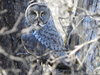
1. Great Gray Owl

Only seen this giant owl once, when a wandering bird hung out near me briefly. It was found by a non-birder who wasn’t even a local, ironically enough. They showed the photo to a birder friend who recognized it as a Great Gray and sent word and the photo along to those of us in the area. Many of us combed the area with no luck for a couple days, and then someone spotted it very early in the morning hours. More searching with no luck followed, and then finally someone discovered it in the late morning hours and alerted the trustworthy birders. I was about to leave on some errands when I got the heads up, so I quickly grabbed my binoculars and camera and shot out the door, and presently was looking at a magnificent Great Gray. It moved off later that afternoon and was not refound again.

DSCN3267.JPG


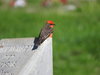
2. Vermillion Flycatcher

Another out of range bird, but this one was a lot more reliable. For whatever reason this male returned for several winters to a small country cemetery, which conveniently was on the route between the two major wildlife refuges for an easy stop over. I stopped by to see the bright fellow a few times, very striking little bird.

DSCN3762.JPG


3. Sora

One of those pesky species you hear plenty and almost never see. Especially annoying when they call from the thick reeds hardly three feet in front of you and yet you still can’t see them. Always appreciate seeing them on the rare occasion I run across one sneaking across an open spot - or in one case, walking around in the open completely ignoring me.

DSCN1924.JPG


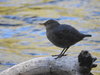
4. American Dipper

Love these little guys. Not the most colorful sure, but the antics are most entertaining as they pop in and out of the water. Also quite fond of their loud varied song. Luckily several areas near me are reliable for them, and I can usually find them easily enough.

DSCN6330.JPG


5. Scarlet Tanager

My claim to fame in the local birding circles - finding an immature male Scarlet Tanager in December in a busy parking lot in northern California for the first county record. Pretty far from the textbook standard on how to find a Scarlet Tanager! I quickly alerted the rest of the birding community and spent the next couple hours pointing it out to arriving birders until it disappeared into some much larger trees at dusk. It one-day-wondered and was not seen again despite people looking for it next day. Wasn’t a stunning red and black male but it’s still easily one of the most unusual records I’ve gotten!

DSCN7691.JPG


6. Greater Roadrunner

Ah, my longstanding nemesis bird. I’m as far north as they go in their range, so they’re not common but there’s a few reasonably reliable places for them during the cooler months in particular. Despite routinely checking those sites I still came up empty handed for years, even being taunted by hearing them call a couple times from areas I couldn’t see or access. Finally I ended the nemesis run earlier this year, finding one sitting out in the open on a rather chilly day. Wasn’t the best view, but I saw it and that’s what counts!
DSCN5832.JPG


7. Rhinoceros Auklet

I was watching Surf Scoters from a pier up on the Puget Sound when some birds much further out caught my attention. They appeared to be alcids, and sure enough some much zoomed photos proved them to be Rhinoceros Auklets. I’d been hoping to find some and there was a handful scattered about in the open water.

8. Northern Shrike

Having seen Loggerhead a few times, when a juvenile Northern was being reliably seen at a wildlife refuge to the south I made a point to go see it. The day I’d planned to go ended up being extremely foggy, but I decided to gamble and go for it anyways. As it turned out the fog ended up clearing a little and the shrike was easy to see and find.

DSCN9544.JPG


9. Burrowing Owl

A species I’ve long been fond of, it took quite awhile to finally see one in the wild. Finally one turned up again in an area that was easier to get to, and I got it as a lifer on my birthday!
DSCN9464.JPG


10. Sandhill Crane

I see Sandhills every so often, but I always like running across them. For some reason I find them more often by stumbling across them rather than when I actively look for them. It’s also the one species I’ve had opportunity to return band information for - I photographed a banded individual (below) and submitted the data; I was surprised to learn the crane was banded as a chick barely three hours north of where I saw it wintering.

DSCN3659.jpg
 

Attachments

  • DSCN3267.JPG
    DSCN3267.JPG
    155.5 KB · Views: 60
  • DSCN3762.JPG
    DSCN3762.JPG
    80.1 KB · Views: 58
  • DSCN1924.JPG
    DSCN1924.JPG
    223.7 KB · Views: 63
  • DSCN6330.JPG
    DSCN6330.JPG
    106.5 KB · Views: 62
  • DSCN7691.JPG
    DSCN7691.JPG
    114.1 KB · Views: 59
  • DSCN5832.JPG
    DSCN5832.JPG
    248.1 KB · Views: 60
  • DSCN9544.JPG
    DSCN9544.JPG
    53.4 KB · Views: 60
  • DSCN9464.JPG
    DSCN9464.JPG
    110.9 KB · Views: 58
  • DSCN3659.jpg
    DSCN3659.jpg
    153.4 KB · Views: 63
11. Common Loon

A species I’ve seen numerous times, but I still like seeing them all the same.

DSCN2770.JPG


12. Calliope Hummingbird

This tiny puffball of a bird is something else, especially given they’re migratory! I’ve seen insects bigger than these little guys. Always a treat to run across one.

DSC_0050.JPG


13. Falcated Duck

My one true vagrant from another continent, a male that returned to Colusa NWR for a couple winters. A pity I saw it not long before I got my better camera and so my pictures aren’t very good.

14. Phainopepla

The erraticness of these birds is fascinating. Whether that stems from living at the far north of their range or the food availability I’ve no idea. They turn up anywhere at anytime of the year with no pattern whatsoever. Sometimes they’ll be there for a day, other times sticking around for a month.

DSCN6246.JPG


15. Pileated Woodpecker

Unlike those of you in the East that get these big fellows visiting your backyard feeders, I have to work a little harder. I’ve only managed to spot one once, well out along a quiet forest trail. I’ve tried for them since, but no luck so far…

DSCN9437.JPG


16. Long-billed Curlew

One of my favorite shorebirds, though I don’t run across them too often. The long bill is quite impressive.

DSCN1906.JPG


17. Black Swift

This often difficult to find species happens to have a breeding colony at a very accessible location near me, and I’ve been able to observe them at a close range for a swift. Still haven’t managed a good photo yet, but hey, I’ll keep trying.

18. American Bittern

I seem to have a knack for running across these guys, though generally unexpectedly. Their camouflage works impressively well when they’re holding still.

DSCN1893.JPG


19. Bank Swallow

I’ve surveyed these at numerous locations in my area with the local FWS branch, which introduced me to several good birding locations as well as seeing a lot of other interesting wildlife. While I haven’t done a official survey for a few years now, I still like checking in on the publicly accessible colonies to see how they’re doing.

DSCN5770.JPG


20. Brown Pelican

While the American White Pelican may be bigger, I find the Brown Pelican more interesting with its seasonal color variations and plunge diving behavior. Probably also because I don’t see Brown nearly as often.

DSCN8806.jpg


Species I would most like to see:
  1. Harlequin Duck
  2. Northern Cardinal
  3. Painted Bunting
  4. Horned Puffin - last large alcid in NA I haven’t seen wild
  5. Scissortail Flycatcher
  6. Crested Caracara
  7. Spotted Owl - have tried to arrange going on surveys for them but never worked out
  8. Gyrfalcon
  9. Snow Bunting - was a day too late to see a vagrant one
  10. King Eider
  11. Green Jay
  12. Black-footed Albatross
  13. Black Skimmer
  14. Prothonotary Warbler
  15. Wilson’s Phalarope
 

Attachments

  • DSCN2770.JPG
    DSCN2770.JPG
    117.4 KB · Views: 60
  • DSC_0050.JPG
    DSC_0050.JPG
    30.3 KB · Views: 59
  • DSCN9437.JPG
    DSCN9437.JPG
    234.2 KB · Views: 57
  • DSCN6246.JPG
    DSCN6246.JPG
    135.4 KB · Views: 59
  • DSCN1906.JPG
    DSCN1906.JPG
    214.2 KB · Views: 59
  • DSCN1893.JPG
    DSCN1893.JPG
    114.8 KB · Views: 63
  • DSCN5770.JPG
    DSCN5770.JPG
    169.9 KB · Views: 58
  • DSCN8806.jpg
    DSCN8806.jpg
    102.7 KB · Views: 63
11. Common Loon

A species I’ve seen numerous times, but I still like seeing them all the same.

View attachment 619187


12. Calliope Hummingbird

This tiny puffball of a bird is something else, especially given they’re migratory! I’ve seen insects bigger than these little guys. Always a treat to run across one.

View attachment 619188


13. Falcated Duck

My one true vagrant from another continent, a male that returned to Colusa NWR for a couple winters. A pity I saw it not long before I got my better camera and so my pictures aren’t very good.

14. Phainopepla

The erraticness of these birds is fascinating. Whether that stems from living at the far north of their range or the food availability I’ve no idea. They turn up anywhere at anytime of the year with no pattern whatsoever. Sometimes they’ll be there for a day, other times sticking around for a month.

View attachment 619191


15. Pileated Woodpecker

Unlike those of you in the East that get these big fellows visiting your backyard feeders, I have to work a little harder. I’ve only managed to spot one once, well out along a quiet forest trail. I’ve tried for them since, but no luck so far…

View attachment 619190


16. Long-billed Curlew

One of my favorite shorebirds, though I don’t run across them too often. The long bill is quite impressive.

View attachment 619192


17. Black Swift

This often difficult to find species happens to have a breeding colony at a very accessible location near me, and I’ve been able to observe them at a close range for a swift. Still haven’t managed a good photo yet, but hey, I’ll keep trying.

18. American Bittern

I seem to have a knack for running across these guys, though generally unexpectedly. Their camouflage works impressively well when they’re holding still.

View attachment 619193


19. Bank Swallow

I’ve surveyed these at numerous locations in my area with the local FWS branch, which introduced me to several good birding locations as well as seeing a lot of other interesting wildlife. While I haven’t done a official survey for a few years now, I still like checking in on the publicly accessible colonies to see how they’re doing.

View attachment 619194


20. Brown Pelican

While the American White Pelican may be bigger, I find the Brown Pelican more interesting with its seasonal color variations and plunge diving behavior. Probably also because I don’t see Brown nearly as often.

View attachment 619195


Species I would most like to see:
  1. Harlequin Duck
  2. Northern Cardinal
  3. Painted Bunting
  4. Horned Puffin - last large alcid in NA I haven’t seen wild
  5. Scissortail Flycatcher
  6. Crested Caracara
  7. Spotted Owl - have tried to arrange going on surveys for them but never worked out
  8. Gyrfalcon
  9. Snow Bunting - was a day too late to see a vagrant one
  10. King Eider
  11. Green Jay
  12. Black-footed Albatross
  13. Black Skimmer
  14. Prothonotary Warbler
  15. Wilson’s Phalarope
Have you ever seen Common Loon in the breeding plumage? They're much more impressive then.

Phainopepla are not erratic in Arizona at least, so it much be an edge-of-range thing. They do have an interesting habit of being altitudinal migrants with two separate breeding seasons - one high up in the Sky Islands and another in the low Sonoran Desert valleys.
 
Have you ever seen Common Loon in the breeding plumage? They're much more impressive then.

Many times - less than a month ago even actually. I just don't have any half-decent photos in breeding plumage so far, they always are so far out. I've heard them yodeling on their breeding grounds as well, really cool to listen to.

Phainopepla are not erratic in Arizona at least, so it much be an edge-of-range thing. They do have an interesting habit of being altitudinal migrants with two separate breeding seasons - one high up in the Sky Islands and another in the low Sonoran Desert valleys.

I do expect it is probably related to being edge of range - though I've yet to pin any reasons why, given it doesn't seem to matter if it's 110 and dry or below freezing with snow on the ground.
 
Back
Top